Search results
Search for "aggregation" in Full Text gives 351 result(s) in Beilstein Journal of Organic Chemistry. Showing first 200.
Synthesis of 1,4-benzothiazinones from acylpyruvic acids or furan-2,3-diones and o-aminothiophenol
Beilstein J. Org. Chem. 2020, 16, 2322–2331, doi:10.3762/bjoc.16.193
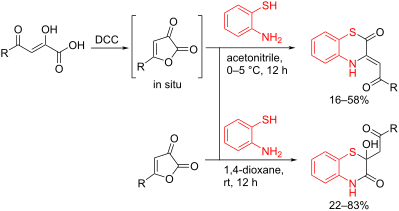
- use. Particularly, some enaminones I and II were found to show antioxidant [3], antimycotic [7][8], antimycobacterial [9][10], anti-Alzheimer’s disease (JNK3 inhibitors) [11], platelet aggregation inhibitory [12], antimicrobial [7] and analgesic [13] activities. Enaminones II were reported as
- potential Cu2+ chemosensors [14], and their BF2 chelates, as multicolor fluorescence complexes, some of which exhibited aggregation-induced emission (AIE) properties [15]. In addition, enaminones I and II proved themselves to be versatile and available building blocks for the synthesis of various



The B & B approach: Ball-milling conjugation of dextran with phenylboronic acid (PBA)-functionalized BODIPY
Beilstein J. Org. Chem. 2020, 16, 2272–2281, doi:10.3762/bjoc.16.188
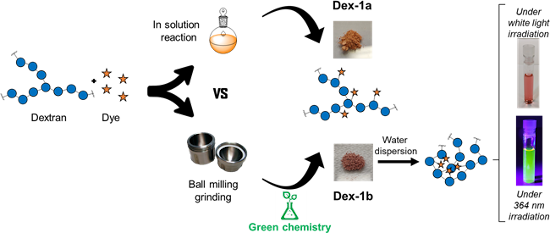
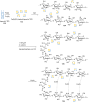
- (hydrodynamic diameter) of the nanoparticles in H2O was 198 ± 42 nm (Figure 4A, black). The measurements were performed also in phosphate-buffered saline (PBS) solution to evaluate a potential additional aggregation in cell medium. The aggregates were stable in solution and did not precipitate over time. The


Naphthalene diimide bis-guanidinio-carbonyl-pyrrole as a pH-switchable threading DNA intercalator
Beilstein J. Org. Chem. 2020, 16, 2201–2211, doi:10.3762/bjoc.16.185
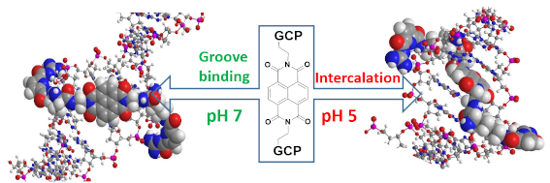
- the DNA/RNA conjugate NDI-GCP2 showed also aggregation along the ds-polynucleotide and AFM and DLS demonstrated that NDI-GCP2 has pronounced ds-DNA condensation ability. Keywords: AFM; circular dichroism; DNA/RNA recognition; fluorescence; guanidinio-carbonyl-pyrrole; naphthalene diimide
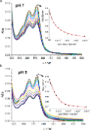
- chromophore in the DNA/RNA grooves aside expulsion of water solvating the NDI, also allows for aromatic interactions, either edge-to-face with base pairs or even with another NDI molecule (aggregation within groove). Both events strongly affect the UV–vis spectrum of the NDI chromophore. In any case, strong
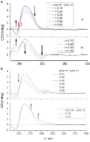
- molecule of 4 binds at separate RNA binding sites, whereas at large compound 4 excess over RNA (ratios r > 0.6, Figure 3a, bottom) a new, negative ICD band at 300 nm appeared, suggesting a secondary binding event, most likely caused by aggregation of 4 within the RNA major groove [14]. Again, there was no





Controlling the stereochemistry in 2-oxo-aldehyde-derived Ugi adducts through the cinchona alkaloid-promoted electrophilic fluorination
Beilstein J. Org. Chem. 2020, 16, 1963–1973, doi:10.3762/bjoc.16.163
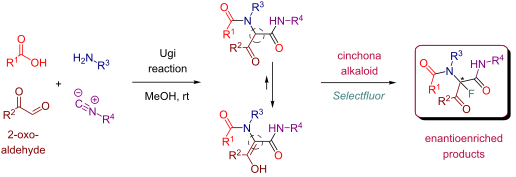
- -triggered complexation with boron trifluoride diethyl etherate. The resulting O,O-chelated boron complexes 11 turned out to be strong solid-state emitters featuring clear aggregation-induced emission (AIE) characteristics [61]. Encouraged by these results, we decided to attempt the reaction of 2-oxo


Models of necessity
Beilstein J. Org. Chem. 2020, 16, 1649–1661, doi:10.3762/bjoc.16.137

- molecular aggregation via weak interactions. Paradoxically, exactly such interactions between drug molecules and proteins form much of the basis of classical cheminformatics. These are, however, very specific in nature and have generally been defined in detail for, for instance, scoring functions. Current
- reactions. There is, however, a need to add non-covalent interactions to the model in order to take the importance of complexation and aggregation via non-covalent interactions into account. This could be done in a purely ad hoc fashion for each type of interaction. This is how force-field developers have


Five-component, one-pot synthesis of an electroactive rotaxane comprising a bisferrocene macrocycle
Beilstein J. Org. Chem. 2020, 16, 1564–1571, doi:10.3762/bjoc.16.128
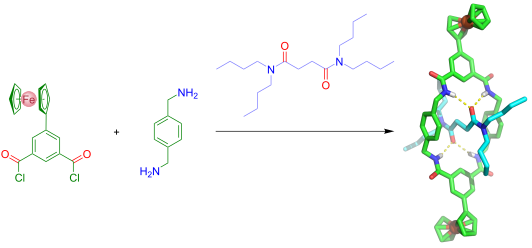
- ). The isolated material had low solubility, which is likely due to self-aggregation via complementary amide hydrogen bonds. This prompted us to use a thread with bulky stopper groups to prepare the corresponding rotaxane compounds, which would increase the solubility by the formation of intramolecular
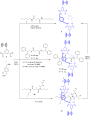
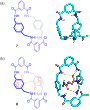
- macrocycle-thread hydrogen bonds, thereby reducing self-aggregation. To this end, a five-component clipping strategy was adopted using different tetrabutylsuccinamide threads (Figure 2) with varying hydrogen-bond basicity (amides > esters) [4][15]. Threads containing an ester group were selected as esters




Synthesis of new fluorescent molecules having an aggregation-induced emission property derived from 4-fluoroisoxazoles
Beilstein J. Org. Chem. 2020, 16, 1411–1417, doi:10.3762/bjoc.16.117
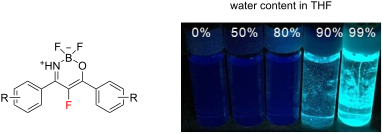
- -opening reaction of 4-fluoroisoxazoles and exhibited highly fluorescent luminescence and aggregation-induced emission (AIE), showing promise as a new fluorophore. Keywords: aggregation-induced emission; boron ketoiminates; fluorescent probe; α-fluorinated boron ketoiminates; 4-fluoroisoxazoles
- concentrated solutions by aggregation-caused quenching (ACQ) [8]. On the other hand, there are molecules that exhibit strong emission even in poor solvents or in the solid state. This property is referred to as aggregation-induced emission (AIE) and has attracted much attention in the field of fluorescence


Disposable cartridge concept for the on-demand synthesis of turbo Grignards, Knochel–Hauser amides, and magnesium alkoxides
Beilstein J. Org. Chem. 2020, 16, 1343–1356, doi:10.3762/bjoc.16.115
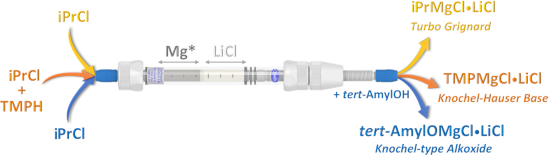
- conversion because the neutralization can alter the aggregation states, producing a significant batch-to-batch variability. The direct insertion of magnesium metal into organic halides is the most common method used to prepare Grignard reagents but present difficulties: (1) sluggish reactions with ordinary


Synthesis and properties of quinazoline-based versatile exciplex-forming compounds
Beilstein J. Org. Chem. 2020, 16, 1142–1153, doi:10.3762/bjoc.16.101
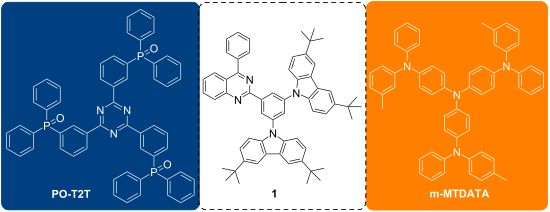
- ; quinazoline; Introduction Organic luminescent materials are extensively used in a wide range of optoelectronic devices. For the design of compounds, potentially exhibiting properties such as bipolar charge transport, delayed fluorescence or aggregation-induced emission enhancement (AIEE), a useful strategy
- efficiency (EQE) of 19.2% [7]. Two blue emitters based on fluorene-bridged quinazoline and quinoxaline derivatives were used in the active layers of OLEDs with EQEs of 1.58% and 1.30%, suggesting that the self-aggregation of emitters had a considerable effect on the photoluminescent and electroluminescent


Fluorinated phenylalanines: synthesis and pharmaceutical applications
Beilstein J. Org. Chem. 2020, 16, 1022–1050, doi:10.3762/bjoc.16.91
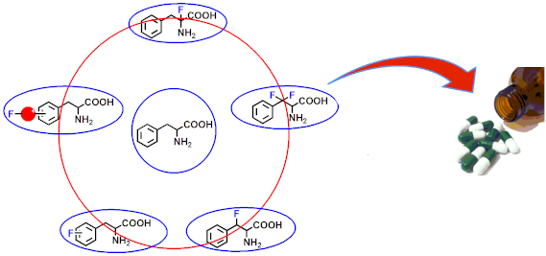
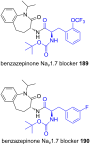
- fluorinated Phe dipeptides [84] 177c–g as racemic mixtures (Scheme 43). 5. Pharmaceutical applications of fluorinated phenylalanine derivatives Peptides and proteins containing FPhe are important tools to identify enzyme–substrate complexes, mechanisms of protein aggregation, and modifying the chemical and


Aryl-substituted acridanes as hosts for TADF-based OLEDs
Beilstein J. Org. Chem. 2020, 16, 989–1000, doi:10.3762/bjoc.16.88
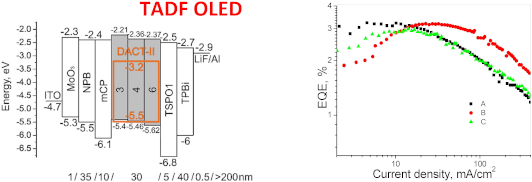
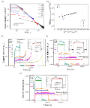
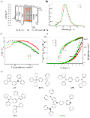
- to polarity and aggregation effects. Despite these observations, emission of compounds 3–6 can mainly be assigned to π–π* transitions of local excited states. However, a slight contribution of charge transfer (CT) can be also recognized in the emission of the studied compounds 3–6 (Figure 3a). The


Synthesis of disparlure and monachalure enantiomers from 2,3-butanediacetals
Beilstein J. Org. Chem. 2020, 16, 616–620, doi:10.3762/bjoc.16.57
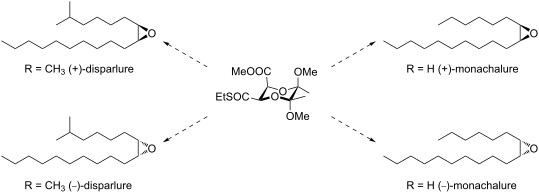
- particularly interesting example, because it is also a component of the luring mixture used by the bolas spider Mastophora hutchinsoni [3][4]. (6R,7S,2E)-6,7-Epoxy-2-nonenal has been identified as a sex-aggregation pheromone of the red-necked longhorn beetle (Aromia bungii) [5] and its synthesis has been


A systematic review on silica-, carbon-, and magnetic materials-supported copper species as efficient heterogeneous nanocatalysts in “click” reactions
Beilstein J. Org. Chem. 2020, 16, 551–586, doi:10.3762/bjoc.16.52
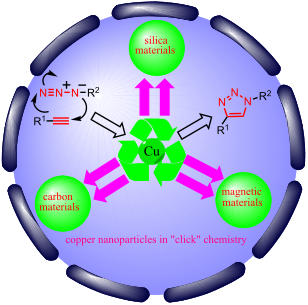
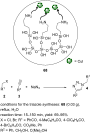
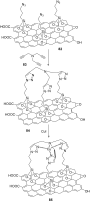
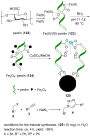
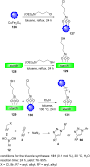
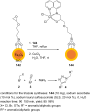
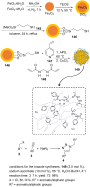
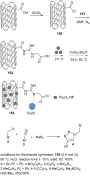
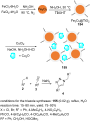
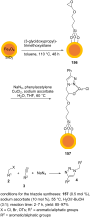
- laponite® discs was to prevent their aggregation. Moreover, the catalytic activity of the nanocomposite 136 was explored in 1,3-dipolar cycloadditions of alkynes with in situ-generated organic azides. The reactions proceeded well in an aqueous medium at 70 °C with 0.004 g of the catalyst (Scheme 30). In
















Photophysics and photochemistry of NIR absorbers derived from cyanines: key to new technologies based on chemistry 4.0
Beilstein J. Org. Chem. 2020, 16, 415–444, doi:10.3762/bjoc.16.40
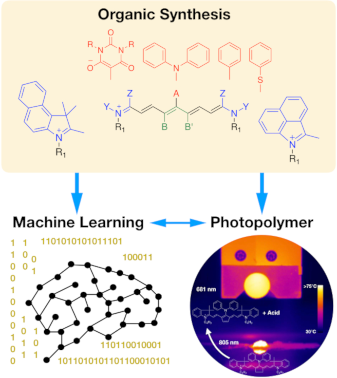
- preferably refers to the solubility in the surrounding matrix, while undesirable events such as aggregation are of minor importance. In the worst case, it can also result in crystallization of the cyanine in the matrix under certain storage conditions such as high humidity and/or elevated temperatures
- ]. Such a geometry affects compatibility with the surrounding matrix. Thus, aggregation phenomena dominate in the case of IV. On the other hand, absorbers related to V often exhibit a much better solubility in organic surroundings such as multi-functional acrylates [5]. This can be seen as a huge
- indolium nitrogen resulting in a decrease of the molar extinction coefficient (ε) as well. Aggregation/dimerization can cause such phenomena, which typically leads to a decrease of absorption at the considered absorption maximum and a pronounced non-radiative deactivation resulting in a decrease of Φf


Synthesis and circularly polarized luminescence properties of BINOL-derived bisbenzofuro[2,3-b:3’,2’-e]pyridines (BBZFPys)
Beilstein J. Org. Chem. 2020, 16, 325–336, doi:10.3762/bjoc.16.32
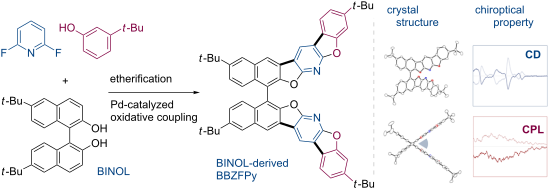
- available (S)- and (R)-1,1’-bi-2-naphthols through a palladium-catalyzed multiple intramolecular C–H/C–H coupling as the key ring-closure step. The effect of terminal tert-butyl substituents on the BBZFPy skeleton was systematically investigated to uncover a unique aggregation-induced enhancement of CPL
- an interesting aggregation-induced enhancement of CPL in the solid state with considerably higher dissymmetry factors compared to those in solution. Results and Discussion Synthesis of BINOL-derived BBFPys The study was initiated with the synthesis of 2,6-diaryloxypyridines 3 bearing a 1,1
- 0.37–0.40. The emission bands of 4a–c in their solid state were considerably red-shifted as compared to that of 6, suggesting that these compounds displayed the appreciable effect of molecular aggregation. Interestingly, 4b and 4c, bearing the additional terminal tert-butyl substituents, were more red


Formal preparation of regioregular and alternating thiophene–thiophene copolymers bearing different substituents
Beilstein J. Org. Chem. 2020, 16, 317–324, doi:10.3762/bjoc.16.31
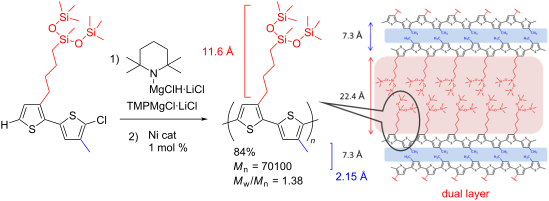
- our result from the XRD analysis (7.3 Å) corresponding to the aggregation of the alternating methyl substituent [27]. Conclusion In summary, we showed that formally alternating thiophene–thiophene copolymers could be synthesized by employing differently substituted halobithiophenes as monomers in


The use of isoxazoline and isoxazole scaffolding in the design of novel thiourea and amide liquid-crystalline compounds
Beilstein J. Org. Chem. 2020, 16, 175–184, doi:10.3762/bjoc.16.20
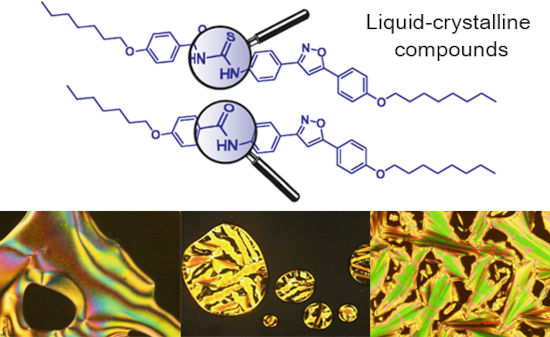
- ability to establish intra- and intermolecular hydrogen bonds [11]. In addition to π–π, dipole–dipole and van der Waals interactions, hydrogen bond interactions are involved in gel formation through self-aggregation of the small gelator molecules. In recent years, there has been increased interest in the



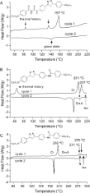

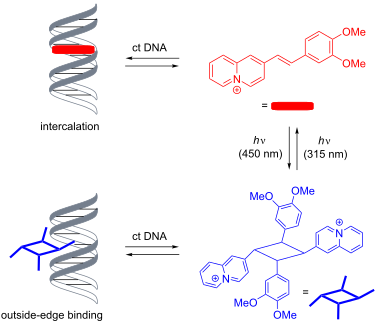
Reversible photoswitching of the DNA-binding properties of styrylquinolizinium derivatives through photochromic [2 + 2] cycloaddition and cycloreversion
Beilstein J. Org. Chem. 2020, 16, 111–124, doi:10.3762/bjoc.16.13
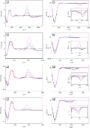
- an aggregation of the molecules along the DNA backbone at very high ligand concentrations. Nevertheless, the CD and LD spectroscopic data revealed at least some specific binding interactions of 4b with DNA that caused a distinct orientation of the aromatic units relative to the host DNA. In




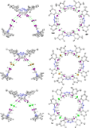
Halogen-bonding-induced diverse aggregation of 4,5-diiodo-1,2,3-triazolium salts with different anions
Beilstein J. Org. Chem. 2020, 16, 78–87, doi:10.3762/bjoc.16.10
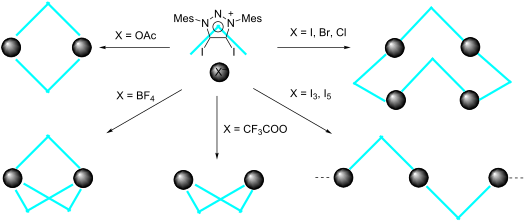
- triazolium salts show diverse aggregation via halogen bonding between C–I bonds and anions. Triazolium with halide anions exists as a tetramer with saddle conformation. Triazolium tetrafluoroborate exists as a trimer with Chinese lantern shape conformation. Triazolium trifluoroacetate and acetate exist as
- dimers, respectively, while the former shows boat conformation and the latter forms rectangle conformation. Triazolium salts form a linear polymer with polyiodide. Keywords: aggregation; 4,5-diiodo-1,2,3-triazolium salts; halogen bond; non-covalent interaction; Introduction The halogen bond (XB) is a
- , 2-Br and 2-Cl show tetrameric aggregation of the 4,5-diiodo-1,3-dimesityl-1,2,3-triazolium moiety with four anion halides that are bridged together to form a saddle shape through XB (Figure 2). 2-I crystallizes in the tetragonal space group . The distances of I···I are 3.306(1) Å and 3.300(1) Å




Influence of the cis/trans configuration on the supramolecular aggregation of aryltriazoles
Beilstein J. Org. Chem. 2019, 15, 2881–2888, doi:10.3762/bjoc.15.282
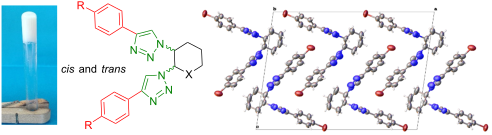
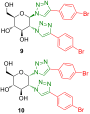
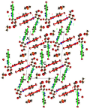
- - and cis-1,2-glucopyranosyl and cyclohexyl ditriazoles, synthesized by CuAAC "click" chemistry, to form gels was studied, their physical properties determined, and the self-aggregation behavior investigated by SEM, X-ray, and EDC studies. The results revealed that self-assembly was driven mainly by π–π
- stabilization of the supramolecular aggregation of bis(4-bromophenyl)triazoles. The trans or cis spatial disposition of the triazole rings is highly important for gelation, with the cis configuration having higher propensity. Keywords: circular dichroism; cis/trans configuration; gels; triazole; X-ray
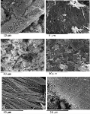
- and 8e point at the fact that the presence of either the phenyl groups or the bromine atoms are not strictly necessary for gelation, although both might contribute to an overall stabilization of the supramolecular aggregation. Optical micrographs of the xerogels formed from compounds 7f, 8f, 10, 12







Design, synthesis and investigation of water-soluble hemi-indigo photoswitches for bioapplications
Beilstein J. Org. Chem. 2019, 15, 2822–2829, doi:10.3762/bjoc.15.275
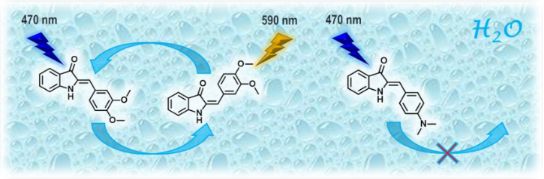
- -1b and E-1c are not fluorescent in aqueous medium. The analysis of the isomeric compositions of the photostationary states was performed by the Fischer method [21] because NMR-spectroscopic analysis was precluded by insufficient solubility or/and possible aggregation at higher concentrations. Thus


Dyes in modern organic chemistry
Beilstein J. Org. Chem. 2019, 15, 2798–2800, doi:10.3762/bjoc.15.272
- theoretical and computational chemistry [20]. In the same way, essential dye properties, such as aggregation [21][22] or solvatochromism [23], are still in the focus of current physical organic research. The analytical sciences also depend very much on the availability of appropriate dyes with characteristic
Emission solvatochromic, solid-state and aggregation-induced emissive α-pyrones and emission-tuneable 1H-pyridines by Michael addition–cyclocondensation sequences
Beilstein J. Org. Chem. 2019, 15, 2684–2703, doi:10.3762/bjoc.15.262
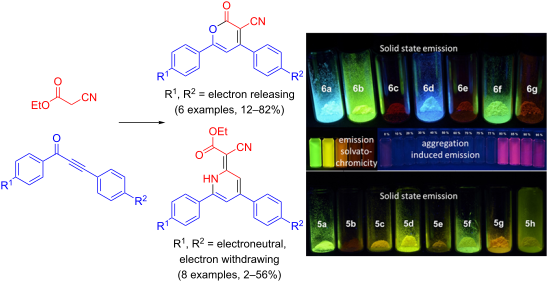
- emission solvatochromism. Also a donor-substituted α-pyrone shows pronounced aggregation-induced emission enhancement. Keywords: cyclocondensation; DFT calculations; fluorescence; heterocycles; 1H-pyridines; α-pyrones; Introduction A high sensitivity and precise tuneability of fluorescence colors are
- molecular aggregation in the solid state causes fluorescence quenching [16]. In recent years, we have coined diversity-oriented syntheses of functional chromophores by multicomponent strategies [17][18], opening accesses to substance libraries for systematic studies of structure–property relationships on
- fluorophores [19], in particular on aggregation-induced emissive polar dyes [20]. Conceptually, many of these consecutive multicomponent syntheses rely on transition-metal-catalyzed heterocyclic syntheses [21]. By virtue of catalytic generation of alkynones [22] we have recently disclosed consecutive




Self-assembled coordination thioether silver(I) macrocyclic complexes for homogeneous catalysis
Beilstein J. Org. Chem. 2019, 15, 2465–2472, doi:10.3762/bjoc.15.239
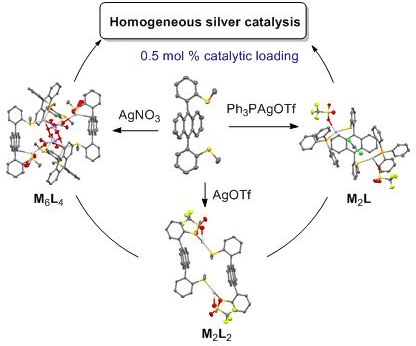
- originate from the presence of several species in solution, such as self-aggregates, mixture of conformers, mixture of diastereoisomers or complexes with different stoichiometry. To investigate the possible self-aggregation of complexes 1a–c (7 mM), VT NMR experiments were conducted between –30 °C and 60 °C


Targeted photoswitchable imaging of intracellular glutathione by a photochromic glycosheet sensor
Beilstein J. Org. Chem. 2019, 15, 2380–2389, doi:10.3762/bjoc.15.230
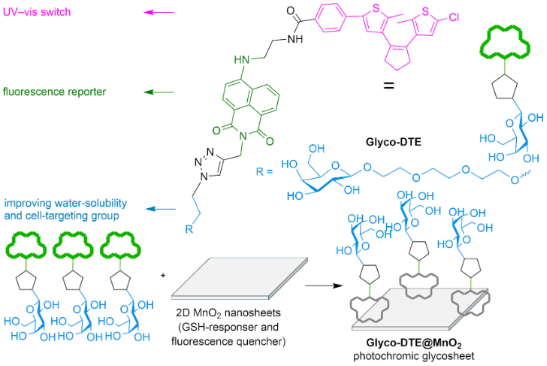
- effective FRET between the attached Glyco-DTE and 2D MnO2, which again suggested the close stacking of Glyco-DTE to the nanosheet surface. Aggregation-caused quenching might be another reason for the fluorescence quenching because of the close distance between fluorescence molecules when absorbed on the