Search results
Search for "carbazole" in Full Text gives 116 result(s) in Beilstein Journal of Organic Chemistry.
Direct alkenylation of indolin-2-ones by 6-aryl-4-methylthio-2H-pyran-2-one-3-carbonitriles: a novel approach
Beilstein J. Org. Chem. 2013, 9, 809–817, doi:10.3762/bjoc.9.92

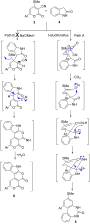
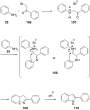
- -6(7H)-ones (5, Figure 1) instead of the mechanistically possible products 2-phenyl-3,6-dioxa-4,5-dioxonaphtho[2,1-b]-7H-indole 6 or a carbazole derivative 7 or 3-alkenylindolin-2-ones 8 (Scheme 2 and Scheme 3). Further, reactions of 3 and 4 in the presence of NaH as a base in THF under reflux gave a




Recent progress in the discovery of small molecules for the treatment of amyotrophic lateral sclerosis (ALS)
Beilstein J. Org. Chem. 2013, 9, 717–732, doi:10.3762/bjoc.9.82
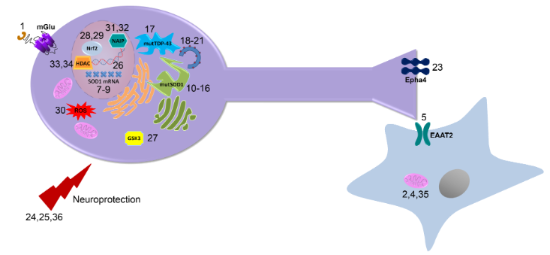
- (Figure 12). In a screen of a chemically diverse compound library, Pieper et al. identified an aminopropyl carbazole, P7C3, which was found to increase adult hippocampal neurogenesis in an in vivo assay [53]. Further optimization of this compound through structure–activity relationship (SAR) analysis led


Synthesis of 2,3-dihydronaphtho[2,3-d][1,3]thiazole-4,9-diones and 2,3-dihydroanthra[2,3-d][1,3]thiazole-4,11-diones and novel ring contraction and fusion reaction of 3H-spiro[1,3-thiazole-2,1'-cyclohexanes] into 2,3,4,5-tetrahydro-1H-carbazole-6,11-diones
Beilstein J. Org. Chem. 2013, 9, 577–584, doi:10.3762/bjoc.9.62
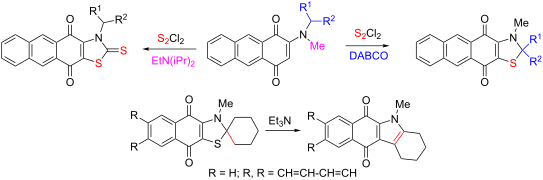
- reaction of anthracene-1,4-diones 4 led unexpectedly to the corresponding 2-thioxo-2,3-dihydroanthra[2,3-d][1,3]thiazole-4,11-diones 10. The reaction of 3H-spiro[1,3-thiazole-2,1'-cyclohexanes] 1d, 2d with Et3N in chlorobenzene under reflux yielded 2,3,4,5-tetrahydro-1H-carbazole-6,11-diones 15, 16, i.e
- ., ring contraction and fusion products. A plausible mechanism was proposed for the formation of the products. Keywords: anthracene-1,4-diones; 1H-carbazole-6,11-diones; fused thiazoles; fusion reaction; heterocycles; naphthoquinones; ring contraction; sulfur–nitrogen; Introduction The 1,4
- ]carbazole-6,11-dione (15) [20]. Anthraquinonothiazole 2d reacted with triethylamine in the same way as naphthoquinone 1d giving fused pyrrole 16 with the same yield. The most plausible pathway for this reaction is given in Scheme 9. The key steps are assumed to be the thiazole ring opening with the


Palladium-catalyzed dual C–H or N–H functionalization of unfunctionalized indole derivatives with alkenes and arenes
Beilstein J. Org. Chem. 2012, 8, 1730–1746, doi:10.3762/bjoc.8.198
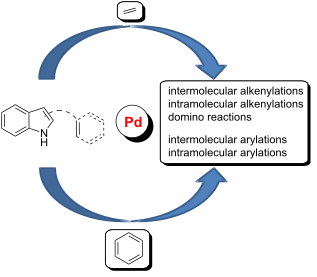
- -established features of natural or man-made compounds containing an indole backbone are of wide interest in pharmacological and agrochemical fields [26][27][28]. Thus, indole and carbazole nuclei are used in medicine for their antibacterial, antimicrobial, and anti-inflammatory effects and occupy a relevant
- role in the discovery of active antitumor drugs [29][30][31]. Carbazole derivatives also find applications in organic materials as chromophores and photoconductors [32]. For several years, the development of methodologies concerning indole synthesis and functionalization has been one of the most
- with Pd(OAc)2 as the catalyst and 1,4-benzoquinone as the oxidant, providing carbazole derivatives 38 (Scheme 19) [77]. The products arise from an endo-cyclization which gives the initially formed dihydrocarbazoles 37, which are easily oxidized to the products 38 by the excess of 1,4-benzoquinone




Photochemistry with laser radiation in condensed phase using miniaturized photoreactors
Beilstein J. Org. Chem. 2012, 8, 1213–1218, doi:10.3762/bjoc.8.135
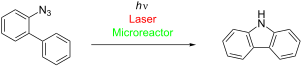
- Toxicology and Genetics, Karlsruhe Institute of Technology, Hermann-von-Helmholtz-Platz 1, D-76344 Eggenstein-Leopoldshafen, Germany 10.3762/bjoc.8.135 Abstract Miniaturized microreactors enable photochemistry with laser irradiation in flow mode to convert azidobiphenyl into carbazole with high efficiency
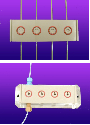
- this study have four reaction chambers with varying volumes of the chambers due to increasing depth, and different connections for the reagent entrance (Figure 1). Photochemistry The combinatorial synthesis of heterocycles and among them of carbazole is of particular interest since they are potential
- active pharmaceutical compounds [33][34][35]. The photolysis of 2-azidobiphenyl (1) with the help of a conventional UV-lamp has been used for the synthesis of carbazole (2) since 1960 (Scheme 1) [36][37][38][39]. However, there are only a few examples of substituted products obtained by this reaction



An intramolecular inverse electron demand Diels–Alder approach to annulated α-carbolines
Beilstein J. Org. Chem. 2012, 8, 829–840, doi:10.3762/bjoc.8.93
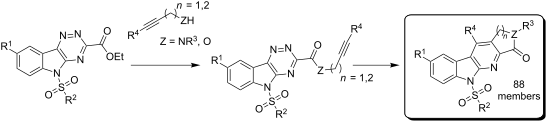
- -carboline by Robinson in 1924 [15][36] proceeded through the acid-catalyzed decomposition of 1-(2-pyridyl)benzotriazole, a modification of the Graebe–Ullmann carbazole synthesis, which closes the indole ring. This procedure was improved upon and exploited for decades [37][38][39][40]. Later, reversing the


A novel and facile synthesis of 3-(2-benzofuroyl)- and 3,6-bis(2-benzofuroyl)carbazole derivatives
Beilstein J. Org. Chem. 2011, 7, 1533–1540, doi:10.3762/bjoc.7.180
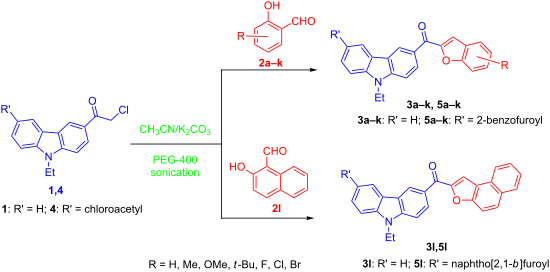
- described. The synthesis mainly relies on the ultrasound-assisted Rap–Stoermer reaction of 3-chloroacetyl- (1) or 3,6-dichloroacetyl-9-ethyl-9H-carbazole (4) with various salicylaldehydes 2a–k as well as 2-hydroxy-1-naphthaldehyde (2l) in CH3CN with the presence of PEG-400 as catalyst. The procedure offers
- easy access to benzofuroylcarbazoles in short reaction times and the products are obtained in moderate to good yields. Keywords: 2-benzofuroyl; carbazole; PEG-400; Rap–Stoermer reaction; salicylaldehydes; ultrasound-assisted; Introduction Carbazole, and especially heterocycle-containing carbazole
- common heterocyclic ring moiety fused with a carbazole ring, such as pyridocarbazoles [20][21], thienocarbazoles [22][23], pyranocarbazoles, pyrrolocarbazoles [24][25], indolocarbazoles [26][27][28], and synthetic analogues thereof. However, there are very few reports in which the heterocyclic moiety is


NMR studies of anion-induced conformational changes in diindolylureas and diindolylthioureas
Beilstein J. Org. Chem. 2011, 7, 1205–1214, doi:10.3762/bjoc.7.140
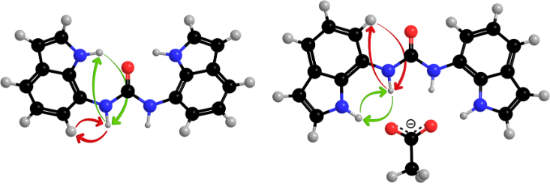
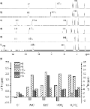
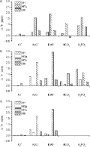
- heterocycles, such as carbazole, 2,2'-biindole and indolo[1,2-b]carbazoles, have recently attracted significant attention [24][25][26][27][28][29][30][31]. Indole contains a single hydrogen bond donor group, which is employed in biological systems to bind anions such as chloride [32] and sulfate [14]. We have






Cationic gold(I) axially chiral biaryl bisphosphine complex-catalyzed atropselective synthesis of heterobiaryls
Beilstein J. Org. Chem. 2011, 7, 944–950, doi:10.3762/bjoc.7.105
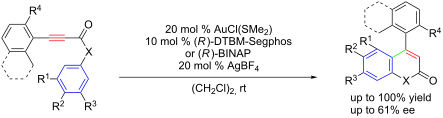
- addition, benzocoumarin 2c (Table 2, entry 3) was obtained in moderate ee, although the yield was low due to partial deprotection of the methoxymethoxynaphthalene moiety (Table 2, entry 3). The reactions of carbazole and dialkoxybenzene derivatives 1d–g, using (R)-DTBM-Segphos as a ligand, furnished the


Novel carbazole–pyridine copolymers by an economical method: synthesis, spectroscopic and thermochemical studies
Beilstein J. Org. Chem. 2011, 7, 638–647, doi:10.3762/bjoc.7.75

- novel class of carbazole-4-phenylpyridine co-polymers are described. The synthesis was carried out by a simple and cheaper method compared to the lengthy methods usually adopted for the preparation of carbazole–pyridine copolymers which involve costly catalysts. Thus, two series of polymers were
- . The weight average molecular masses (Mw) of the polymers were estimated by the laser light scattering (LLS) technique. Keywords: carbazole–pyridine copolymers; fluorescent materials; organic light emitting diode (OLED); photoluminescence spectra; UV spectra; Introduction An immense research effort
- for employing organic materials as LEDs [7] and carbazole containing polymers are the most studied group amongst the different polymers intended for OLED applications [8][9][10][11][12][13][14][15]. Carbazole containing polymers exhibit excellent electron-donating properties together with intense




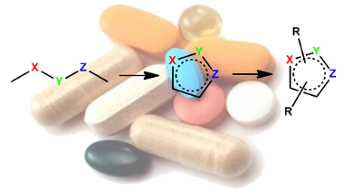
An overview of the key routes to the best selling 5-membered ring heterocyclic pharmaceuticals
Beilstein J. Org. Chem. 2011, 7, 442–495, doi:10.3762/bjoc.7.57
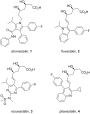
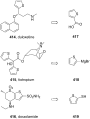
- considered and executed process optimisation study. Carbazoles Carvedilol (136, Coreg) is a general non-selective β-blocker, used in the treatment of mild to moderate congestive heart failure. The structure comprises of a core carbazole ring that plays an important role in its increased activity. The
- carvedilol has an additional antioxidant mode of action. It has been proposed that the carbazole ring may be involved in scavenging oxygen radicals thereby accounting for reduced myocardial damage [41]. Since carbazoles are similar to indoles, analogous methods can be used for their synthesis. The key
- intermediate for carvedilol is 4-hydroxy-9H-carbazole (141) [42]. In analogy to the Fischer indole synthesis, cyclohexane-1,3-dione monophenyl hydrazone 139 is prepared via condensation of phenylhydrazine (138) with 1,3-cyclohexanedione (121, Scheme 29). This compound can then undergo an acid catalysed Fischer







Palladium- and copper-mediated N-aryl bond formation reactions for the synthesis of biological active compounds
Beilstein J. Org. Chem. 2011, 7, 59–74, doi:10.3762/bjoc.7.10

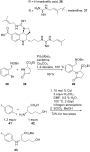
- demanding N-nucleophile at two positions. Murrazoline (23), a carbazole alkaloid isolated from the shrub Murraya, is used in folk medicine for the treatment of eczema, rheumatism and dropsy, as an analgesic, and in anaesthesia. It is known to be a potent platelet aggregation inhibitor. The double N




Synthesis of 3-(quinolin-2-yl)- and 3,6-bis(quinolin-2-yl)-9H-carbazoles
Beilstein J. Org. Chem. 2010, 6, 966–972, doi:10.3762/bjoc.6.108

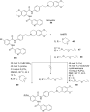
- reaction between 3-acetyl-9-ethyl-9H-carbazole or 3,6-diacetyl-9-ethyl-9H-carbazole and β-aminoaldehydes or β-aminoketones is described. All of the title compounds were obtained in good yields of 52–72% and their structures were confirmed by IR, 1H NMR, MS, and elemental analysis. Keywords
- : acetylcarbazole; β-aminoaldehyde; β-aminoketone; Friedländer condensation; sodium ethoxide; Introduction Nitrogen-containing heterocycles are a very important group of organic compounds because of their wide application in medicine, agriculture, and technology. Among these, quinoline and carbazole derivatives
- system especially in the area of medicinal chemistry, and moreover it is a ubiquitous sub-structure found in many biologically active natural products [4][5][6][7][8]. Carbazole-based compounds are also embodied in many naturally occurring products and these too display a wide variety of biological


Conjugated polymers containing diketopyrrolopyrrole units in the main chain
Beilstein J. Org. Chem. 2010, 6, 830–845, doi:10.3762/bjoc.6.92
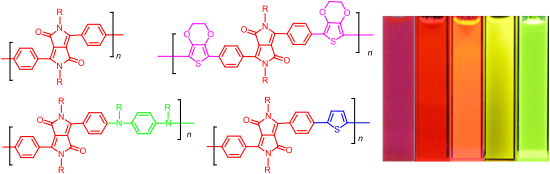
- ]. The polymers consisted of dialkylated DPP units and carbazole, triphenylamine, benzo[2,1,3]thiadiazole, anthracene, or fluorene units in alternating fashion. They were prepared via Suzuki coupling, from the DPP monomers M-1 or DPP-3,6-diphenyl(4,4´-bis(pinacolato)boron ester. A number of readily
- (Table 6). Encouraged by the good performance of thiophenylDPP-based solar cells, further polymers P-29 - P-46 were recently synthesized and their photovoltaic properties investigated. Among these were alternating copolymers containing the thiophenylDPP, or bithiophenylDPP unit [58], and carbazole [58




Aromatic and heterocyclic perfluoroalkyl sulfides. Methods of preparation
Beilstein J. Org. Chem. 2010, 6, 880–921, doi:10.3762/bjoc.6.88
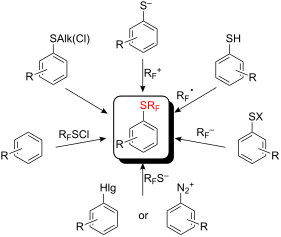
- contrast, in the case of 1-benzyl-2-methyl indolizine [81] both the pyrrole and the aromatic ring of the benzyl group undergo trifluoromethylsulfanylation. Only N-substitution occurs in the case of carbazole [80]. N-Methylpyrrole can be variously substituted depending on the conditions as illustrated in


Synthesis of indolo[3,2-b]carbazole-based new colorimetric receptor for anions: A unique color change for fluoride ions
Beilstein J. Org. Chem. 2010, 6, No. 12, doi:10.3762/bjoc.6.12
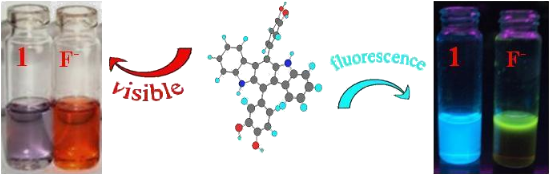
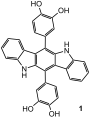
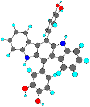
- CH3CN in the presence of I2 for 45 min afforded the desired receptor 1 in 82% yield. To look into the orientation of hydrogen bond donors around the carbazole motif, we optimized the structure by the AM1 method [45] (Figure 2). It is evident from Figure 2 that the two catechol units do not lie in the
- same plane as the carbazole unit. Interaction studies UV–vis study The anion-binding properties of receptor 1 were investigated by UV–vis, fluorescence and 1H NMR spectroscopic methods. The sensing ability of chemosensor 1 with a series of tetrabutylammonium salts ([Bu4N]+X−, X = F−, Cl−, Br−, I−, AcO