


Search results
Search for "chiral ligands" in Full Text gives 103 result(s) in Beilstein Journal of Organic Chemistry.
The first salen- type ligands derived from 3',5'-diamino- 3',5'-dideoxythymidine and -dideoxyxylothymidine and their corresponding copper(II) complexes
Beilstein J. Org. Chem. 2006, 2, No. 17, doi:10.1186/1860-5397-2-17

- molecules. The regio- and stereospecific exchange of the hydroxyl groups at the sugar moiety by chelating units improves its complexation ability and should give access to a new class of chiral ligands. Results In this paper we present the synthesis of 3',5'-diamino substituted thymidines with ribo- as well
- of diimino functionalized ligands are often used as catalysts for a wide variety of reactions. Enantioselective synthesis has gained in importance in the last few years, and the development of chiral ligands has become an important field in organic chemistry. Nucleosides provide a stable scaffold
- 3',5'-diaminothymidines in ribo- and xylo-configuration represent the first nucleosides bearing salen-type chelating units at these positions. With their synthesis a new class of tetradentate chiral ligands with interesting features could be obtained. The chiral sugar moiety is close to the metal


An exceptional P-H phosphonite: Biphenyl- 2,2'-bisfenchylchlorophosphite and derived ligands (BIFOPs) in enantioselective copper- catalyzed 1,4-additions
Beilstein J. Org. Chem. 2005, 1, No. 6, doi:10.1186/1860-5397-1-6
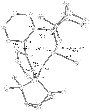
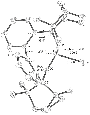
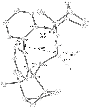
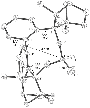
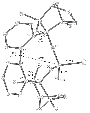
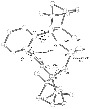
- (X) side (FAA), the pyramidality of phosphorus measured as angle sum and the distance of phosphorus to the biaryl axis (C1-C1’). Biphenyl-2,2'-bisfenchol based phosphanes (BIFOPs) as chiral ligands in enantioselective Cu-catalyzed 1,4-additions. Anharmonic B3LYP/6-31G*(C,H,N,O,F,Cl,Br) /SDD(Cu) CO
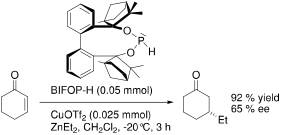
- ][13][14][15][16][17][18] Such asymmetric conjugate additions of diethylzinc to enones are often highly enantioselective, especially with phosphoramidites (amidophosphites) and phosphites. [2][19][20][21][22][23][24][25][26][27][28][29][30][31][32][33][34][35][36][37][38][39][40][41] These chiral
- ligands (L*) exhibit large steric demands and good metal to ligand back bonding abilities. Such ligands generate active R-CuI-L* catalysts and support the rate determining reductive elimination in the catalytic cycle (Scheme 1). [42][43][44][45][46][47] Common basis for diol-based phosphoramidites and









Mixtures of monodentate P-ligands as a means to control the diastereoselectivity in Rh-catalyzed hydrogenation of chiral alkenes
Beilstein J. Org. Chem. 2005, 1, No. 3, doi:10.1186/1860-5397-1-3
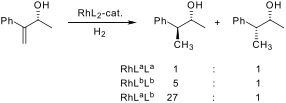
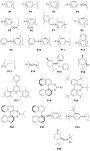
- described earlier.[34] Since the substrates 1 and 5 were used as racemates, kinetic resolution may be involved when the chiral ligands are employed, i.e., diastereoselectivity may change with conversion. This aspect was not a subject of the present study. In all hydrogenation reactions the standard
- control" in the case of the chiral ligands P16, P18 and P20 was not ascertained. The highest syn-selectivity favoring 7 amounts to only 1:1.8 when using ligand P4 (entry 4). From the list of hetero-combinations showing a stereochemical influence relative to the use of the respective pure ligands, three
- thermodynamically controlled, changing the La : Lb ratio may affect diastereoselectivity and can thus be used as a tool in future studies. It also remains to be seen if mixtures of chiral ligands affect diastereoselectivity in reactions of chiral substrates when they are used in enantiomerically pure form. In


Other Beilstein-Institut Open Science Activities



