Search results
Search for "cross coupling" in Full Text gives 615 result(s) in Beilstein Journal of Organic Chemistry. Showing first 200.
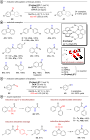
Non-noble metal-catalyzed cross-dehydrogenation coupling (CDC) involving ether α-C(sp3)–H to construct C–C bonds
Beilstein J. Org. Chem. 2023, 19, 1259–1288, doi:10.3762/bjoc.19.94
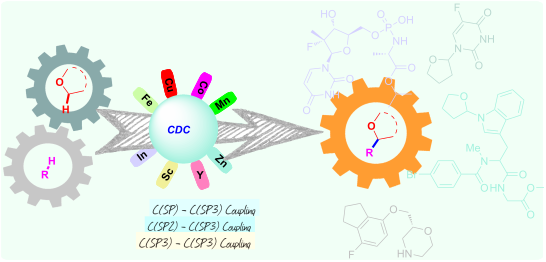
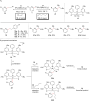
- become a major strategy for ether functionalization. This review covers C–H/C–H cross-coupling reactions of ether derivatives with various C–H bond substrates via non-noble metal catalysts (Fe, Cu, Co, Mn, Ni, Zn, Y, Sc, In, Ag). We discuss advances achieved in these CDC reactions and hope to attract
- interest in developing novel methodologies in this field of organic chemistry. Keywords: alkylation; cross-dehydrogenation coupling; ether; non-noble metals; Introduction Since the 1970s, organic chemists have developed many selective cross-coupling methods for the construction of C–C bonds, such as the
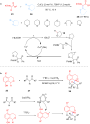
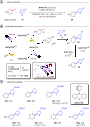
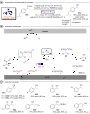
- , tetrahydrofuran or tetrahydropyran can smoothly react with many methyl aryl ketones to obtain the desired coupling products (Scheme 6a) [54]. The mechanism of the dehydrogenation cross-coupling reaction may undergo a radical pathway. Initially, the tert-butoxy radical produced by the dissociation of t-BuOOH may










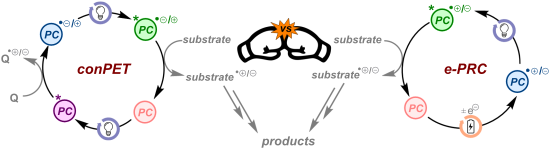
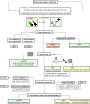
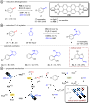
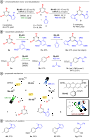
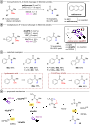
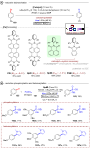
Photoredox catalysis harvesting multiple photon or electrochemical energies
Beilstein J. Org. Chem. 2023, 19, 1055–1145, doi:10.3762/bjoc.19.81




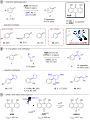
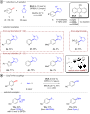
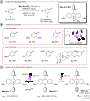
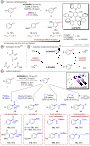
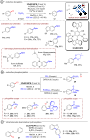






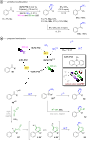









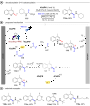
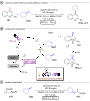


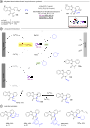


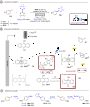


Photoredox catalysis enabling decarboxylative radical cyclization of γ,γ-dimethylallyltryptophan (DMAT) derivatives: formal synthesis of 6,7-secoagroclavine
Beilstein J. Org. Chem. 2023, 19, 918–927, doi:10.3762/bjoc.19.70
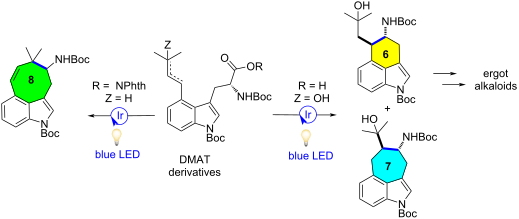
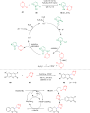
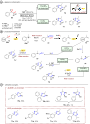
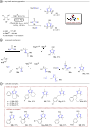
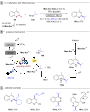
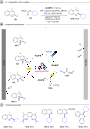
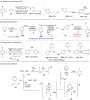
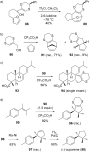
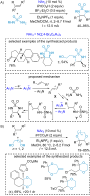
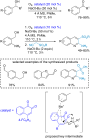
- )PF6 (E1/2*III/II = +1.21 V, E1/2III/II = −1.37; E1/2IV/*III = −0.89, E1/2 IV/III = +1.69 V) [74] would permit efficient radical generation and C(sp3)–C(sp3) bond formation either by challenging selective radical–radical cross-coupling or by radical addition to a π-bond, enabling a rare example of


Synthesis of aliphatic nitriles from cyclobutanone oxime mediated by sulfuryl fluoride (SO2F2)
Beilstein J. Org. Chem. 2023, 19, 901–908, doi:10.3762/bjoc.19.68
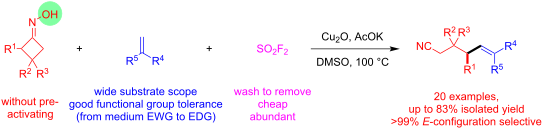
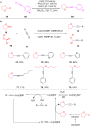
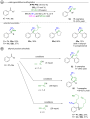
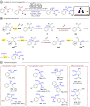
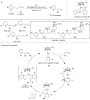
- Xian-Lin Chen Hua-Li Qin School of Chemistry, Chemical Engineering and Life Science, Wuhan University of Technology, 205 Luoshi Road, Wuhan, 430070, PR China 10.3762/bjoc.19.68 Abstract A SO2F2-mediated ring-opening cross-coupling of cyclobutanone oxime derivatives with alkenes was developed for
- the construction of a range of δ-olefin-containing aliphatic nitriles with (E)-configuration selectivity. This new method features wide substrate scope, mild conditions, and direct N–O activation. Keywords: direct N–O activation; E-selectivity; nitrile synthesis; ring-opening cross-coupling; sulfuryl
- of novel synthetic methods and strategies toward nitrile group construction continues to be a focus for synthetic chemists. The cross-coupling reactions of C–C bonds catalyzed by transition-metal complexes play a crucial role in modern organic synthesis, as they make it feasible to synthesize complex


Pyridine C(sp2)–H bond functionalization under transition-metal and rare earth metal catalysis
Beilstein J. Org. Chem. 2023, 19, 820–863, doi:10.3762/bjoc.19.62
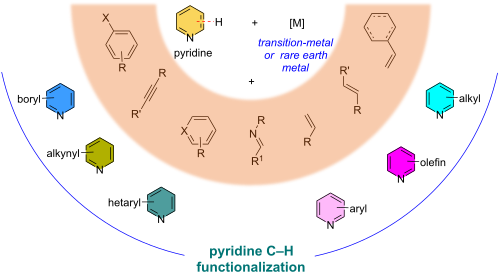
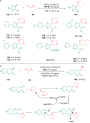
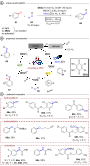
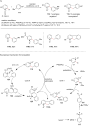
- on subsequent deprotonation gives the branched alkylated product 4. Whereas, in case of styrene 3 a 1,2-insertion takes place possibly due to the formation of the stable benzallylic species 8, which on deprotonation gives the linear alkylated product 5. The C–H activation/C–C cross-coupling reaction
- cross-coupling of pyridine N-oxides with nonactivated secondary (2°) alkyl bromides [51]. The cross-coupling is difficult to achieve as the Pd-catalyzed SN2 process is sensitive towards the steric bulk of the secondary or tertiary alkyl electrophiles. The optimized conditions for the ortho-alkylation of
- Heck cross-coupling [69][70]. However, researchers have developed various methods for the transition-metal-catalyzed C(sp2)–H olefination using various types of alkenes as coupling partners [71][72][73]. This part of the review covers reports for the alkenylation of pyridine with terminal alkynes
















Construction of hexabenzocoronene-based chiral nanographenes
Beilstein J. Org. Chem. 2023, 19, 736–751, doi:10.3762/bjoc.19.54
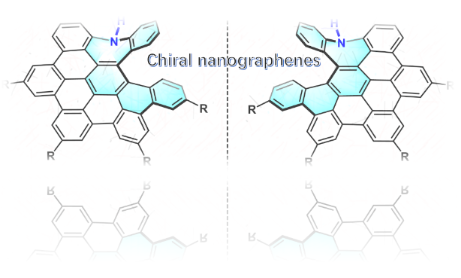
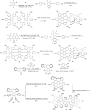
- ]azepine and tetrabromothiophene-S,S-dioxide, followed by oxidative aromatization in the presence DDQ to afford compound 25 in an overall 75% yield. Suzuki−Miyaura cross-coupling reaction of compound 25 with (4-ethylphenyl)boronic acid in the presence of Pd(CH3CN)2Cl2, SPhos, and K3PO4 then furnished the
- Sonogashira cross-coupling reaction of phenylacetylene 50 and 1,4-dibromotetrafluorobenzene. The resulting bis[aryl(ethynyl)]tetrafluorobenzene 59 was able to undergo a 2-fold [4 + 2] cycloaddition reaction with cyclopentadienone 2, affording polyaromatic 60 in a 70% yield. The final step was the Scholl
- benzo[b]naphtho[2,3-f]oxepine 66 with tetrabromothiophene-S,S-dioxide in toluene followed by oxidative aromatization in the presence of DDQ afforded tetrabrominated aromatics 67 in an 81% yield. Subsequently, fourfold Suzuki–Miyaura cross-coupling of polybrominated compound 67 was performed, affording




Synthesis of medium and large phostams, phostones, and phostines
Beilstein J. Org. Chem. 2023, 19, 687–699, doi:10.3762/bjoc.19.50
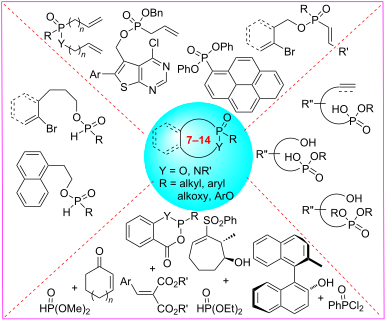
- ][17]. The Zn-catalyzed cross-coupling of dialkyl 2-bromo-1-methylethylphosphonates 68 and trimethylsilyl but-3-ynyl ether (69) generated dialkyl 5-hydroxy-1-methyl-3-methylenepentylphosphonates 70 in 66–73% yields under ultrasonic irradiation in THF at 45–50 °C for 45 min followed by treatment with




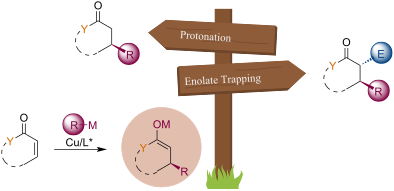
Enolates ambushed – asymmetric tandem conjugate addition and subsequent enolate trapping with conventional and less traditional electrophiles
Beilstein J. Org. Chem. 2023, 19, 593–634, doi:10.3762/bjoc.19.44
- , transformation to potassium trifluoroborate salt, hydrolysis, C–C cross-coupling, base-mediated elimination, radical C–B cleavage) [72]. Therefore, enantioenriched boronates are commonly applied intermediates in organometallic, medicinal, and other fields of chemistry. At the same time, some organoboronic acid
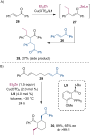
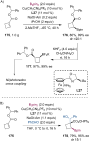
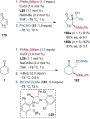
- highly beneficial scaffold which was successfully involved in diastereoselective Ni/photoredox dual-catalyzed cross-coupling reactions. Furthermore, rather than the stereoselective protonation, they have also demonstrated the successful trapping of the Cu enolate with benzaldehyde (Scheme 45B). This





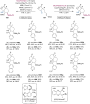


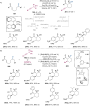


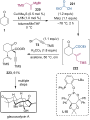
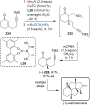
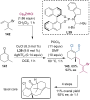
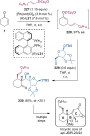
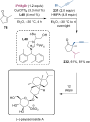
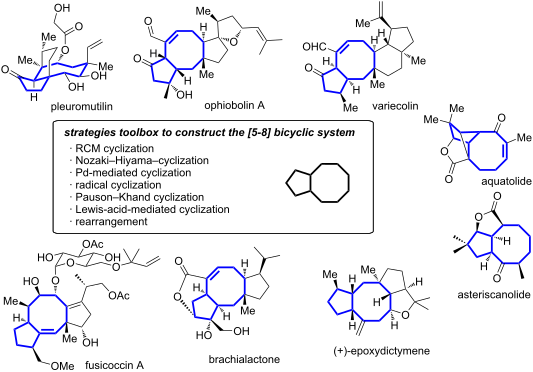
Strategies to access the [5-8] bicyclic core encountered in the sesquiterpene, diterpene and sesterterpene series
Beilstein J. Org. Chem. 2023, 19, 245–281, doi:10.3762/bjoc.19.23


Sequential hydrozirconation/Pd-catalyzed cross coupling of acyl chlorides towards conjugated (2E,4E)-dienones
Beilstein J. Org. Chem. 2023, 19, 176–185, doi:10.3762/bjoc.19.17
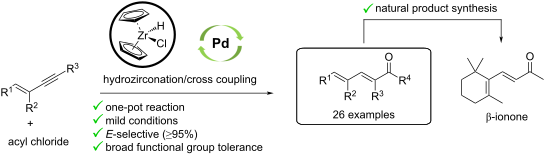
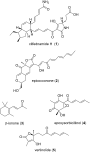
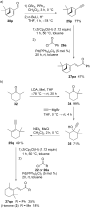
- analogues, whereas the variation of the acyl chlorides did not affect the reaction significantly. The synthetic application is demonstrated by formation of non-natural and natural dienone-containing terpenes such as β-ionone which was available in 4 steps and 6% overall yield. Keywords: cross coupling
- ethers 12 [19] and metal-catalyzed cross coupling of alkenes 13 and enones 14 [20][21] have been reported. However, these reactions face multiple disadvantages such as limited substrate scope, use of hazardous solvents and harsh reaction conditions such as high temperatures or acidic/basic conditions
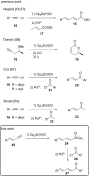
- ][33][34][35][36][37][38][39][40] as well as in several total syntheses of natural products [41][42][43][44][45][46]. Especially the combination of hydrozirconation and Pd or Ni-catalyzed cross coupling was elaborated by several groups (Scheme 3) [47][48][49][50][51][52][53][54]. Negishi extended



Total synthesis of insect sex pheromones: recent improvements based on iron-mediated cross-coupling chemistry
Beilstein J. Org. Chem. 2023, 19, 158–166, doi:10.3762/bjoc.19.15

- sustainable synthetic procedures involving cheap, non-toxic and efficient additives is also discussed, as well as the mechanistic features guiding the reactivity of such catalytic systems. Keywords: catalysis; cross-coupling; insect pheromones; iron; Introduction Public health issues related to
- ]) are linear syntheses involving a great number of steps and purifications as well as cryogenic temperatures. Moreover, the introduction of the C=C unsaturation is achieved via a Wittig reaction or a Pd-catalyzed Sonogashira cross-coupling followed by a reduction by a borane reagent, methods which lead
- to overall processes with a low atom economy, generating a significant amount of chemical waste, and which can be expensive when noble metals such as palladium salts are required (Scheme 1). The high efficiency of transition-metal-catalyzed cross-coupling methods in C–C bond formation processes


1,4-Dithianes: attractive C2-building blocks for the synthesis of complex molecular architectures
Beilstein J. Org. Chem. 2023, 19, 115–132, doi:10.3762/bjoc.19.12
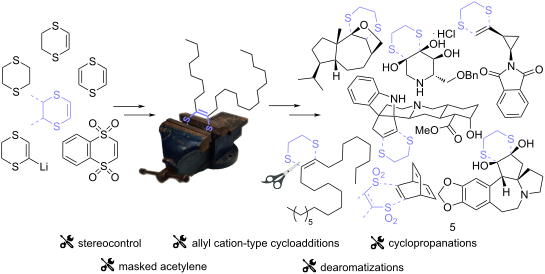
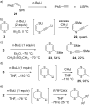
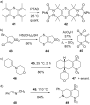
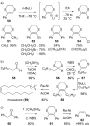
- °C and 0 °C, temperatures at which these organometallic reagents are also reported to be quite stable. The zincated dithiins can also be prepared by transmetalation of the magnesiated dithiins at −30 °C, and these organozinc reagents can then be used in room temperature Pd-catalyzed cross-coupling
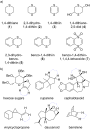
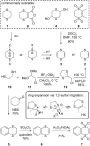
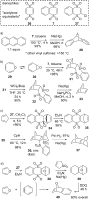
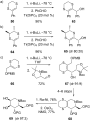
- , including cross-coupling-type chemistries on a conformationally stable cis-vinyl zinc building block. 3 Diels–Alder reactivity of 1,4-dithiin-based dienophiles and dienes Vinyl sulfones and vinyl sulfoxides are classical synthetic equivalents of ethylene in Diels–Alder reactions, and have been widely used











Practical synthesis of isocoumarins via Rh(III)-catalyzed C–H activation/annulation cascade
Beilstein J. Org. Chem. 2023, 19, 100–106, doi:10.3762/bjoc.19.10
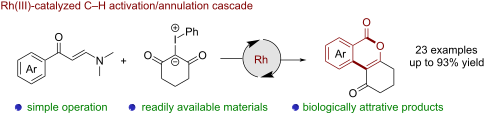
- for the synthesis of isocoumarin scaffolds. Traditional synthetic strategies including 1) intramolecular cyclization of 2-alkenyl benzoic acids or o‑alkynylbenzoates (Scheme 1b, I) [6][7][8][9][10], 2) oxidation of isochromans (Scheme 1b, II) [11][12], or 3) metal-catalyzed cross-coupling/cyclization
- approach towards isocoumarins [17][18]. Pioneering examples relying on the Pd, Ru, and Ir-catalyzed C–H cross coupling of benzoic acids with alkenes and alkynes were realized by the groups of Miura [19], Lee [20], Ackermann [21], Zhang [22], Jiang [23], and Jeganmohan [24] et al. Despite these impressive
- recently, the same group developed an efficient Rh(III)-catalyzed C–H cross-coupling of enaminones with diazodicarbonyls for the divergent construction of isocoumarins and naphthalenes [27]. Moreover, Loh et al. disclosed a Rh-catalyzed formal [4 + 2] cycloaddition of enaminones with diazocarbonyls [28


Organophosphorus chemistry: from model to application
Beilstein J. Org. Chem. 2023, 19, 89–90, doi:10.3762/bjoc.19.8
- ” topics of the discipline under discussion. Cross-coupling reactions are also of importance in organophosphorus chemistry. Taddei and co-workers applied an alternative method to the classical Hirao reaction [1]. They utilized the Ni-catalyzed double Michaelis–Arbuzov reaction of bis(bromoaryl) species and
Combining the best of both worlds: radical-based divergent total synthesis
Beilstein J. Org. Chem. 2023, 19, 1–26, doi:10.3762/bjoc.19.1
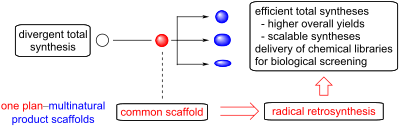
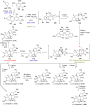
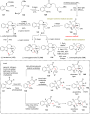
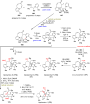
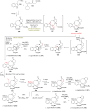
- chemoselective manner [3]. The development of persistent radicals [4] as synthons in chemical synthesis, coupled with the advancements in generating and manipulating transient radicals [5] as cross-coupling partners in an array of chemical reactions, gives access to a wide variety of “new” retrosynthetic
- reactions of transition metal hydrides (Fe, Co, Mn, etc) with alkenes (e.g., Mukaiyama hydration) [20]. The last decade saw the development of milder methods for generating carbon-centered radicals as the advancement of their reactivity in cross-coupling reactions, the concept of photoredox catalysis [21
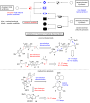
- nickel-mediated decarboxylative Giese reactions and decarboxylative radical zinc-mediated cross-coupling reactions of redox-active esters, established from previous works of the group [27][28], for the key C–C bonds of the diverse congeners. To this end, a hypothetical intermediate 3 was envisioned for











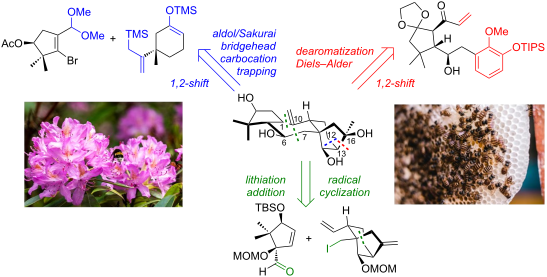
Total synthesis of grayanane natural products
Beilstein J. Org. Chem. 2022, 18, 1707–1719, doi:10.3762/bjoc.18.181
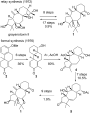
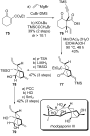
- -membered triflate 71 was synthesized from diketone 26 in 5 steps and 37% overall yield. Both fragments were assembled by a Sonogashira cross-coupling, affording 72 in 72% yield. In a first attempt, TBS protection was considered on the bicylo[3.2.1]octane. However, later in the strategy, the deprotection





Redox-active molecules as organocatalysts for selective oxidative transformations – an unperceived organocatalysis field
Beilstein J. Org. Chem. 2022, 18, 1672–1695, doi:10.3762/bjoc.18.179
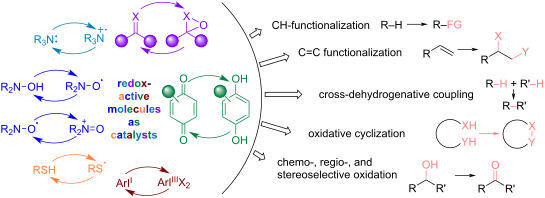
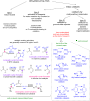
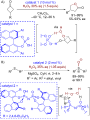
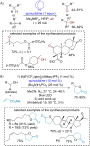
- introduction of an electron-withdrawing acetoxy group. The DABCO cation radical is less reactive compared to quinuclidine-derived cation radicals. It was involved in the Ni-catalyzed oxidative C–C cross-coupling involving aldehyde C–H bond cleavage with the formation of acyl radicals according to the proposed
- catalyzed by ABNO-type amine-N-oxyl radicals. Hydrogen atom transfer (HAT) and single-electron transfer (SET) as basic principles of amine cation radical oxidative organocatalysis. Electrochemical quinuclidine-catalyzed oxidation involving unactivated C–H bonds. DABCO-mediated photocatalytic C–C cross
- -coupling involving aldehyde C–H bond cleavage. DABCO-derived cationic catalysts in inactivated C–H bond cleavage for alkyl radical addition to electron-deficient alkenes under photoredox catalysis conditions. Electrochemical diamination and dioxygenation of vinylarenes catalyzed by triarylamines











Synthetic study toward the diterpenoid aberrarone
Beilstein J. Org. Chem. 2022, 18, 1625–1628, doi:10.3762/bjoc.18.173
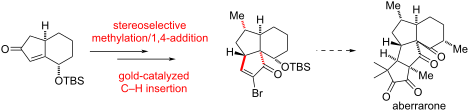
- was further confirmed through X-ray crystallographic analysis. With the key intermediate 10 in hand, we were in a position to test the planned two-step transformation including the palladium-catalyzed reductive cross coupling with HCO2H followed by Pd/C-catalyzed hydrogenation. To our surprise, the
- –Martin oxidation. At this stage, the pivotal C–H insertion step was tried under the reported conditions [34], and cyclopentenone 8 was successfully obtained. Further study with cross coupling or halogen–magnesium exchange shows this moiety is inert for functional group transformation. The attempt for


A new route for the synthesis of 1-deazaguanine and 1-deazahypoxanthine
Beilstein J. Org. Chem. 2022, 18, 1617–1624, doi:10.3762/bjoc.18.172
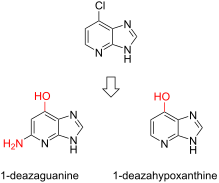
- the cross coupling reaction. We also mention that we did not decide for a direct transformation [27][28] of 6-iodo-1-deazapurine into 6-hydroxy-1-deazapurine for reasons of solubility and desired regioselectivity of the subsequent nitration reaction. 1-Deazahypoxanthine Synthesis of 1


Simple synthesis of multi-halogenated alkenes from 2-bromo-2-chloro-1,1,1-trifluoroethane (halothane)
Beilstein J. Org. Chem. 2022, 18, 1567–1574, doi:10.3762/bjoc.18.167
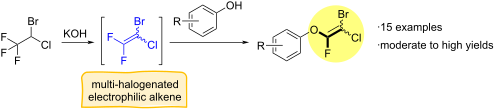
- difluoroalkyl ethers (1), along with small amounts of fluoroalkenyl ethers (2), which were obtained from 1 via an E2-elimination mechanism (Scheme 1B) [14][15]. The fluoroalkenyl group in 2 is a potentially useful moiety that could participate in cross-coupling reactions for replacement of the bromine atom with
- HF from 1 provides 2 as an E/Z mixuture (E/Z = 1:1). We speculated that the stability of the E isomer was equal to that of the Z isomer under these conditions. To expand the scope of this reaction, we subjected product 2 to a Sonogashira cross-coupling reaction (Scheme 3). This gave a highly
- functionalized enyne structure that will be useful in various molecular transformations [27][28][29]. On the basis of a previous report, Sonogashira cross-coupling of 2 with trimethylsilylacetylene was performed with a bis(triphenylphosphine)palladium(II) dichloride. The reaction proceeded smoothly to give


An alternative C–P cross-coupling route for the synthesis of novel V-shaped aryldiphosphonic acids
Beilstein J. Org. Chem. 2022, 18, 1518–1523, doi:10.3762/bjoc.18.160
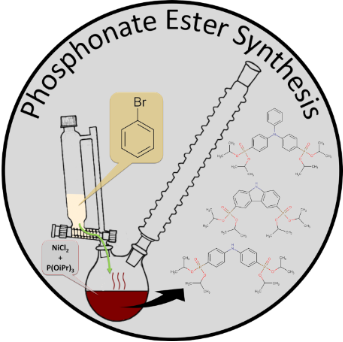
- order of addition of reactants to perform the transition-metal-catalyzed C–P cross-coupling reaction, often referred to as the Tavs reaction, employing NiCl2 as a pre-catalyst in the phosphonylation of aryl bromide substrates using triisopropyl phosphite. This new method was employed in the synthesis of
- three novel aryl diphosphonate esters which were subsequently transformed to phosphonic acids through silylation and hydrolysis. Keywords: arylphosphonic acids; cross-coupling reaction; phosphonate esters; transition-metal catalysis; Introduction Phosphonates and phosphonic acids are a very
- ][25][26]. These catalytic cross-coupling reactions tend to follow similar pathways to the Michaelis–Arbuzov reaction, with the inclusion of a catalytic intermediate step. A number of suitable catalysts have been identified, ranging from nickel(II) bromide and nickel(II) chloride, to palladium(II



Microelectrode arrays, electrosynthesis, and the optimization of signaling on an inert, stable surface
Beilstein J. Org. Chem. 2022, 18, 1488–1498, doi:10.3762/bjoc.18.156
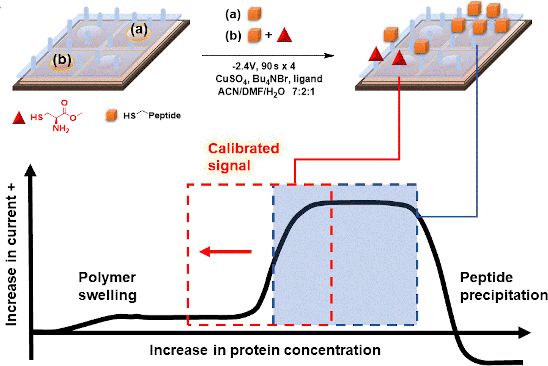
- peptide so that the thiol group in the sidechain could be used to place the molecule the array with the use of an electrochemically initiated Cu(I)-catalyzed cross-coupling reaction (Scheme 1) [9]. To this end, the Cu(I) catalyst needed for the reaction was generated at the electrodes by the reduction of
- for the confinement strategy to keep up. The result is a loss in confinement. It is important to point out that the reaction shown in Scheme 1 is not a typical electrosynthetic reaction. The cross-coupling reaction shown is a Cu(I)-catalyzed transformation that requires no recycling of a reagent
- 12 electrodes each functionalized with pyrene-butanol at various places on the array. For the placement reaction, the Cu(I)-catalyzed cross-coupling reaction used above (Scheme 1) was employed for 4 cycles (90 s on and 180 s off). The chemistry placed enough of the alcohol by the electrodes for the


One-pot synthesis of 2-arylated and 2-alkylated benzoxazoles and benzimidazoles based on triphenylbismuth dichloride-promoted desulfurization of thioamides
Beilstein J. Org. Chem. 2022, 18, 1479–1487, doi:10.3762/bjoc.18.155

- cyclopropanes with arenes [29]. They have also been used in Pd-catalyzed cross-coupling reactions to react with hypervalent iodonium salts, organostananes, and vinyl epoxides [30][31][32]. Moreover, there are reports of them serving as oxidizing agents for alcohols [33]. Two papers have recently reported


Design, synthesis, and evaluation of chiral thiophosphorus acids as organocatalysts
Beilstein J. Org. Chem. 2022, 18, 1471–1478, doi:10.3762/bjoc.18.154
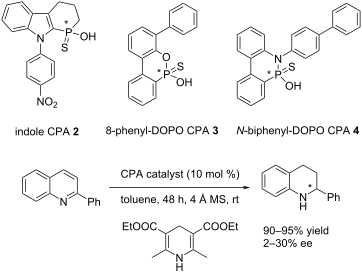
- cross-coupling [34] in excellent yield. Esterification of 6 with monomethyl H-phosphonate tert-butylamine salt [35] resulted in the mixed H-phosphonate ester 7 in excellent yield. Cyclization using our homolytic aromatic substitution methodology [36] gave P-heterocycle 8 in modest yield. Other methods
- cross-coupling, and 2) immobilization on a solid support via reduction and reaction of the aniline with an electrophile such as polystyrene isocyanate. DOPO scaffold We previously reported the syntheses of both enantiomers of 8-phenyl DOPO 3 [38]. The syntheses proceed in only three steps (including the


Synthesis and electrochemical properties of 3,4,5-tris(chlorophenyl)-1,2-diphosphaferrocenes
Beilstein J. Org. Chem. 2022, 18, 1338–1345, doi:10.3762/bjoc.18.139
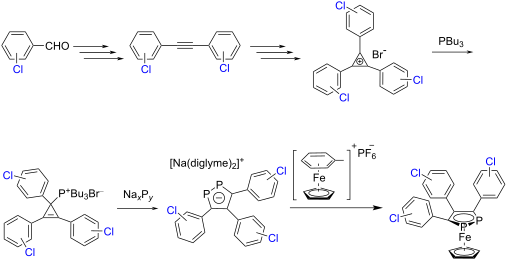
- transition metal-catalyzed cross-coupling reactions broadly used for the preparation of different diarylacetylenes and, rarely, bis(chlorophenyl)acetylenes. Next, starting substituted benzaldehydes were treated with an excess of SOCl2 for 24 h at 25 °C. Corresponding substituted benzal chlorides 4 were