


Search results
Search for "substitution reactions" in Full Text gives 146 result(s) in Beilstein Journal of Organic Chemistry.
Relay cross metathesis reactions of vinylphosphonates
Beilstein J. Org. Chem. 2014, 10, 1933–1941, doi:10.3762/bjoc.10.201
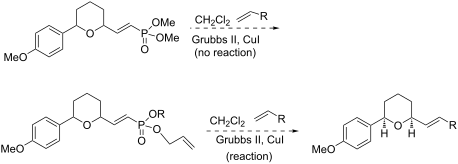
- complete chirality transfer. Various carbon, nitrogen, and oxygen nucleophiles participate in the palladium-catalyzed substitution reactions of phosphono allylic carbonates 1. Vinylphosphonates formed in this way, for example 2a–e (Figure 1), have been used in the synthesis of the natural products


Chemistry of polyhalogenated nitrobutadienes, 14: Efficient synthesis of functionalized (Z)-2-allylidenethiazolidin-4-ones
Beilstein J. Org. Chem. 2014, 10, 1638–1644, doi:10.3762/bjoc.10.170

- ). Formation of thiazolidin-4-ones 7–19. Assumed mechanism for the formation of thiazolidin-4-ones 7–18. Substitution reactions of the precursors 3 and 5 with additional amines. Synthesis of 5-arylmethylidenethiazolidin-4-ones 22–26 and 1H-pyrazoles 27, 28. Assumed mechanism for the formation of 1H-pyrazole 27


Magnesium bis(monoperoxyphthalate) hexahydrate as mild and efficient oxidant for the synthesis of selenones
Beilstein J. Org. Chem. 2014, 10, 1267–1271, doi:10.3762/bjoc.10.127

- they are versatile reagents or intermediates in organic synthesis [1]. Particularly, alkyl phenyl selenones [2][3] represent a valuable compound class due to the ability of the phenylselenonyl group to behave as a good leaving group in substitution reactions (Scheme 1). Thus, the development of
- different alkyl phenyl selenides to the corresponding selenones. Since the phenylselenonyl group is an excellent leaving group, selenone 2 readily undergoes SN2 type substitution reactions with common nucleophiles [7][8] as shown in Scheme 2. A wide range of heterocyclic compounds can be obtained by
- intramolecular nucleophilic substitution reactions e.g. epoxides from β-hydroxy phenyl selenides [9][10], N-benzoyl- and N-tosyl-1,3-oxazolidin-2-ones from β-hydroxyalkyl phenyl selenides [11], N-arenesulfonylazetidines from γ-(phenylseleno)alkyl arylsulfonamides [12], N-acylaziridines [13], 1,3-oxazolines


Synthesis of 1-[bis(trifluoromethyl)phosphine]-1’-oxazolinylferrocene ligands and their application in regio- and enantioselective Pd-catalyzed allylic alkylation of monosubstituted allyl substrates
Beilstein J. Org. Chem. 2014, 10, 1261–1266, doi:10.3762/bjoc.10.126
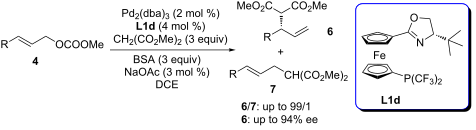
- . Preliminary explanation of the regioselectivity. Transition metal-catalyzed allylic substitution reactions with monosubstituted allyl substrates. Preparation of 1-[bis(trifluoromethyl)phosphine]-1’-oxazolinylferrocene ligands. Reagents and conditions: (a) (i) n-BuLi, TMEDA, Et2O, rt; (ii) (BrCF2)2, −78 °C. (b


Syntheses of fluorooxindole and 2-fluoro-2-arylacetic acid derivatives from diethyl 2-fluoromalonate ester
Beilstein J. Org. Chem. 2014, 10, 1213–1219, doi:10.3762/bjoc.10.119
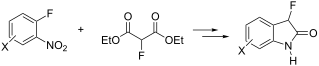
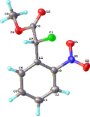
- ester is utilised as a building block for the synthesis of 2-fluoro-2-arylacetic acid and fluorooxindole derivatives by a strategy involving nucleophilic aromatic substitution reactions with ortho-fluoronitrobenzene substrates followed by decarboxylation, esterification and reductive cyclisation
- elemental fluorine for the key construction of the carbon–fluorine bond by complementary direct selective direct fluorination [41][42][43][44], continuous flow [45][46][47][48][49] and building block [50] strategies, in this paper, we describe nucleophilic aromatic substitution reactions of carbanions





Preparation of phosphines through C–P bond formation
Beilstein J. Org. Chem. 2014, 10, 1064–1096, doi:10.3762/bjoc.10.106
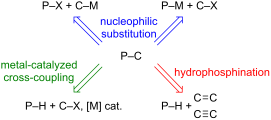
- ; enantioselectivity; hydrophosphination; organophosphorus chemistry; phosphines; phosphine-boranes; substitution reactions; trivalent phosphorus; Introduction Phosphines are an important class of organophosphorus compounds. They are often used as ligands in metal complex catalysis and they have become a popular
- C–C bond is more efficient than substitution reactions when considering atom efficiency, what makes it not only greener but also more economical. Other phosphination reactions of unsaturated bonds, such as diphosphination, thiophosphination or selenophosphination, were not included [67]. Depending


On the mechanism of photocatalytic reactions with eosin Y
Beilstein J. Org. Chem. 2014, 10, 981–989, doi:10.3762/bjoc.10.97
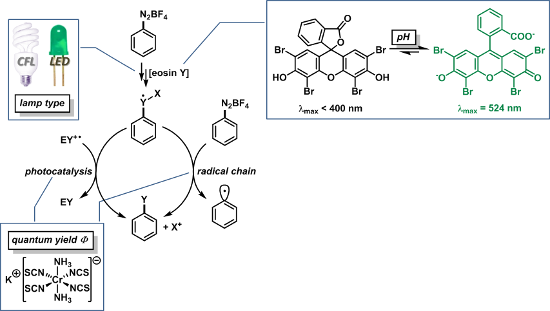
- different mechanisms in these aromatic substitution reactions with arene diazonium salts. The redox potentials of most substituted arene diazonium salts cluster with very little deviation around 0.0 V vs. SCE (±0.2 V) [23][24] so that the observed differences in Φ can be largely attributed to different
- erosion of Φ. Conclusion In summary, we have investigated the impact of several reaction parameters on the outcome and mechanism of photocatalytic aromatic substitution reactions of arenediazonium salts in the presence of eosin Y. However, the significance of these data certainly extends to other light


One-pot three-component synthesis and photophysical characteristics of novel triene merocyanines
Beilstein J. Org. Chem. 2014, 10, 599–612, doi:10.3762/bjoc.10.51
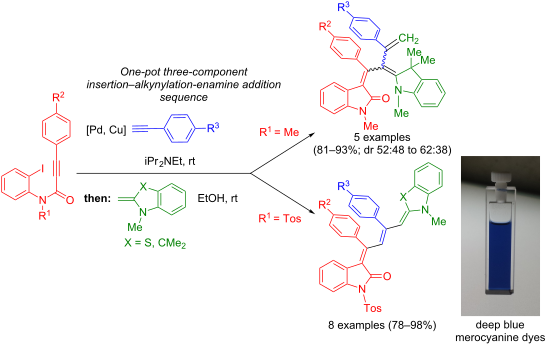
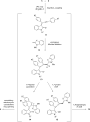
- been accessed by Knoevenagel condensations [12][13][14] or substitution reactions [15][16][17][18]. Still the quest for new synthetic strategies, novel substitution patterns, and eventually unusual properties and effects has become an ongoing challenge for organic synthesis, physical organic chemistry




Direct and indirect single electron transfer (SET)-photochemical approaches for the preparation of novel phthalimide and naphthalimide-based lariat-type crown ethers
Beilstein J. Org. Chem. 2014, 10, 514–527, doi:10.3762/bjoc.10.47

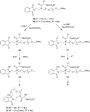
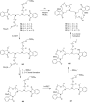
- lariat-type crown ethers employs sequences in which SET-promoted macrocyclization reactions of α-trialkylsilyl-terminated, polyethoxy-tethered phthalimides and naphthalimides are followed by a side chain introduction through substitution reactions at the amidol centers in the macrocyclic ethers. The
- macrocyclization reactions of the α-trialkylsilyl-terminated, polyethoxy-tethered phthalimides and naphthalimides are followed by a side chain introduction through substitution reactions at the amidol centers in the macrocyclic ethers (Scheme 6). Direct approaches for the preparation of imide-derived lariat-type




Diversity-oriented synthesis of dihydrobenzoxazepinones by coupling the Ugi multicomponent reaction with a Mitsunobu cyclization
Beilstein J. Org. Chem. 2014, 10, 209–212, doi:10.3762/bjoc.10.16

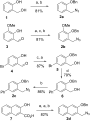
- heterocycles [1]. This is usually accomplished by introducing additional orthogonal functional groups in the starting components, taking advantage of the high tolerance of the U-4CR. In particular our group has been quite active in the last seven years in coupling the U-4CR with acyl or aliphatic substitution
- reactions [2], especially the intramolecular Mitsunobu reaction of alcohols with phenols or sulfonamides. By exploiting a single post-MCR transformation (the Mitsunobu reaction) it is possible to obtain several diverse heterocyclic scaffolds by installing the two additional groups in any of the four


Silica: An efficient catalyst for one-pot regioselective synthesis of dithioethers
Beilstein J. Org. Chem. 2014, 10, 26–33, doi:10.3762/bjoc.10.5
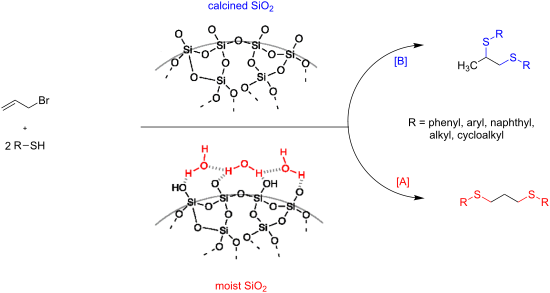
- products. Thus, moistened silica gel turns out to be effective for sequential substitution reactions, and entirely anti-Markovnikov addition, while pre-calcined dry silica gel could efficiently give rise to only Markovnikov addition products. The reactions over dry silica gel appear to be faster than the


Flow microreactor synthesis in organo-fluorine chemistry
Beilstein J. Org. Chem. 2013, 9, 2793–2802, doi:10.3762/bjoc.9.314
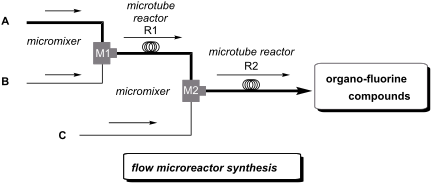
- by nucleophilic substitution reactions using [18F]-fluoride ion (Scheme 7) [55][56][57][58][59][60][61][62][63][64][65][66][67]. For not only fluorination/fluoroalkylation, but also for defluorination, flow microreactor synthesis is quite effective. Defluorination involving a nucleophilic addition


Triol-promoted activation of C–F bonds: Amination of benzylic fluorides under highly concentrated conditions mediated by 1,1,1-tris(hydroxymethyl)propane
Beilstein J. Org. Chem. 2013, 9, 2451–2456, doi:10.3762/bjoc.9.283
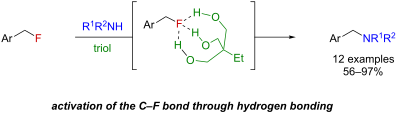
- fluoride as a leaving group in nucleophilic substitution reactions of activated alkyl fluorides through hydrogen bonding [17]. Particularly, water was used as the hydrogen bond donor and co-solvent. DFT calculations show that activation proceeds through stabilization of the transition-state structure by


An overview of the synthetic routes to the best selling drugs containing 6-membered heterocycles
Beilstein J. Org. Chem. 2013, 9, 2265–2319, doi:10.3762/bjoc.9.265
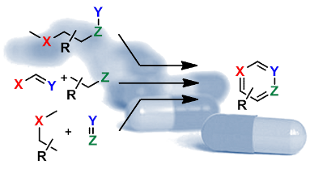
- pyrimidines form very tight hydrogen-bonding arrays as seen in DNA and RNA. Synthetically, the electron-poor nature of pyrimidines accounts for the manifold functionalisation pathways using nucleophilic aromatic substitution chemistry. Electrophilic aromatic substitution reactions are more common during the


Gold(I)-catalyzed hydroarylation reaction of aryl (3-iodoprop-2-yn-1-yl) ethers: synthesis of 3-iodo-2H-chromene derivatives
Beilstein J. Org. Chem. 2013, 9, 2120–2128, doi:10.3762/bjoc.9.249
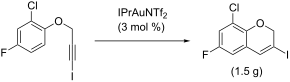
- pattern is not the one commonly associated with conventional electrophilic aromatic substitution reactions, other mechanism should not be disregarded on the basis of the structure of the final product. So, the alternative mechanistic description summarized in Scheme 4B cannot be firmly rejected, at the

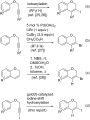


Enantioselective synthesis of planar chiral ferrocenes via palladium-catalyzed annulation with diarylethynes
Beilstein J. Org. Chem. 2013, 9, 1891–1896, doi:10.3762/bjoc.9.222

- ). The allylic substitution reactions of (rac)-4 had been carried out. The allylic alkylation reaction proceeded in 95% yield and 44% ee (Scheme 3, reaction 1) and the allylic amination reaction proceeded in 32% yield and 43% ee (Scheme 3, reaction 2) [69][70][71]. Although only moderate
- could be transformed readily into a P,N-ligand, which was found to be suitable for Pd-catalyzed allylic substitution reactions. Experimental General procedure for the enantioselective synthesis of planar chiral ferrocenes To a solution of alkyne 2 (0.46 mmol) in DMA (1.5 mL) was added Boc-L-Val-OH (8.7


The first example of the Fischer–Hepp type rearrangement in pyrimidines
Beilstein J. Org. Chem. 2013, 9, 1819–1825, doi:10.3762/bjoc.9.212

- , nucleophilic aromatic substitution reactions of halopyrimidines are smooth and high-yielding, especially when an electron-withdrawing group is present in this heterocycle. It is noteworthy that in the case of non-activated dihalopyrimidines, the first nucleophilic displacement reaction deactivates the
- triethylamine at room temperature, a smooth completion of the nucleophilic substitution reactions was observed by TLC. Then the solutions were diluted with 50% (v/v) sulfuric acid, and the resultant yellow colored mixtures were stirred at room temperature for 15 min. After the work-up of the reaction mixtures
- ]+ calcd for C16H21N5NaOS, 354.1359; found, 354.1365. General behavior of electrophilic and nucleophilic substitution reactions of pyrimidines. Our previous results. Reagents and conditions: i: NaNO2 (1.2 equiv), AcOH, rt; 1a,2a: R = H; R1 = Me; 1b,2b: R = H; R1 = Bn; 1c,2c: R = H; R1 = Bu; 1d,2d: R = Me


Computational study of the rate constants and free energies of intramolecular radical addition to substituted anilines
Beilstein J. Org. Chem. 2013, 9, 1620–1629, doi:10.3762/bjoc.9.185

- intermolecular or intramolecular manner have been employed in some transformations that are highly useful. Prominent examples are the Minisci reaction [11][12][13][14][15] for the preparation of mainly nitrogen heterocycles and Zard’s homolytic substitution reactions at nitrogen heterocycles with xanthates as


Homolytic substitution at phosphorus for C–P bond formation in organic synthesis
Beilstein J. Org. Chem. 2013, 9, 1269–1277, doi:10.3762/bjoc.9.143

- substitution reactions of organic halides and related compounds with phosphination agents have now been rapidly developing since 2006. Yorimitsu and Oshima invented radical phosphination of organic halides with tetraphenyldiphosphine (Table 6) [43]. Tetraphenyldiphosphine is generated in situ by radical


Titanium-mediated reductive cross-coupling reactions of imines with terminal alkynes: An efficient route for the synthesis of stereodefined allylic amines
Beilstein J. Org. Chem. 2013, 9, 621–627, doi:10.3762/bjoc.9.69

- substitution reactions [8][9], radical reactions [10] and Pd-catalyzed reactions [11]. Thus, allylic amines have been used for the synthesis of numerous heterocycles and bioactive amines, such as α- and β-amino acids [12][13][14][15], different alkaloids [16], aminoallylsilanes [17], aminoepoxides [18


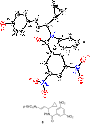

Kinetics and mechanism of the anilinolysis of aryl phenyl isothiocyanophosphates in acetonitrile
Beilstein J. Org. Chem. 2013, 9, 615–620, doi:10.3762/bjoc.9.68
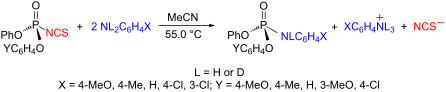
- . Keywords: anilinolysis; cross-interaction constant; deuterium kinetic isotope effects; phosphoryl transfer reaction; reactive intermediates; Y-aryl phenyl isothiocyanophosphates; Introduction The nucleophilic substitution reactions of tetracoordinate phosphorus have been studied extensively


Efficient Cu-catalyzed base-free C–S coupling under conventional and microwave heating. A simple access to S-heterocycles and sulfides
Beilstein J. Org. Chem. 2013, 9, 467–475, doi:10.3762/bjoc.9.50

- substitution reactions with methyl iodide and benzyl bromide, methyl phenyl sulfide and benzyl methyl sulfide in 81% and 66% yields, respectively, and 4-anisyl phenyl sulfide (4-AnSPh) in 85% yield (quantified by 1H NMR) by a second copper-catalyzed reaction (Scheme 8). Conclusion We have developed a simple


Polymerization of novel methacrylated anthraquinone dyes
Beilstein J. Org. Chem. 2013, 9, 453–459, doi:10.3762/bjoc.9.48

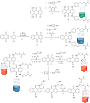
- anthraquinone dyes has been synthesized by nucleophilic aromatic substitution reactions and subsequent methacrylation. Thereby, green 5,8-bis(4-(2-methacryloxyethyl)phenylamino)-1,4-dihydroxyanthraquinone (2), blue 1,4-bis(4-((2-methacryloxyethyl)oxy)phenylamino)anthraquinone (6) and red 1-((2-methacryloxy-1,1
- materials used for iris implants or other medical applications. Conclusion In conclusion, a series of novel anthraquinone based polymerizable dyes has been synthesized by nucleophilic aromatic substitution reactions of anthraquinone derivatives with several amino alcohols. Depending on the moieties that



Radical zinc-atom-transfer-based carbozincation of haloalkynes with dialkylzincs
Beilstein J. Org. Chem. 2013, 9, 236–245, doi:10.3762/bjoc.9.28
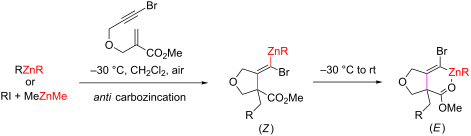
- organometallic nucleophiles and undergo intramolecular nucleophilic substitution reactions [47][48][49][50][51]. Experimental Experiments involving organometallic compounds were carried out in dried glassware under a positive pressure of dry Ar. All solvents were distilled to remove stabilizers and dried with a


Chemistry of polyhalogenated nitrobutadienes, 10: Synthesis of highly functionalized heterocycles with a rigid 6-amino-3-azabicyclo[3.1.0]hexane moiety
Beilstein J. Org. Chem. 2012, 8, 621–628, doi:10.3762/bjoc.8.69

- Göttingen, Germany 10.3762/bjoc.8.69 Abstract The nitropolychlorobutadienes 3, 4 are valuable building blocks for various amination and successive heterocyclization products. Nucleophilic substitution reactions of the partially protected, bioactive amines 1, 2 with either vinyl, imidoyl or carbonyl
- nucleophilic substitution reactions as described above, it was of interest to incorporate a persubstituted diene unit as in 3 and 4 into a heterocycle. For example, the isothiazole 17 was obtained from the nitrodiene 3 upon treatment with elemental sulfur at 200 °C [23]. Subsequent reaction with fuming nitric





