


Search results
Search for "aldol reaction" in Full Text gives 138 result(s) in Beilstein Journal of Organic Chemistry.
Synthetic approaches to multifunctional indenes
Beilstein J. Org. Chem. 2011, 7, 1739–1744, doi:10.3762/bjoc.7.204
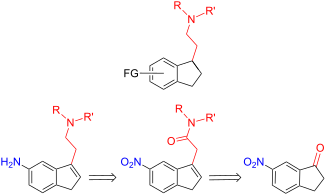
- immediately by dehydration with acid. This classical condensation process, which is neither simple nor trivial despite its apparent directness, permits an efficient entry to a variety of indene-based molecular modules, which could be adapted to a range of functionalized indanones. Keywords: aldol reaction


Oxidative allylic rearrangement of cycloalkenols: Formal total synthesis of enantiomerically pure trisporic acid B
Beilstein J. Org. Chem. 2011, 7, 421–425, doi:10.3762/bjoc.7.54
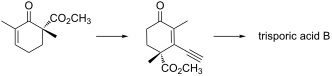
- -oxocyclohex-3-ene-1-carboxylate ((−)-1c, Scheme 1) [21][22]. Results and Discussion Precursor for the synthesis of racemic cyclohexenone (±)-1c is methyl 2-methyl-3-oxopentanoate (5), which upon addition of acrolein undergoes a tandem Michael/aldol-reaction sequence (Scheme 2) [11]. To obtain optically pure β


Photocycloaddition of aromatic and aliphatic aldehydes to isoxazoles: Cycloaddition reactivity and stability studies
Beilstein J. Org. Chem. 2011, 7, 127–134, doi:10.3762/bjoc.7.18
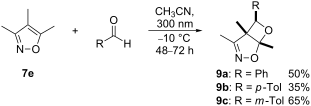
- -1,4-diketones after hydrolysis of the primary photochemical products (photo aldol reaction) [7], whilst the reaction of oxazoles with carbonyl compounds is a convenient protocol for the stereoselective synthesis of α-amino β-hydroxy ketones [8][9] as well as highly substituted α-amino β-hydroxy acids



Stereoselective synthesis of four possible isomers of streptopyrrolidine
Beilstein J. Org. Chem. 2011, 7, 34–39, doi:10.3762/bjoc.7.6

- % yield over six steps starting from D-phenylalanine and L-phenylalanine, respectively. The absolute configuration of the natural product was shown to be (4S,5S) by comparing its spectral and analytical data with the reported values. Keywords: aldol reaction; angiogenesis; cancer; Lewis acid mediated
- could be utilized for the aldol reaction in the presence of different Lewis acids to obtain a better selectivity particularly for (R)-tert-butyl (1-oxo-3-phenylpropan-2-yl)carbamate (6). To our surprise, when the reaction was carried out with the ketene silyl acetate at −78 °C, of the five Lewis acids


The allylic chalcogen effect in olefin metathesis
Beilstein J. Org. Chem. 2010, 6, 1219–1228, doi:10.3762/bjoc.6.140
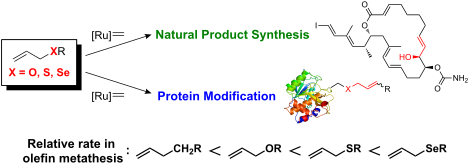
- previously optimized by our group, compound 25 was efficiently functionalized with an allyl sulfide derived fluorescent probe 26 via CM in aqueous media to demonstrate the utility of functionalization of peptides and proteins by the Mukaiyama aldol reaction (Scheme 10). Allyl selenides are superior


The C–F bond as a conformational tool in organic and biological chemistry
Beilstein J. Org. Chem. 2010, 6, No. 38, doi:10.3762/bjoc.6.38
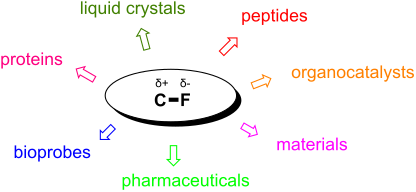
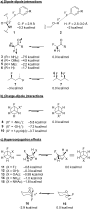
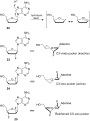
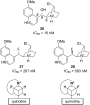
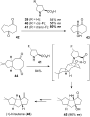
- enantioselectivity suggesting that the fluorine atom of 35 helps to rigidify the activated intermediate and thereby enhances selectivity. Another fluorinated organocatalyst has recently featured in the first example of an asymmetric transannular aldol reaction (Figure 10) [35]. (S)-proline (39) is able to catalyse
- , Figure 10), with the key transannular aldol reaction (44→45) proceeding in high yield and with impressive enantioselectivity [35]. Fluorine-substituted organocatalysts are also useful in the asymmetric Stetter reaction (Figure 11) [36]. N-Heterocyclic carbene 49 was identified as a promising first
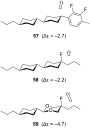
- . The asymmetric transannular aldol reaction catalysed by trans-4-fluoroproline (41), and its application to the total synthesis of (+)-hirsutene (46). The asymmetric Stetter reaction catalysed by chiral NHC catalysts 49–52. The ring conformations of 50–52 are influenced by σCH→σ*CF hyperconjugation. Cy









Can we measure catalyst efficiency in asymmetric chemical reactions? A theoretical approach
Beilstein J. Org. Chem. 2009, 5, No. 67, doi:10.3762/bjoc.5.67

- anecdotally refer to a “good“ or “bad“ reaction, there is no system for comparing those reactions with each other. Well-known examples of asymmetric catalysis such as the Sharpless asymmetric dihydroxylation, the Corey oxazaborolidine ketone reduction or the proline-catalysed aldol reaction are almost
- asymmetric hydrogenation, which gives a product of 79% ee, is employed in the industrial multi-tonne synthesis of (S)-metolachlor [3]. An instructive comparison may be made between an antibody capable of catalysing an intramolecular, asymmetric aldol reaction and proline, capable of catalysing the same


Asymmetric reactions in continuous flow
Beilstein J. Org. Chem. 2009, 5, No. 19, doi:10.3762/bjoc.5.19
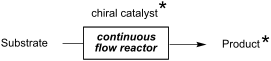
- in the near future. Enantioselective addition of trimethylsilyl cyanide to benzaldehyde. Asymmetric catalytic hydrogenation in a falling-film microreactor. Aldol reaction catalyzed by 5-(pyrrolidine-2-yl)tetrazole. Enantioselective addition of diethylzinc to aryl aldehydes. Glyoxylate-ene reaction in


Synthesis of new Cα-tetrasubstituted α-amino acids
Beilstein J. Org. Chem. 2009, 5, No. 5, doi:10.3762/bjoc.5.5

- prepared from aliphatic aldehydes. Results and Discussion The major difference between the previously used aromatic aldehydes and their aliphatic counterparts is their ability to undergo an aldol reaction under the strongly basic conditions necessary for the formation of the tetrahydrofuran ring system


Stereoselective synthesis of (2S,3S,4Z)-4-fluoro- 1,3-dihydroxy- 2-(octadecanoylamino)octadec- 4-ene, [(Z)-4-fluoroceramide], and its phase behavior at the air/water interface
Beilstein J. Org. Chem. 2008, 4, No. 12, doi:10.3762/bjoc.4.12

- fatty acid amide functions. Results In a short synthetic route (2S,3S)-4-fluorosphingosine and 4-fluoroceramide, the fluorinated analogues of the natural products, D-erythro-sphingosine and ceramide, have been prepared. The key step of the synthetic sequence is an asymmetric aldol reaction of (Z)-2
- formation of multi-layers was observed for natural ceramide. Conclusions Asymmetric aldol reaction proved to be successful for the preparation of enantiopure 4-fluoroceramide. Surface/pressure isotherms and hysteresis curves of ceramide and its 4-fluoro derivative showed that the presence of fluorine leads
- recently for the preparation of long chain α-fluoro-α,β-unsaturated carboxylic acid esters [29] and fluorinated 2,4-dienecarboxylic acid esters [30]. The key step of the synthesis is an asymmetric aldol reaction of the fluorinated aldehyde 3 with the enantiopure iminoglycinate 4 (Scheme 1). The latter


Vinylogous Mukaiyama aldol reactions with 4-oxy-2-trimethylsilyloxypyrroles: relevance to castanospermine synthesis
Beilstein J. Org. Chem. 2007, 3, No. 38, doi:10.1186/1860-5397-3-38

- Roger Hunter Sophie C. M. Rees-Jones Hong Su Department of Chemistry, University of Cape Town, Private Bag, Rondebosch, Cape Town 7701, South Africa 10.1186/1860-5397-3-38 Abstract Background The diastereoselectivity of a vinylogous Mukaiyama aldol reaction of a series of N-substituted 4-oxy-2
- castanospermine synthesis using a Mukaiyama aldol reaction as a key step. Thus it was decided to investigate the influence of changing both the O-protecting group as well as substituting the 4-oxy substituent with hydrogen. Deprotection of a methyl ether to its hydroxyl group requires aggressive conditions that
- have utilized a convergent stategy via a C-8/C-8a disconnection (Figure 3). Thus, Gallagher,[25] Martin [26][27] and Casiraghi [4] have all attempted syntheses involving either a carbanion at C-8a or a Lewis-acid promoted aldol reaction as in Scheme 1 to form the C-8/C-8a bond. All the syntheses have


Tether- directed synthesis of highly substituted oxasilacycles via an intramolecular allylation employing allylsilanes
Beilstein J. Org. Chem. 2007, 3, No. 6, doi:10.1186/1860-5397-3-6
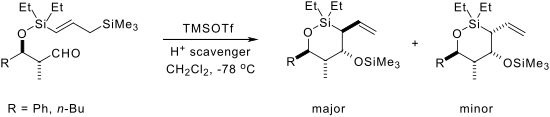
- -NMR spectroscopy) by a method described by Heathcock et al. (Scheme 5). [18] We were concerned, however, that the steric bulk of the aryl ester in 5b, which is required to impart the complete anti selectivity on the aldol reaction, would make unmasking of the aldehyde difficult owing to unfavourable


One-pot synthesis of novel 1H-pyrimido[4,5-c][1,2]diazepines and pyrazolo[3,4-d]pyrimidines
Beilstein J. Org. Chem. 2006, 2, No. 5, doi:10.1186/1860-5397-2-5

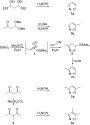
- hot acid produces pyrazolo [3,4-d]pyrimidines, most likely by hydrolytic ring opening at the 'hydrazone' bond followed by a retro-aldol reaction and ring closure.[25][33][34] In contrast, we synthesised the corresponding pyrazolo [3,4-d]pyrimidines in high yields under mild conditions without heating





