Search results
Search for "bifunctional" in Full Text gives 250 result(s) in Beilstein Journal of Organic Chemistry. Showing first 200.
Investigations towards the stereoselective organocatalyzed Michael addition of dimethyl malonate to a racemic nitroalkene: possible route to the 4-methylpregabalin core structure
Beilstein J. Org. Chem. 2018, 14, 553–559, doi:10.3762/bjoc.14.42
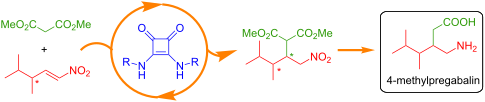
- and pregabalin [9][10]. Later, hydrogen-bonding activation proved to be more general for obtaining Michael adducts via the addition of 1,3-dicarbonyl compounds to nitroalkenes. Chiral thioureas and squaramides, particularly those with the bifunctional mode of action, served as excellent catalysts in


Carbohydrate inhibitors of cholera toxin
Beilstein J. Org. Chem. 2018, 14, 484–498, doi:10.3762/bjoc.14.34
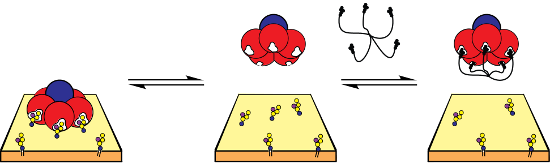
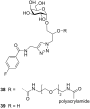
- [70][71]. For example, using a fragment-based approach, Tran et al. synthesised and evaluated a library of polymer-based hetero-bifunctional ligands and found that some compounds showed low nanomolar multivalent inhibition [68]. Alpha-galactoside 38 (Figure 17) showed the highest activity when
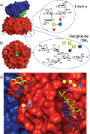
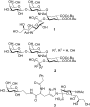
- -bifunctional inhibitor designed by Bundle and co-workers. Glycopolymers with exchangeable sugar ligands and variable length linkers. Acknowledgements This review is part of a project that has received funding from the European Union’s Horizon 2020 research and innovation programme under the Marie Skłodowska







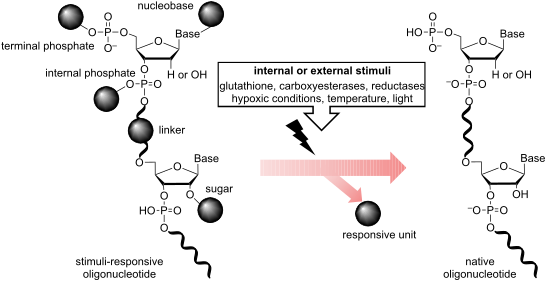
Stimuli-responsive oligonucleotides in prodrug-based approaches for gene silencing
Beilstein J. Org. Chem. 2018, 14, 436–469, doi:10.3762/bjoc.14.32


Synthesis and biological evaluation of RGD and isoDGR peptidomimetic-α-amanitin conjugates for tumor-targeting
Beilstein J. Org. Chem. 2018, 14, 407–415, doi:10.3762/bjoc.14.29
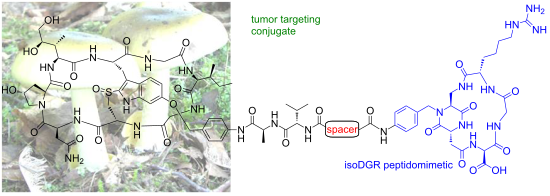
- synthetic peptides or peptidomimetics containing these sequences have been prepared and show low nanomolar IC50 values for integrin αVβ3 binding [21][22][23][24][25][26][27]. A number of cyclic RGD and isoDGR ligands containing a bifunctional diketopiperazine (DKP) scaffold have been developed by the


Novel amide-functionalized chloramphenicol base bifunctional organocatalysts for enantioselective alcoholysis of meso-cyclic anhydrides
Beilstein J. Org. Chem. 2018, 14, 309–317, doi:10.3762/bjoc.14.19

- )-GABOB. Keywords: alcoholysis desymmetrization; bifunctional organocatalysis; chloramphenicol base; Introduction Over the past decade, remarkable advances in the utilization of natural products as chiral structural motifs for the design of bifunctional organocatalysts have been achieved. A high
- development of chiral bifunctional urea 1 [35], thiourea 2 and 3 [36][37], sulfonamide 4 [38][39][40] and squaramide 5 [38][39][40] catalysts derived from chloramphenicol base (Figure 1), which showed excellent reactivity and enantioselectivity for this asymmetric transformation. A typical example of the
- -derived bifunctional derivatives catalyzed asymmetric alcoholysis of anhydride, the exploration of new effective and easily accessible fully synthetic organocatalysts through further modification of this privilege motif are always needed. Our present design is inspired by cinchona-derived sulfonamides


Vinylphosphonium and 2-aminovinylphosphonium salts – preparation and applications in organic synthesis
Beilstein J. Org. Chem. 2017, 13, 2710–2738, doi:10.3762/bjoc.13.269

- vinylphosphonium salts are important reagents and building blocks in organic synthesis mainly due to the convenience of their transformation into reactive ylides by addition of a variety of nucleophiles, including carbon, nitrogen, sulfur, and oxygen nucleophiles. The addition of a bifunctional nucleophile with a


Pyrene–nucleobase conjugates: synthesis, oligonucleotide binding and confocal bioimaging studies
Beilstein J. Org. Chem. 2017, 13, 2521–2534, doi:10.3762/bjoc.13.249
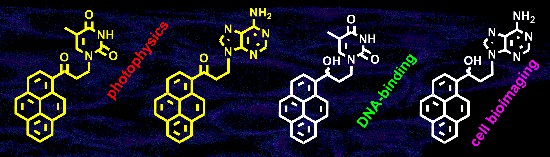
- synthesis, DFT calculations, photophysical characterization, oligonucleotide binding studies, and confocal microscopy studies of the novel pyrene–nucleobase conjugates 2–5 (nucleobase = thymine (2 and 4), and adenine (3 and 5)). Our compounds represent a simple bifunctional design combining the fluorescent




Preactivation-based chemoselective glycosylations: A powerful strategy for oligosaccharide assembly
Beilstein J. Org. Chem. 2017, 13, 2094–2114, doi:10.3762/bjoc.13.207
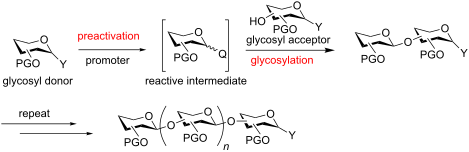
- disaccharide 7, which could be subjected to bromine-promoted glycosylation for further chain elongation. As an example, preactivation of a monosaccharide 8 with bromine was followed by the addition of a bifunctional disaccharide building block 10 and subsequent TMSOTf-promoted orthoester rearrangement
- thioglycosyl building blocks as illustrated in Scheme 9 [38]. The hemiacetal donor 38 was preactivated with Ph2SO and Tf2O, and reacted with a bifunctional thioglycosyl acceptor 39 to form disaccharide 40. Interestingly, thioglycoside 40 could also be activated by Ph2SO/Tf2O. The subsequent addition of
- mixed together with a bifunctional thioglycosyl acceptor with lower anomeric reactivity (Scheme 12). Upon the addition of a promoter, the donor is preferentially activated to glycosylate the acceptor. The resulting disaccharide can then be utilized directly as a donor to react with another bifunctional







New bio-nanocomposites based on iron oxides and polysaccharides applied to oxidation and alkylation reactions
Beilstein J. Org. Chem. 2017, 13, 1982–1993, doi:10.3762/bjoc.13.194
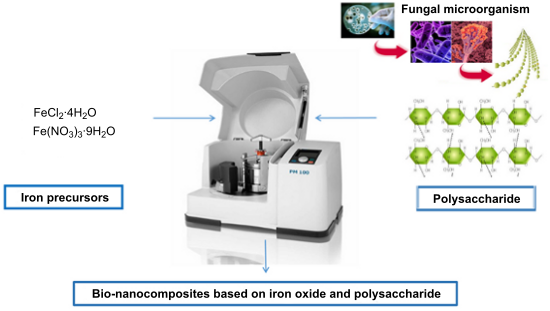
- on iron oxide and the polysaccharide S4, obtained from Lentinus Tigrinus (PS4). The most promising feature of such nanoentities based on iron oxide and polysaccharides is the bifunctional, oxidative [20] and acidic nature [21], which in turn can be fine-tuned to design highly active materials for


Chiral phase-transfer catalysis in the asymmetric α-heterofunctionalization of prochiral nucleophiles
Beilstein J. Org. Chem. 2017, 13, 1753–1769, doi:10.3762/bjoc.13.170
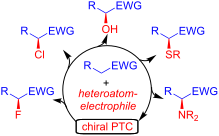
- asymmetric applications. Besides quaternary ammonium salts, also chiral phosphonium salts [21][36], chiral (bis)guanidinium systems [22][27][37], chiral crown ethers [38][39], bifunctional onium salts [17][40][41][42][43][44][45][46], or even sulfonium salts [47][48] have been systematically developed very
- combination with an anthracenylmethyl quaternary ammonium group (resulting in catalyst A2) allows them to carry out the syntheses of products 3 with high enantioselectivities [76]. Our group has over the last years been interested in the design and development of bifunctional (thio)urea/ammonium salt
- synthesis of differently substituted ketoesters 3 with good to high enantioselectivities by using just 2 mol % of the bifunctional catalyst. Very interestingly, Shi’s group very recently also reported PEG-bound derivatives of these catalysts which performed more or less equally selective for this


Bifunctional organocatalysts for the asymmetric synthesis of axially chiral benzamides
Beilstein J. Org. Chem. 2017, 13, 1518–1523, doi:10.3762/bjoc.13.151

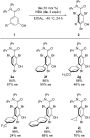
- Ryota Miyaji Yuuki Wada Akira Matsumoto Keisuke Asano Seijiro Matsubara Department of Material Chemistry, Graduate School of Engineering, Kyoto University, Kyotodaigaku-Katsura, Nishikyo, Kyoto 615-8510, Japan 10.3762/bjoc.13.151 Abstract Bifunctional organocatalysts bearing amino and urea
- functional groups in a chiral molecular skeleton were applied to the enantioselective synthesis of axially chiral benzamides via aromatic electrophilic bromination. The results demonstrate the versatility of bifunctional organocatalysts for the enantioselective construction of axially chiral compounds
- . Moderate to good enantioselectivities were afforded with a range of benzamide substrates. Mechanistic investigations were also carried out. Keywords: axial chirality; benzamide; bifunctional organocatalyst; molecular conformation; multipoint recognition; Introduction Bifunctional organocatalysts have




Construction of highly enantioenriched spirocyclopentaneoxindoles containing four consecutive stereocenters via thiourea-catalyzed asymmetric Michael–Henry cascade reactions
Beilstein J. Org. Chem. 2017, 13, 1342–1349, doi:10.3762/bjoc.13.131
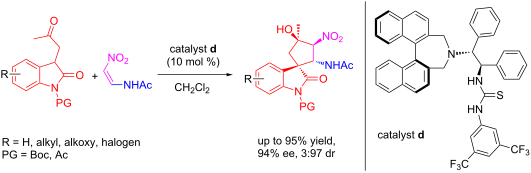
- asymmetric catalytic synthesis of saturated spirocyclopentaneoxindoles containing four consecutive stereocenters with 3-substituted oxindoles and nitrovinylacetamide using a bifunctional thiourea catalyst in good yields (up to 95%) with excellent diastereoselectivity (up to 3:97) and enantioselectivity (up
- , respectively (Table 1, entries 1 and 2). Further experiments showed that a bifunctional thiourea catalyst d was the most efficient for the synthesis of spirocyclic oxindole derivatives in good yields (80%) with excellent diastereoselectivity (8:92 dr), and moderate enantioselectivity (83% ee, Table 1, entries



One-pot synthesis of block-copolyrotaxanes through controlled rotaxa-polymerization
Beilstein J. Org. Chem. 2017, 13, 1310–1315, doi:10.3762/bjoc.13.127
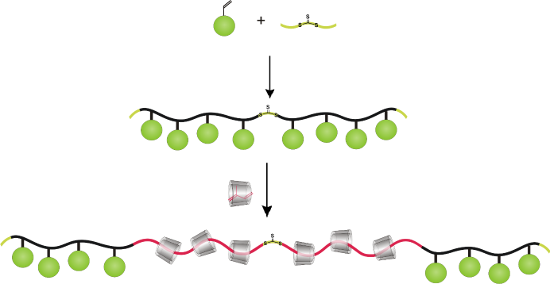
- acrylate and an acrylamide in the presence of methylated β-cyclodextrin was employed for the first time to synthesize block-copolyrotaxanes. RAFT polymerizations started from a symmetrical bifunctional trithiocarbonate and gave rise to triblock-copolymers where the outer polyacrylate/polyacrylamide blocks
- other polymerization techniques, such as atom transfer radical polymerization, because of the lack of toxic metal additives, and because of good control exerted in aqueous solution. The water-soluble bifunctional CTA S,S′-bis(α,α′-dimethyl-α′′-acetic acid)trithiocarbonate (DMATC) was selected because it
- polymerization, we investigated the synthesis of ABA triblock-copolyrotaxanes from the same building blocks in a two-step process as displayed in Scheme 2. First, one of the stopper monomers was homopolymerized by RAFT process starting from the bifunctional CTA, DMATC. In the second step, isoprene, complexed in


Opportunities and challenges for the sustainable production of structurally complex diterpenoids in recombinant microbial systems
Beilstein J. Org. Chem. 2017, 13, 845–854, doi:10.3762/bjoc.13.85
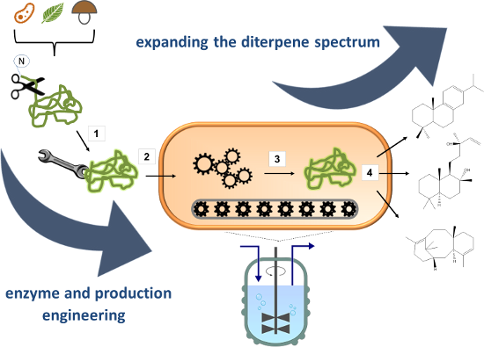
- example in the biosynthesis of labdane- and clerodane type diterpenes [41]. This close collaboration is performed either in one single bifunctional enzyme containing structure motifs of both types or sets of two different monofunctional synthases of both classes [54][55]. Engineering measures can directly
- performed in vivo substrate promiscuity tests following a combinatorial approach [41][66]. The resulting products entailed pimarane- and abietane-type diterpenes as well as the trans-clerodane type diterpene kolavenol, a putative intermediate in the salvinorin A biosynthesis. Other bifunctional diterpene
- example of these bifunctional enzymes was published by Chen and coworkers [60], who managed to crystalize catalytic domains of PaFS, a diterpene synthase from Phomopsis amygdali. The formation of GGPP is located in a C-terminal α-domain with very low sequence identity to the N-terminal Class I terpene


Phosphazene-catalyzed desymmetrization of cyclohexadienones by dithiane addition
Beilstein J. Org. Chem. 2017, 13, 762–767, doi:10.3762/bjoc.13.75

- ] nucleophiles using bifunctional cinchona alkaloid catalysts. The Sasai and Enders groups used a phosphinothiourea to enable a Rauhut–Currier reaction to form bicyclic enones [16]. The Tian and Lin group used alkyne-tethered cyclohexadienones in an arylrhodation/conjugate addition sequence that




Synthesis of 1-indanones with a broad range of biological activity
Beilstein J. Org. Chem. 2017, 13, 451–494, doi:10.3762/bjoc.13.48


Highly reactive, liquid diacrylamides via synergistic combination of spatially arranged curing moieties
Beilstein J. Org. Chem. 2017, 13, 372–383, doi:10.3762/bjoc.13.40
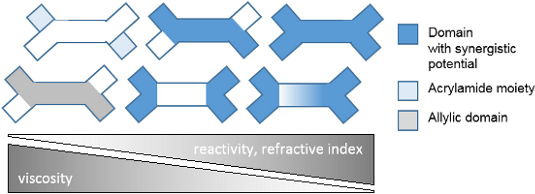
- photoinitiation. Results and Discussion As stated earlier [24] we strive to investigate the unique physical properties and reactivity of tertiary N,N’-diallyl-diacrylamides. Closely related to this class of crosslinkers are bifunctional N-alkyl-N-allylacrylamides, which are known to undergo radical








The reductive decyanation reaction: an overview and recent developments
Beilstein J. Org. Chem. 2017, 13, 267–284, doi:10.3762/bjoc.13.30
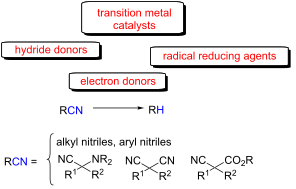
- ether cleavage. Aluminium- and borohydrides and the use of sodium hydride Reduction of α-aminonitriles Bifunctional α-aminonitriles exhibit several modes of reactivity. Recent reviews demonstrated the richness of this chemistry and emphasized synthetic applications particularly in heterocyclic chemistry


Silyl-protective groups influencing the reactivity and selectivity in glycosylations
Beilstein J. Org. Chem. 2017, 13, 93–105, doi:10.3762/bjoc.13.12

- benzoylated thioglycosides with high chemoselectivity and was therefore used in a range of high yielding oligosaccharide syntheses [38]. The bifunctional silicon protective group DTBS (Figure 1) has been used both to increase and decrease the reactivity of glycosyl donors. The 4,6-O-DTBS-protected


Synthesis of structurally diverse 3,4-dihydropyrimidin-2(1H)-ones via sequential Biginelli and Passerini reactions
Beilstein J. Org. Chem. 2017, 13, 54–62, doi:10.3762/bjoc.13.7
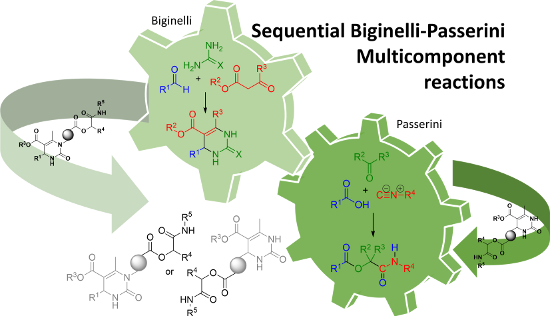
- performed first, in order to avoid undesired transesterification reactions (of the Passerini product) due to the acidic conditions of the Biginelli reaction [33]. A general challenge, which has to be faced in this context, is the choice of solvent and the selection of bifunctional components (which can
- products, however, are in most cases very poorly soluble in non-polar solvents. In our investigations, a solvent mixture of dichloromethane with a small amount of dimethyl sulfoxide (polar but aprotic) allowed the successful combination of both chemistries. All possible bifunctional components for the
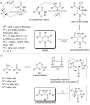
- Biginelli–Passerini reaction are represented in Figure 1. Compared to the above mentioned multicomponent tandem approaches, our strategy provides higher yields and makes use of more bifunctional linker components. Careful evaluation of the bifunctional components allowed a pre-selection: A3, B3 and C3 in



Synthesis and evaluation of anti-oxidant and cytotoxic activities of novel 10-undecenoic acid methyl ester based lipoconjugates of phenolic acids
Beilstein J. Org. Chem. 2017, 13, 26–32, doi:10.3762/bjoc.13.4
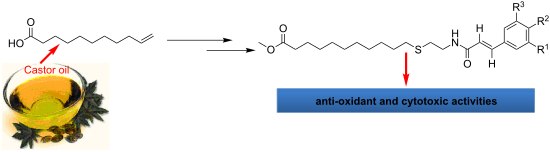
- of phenolic lipids, we have synthesized novel derivatives of phenolic lipids from undecenoic acid where the phenolic acids were linked to the olefinic group of undecenoic acid via a thioamide spacer. Among the various fatty acids reported, 10-undecenoic acid is unique due to its bifunctional nature


Green chemistry
Beilstein J. Org. Chem. 2016, 12, 2763–2765, doi:10.3762/bjoc.12.273
- , including “Strategies in asymmetric catalysis” by Tehshik P. Yoon [6], “Organometallic chemistry” by Bernd F. Straub and Lutz H. Gade [7], “C–H functionalization/activation in organic synthesis” by Richmond Sarpong [8], “Bifunctional catalysis” by Darren J. Dixon [9], “Sustainable catalysis” by Nicholas J
Isosorbide and dimethyl carbonate: a green match
Beilstein J. Org. Chem. 2016, 12, 2256–2266, doi:10.3762/bjoc.12.218
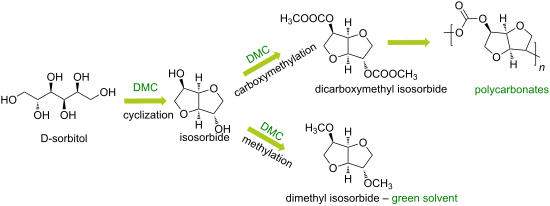
- glucose by hydrolysis. Hydrogenation of glucose to D-sorbitol. An appropriate catalyst for this process should provide both acid sites (hydrolysis) and metallic sites (hydrogenation). Thus, several bifunctional catalytic systems have been investigated [40][41][42][43][44]. The use of ionic liquids as


Chiral ammonium betaine-catalyzed asymmetric Mannich-type reaction of oxindoles
Beilstein J. Org. Chem. 2016, 12, 2099–2103, doi:10.3762/bjoc.12.199
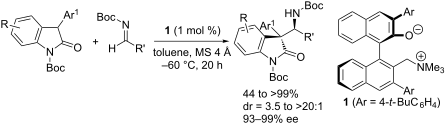
- ][14]. Ammonium betaines are defined as intramolecular ion-pairing quaternary ammonium salts. In 2008, we employed this structurally distinct molecular scaffold for designing a novel bifunctional organic base catalyst [23], namely axially chiral ammonium betaines of type 1 (Figure 1) [24][25], and


Cross-linked cyclodextrin-based material for treatment of metals and organic substances present in industrial discharge waters
Beilstein J. Org. Chem. 2016, 12, 1826–1838, doi:10.3762/bjoc.12.172
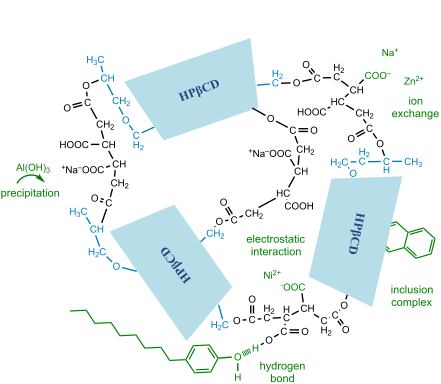
- distinct commercial materials. To our knowledge, materials able to combine the two functions are rare. Recently, bifunctional natural derivatives have been proposed for this purpose. For example, Zhao et al. [3] proposed a new cyclodextrin-based material for the simultaneous adsorption of metals and