Search results
Search for "cascade" in Full Text gives 429 result(s) in Beilstein Journal of Organic Chemistry. Showing first 200.
Enzymes in biosynthesis
Beilstein J. Org. Chem. 2022, 18, 1131–1132, doi:10.3762/bjoc.18.116
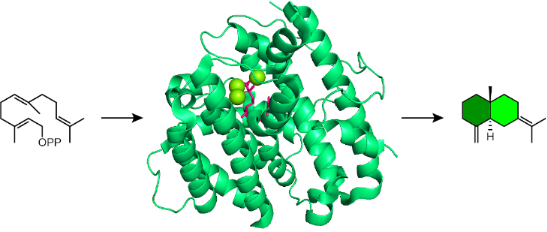
- proceed through multistep cationic cascade reactions and usually produce a polycyclic terpene hydrocarbon or alcohol with multiple stereogenic centers. While these transformations require only a single enzyme, polyketide and nonribosomal peptide biosyntheses are catalyzed by megasynthases that follow an

The stereochemical course of 2-methylisoborneol biosynthesis
Beilstein J. Org. Chem. 2022, 18, 818–824, doi:10.3762/bjoc.18.82
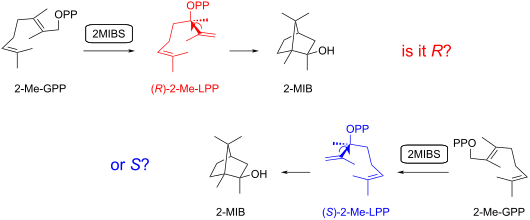
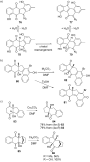
- ), followed by a conformational change through rotation around the C2–C3 bond and cyclization to the 2-methyl-α-terpinyl cation (A). A second cyclization to B and attack of water results in 2-methylisoborneol (1) [8]. The stereochemical details of this cyclization cascade were first suggested by Cane, with




DDQ in mechanochemical C–N coupling reactions
Beilstein J. Org. Chem. 2022, 18, 639–646, doi:10.3762/bjoc.18.64
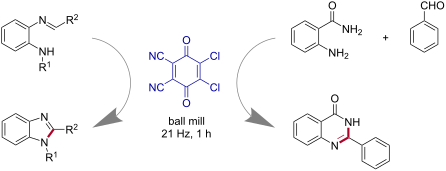
- practice by applying the strategies like domino, cascade, or tandem [11][12][13]. These environmentally friendly approaches set forth the journey of facilitating sustainable systems by using mechanochemical methods to access small organic compounds [3]. Due to the high reduction potential of the quinone


Chemistry of polyhalogenated nitrobutadienes, 17: Efficient synthesis of persubstituted chloroquinolinyl-1H-pyrazoles and evaluation of their antimalarial, anti-SARS-CoV-2, antibacterial, and cytotoxic activities
Beilstein J. Org. Chem. 2022, 18, 524–532, doi:10.3762/bjoc.18.54
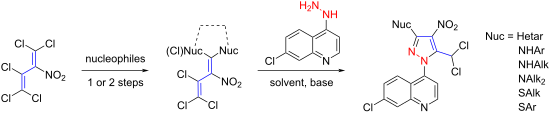
- in moderate yields (58–69%). A conceivable mechanistic pathway for the reaction cascade to pyrazoles 3 is shown in Scheme 2. Initially, a first molecule of the strong nucleophile 7-chloro-4-hydrazinylquinoline is assumed to react with the nitrodiazolylvinyl subunit of 2 to give butene A. 1,2
- poor leaving group quality of the formal alkoxide. A conceivable mechanistic pathway for the reaction cascade to pyrazole 7 is shown in Scheme 6. Initially, a nucleophilic attack of the NH2 group of 7-chloro-4-hydrazinylquinoline on the C2 position of the oxazolidine ring of 6 leads to the formation of


Tosylhydrazine-promoted self-conjugate reduction–Michael/aldol reaction of 3-phenacylideneoxindoles towards dispirocyclopentanebisoxindole derivatives
Beilstein J. Org. Chem. 2022, 18, 469–478, doi:10.3762/bjoc.18.49
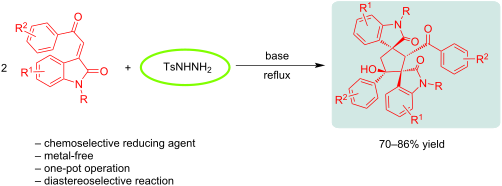
- generation of new cascade reactions to construct carbo- and heterocyclic moieties [27][28], we aimed to synthesize dispirocyclopentanebisoxindoles in one pot operation using a new protocol. Chemical hydrogenation of double bonded compounds like α,β-unsaturated ketones, approaching to saturated ketones, is an


Regioselectivity of the SEAr-based cyclizations and SEAr-terminated annulations of 3,5-unsubstituted, 4-substituted indoles
Beilstein J. Org. Chem. 2022, 18, 293–302, doi:10.3762/bjoc.18.33
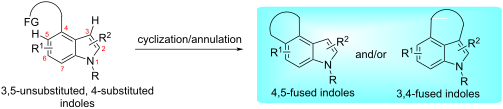
- generated via 1,6-hydride shift in both I and II. Finally, an intramolecular Mannich-type cyclization then furnishes products 27. The cascade protocol enjoys several advantageous synthetic features, including high step- and atom-economy, transition-metal-free and room temperature conditions. In all cases
- cyclization leading to the formation of polycyclic azepino[5,4,3-cd]indoles. Synthesis of azepino[3,4,5-cd]indoles via iridium-catalyzed asymmetric [4 + 3] cycloaddition of racemic 4-indolyl allylic alcohols with azomethine ylides. Aldimine condensation/1,6-hydride transfer/Mannich-type cyclization cascade of


New advances in asymmetric organocatalysis
Beilstein J. Org. Chem. 2022, 18, 240–242, doi:10.3762/bjoc.18.28
- within the area. Organocatalytic reactions are highly suitable components of cascade transformations as exemplified by the seminal work of Enders [13]. Besides traditional enamine and iminium activation of carbonyl compounds other activation modes were uncovered which significantly broadened the
Asymmetric organocatalytic Michael addition of cyclopentane-1,2-dione to alkylidene oxindole
Beilstein J. Org. Chem. 2022, 18, 167–173, doi:10.3762/bjoc.18.18
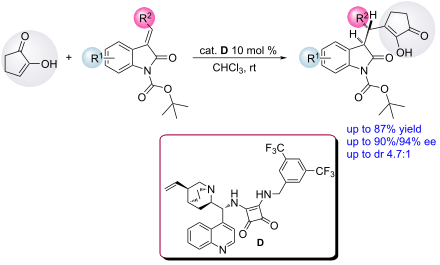
- molecular complexity. There are many examples of the organocatalytic synthesis of fused cycles starting from the cyclohexane-1,3-dione. For example, Rueping et al. demonstrated that the cyclohexane-1,3-dione undergoes a cascade reaction with α,β-unsaturated aldehydes [4] and they later employed the method
- substituted cyclopentane diones were uninvestigated until 2014 when we showed that CPD undergoes a Michael addition with nitrostyrenes [22]. Subsequently, different cascade reactions for CPD have been developed: with highly reactive (E)-2-oxobut-3-enoates [23], α,β-unsaturated aldehydes [24] and alkylidene


Chemical and chemoenzymatic routes to bridged homoarabinofuranosylpyrimidines: Bicyclic AZT analogues
Beilstein J. Org. Chem. 2022, 18, 95–101, doi:10.3762/bjoc.18.10
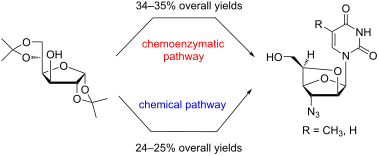
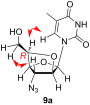
- pyridine to afford dimesylated nucleosides 16a,b in 93 and 94% yields, respectively. The reaction of nucleosides 16a,b with NaOH in dioxane/water (1:1) underwent a cascade reaction pathway to form 9a,b in 82 and 84% yields, respectively (Scheme 4). The overall yields for the synthesis of nucleosides 9a,b



1,2-Naphthoquinone-4-sulfonic acid salts in organic synthesis
Beilstein J. Org. Chem. 2022, 18, 53–69, doi:10.3762/bjoc.18.5
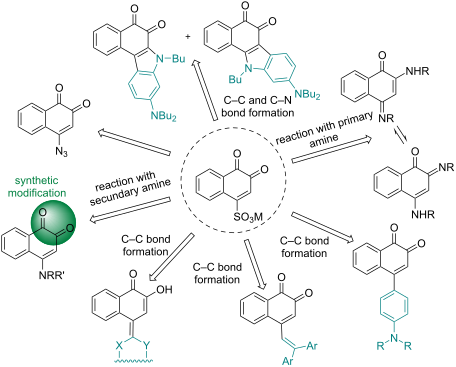
- -naphthoquinones 35 and β-lapachone (11) for hCE1 (Scheme 9). It is important to note that 35 can be obtained from other reagents, such as 2-naphthol, in a cascade of reactions involving oxidation to 1,2-naphthoquinones followed by Michael addition to the olefin and reoxidation [85]. In addition, Yang and co


Bifunctional thiourea-catalyzed asymmetric [3 + 2] annulation reactions of 2-isothiocyanato-1-indanones with barbiturate-based olefins
Beilstein J. Org. Chem. 2022, 18, 25–36, doi:10.3762/bjoc.18.3
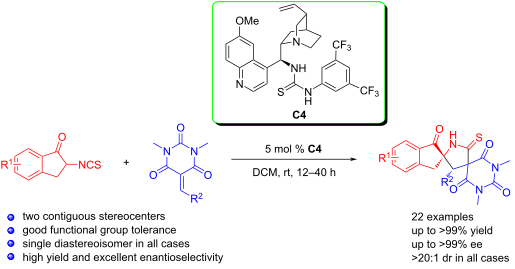
- cascade reagent with the indane framework, namely, 2-isothiocyanato-1-indanone (Scheme 1a) [15], but research on its participation in the construction of chiral compounds has been relatively low [16][17]. On the other hand, as a kind of vital spiroheterocyclic derivatives, spirobarbiturates show a wide




A two-phase bromination process using tetraalkylammonium hydroxide for the practical synthesis of α-bromolactones from lactones
Beilstein J. Org. Chem. 2021, 17, 2906–2914, doi:10.3762/bjoc.17.198
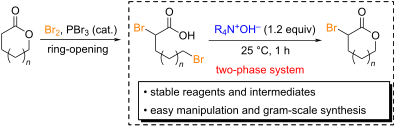
- . Finally, the residue was purified by distillation to give pure product 3b in 64% yield (1.05 g). Cascade synthesis of 5 via two-phase ring closing of 3b and following substitution with benzenethiol 4 in the presence of K2CO3 (Scheme 4). To a 100 mL flask were added 2b (4.0 mmol), CH3CN (4 mL), H2O (16 mL


Iron-catalyzed domino coupling reactions of π-systems
Beilstein J. Org. Chem. 2021, 17, 2848–2893, doi:10.3762/bjoc.17.196
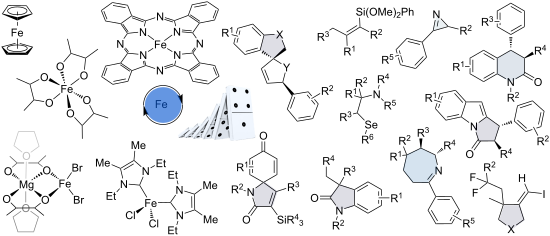
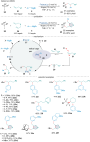
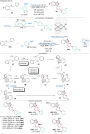
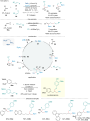
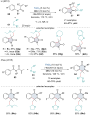
- the design of novel domino reactions. Keywords: cascade; catalysis; coupling; earth-abundant; iron; Introduction Over the past couple decades, the use of transition-metal-catalyzed cross-coupling reactions have become a staple within the organic chemist’s arsenal of carbon–carbon and carbon
- production of byproducts. Iron catalysis offers an attractive, and sustainable, approach to the aforementioned economic and ecological concerns. In the same vein, cascade reactions are important tools to meet such challenges currently facing synthetic chemists and have received considerable attention as of
- late. Introduced by Tietze, cascade reactions are sequences of transformations where subsequent transformations occur only in virtue of functionality formed in previous steps [47]. This process repeats until a product stable under the reaction conditions is formed and the reaction terminates. Compared





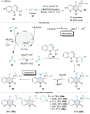
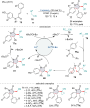


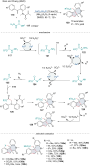

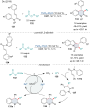





The PIFA-initiated oxidative cyclization of 2-(3-butenyl)quinazolin-4(3H)-ones – an efficient approach to 1-(hydroxymethyl)-2,3-dihydropyrrolo[1,2-a]quinazolin-5(1H)-ones
Beilstein J. Org. Chem. 2021, 17, 2787–2794, doi:10.3762/bjoc.17.189
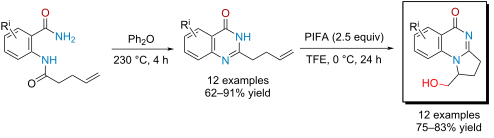
- [13], as well as Ir-catalyzed intramolecular dehydrative cross-coupling of 2-(pyrrolidine-1-yl)benzamide [14]. Another approach to compounds of type 1 that relies on a cascade formation of the pyrimidine and pyrrole rings have found much wider application (see Scheme 1B). One of its variations
- derivatives with 4-chloroketones or 4-oxocarboxylic acids in ionic liquids [20][21][22][23] or refluxing acetic acid [24][25]. An alternative approach involves cascade cyclization of anthranilamides with 4-chlorobutanoyl chloride [26][27]. Also, reductive cyclocondensation of 2-nitrobenzamides and


Recent advances in the asymmetric phosphoric acid-catalyzed synthesis of axially chiral compounds
Beilstein J. Org. Chem. 2021, 17, 2729–2764, doi:10.3762/bjoc.17.185
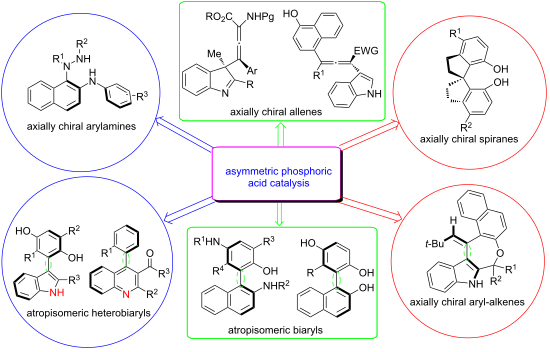
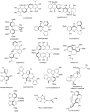
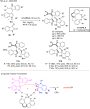
- the yields, whereas the electronic properties of the substituents on the indole ring did. In 2019, Lin and co-workers reported the asymmetric three-component cascade reaction of 2,3-diketo esters 28, aromatic amines 29, and 1,3-cyclohexanediones 30 to prepare axially chiral arylindoles 31 in a highly
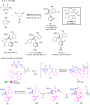
- catalyst developed by our group is critical for increasing the enantioselectivity in this cascade reaction [38]. This catalyst can facilitate the aldol reaction to generate a stereocenter (I-7), which can then be converted to axial chirality (I-8 to I-10) and finally aromatized to give 31 (Scheme 11) [60








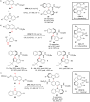


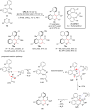


Synthetic strategies toward 1,3-oxathiolane nucleoside analogues
Beilstein J. Org. Chem. 2021, 17, 2680–2715, doi:10.3762/bjoc.17.182
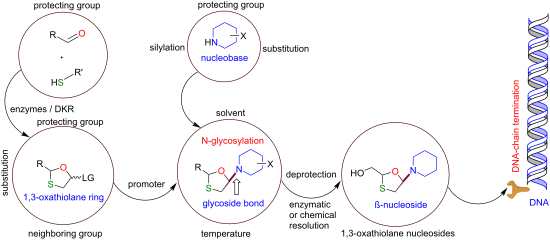
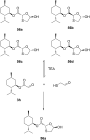
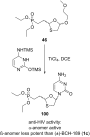
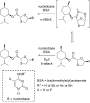
- -friendliness. Ren and colleagues [59] recently reported the preparation of an enantiopure 1,3-oxathiolane 65 utilizing a multienzymatic cascade protocol (Scheme 21). The combined use of surfactant-treated Subtilisin Carlsberg (STS) and Candida antarctica lipase B (CAL-B) resulted in the 1,3-oxathiolane ring in








Recent advances in organocatalytic asymmetric aza-Michael reactions of amines and amides
Beilstein J. Org. Chem. 2021, 17, 2585–2610, doi:10.3762/bjoc.17.173
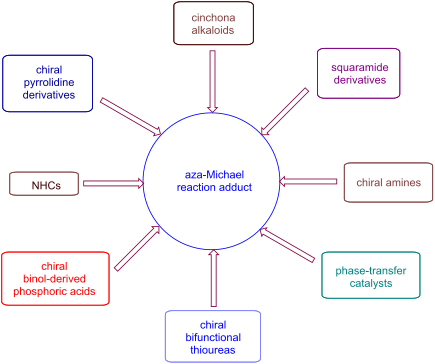
- -MRs, each highlighting a certain aspect of the reaction. While Sánchez-Roselló et al. [18] classified these reactions on the basis of the nature of the substrates, Nayak et al. [19] and Bhanja et al. [20] focused on the stereoselective synthesis of nitrogen heterocycles via Michael cascade reactions
- al. reported cinchona-based primary amine catalyzed cascade aza-Michael-aldol reaction of α,β-unsaturated ketones 6 with 2-(1H-pyrrol-2-yl)-2-oxoacetates 5 where triphenylacetic acid was used as an additive. This cascade reaction afforded highly functionalized chiral pyrrolizines 8 in good yields (70
- –91%) with excellent levels of stereocontrol (≈92% ee, >20:1 dr in all cases). The ketone group in the cascade product was reduced asymmetrically to a chiral secondary hydroxy group (Table 1) [26]. In this case, the role of Ph3CCO2H as additive is to furnish the conjugate base Ph3CO2− anion which


α-Ketol and α-iminol rearrangements in synthetic organic and biosynthetic reactions
Beilstein J. Org. Chem. 2021, 17, 2570–2584, doi:10.3762/bjoc.17.172
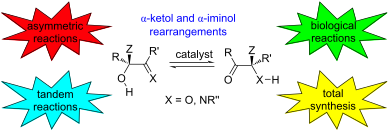
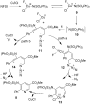
- 50 and 51, an α-ketol rearrangement of 52, and a hemiketal-forming cyclization of 53, all of which occurred as a cascade (Figure 12) [16]. Over a series of optimizations, it was found that performing this cascade in a solution of water at 35 °C over the course of 2.5 days produced a 75% yield of 49
- and a 22% yield of the Diels–Alder adduct, showing that the first step of the cascade had near-quantitative yield, diastereoselectively and regioselectively. The authors speculated that it is possible, considering their own reaction efficiency in conditions reminiscent of natural ones, that the
- -ketol rearrangement to 59. Note that this reaction took advantage of the thermodynamically preferred conversion of an α-ketoester to a β-ketoester seen in other examples in this review. Although not technically a tandem reaction due to the need to add a reagent to continue the cascade, the sequence of




Recent advances in the tandem annulation of 1,3-enynes to functionalized pyridine and pyrrole derivatives
Beilstein J. Org. Chem. 2021, 17, 2462–2476, doi:10.3762/bjoc.17.163
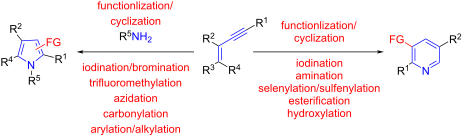
- ][28][29]. In industry, pyrrole mainly comes from the extraction of coal tar, the condensation reaction of furan and ammonia under high temperature, or the cascade cyclization reaction of acetylene, formaldehyde, and ammonia. In the laboratory, there are many efficient methods for the synthesis of
- dibromopyrroles 38, respectively. Subsequently, Punniyamurthy and co-workers also described the copper-catalyzed cascade cyclization of 2-nitro-1,3-enynes 34 to tetrasubstituted pyrroles 39 (Scheme 14) [58]. Through screening the conditions, the Cu(OTf)2-promoted (5 mol %) annulation addition reaction of 2-nitro
- trifluoromethylated coumarins [59], we recently developed a Rh-catalyzed approach to trifluoromethyl-substituted pyrroles using the Togni reagent II as trifluoromethyl source. It involves a three-component cascade reaction of 1,3-enynes, anilines, and Togni reagent II to afford fully substituted pyrrole derivatives




Targeting active site residues and structural anchoring positions in terpene synthases
Beilstein J. Org. Chem. 2021, 17, 2441–2449, doi:10.3762/bjoc.17.161
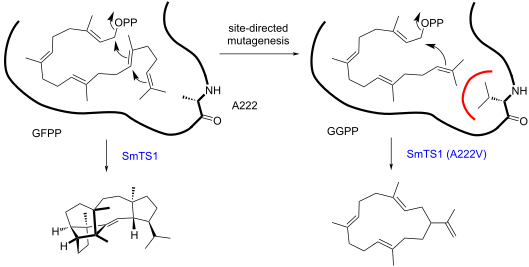
- (GFPP, C25) for sesterterpene biosynthesis. Type I terpene synthases (TPSs) activate these acyclic molecules by the abstraction of diphosphate to produce a reactive allyl cation that can initiate a cascade reaction through typical carbocation chemistry, including cyclisation reactions by intramolecular
- attack of an olefinic double bond to the cationic centre Wagner–Meerwein rearrangements, and proton or hydride migrations [2]. These multistep cascade reactions ultimately result in terpene hydrocarbons that are often (poly)cyclic and contain several stereogenic centres [3][4]. In some cases, water is
- synthases seem to be quite random, only the active site is lined with mostly non-polar residues. They contour the active site and force the substrate into a certain conformation which, after substrate ionisation, determines the reaction pathway that is taken by the cationic cascade. Here we present site


Advances in mercury(II)-salt-mediated cyclization reactions of unsaturated bonds
Beilstein J. Org. Chem. 2021, 17, 2348–2376, doi:10.3762/bjoc.17.153
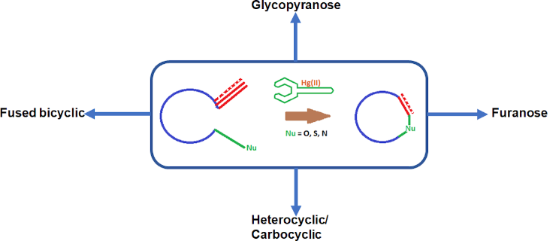
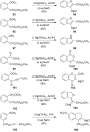
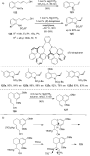
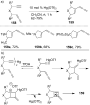
- Pd(II) [8][9][10], Ru(II) [11][12][13], Rh(III) [14][15][16], Mn(II) [17][18][19], Au(II/I) [20][21][22], Ag(I) [23][24][25] etc. in both cascade and sequential reactions have been published. Electrophilic Hg(II) salts are important reagents in organic synthesis and there is published literature
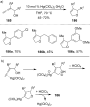
- , hippuristanol and some analogs were successfully synthesized utilizing a Hg(OTf)2-catalyzed cascade spiroketalization step of the 3-alkyne-1,7-diol motif. The Hg(OTf)2-catalyzed cascade spiroketalization step was proved to be more convenient than Suárez cyclization. A Hg(TFA)2-mediated cyclization was












Photoredox catalysis in nickel-catalyzed C–H functionalization
Beilstein J. Org. Chem. 2021, 17, 2209–2259, doi:10.3762/bjoc.17.143
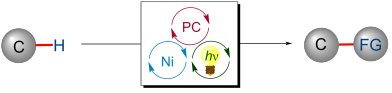
- for the mode of action of this cascade arylation protocol (Figure 10) [73]. In the photocatalytic cycle, the SET event between the photoexcited iridium catalyst 10-II and the substrate oxalate 33 generates a tertiary carbon-centered radical 10-IV by decarboxylation and the reduced iridium(II












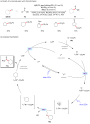


Transition-metal-free intramolecular Friedel–Crafts reaction by alkene activation: A method for the synthesis of some novel xanthene derivatives
Beilstein J. Org. Chem. 2021, 17, 2203–2208, doi:10.3762/bjoc.17.142
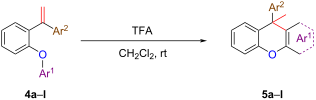
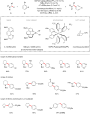
- of their important biological and fluorescent uses. To summarize the main syntheses of these studies: in particular, transition metal-catalyzed cascade benzylation–cyclization [17], cyclization of polycyclic aryl triflate esters [18], reaction of β-naphthol and aldehydes [19][20] or inter- or


Catalyzed and uncatalyzed procedures for the syntheses of isomeric covalent multi-indolyl hetero non-metallides: an account
Beilstein J. Org. Chem. 2021, 17, 2102–2122, doi:10.3762/bjoc.17.137

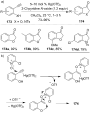
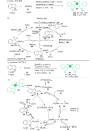
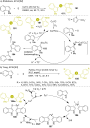
- 10% yield when chloranil was used as the oxidant (Scheme 25) [115]. The high electrophilicity of 178 at the C7 position resulted in this product formation. The reaction proceeds through the radical intermediate 181. Sulfides Reddy synthesized the di(indol-5-yl)sulfide (183) via a cascade strategy







Asymmetric organocatalyzed synthesis of coumarin derivatives
Beilstein J. Org. Chem. 2021, 17, 1952–1980, doi:10.3762/bjoc.17.128
- hydroquinolinone, chromene, piperidine, peptide, lipid, and glycoside moieties (Scheme 2). Bojanowski and co-workers developed a methodology to synthetize 3,4-dihydrocoumarins 10 through a decarboxylative and dearomatizative cascade reaction [33]. This reaction was carried out using coumarin-3-carboxylic acids 8
- cascade synthesis of hydrocoumarin 78 mediated by squaramide catalyst with 9-amino-9-deoxy-epi-quinine moiety 73 was reported by Albrecht et al. [59]. In this transformation, the authors developed a Michael addition of azlactones to 2-hydroxychalcones 76 followed by the opening of the azlactone 77 ring to
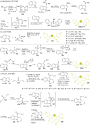
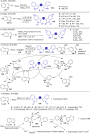
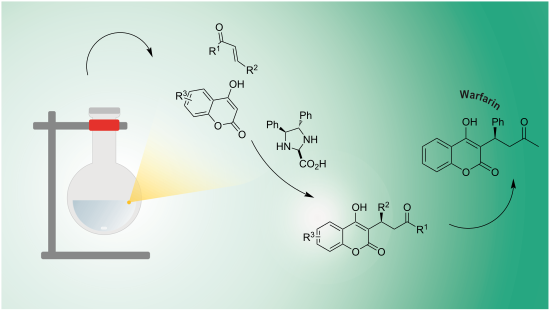
- cascade reaction. Total synthesis of (+)-smyrindiol (17). Michael addition of 4-hydroxycoumarin (1) to enones 2 through a bifunctional modified binaphthyl organocatalyst 18. Michael addition of ketones 20 to 3-aroylcoumarins 19 using a cinchona alkaloid-derived primary amine catalyst 22. Enantioselective