


Search results
Search for "configuration" in Full Text gives 1071 result(s) in Beilstein Journal of Organic Chemistry. Showing first 200.
1,2-Difluoroethylene (HFO-1132): synthesis and chemistry
Beilstein J. Org. Chem. 2024, 20, 1955–1966, doi:10.3762/bjoc.20.171
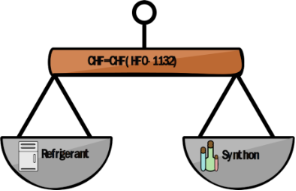
- Haszeldine et al. [49][100]. The reaction of individual E- or Z-isomer of 1,2-difluoroethylene and fluorinated ketones (Scheme 21) led to a mixture of stereoisomers in both cases, although for the E-isomer, about 70% of the product retained the starting configuration. Overall, (E)-1,2-difluoroethylene had
- hexafluorodiacetyl under UV irradiation, yielding a mixture of five products, regardless of the configuration of the starting 1,2-difluoroethylene, in a ratio of 8.8:2.0:1.2:1.2:1.0 in 85% and 92% yield for the Z- and E-olefin, respectively (Scheme 23) [48]. Interestingly, the formation of [4 + 2]-adducts in this


Discovery of antimicrobial peptides clostrisin and cellulosin from Clostridium: insights into their structures, co-localized biosynthetic gene clusters, and antibiotic activity
Beilstein J. Org. Chem. 2024, 20, 1800–1816, doi:10.3762/bjoc.20.159
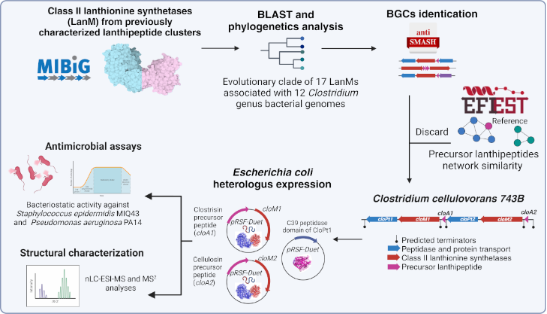
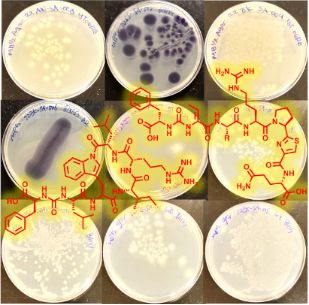
- . These peptides were expressed in an E. coli host and produced in sufficient concentrations to perform bioactivity assays. The C39-associated domain was purified to facilitate the transformation from pre-peptide to the mature configuration. The mature clostrisin and cellulosin exhibited antimicrobial




Oxidative fluorination with Selectfluor: A convenient procedure for preparing hypervalent iodine(V) fluorides
Beilstein J. Org. Chem. 2024, 20, 1785–1793, doi:10.3762/bjoc.20.157
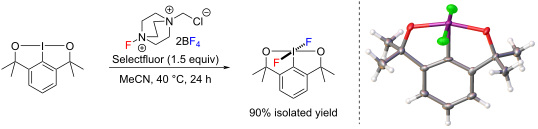
- to a trans-configuration because of the bicyclic carbon skeleton. Trifluoroiodane 3, on the other hand, has both trans- and cis-configurations of the fluorine ligands which could play a key role in the reductive elimination step in the fluorination of phenylmagnesium bromide. Trifluoroiodane 3 also


Ugi bisamides based on pyrrolyl-β-chlorovinylaldehyde and their unusual transformations
Beilstein J. Org. Chem. 2024, 20, 1773–1784, doi:10.3762/bjoc.20.156
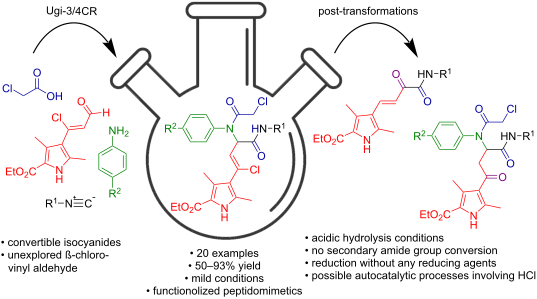
- which the Z-configuration of the chlorovinyl fragment was detected. Post-Ugi transformations As previously mentioned [32], the introduction of the convertible 2‑bromo-6-isocyanopyridine into the Ugi bisamide structure allows the conversion of the newly formed amide into a carboxylic acid fragment after




Harnessing unprotected deactivated amines and arylglyoxals in the Ugi reaction for the synthesis of fused complex nitrogen heterocycles
Beilstein J. Org. Chem. 2024, 20, 1758–1766, doi:10.3762/bjoc.20.154
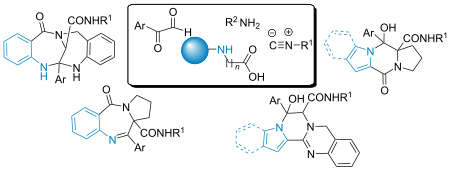
- reaction took place with a α,3-like relative configuration on the major diastereomer, similar to that obtained for the Ugi/Staudinger/aza-Wittig sequence and complementary to that observed for the Ugi/reduction/cyclization sequence (see Supporting Information File 1, Figure S2). With the aim of building
- pyrrolopiperazinones when enantiopure (S)-α-methylbenzylamine was used as chiral component. In this case, although the relative configuration on C3,C4 remained unchanged ((3R*,4R*)), an equimolar mixture of diastereomers (2(1S),3R,4R) and (2(1S),3S,4S) was obtained (Scheme 7). These results indicate that these
- reactions seem to take place through conjugated additions on the enol tautomer of the Ugi adduct. Indeed, the enolate intermediate would explain the stereochemical results, controlled by the configuration in the hemiaminal intermediate and not by the chiral information on the amine, unlike in the case of


Syntheses and medicinal chemistry of spiro heterocyclic steroids
Beilstein J. Org. Chem. 2024, 20, 1713–1745, doi:10.3762/bjoc.20.152
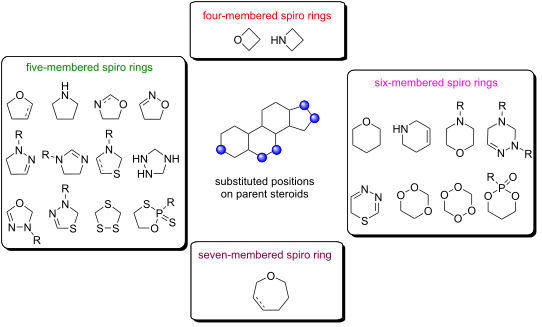
- inhibitors of 17β-HSD3 in a microsomal fraction of rat testes. Their androgenic effect on androgen-sensitive cells LAPC-4 was also evaluated. According to the biological results, compounds 134 and 136 with substituents in (S)-configuration were better inhibitors than the (R)-isomers. Furthermore, tertiary


A fiber-optic spectroscopic setup for isomerization quantum yield determination
Beilstein J. Org. Chem. 2024, 20, 1684–1692, doi:10.3762/bjoc.20.150
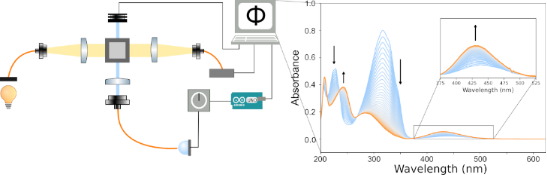
- (Avantes IC-DB26-RM), which allows the proprietary software AvaSoft from Avantes to control the internal shutter of the light source via a PC. With this configuration, starting a single measurement in AvaSoft sends a TTL signal to the light source that opens the shutter, which is followed by the
- Table S2 (Supporting Information File 1). Calculated quantum yields and related quantum yields from the literature. Supporting Information Supporting Information File 4: Scripts description, configuration and supplementary data. Acknowledgements A.V. thanks J. J. van der Wal for the synthesis of


Methyltransferases from RiPP pathways: shaping the landscape of natural product chemistry
Beilstein J. Org. Chem. 2024, 20, 1652–1670, doi:10.3762/bjoc.20.147
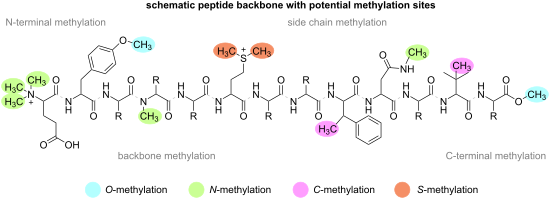
- , unstructured configuration to AerE [113]. Otherwise, the biosynthetic machinery of aeronamide A seems to be permissive to other core sequences. Swapping the core sequence with other proteusin core structures, such as the polytheonamides core and a Rhodospirillaceae sp. proteusin precursor, demonstrated a





Polymer degrading marine Microbulbifer bacteria: an un(der)utilized source of chemical and biocatalytic novelty
Beilstein J. Org. Chem. 2024, 20, 1635–1651, doi:10.3762/bjoc.20.146
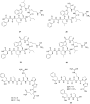
- known parabens (2, 5, 6, and 11), five new ones (7–10, and 12) were identified. Their structures were elucidated by high-resolution mass spectrometry (HRMS) and 1D and 2D nuclear magnetic resonance (NMR). The configuration in 8 and 10 remained undetermined. Antimicrobial activities of compounds 2 and 5




Regio- and stereochemical stability induced by anomeric and gauche effects in difluorinated pyrrolidines
Beilstein J. Org. Chem. 2024, 20, 1572–1579, doi:10.3762/bjoc.20.140
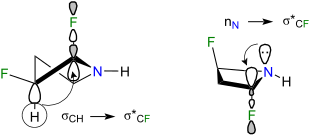
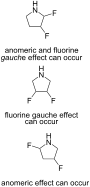
- conformation. Consequently the introduction of a second fluorine atom with an appropriate relative configuration was thought to reinforce and establish a predominant conformation. Theoretical levels that closely approximated the CCSD outcome included B3LYP-D3BJ/6-311++G**, B3LYP-D3BJ/DGTZVP, and ωB97XD/DGTZVP





Primary amine-catalyzed enantioselective 1,4-Michael addition reaction of pyrazolin-5-ones to α,β-unsaturated ketones
Beilstein J. Org. Chem. 2024, 20, 1518–1526, doi:10.3762/bjoc.20.136
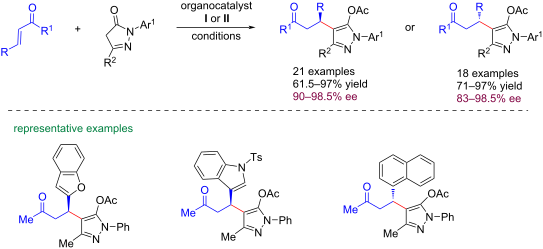
- on a 1 mmol scale under the optimized reaction conditions (Scheme 4). The product 3aa was isolated in slightly lower yield and similar enantioselectivity compared to the 0.2 mmol scale reaction. Subsequently, we turned our attention to determine the absolute configuration of the newly formed chiral
- crystallography data of ent-3ba (Figure 2) [37]. The stereochemistry of the products in this series was assigned by analogy. Based on the observed absolute configuration of product ent-3ba and preceding literature reports [38][40], a plausible mechanistic pathway is outlined in Scheme 5. Initially, in the




Towards an asymmetric β-selective addition of azlactones to allenoates
Beilstein J. Org. Chem. 2024, 20, 1504–1509, doi:10.3762/bjoc.20.134
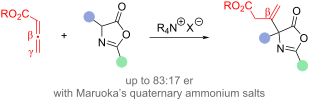
- residual water during column chromatography. Unfortunately, attempts to assign the absolute configuration of products 5 failed, as we have not been able to obtain any crystals suited for single crystal X-ray diffraction analysis. Finally, we also tested the suitability of products 5 to access acyclic α-AA


Bioinformatic prediction of the stereoselectivity of modular polyketide synthase: an update of the sequence motifs in ketoreductase domain
Beilstein J. Org. Chem. 2024, 20, 1476–1485, doi:10.3762/bjoc.20.131
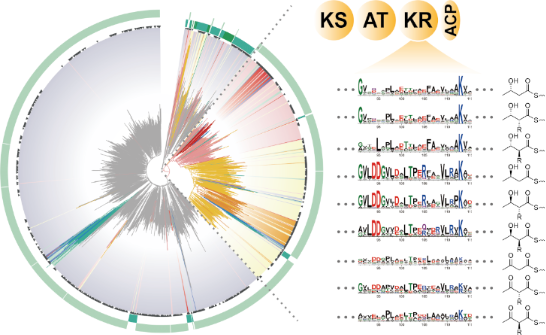
- substrate contains an α-substition. Subtype 1 (A1, B1, and C1) KRs retain the original α-ᴅ-configuration, while subtype 2 (A2, B2, and C2) KRs epimerize the α-carbon to yield α-ʟ-configured products (Figure 1b). The stereocontrol of KR has been found to correlate with several conserved sequence motifs
- ] PKS cannot be accurately predicted due to the absence of both the LDD and W motifs. Moreover, KR3 of neaumycin B [14], KR19 of caniferolide A [15], KR16 of epemicin B [16], and KR26 of gargantulide B [17] show discrepancies between bioinformatic prediction and the determined product configuration
- been investigated in several DH domains, which all follow the syn-elimination mechanism [5][21][33]. Based on the product configuration, we classified DHs into two types, E-type DHs (trans-double bond) and Z-type DHs (cis-double bond) and analyzed sequence logos of the DH-associated KRs. The sequence


Rapid construction of tricyclic tetrahydrocyclopenta[4,5]pyrrolo[2,3-b]pyridine via isocyanide-based multicomponent reaction
Beilstein J. Org. Chem. 2024, 20, 1436–1443, doi:10.3762/bjoc.20.126
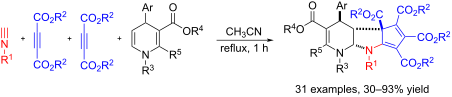
- produced in the reaction, while the other diastereomers were not detected. In order to elucidate the relative configuration of the obtained compounds, the molecular structure of the compound 4a was determined by single crystal X-ray diffraction (Figure 1). From Figure 1, it can be seen that the fused
- that all tricyclic compounds have this kind of relative configuration on the basis of NMR spectra and single crystal structure. In order to develop the scope of the reaction, another kind of 5,6-unsubstituted 1,4-dihydropyridines 5 were also employed in the reaction, which were previously prepared from
- -position of the o-methoxyphenyl group. Therefore, compound 6g has the same relative configuration to that of the above mentioned product 3a, which also indicated that this reaction has same steric controlling effect. A plausible reaction mechanism is proposed in Scheme 1 to explain the formation of the


Computation-guided scaffold exploration of 2E,6E-1,10-trans/cis-eunicellanes
Beilstein J. Org. Chem. 2024, 20, 1320–1326, doi:10.3762/bjoc.20.115

- -eunicellane skeletons, respectively. Although the structures of these diterpenes only differed in their configuration at a single position, C1, they displayed distinct chemical and thermal reactivities. Here, we used a combination of quantum chemical calculations and chemical transformations to probe their
- family members in bacteria and plants [4], these diterpenoids have four main structural differences: the number and location of oxidized carbons, the absence or presence of transannular ether bridges, the configuration (cis or trans) of the bicyclic ring fusion, and the presence and configuration (E or Z
- (1) [6]. In 1, the C2–C3 and C6–C7 alkenes are E-configured, with the latter alkene configuration being conserved in all known eunicellane cyclization mechanisms. The first trans-eunicellane synthase, AlbS from the biosynthesis of albireticulone in Streptomyces albireticuli [10], was also identified


Enhancing structural diversity of terpenoids by multisubstrate terpene synthases
Beilstein J. Org. Chem. 2024, 20, 959–972, doi:10.3762/bjoc.20.86
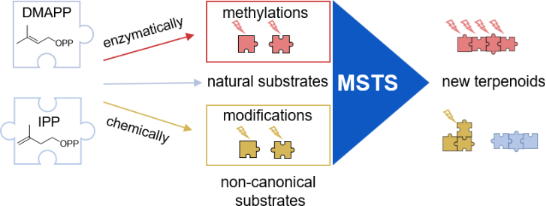
- analogues 80 and 81 with shifted double bonds were synthesized to study the stereochemistry and cyclization mechanism of casbene synthase (CS) from the castor bean (Ricinus communis), which indicated a stereochemical course in accordance with the reported absolute configuration of casbene [41] (Figure 6b







Enantioselective synthesis of β-aryl-γ-lactam derivatives via Heck–Matsuda desymmetrization of N-protected 2,5-dihydro-1H-pyrroles
Beilstein J. Org. Chem. 2024, 20, 940–949, doi:10.3762/bjoc.20.84
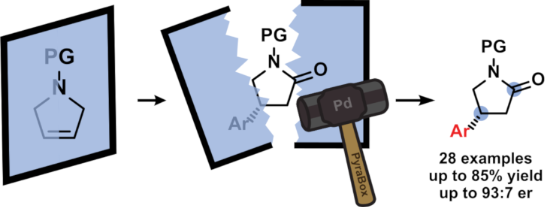
- upward, therefore creating an asymmetric center with absolute configuration (R), in accordance with experimental results. A rationalization for the transition state that would lead to the observed outcome is depicted in Figure 2. Conclusion The palladium-catalyzed Heck–Matsuda desymmetrization of N




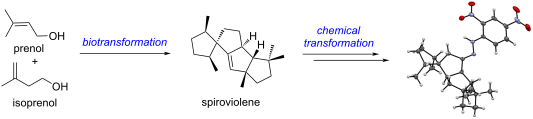
Confirmation of the stereochemistry of spiroviolene
Beilstein J. Org. Chem. 2024, 20, 852–858, doi:10.3762/bjoc.20.77
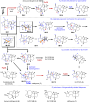
- the 9-organoborane intermediate IM-16 probably through borane–olefin complexes. The suprafacial nature of the boron migration allowed the boron to be α-oriented in intermediate IM-16, which would give 10 with retention of the configuration after NaOH/H2O2 oxidation. The formation of a significant




Skeletal rearrangement of 6,8-dioxabicyclo[3.2.1]octan-4-ols promoted by thionyl chloride or Appel conditions
Beilstein J. Org. Chem. 2024, 20, 823–829, doi:10.3762/bjoc.20.74
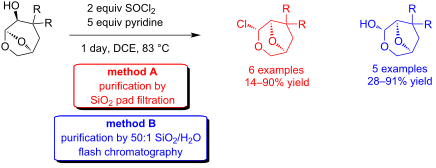
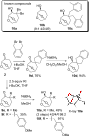
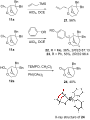
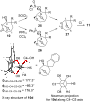
- the acetal in 3 and 6 to the neighbouring C4-position (Figure 1) [19][20]. A variety of products were reported resulting from fluorination as well as the skeletal rearrangement, with the reaction outcome highly substrate-dependent. A key finding in this work was that the configuration of the alcohol
- Diels–Alder adducts of 1, and similar results on the effect of configuration were observed [21]. During some recent attempts at the chlorination of the π-stacking chiral auxiliary 10a using SOCl2 [9], we observed the migration of O8 resulting in the formation of anomeric chlorides analogous to the
- the glycosidic bond using an organometallic purine or pyrimidine derivative and an electrophilic furanose derivative [23][25]. This process can result in anomeric mixtures, so 5 has potential applications in targeted synthesis, as the configuration of the pseudo-anomeric centre matches the common




Discovery and biosynthesis of bacterial drimane-type sesquiterpenoids from Streptomyces clavuligerus
Beilstein J. Org. Chem. 2024, 20, 815–822, doi:10.3762/bjoc.20.73
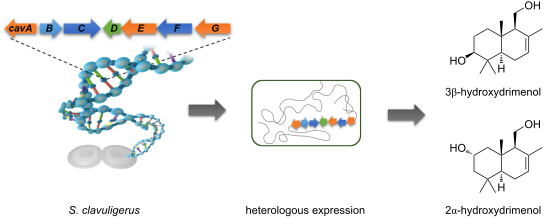
- differences in 13C NMR (ΔδC = 3.3) (Figures S19–S25, Supporting Information File 1) [43]. Moreover, the key correlation observed between H5 and H7 in the ROESY spectrum provides additional support for the β-configuration of this hydroxy group (Figure S26 and Table S7 in Supporting Information File 1). These
- to note that CavA exhibits limited substrate promiscuity, predominantly targeting the drimenol skeleton with minor variations. This selectivity may be attributed to the structural configuration of the enzyme, which appears to be finely tuned to recognize and interact with specific features of the


Methodology for awakening the potential secondary metabolic capacity in actinomycetes
Beilstein J. Org. Chem. 2024, 20, 753–766, doi:10.3762/bjoc.20.69
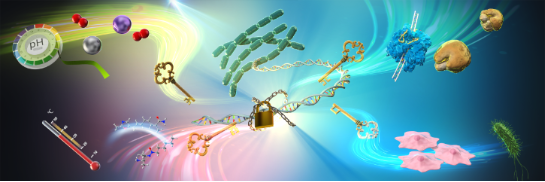
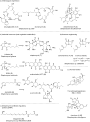
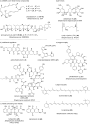
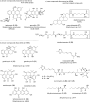
- culture conditions. Du et al. identified a new compound (designated ishigamide (10)) as 3-([2E,4E,6E,8E]-13-hydroxytetradeca-2,4,6,8-tetraenamido)propanoic acid and elucidated the biosynthetic machinery (Figure 2c) [43][44][45]. Seo et al. synthesized ishigamide and determined its absolute configuration


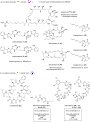
Substrate specificity of a ketosynthase domain involved in bacillaene biosynthesis
Beilstein J. Org. Chem. 2024, 20, 734–740, doi:10.3762/bjoc.20.67
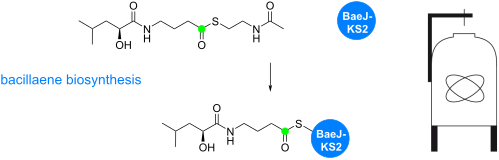
- structure of this intermediate as N-((S)-α-hydroxyisocaproyl)-γ-aminobutanoyl-S-ACP and also demonstrate that BaeJ-KS2 is not sensitive towards an inversion of the configuration in the α-hydroxyisocaproate moiety. This finding is in agreement with the phylogenetic analysis of KS domains from trans-AT PKSs


Genome mining of labdane-related diterpenoids: Discovery of the two-enzyme pathway leading to (−)-sandaracopimaradiene in the fungus Arthrinium sacchari
Beilstein J. Org. Chem. 2024, 20, 714–720, doi:10.3762/bjoc.20.65
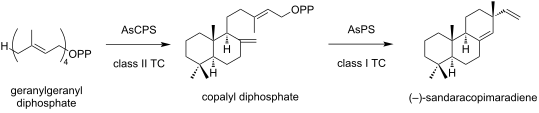
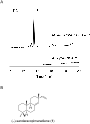
- and absolute configuration of 1, we assumed this compound could be a biosynthetic precursor of myrocins. In the flanking regions of AsPS and AsCPS, genes encoding oxidoreductases such as cytochrome P450 are present. These genes might be involved in the oxidation of 1 in the biosynthesis of myrocins. A


SOMOphilic alkyne vs radical-polar crossover approaches: The full story of the azido-alkynylation of alkenes
Beilstein J. Org. Chem. 2024, 20, 701–713, doi:10.3762/bjoc.20.64
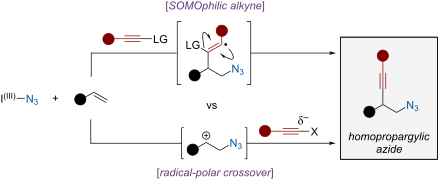
- azides substituted with heteroaryls such as thiophene (4i) or a bromofuran (4j) were obtained in 62% and 54% yield, respectively. When the azido-alkynylation was carried out on 1,2-dihydronaphthalene, 4k could be obtained in 71% yield and 3.8:1 dr. As expected, the configuration of the major


Evaluation of the enantioselectivity of new chiral ligands based on imidazolidin-4-one derivatives
Beilstein J. Org. Chem. 2024, 20, 684–691, doi:10.3762/bjoc.20.62
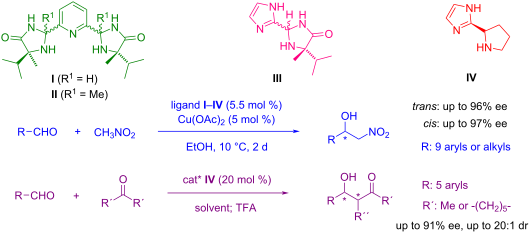
- depends on the relative configuration of the ligand used; cis-configuration of ligand affords the nitroaldols with major enantiomer S- (up to 97% ee), whereas the application of ligands with trans-configuration led to nitroaldols with major R-enantiomer (up to 96% ee). The “proline-type” ligand IV was
- group). The copper complex bearing a ligand with trans-trans configuration (Ia) is less enantioselective than those bearing a bidentate ligand analogue (87–96% ee, see [5]). Interestingly, the introduction of a methyl group at position 2 of the imidazolidin-4-one ring, i.e., ligand IIa, led to an
- improvement of enantioselectivity and the ee values obtained by its copper(II) complex were satisfactory (75–96%). This phenomenon was more distinct in the case of the application complexes of ligands with cis-trans configuration (Ib vs IIb). Whilst the complex of Ib exhibited only poor enantioselectivity





