Search results
Search for "dimer" in Full Text gives 381 result(s) in Beilstein Journal of Organic Chemistry. Showing first 200.
Combining the Ugi-azide multicomponent reaction and rhodium(III)-catalyzed annulation for the synthesis of tetrazole-isoquinolone/pyridone hybrids
Beilstein J. Org. Chem. 2019, 15, 2447–2457, doi:10.3762/bjoc.15.237

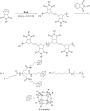
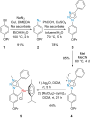
- the relatively cheap complex (p-cymene)ruthenium(II) chloride dimer, in the presence of copper(II) acetate as oxidant under conventional heating. Despite all effort put in this attempt, the isolated yields were in the range of 14–62%, with the highest yield achieved after 24 h of reaction using 10 mol
- use of pentamethylcyclopentadienylrhodium(III) chloride dimer, [Cp*RhCl2]2, allowed reducing both the loading to 5 mol % and the reaction time to 12 h (Table 1). The addition of cesium acetate appeared to be required, probably to convert the pre-catalyst into the active catalyst. After some additional




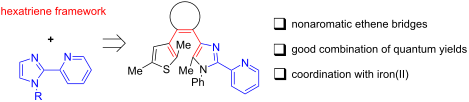
Photochromic diarylethene ligands featuring 2-(imidazol-2-yl)pyridine coordination site and their iron(II) complexes
Beilstein J. Org. Chem. 2019, 15, 2428–2437, doi:10.3762/bjoc.15.235
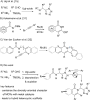
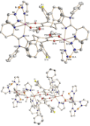
- that bond. Two iron(II) centers are 8.057 Å apart in the dimer. The ligand 6 appears in the open-ring form and the parallel conformation [8], with the α-methyl groups pointing in similar directions. While still appearing in a distorted half-chair conformation, the phenyl substituent of the
- 2.1190(19) Å. The pyridine and imidazole Fe–N bond distances are 2.2467(19) Å and 2.1793(18) Å, which are very similar to those found for the dimer 8. On the contrary, the Fe–O bond distances to the β-keto ester moiety differ much less with 2.0812(15) Å and 2.0098(15) Å. The iron–donor bond distances are


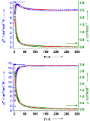
Reversible switching of arylazopyrazole within a metal–organic cage
Beilstein J. Org. Chem. 2019, 15, 2398–2407, doi:10.3762/bjoc.15.232
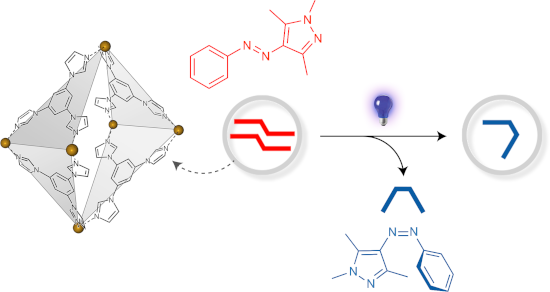
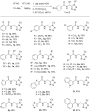
- release of "high-energy" water molecules from the cavity of 2 [50][51]. Determining the X-ray structure was challenging; the difficulty lies in the fact that both the cage and the encapsulated guest dimer exist in the form of two different conformations. Figure 3 shows (E-1)22 that features the main
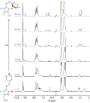
- with any of the three methyl groups. Furthermore, we note that the resonance due to Hb – very broad in complex (E-1)22 as a consequence of dimer formation – becomes as sharp as those of the other protons after UV irradiation (compare spectra i and ii in Figure S23, Supporting Information File 1). Taken


![[Graphic 1]](/bjoc/content/inline/1860-5397-15-232-i3.svg?max-width=637&scale=1.18182) 2 (500 MHz, D2O, 298 K).
2 (500 MHz, D2O, 298 K).




Current understanding and biotechnological application of the bacterial diterpene synthase CotB2
Beilstein J. Org. Chem. 2019, 15, 2355–2368, doi:10.3762/bjoc.15.228
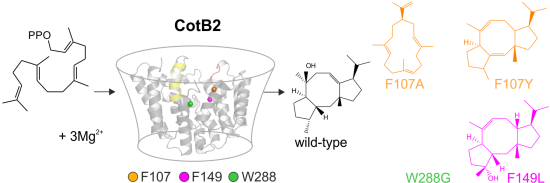
- ). CotB2 is arranged as a homo-dimer in crystallo [36][38] and it was demonstrated that CotB2 exists as a homo-dimer in solution as well [38]. The two active sites of CotB2 are arranged in an antiparallel fashion, resembling the arrangement initially observed for the monoterpene (+)-bornyl diphosphate
- synthase [47] and the sesquiterpene trichodiene synthase [48], but is in contrast to the parallel dimer as described for farnesyl diphosphate synthase [49]. Structurally, CotB2 is most closely related to the fungal monoterpene synthase aristolochene (PDB-ID 2OA6; [50]), and epi-isozizaene synthase (PDB-ID


Fluorescent phosphorus dendrimers excited by two photons: synthesis, two-photon absorption properties and biological uses
Beilstein J. Org. Chem. 2019, 15, 2287–2303, doi:10.3762/bjoc.15.221
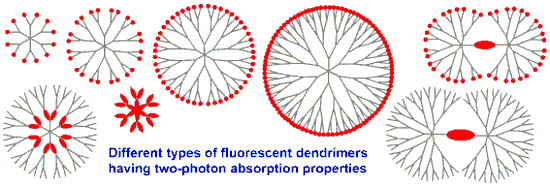
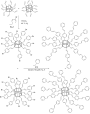
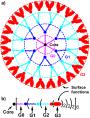
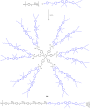
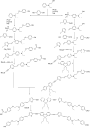
- derivatives grafted on the surface of phosphorhydrazone dendrimers. In this case, a β-diketone functionalized by a phenol was first grafted on the surface of the dendrimer [47], then BF3 was added to obtain the dioxaborines (Scheme 3). Monomer, dimer, and all generations of the dendrimer from zero (6 terminal
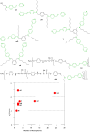
- dimer and 33% for the G1 dendrimer, but a 15% decrease of the TPA response was measured for the G2 dendrimer [53]. In addition, in that case, also the fluorescence quantum yield was found to decrease dramatically with an increasing number of fluorophores. TPA fluorophore as core of dendrimers None of









Recent advances in transition-metal-catalyzed incorporation of fluorine-containing groups
Beilstein J. Org. Chem. 2019, 15, 2213–2270, doi:10.3762/bjoc.15.218
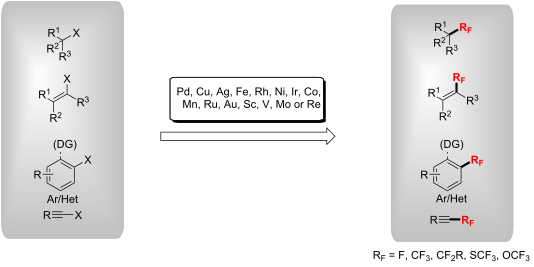
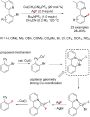
- Scheme 45a. Cyclooctadiene iridium chloride dimer, [IrCl(COD)]2, was an effective catalyst to promote this fluorination with Et3N·3HF, forming allylic fluorides in moderate to good yields. This facile method shows a good regioselectivity to gain the branched isomer within 1 h. Later in 2017, they











1,2,3-Triazolium macrocycles in supramolecular chemistry
Beilstein J. Org. Chem. 2019, 15, 2142–2155, doi:10.3762/bjoc.15.211
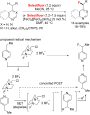
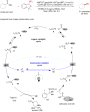
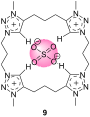
- [TCNQ]−· radical anion, dragging the second [TCNQ]− near to the cavity by the help of the electrostatic stabilization supplied by the 1,2,3-triazolium cations, coupling of the two [TCNQ]−· anion radicals in the cavity and rapid formation of the sigma-connected dimer, reduction of the photogenerated
- porphyrin cation by the iodide counterions of the triazolium macrocycle, either before or after the constraining of the second [TCNQ]−· anion radical, finally, the dimer is either ejected from the host or is displaced by the [TCNQ]−· anion radical. It was clearly shown that the macrocycle 15 acts as a
- compound 8. Chemical structures of compound 9. Chemical structures of compound 10, 11 and 12. Chemical structure of compound 13. Chemical structure of compound 15 including the sigma-connected TCNQ dimer. Chemical structure of compound 16 for the kinetic resolution of epoxides. Chemical structure of




Genome mining in Trichoderma viride J1-030: discovery and identification of novel sesquiterpene synthase and its products
Beilstein J. Org. Chem. 2019, 15, 2052–2058, doi:10.3762/bjoc.15.202
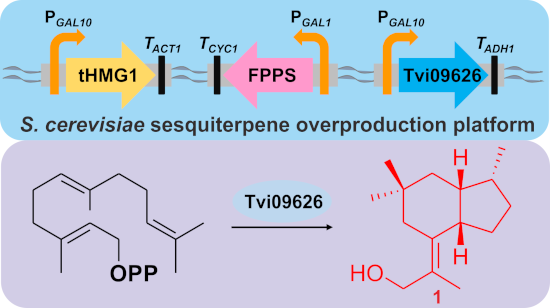
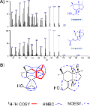
- aspartate-rich motif, 276NSE/DTE triad, 366RY dimer and 230R monomer (Figure S1, Supporting Information File 1) [29][30][31]. Furthermore, in a phylogenetic analysis (Figure 2), Tvi09626 belonged to Clade V of Class I terpene synthases. In previous studies, terpene synthases have been studied in the genus



Attempted synthesis of a meta-metalated calix[4]arene
Beilstein J. Org. Chem. 2019, 15, 1996–2002, doi:10.3762/bjoc.15.195
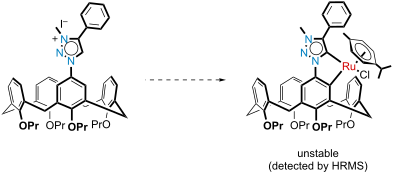
- be formed. However, the 1H NMR spectroscopic evidence for this was speculative at best and would suggest a very small quantity of the desired product (see Supporting Information File 1, Figure S34). Another main contaminant was the dichloro(p-cymene)ruthenium(II) dimer, which we could not eliminate
- dichloro(p-cymene)ruthenium(II) dimer or the triazolium chloride salt already observed. As a last attempt to find evidence for the ruthenacycle, a high-resolution mass spectrum was acquired directly after the reaction was completed. The most important isotopic distribution detected was at 984.4283 Da




Identification of optimal fluorescent probes for G-quadruplex nucleic acids through systematic exploration of mono- and distyryl dye libraries
Beilstein J. Org. Chem. 2019, 15, 1872–1889, doi:10.3762/bjoc.15.183
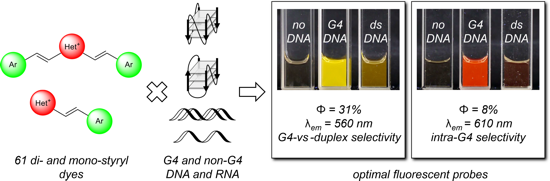
- and RNA structures The fluorimetric response of the dye library was investigated against a set of 14 diverse nucleic acid structures (Table 2), including ten G4-DNA structures of different topologies (parallel G4: c-kit2, 25CEB, c-kit87up, c-myc, c-src1; parallel dimer G4: c-myb; hybrid G4: 22AG, 46AG







Water inside β-cyclodextrin cavity: amount, stability and mechanism of binding
Beilstein J. Org. Chem. 2019, 15, 1592–1600, doi:10.3762/bjoc.15.163
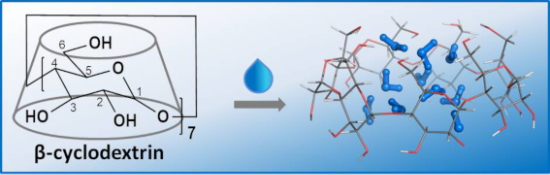
- rim is the preferred mode of coordination (n = 2; Figure 2, structure a). In this construct the water dimer not only connects two oppositely located OH groups from the rim, but additionally interacts with four other OH groups and forms an elaborate hydrogen-bond network that almost occludes the
- against experimental data (dissociation energy, D0, in the gas phase) on water dimer. Frequency calculations for each M062X/6-31G(d,p) optimized construct were performed at the same level of theory. No imaginary frequency was found for the lowest energy configurations of any of the optimized structures


Synthesis of 9-O-arylated berberines via copper-catalyzed CAr–O coupling reactions
Beilstein J. Org. Chem. 2019, 15, 1575–1580, doi:10.3762/bjoc.15.161

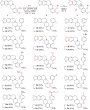
- 9-O-phenylene-bridged berberine dimer (5) was synthesized by copper-catalyzed cross-coupling of tetrahydroberberrubine and aryl iodides, followed by oxidation with I2. Keywords: arylation; berberines; cross-coupling; copper; lipophilicity; structural modification; Introduction Berberine (BBR) is a
- were subsequently converted back to the respective 9-O-arylated berberines and 9-O-phenylene-bridged berberine dimer. Oxidation with DMSO-d6 was first attempted with 2a. It showed good stability at ambient temperature and only 16% conversion to the 9-O-Ph berberine 3a was noted after 72 h of heating at
- backbone was observed as with Br2 [5]. This makes I2 a better oxidant for the oxidation of tetrahydroberberines. Compounds 3a–o are yellow solids, which are soluble in CH2Cl2, CH3CN, DMSO and MeOH. In contrast, the phenylene-bridged dimer 5 is only sparingly soluble in DMSO and MeOH. The formation of the



2,3-Dibutoxynaphthalene-based tetralactam macrocycles for recognizing precious metal chloride complexes
Beilstein J. Org. Chem. 2019, 15, 1460–1467, doi:10.3762/bjoc.15.146
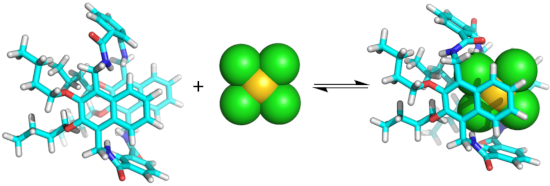
- values for (TBA)2[PtCl4] and (TBA)2[PdCl4] were 189 ± 36 M−1 and 198 ± 15 M−1, respectively. It should be noted that PdCl42− is relatively labile at high concentrations and is in equilibrium with the palladate dimer (Pd2Cl62−) and chloride ions [32][39]. The formation of Pd2Cl62− was supported by an ESI


Introduction of an isoxazoline unit to the β-position of porphyrin via regioselective 1,3-dipolar cycloaddition reaction
Beilstein J. Org. Chem. 2019, 15, 1434–1440, doi:10.3762/bjoc.15.143
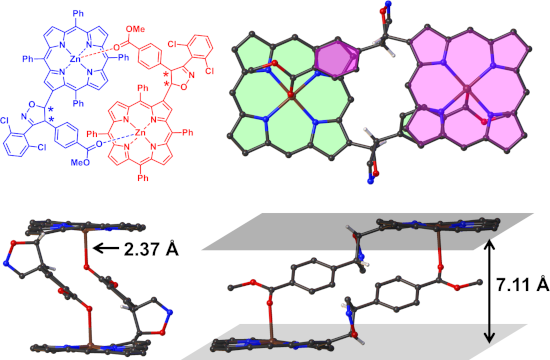
- longer than the distance when MeOH coordinated to the Zn2+ ions [49]. This may attribute to the larger volume of the C6H4CO2Me group than MeOH when closing to the Zn2+ center. In the dimer structure, two planes defined by porphyrin macrocycles are parallel with a distance of 7.11 Å. The bulky substituent
- trimethylphenyl group) in CDCl3 (500 MHz, 25 °C). The representative dimeric structure of 3a according to the crystal structure (a) and enantiomeric dimer structure in crystal (b–d, the phenyl group at meso-positions and 2,6-dichlorophenyl group were omitted for the sake of clarity). The distances of Zn–O (c) and


Borylation and rearrangement of alkynyloxiranes: a stereospecific route to substituted α-enynes
Beilstein J. Org. Chem. 2019, 15, 1416–1424, doi:10.3762/bjoc.15.141

- occurred upon oxygen-directed metalation. The resulting oxiranyllithium probably exists as a dimer in solution, as it has been nicely evidenced by structural characterization and NMR studies of the lithiated o-trifluoromethylstyrene oxide [37]. Such dimerization obviously stabilizes the oxiranyllithium
- species. Applied to oxiranyllithium derived from cis or trans-alkynyloxiranes, such dimer may easily form from the cis-oxirane (Scheme 2, entry 4), but not from the trans-isomer, or at least the large steric constrain present in it may hamper its stability. Indeed, the long oxirane C–O bond adjacent to
- lithium observed by X-ray diffraction in the lithiated o-trifluoromethylstyrene oxide [37] may be further elongated due to hindrance introduced by the trans-substituent adjacent to the lithium atom of the second oxirane in the dimer (Scheme 2, entry 5). Such effect may facilitate the formation of the


Selenophene-containing heterotriacenes by a C–Se coupling/cyclization reaction
Beilstein J. Org. Chem. 2019, 15, 1379–1393, doi:10.3762/bjoc.15.138

- formed dimers showed some differences: in DTT 1 the molecules overlap in a parallel orientation whereas in DST 3 an antiparallel orientation of the molecules in the dimer was found. The degree of overlap was determined to 73% and 64% for DTT 1 and DST 3, respectively. Less degree of overlap (43–53% and


Selective detection of DABCO using a supramolecular interconversion as fluorescence reporter
Beilstein J. Org. Chem. 2019, 15, 1371–1378, doi:10.3762/bjoc.15.137
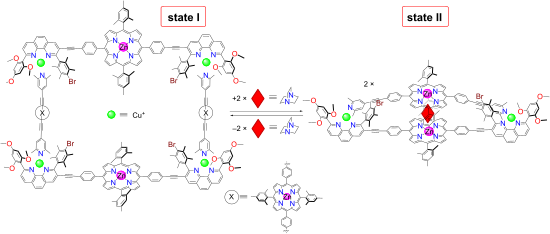
- , 3, and 4 and of the resulting products, i.e., rectangle 5, sandwich 6 and rhodium porphyrin dimer 7. Comparison of partial 1H NMR spectra (400 MHz, CD2Cl2, 298 K) of (a) ligand 2; (b) ligand 1; (c) porphyrin 3; (d) complex 7 = [(3)2(4)]; (e) rectangle 5 = [Cu4(1)2(2)2]4+]; (f) sandwich complex 6
- ); (c) after addition of 4.0 equiv of rhodium porphyrin 3, leading to formation of rectangle 5 and rhodium porphyrin dimer 7. (d) Further addition of 2.0 equiv of DABCO furnishes state II; (e) finally, addition of 4.0 equiv of rhodium porphyrin 3 recovered rectangle 5 along with 4.0 equiv of complex 7


One-pot activation–alkynylation–cyclization synthesis of 1,5-diacyl-5-hydroxypyrazolines in a consecutive three-component fashion
Beilstein J. Org. Chem. 2019, 15, 1360–1370, doi:10.3762/bjoc.15.136
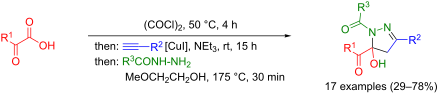
- dimer of compound 5r (thermal ellipsoids at 30% probability). Glyoxylation–alkynylation (GA) and activation–alkynylation (AA) synthesis of alkynediones in a one-pot fashion. Consecutive three-component synthesis to give 5-benzoyl-3-phenyl-1H-pyrazole (6a) after alkaline deacylation of intermediate 5a


Mechanochemical Friedel–Crafts acylations
Beilstein J. Org. Chem. 2019, 15, 1313–1320, doi:10.3762/bjoc.15.130
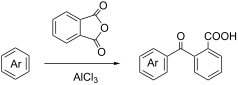
- anthracene in 95% yield. This [4π + 4π] cycloreversion in mechanochemical conditions is analogous to previously described dissociation of labile anthracene/C60 cycloadduct [52]. When the reaction of 19 with 20 was carried out in solution (DCM, overnight), 60% of dimer was converted to anthracene, and traces
- ); aconversion from NMR analysis; bsolution reaction in flask, substrate/acylation reagent/AlCl3 ratio is 1:1:2.5; ball-milling details are given in Table 1. Scope of aromatic substrates in FCR under mechanochemical activation conditions. aIsolated yields. Mechanochemical regiodirected FCR of anthracene dimer


Switchable selectivity in Pd-catalyzed [3 + 2] annulations of γ-oxy-2-cycloalkenones with 3-oxoglutarates: C–C/C–C vs C–C/O–C bond formation
Beilstein J. Org. Chem. 2019, 15, 1107–1115, doi:10.3762/bjoc.15.107
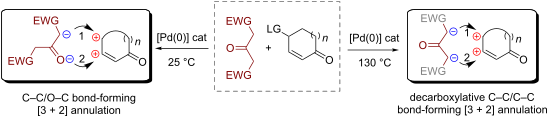
- cycloaddition to form dimer 6 [45]. We next turned our attention to the [3 + 2] C–C/C–C annulation by using the conditions B and C in DMSO at 130 °C (Scheme 4). The 2-cyclohexenone 4-benzoate (2a) afforded the expected bicyclo[4.3.0]nonane-3,8-dione (5a) in 69% yield (64% from 1.0 mmol of 1a) under either


Halogen bonding and host–guest chemistry between N-alkylammonium resorcinarene halides, diiodoperfluorobutane and neutral guests
Beilstein J. Org. Chem. 2019, 15, 947–954, doi:10.3762/bjoc.15.91
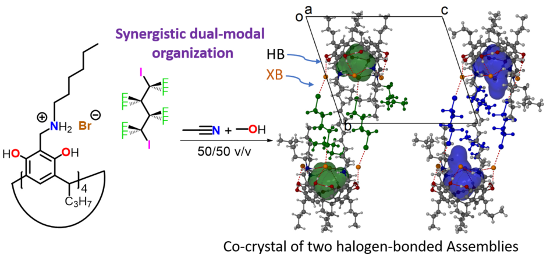
- nature of the halogen bond assembly. The crystal lattice of 1 contains two structurally different dimeric assemblies A and B, formally resulting in the mixture of a capsular dimer and a dimeric pseudo-capsule. 1H and 19F NMR analyses supports the existence of these halogen-bonded complexes and enhanced
- tube, only creating isolated pores in the cavity of the resorcinarene. Note that the two modes are present simultaneously in the crystal lattice, thus, the structure formally contains around 75% halogen bonded dimer, and 25% halogen bonded capsule. Additionally, the conformation difference could reveal


Diastereo- and enantioselective preparation of cyclopropanol derivatives
Beilstein J. Org. Chem. 2019, 15, 752–760, doi:10.3762/bjoc.15.71
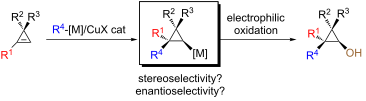
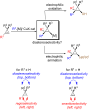
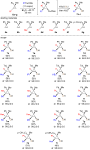
- usually proceeds through single-electron transfer to dioxygen, leading to either a loss of stereoselectivity, degradation of the organocopper or to the formation of dimer as major products [71]. Therefore, it was clear that a different approach for the oxidation process was needed. Oxenoid, possessing the





Efficient synthesis of 4-substituted-ortho-phthalaldehyde analogues: toward the emergence of new building blocks
Beilstein J. Org. Chem. 2019, 15, 721–726, doi:10.3762/bjoc.15.67

- % yield. After completing the oxidation step with convincing results, the final step of the methoxy group removal was undertaken. Several studies showed that OPA reacts in the presence of water to form a cyclic 1,3-phthalandiol [21] or a dimer [22]. Taking this into account to access pure 4-HO-OPA, it was


Synthesis and selected transformations of 2-unsubstituted 1-(adamantyloxy)imidazole 3-oxides: straightforward access to non-symmetric 1,3-dialkoxyimidazolium salts
Beilstein J. Org. Chem. 2019, 15, 497–505, doi:10.3762/bjoc.15.43
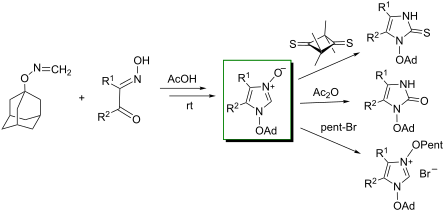
- isoamyl nitrate [35] or, as in the case of 2b, by oximation of 1,2-diphenylethane-1,2-dione [36]. 2,2,4,4-Tetramethylcyclobutane-1,3-dithione (11a) was prepared from the dimethylketene dimer (2,2,4,4-tetramethylcyclobutane-1,3-dione) by thionation using tetraphosphorus decasulfide [37]. Adamantan-1-yl


Application of olefin metathesis in the synthesis of functionalized polyhedral oligomeric silsesquioxanes (POSS) and POSS-containing polymeric materials
Beilstein J. Org. Chem. 2019, 15, 310–332, doi:10.3762/bjoc.15.28
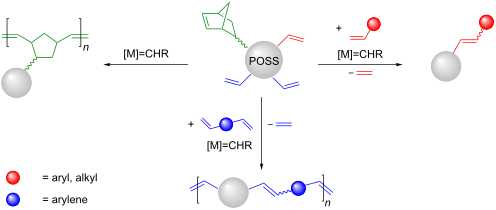
- of the acid and the directionality of the hydrogen bond pattern of the acid dimer. Cross metathesis of monovinyl-substituted POSS with olefins has been reported for the first time by Marciniec [18]. It was demonstrated that monovinylheptaisobutyl-substituted octasilsesquioxane (monovinyl-POSS