


Search results
Search for "dipolar cycloaddition" in Full Text gives 186 result(s) in Beilstein Journal of Organic Chemistry.
Triazol-substituted titanocenes by strain-driven 1,3-dipolar cycloadditions
Beilstein J. Org. Chem. 2014, 10, 1630–1637, doi:10.3762/bjoc.10.169

- molecules. Since no metal complexes are required to catalyze the 1,3-dipolar cycloaddition [41][42][43], the reaction can be even used for the functionalization of biomolecules in living systems and has therefore been called bioorthogonal [34][35]. To the best of our knowledge, no examples of the Ti
- cycloaddition with an alkyne-functionalized titanocene has been described [44]. Therefore, the properties of triazol-substituted titanocenes, the products of the 1,3-dipolar cycloaddition, are also largely unexplored. Results and Discussion Synthesis of the titanocenes Preparation of the starting materials We
- functionalization through the strain-driven 1,3-dipolar cycloaddition with cyclooctyne. The original conditions of Wittig [36], the reaction of cyclooctyne with phenyl azide, and the numerous applications pioneered by Bertozzi suggest that the reaction proceeds under mild conditions [34][35][37][38][39][40


Synthesis and solvodynamic diameter measurements of closely related mannodendrimers for the study of multivalent carbohydrate–protein interactions
Beilstein J. Org. Chem. 2014, 10, 1524–1535, doi:10.3762/bjoc.10.157
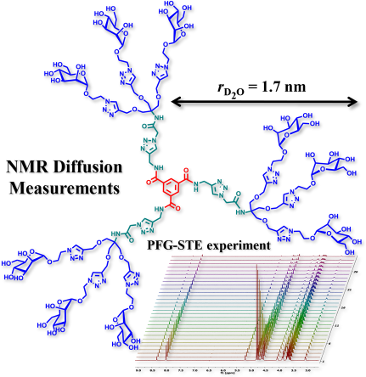
- -azidoethyl α-D-mannopyranoside 3 [34] under classical copper-catalyzed dipolar cycloaddition (CuAAc) to afford 4 in 56% yield. Structure 4 was readily characterized by the absence of acetylenic protons at δ 3.16 ppm, the appearance of identical triazole protons (3H) at δ 7.74 ppm relative to the anomeric


Carbohydrate PEGylation, an approach to improve pharmacological potency
Beilstein J. Org. Chem. 2014, 10, 1433–1444, doi:10.3762/bjoc.10.147
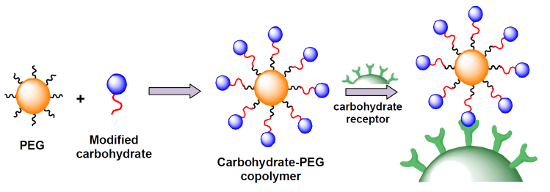
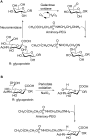
- others, free radical polymerization of C-6 of the glucosamine residues with poly(ethylenglycol) acrylate [58]; free-radical polymerization of C-1 of glucosamine with mPEG [59] and 1,3-dipolar cycloaddition between the azide of an N-azidated chitosan and mPEG derivatives containing a triazolyl moiety [60






A complete series of 6-deoxy-monosubstituted tetraalkylammonium derivatives of α-, β-, and γ-cyclodextrin with 1, 2, and 3 permanent positive charges
Beilstein J. Org. Chem. 2014, 10, 1390–1396, doi:10.3762/bjoc.10.142

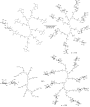
- Huisgen 1,3-dipolar cycloaddition [30] (most popular ‘click reaction’) or the reduction to the amine. Our strategy involved the synthesis of the alkylation agent 1-azido-2-iodoethane (24) (Scheme 5) which would be used for the quaternization of the tertiary amine intermediate. The reaction sequence for


An economical and safe procedure to synthesize 2-hydroxy-4-pentynoic acid: A precursor towards ‘clickable’ biodegradable polylactide
Beilstein J. Org. Chem. 2014, 10, 1365–1371, doi:10.3762/bjoc.10.139

- groups onto polymers via convenient ‘click’ reaction with organic azido molecules without PLA backbone degradation [17]. ‘Click’ chemistry [20], which is copper(I)-catalyzed 1,3-dipolar cycloaddition of azides and alkynes, has been developed and utilized in recent years as a powerful synthetic strategy


Visible-light photoredox catalyzed synthesis of pyrroloisoquinolines via organocatalytic oxidation/[3 + 2] cycloaddition/oxidative aromatization reaction cascade with Rose Bengal
Beilstein J. Org. Chem. 2014, 10, 1233–1238, doi:10.3762/bjoc.10.122
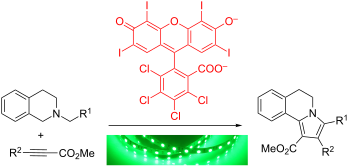
- type of compounds [22][23][24][25][26]. Recently, several metal mediated syntheses using a [3 + 2] cycloaddition reaction have been described in the literature. Porco Jr. et al. [27] described a silver-catalyzed cycloisomerization/dipolar cycloaddition for the synthesis of the pyrrolo[2,1-a
- . In this case, the addition of NBS was not necessary, and the corresponding products 6 were isolated in moderate yields (Scheme 3). Conclusion In conclusion, we have developed a metal-free photoredox oxidation/[3 + 2] dipolar cycloaddition/oxidative aromatization cascade catalyzed by Rose Bengal using


N-Alkylated dinitrones from isosorbide as cross-linkers for unsaturated bio-based polyesters
Beilstein J. Org. Chem. 2014, 10, 902–909, doi:10.3762/bjoc.10.88

- unsaturated polyester was cross-linked by a 1,3-dipolar cycloaddition with the received dinitrones 10a/b. The 1,3-dipolar cycloaddition led to a strong change of the mechanical properties which were investigated by rheological measurements. Nitrones derived from methyl acrylate (3a) and methyl crotonate (3b
- ) were used as model systems and reacted with dimethyl itaconate to further characterize the 1,3-dipolaric cycloaddition. Keywords: bio-based polyesters; cross-linkers; dinitrones; 1,3-dipolar cycloaddition; isosorbide; Introduction Nitrones represent a class of compounds with a versatile use as
- -dipolar cycloaddition with unsaturated bio-based polyester poly(isosorbide itaconate -co- succinate). Results and Discussion N-Alkylated dinitrones derived from acrylates and crotonates were prepared and evaluated in respect to their 1,3-cycloaddition with itaconic acid containing polyester resins. To


Use of activated enol ethers in the synthesis of pyrazoles: reactions with hydrazine and a study of pyrazole tautomerism
Beilstein J. Org. Chem. 2014, 10, 752–760, doi:10.3762/bjoc.10.70

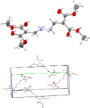
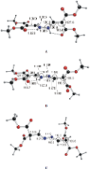
- ), 1,3-dipolar cycloaddition with diazo compounds as a source of N–N linkage, degradation of fused pyrazoles or rearrangement of other monocyclic heterocycles under chemical, thermal or photochemical conditions [4]. Upon reaction of hydrazine with symmetrical enol ethers, only a single product is formed



Copper–phenanthroline catalysts for regioselective synthesis of pyrrolo[3′,4′:3,4]pyrrolo[1,2-a]furoquinolines/phenanthrolines and of pyrrolo[1,2-a]phenanthrolines under mild conditions
Beilstein J. Org. Chem. 2014, 10, 692–700, doi:10.3762/bjoc.10.62

- -700032, India 10.3762/bjoc.10.62 Abstract A new series of pyrrolo[3′,4′:3,4]pyrrolo[1,2-a]furoquinolines/phenanthrolines and pyrrolo[1,2-a]phenanthrolines were efficiently built up from an 8-hydroxyquinoline derivative or phenanthroline via 1,3-dipolar cycloaddition reaction involving non-stabilized
- azomethine ylides, generated in situ from the parent furo[3,2-h]quinoliniums/phenanthroliums, in presence of a copper(II) chloride–phenanthroline catalytic system. The methodology combines general applicability with high yields. Keywords: copper(II) chloride–phenanthroline; 1,3-dipolar cycloaddition; furo
- [3,2-h]quinoliniums; phenanthroliums; pyrrolo[1,2-a]phenanthrolines; pyrrolo[3′,4′:3,4]pyrrolo[1,2-a]furoquinolines/phenanthrolines; Introduction The chemistry of the 1,3-dipolar cycloaddition has always been a fascinating undertaking especially when azomethine ylides are involved as the key component


Isocyanide-based multicomponent reactions towards cyclic constrained peptidomimetics
Beilstein J. Org. Chem. 2014, 10, 544–598, doi:10.3762/bjoc.10.50

- -components that bear an additional alkene, alkyne or azide moiety and can be cyclized via either a deprotection–cyclization strategy, a ring-closing metathesis, a 1,3-dipolar cycloaddition or even via a sequence of multiple multicomponent reactions. The sequential IMCR-cyclization reactions can afford small


Silver and gold-catalyzed multicomponent reactions
Beilstein J. Org. Chem. 2014, 10, 481–513, doi:10.3762/bjoc.10.46
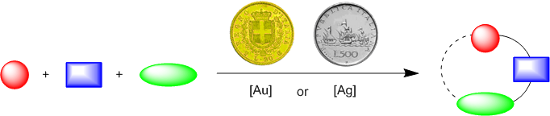
- tautomerization. Instead, an Ag(I) complex based on BINAP and AgSbF6 was employed as a catalyst for the enantioselective 1,3-dipolar cycloaddition reaction of azomethine ylides and alkenes for the synthesis of pyrrolidines 81 and 82 (Scheme 38) [97]. The reaction was developed mainly as a two-component reaction


Additive-assisted regioselective 1,3-dipolar cycloaddition of azomethine ylides with benzylideneacetone
Beilstein J. Org. Chem. 2014, 10, 352–360, doi:10.3762/bjoc.10.33

- 4-nitrobenzoic acid, respectively. The substituent effects on the regioselectivity were also investigated. Keywords: 1,3-dipolar cycloaddition; azomethine ylide; regioselectivity; spirooxindole; Introduction Spirooxindoles are important synthetic targets due to their significant biological
- with various dipolarophiles, such as α,β-unsaturated esters [21][22][23][24][25], dienones [26][27], α,β-unsaturated ketones [28][29][30], unsaturated aryl ketones [31][32][33] and electron-poor alkenes [34][35][36][37][38][39]. Among the studied α,β-unsaturated enones for 1,3-dipolar cycloaddition
- , chalcone derivatives are the most widely used dipolarophiles. Sarrafi and co-workers reported a 1,3-dipolar cycloaddition reaction of isatin, benzylamine and chalcone derivatives [31], and only one single regioisomer was obtained in high yield, in which the benzoyl group was connected to C-3 of the newly




Synthesis and biological activity of N-substituted-tetrahydro-γ-carbolines containing peptide residues
Beilstein J. Org. Chem. 2014, 10, 155–162, doi:10.3762/bjoc.10.13
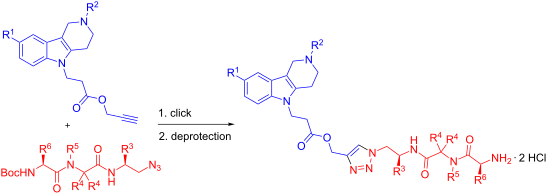
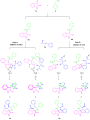
- described the conjugation of N-substituted tetrahydro-γ-carbolines containing a terminal alkyne group 3a–d with various azidopeptides 5 (prepared by Ugi multicomponent reaction) through the Cu(I)-catalyzed Huisgen 1,3-dipolar cycloaddition. The activity of the obtained compounds on rat liver mitochondria


The regioselective synthesis of spirooxindolo pyrrolidines and pyrrolizidines via three-component reactions of acrylamides and aroylacrylic acids with isatins and α-amino acids
Beilstein J. Org. Chem. 2014, 10, 117–126, doi:10.3762/bjoc.10.8
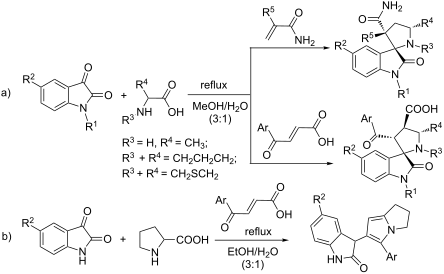
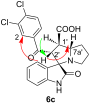
- aroylacrylic acids as dipolarophiles has been realized through a one-pot 1,3-dipolar cycloaddition protocol. Decarboxylation of 2'-aroyl-2-oxo-1,1',2,2',5',6',7',7a'-octahydrospiro[indole-3,3'-pyrrolizine]-1'-carboxylic acids is accompanied by cyclative rearrangement with formation of dihydropyrrolizinyl
- inhibitors [9][10]. The multicomponent 1,3-dipolar cycloaddition of azomethine ylides, generated in situ via decarboxylative condensation of isatins and α-amino acids with olefinic and acetylenic dipolarophiles, represents a key approach for the regio- and stereoselective construction of a variety of complex
- inhibitors there are compounds containing a pyrrolidine-2-one as a part of the spirocyclic system [34]. In the present work we report the synthesis of spirooxindolo pyrrolidines and pyrrolizidines by utilizing a 1,3-dipolar cycloaddition of hitherto uninvestigated acrylamides and aroylacrylic acids with




Synthesis of five- and six-membered cyclic organic peroxides: Key transformations into peroxide ring-retaining products
Beilstein J. Org. Chem. 2014, 10, 34–114, doi:10.3762/bjoc.10.6
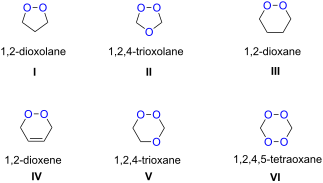
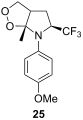
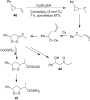
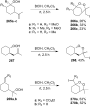
- involves several steps: the 1,3-dipolar cycloaddition of ozone to the double bond to form unstable 1,2,3-trioxolane 164 (so-called molozonide) that is followed by its decomposition to a peroxycarbenium ion and a carbonyl compound (Criegee intermediates). The 1,3-dipolar cycloaddition of the intermediates












Less reactive dipoles of diazodicarbonyl compounds in reaction with cycloaliphatic thioketones – First evidence for the 1,3-oxathiole–thiocarbonyl ylide interconversion
Beilstein J. Org. Chem. 2013, 9, 2751–2761, doi:10.3762/bjoc.9.309

- formation of these compounds can be rationalized by pathways presented in Scheme 2 [4][22]. 1) Pathway A implies the initial 1,3-dipolar cycloaddition between the diazo compound 2 and the С=S bond of thioketone 1 giving rise to 1,3,4-thiadiazoline 10. The latter is usually an unstable intermediate species




Advancements in the mechanistic understanding of the copper-catalyzed azide–alkyne cycloaddition
Beilstein J. Org. Chem. 2013, 9, 2715–2750, doi:10.3762/bjoc.9.308
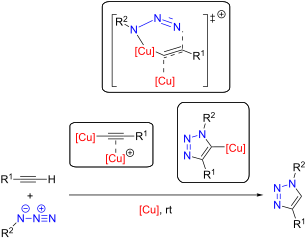
- but-2-ynedioate and phenyl azide at 100 °C in a sealed tube and suggested that regioisomeric triazoles were formed [1]. However, it was only in the 1960s that Huisgen recognized this type of reaction for its generality, scope and mechanism [2][3][4][5], and coined the term 1,3-dipolar cycloaddition
- a factor of up to 107 in comparison to Huisgen’s uncatalyzed procedure [13][14]. Since Meldal and Sharpless had first reported this copper-catalyzed variant of Huisgen’s 1,3-dipolar cycloaddition, a myriad of protocols employing different catalyst systems has been described. It is essential for the




Synthetic scope and DFT analysis of the chiral binap–gold(I) complex-catalyzed 1,3-dipolar cycloaddition of azlactones with alkenes
Beilstein J. Org. Chem. 2013, 9, 2422–2433, doi:10.3762/bjoc.9.280
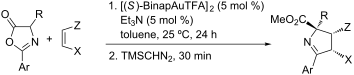
- , Universidad del País Vasco, Apdo. 1072, E-20018 San Sebastián, Spain IKERBASQUE, Basque Foundation for Science, 48011 Bilbao, Spain 10.3762/bjoc.9.280 Abstract The 1,3-dipolar cycloaddition between glycine-derived azlactones with maleimides is efficiently catalyzed by the dimeric chiral complex [(Sa
- : asymmetric catalysis; DFT; 1,3-dipolar cycloaddition; gold catalysis; NICS; NTR; oxazolones; prolines; Introduction The synthesis of α-amino acids employing an α-amino carbonyl template constitutes the most straightforward route to introduce the α-side chain [1]. As a valid example, oxazol-5-(4H)-ones
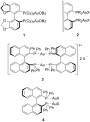
- electrophilic alkenes have not been exploited. Toste´s group published an efficient 1,3-dipolar cycloaddition (1,3-DC) between alanine, phenylalanine and allylglycine derived azlactones with maleimides and acrylates employing dimetallic (S)-Cy-Segphos(AuOBz)2 complex 1 as a catalyst (2 mol %) in the absence of





Synthesis of enantiopure sugar-decorated six-armed triptycene derivatives
Beilstein J. Org. Chem. 2013, 9, 2410–2416, doi:10.3762/bjoc.9.278

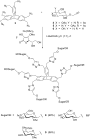
- is the first example of six-armed carbohydrate-substituted triptycenes, which appear as promising candidates for the development of new supramolecular systems with specific properties. Results and Discussion The Huisgen 1,3-dipolar cycloaddition reaction, which represents the key step of click



A one-pot synthesis of 3-trifluoromethyl-2-isoxazolines from trifluoromethyl aldoxime
Beilstein J. Org. Chem. 2013, 9, 2387–2394, doi:10.3762/bjoc.9.275
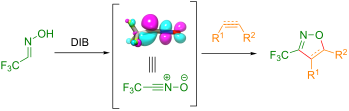
- reacted with olefins (such as styrene, allyl derivatives, etc.) through a 1,3-dipolar cycloaddition to give the desired product. Therefore, the development of a straightforward and mild general procedure to access these valuable derivatives remains of great importance. In the present work, we describe a
- unreactive towards trifluoroacetonitrile oxide 4. 1,3-Dipolar cycloaddition reactions have been studied from the theoretical standpoint since the 1970’s onwards [36][37] with an ever-increasing accuracy as computational methods evolved [38]. Assuming that the above-mentioned transformations occur via a


Synthesis and characterization of novel bioactive 1,2,4-oxadiazole natural product analogs bearing the N-phenylmaleimide and N-phenylsuccinimide moieties
Beilstein J. Org. Chem. 2013, 9, 2202–2215, doi:10.3762/bjoc.9.259
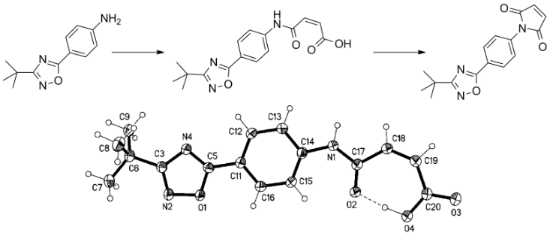
- reviewed the synthesis of 1,2,4-oxadiazoles [33]. He pointed out that two general methods dominate the practical preparation (≈95%): (a) The condensation of amidoximes with carboxylic acid derivatives. (b) The dipolar cycloaddition of nitrile oxides to nitriles. The general approach for the synthesis of
- (interplanar angles 22° and 9°). Three of the four NH hydrogens are involved in hydrogen bonds, leading to ribbons of H-bonded rings parallel to the a axis. Following the second route, the 1,3-dipolar cycloaddition, with the purpose of increasing the yield of compound 1, we used p-toluenesulfonic acid (PTSA
- complex as a leaving group, giving rise to the formation of the nitrile oxide. The 1,2,4-oxadiazole moiety is established by the 1,3-dipolar cycloaddition of nitrile oxide to the 4-aminobenzonitrile. However, the Lewis acid might also be involved in the formation of the heterocycle via a Lewis acid



The chemistry of isoindole natural products
Beilstein J. Org. Chem. 2013, 9, 2048–2078, doi:10.3762/bjoc.9.243
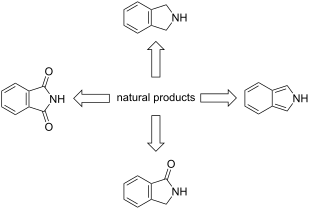
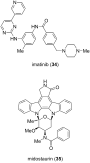
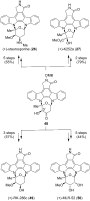
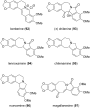
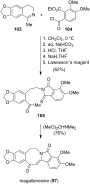
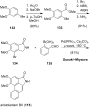
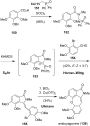
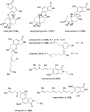
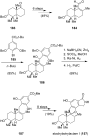
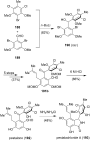
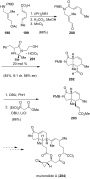
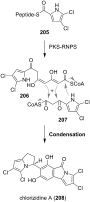
- . This transformation proceeds via a 1,3-dipolar cycloaddition between the in situ formed azomethinylide 15 and the benzoquinone 16 to directly give 17 (Scheme 1). Spontaneous oxidation of the so-obtained cyclization adduct generates isoindole 18. Isoindoles have also found application as dyes. Pigment
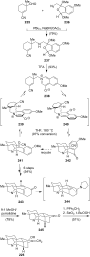
- % overall yield. Two years later, a more concise and efficient access to (±)-nominine (225), featuring a oxidoisoquinolinium-1,3-dipolar cycloaddition and a dienamine-Diels–Alder reaction, was accomplished by Gin (Scheme 31) [178]. Coupling of 235 and 236, both synthesized within three steps from simple
- -dipolar cycloaddition. Carrying out the reaction at 180 °C in tetrahydrofuran provided a separable mixture of pyrrolidine isomers 241 and 242 (1:3.6). The undesired cycloadduct 242 could be equilibrated to 241 due to the reversibility of the reaction. Conversion to the β,γ-cyclohexenone 243 was
















The chemistry of amine radical cations produced by visible light photoredox catalysis
Beilstein J. Org. Chem. 2013, 9, 1977–2001, doi:10.3762/bjoc.9.234
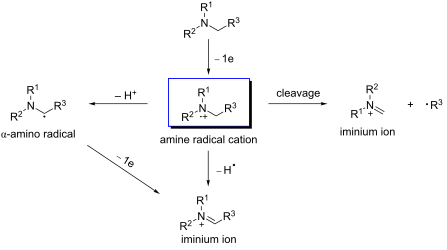
- that when tetrahydroisoquinolines (e.g., 41 and 45) were substituted with a methylene group attached to one or two esters, the initially formed iminium ions were readily converted to azomethine ylides. They subsequently underwent 1,3-dipolar cycloaddition with a range of dipolarophiles to form fused
- loss of a proton. 1,3-Dipolar cycloaddition of 50 with a dipolarophile 46 furnishes fused pyrrolidine 51 that is further oxidized to pyrrole 52. The Zhu group discovered that the use of α-ketoester 53 as a pronucleophile to intercept the iminium ion of 13 triggered a new cascade reaction en route to
- oxidized to nitrone 64. Finally, an intramolecular 1,3-dipolar cycloaddition of 64 furnishes isoxazolidine 55. Tetrahydroisoquinolines are arguably the most exploited amines in visible light photoredox catalysis. However, efforts towards expanding the scope of amines have been recently reported. Li [82




AgOTf-catalyzed one-pot reactions of 2-alkynylbenzaldoximes with α,β-unsaturated carbonyl compounds
Beilstein J. Org. Chem. 2013, 9, 1949–1956, doi:10.3762/bjoc.9.231

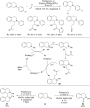
- /Pd-catalyzed direct arylation of 2-alkynylbenzaldoximes [41]. Inspired by the key contributions from the groups of Wu [36][37][38][39] and Deng [40], we envisioned that 1-alkylated isoquinolines could be generated in a one-pot AgOTf-catalyzed cyclization/1,3-dipolar cycloaddition/rearrangement or
- a 1,3-dipolar cycloaddition with α,β-unsaturated carbonyl compound 2 leading to 2,10b-dihydro-1H-isoxazolo[3,2-a]isoquinoline intermediate B [44][45], which may then suffer a rearrangement or fragmentation resulting in compound 3 (Scheme 1) [35][36][38][42]. To demonstrate the feasibility of this


[3 + 2]-Cycloadditions of nitrile ylides after photoactivation of vinyl azides under flow conditions
Beilstein J. Org. Chem. 2013, 9, 1745–1750, doi:10.3762/bjoc.9.201
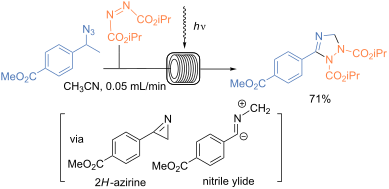
- nitrile ylide formation and the 1,3-dipolar cycloaddition. We initially chose to photolyze methyl 4-(1-azidovinyl)benzoate (1a) in the presence of acrylonitrile (4a) (Table 2). A solution of 1a and 4a in the respective solvent was passed through the photochemical flow-reactor with 5.5 mL volume and a
- presence of a tenfold access of 4a provided the cycloaddition product 5a in 96% yield as a single regioisomer (Table 2, entry 8). Remarkably, after removal of the solvent under reduced pressure it was not necessary to further purify the product. Next the scope of the photo-induced 1,3-dipolar cycloaddition
- further generalization of this flow protocol along with telescoping it with vinyl azide formation. Formation of azirines 2 from vinyl azides 1, photoinduced ring-opening to the nitrile ylides 3, and 1,3-dipolar cycloaddition to the pentacyclic N-heterocycles 5. Solid-phase assisted synthesis of vinyl





