Search results
Search for "ethanol" in Full Text gives 779 result(s) in Beilstein Journal of Organic Chemistry. Showing first 200.
Synthesis of N-phenyl- and N-thiazolyl-1H-indazoles by copper-catalyzed intramolecular N-arylation of ortho-chlorinated arylhydrazones
Beilstein J. Org. Chem. 2022, 18, 1079–1087, doi:10.3762/bjoc.18.110
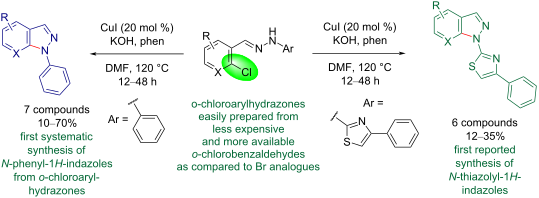
- g, 1.5 mmol), 2-bromoacetophenone (0.298 g, 1.5 mmol), and absolute ethanol (2 mL) were added to a 10 mL round bottom flask. The mixture was stirred at room temperature for 5–10 min. The solid was filtered off, washed with ethyl ether, and dried in a desiccator to give the product 3a–i with adequate


Electrochemical formal homocoupling of sec-alcohols
Beilstein J. Org. Chem. 2022, 18, 1062–1069, doi:10.3762/bjoc.18.108
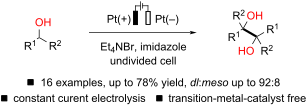
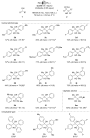
- (2f and 2g). On the other hand, the reaction of 1-(4-cyanophenyl)ethanol (1h) resulted in a decrease in both the yield and the dl:meso ratio. While steric hindrance of substituents on the meta-position of the aryl moiety did not impede the present transformation (2i and 2j), the ortho-substituted




Automated grindstone chemistry: a simple and facile way for PEG-assisted stoichiometry-controlled halogenation of phenols and anilines using N-halosuccinimides
Beilstein J. Org. Chem. 2022, 18, 999–1008, doi:10.3762/bjoc.18.100
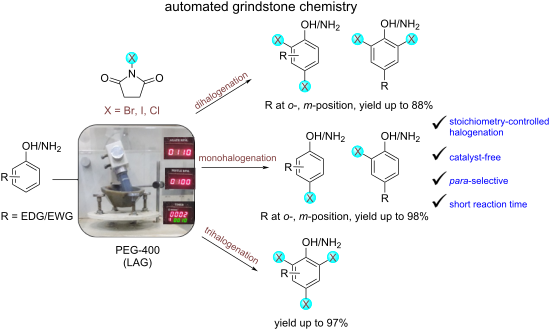
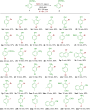
- incomplete and a mixture containing some starting material (1a), two other spots which are identified as o-monobromo (2a) as major (57%), and o-dibrominated p-cresol (3a) as minor (20%) constituents, was obtained (Table 1, entry 1). Next, the reaction mixture was ground under LAG conditions with ethanol and




On Reuben G. Jones synthesis of 2-hydroxypyrazines
Beilstein J. Org. Chem. 2022, 18, 935–943, doi:10.3762/bjoc.18.93
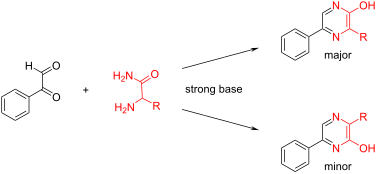
- were made on a 0.2 mol scale and an optimal addition rate of a 12 N sodium hydroxide solution of 8.0–8.6 mmol/min was reported [32]. For our part, instead of starting the reaction at −30 °C, we used the lower temperature of −78 °C which only requires a cooling bath containing dry ice and ethanol
- (Table 2, entries 5 and 6 in comparison with entry 2). Trials using ethanol or isopropanol as a solvent (Table 2, entries 7 and 8) were not successful, plausibly because of a precipitation of the reaction medium before the end of the base addition. Trials with lithium or potassium hydroxide (Table 2
- entry 10. In a double-necked flask, phenyl glyoxal hydrate (2 g, 0.013 mol) and alanine amide hydrochloride (1.63 g, 0.013 mmol) were dispersed in methanol (35 mL). This was cooled to −78 °C using an ethanol and dry ice bath, under a calcium chloride-protected atmosphere. Then, 20% tetraethylammonium


First series of N-alkylamino peptoid homooligomers: solution phase synthesis and conformational investigation
Beilstein J. Org. Chem. 2022, 18, 845–854, doi:10.3762/bjoc.18.85
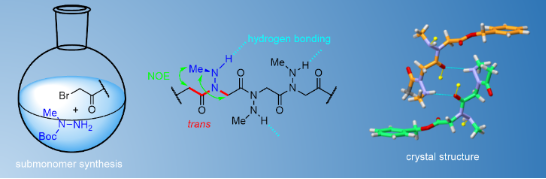
- of acid and carrying out the reaction at 60 °C. The formation of byproduct 1e was also observed at room temperature and attempts to trap the ethanol released in the reaction by molecular sieves did not give any improvement. Finally, we tested N-methyl-2-chloropyridinium iodide (Mukaiyama reagent) [46


Synthesis and HDAC inhibitory activity of pyrimidine-based hydroxamic acids
Beilstein J. Org. Chem. 2022, 18, 837–844, doi:10.3762/bjoc.18.84
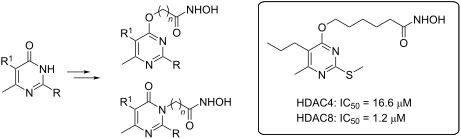
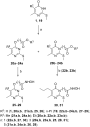
- collected by filtration, washed with ice water and dried (compound 30 was recrystallized from a mixture of ethanol/water 1:1). In case of compound 29, after acidification, the reaction mixture was extracted with chloroform (3 × 10 mL), the organic solutions were combined, washed with brine, dried over



Synthesis of bis-spirocyclic derivatives of 3-azabicyclo[3.1.0]hexane via cyclopropene cycloadditions to the stable azomethine ylide derived from Ruhemann's purple
Beilstein J. Org. Chem. 2022, 18, 769–780, doi:10.3762/bjoc.18.77
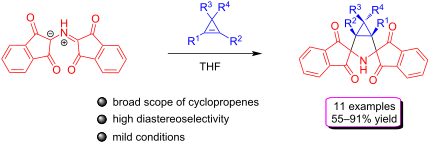
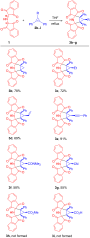
- cycloadduct 3a. 3-Azabicyclo[3.1.0]hexane derivative 3a was obtained after recrystallization from MeOH in yields 67, 70, and 61%, respectively (Table 1, entries 2–4). In contrast to aprotic solvents, alcohols such as methanol (MeOH) and ethanol (EtOH) were absolutely unsuitable for carrying out this reaction
- a result of the cycloaddition reaction with cyclopropene 2m. The corresponding bis-spiro compound 5a was readily isolated in 82% yield after recrystallization from ethanol. Similarly, we succeeded in carrying out reactions between unsymmetrically 1,2-disubstituted cyclopropenes 2n, 2o and PRP (1). 1






Inductive heating and flow chemistry – a perfect synergy of emerging enabling technologies
Beilstein J. Org. Chem. 2022, 18, 688–706, doi:10.3762/bjoc.18.70
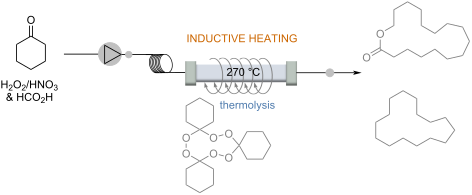
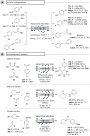
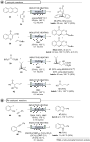
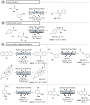
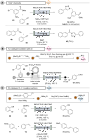
- electromagnetic field. Other comparisons include the Pd-mediated transfer hydrogenations using ethanol in cyclohexene (Scheme 9, case A), multicomponent reactions (Scheme 9, case B), pericyclic reactions (Scheme 10, case A) and Pd-catalyzed reactions (Scheme 10, case B) [53]. Noteworthy, packed bed fillings used
- consisting of O-allylation and Claisen rearrangement for the continuous synthesis of 2-allyl-4,6-difluorophenol (SiC = silicon carbide) [52]. Continuous flow reactions and comparison with batch reaction (oil bath). A. Pd-catalyzed transfer hydrogenations using ethanol in cyclohexene [53], B. multicomponent




Direct C–H amination reactions of arenes with N-hydroxyphthalimides catalyzed by cuprous bromide
Beilstein J. Org. Chem. 2022, 18, 647–652, doi:10.3762/bjoc.18.65
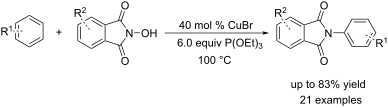
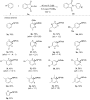
- obtained in moderate to high yields. According to the experimental results and our previous work [27][28], a possible reaction mechanism is given in Scheme 4. At first, NHPI combines with triethyl phosphite to form intermediate 4, which is the loss of ethanol to generate intermediate 5. Then, single




Cholyl 1,3,4-oxadiazole hybrid compounds: design, synthesis and antimicrobial assessment
Beilstein J. Org. Chem. 2022, 18, 631–638, doi:10.3762/bjoc.18.63
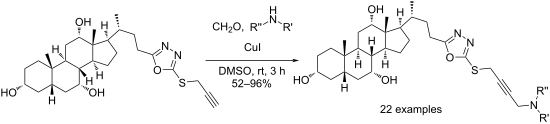
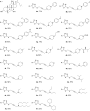
- available cholic acid, which was converted to its cholyl hydrazide (1) as previously reported by us [21]. The produced cholyl hydrazide 1 was heterocyclized to 1,3,4-oxadiazole-2-thiol 2 in excellent yield (93%), via the treatment with carbon disulfide and trimethylamine in refluxing ethanol (Scheme 1) [33


A study of the photochemical behavior of terarylenes containing allomaltol and pyrazole fragments
Beilstein J. Org. Chem. 2022, 18, 588–596, doi:10.3762/bjoc.18.61
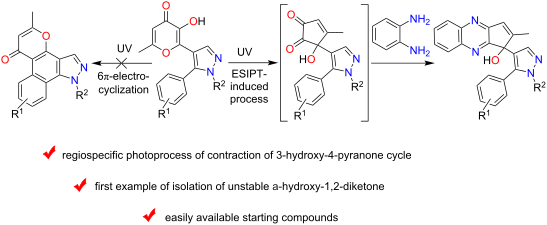
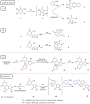
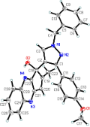
- in a solution of DMSO-d6. UV irradiation at a wavelength of 365 nm for 48 h in an NMR tube did not lead to any transformations of the starting pyrazole 16. Our attempts to carry out the photocyclization of pyrazole 16 in various solvents (DMF, acetonitrile, toluene, ethanol, methylene chloride





Syntheses of novel pyridine-based low-molecular-weight luminogens possessing aggregation-induced emission enhancement (AIEE) properties
Beilstein J. Org. Chem. 2022, 18, 580–587, doi:10.3762/bjoc.18.60
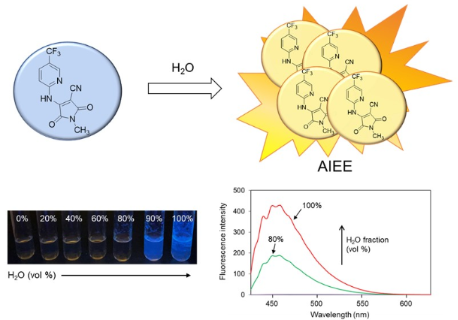
- electron-withdrawing groups [13][14][15]. Previously, we have reported various pyridine derivatives, including polysubstituted pyridines and fused pyridines, which exhibited strong fluorescence in organic solvents (ethanol and dichloromethane) [16][17][18][19], while their fluorescence in aqueous media was
- study, we used 1-methyl-4-(methylsulfanyl)-2,5-dioxo-2,5-dihydro-1H-pyrrole-3-carbonitrile (1) with a methylsulfanyl group as a good leaving group. As shown in Scheme 1, the one-pot reaction of 1 with 2-aminopyridine (2a) proceeded by refluxing in ethanol for 2 h to produce the ring-fused pyridine
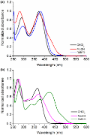
- –vis spectra of all compounds were recorded in ethanol (EtOH), a polar solvent, and in dichloromethane (DCM), a non-polar solvent (see Figures S15–S17 in Supporting Information File 1). The maximum absorption peaks (λmax) shifted slightly to longer wavelengths in dichloromethane. Table 2 summarizes the


Chemistry of polyhalogenated nitrobutadienes, 17: Efficient synthesis of persubstituted chloroquinolinyl-1H-pyrazoles and evaluation of their antimalarial, anti-SARS-CoV-2, antibacterial, and cytotoxic activities
Beilstein J. Org. Chem. 2022, 18, 524–532, doi:10.3762/bjoc.18.54
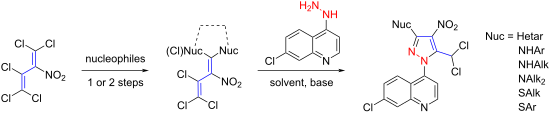
- –e [14], 4f [9], 4i [14], 4j [9], 4k [26], and 4m,n [27], and led to dienes 4a, 4g, 4h, 4l, and 4o, respectively, in yields of 52–85%. The subsequent treatment of the butadienes 4 with 2.20 equivalents of 7-chloro-4-hydrazinylquinoline in methanol or ethanol led to the formation of pyrazoles 5 in


Menadione: a platform and a target to valuable compounds synthesis
Beilstein J. Org. Chem. 2022, 18, 381–419, doi:10.3762/bjoc.18.43
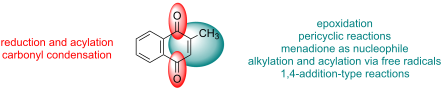
- (Scheme 24). Tang and co-workers described the synthesis of thiosemicarbazone 80 from menadione (10) through a condensation reaction with thiosemicarbazide (79), which was used as a ligand in the synthesis of metal complexes using different transition metals, in refluxing ethanol (Scheme 25) [125
- menadione (10) in trifluoroacetic acid under ethanol reflux conditions (Scheme 26) to synthesize acylhydrazones 81 in 63–91% yield. In view of the different structures that compounds 81a–e could adopt, after analysis by 2D NMR-NOESY spectra, it was found that all products were obtained as E-geometrical


Organocatalytic asymmetric nitroso aldol reaction of α-substituted malonamates
Beilstein J. Org. Chem. 2022, 18, 217–224, doi:10.3762/bjoc.18.25

- , CDCl3) δ 171.5 (C), 167.0 (C), 147.1 (C), 136.5 (C), 132.1 (CH), 132.1(CH), 128.9 (CH), 128.9 (CH), 126.1 (CH), 122.2 (CH), 122.2 (CH), 121.6 (CH), 121.6 (CH), 117.4 (C), 76.8 (C), 53.5 (CH3), 17.9 (CH3) ppm. The enantiomeric excess was determined by HPLC on a Chiralpak IC column (hexane/ethanol 90:10 v




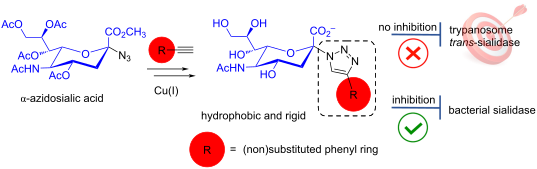
Anomeric 1,2,3-triazole-linked sialic acid derivatives show selective inhibition towards a bacterial neuraminidase over a trypanosome trans-sialidase
Beilstein J. Org. Chem. 2022, 18, 208–216, doi:10.3762/bjoc.18.24
- ) and compounds were visualised by UV irradiation (λ = 254 nm) and/or dipping in ethanol/sulfuric acid (95:5 v/v) followed by heating. A Biotage SP4 flash chromatography system was used for purification of the protected sugars with normal phase silica (pre-packed SNAP Ultra cartridges). Deprotected



Glycosylated coumarins, flavonoids, lignans and phenylpropanoids from Wikstroemia nutans and their biological activities
Beilstein J. Org. Chem. 2022, 18, 200–207, doi:10.3762/bjoc.18.23
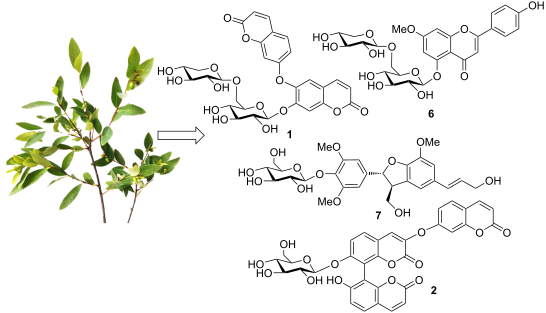
- using 95% aqueous ethanol (15 L × 4 times × 2 h at room temperature) with ultrasonic assistance. The combined extracts were filtered and evaporated under reduced pressure to yield a green residue (350.6 g). The crude extract was suspended in distilled H2O (2 L) and successively partitioned with n-BuOH



Green synthesis of C5–C6-unsubstituted 1,4-DHP scaffolds using an efficient Ni–chitosan nanocatalyst under ultrasonic conditions
Beilstein J. Org. Chem. 2022, 18, 133–142, doi:10.3762/bjoc.18.14
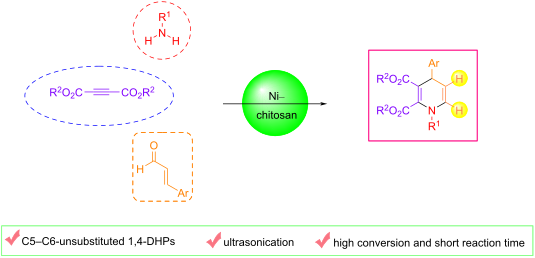
- . We mainly focused on the synthesis under green aspects and towards a high product diversity. We initially chose three green solvents with a relatively low boiling point, ethanol, water, and acetone, respectively, as a reaction medium. A series of reactions was examined in these solvents, using an
- temperature. In the ultrasonication procedure, the reaction was started at room temperature, and after completion of the reaction, the final temperature of the solution was found to be 40 °C. Among the solvents, ethanol afforded the highest yield under sonication within a very short reaction time. When we
- further increasing this quantity did not result in an enhanced yield. As such, the optimized conditions were sonication for 15 min in ethanol using 30 mg of the Ni–chitosan NPs (Table 2, entry 17). The optimization studies using this standard amount of catalyst are summarized in Table 2. Substrate scope




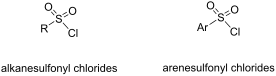
Mechanistic studies of the solvolysis of alkanesulfonyl and arenesulfonyl halides
Beilstein J. Org. Chem. 2022, 18, 120–132, doi:10.3762/bjoc.18.13
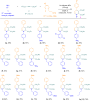
- -methyl derivative, 0.0146 min−1 for the parent compound, and 0.044 min−1 for the m-NO2 derivative. A change of solvent to 47.5% ethanol/52.5% water led to very similar behavior with the corresponding specific rates being 0.0287, 0.0313, and 0.058 min−1. In modern terminology, this would suggest a close
- value of +0.82 for the para-methyl derivative and of +0.71 for the meta-nitro derivative. and, for the study in 47.5% ethanol/52.5% water the corresponding values are +0.22 and +0.38, respectively. These small reaction constant ρ values depend only on the type of reaction but not on the substituent used
- aqueous dioxane, aqueous acetone, methanol/acetone, and ethanol/acetone, the p-NO2 (strongest electron-withdrawing influence) was always reacting faster than the parent and the other two derivatives and the overall behavior in a Hammett equation treatment indicated that all were reacting by an SN2 pathway


Efficient and regioselective synthesis of dihydroxy-substituted 2-aminocyclooctane-1-carboxylic acid and its bicyclic derivatives
Beilstein J. Org. Chem. 2022, 18, 77–85, doi:10.3762/bjoc.18.7
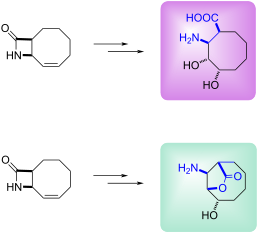
- material in the synthesis of the other isomer of β-amino acid 6. The ring-opening reaction of 7 with HCl(g) in MeOH resulted in a mixture of products 8 and 9 in a 9:1 ratio (1H NMR). The product 8 in the reaction mixture was purified by recrystallization from ethanol/ether, but all attempts to purify the


1,2-Naphthoquinone-4-sulfonic acid salts in organic synthesis
Beilstein J. Org. Chem. 2022, 18, 53–69, doi:10.3762/bjoc.18.5
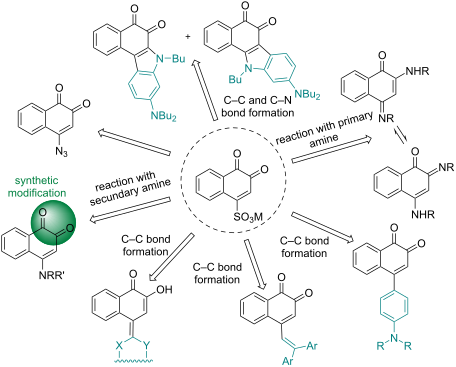
- reacted with different amines 42a–c in the presence of an ethanol–water mixture under ultrasonication, followed by reaction with arylhydrazines, which led to hydrazones 44a–l according to the classical procedure that employs methanol at room temperature. All compounds were evaluated against different
- methylene acid compounds [109]. These authors developed two methods (A and B) to prepare 2-hydroxynaphthoquinomethanes 62 with diverse structures by condensation of 18 with active methylene compounds (Scheme 18). Method A involves the reaction promoted by sodium hydroxide in an ethanol/water mixture at 40


Peptide stapling by late-stage Suzuki–Miyaura cross-coupling
Beilstein J. Org. Chem. 2022, 18, 1–12, doi:10.3762/bjoc.18.1
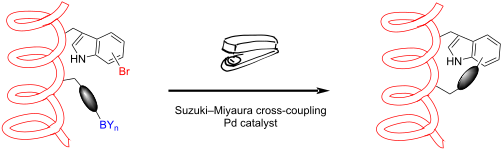
- Pd source together with the water-soluble Buchwald ligand sulfonated SPhos (sSPhos) and potassium fluoride as a base. The reaction was performed in a solvent mixture of dimethoxyethane, ethanol and water (DME/EtOH/H2O 9:9:2) at 120 °C under microwave irradiation for 30 min (Scheme 1) [78]. The


Photophysical, photostability, and ROS generation properties of new trifluoromethylated quinoline-phenol Schiff bases
Beilstein J. Org. Chem. 2021, 17, 2799–2811, doi:10.3762/bjoc.17.191
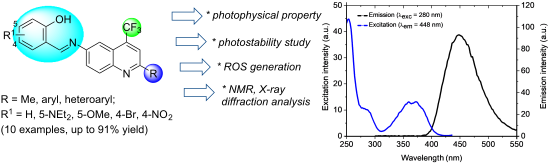
- using an equimolar ratio of both reactants in methanol, ethanol, and acetonitrile as solvent at reflux temperature according to previously reported data [22][24][25]. Thus, we found increasing yields for 3ba depending on the solvent used, i.e., 70% (methanol), 80% (ethanol), and 83% (acetonitrile
- after recrystallization from ethanol (Scheme 2). In order to evaluate the properties related to the substituents of the portion provided by salicylaldehyde, the same optimized conditions were applied to the reaction of quinoline 1b (R = C6H5) with various salicylaldehydes 2b–e, resulting in four more
- Schiff bases 3bb–be with 40–89% yield for the isolated products after recrystallization from ethanol (Scheme 3). With some exceptions, electron-deficient or electron-rich substituted 2-aryl-6-aminoquinolines and aromatic aldehydes worked very well to furnish the Schiff bases 3. However, a poor yield (20




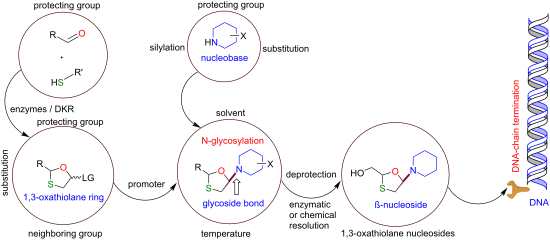
Synthetic strategies toward 1,3-oxathiolane nucleoside analogues
Beilstein J. Org. Chem. 2021, 17, 2680–2715, doi:10.3762/bjoc.17.182
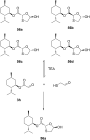
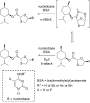
- intermediate 37 was resolved using a lipase in t-BuOMe, resulting in a high enantiomeric excess. They used an enzymatic resolution of an acetoxy sulfide with a Pseudomonas fluorescens lipase to obtain compound 38. Reaction of chiral acetoxy sulfide 38 with HCl in dry ethanol induced acetate removal by
- synthesis of lamivudine (1) and the opposite enantiomer 1a was demonstrated by Han et al. [57]. They carried out the [1,2]-Brook rearrangement of silyl glyoxylate 61 using thiol 3nb as the nucleophile. Under optimized conditions, the reaction of the key intermediate 62 with acetyl chloride in ethanol
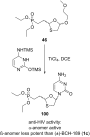
- directly with the presilylated cytosine without any promoter or additive and gave nucleoside 93 in a selective manner (β/α 10:1). The ester group of nucleoside derivative 93 was further reduced with sodium borohydride in ethanol, which gave lamivudine (1). An efficient and enantioselective synthesis of








Cryogels: recent applications in 3D-bioprinting, injectable cryogels, drug delivery, and wound healing
Beilstein J. Org. Chem. 2021, 17, 2553–2569, doi:10.3762/bjoc.17.171
- antibacterial properties as well [113]. Physically crosslinked chitosan-gluconic acid cryogels have also been reported by Takei et al., who investigated applying differing methods of sterilisation, using either ethanol washing [114], or by autoclaving the cryogels [115]. Interestingly, the cryogels retained
- their haemostatic properties following autoclaving at 121 °C for 20 min, and showed comparable healing rates compared to ethanol sterilisation (Figure 8). A unique take to the development of cryogels as injectable gels is the work achieved by Zhao et al. in developing an injectable antibacterial and