


Search results
Search for "metal complexes" in Full Text gives 276 result(s) in Beilstein Journal of Organic Chemistry. Showing first 200.
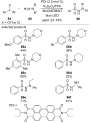
Transition metal-free oxidative and deoxygenative C–H/C–Li cross-couplings of 2H-imidazole 1-oxides with carboranyl lithium as an efficient synthetic approach to azaheterocyclic carboranes
Beilstein J. Org. Chem. 2018, 14, 2618–2626, doi:10.3762/bjoc.14.240

- capture therapy (BNCT) of cancer [8][9][10][11][12], as well as agonists and antagonists of biological receptors [13][14][15][16][17], etc. In addition, azaheterocyclic carboranes are actively used as ligands in the synthesis of metal complexes of various architectures, possessing catalytic activity [18


Efficient catalytic alkyne metathesis with a fluoroalkoxy-supported ditungsten(III) complex
Beilstein J. Org. Chem. 2018, 14, 2425–2434, doi:10.3762/bjoc.14.220
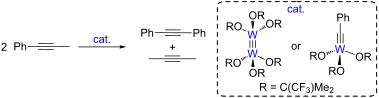
- cleaving the W≡W bond in W2F3 with 1-phenyl-1-propyne. The catalytic alkyne metathesis activity of these metal complexes was determined in the self-metathesis, ring-closing alkyne metathesis and cross-metathesis of internal and terminal alkynes, revealing an almost equally high metathesis activity for the


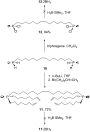
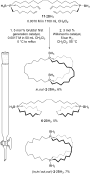
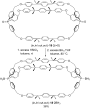
Non-metal-templated approaches to bis(borane) derivatives of macrocyclic dibridgehead diphosphines via alkene metathesis
Beilstein J. Org. Chem. 2018, 14, 2354–2365, doi:10.3762/bjoc.14.211
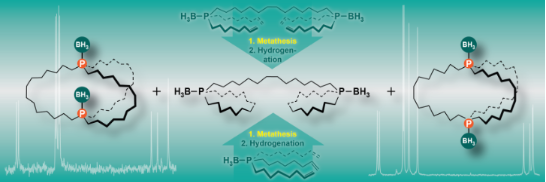
- ; crystal structures; homeomorphic isomerization; hydrogenation; in/out isomers; metathesis; phosphine boranes; Introduction We have found that a variety of metal complexes with trans-phosphine ligands of the formula P((CH2)mCH=CH2)3 (1; m = 4–14) undergo threefold interligand ring closing alkene
- metatheses to give, after hydrogenations, metal complexes of in,in isomers of macrocyclic dibridgehead diphosphines [1][2][3][4][5][6][7][8][9][10][11][12][13]. Representative examples with square planar complexes are shown in Scheme 1. Analogous sequences with trigonal bipyramidal substrates proceed in
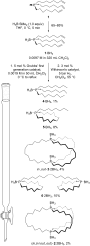
- an isomer below. A white powder was obtained next. The 13C{1H} NMR spectrum exhibited fourteen signals, half of which were approximately twice as intense as the others. Two signals of each set exhibited phosphorus coupling. The overall pattern was quite similar to those shown by metal complexes with






D-Fructose-based spiro-fused PHOX ligands: synthesis and application in enantioselective allylic alkylation
Beilstein J. Org. Chem. 2018, 14, 2082–2089, doi:10.3762/bjoc.14.182
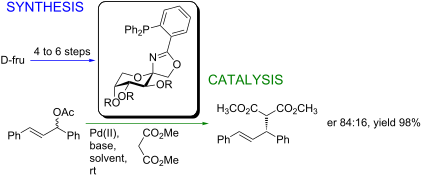
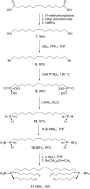
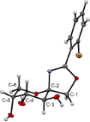
- -fused PHOX ligands. The described ligands can be prepared from literature-known carbohydrate derivatives in two steps. Preliminary tests of the spiro-fused PHOX ligands in Tsuji–Trost reaction showed promising results. Different metal complexes as well as further application of the ligands in asymmetric




Graphitic carbon nitride prepared from urea as a photocatalyst for visible-light carbon dioxide reduction with the aid of a mononuclear ruthenium(II) complex
Beilstein J. Org. Chem. 2018, 14, 1806–1812, doi:10.3762/bjoc.14.153
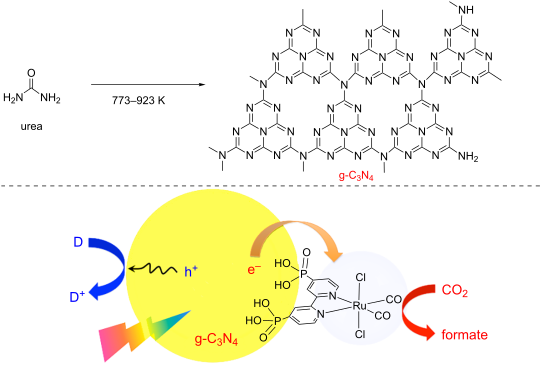
- phase. Keywords: artificial photosynthesis; heterogeneous photocatalysis; hybrid material; metal complexes; solar fuels; Introduction Carbon nitride is one of the oldest synthetic polymers [1], and has several allotropes. Among them, graphitic carbon nitride (g-C3N4) is the most stable form and is an
- reduction systems using g-C3N4-based materials, in combination with functional metal complexes [8][9][10][11][12][13][14][15][16]. For example, mesoporous g-C3N4 (mpg-C3N4) modified with a mononuclear Ru(II) complex, such as trans-(Cl)-Ru{(PO3H2)2bpy(CO)2Cl2} (bpy: 2,2’-bipyridine), abbreviated as RuP, is
- using cobalt-based metal complexes as reduction cocatalysts [17][18][19][20]. In these systems, structural properties of g-C3N4 such as specific surface area and porosity have a strong impact on activity, because they strongly affect the efficiency of electron/hole utilization to the surface chemical


DFT calculations on the mechanism of copper-catalysed tandem arylation–cyclisation reactions of alkynes and diaryliodonium salts
Beilstein J. Org. Chem. 2018, 14, 1743–1749, doi:10.3762/bjoc.14.148
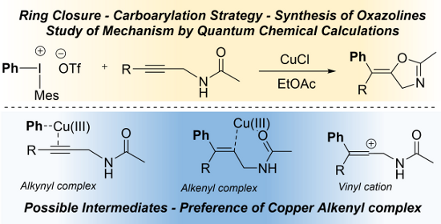
- route often observed for the 16 electron metal complexes. We could locate a crucial structure (Ic) where the incoming reactant and the leaving solvent molecule occupy the equatorial position of the trigonal bipyramid formed by the five ligands of the Cu(III) ion. We decided to characterise this step by


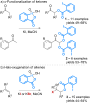
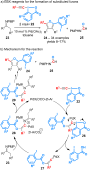
Hypervalent organoiodine compounds: from reagents to valuable building blocks in synthesis
Beilstein J. Org. Chem. 2018, 14, 1508–1528, doi:10.3762/bjoc.14.128
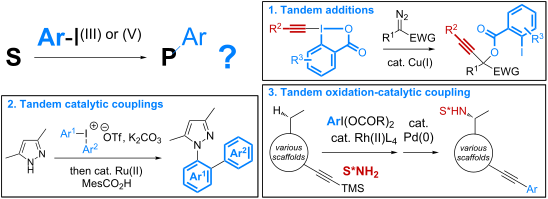
- for the 1,2-benzoyloxy-azidation reaction. Based on a preliminary observation made during their study on catalytic trifluoromethylation of enamides [49], the group of Gillaizeau has reported the catalytic conversion of enamides with various ABX derivatives 44 [50]. A screening of various metal
- complexes has led the authors to demonstrate the superior ability of cheap FeCl2 to mediate the 1,2-addition thereby allowing the formation of the trans-products 43 with complete regio- and diastereocontrol (Scheme 14). The group of Hamashima has reported that various 1,2-difunctionalizations of alkenes can






Recent advances in phosphorescent platinum complexes for organic light-emitting diodes
Beilstein J. Org. Chem. 2018, 14, 1459–1481, doi:10.3762/bjoc.14.124
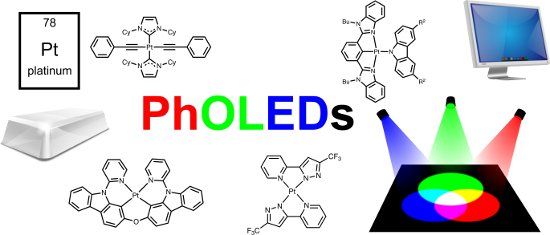
- organometallic compounds based on heavy transition metal complexes (TMCs) are an appealing research topic of enormous current interest. Amongst all different fields in which they found valuable application, development of emitting materials based on TMCs have become crucial for electroluminescent devices such as






Synthesis of chiral 3-substituted 3-amino-2-oxindoles through enantioselective catalytic nucleophilic additions to isatin imines
Beilstein J. Org. Chem. 2018, 14, 1349–1369, doi:10.3762/bjoc.14.114

- ]. An extensively used two-component variant of this reaction consists in using a preformed imine. Among chiral metal complexes, a wide variety of organocatalysts [26][27][28][29][30][31][32][33][34] has been used to promote asymmetric Mannich reactions. Among them, cinchona alkaloid 1 was employed in
- either chiral organocatalysts or chiral metal complexes. Among the organocatalysts, chiral bifunctional guanidine 50 was applied by Feng et al. in 2015 to promote the reaction of nitromethane 51 with N-Boc-isatin imines 3 (Scheme 18) [71]. The reaction performed at −30 °C using 10 mol % of this catalyst
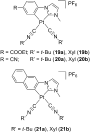
- trimethylsilyl ether. However, also metal complexes (Zn, Sn) derived from N,N’-dioxide and BINOL-derived ligands have been employed affording the products with enantioselectivities of up to 90–99% ee. Moreover, comparable enantioselectivities of up to 99% ee were reported in aza-Morita–Baylis–Hilman reactions








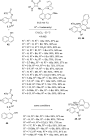


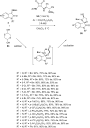

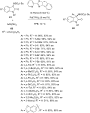
Selective carboxylation of reactive benzylic C–H bonds by a hypervalent iodine(III)/inorganic bromide oxidation system
Beilstein J. Org. Chem. 2018, 14, 1087–1094, doi:10.3762/bjoc.14.94
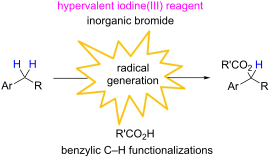
- reaction systems have been further elaborated to include elegant C–H coupling methodologies. Several important researches that provide a new benzylic C–H coupling strategy have been reported over the past few years, involving the promising catalytic activities of metal complexes [13][14]. On the other hand


An overview of recent advances in duplex DNA recognition by small molecules
Beilstein J. Org. Chem. 2018, 14, 1051–1086, doi:10.3762/bjoc.14.93
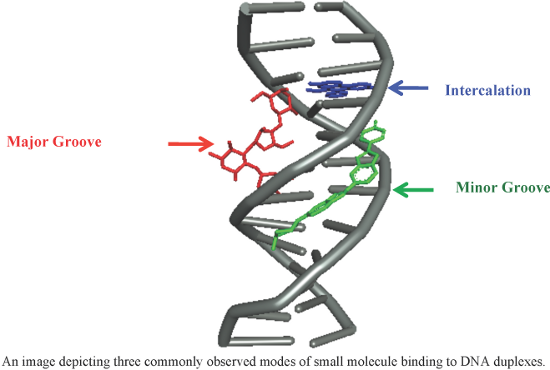
- exceptionally stable duplexes (ΔTm = +44.8 °C) and high selectivity [92]. Six novel 4-aminoantipyrine derived Schiff bases and their metal complexes with Cu(II), Ni(II), Zn(II) ions (conjugates 26–31) were synthesized and characterized and binding of these complexes with ct-DNA were analyzed by electronic


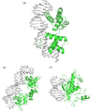

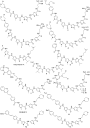


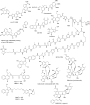

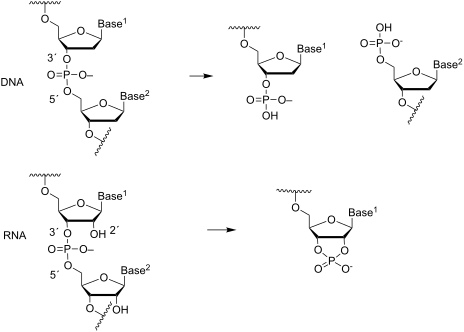
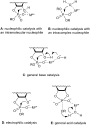
Phosphodiester models for cleavage of nucleic acids
Beilstein J. Org. Chem. 2018, 14, 803–837, doi:10.3762/bjoc.14.68



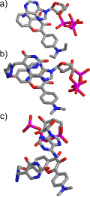
An uracil-linked hydroxyflavone probe for the recognition of ATP
Beilstein J. Org. Chem. 2018, 14, 747–755, doi:10.3762/bjoc.14.63

- ], metal-complexes [21][22][23][24][25][26][27] and other direct sensing systems [28][29][30] have significant advantages over the classical, separation-based methods. The primary difficulties in the design of an ATP chemosensor are the structural similarity of ATP to other nucleotides (i.e., to guanosine




Nanoreactors for green catalysis
Beilstein J. Org. Chem. 2018, 14, 716–733, doi:10.3762/bjoc.14.61
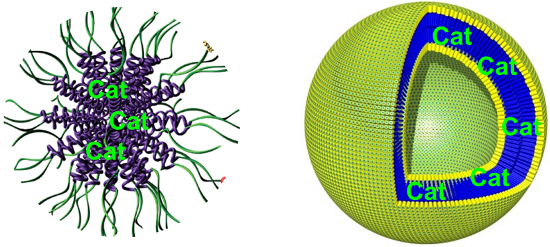
- yield and output [23][24]. Indeed, such a strategy proved to be advantageous for performing reactions in water and minimizing both reaction waste and cost [25][26]. Attempts to support homogeneous metal complexes onto organic or inorganic surfaces to facilitate their removal/extraction from the reaction


AuBr3-catalyzed azidation of per-O-acetylated and per-O-benzoylated sugars
Beilstein J. Org. Chem. 2018, 14, 682–687, doi:10.3762/bjoc.14.56
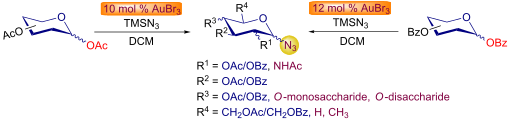
- -benzoylated disaccharides needed 2–3 h of heating at 55 °C. Keywords: acylated sugars; azidation; gold(III) bromide; N-glycoside; oxophilicity; Introduction The past few decades had seen the enrichment of transition metal complexes in various glycosylation strategies [1]. In particular, gold complexes with


Recent advances on organic blue thermally activated delayed fluorescence (TADF) emitters for organic light-emitting diodes (OLEDs)
Beilstein J. Org. Chem. 2018, 14, 282–308, doi:10.3762/bjoc.14.18
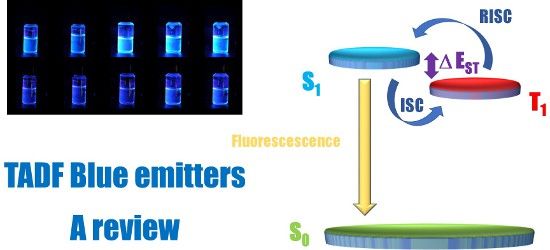
- % for phosphorescent OLEDs [5]. As drawback, triplet emitters are transition-metal complexes mostly based on iridium, platinum and osmium and the scarcity of these metals on Earth, their toxicity and high cost make these materials unsuitable candidates for a mass-production of OLEDs [6]. However
- and triplet excitons for radiative transition, excepted that the emission occurs from the singlet state and not from the triplet state (as observed for metal complexes) and that the triplet–triplet annihilation commonly observed with phosphorescent OLEDs [10] can be drastically reduced (see Figure 1




Synthesis and spectroscopic properties of β-meso directly linked porphyrin–corrole hybrid compounds
Beilstein J. Org. Chem. 2018, 14, 187–193, doi:10.3762/bjoc.14.13
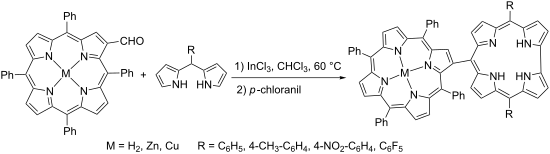
- used to obtain this product. In order to expand the scope of the reaction, metal complexes of formylated porphyrins were subjected to the reaction. While Zn-porphyrin containing hybrid compound 4f was isolated in 21%, the Cu(II) complex of β-formylated porphyrin underwent the reaction to produce the

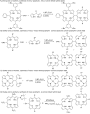


Photocatalytic formation of carbon–sulfur bonds
Beilstein J. Org. Chem. 2018, 14, 54–83, doi:10.3762/bjoc.14.4
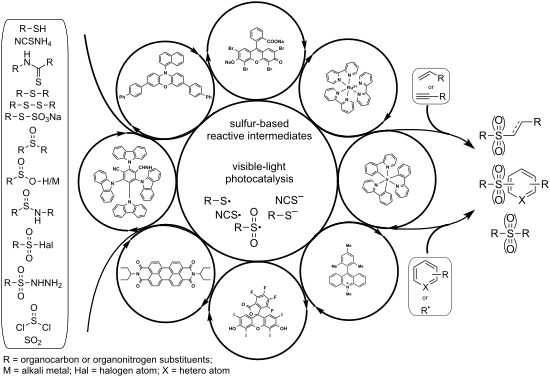
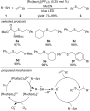
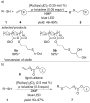
- . Photoredox-active metal complexes or organic dyes are used to initiate photo-induced single-electron transfer (SET) processes upon excitation with visible-light. Such photooxidations or photoreductions yield reactive organic radicals, which can undergo unique bond forming reactions, under very mild

























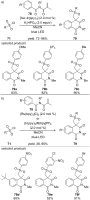
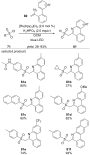


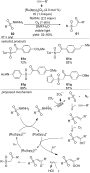

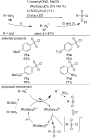

Comparative profiling of well-defined copper reagents and precursors for the trifluoromethylation of aryl iodides
Beilstein J. Org. Chem. 2017, 13, 2297–2303, doi:10.3762/bjoc.13.225
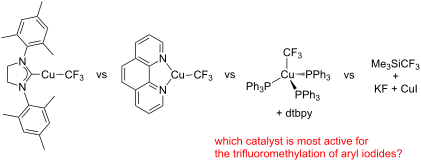
- induction period, whereas the induction period for A2 was short. Conclusion In summary, we have determined that in DMF the best trifluoromethylating agent was generated in situ using the [Cu(O-t-Bu)]4/Me3SiCF3/phen combination. However, when optimized solvents were employed, other metal complexes and


Curcuminoid–BF2 complexes: Synthesis, fluorescence and optimization of BF2 group cleavage
Beilstein J. Org. Chem. 2017, 13, 2264–2272, doi:10.3762/bjoc.13.223

- ongoing research to increase the selectivity of antitumor active metal complexes [17][18][19][20][21][22], our focus was on the synthesis of curcuminoids that could serve as building blocks to attach sugars like D-fructose or D-glucose [23]. Due to the easy accessibility to azido sugars [24][25] we


Main group mechanochemistry
Beilstein J. Org. Chem. 2017, 13, 2068–2077, doi:10.3762/bjoc.13.204
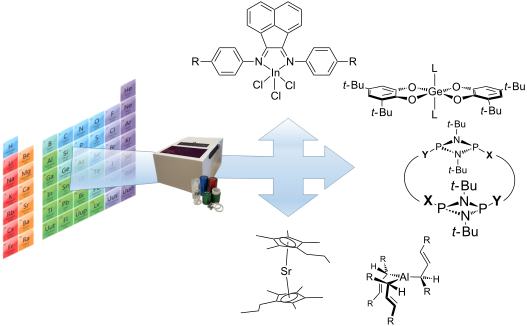
- completion. A rare example of a one-pot multistep ball milling reaction is the case of an electron-rich aniline derivative that produced 4 in good yield without the need for ligand isolation. Previously reported examples typically employ “preformed” ligands and metal complexes [68][86], raising the
- orthogonality of multistep mechanochemical synthesis and widening its applicability. A significant example of the transformative potential of mechanochemistry is its ability to produce metal complexes directly from bulk metal or metal oxides [66]. Within this context, the LAG synthesis of germanes (GeR4


Pd(OAc)2/Ph3P-catalyzed dimerization of isoprene and synthesis of monoterpenic heterocycles
Beilstein J. Org. Chem. 2017, 13, 1807–1815, doi:10.3762/bjoc.13.175
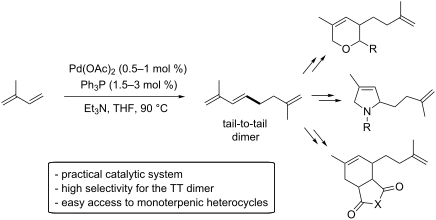
- formed: tail-to-tail, head-to-tail, tail-to-head and head-to-head (Figure 1). In addition to the linear dimeric products, cyclic monoterpenes such as limonene can also be formed as byproducts. A number of transition metal complexes can be used as catalysts in the dimerization of isoprene. In one hand


Chiral phase-transfer catalysis in the asymmetric α-heterofunctionalization of prochiral nucleophiles
Beilstein J. Org. Chem. 2017, 13, 1753–1769, doi:10.3762/bjoc.13.170
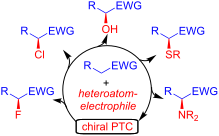
- use of chiral metal complexes, or chiral organocatalysts have been reported, and the use of chiral PTCs became a powerful strategy herein too [44][56][57][73][74][75][76][77][78][79]. The seminal report on asymmetric phase-transfer-catalysed electrophilic α-fluorinations of prochiral carbonyl


Chemical systems, chemical contiguity and the emergence of life
Beilstein J. Org. Chem. 2017, 13, 1551–1563, doi:10.3762/bjoc.13.155
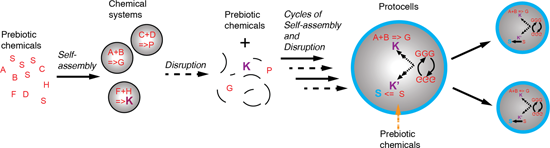
- processes pertaining to its synthesis/formation: information polymer, functional catalysts or self-assembly/stability of the compartment. (B) A higher degree of complexity can be attained by using chemicals that by themselves already link to two component functions: for instance, metal complexes that can


Mechanochemical borylation of aryldiazonium salts; merging light and ball milling
Beilstein J. Org. Chem. 2017, 13, 1463–1469, doi:10.3762/bjoc.13.144
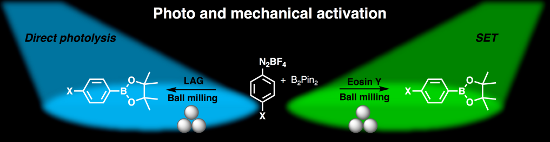
- the photodimerizations of olefins by manual grinding of the reactants followed by long UV-light exposure [10], or by vortex grinding [11]. However, until now, studies of photocatalyzed mechanochemical reactions involving, for example, metal complexes [12] or organic photocatalysts (PC) [13] has been





