Search results
Search for "naphthalene" in Full Text gives 215 result(s) in Beilstein Journal of Organic Chemistry. Showing first 200.
One hundred years of benzotropone chemistry
Beilstein J. Org. Chem. 2018, 14, 1120–1180, doi:10.3762/bjoc.14.98
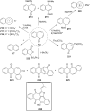
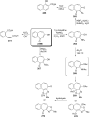
- reported that the oxidative amination of 2,3-benzotropone (12) with methylcopperamine sulfate in aqueous methylamine at room temperature afforded 4-methylamino-1-naphthalene carbaldehyde (215) with a trace amount of 4-methylamino-2,3-benzotropone (214) via reaction paths including the dishing of Michael








Synthetic avenues towards a tetrasaccharide related to Streptococcus pneumonia of serotype 6A
Beilstein J. Org. Chem. 2018, 14, 1095–1102, doi:10.3762/bjoc.14.95

- ). Subsequently, 10 was subjected to naphthylmethylation/p-methoxybenzylation [32] with 2-(bromomethyl)naphthalene (NapBr)/p-methoxybenzyl chloride in DMF to afford 6a/11 [32] in 90% and 80% yields, respectively. These derivatives were next subjected to thioglycoside hydrolysis using trichloroisocyanuric acid


An overview of recent advances in duplex DNA recognition by small molecules
Beilstein J. Org. Chem. 2018, 14, 1051–1086, doi:10.3762/bjoc.14.93
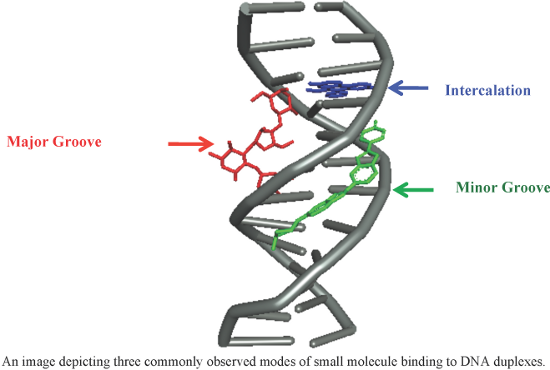
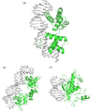
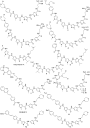
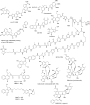
- and its cytotoxicity was attributed to DNA minor groove binding ability [105]. Recently, Schmuck et al. have developed a first prototype of cationic oligopeptide-based molecular beacon (conjugate 43) coupled with a FRET pair, a naphthalene donor and a dansyl acceptor, for ratiometric detection of ds






Electrochemically modified Corey–Fuchs reaction for the synthesis of arylalkynes. The case of 2-(2,2-dibromovinyl)naphthalene
Beilstein J. Org. Chem. 2018, 14, 891–899, doi:10.3762/bjoc.14.76
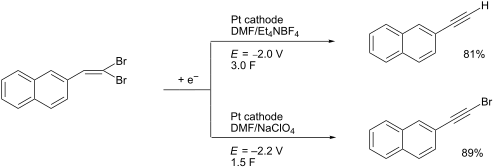
- Fabiana Pandolfi Isabella Chiarotto Marta Feroci Deptartment of Fundamental and Applied Sciences for Engineering (SBAI), Sapienza University of Rome, via Castro Laurenziano, 7, 00161, Rome, Italy 10.3762/bjoc.14.76 Abstract The electrochemical reduction of 2-(2,2-dibromovinyl)naphthalene in a DMF
- solution (Pt cathode) yields selectively 2-ethynylnaphthalene or 2-(bromoethynyl)naphthalene in high yields, depending on the electrolysis conditions. In particular, by simply changing the working potential and the supporting electrolyte, the reaction can be directed towards the synthesis of the terminal
- alkyne (Et4NBF4) or the bromoalkyne (NaClO4). This study allowed to establish that 2-(bromoethynyl)naphthalene can be converted into 2-ethynylnaphthalene by cathodic reduction. Keywords: arylalkyne; carbon–bromine bond cleavage; cathodic reduction; Corey–Fuchs reaction; 2-(2,2-dibromovinyl)naphthalene


Bromide-assisted chemoselective Heck reaction of 3-bromoindazoles under high-speed ball-milling conditions: synthesis of axitinib
Beilstein J. Org. Chem. 2018, 14, 786–795, doi:10.3762/bjoc.14.66

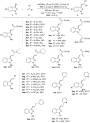
- coupling product 3oa (70%). Besides, N-unsubstituted indazole 1n could also be tolerated in this reaction giving 3na (52%) and 3nf (49%) in moderate yield by using 1,8-bis(dimethylamino)naphthalene as a base. To our delight, 3-chloroindazole could also be activated in this reaction, giving the
- 207 stainless-steel balls (dMB = 6 mm, ФMB = 0.293), milling at 800 rpm for 90 min. aN-Boc-3-bromoindazole was used as substrate. b150 min. c700 rpm. d3-chloro-1-methyl-1H-indazole was used as substrate, νrot = 900 rpm. e1,8-Bis(dimethylamino)naphthalene was used as base. Synthesis of axitinib by



An air-stable bisboron complex: a practical bidentate Lewis acid catalyst
Beilstein J. Org. Chem. 2018, 14, 618–625, doi:10.3762/bjoc.14.48

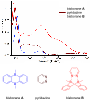
- yields of the substituted naphthalene 5e were comparable between the two bidentate Lewis acid catalysts (Table 1, entry 5). The binding of pyridazine (1j) with bisboron compound A, seems to be too strong to engage a fast ligand exchange with phthalazine (3). Recently we have demonstrated that catalyst A


The selective electrochemical fluorination of S-alkyl benzothioate and its derivatives
Beilstein J. Org. Chem. 2018, 14, 389–396, doi:10.3762/bjoc.14.27
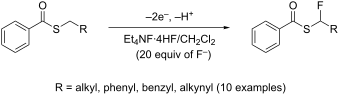
- , Rozhkov and Laurent reported an electrochemical partial fluorination of naphthalene and olefins about 30 years ago [5][6]. However, at that time, there has been no report on the anodic fluorination of heteroatom-containing compounds. At almost the same time, we found that the anodic α-methoxylation of


Aminomethylation/hydrogenolysis as an alternative to direct methylation of metalated isoquinolines – a novel total synthesis of the alkaloid 7-hydroxy-6-methoxy-1-methylisoquinoline
Beilstein J. Org. Chem. 2018, 14, 130–134, doi:10.3762/bjoc.14.8
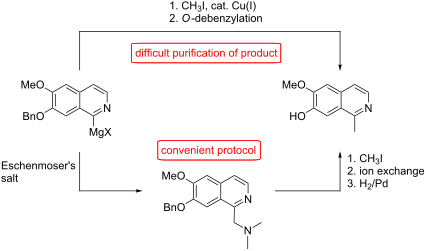
- naphthalene-derived natural product plumbagin. In fact, trapping 1-metalated isoquinoline 3 with Eschenmoser’s salt gave the aminomethyl derivative 5 in 37% yield. Chromatographic separation from starting material 3 (recovered yield: 32%) was unproblematic. Surprising results were obtained in our


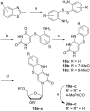
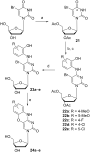
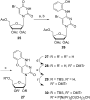
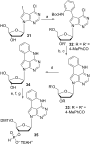
Fluorescent nucleobase analogues for base–base FRET in nucleic acids: synthesis, photophysics and applications
Beilstein J. Org. Chem. 2018, 14, 114–129, doi:10.3762/bjoc.14.7
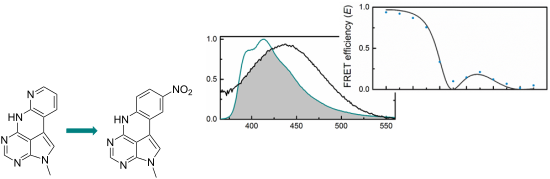
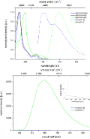
- ). Notable recent examples of fluorescent base analogues. For cnA and dnA the attachment point to the substituted naphthalene moiety has been varied. Absorption and emission of tC (dashed line) and tCO (solid line) in dsDNA. The absorption below 300 nm is divided by three to emphasize the absorption spectral





Synthesis and supramolecular properties of regioisomers of mononaphthylallyl derivatives of γ-cyclodextrin
Beilstein J. Org. Chem. 2017, 13, 2509–2520, doi:10.3762/bjoc.13.248
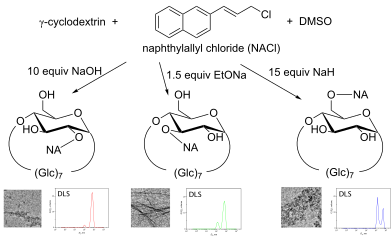
- complexation of the alkylation agent to the CD cavity and orientation of the agent´s reactive center towards the 3-OH group [11][12][13]. Here, we report the preparation of regioisomers of novel mononaphthylallyl γ-CD (NA-CD), i.e., 3-(naphthalene-2-yl)prop-2-en-1-yl γ-CD, which is interesting for several
- based on a direct alkylation of γ-CD with 2-(3-chloroprop-1-enyl)naphthalene. Cross-metathesis Mono 2I-O-, 3I-O- and 6I-O-naphthylallyl-γ-CDs (2-O-NA-γ-CD, 2a, 3-O-NA-γ-CD, 2b, 6-O-NA-γ-CD, 2c) were prepared from peracetylated O-allyl derivatives [14] by cross-metathesis with 2-vinylnaphthalene (Scheme
- allyl esters was described before by Tanaka et al. [26][27]. Naphthylallylation The same naphthylallyl derivatives of γ-CD 2a–c were also prepared by direct alkylation of γ-CD with 2-(3-chloroprop-1-enyl)naphthalene [28] as the alkylation reagent (Scheme 2). This reagent is easy to prepare on a large


One-pot syntheses of blue-luminescent 4-aryl-1H-benzo[f]isoindole-1,3(2H)-diones by T3P® activation of 3-arylpropiolic acids
Beilstein J. Org. Chem. 2017, 13, 2340–2351, doi:10.3762/bjoc.13.231
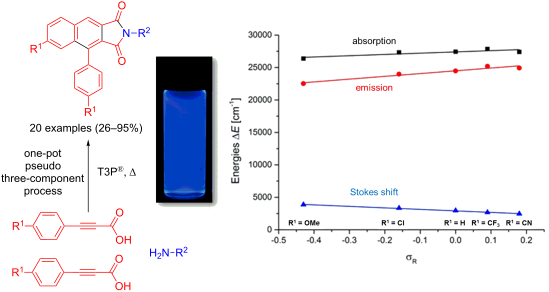
- are often prepared by condensation of acid anhydrides and amines [34]. Their applications are widespread, ranging from pharmaceutically active compounds [35] to agrochemicals [36] and fluorophores [37]. The characteristic photophysical properties of 1,8- and 2,3-naphthalene imides render the substance
- can be detected and monitored by absorption and emission spectroscopy. Furthermore, the investigation of a substance library of various 2,3- and 1,8-naphthalene imides has shown that the electronic nature of the ground and the excited state is decisively influenced by variation of the substitution
- pattern of the naphthalene scaffold. Even the smallest polarity change in the solvent system effects their absorption and emission behavior [34][40]. Very recent investigations on naphthaleneimide derivatives revealed enormous phosphorescence lifetimes that are particularly interesting for imaging




An efficient Pd–NHC catalyst system in situ generated from Na2PdCl4 and PEG-functionalized imidazolium salts for Mizoroki–Heck reactions in water
Beilstein J. Org. Chem. 2017, 13, 1735–1744, doi:10.3762/bjoc.13.168

- -PEG1900-Im was heated with various organic bromides (2-(bromomethyl)pyridine, benzyl bromide and 1-(bromomethyl)naphthalene) to generate the corresponding imidazolium salts L1–L3 under solvent-free conditions. All imidazolium salts were water-soluble and air-stable. The resulted salts L1–L3 were


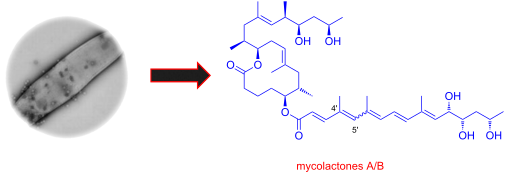
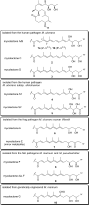
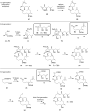
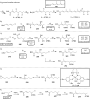
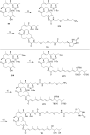
The chemistry and biology of mycolactones
Beilstein J. Org. Chem. 2017, 13, 1596–1660, doi:10.3762/bjoc.13.159









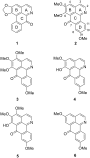
A novel approach to oxoisoaporphine alkaloids via regioselective metalation of alkoxy isoquinolines
Beilstein J. Org. Chem. 2017, 13, 1564–1571, doi:10.3762/bjoc.13.156

- pyridine nitrogen), can very well promote a directed remote metalation. To test our hypothesis, we performed two more D2O quenching experiments with naphthalene analogues of esters 10 and amide 12. The methyl ester analogue 15 was obtained by Suzuki cross-coupling of naphthalene-1-boronic acid (13) and
- only in the ortho-position to the benzamide residue (C-2 of the naphthalene ring system), but not in the peri-position (C-8 of the naphthalene). Consequently, further attempts to initialize the cyclization of arylisoquinolines 10c and 12 to the oxoisoaporphine alkaloid bianfugecine (6, Scheme 5) by a



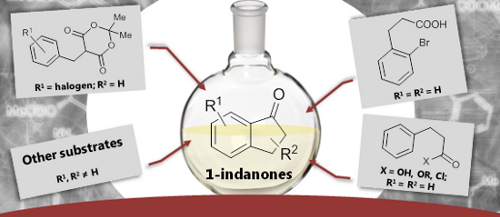
Synthesis of 1-indanones with a broad range of biological activity
Beilstein J. Org. Chem. 2017, 13, 451–494, doi:10.3762/bjoc.13.48


Synthesis and optical properties of new 5'-aryl-substituted 2,5-bis(3-decyl-2,2'-bithiophen-5-yl)-1,3,4-oxadiazoles
Beilstein J. Org. Chem. 2017, 13, 313–322, doi:10.3762/bjoc.13.34
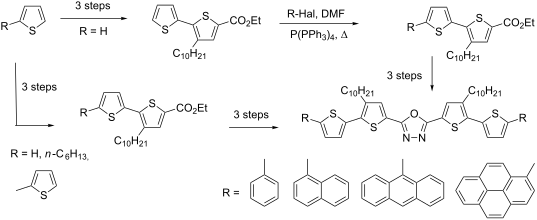
- to the π–π* transition for the studied thiophene, phenyl, naphthalene and anthracene-substituted derivatives, shows a small hypsochromic shift with increasing spatial volume of the substituent R. This observation is in a full accordance with the aforementioned relationship of the molecule planarity


A new class of organogelators based on triphenylmethyl derivatives of primary alcohols: hydrophobic interactions alone can mediate gelation
Beilstein J. Org. Chem. 2017, 13, 138–149, doi:10.3762/bjoc.13.17
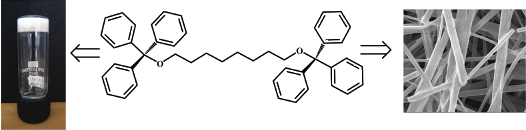
- ][24]. Similar is the case for π-stacking interaction (seen in naphthalene, anthracene, pyrene, perylene, etc.) which has been mostly used in combination with other types of secondary interactions in the discovery of many gelators [25][26]. This holds true for many other non-covalent interactions as
- interactions between the alkyl chains and the triphenylmethyl moieties. Compared to other planar aromatic molecules (such as naphthalene, anthracene, perylene, etc.), the triphenylmethyl moiety as a whole exhibits a non-planar geometry, hence π-stacking interaction between triphenylmethyl moieties may not be







cis-Diastereoselective synthesis of chroman-fused tetralins as B-ring-modified analogues of brazilin
Beilstein J. Org. Chem. 2016, 12, 2816–2822, doi:10.3762/bjoc.12.280

- group of 5 and/or 9, leading to the formation of a stable 3°carbocation that can undergo further dehydration reactions until full aromatization to the naphthalene ring is achieved. This study would serve to help us to find the real scenario. Finally, in the presence of Lewis/Brønsted acids, substrates 6


Direct arylation catalysis with chloro[8-(dimesitylboryl)quinoline-κN]copper(I)
Beilstein J. Org. Chem. 2016, 12, 2757–2762, doi:10.3762/bjoc.12.272
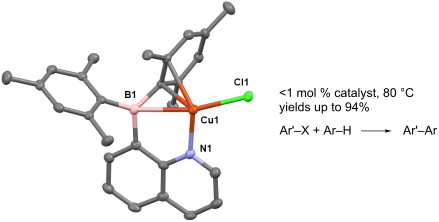
- Sem Raj Tamang James D. Hoefelmeyer Department of Chemistry, University of South Dakota, 414 E. Clark St., Vermillion, SD 57069, USA 10.3762/bjoc.12.272 Abstract We report direct arylation of arylhalides with unactivated sp2 C–H bonds in benzene and naphthalene using a copper(I) catalyst
- . Activation of the sp2 C–H bonds in naphthalene was possible as well. The reaction of iodobenzene in neat naphthalene at 85 °C using 0.2 mol % catalyst and 3 equivalents KO(t-Bu) gave a ≈2:1 ratio of 1-phenylnaphthalene and 2-phenylnaphthalene in a total yield of 43% (Table 1, entry 18). The observed
- substitution ratio is typical of substitutions on naphthalene under kinetic control that tend to favor the alpha C–H bonds due better resonance stabilization effects [53]. Importantly, we note the alpha protons are slightly more acidic than the beta protons [54]. The mechanism of Cu catalyzed coupling


Determination of the absolute stereostructure of a cyclic azobenzene from the crystal structure of the precursor containing a heavy element
Beilstein J. Org. Chem. 2016, 12, 2211–2215, doi:10.3762/bjoc.12.212
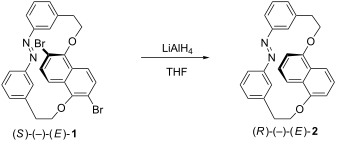
- structure, with a photoisomerizable azobenzene unit linked to a substituted or unsubstituted aromatic unit such as naphthalene or benzene. Generally the molecules are of three categories (i) achiral (irrespective of the isomerized state of the azobenzene, i.e., E or Z), (ii) chiral in E-state and achiral in
- polygonal finger print texture [45]. Molecule (E)-1 contains a 2,6-dibromo-1,5-dihydroxynaphthalene part linked to an azobenzene unit through bismethylene spacers. The constricted rotation of the naphthalene unit in the cyclic structure gives planar chirality to this molecule with separable enantiomers. The
- presence of the bromine substitution in the naphthalene unit gives an added advantage in determining the absolute stereostructure of the separated enantiomers. The determination of the absolute stereostructure of one of the enantiomers of (E)-1 by X-ray diffraction has been presented in our previous report


Stereoselective synthesis of fused tetrahydroquinazolines through one-pot double [3 + 2] dipolar cycloadditions followed by [5 + 1] annulation
Beilstein J. Org. Chem. 2016, 12, 2204–2210, doi:10.3762/bjoc.12.211
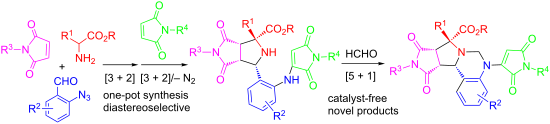
- ). Compound 7b was an exception, which was obtained in a trace amount. It was found that replacing maleimides 6 with other activated alkenes such as dimethyl maleate, benzoquinone, naphthalene-1,4-dione, and maleonitrile failed to afford products 7q–t, probably due to unfavorable stereoelectronic effects


Palladium-catalyzed ring-opening reactions of cyclopropanated 7-oxabenzonorbornadiene with alcohols
Beilstein J. Org. Chem. 2016, 12, 2189–2196, doi:10.3762/bjoc.12.209

- , the dihydronaphthalenols can fully aromatize to form various substituted naphthalene derivatives 11. This has been accomplished through acid catalysis with various alcohol nucleophiles [31]. The last type of predicted ring opening (type 3) which has not yet been observed involves the attack of the
- reaction did not proceed and the starting material was recovered. The effect of a palladium(II) catalyst was then investigated (Table 1, entries 4–9), producing variable yields of substituted naphthalene 11a. While attempts using Pd(OAc)2 (Table 1, entry 4) and PdCl2(PPh3)2 (Table 1, entry 5) were
- unsuccessful, palladium(II) catalysts in the absence of a triphenylphosphine ligand were more promising (Table 1, entries 6–9). The palladium(II) catalyst PdCl2(CH3CN)2 generated a high yield of substituted naphthalene 11a after only 24 hours and was chosen to further optimize reaction conditions. When the


Synthesis and characterization of fluorinated azadipyrromethene complexes as acceptors for organic photovoltaics
Beilstein J. Org. Chem. 2016, 12, 1925–1938, doi:10.3762/bjoc.12.182
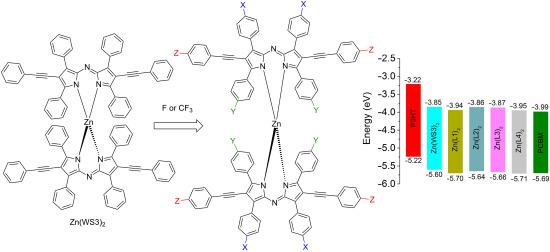
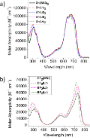
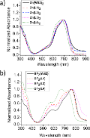
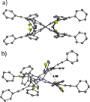
- known, fluorinated n-type materials are less common [13][30][31]. Nevertheless, fluorinated n-type materials have been shown to exhibit promising characteristics in devices. For instance, the addition of fluorinated groups to naphthalene diimide (NDI) and perylene diimide (PDI) derivatives increased the




Cross-linked cyclodextrin-based material for treatment of metals and organic substances present in industrial discharge waters
Beilstein J. Org. Chem. 2016, 12, 1826–1838, doi:10.3762/bjoc.12.172
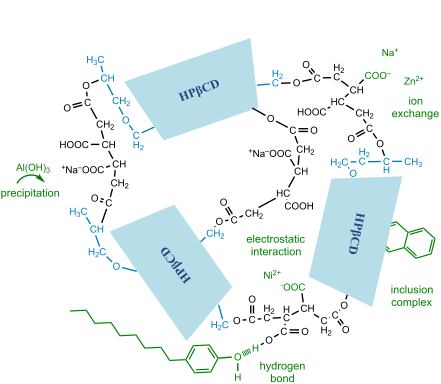
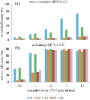
- PAHs: naphthalene (NAP), acenaphthene (ACE), acenaphthylene (ACY), fluorene (FLU), phenanthrene (PHE), anthracene (ANT), fluoranthene (FLT) and pyrene (PYR); eight heavy PAHs: benz[a]anthracene (BaANT), chrysene (CHY), benzo[b]fluoranthene (BbFLT), benzo[k]fluoranthene (BkFLT), benzo[a]pyrene (BaPYR




Ring-whizzing in polyene-PtL2 complexes revisited
Beilstein J. Org. Chem. 2016, 12, 1410–1420, doi:10.3762/bjoc.12.135
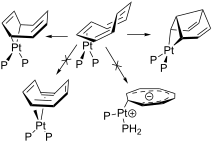
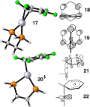
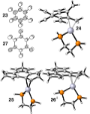
- , octafluorooctatetraene, 6-radialene, pentalene, phenalenium+, naphthalene and octafluoronaphthalene. The HOMO of a d10 ML2 group (with b2 symmetry) interacting with the LUMO of the polyene was used as a model to explain the occurrence of minima and maxima on the potential energy surface. Keywords: d10 metal complexes
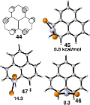
- complexes [64][65][66][67] are akin to 45. Our calculated barrier of 14.7 kcal/mol via 47 seems a bit too low. The measured barrier in two Pd(tmeda) complexes was 21.4 and 21.6 kcal/mol [66]. No signs of fluxionality was found in a substituted phenalenium–Pt(PPh3)2+ complex [67]. Naphthalene and anthracene
- fusion. Our calculations on octafluoronaphthalene–Ni(dpe) and –Pt(dpe) (as well as naphthalene–Pt(dpe) itself) are in good agreement with experiment. A top view of the structure is shown by 48 in Figure 14. This offers a good overlap between the LUMO in C10F8, 49, and the b2 HOMO, 5, in Pt(dpe). It was