Search results
Search for "pKa" in Full Text gives 252 result(s) in Beilstein Journal of Organic Chemistry. Showing first 200.
Nucleophilic dearomatization of 4-aza-6-nitrobenzofuroxan by CH acids in the synthesis of pharmacology-oriented compounds
Beilstein J. Org. Chem. 2017, 13, 2854–2861, doi:10.3762/bjoc.13.277
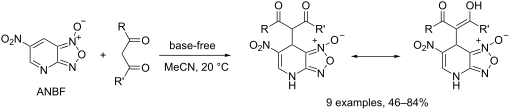
- 12·DMF. Due to significant steric effects, the single bond C4–C11 is significantly elongated (1.567(2) Å), and two nitro groups in ortho-positions of the connected picryl fragment are rotated out of the plane of the benzene ring. Thus, reactions of ANBF with strong CH acids (pKa(H2O) 4–11) proceed
- without added base while in case of diethyl malonate (pKa(H2O) 13.3) and TNT (pKa(H2O) 13.6) the addition of one equivalent of Et3N is required. In the latter case the formation of the adducts proceeds through the attack of the anion on C7. All other CH acids used exist mainly in enol form in polar


CF3SO2X (X = Na, Cl) as reagents for trifluoromethylation, trifluoromethylsulfenyl-, -sulfinyl- and -sulfonylation and chlorination. Part 2: Use of CF3SO2Cl
Beilstein J. Org. Chem. 2017, 13, 2800–2818, doi:10.3762/bjoc.13.273
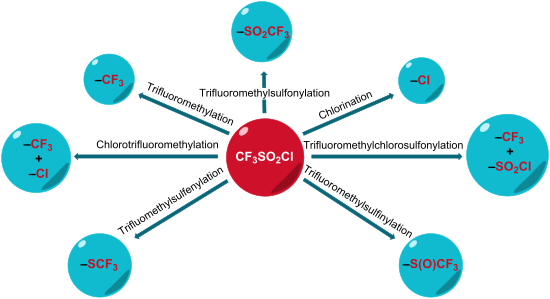
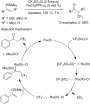
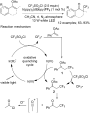
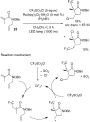
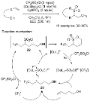
- example of such type of reaction was reported by Just and Hakimelahi in 1979 [49]. Their work was focused on the mono- or dichlorination of various carbon acids, in the pKa range between dialkyl malonate and methyl dichloroacetate, as well as certain nucleophiles, were reacted with








Binding abilities of polyaminocyclodextrins: polarimetric investigations and biological assays
Beilstein J. Org. Chem. 2017, 13, 2751–2763, doi:10.3762/bjoc.13.271
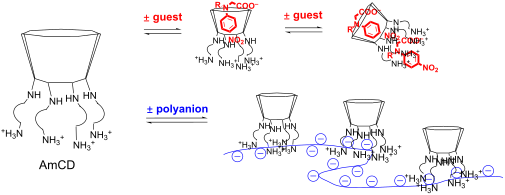
- larger and larger amount of AmCD is subtracted from the solution at the same time. Noticeably, because the pKa value reported for alginic acid is far below 4.0 [54], we can rule out that Alg is neutralized up to a significant extent under our experimental conditions. We verified that Alg alone does not



Binding abilities of a chiral calix[4]resorcinarene: a polarimetric investigation on a complex case of study
Beilstein J. Org. Chem. 2017, 13, 2698–2709, doi:10.3762/bjoc.13.268

- ionizable sites (four sites per prolinylarene subunit) and 12 acidic hydrogens, keeping into account both the proline moieties and the phenolic groups [32]. One can reasonably expect that the proline subunits at the macrocycle’s upper rim are present in their zwitterionic form. On grounds of the pKa values
- (with methyl groups in place of the n-propyl groups at the methylene bridges), an average pKa value as large as 6.3 ± 1 per arene subunit has been estimated from titration curves, under the hypothesis that the four subunits behave equivalently [32]. In the latter case, the deprotonation of phenol groups




Metal-mediated base pairs in parallel-stranded DNA
Beilstein J. Org. Chem. 2017, 13, 2671–2681, doi:10.3762/bjoc.13.265
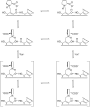
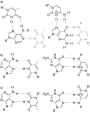
- the triplex represents a duplex of its own. Scheme 2a indicates how the A:T and G:CH+ Hoogsteen base pairs are formally derived from the respective base triples. As can be seen, the cytosine residue needs to be protonated to engage in this hydrogen-bonding pattern. Based on the pKa value of a cytosine
- residue within an oligonucleotide single strand of about 4.3 [42], it can be anticipated that this base pair is ideally stabilized under slightly acidic conditions. However, triple helices including a protonated cytosine are stable under physiological conditions, too. In this context, the apparent pKa
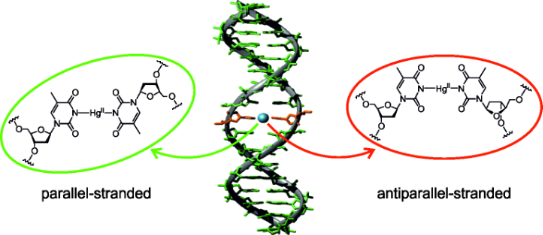
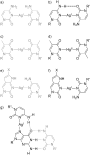
- < 2FurIC (pKa = 8.8, 7.9, and 7.3 for the respective nucleosides), which is identical to the trend in stabilization [72]. For all XIC-derived base pairs, parallel-stranded duplexes were obtained by enforcing reversed Watson–Crick base pairing. 1,N6-Ethenoadenine (εA) is an exocyclic etheno adduct of





Electron-deficient pyridinium salts/thiourea cooperative catalyzed O-glycosylation via activation of O-glycosyl trichloroacetimidate donors
Beilstein J. Org. Chem. 2017, 13, 2385–2395, doi:10.3762/bjoc.13.236

- our own research interest in developing stereoselective glycosylation methods, we decided to focus our attention on the synthesis of glycosides via cooperative catalysis. A highly reactive glycosyl donor for instance, O-glycosyl trichloroacetimidate, generally requires a pKa value less than 5 for
- activation at room temperature [32][33][34][35][36]. It is known from the literature that pyridinium salts exhibit pKa values of about 5.2 [37]. Of late, Berkessel et al. disclosed an elegant method, where different electron deficient pyridinium salts (expected pKa values less than 5) were used as a catalyst
- for the activation of glycals to provide stereoselective 2-deoxyglycosides with high yields [38]. Based on this fact, we anticipated that for electron-deficient pyridinium salts the pKa value would be further diminished in the presence of hydrogen-bonding cocatalysts such as thiourea derivatives. The


Phosphonic acid: preparation and applications
Beilstein J. Org. Chem. 2017, 13, 2186–2213, doi:10.3762/bjoc.13.219
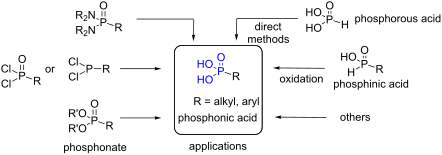
- first pKa ranging from 1.1 to 2.3 and the second acidity which features a pKa ranging from 5.3 to 7.2 [11]. The values strongly depend on the electronic properties induced by the substituent R. It must be noted that due to the high polarity of the phosphonic acid function, the purification of phosphonic
- analogue) [11]. Meanwhile, the phosphonic acid derivatives are more acidic when compared to their carboxylic acid equivalents (1.9 to 2.9 units of pKa below for the first acidity of phosphonic acid derivatives) [11]. This property was used to design Brönsted acid catalysts that were used for the
- consistent with a protonation at the oxygen atom that is doubly bonded to the phosphorus atom leading to a phosphorus centered cation (the protonated trimethyl phosphate was characterized by a pKa of −3.6). These results, extrapolated to phosphonate, suggest that the protonation of the phosphonate would


Solid-state mechanochemical ω-functionalization of poly(ethylene glycol)
Beilstein J. Org. Chem. 2017, 13, 1963–1968, doi:10.3762/bjoc.13.191
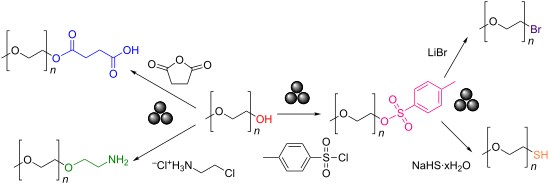
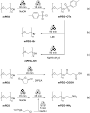
- and facilitated the interaction and mobility of substrates [31][32][33], and allowed the substrates to better interact in situ. Given that DIPEA did not afford high yields albeit being liquid and having a pKa of 3.02, smaller than the one of mPEG (pKa = 4.5–4.8), it suggests that solvation may play a


Mechanochemical N-alkylation of imides
Beilstein J. Org. Chem. 2017, 13, 1745–1752, doi:10.3762/bjoc.13.169
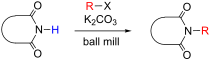
- deprotonation of the imides with pKa values at least within the range of 8.3–9.9 units [30] under ball milling conditions. Deprotonation of phthalimide in solution is usually carried out with the use of bases stronger than K2CO3 [31] and this difference in reactivity in comparison to solvent free conditions has


Direct catalytic arylation of heteroarenes with meso-bromophenyl-substituted porphyrins
Beilstein J. Org. Chem. 2017, 13, 1524–1532, doi:10.3762/bjoc.13.152
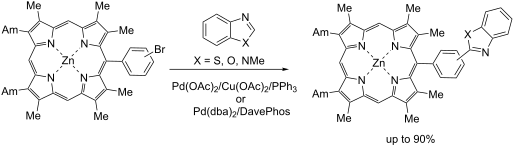
- described in the arylation reactions. In this connection we considered it important to develop an alternative approach to heteroaryl-substituted porphyrins using catalytic arylation of easily accessible meso-(bromophenyl)porphyrins with heterocycles possessing “acidic” C–H bonds, such as benzoxazole (pKa
- 24.4), benzothiazole (pKa 27.3), and N-methylbenzimidazole (pKa 32.5) [30]. Starting mono- and di(p-bromophenyl)-substituted porphyrins 1 and 11 were synthesized according to a described procedure [31], their analogues 2, 10, 12 were obtained using essentially the same approach. Results and Discussion


Strategies toward protecting group-free glycosylation through selective activation of the anomeric center
Beilstein J. Org. Chem. 2017, 13, 1239–1279, doi:10.3762/bjoc.13.123

- aldehyde or ketone) making this center more electrophilic (Scheme 1) [3]. Secondly, the pKa value of the anomeric OH group (glucose pKa ≈ 12.5 [9] or 14 [10]) is several orders of magnitude lower than for the other hydroxy groups (pKa ≈ 16–18) [9][10] so a careful selection of the base should allow for the
- decasaccharide donors. Shoda and co-workers proposed the differential reactivity at the anomeric center (Scheme 24, glucose shown for convenience) can be explained by the lower pKa (≈12.5–14) of the C1–OH [9][10][77]. They believe that the base-promoted nucleophilic attack of the anomeric OH (either the α or β




Sugar-based micro/mesoporous hypercross-linked polymers with in situ embedded silver nanoparticles for catalytic reduction
Beilstein J. Org. Chem. 2017, 13, 1212–1221, doi:10.3762/bjoc.13.120
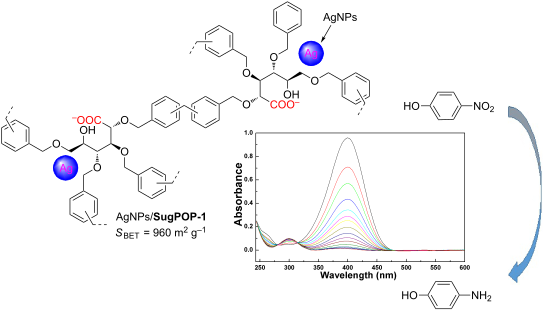
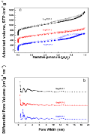
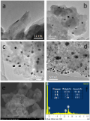
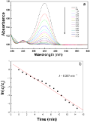
- absorption peak at 317 nm of observed for the neutral 4-NP solution, the absorption at 400 nm is attributed to the 4-nitrophenolate ion. The latter is generated through deprotonation of 4-NP (pKa = 7.15) upon the addition of NaBH4 [41]. As can be seen from Figure 5a, the absorption peak of the substrate




New approach toward the synthesis of deuterated pyrazolo[1,5-a]pyridines and 1,2,4-triazolo[1,5-a]pyridines
Beilstein J. Org. Chem. 2017, 13, 800–805, doi:10.3762/bjoc.13.80

- with hydroxylamine-O-sulfonic acid followed by the reaction with HBF4 according to a previously described method [30]. Salts 1b,c were prepared by direct N-amination of the corresponding pyridines with O-mesitylsulfonylhydroxylamine. In view of difficulties in obtaining experimental pKa values of
- different positions of pyridinium cations we carried out DFT calculations [31] at the M06-2X 6-31+G(d,p) [32] level of theory with SMD [33] solvation (Figure 1, see also Supporting Information File 1). As expected, in all cases the NH2 group is the most acidic. The NH2 group is usually ≈12–13 pKa units more
- acidic than α-C–H hydrogens. However, the difference in pKa of NH2 and CH3 groups of the 4-methyl-1-aminopyridinium cation is not so high and the NH2 group is only 2.7 units more acidic. 1-Aminopyridinium and 4-methyl-1-aminopyridinium cations have similar pKa values for NH2 and α-C–H groups. The 4


Phosphazene-catalyzed desymmetrization of cyclohexadienones by dithiane addition
Beilstein J. Org. Chem. 2017, 13, 762–767, doi:10.3762/bjoc.13.75

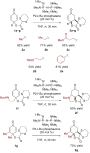
- -carboxylic acid because of its relatively low pKa (compared with non-carboxylate substituted analogs) and the possibility of using an ester linkage as a tether. We found that the heretofore unknown dicyclohexylcarbodiimide (DCC) mediated coupling between para-quinols and 1,3-dithiane-2-carboxylic acid




Polyketide stereocontrol: a study in chemical biology
Beilstein J. Org. Chem. 2017, 13, 348–371, doi:10.3762/bjoc.13.39
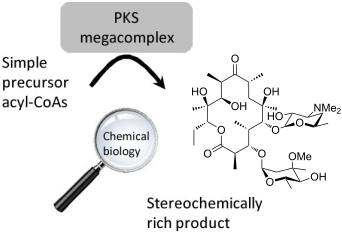
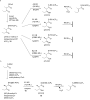
- in fact, epimerizing KRs bind their substrates in two distinct modes. In the first, which is only available to the substrate bearing the non-epimerized methyl center, the thioester and C-3-keto groups are aligned so that the pKa of the C-2 proton is suitably depressed, allowing facile catalysis by KR




(Z)-Selective Takai olefination of salicylaldehydes
Beilstein J. Org. Chem. 2017, 13, 323–328, doi:10.3762/bjoc.13.35

- substituents initially seems counter-intuitive, as it might be predicted that these could attenuate the ortho-hydroxy’s ability to coordinate to the Cr centre. Although the effect appears to correlate with lowered pKa of this hydroxy group, moderate amounts of (Z)-product are generated when this group is


Spectral and DFT studies of anion bound organic receptors: Time dependent studies and logic gate applications
Beilstein J. Org. Chem. 2017, 13, 222–238, doi:10.3762/bjoc.13.25
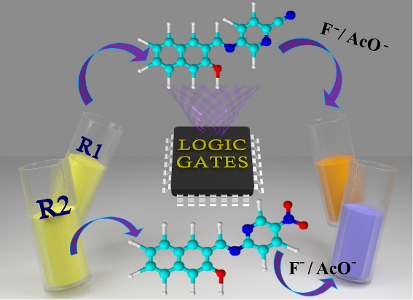
- relative dependence of the anion concentration on the reacting species. Similarly, the rate constants have been calculated for R1 and R2 in the presence of fluoride. The lower order of magnitude of the rate constant in the presence of F− ions could be correlated to the pKa value of 3.2 (F− ion) in
- comparison with AcO− ion whose pKa value is 4.8. The time response of receptors R1 and R2 in the presence of AcO− ion is represented in Supporting Information File 1, Figures S17 and S18. The observed rate constants at different wavelengths for R1 and R2 are summarized in Table 2. 1H NMR titration studies To


Interactions between photoacidic 3-hydroxynaphtho[1,2-b]quinolizinium and cucurbit[7]uril: Influence on acidity in the ground and excited state
Beilstein J. Org. Chem. 2017, 13, 203–212, doi:10.3762/bjoc.13.23
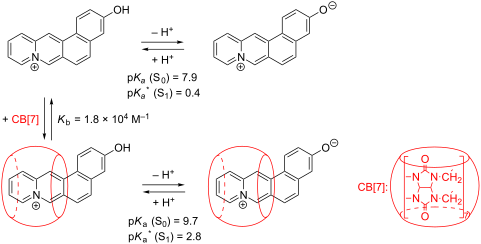
- red-shifted absorption bands and causes a dual emisson, i.e., a combination of emission bands of the hydroxyquinolizinium and its deprotonated form. Whereas this compound is a weak acid in the ground state (pKa = 7.9), it has a strongly increased acidity in the excited state (pKa* = 0.4). As a result
- , the blue-shifted fluorescence of the hydroxyquinolizinium becomes dominant only under strongly acidic conditions. In addition, it is shown that 3-hydroxynaphtho[1,2-b]quinolizinium binds to cucurbit[7]uril (CB[7]) with moderate affinity (Kb = 1.8 × 10⁴ M−1, pH 5) and that the pKa and pKa* values of
- acidity or basicity. In fact, it was shown that the pKa of organic acids and bases often shifts by orders of magnitude upon association with CB[n] [16][17][18][19][20][21][22][23][24], which may be used, e.g., to modify catalytic activity [6] or for sensing purposes [7]. Notably, the same effect was


Silyl-protective groups influencing the reactivity and selectivity in glycosylations
Beilstein J. Org. Chem. 2017, 13, 93–105, doi:10.3762/bjoc.13.12

- electronegativity of the R group is probably also important; when more electropositive (as Si), the oxygen atoms become more electron rich and their repulsion becomes larger. Changing the conformation of a heterocycle has, as mentioned, been studied using the piperidine model system. The pKa of the corresponding
- the reactivity of glycosyl donors with the pKa of the corresponding piperidinium ions. Conformational change induced by bulky vicinal protective groups such as TBS, TIPS and TBDPS. The vicinal clash overrules the 1,3-diaxial interaction, which is less influenced by bulky silyl ethers as these can


New approaches to organocatalysis based on C–H and C–X bonding for electrophilic substrate activation
Beilstein J. Org. Chem. 2016, 12, 2834–2848, doi:10.3762/bjoc.12.283
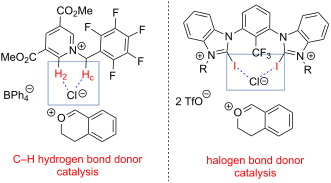
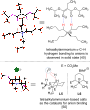
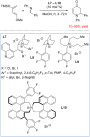
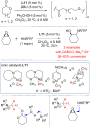
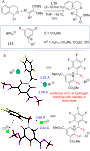
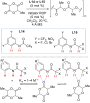
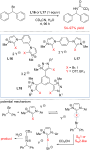
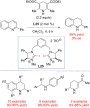
- substantial dipole moment (≈4.5 D) almost aligned with the C5–H bond and the relatively high acidity of this position (pKa(DMSO) = 27–28, for the 1H-tautomer). These heterocycles, which are easily available from 1,3-cycloaddition of alkynes and azides, can both form strong C–H bonds with hydrogen bond










Facile synthesis of a 3-deazaadenosine phosphoramidite for RNA solid-phase synthesis
Beilstein J. Org. Chem. 2016, 12, 2556–2562, doi:10.3762/bjoc.12.250

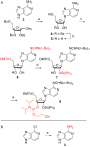
- basicity of these purine nitrogen atoms, because N1 represents the major protonation site, followed by N7 and N3. This order is deduced from the macroscopic pKa values that were measured for adenine, 9-methyladenine, and adenosine [11]. Importantly, there is growing evidence that the pKa values of


Biomimetic synthesis and HPLC–ECD analysis of the isomers of dracocephins A and B
Beilstein J. Org. Chem. 2016, 12, 2523–2534, doi:10.3762/bjoc.12.247

- calculated (total polar surface area; TPSA) and measured (pKa, log P/D and Pe) parameters are shown in Table 1. The lipophilicity of neutral species of naringenin and dracocephins A and B are 3.39, 2.52 and 2.39, respectively. Similarly to this lipophilicity trend, the TPSA value of (±)-naringenin is lower
- than dracocephins A and B, however, there is no difference between the calculated TPSA values of 2a–d and 3a–d. The pKa values of the three phenolic hydroxy groups of the evaluated compounds are quite similar and these are in the range of 6.5 and 12.0. Among these proton-dissociation constants, the
- lowest acidic pKa values are predominant in physiological environment, which is also indicated by the difference of log D values between pH 7.4 and pH 6.5. The blood–brain barrier (BBB) specific penetration of dracocephins isomers has also been studied by the PAMPA (parallel artificial membrane


Inhibition of peptide aggregation by means of enzymatic phosphorylation
Beilstein J. Org. Chem. 2016, 12, 2462–2470, doi:10.3762/bjoc.12.240
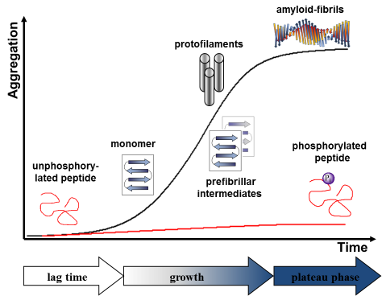
- recognition motif for PKA (cAMP-dependent protein kinase) that enables enzymatic phosphorylation. We have analyzed the pathway of amyloid formation and the influence of enzymatic phosphorylation on the different states along the conformational transition from random-coil to β-sheet-rich oligomers to
- binding [43]. Additionally, phosphorylation may be found to direct desired behaviors in the currently intensively studied area of amyloid-based biomaterials. In this report we show the use of the negatively charged phosphate group to control the aggregation process. Using PKA and ATP (adenosine
- Peptide model Peptide KFM6 follows a typical coiled-coil heptad repeat sequence and it includes five amino acids (-R-R-A-S-L-) in positions 20–24, in proximity to the C-terminus, that serve as the recognition motif for PKA. The crucial role of this recognition motif for efficient phosphorylation has long


Et3B-mediated and palladium-catalyzed direct allylation of β-dicarbonyl compounds with Morita–Baylis–Hillman alcohols
Beilstein J. Org. Chem. 2016, 12, 2402–2409, doi:10.3762/bjoc.12.234

- optimized conditions (Table 1, entry 4), we examined the scope of the catalytic system, Et3B/ Pd(OAc)2/PPh3, for a wide range of 1,3-dicarbonyl compounds and related derivatives (pKa = 9–14) [29][31] using two typical MBH alcohols 1a and 1b. The results of this study are summarized in Table 2. Like diethyl
- malonate (2a), the malonate derivative 2b (pKa = 13) [29] similarly reacted with the allylic alcohol 1a in the presence of the catalytic system Pd(0)/Et3B to exclusively give the mono-allylated product 3a in 65% yield, whereas the same reaction with ethyl 3-cyano-3-oxopropanoate (2c, pKa = 10.7) [43] whose


Experimental and theoretical investigations into the stability of cyclic aminals
Beilstein J. Org. Chem. 2016, 12, 2280–2292, doi:10.3762/bjoc.12.221
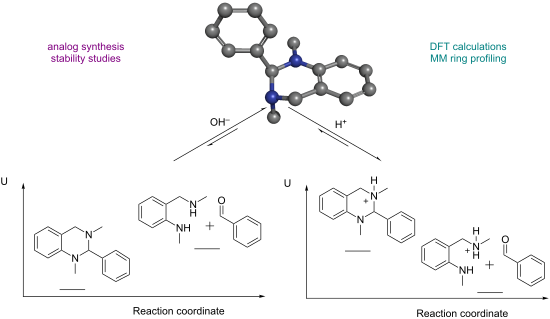
- of the conformational energy of the ring system and pKa values of the N-3 nitrogen atom. Conclusion: Cyclic aminals are stable compounds when not exposed to acidic media and their stability is mainly dependent on the conformational energy of the ring system. Therefore, for the preparation and work-up
- the test compounds, as protonation of the tetrahydroquinazoline system is expected to be an essential factor of hydrolysis induction. Theoretically, protonation might occur at the anilinic N-1, the aliphatic N-3 or by double protonation of N-1 and N-3. Therefore the pKa values of both nitrogens of the
- corresponding fragments. Therefore, compounds with a higher pKa value at the N-3 nitrogen might increase the hydrolysis sensitivity of these compounds due to their faster protonation, like for compound 9b. Computational studies as well as experimental data revealed that the formation of tetrahydroquinazolines