Search results
Search for "peptide" in Full Text gives 488 result(s) in Beilstein Journal of Organic Chemistry. Showing first 200.
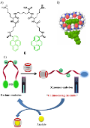
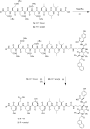
Supramolecular polymerization of sulfated dendritic peptide amphiphiles into multivalent L-selectin binders
Beilstein J. Org. Chem. 2021, 17, 97–104, doi:10.3762/bjoc.17.10
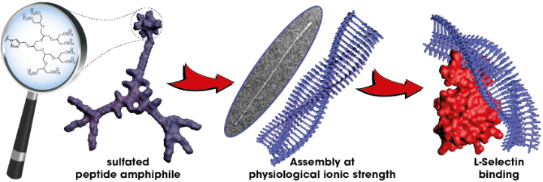
- Research Center of Electron Microscopy, Freie Universität Berlin, Fabeckstr. 34a, 14195 Berlin 10.3762/bjoc.17.10 Abstract The synthesis of a sulfate-modified dendritic peptide amphiphile and its self-assembly into one-dimensional rod-like architectures in aqueous medium is reported. The influence of the
- self-assembly turns out to be crucial in obtaining supramolecular polymers suitable for interactions with biological targets [16]. Peptide amphiphiles provide access to supramolecular structures in this competitive environment by taking advantage of nature’s versatile toolbox of noncovalent
- recently reported the successful application of functional supramolecular polymers in a biological context [30]. By decoration of the discotic peptide amphiphile monomers with dendritic mannose moieties, a specific cell targeting of macrophages and internalization in those antigen presenting cells has been



Molecular basis for protein–protein interactions
Beilstein J. Org. Chem. 2021, 17, 1–10, doi:10.3762/bjoc.17.1
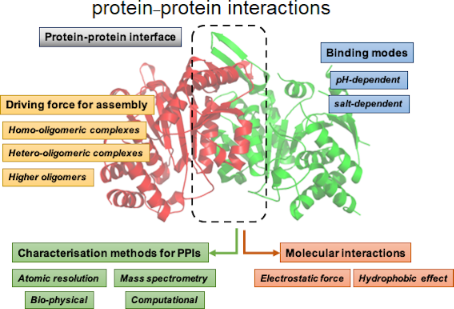
- incorporated deuterium can then be localised through protease-generated peptide fragments or fragmentation within the mass spectrometer. The rate of hydrogen-to-deuterium exchange provides insight into the solvent accessibility. HDXMS provides information on the conformation of the protein, PPIs, and even


Semiautomated glycoproteomics data analysis workflow for maximized glycopeptide identification and reliable quantification
Beilstein J. Org. Chem. 2020, 16, 3038–3051, doi:10.3762/bjoc.16.253
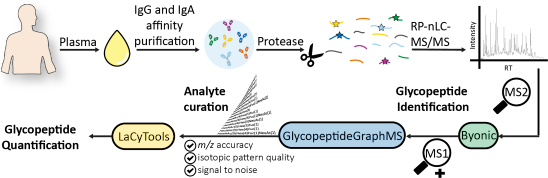
- complex, reflecting the high structural diversity of peptide and glycan portions. The use of glycopeptide-centered glycoproteomics by mass spectrometry is rapidly evolving in many research areas, leading to a demand in reliable data analysis tools. In recent years, several bioinformatic tools were
- compared to Skyline, and GlycopeptideGraphMS. All quantification packages resulted in comparable glycosylation profiles but featured differences in terms of robustness and data quality control. Partial cysteine oxidation was identified as an unexpectedly abundant peptide modification and impaired the
- separation of glycopeptides in RPLC is mainly driven by the peptide portions. Thus, information on different proteins and glycosylation sites appears in the form of glycopeptide clusters. Next to the peptide portion, glycosylation features, such as sialic acids, can strongly influence the retention time [8



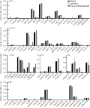
Secondary metabolites of Bacillus subtilis impact the assembly of soil-derived semisynthetic bacterial communities
Beilstein J. Org. Chem. 2020, 16, 2983–2998, doi:10.3762/bjoc.16.248
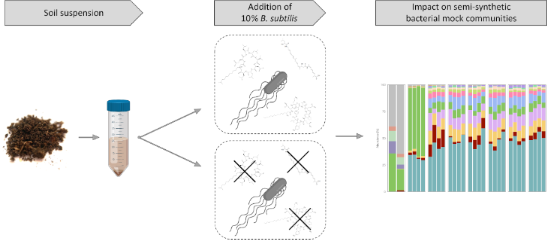
- Bacillus spp. produce various SMs [33][34]. The most prominent and bioactive SMs are nonribosomal peptides (NRPs), of which isoforms belong to the families of surfactins, fengycins, or iturins [35][36] (Figure 1). They are biosynthesised by large enzyme complexes, nonribosomal peptide synthetases (NRPSs


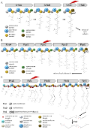
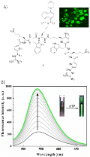
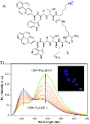
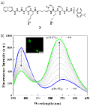
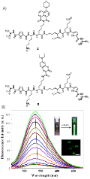
Selected peptide-based fluorescent probes for biological applications
Beilstein J. Org. Chem. 2020, 16, 2971–2982, doi:10.3762/bjoc.16.247

- Debabrata Maity Department of Chemistry, New York University, New York, NY 10003, USA 10.3762/bjoc.16.247 Abstract To understand the molecular interactions, present in living organisms and their environments, chemists are trying to create novel chemical tools. In this regard, peptide-based
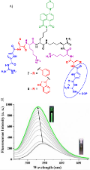
- fluorescence techniques have attracted immense interest. Synthetic peptide-based fluorescent probes are advantageous over protein-based sensors, since they are synthetically accessible, more stable, and can be easily modified in a site-specific manner for selective biological applications. Peptide receptors
- labeled with environmentally sensitive/FRET fluorophores have allowed direct detection/monitoring of biomolecules in aqueous media and in live cells. In this review, key peptide-based approaches for different biological applications are presented. Keywords: fluorescent probe; fluorophores; molecular

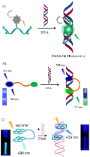



UV resonance Raman spectroscopy of the supramolecular ligand guanidiniocarbonyl indole (GCI) with 244 nm laser excitation
Beilstein J. Org. Chem. 2020, 16, 2911–2919, doi:10.3762/bjoc.16.240
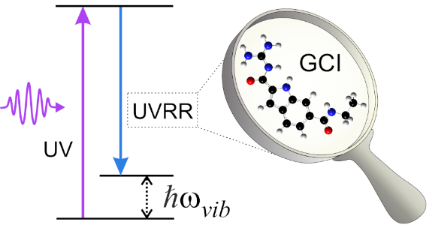
- autofluorescence of the peptide or protein. Here, we demonstrate the use of UVRR spectroscopy with 244 nm laser excitation for the characterization of GCP as well as guanidiniocarbonyl indole (GCI), a next generation supramolecular ligand for the recognition of carboxylates. For demonstrating the feasibility of
- relevant peptide. In the case of RGD, the more pronounced differences between the UVRR spectra of the free and complexed GCI (1:1 mixture) clearly indicate a stronger binding of GCI to RGD compared with BA. A tentative assignment of the experimentally observed changes upon molecular recognition is based on
- strengths. Various spectroscopic techniques can be employed for monitoring these changes. For example, electronic absorption or fluorescence spectroscopy can probe the spectral differences due to the complexation of the supramolecular ligand with a peptide or protein. However, electronic spectroscopies


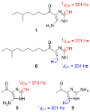
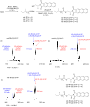
Nocarimidazoles C and D, antimicrobial alkanoylimidazoles from a coral-derived actinomycete Kocuria sp.: application of 1JC,H coupling constants for the unequivocal determination of substituted imidazoles and stereochemical diversity of anteisoalkyl chains in microbial metabolites
Beilstein J. Org. Chem. 2020, 16, 2719–2727, doi:10.3762/bjoc.16.222
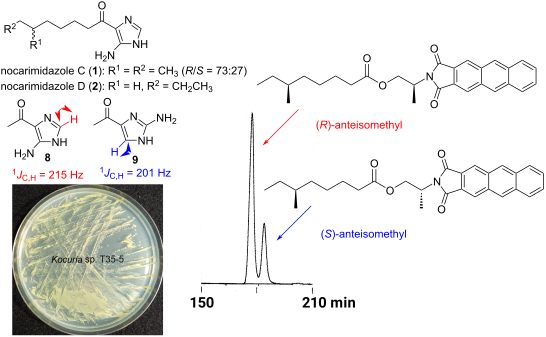
- genomic information suggests the presence of biosynthetic genes for nonribosomal peptide synthetase and type III polyketide synthase in some Kocuria strains [18], which leaves a hope for new secondary metabolites. At present, only a few limited structural types of metabolites, including polyamine-derived



Enzyme-instructed morphological transition of the supramolecular assemblies of branched peptides
Beilstein J. Org. Chem. 2020, 16, 2709–2718, doi:10.3762/bjoc.16.221

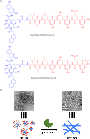
- of the N-terminal of the branch increased the stability of the branched peptides. Moreover, these branched peptides facilitate the delivery of the proteins into cells. This work contributes insights for the development of peptide supramolecular assemblies via enzymatic noncovalent synthesis in
- , peptide assemblies are being explored for a wide range of applications, including cell cultures [6], tissue engineering [7], drug delivery [8][9][10][11], antibacterial agents [12][13], regarding biomineralization [14][15], as collagen mimics [16], anisotropic hydrogels [17][18], for cancer therapy [19
- ][20][21][22][23][24][25][26], as mimicry of amyloids [27], in the context of intracellular phase transition [28], and in molecular imaging [29][30]. Most of these studies are centered on peptide amphiphiles or amphiphilic peptides that are linear in geometry. Nature, however, also produces and





Optical detection of di- and triphosphate anions with mixed monolayer-protected gold nanoparticles containing zinc(II)–dipicolylamine complexes
Beilstein J. Org. Chem. 2020, 16, 2687–2700, doi:10.3762/bjoc.16.219
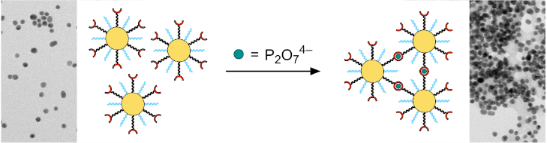
- solution, potentially giving rise to highly selective receptors if the two binding sites are arranged at a distance that allows for binding a diphosphate, but not a larger triphosphate anion. The peptide and cyclopeptide-derived receptors introduced by Jolliffe are examples [26] along with a range of


Vicinal difluorination as a C=C surrogate: an analog of piperine with enhanced solubility, photostability, and acetylcholinesterase inhibitory activity
Beilstein J. Org. Chem. 2020, 16, 2663–2670, doi:10.3762/bjoc.16.216
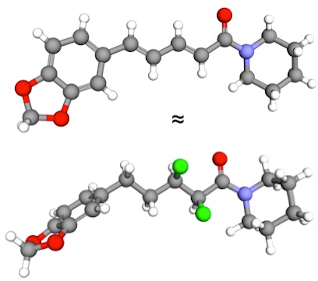
- advantage of improved aqueous solubility. The inhibition of BACE-1 was measured using a fluorogenic peptide substrate according to an established method (Figure 4b) [34]. Intriguingly, the relative activities of 1 vs 2 were reversed in comparison with the AChE assay. The lead compound 1 achieved the


A consensus-based and readable extension of Linear Code for Reaction Rules (LiCoRR)
Beilstein J. Org. Chem. 2020, 16, 2645–2662, doi:10.3762/bjoc.16.215
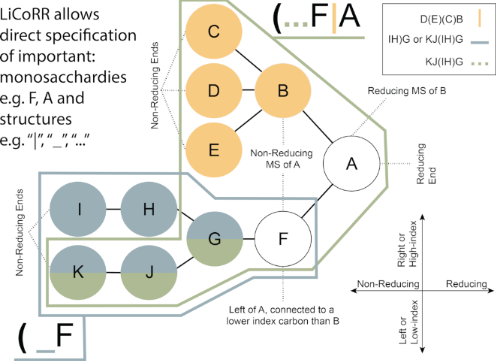
- be reserved for other future uses. To specify a glycopeptide, users may also inscribe them directly in the peptide using the existing branching rules: “PEP(AG(LY)CAN)TIDE” would describe a biantennary glycan bound to the threonine of a peptide. Because the number sign is used to indicate a


Comparative ligand structural analytics illustrated on variably glycosylated MUC1 antigen–antibody binding
Beilstein J. Org. Chem. 2020, 16, 2540–2550, doi:10.3762/bjoc.16.206
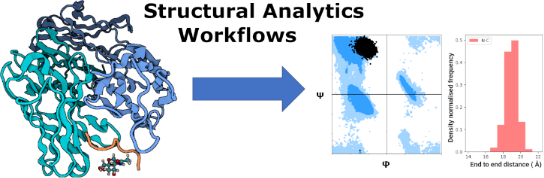
- approach by investigating the in-silico binding of a peptide and glycopeptide epitope of the glycoprotein Mucin 1 (MUC1) binding with the antibody AR20.5. To study the binding, we performed molecular dynamics simulations using OpenMM and then used the Galaxy platform for data analysis. The same analysis
- analysis were carried out. These analyses were used to rapidly assess key features of the system, interrogate the dynamic structure of the ligand, and determine the role of glycosylation on the conformational equilibrium. The glycopeptide conformations in solution change relative to the peptide; thus a
- partially pre-structuring is seen prior to binding. Although the bound conformation of peptide and glycopeptide is similar, the glycopeptide fluctuates less and resides in specific conformers for more extended periods. This structural analysis which gives a high-level view of the features in the system



NMR Spectroscopy of supramolecular chemistry on protein surfaces
Beilstein J. Org. Chem. 2020, 16, 2505–2522, doi:10.3762/bjoc.16.203
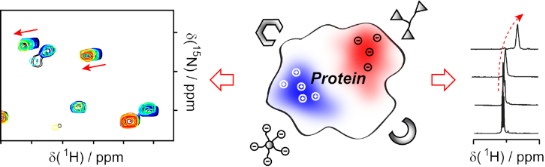
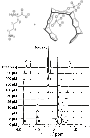
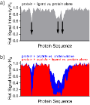
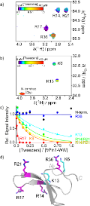
- the unsubstituted parent ligand [31][32]. These ligands bind KMe3 in a short histone 3 (H3) peptide tight enough to even displace natural methyl-lysine binding proteins such as plant homeodomain (PHD) containing epigenetic readers. Since the H3 peptides are synthetic and not easily available in
- isotope-labeled form, a competition experiment was set up with 15N-labeled PHD domains. First, the methylated histone peptide was titrated to the PHD domain, resulting in chemical shift perturbations. The calixarene ligand was subsequently titrated to the same sample now containing the binary PHD–histone
- complex. Competition of the ligand for the peptide resulted in release of unbound PHD domain, which is evident from the signals shifting back towards the position of the free protein in the absence of peptide. The Crowley lab has conducted multiple binding model studies comparing binding of sulfonato and




Photosensitized direct C–H fluorination and trifluoromethylation in organic synthesis
Beilstein J. Org. Chem. 2020, 16, 2151–2192, doi:10.3762/bjoc.16.183
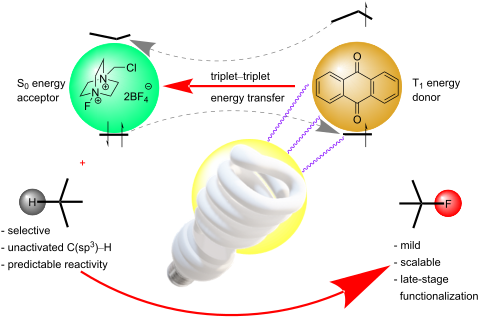
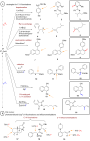
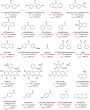
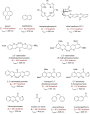
- with Selectfluor® [153]. The authors justified the use of protecting groups due to their extensive use in peptide synthesis. Of all the PGs tested, phthalimide (Phth)- and trifluoroacetate (TFA)-protected substrates underwent photosensitized C–H fluorination to give the highest yield of 80% and 71% of






GlypNirO: An automated workflow for quantitative N- and O-linked glycoproteomic data analysis
Beilstein J. Org. Chem. 2020, 16, 2127–2135, doi:10.3762/bjoc.16.180
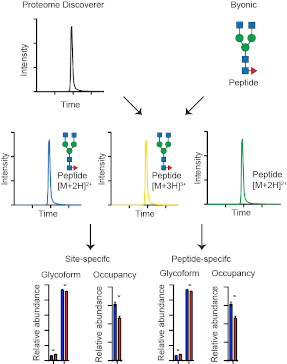
- packages have been developed for analysis of outputs from MS technology to automate the process of transformation of raw MS data into ion intensities and matching them with appropriate glycan and peptide sequence databases for glycopeptide identification (reviewed in [12][13][14][15][16]). However, there
- perform quantification. Proteome Discoverer allows robust and facile measurement of peptide abundances using MS1 peptide area under the curve (AUC) information. We developed GlypNirO to integrate the outputs from Byonic and Proteome Discoverer to improve the efficiency, ease, and robustness of
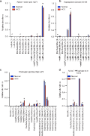
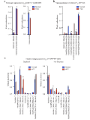
- quantitative glycoproteomic data analysis. GlypNirO takes Byonic and Proteome Discover output files, and user-defined sample information and processing parameters, performs a series of automated data integration and computational steps, and provides informative and intuitive output files with site or peptide



Naphthalene diimide–amino acid conjugates as novel fluorimetric and CD probes for differentiation between ds-DNA and ds-RNA
Beilstein J. Org. Chem. 2020, 16, 2032–2045, doi:10.3762/bjoc.16.170
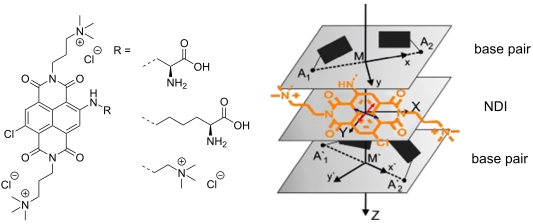
- peptide chain and DNA/RNA interacting aromatic moiety, for instance peptide-based DNA/RNA-intercalators [1][2], as well as many DNA/RNA groove binding small molecules [3][4]. Inspired by these natural examples, the development of novel DNA/RNA targeting synthetic molecules has been in scientific focus for
- [9]). One of the approaches relies on amino acids conjugated with various DNA/RNA-binding chromophores, thereby yielding effective spectrometric sensing systems due to their interactions with DNA. In this approach, chromophores can be combined with peptide sequences in various ways, thus giving
- access to large libraries of close analogues. Further, in such peptide-based chromophore systems, a multitude of different chromophores/fluorophores [10] could allow fine tuning of spectroscopic responses to various DNA/RNA sequences. With this concept in mind, Piantanida and co-workers recently


pH- and concentration-dependent supramolecular self-assembly of a naturally occurring octapeptide
Beilstein J. Org. Chem. 2020, 16, 2017–2025, doi:10.3762/bjoc.16.168
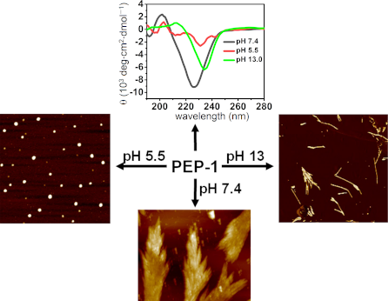
- Goutam Ghosh Gustavo Fernandez Organisch-Chemisches Institut, Westfälische Wilhelms-Universität Münster, Correnstraße 40, 48149 Münster, Germany 10.3762/bjoc.16.168 Abstract Peptide-based biopolymers represent highly promising biocompatible materials with multiple applications, such as tailored
- development of novel drug nanocarrier assemblies. Keywords: aqueous self-assembly; pH-responsive systems; secondary structure; self-assembled nanostructures; solid-phase peptide synthesis; Introduction The self-assembly of small molecules is a ubiquitous phenomenon in nature [1] and also has key
- secondary structures, which lead to nanostructured materials [16][17]. Noncovalent interactions, such as hydrogen bonding, van der Waals interactions, hydrophobic interactions, electrostatic interactions, and π–π interactions [18][19][20][21][22] are common driving forces in peptide self-assembly. These


Automated high-content imaging for cellular uptake, from the Schmuck cation to the latest cyclic oligochalcogenides
Beilstein J. Org. Chem. 2020, 16, 2007–2016, doi:10.3762/bjoc.16.167
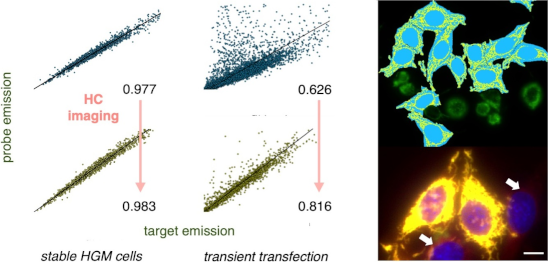
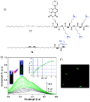
- ]. This binding model 10 can be applied to cell-surface GAGs to enhance the cellular uptake efficiency. The peptide 9, with rhodamine B attached, successfully enters into the living cells while the control peptide 11 with a simple guanidinium group shows a negligible uptake efficiency. In addition, the
- efficient delivery of a model protein (avidin, around 67 kDa) into cells through biotin–avidin technology could be achieved in the presence of this strikingly small peptide. However, the uptake of peptide 9-labeled avidin was dramatically reduced into cells that express less GAGs on the cell surfaces. These
- more stable complexes 12 with the phosphodiesters in the DNA backbone, and thus making it possible to transfect cells with shorter peptides. In 2015, the Schmuck group reported the first example of a small peptide with only four amino acids for gene transfection [27]. The binding affinity of 13 to DNA




Syntheses of spliceostatins and thailanstatins: a review
Beilstein J. Org. Chem. 2020, 16, 1991–2006, doi:10.3762/bjoc.16.166

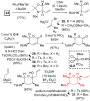
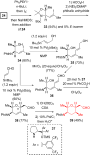
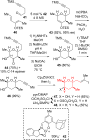
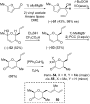
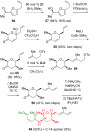
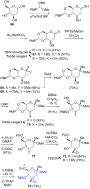
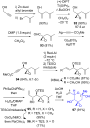
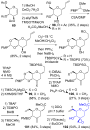
- (Figure 1) are a family of linear peptide/polyketide natural products isolated from the bacteria Burkholderia sp. FERM BP-3421 [1][2][3] (originally identified as Pseudomonas sp. No 2663) and Burkholderia sp. MSMB 43 [4][5]. These compounds are of interest due to their ability to bind to a subunit of the








Controlling the stereochemistry in 2-oxo-aldehyde-derived Ugi adducts through the cinchona alkaloid-promoted electrophilic fluorination
Beilstein J. Org. Chem. 2020, 16, 1963–1973, doi:10.3762/bjoc.16.163
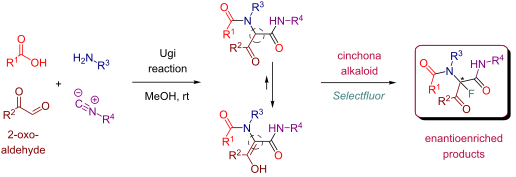
- -component reaction (U-4CR) a carboxylic acid 1, an aldehyde 2, and an isocyanide 3 are complemented by a primary amine 5 that altogether undergo a condensation into a peptide-like adduct 6. These reactions are typically conducted in polar protic solvents such as methanol or water. Several examples of


Polarity effects in 4-fluoro- and 4-(trifluoromethyl)prolines
Beilstein J. Org. Chem. 2020, 16, 1837–1852, doi:10.3762/bjoc.16.151
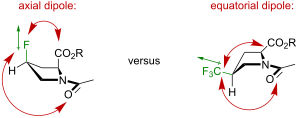
- functional groups, but due to the altered backbone folding and solvation. For example, a proline residue cannot be considered hydrophobic, even though, it contains the same number of carbon atoms as valine, which is evidently hydrophobic [2]. In fact, a proline contribution to the peptide polarity can be
- chemically inert under most biologically relevant conditions. The presence of these groups adjacent to the proline structure helps to modulate the conformational landscape of the parent amino acid, and this effectively alters the folding of the peptide chain when an analogue is included in it as a residue
- complex structures: peptides and proteins. Results and Discussion Model compounds The study was originally set up following an assumption that a peptide containing a proline analogue would form a system of three dipoles. The peptide bond itself creates a strong dipole, with a direction that roughly aligns


Facile synthesis of 7-alkyl-1,2,3,4-tetrahydro-1,8-naphthyridines as arginine mimetics using a Horner–Wadsworth–Emmons-based approach
Beilstein J. Org. Chem. 2020, 16, 1617–1626, doi:10.3762/bjoc.16.134
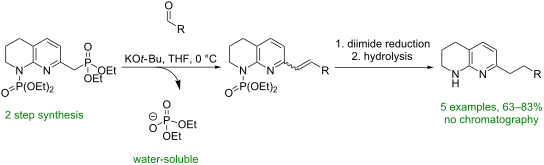
- ; Introduction Tetrahydronaphthyridines are prominent in peptidomimetic pharmaceuticals as arginine mimetics and they are widely used in Arg–Gly–Asp (RGD) peptide mimetics such as αv integrin inhibitors [1]. Tetrahydronaphthyridines represent less basic but more permeable alternatives to arginine (pKa ≈ 7 versus



A dynamic combinatorial library for biomimetic recognition of dipeptides in water
Beilstein J. Org. Chem. 2020, 16, 1588–1595, doi:10.3762/bjoc.16.131
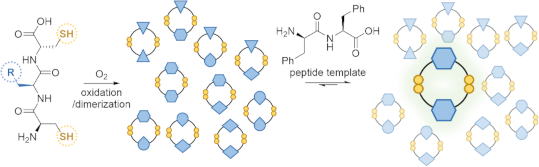
- receptors emerging form a dynamic combinatorial library of peptide building blocks. In this study we aimed to broaden this scope towards recognition of small peptides. Employing CXC peptide building blocks, we found that cyclic dimers of oxidized CFC bind to the aromatic peptides FF and YY (K ≈ 229–702 M−1
- , selective binders for peptides are extremely desirable but also highly challenging to design. Early developments in artificial peptide recognition go back to the 1970’s when it was discovered that crown ethers can bind to ammonium functions, such as protonated amines in peptides [1]. Further such binding
- motifs were developed and if arranged correctly can be used to synthesize artificial receptors with high affinity [2][3]. Schmuck et al. have been hugely successful in designing artificial peptide receptors [4][5]. For example, they combined a carboxylate binding site with an aromatic bowl-shaped cavity


Photocatalyzed syntheses of phenanthrenes and their aza-analogues. A review
Beilstein J. Org. Chem. 2020, 16, 1476–1488, doi:10.3762/bjoc.16.123
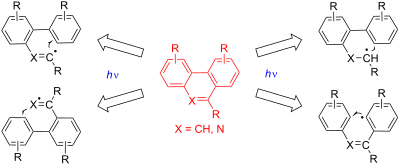
- biaryls 5.1a–d in up to excellent yields at room temperature by using α-bromoesters as radical precursors and [fac-Ir(ppy)3] as the photoredox catalyst [49]. A similar photocatalyzed tandem insertion/cyclization approach based on isocyanides and amino acid/peptide-derived Katritzky salts as precursors of


An overview on disulfide-catalyzed and -cocatalyzed photoreactions
Beilstein J. Org. Chem. 2020, 16, 1418–1435, doi:10.3762/bjoc.16.118
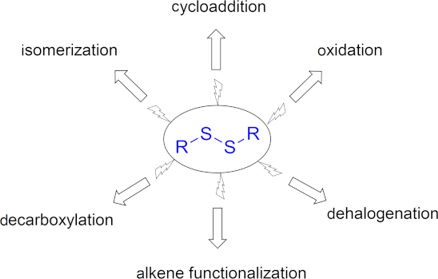
- and co-workers reported an excellent thiyl radical-catalyzed enantioselective cyclization reaction of vinylcyclopropanes with alkenes [7]. For the extension of this concept, in 2018, Miller and co-workers reported a UV-light-promoted disulfide-bridged peptide-catalyzed enantioselective cycloaddition
- of vinylcyclopropanes with olefins [8]. The reaction mechanism of this cycloaddition process was similar to other thiyl radical-catalyzed cycloaddition cascade reactions. The alkylthiyl radical generated by the homolysis of a disulfide-bridged peptide precatalyst under UV-light irradiation triggers
- engage with the peptide backbone via an H-bonding interaction, and in order to achieve a high enantioselectivity, the amide functionalization of the peptide at the 4-proline position is essential. Amide-substituted vinylcyclopropanes have a relatively good H-bond-donating ability, so they are more