


Search results
Search for "reaction mechanisms" in Full Text gives 139 result(s) in Beilstein Journal of Organic Chemistry.
The preparation of several 1,2,3,4,5-functionalized cyclopentane derivatives
- André S. Kelch,
- Peter G. Jones,
- Ina Dix and
- Henning Hopf
Beilstein J. Org. Chem. 2013, 9, 1705–1712, doi:10.3762/bjoc.9.195
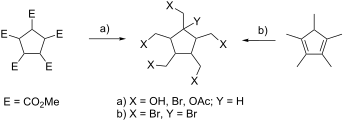
- acetylenedicarboxylate (22) with dimethyl malonate (23) under the catalytic influence of pyridinium acetate, the fully substituted cycloheptadienes 24 and 25 (Scheme 5) were produced; both authors also proposed reaction mechanisms for this complex transformation that can be considered as reasonable even today; for the

Graphical Abstract

Scheme 1: The first members of the [n]radialene series and retrosynthesis for [5]radialene (3).

Scheme 2: Preparation of cis,cis,cis,cis-1,2,3,4,5-pentakis(hydroxymethyl)cyclopentane (16) according to Tolb...

Scheme 3: The preparation of derivatives of 16 better suited for nucleophilic substitution and elimination.

Figure 1: Structure of 19 in the crystal; ellipsoids represent 50% probability levels.

Scheme 4: Preparation of the pentaacetate 21 from 16.

Scheme 5: Preparation of the cycloheptadiene octaesters 24/25 according to Diels [11] and Le Goff [13], respectively,...

Figure 2: Structure of 24 in the crystal; ellipsoids represent 30% probability levels.

Figure 3: Structure of 26 in the crystal; ellipsoids represent 30% probability levels.

Scheme 6: Derivatives derived from the pentaester mixture 26/27.
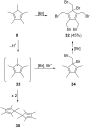
Scheme 7: Bromination of 1,2,3,4,5-pentamethylcyclopenta-1,3-diene (8).

Figure 4: Structure of 32 in the crystal; ellipsoids represent 50% probability levels.
True and masked three-coordinate T-shaped platinum(II) intermediates
- Manuel A. Ortuño,
- Salvador Conejero and
- Agustí Lledós
Beilstein J. Org. Chem. 2013, 9, 1352–1382, doi:10.3762/bjoc.9.153
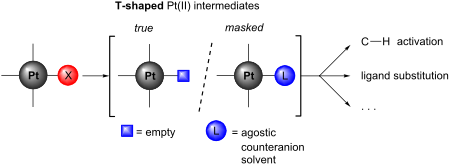
- . Moreover, recent experimental and theoretical reports are analyzed, which suggest the involvement of such intermediates in reaction mechanisms, particularly C–H bond-activation processes. Keywords: C–H bond activation; intermediate; platinum(II); reactive intermediates; three-coordinate; T-shaped; Review
- large number of reaction mechanisms. A review concerning dissociative pathways in Pt(II) complexes was published in 1990 [113]. Due to both the low electron count and the presence of a vacant site in the coordination sphere, T-shaped Pt(II) species are suitable intermediates in ligand-exchange and bond

Graphical Abstract
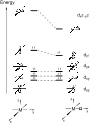
Figure 1: Qualitative orbital diagram for a d8 metal in ML4 square-planar and ML3 T-shaped complexes.

Figure 2: Walsh diagram for the d-block of a d8 ML3 complex upon bending of one L–M–L angle.

Figure 3: Neutral Y-shaped Pt complex Y1 [15]. Angles are given in degrees.

Figure 4: General classification of T-shaped Pt(II) structures according to the fourth coordination site.

Figure 5: Hydride, boryl and borylene true T-shaped Pt(II) complexes.

Figure 6: NHC-based true T-shaped Pt(II) complexes.

Figure 7: Phosphine-based agostic T-shaped Pt(II) complexes. Compounds in brackets correspond with hydrido–al...

Figure 8: Phenylpyridine and NHC-based agostic T-shaped Pt(II) complexes.

Figure 9: Counteranion coordination in T-shaped Pt(II) complexes.

Figure 10: Phosphine-based solvento Pt(II) complexes.

Figure 11: Nitrogen-based solvento Pt(II) complexes.

Figure 12: Pincer-based solvento Pt(II) complexes.
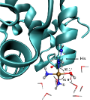
Figure 13: Structure of the QM/MM optimized cisplatin–protein adduct [94].

Figure 14: NMR coupling constants used for the characterization of three-coordinate Pt(II) species.

Figure 15: The chemical formula of the complexes discussed in Table 2.

Scheme 1: Halogen abstraction from 1.

Scheme 2: Halogen abstraction from 2 forming the dicationic complex T3 [22].

Scheme 3: Hydrogenation of complexes A5a and A5b [39].

Scheme 4: Hydrogenation of complexes 3 and A5c [40].

Scheme 5: Intermolecular C–H bond activation from T5a [28].

Scheme 6: Protonation of complexes 4 [35,36].

Scheme 7: Cyclometalation of 5 [43].

Scheme 8: Protonation of 6.

Scheme 9: Reductive elimination of ethane from 7.

Scheme 10: Reductive elimination of methane from six-coordinate Pt(IV) complexes.

Scheme 11: Proposed dissociative mechanism for the fluxional motion of dmphen in [Pt(Me)(dmphen)(PR3)]+ comple...

Figure 16: Feasible interactions for unsaturated intermediates 11b (left) and 12b (right) during fluxional mot...

Scheme 12: Halogen abstraction from 13a,b and subsequent cyclometalation to yield complexes A5a,b [39].

Scheme 13: Proposed mechanism for the acid-catalyzed cyclometalation of 14 via intermediate 15 [41].

Scheme 14: Proposed mechanism for the formation of 19 [102].

Scheme 15: Cyclometalation of 20 via thioether dissociation [117].

Figure 17: Gibbs energy profile (in chloroform solvent) for the cyclometalation of 23 [120].

Scheme 16: Coordination of tmtu to 29 and subsequent C–H bond activation via three-coordinate species 31 and 32...

Scheme 17: Cyclometalation process of NHC-based Pt(II) complexes [28,44].

Scheme 18: Cyclometalation process of complex A9 [43].

Scheme 19: “Rollover” reaction of 38 and subsequent oligomerization [123].

Scheme 20: Proposed mechanism for the formation of cyclometalated species 44 [124].

Scheme 21: Self-assembling process of 45 by “rollover” reaction [126].

Scheme 22: “Rollover” reaction of A9. Energies (solvent) in kcal mol−1 [127].

Scheme 23: Proposed mechanisms for the “rollover” cyclometalation of 52 in gas-phase ion-molecule reactions [128].

Scheme 24: β-H elimination and 1,2-insertion equilibrium involving A1d and the subsequent generation of 57 [35].

Scheme 25: Proposed mechanism for thermolysis of 7b and 7c in benzene-d6 and cyclohexane-d12 solvents [101].

Scheme 26: β-H elimination process of A11a [28].

Scheme 27: Intermolecular C–H bond activation from 62 [95].

Scheme 28: Reductive elimination of methane from 65 followed by CD3CN coordination or C–D bond-activation proc...

Figure 18: DFT-optimized structures describing the κ2 (69, left) and κ3 (69’, right) coordination modes of [Pt...

Scheme 29: Intermolecular arene C–H bond activation from NHC-based complexes [28].

Figure 19: Energy profiles (in benzene solvent) for the benzene C–H bond activation from A11a, A11b, T5a and T...

Scheme 30: Intermolecular arene C–H bond activation from PNP-based complex 71 [12].

Scheme 31: Intermolecular C–H bond-activation by gas-phase ion-molecule reactions of 74 [7,142].

Scheme 32: Dihydrogen activation through complexes A5a, A5b [39], A5c [40] and S1a [54].

Scheme 33: Dihydrogen activation through complexes A7 and 16 [41]. For a: see Scheme 13.

Scheme 34: Br2 and I2 bond activations through complexes A11a and T5a [143].

Scheme 35: Detection and isolation of the Pt(III) complex 81a [143].

Scheme 36: Cl2 bond activation through complexes 82 and 83 [144].

Scheme 37: cis–trans Isomerization mechanism of the solvento Pt(II) complexes S5 [2,61].

Figure 20: Energy profiles for the isomerization of complexes [Pt(R)(PMe3)2(NCMe)]+ where R means Me (85a, red...

Figure 21: DFT-optimized structure of intermediate 86 [62]. Bond distances in angstrom and angles in degrees.

Scheme 38: Proposed dissociative ligand-substitution mechanism of cis-[Pt(R)2S2] complexes (87) [117].

Scheme 39: Proposed mechanisms for the ligand substitution of the dinuclear species 91 [146].
Copper-catalyzed aerobic aliphatic C–H oxygenation with hydroperoxides
- Pei Chui Too,
- Ya Lin Tnay and
- Shunsuke Chiba
Beilstein J. Org. Chem. 2013, 9, 1217–1225, doi:10.3762/bjoc.9.138

- 1,5-H radical shift. Aliphatic C–H oxidation with hydroperoxides. Proposed reaction mechanisms for the formation of 2a, 3a, and 4a. Proposed reaction mechanisms for the formation of 5 and 6. The reaction of secondary hydroperoxide 1o. 1,4-Dioxygenation of alkanes. Aerobic 1,4-dioxygenation of alkanes

Graphical Abstract

Scheme 1: Aliphatic C–H oxidation with amidines and ketimines by 1,5-H radical shift.

Scheme 2: Aliphatic C–H oxidation with hydroperoxides.

Scheme 3: Proposed reaction mechanisms for the formation of 2a, 3a, and 4a.

Scheme 4: Proposed reaction mechanisms for the formation of 5 and 6.

Scheme 5: The reaction of secondary hydroperoxide 1o.

Scheme 6: 1,4-Dioxygenation of alkanes.

Scheme 7: Aerobic 1,4-dioxygenation of alkanes in the CuCl–NHPI catalytic system.
Gold-catalyzed oxycyclization of allenic carbamates: expeditious synthesis of 1,3-oxazin-2-ones
- Benito Alcaide,
- Pedro Almendros,
- M. Teresa Quirós and
- Israel Fernández
Beilstein J. Org. Chem. 2013, 9, 818–826, doi:10.3762/bjoc.9.93
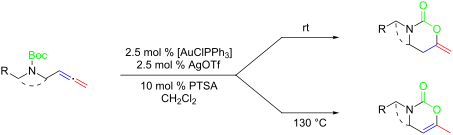
- gold-catalyzed synthetic routes to 1,3-oxazinan-2-ones (kinetically controlled products) and 1,3-oxazin-2-one derivatives (thermodynamically favored) from easily accessible allenic carbamates has been carried out. Keywords: allenes; computational chemistry; gold; gold catalysis; heterocycles; reaction
- mechanisms; Introduction The search for new synthetic routes to 1,3-oxazin-2-one derivatives [1] is of interest because of the biological activity of these molecules [2][3][4][5][6][7]. Carretero and colleagues have published the Au(I)-catalyzed cyclization of N-Boc-3-butyn-1-amines to afford six-membered 2

Graphical Abstract
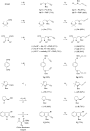
Scheme 1: Preparation of allenic carbamates 2a–j. Reagents and conditions: (i) Propargylamine, MgSO4, CH2Cl2,...
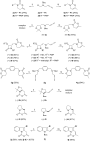
Scheme 2: Controlled oxycyclization reactions of allenic carbamates 2 to 1,3-oxazinan-2-ones 3 and 1,3-oxazin...

Scheme 3: Possible explanation for the gold-catalyzed isomerization reaction of 1,3-oxazinan-2-one 3a into 1,...

Scheme 4: Mechanistic explanation for the gold-catalyzed oxycyclization reactions of allenic carbamates 2 int...

Figure 1: Computed reaction profile for the reaction of AuPMe3+ and 1M. Numbers indicate the corresponding PC...
Complete σ* intramolecular aromatic hydroxylation mechanism through O2 activation by a Schiff base macrocyclic dicopper(I) complex
- Albert Poater and
- Miquel Solà
Beilstein J. Org. Chem. 2013, 9, 585–593, doi:10.3762/bjoc.9.63
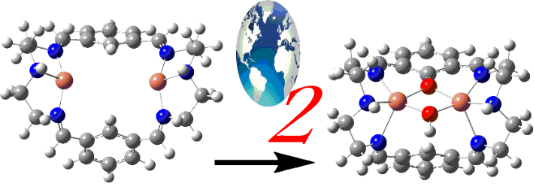
- . Finally, comparison of the reaction mechanisms involving hexaazamacrocyclic bsH2m and H3m ligands indicates that the energy barriers present in the H3m reaction mechanism are somewhat lower than those found in the more rigid bsH2m ligand. Stationary points located along the reaction path of the aromatic

Graphical Abstract

Figure 1: Stationary points located along the reaction path of the aromatic hydroxylation mechanism (some H a...

Figure 2: Computed structures of the potential equilibrium between the peroxo and bis-μ-oxo intermediates (so...

Figure 3: Computed structures for a potential alternative pathway f→g of the σ* mechanism (some H atoms omitt...

Figure 4: Computed structures for a potential alternative pathway e→g of the σ* mechanism (some H atoms omitt...

Figure 5: Computed structures for a potential alternative pathway j→i of the σ* mechanism (Gibbs energies in ...

Figure 6: Computed structures for a potential alternative pathway b→g of the σ* mechanism (some H atoms omitt...

Figure 7: Computed structures for a potential alternative pathway c→g of the σ* mechanism (some H atoms omitt...
Some aspects of radical chemistry in the assembly of complex molecular architectures
- Béatrice Quiclet-Sire and
- Samir Z. Zard
Beilstein J. Org. Chem. 2013, 9, 557–576, doi:10.3762/bjoc.9.61

- over the years. Our research is curiosity driven, guided by a search for novelty and a thirst for understanding reaction mechanisms. Constructing complex molecular architectures is only incidental to our work, mostly a consequence of our exploration of the scope and limitations of our methods. The

Graphical Abstract

Scheme 1: Key radical step in the total synthesis of (–)-dendrobine.

Scheme 2: Radical cascade in the total synthesis of (±)-13-deoxyserratine (ACCN = 1,1'-azobis(cyclohexanecarb...

Scheme 3: Formation of the complete skeleton of (±)-fortucine.
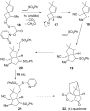
Scheme 4: Model radical sequence for the synthesis of quadrone.

Scheme 5: Radical cascade using the Barton decarboxylation.

Scheme 6: Simplified mechanism for the xanthate addition to alkenes.

Scheme 7: Synthesis of β-lactam derivatives.

Scheme 8: Sequential additions to three different alkenes (PhthN = phthalimido).

Scheme 9: Key cascade in the total synthesis of (±)-matrine (43).

Scheme 10: Synthesis of complex tetralones.

Scheme 11: Synthesis of functionalised azaindoline and indole derivatives.

Scheme 12: Synthesis of thiochromanones.

Scheme 13: Synthesis of complex benzothiepinones. Conditions: 1) CF3COOH; 2) RCHO / AcOH (PMB = p-methoxybenzy...

Scheme 14: Formation and capture of a cyclic nitrone.
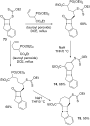
Scheme 15: Synthesis of bicyclic cyclobutane motifs.

Scheme 16: Construction of the CD rings of steroids.

Scheme 17: Rapid assembly of polyquinanes.

Scheme 18: Formation of a polycyclic structure via an allene intermediate.
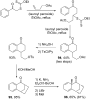
Scheme 19: A polycyclic structure via the alkylative Birch reduction.

Scheme 20: Synthesis of polycyclic pyrimidines and indoline structures.

Scheme 21: Construction of a trans-decalin derivative.
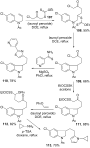
Scheme 22: Multiple uses of a chloroacetonyl xanthate.

Scheme 23: A convergent route to spiroketals.

Scheme 24: A modular approach to 3-arylpiperidines.

Scheme 25: A convergent route to cyclopentanols and to functional allenes.
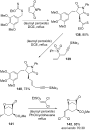
Scheme 26: Allylation and vinylation of a xanthate and an iodide.
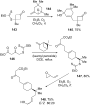
Scheme 27: Vinyl epoxides as allylating agents.

Scheme 28: Radical allylations using allylic alcohol derivatives.

Scheme 29: Synthesis of variously substituted lactams.

Scheme 30: Nickel-mediated synthesis of unsaturated lactams.
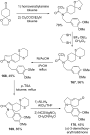
Scheme 31: Total synthesis of (±)-3-demethoxy-erythratidinone.

Scheme 32: Generation and capture of an iminyl radical from an oxime ester.
Electron and hydrogen self-exchange of free radicals of sterically hindered tertiary aliphatic amines investigated by photo-CIDNP
- Martin Goez,
- Isabell Frisch and
- Ingo Sartorius
Beilstein J. Org. Chem. 2013, 9, 437–446, doi:10.3762/bjoc.9.46
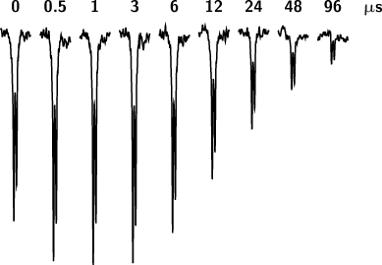
- observed [8][9]. One of the most versatile methods to elucidate complex reaction mechanisms that occur via paramagnetic intermediates is provided by measurements of chemically induced dynamic nuclear polarization (CIDNP) [10][11][12][13][14][15]. CIDNP arises from a spin-sorting process in radical pairs
- spectroscopy attaches labels (the polarizations) at the stage of the intermediates and observes them in the products, thus highlighting the interconnections of species along the reaction coordinate. The present study thus again demonstrates the power of CIDNP to provide detailed insights into complex reaction
- mechanisms. Experimental TIPA was synthesized and purified according to a literature procedure [47]; DABCO and all the sensitizers were commercially obtained and purified by double sublimation. The purchased solvent acetonitrile-d3 was carefully dried to a water content of less than 5 × 10⁻⁴ M in a specially

Graphical Abstract

Scheme 1: Mechanism explaining the CIDNP effects in sensitized hydrogen abstractions from tertiary aliphatic ...

Figure 1: Time-resolved CIDNP in sensitized (sensitizers xanthone (XA), benzophenone (BP), or anthraquinone (...

Figure 2: Influence of the laser intensity E on the observed exchange-rate constant kex (DABCO) (main plot) a...

Scheme 2: Pathways from the free radicals to the product.

Figure 3: Time-resolved CIDNP signals of the 18 equivalent β protons (d, 0.98 ppm) of triisopropylamine (TIPA...

Figure 4: Eyring plots for the self-exchange rate constants kex (TIPA) of triisopropylamine (TIPA) sensitized...
Recent advances in transition-metal-catalyzed intermolecular carbomagnesiation and carbozincation
- Kei Murakami and
- Hideki Yorimitsu
Beilstein J. Org. Chem. 2013, 9, 278–302, doi:10.3762/bjoc.9.34
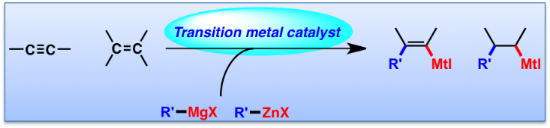
- phenylmagnesium reagent provided 3i whereas the reaction with a vinylmagnesium reagent gave 3j. The reaction mechanisms are shown in Scheme 25. They proposed that the carbon–carbon bond cleavage happened prior to the carbometalation reactions, which is different from other ring-opening reactions of cyclopropenes

Graphical Abstract

Scheme 1: Variation of substrates for carbomagnesiation and carbozincation in this article.

Scheme 2: Copper-catalyzed arylmagnesiation and allylmagnesiation of alkynyl sulfone.

Scheme 3: Copper-catalyzed four-component reaction of alkynyl sulfoxide with alkylzinc reagent, diiodomethane...

Scheme 4: Rhodium-catalyzed reaction of aryl alkynyl ketones with arylzinc reagents.

Scheme 5: Allylmagnesiation of propargyl alcohol, which provides the anti-addition product.

Scheme 6: Negishi’s total synthesis of (Z)-γ-bisabolene by allylmagnesiation.

Scheme 7: Iron-catalyzed syn-carbomagnesiation of propargylic or homopropargylic alcohol.

Scheme 8: Mechanism of iron-catalyzed carbomagnesiation.

Scheme 9: Regio- and stereoselective manganese-catalyzed allylmagnesiation.

Scheme 10: Vinylation and alkylation of arylacetylene-bearing hydroxy group.

Scheme 11: Arylmagnesiation of (2-pyridyl)silyl-substituted alkynes.

Scheme 12: Synthesis of tamoxifen from 2g.

Scheme 13: Controlling regioselectivity of carbocupration by attaching directing groups.

Scheme 14: Rhodium-catalyzed carbozincation of ynamides.

Scheme 15: Synthesis of 4-pentenenitriles through carbometalation followed by aza-Claisen rearrangement.

Scheme 16: Uncatalyzed carbomagnesiation of cyclopropenes.

Scheme 17: Iron-catalyzed carbometalation of cyclopropenes.

Scheme 18: Enantioselective carbozincation of cyclopropenes.

Scheme 19: Copper-catalyzed facially selective carbomagnesiation.

Scheme 20: Arylmagnesiation of cyclopropenes.

Scheme 21: Enantioselective methylmagnesiation of cyclopropenes without catalyst.

Scheme 22: Copper-catalyzed carbozincation.

Scheme 23: Enantioselective ethylzincation of cyclopropenes.

Scheme 24: Nickel-catalyzed ring-opening aryl- and alkenylmagnesiation of a methylenecyclopropane.

Scheme 25: Reaction mechanism.

Scheme 26: Nickel-catalyzed carbomagnesiation of arylacetylene and dialkylacetylene.

Scheme 27: Nickel-catalyzed carbozincation of arylacetylenes and its application to the synthesis of tamoxifen....

Scheme 28: Bristol-Myers Squibb’s nickel-catalyzed phenylzincation.

Scheme 29: Iron/NHC-catalyzed arylmagnesiation of aryl(alkyl)acetylene.

Scheme 30: Iron/copper-cocatalyzed alkylmagnesiation of aryl(alkyl)acetylenes.

Scheme 31: Iron-catalyzed hydrometalation.

Scheme 32: Iron/copper-cocatalyzed arylmagnesiation of dialkylacetylenes.

Scheme 33: Chromium-catalyzed arylmagnesiation of alkynes.

Scheme 34: Cobalt-catalyzed arylzincation of alkynes.

Scheme 35: Cobalt-catalyzed formation of arylzinc reagents and subsequent arylzincation of alkynes.

Scheme 36: Cobalt-catalyzed benzylzincation of dialkylacetylene and aryl(alkyl)acetylenes.

Scheme 37: Synthesis of estrogen receptor antagonist.

Scheme 38: Cobalt-catalyzed allylzincation of aryl-substituted alkynes.

Scheme 39: Silver-catalyzed alkylmagnesiation of terminal alkyne.

Scheme 40: Proposed mechanism of silver-catalyzed alkylmagnesiation.

Scheme 41: Zirconium-catalyzed ethylzincation of terminal alkenes.

Scheme 42: Zirconium-catalyzed alkylmagnesiation.

Scheme 43: Titanium-catalyzed carbomagnesiation.

Scheme 44: Three-component coupling reaction.

Scheme 45: Iron-catalyzed arylzincation reaction of oxabicyclic alkenes.

Scheme 46: Reaction of allenyl ketones with organomagnesium reagent.

Scheme 47: Regio- and stereoselective reaction of a 2,3-allenoate.

Scheme 48: Three-component coupling reaction of 1,2-allenoate, organozinc reagent, and ketone.

Scheme 49: Proposed mechanism for a rhodium-catalyzed arylzincation of allenes.

Scheme 50: Synthesis of skipped polyenes by iterative arylzincation/allenylation reaction.

Scheme 51: Synthesis of 1,4-diorganomagnesium compound from 1,2-dienes.

Scheme 52: Synthesis of tricyclic compounds.

Scheme 53: Manganese-catalyzed allylmagnesiation of allenes.

Scheme 54: Copper-catalyzed alkylmagnesiation of 1,3-dienes and 1,3-enynes.

Scheme 55: Chromium-catalyzed methallylmagnesiation of 1,6-diynes.

Scheme 56: Chromium-catalyzed allylmagnesiation of 1,6-enynes.

Scheme 57: Proposed mechanism of the chromium-catalyzed methallylmagnesiation.
A chemist and biologist talk to each other about caged neurotransmitters
- Graham C.R. Ellis-Davies
Beilstein J. Org. Chem. 2013, 9, 64–73, doi:10.3762/bjoc.9.8
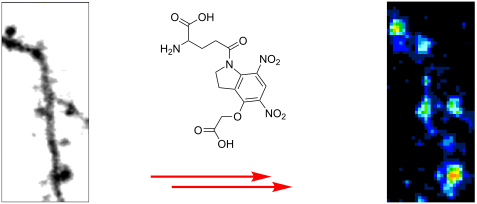
- practical purposes we make stock solutions for freezing in aliquots, and only thaw for use at the desired time. Chemist: Since 1980, the rate of release of the caged compound has been the subject of study by those who develop caged compounds [3]. Since the reaction mechanisms are quite complex, these
- rate of release of product is the key property [3][62][63]. In fact this is one reason why chemists study reaction mechanisms, as there can be several intermediates along the reaction pathway, leading to transmitter release [73]. Unfortunately, there is no easy way to detect glutamate optically, so the

Graphical Abstract

Figure 1: Structures of various caging chromophores. Abbreviations: Noc, N-nitrophenethyloxycarbonyl; CNB, ca...

Figure 2: Comparative two-photon uncaging of MNI-Glu and CDNI-Glu on pyramidal neurons in an acutely isolated...
The chemistry of bisallenes
- Henning Hopf and
- Georgios Markopoulos
Beilstein J. Org. Chem. 2012, 8, 1936–1998, doi:10.3762/bjoc.8.225

Graphical Abstract

Figure 1: Loschmidt’s structure proposal for benzene (1) (Scheme 181 from [3]) and the corresponding modern stru...

Figure 2: The first isolated bisallenes.

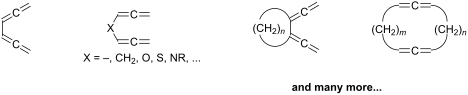
Figure 3: Carbon skeletons of selected bisallenes discussed in this review.

Scheme 1: The preparation of 1,2,4,5-hexatetraene (2).

Scheme 2: The preparation of a conjugated bisallene by the DMS-protocol.

Scheme 3: Preparation of the 3-deuterio- and 3,4-dideuterio derivatives of 24.

Scheme 4: A versatile method to prepare alkylated conjugated bisallenes and other allenes.

Scheme 5: A preparation of 3,4-dimethyl-1,2,4,5-hexatetraene (38).

Scheme 6: A (C6 + 0)-approach to 1,2,4,5-hexatetraene (2).

Scheme 7: The preparation of a fully alkylated bisallenes from a 2,4-hexadiyne-1,6-diol diacetate.

Scheme 8: The preparation of the first phenyl-substituted conjugated bisallenes 3 and 4.

Scheme 9: Selective hydrogenation of [5]cumulenes to conjugated bisallenes: another (C6 + 0)-route.

Scheme 10: Aryl-substituted conjugated bisallenes by a (C3 + C3)-approach.

Scheme 11: Hexaphenyl-1,2,4,5-hexatetraene (59) by a (C3 + C3)-approach.

Scheme 12: An allenation route to conjugated bisallenes.

Scheme 13: The preparation of 3,4-difunctionalized conjugated bisallenes.

Scheme 14: Problems during the preparation of sulfur-substituted conjugated bisallenes.

Scheme 15: The preparation of 3,4-dibromo bisallenes.

Scheme 16: Generation of allenolates by an oxy-Cope rearrangement.

Scheme 17: A linear trimerization of alkynes to conjugated bisallenes: a (C2 + C2 + C2)-protocol.

Scheme 18: Preparation of a TMS-substituted conjugated bisallene by a C3-dimerization route.

Scheme 19: A bis(trimethylsilyl)bisallene by a C3-coupling protocol.

Scheme 20: The rearrangement of highly substituted benzene derivatives into their conjugated bisallenic isomer...

Scheme 21: From fully substituted benzene derivatives to fully substituted bisallenes.

Scheme 22: From a bicyclopropenyl to a conjugated bisallene derivative.

Scheme 23: The conversion of a bismethylenecyclobutene into a conjugated bisallene.

Scheme 24: The preparation of monofunctionalized bisallenes.

Scheme 25: Preparation of bisallene diols and their cyclization to dihydrofurans.

Scheme 26: A 3,4-difunctionalized conjugated bisallene by a C3-coupling process.

Scheme 27: Preparation of a bisallenic diketone by a coupling reaction.

Scheme 28: Sulfur and selenium-substituted bisallenes by a [2.3]sigmatropic rearrangement.

Scheme 29: The biallenylation of azetidinones.

Scheme 30: The preparation of a fully ferrocenylated conjugated bisallene.

Scheme 31: The first isomerization of a 1,5-hexadiyne to a 1,2,4,5-hexatetraene.

Scheme 32: The preparation of alkynyl-substituted bisallenes by a C3-dimerization protocol.

Scheme 33: Preparation of another completely ferrocenylated bisallene.

Scheme 34: The cyclization of 1,5-hexadiyne (129) to 3,4-bismethylenecyclobutene (130) via 1,2,4,5-hexatetraen...
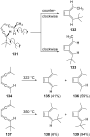
Scheme 35: Stereochemistry of the thermal cyclization of bisallenes to bismethylenecyclobutenes.

Scheme 36: Bisallene→bismethylenecyclobutene ring closures in the solid state.

Scheme 37: A bisallene cyclization/dimerization reaction.

Scheme 38: A selection of Diels–Alder additions of 1,2,4,5-hexatetraene with various double-bond dienophiles.

Scheme 39: The stereochemistry of the [2 + 4] cycloaddition to conjugated bisallenes.

Scheme 40: Preparation of azetidinone derivatives from conjugated bisallenes.

Scheme 41: Cycloaddition of heterodienophiles to a conjugated bisallene.

Scheme 42: Addition of triple-bond dienophiles to conjugated bisallenes.

Scheme 43: Sulfur dioxide addition to conjugated bisallenes.

Scheme 44: The addition of a germylene to a conjugated bisallene.

Scheme 45: Trapping of conjugated bisallenes with phosphinidenes.

Scheme 46: The cyclopropanantion of 1,2,4,5-hexatetraene (2).

Scheme 47: Photochemical reactions involving conjugated bisallenes.

Scheme 48: Base-catalyzed isomerizations of conjugated bisallenes.

Scheme 49: Ionic additions to a conjugated bisallene.

Scheme 50: Oxidation reactions of a conjugated bisallene.
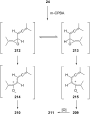
Scheme 51: The mechanism of oxidation of the bisallene 24.

Scheme 52: CuCl-catalyzed cyclization of 1,2,4,5-hexatetraene (2).

Scheme 53: The conversion of conjugated bisallenes into cyclopentenones.

Scheme 54: Oligomerization of a conjugated bisallene by nickel catalysts.
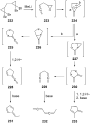
Scheme 55: Generation of 1,2,5,6-heptatetraene (229) as a reaction intermediate.

Scheme 56: The preparation of a stable derivative of 1,2,5,6-heptatetraene.

Scheme 57: A bisallene with a carbonyl group as a spacer element.

Scheme 58: The first preparation of 1,2,6,7-octatetraene (242).

Scheme 59: Preparation of 1,2,6,7-octatetraenes by (C4 + C4)-coupling of enynes.

Scheme 60: Preparation of 1,2,6,7-octatetraenes by (C4 + C4)-coupling of homoallenyl bromides.

Scheme 61: Preparation of 1,2,6,7-octatetraenes by alkylation of propargylic substrates.

Scheme 62: Preparation of two highly functionalized 1,2,6,7-octatetraenes.

Scheme 63: Preparation of several higher α,ω-bisallenes.

Scheme 64: Preparation of different alkyl derivatives of α,ω-bisallenes.

Scheme 65: The preparation of functionalized 1,2,7,8-nonatetraene derivatives.

Scheme 66: Preparation of functionalized α,ω-bisallenes.

Scheme 67: The preparation of an α,ω-bisallene by direct homologation of an α,ω-bisalkyne.

Scheme 68: The gas-phase pyrolysis of 4,4-dimethyl-1,2,5,6-heptatetraene (237).
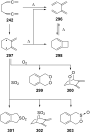
Scheme 69: Gas-phase pyrolysis of 1,2,6,7-octatetraene (242).

Scheme 70: The cyclopropanation of 1,2,6,7-octatetraene (242).

Scheme 71: Intramolecular cyclization of 1,2,6,7-octatetraene derivatives.

Scheme 72: The gas-phase pyrolysis of 1,2,7,8-nonatetraene (265) and 1,2,8,9-decatetraene (266).

Scheme 73: Rh-catalyzed cyclization of a functionalized 1,2,7,8-nonatetraene.

Scheme 74: A triple cyclization involving two different allenic substrates.

Scheme 75: Bicyclization of keto derivatives of 1,2,7,8-nonatetraene.

Scheme 76: The preparation of complex organic compounds from functionalized bisallenes.

Scheme 77: Cycloisomerization of an α,ω-bisallene containing a C9 tether.

Scheme 78: Organoborane polymers from α,ω-bisallenes.

Scheme 79: Preparation of trans- (337) and cis-1,2,4,6,7-octapentaene (341).

Scheme 80: The preparation of 4-methylene-1,2,5,6-heptatetraene (349).

Scheme 81: The preparation of acetylenic bisallenes.

Scheme 82: The preparation of derivatives of hydrocarbon 351.

Scheme 83: The construction of macrocyclic alleno-acetylenes.

Scheme 84: Preparation and reactions of 4,5-bismethylene-1,2,6,7-octatetraene (365).

Scheme 85: Preparation of 1,2-bis(propadienyl)benzene (370).

Scheme 86: The preparation of 1,4-bis(propadienyl)benzene (376).

Scheme 87: The preparation of aromatic and heteroaromatic bisallenes by metal-mediated coupling reactions.

Scheme 88: Double cyclization of an aromatic bisallene.

Scheme 89: Preparation of an allenic [15]paracyclophane by a ring-closing metathesis reaction of an aromatic α...

Scheme 90: Preparation of a macrocyclic ring system containing 1,4-bis(propadienyl)benzene units.

Scheme 91: Preparation of copolymers from 1,4-bis(propadienyl)benzene (376).

Scheme 92: A boration/copolymerization sequence of an aromatic bisallene and an aromatic bisacetylene.

Scheme 93: Formation of a layered aromatic bisallene.

Figure 4: The first members of the semicyclic bisallene series.

Scheme 94: Preparation of the first bis(vinylidene)cyclobutane derivative.
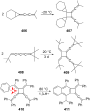
Scheme 95: Dimerization of strain-activated cumulenes to bis(vinylidene)cyclobutanes.

Scheme 96: Photodimerization of two fully substituted butatrienes in the solid state.

Scheme 97: Preparation of the two parent bis(vinylidene)cyclobutanes.

Scheme 98: The preparation of 1,3-bis(vinylidene)cyclopentane and its thermal isomerization.

Scheme 99: The preparation of the isomeric bis(vinylidene)cyclohexanes.

Scheme 100: Bi- and tricyclic conjugated bisallenes.
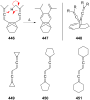
Scheme 101: A selection of polycyclic bisallenes.

Scheme 102: The first endocyclic bisallenes.

Figure 5: The stereochemistry of 1,2,6,7-cyclodecatetraene.

Scheme 103: The preparation of several endocyclic bisallenes.

Scheme 104: Synthesis of diastereomeric derivatives of 1,2,6,7-cyclodecatetraene.

Scheme 105: Preparation of a derivative of 1,2,8,9-cyclotetradecatetraene.

Scheme 106: The preparation of keto derivatives of cyclic bisallenes.

Scheme 107: The preparation of cyclic biscumulenic ring systems.

Scheme 108: Cyclic bisallenes in natural- and non-natural-product chemistry.

Scheme 109: The preparation of iron carbonyl complexes from cyclic bisallenes.

Figure 6: A selection of unknown exocyclic bisallenes that should have interesting chemical properties.

Scheme 110: The thermal isomerization of 1,2-diethynylcyclopropanes and -cyclobutanes.

Scheme 111: Intermediate generation of a cyclooctapentaene.

Scheme 112: Attempted preparation of a cyclodecahexaene.

Scheme 113: The thermal isomerization of 1,5,9-cyclododecatriyne (511) into [6]radialene (514).

Scheme 114: An isomerization involving a diketone derived from a conjugated bisallene.

Scheme 115: Typical reaction modes of heteroorganic bisallenes.

Scheme 116: Generation and thermal behavior of acyclic hetero-organic bisallenes.

Scheme 117: Generation of bis(propadienyl)thioether.

Scheme 118: The preparation of a bisallenic sulfone and its thermal isomerization.

Scheme 119: Bromination of the bisallenic sulfone 535.

Scheme 120: Metalation/hydrolysis of the bisallenic sulfone 535.

Scheme 121: Aromatic compounds from hetero bisallenes.

Scheme 122: Isomerization/cyclization of bispropargylic ethers.

Scheme 123: The preparation of novel aromatic systems by base-catalyzed isomerization of bispropargyl ethers.

Scheme 124: The isomerization of bisacetylenic thioethers to bicyclic thiophenes.

Scheme 125: Aromatization of macrocyclic bispropargylic sulfides.

Scheme 126: Preparation of ansa-compounds from macrocyclic bispropargyl thioethers.

Scheme 127: Alternate route for cyclization of a heterorganic bisallene.
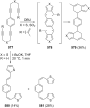
Scheme 128: Multiple isomerization/cyclization of “double” bispropargylic thioethers.

Scheme 129: Preparation of a bisallenyl disulfide and its subsequent bicyclization.

Scheme 130: Thermal cyclization of a bisallenyl thiosulfonate.

Scheme 131: Some reactions of heteroorganic bisallenes with two sulfur atoms.

Scheme 132: Further methods for the preparation of heteroorganic bisallenes.

Scheme 133: Cyclization reactions of heteroorganic bisallenes.

Scheme 134: Thermal cycloadditions of bisallenic tertiary amines.

Scheme 135: Cyclization of a bisallenic tertiary amine in the presence of a transition-metal catalyst.

Scheme 136: A Pauson–Khand reaction of a bisallenic ether.

Scheme 137: Formation of a 2:1adduct from two allenic substrates.

Scheme 138: A ring-forming silastannylation of a bisallenic tertiary amine.

Scheme 139: A three-component cyclization involving a heterorganic bisallene.

Scheme 140: Atom-economic construction of a complex organic framework from a heterorganic α,ω-bisallene.
Discovery of practical production processes for arylsulfur pentafluorides and their higher homologues, bis- and tris(sulfur pentafluorides): Beginning of a new era of “super-trifluoromethyl” arene chemistry and its industry
- Teruo Umemoto,
- Lloyd M. Garrick and
- Norimichi Saito
Beilstein J. Org. Chem. 2012, 8, 461–471, doi:10.3762/bjoc.8.53

- these new reactions are revealed and reaction mechanisms are discussed. As the method offers considerable improvement over previous methods in cost, yield, practicality, applicability, and large-scale production, the new processes described here can be employed as the first practical methods for the

Graphical Abstract

Scheme 1: Preparation of ArSF4Cl 2.

Scheme 2: Preparation of Ar(SF4Cl)n from Ar(SH)n (n = 2, 3).

Scheme 3: Reaction mechanism for the formation of ArSF4Cl.

Scheme 4: Reaction mechanism for the formation of trans and cis-ArSF4Cl.

Scheme 5: Preparation of ArSF5 with ZnF2.

Scheme 6: Preparation of PhSF5 with anhydrous HF.

Scheme 7: Preparation of 3a with HF–pyridine.

Scheme 8: Preparation of polyfluorinated ArSF5.

Scheme 9: Preparation of aryl bis- and tris(sulfur pentafluorides), Ar(SF5)n (n = 2,3).
Alkene selenenylation: A comprehensive analysis of relative reactivities, stereochemistry and asymmetric induction, and their comparisons with sulfenylation
- Vadim A. Soloshonok and
- Donna J. Nelson
Beilstein J. Org. Chem. 2011, 7, 744–758, doi:10.3762/bjoc.7.85

- demonstrated that such different data point groupings reflect different steric and electronic characteristics of the rate-determining transition states, intermediates, or products. These different patterns have corresponded to different reaction mechanisms [72][73][74][75][76][77][78]. Thus, the different

Graphical Abstract

Figure 1: Chiral aryl selenium electrophiles 1–3.

Scheme 1: Plausible mechanism of alkene selenenylation.

Figure 2: Plot of log krel values for PhSeCl addition to alkenes versus their corresponding IEs. Point number...

Figure 3: Plot of log krel values for PhSeCl addition to alkenes versus their corresponding HOMOs, analogous ...

Figure 4: Plot of log krel versus HOMO shows data grouped by branching at α position. Data are from Table 3; point n...

Scheme 2: Major products from reactions of 1 and 2 with representative alkenols.

Figure 5: Structure of intermediate complex 9.

Figure 6: Plot of log krel values for PhSCl addition to alkenes versus their IEs. Data are from Table 6.
The arene–alkene photocycloaddition
- Ursula Streit and
- Christian G. Bochet
Beilstein J. Org. Chem. 2011, 7, 525–542, doi:10.3762/bjoc.7.61
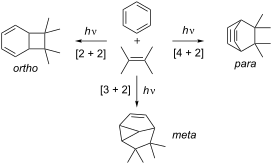
- yields up to 94% of the para photocycloaddition product, while other substituents gave yields of up to 44% of the benzoxepine compound. Pericyclic reaction mechanisms for these two photocycloadditions have been proposed, but no hard evidence has so far been obtained. The mechanism of this unprecedented
- step. We have discussed the diverse selectivities of the reaction, mechanisms as well as further modifications, and some of the most recent applications in total synthesis. Thus, while meta photocycloadditions have been exploited for over thirty years, ortho and, in particular, para photocycloadditions

Graphical Abstract

Scheme 1: Photochemistry of benzene.

Scheme 2: Three distinct modes of photocycloaddition of arenes to alkenes.

Scheme 3: Mode selectivity with respect of the free enthalpy of the radical ion pair formation.

Scheme 4: Photocycloaddition shows lack of mode selectivity.

Scheme 5: Mechanism of the meta photocycloaddition.

Scheme 6: Evidence of biradiacal involved in meta photocycloaddition by Reedich and Sheridan.

Scheme 7: Regioselectivity with electron withdrawing and electron donating substituents.

Scheme 8: Closure of cyclopropyl ring affords regioisomers.

Scheme 9: Endo versus exo product in the photocycloaddition of pentene to anisole [33].

Scheme 10: Regio- and stereoselectivity in the photocycloaddition of cyclopentene with a protected isoindoline....

Scheme 11: 2,6- and 1,3-addition in intramolecular approach.

Scheme 12: Linear and angularly fused isomers can be obtained upon intramolecular 1,3-addition.

Scheme 13: Synthesis of α-cedrene via diastereoselective meta photocycloaddition.

Scheme 14: Asymmetric meta photocycloaddition introduced by chirality of tether at position 2.

Scheme 15: Enantioselective meta photocycloaddition in β-cyclodextrin cavity.

Scheme 16: Vinylcyclopropane–cyclopentene rearrangement.

Scheme 17: Further diversification possibilities of the meta photocycloaddition product.

Scheme 18: Double [3 + 2] photocycloaddition reaction affording fenestrane.

Scheme 19: Total synthesis of Penifulvin B.

Scheme 20: Towards the total synthesis of Lacifodilactone F.

Scheme 21: Regioselectivity of ortho photocycloaddition in polarized intermediates.

Scheme 22: Exo and endo selectivity in ortho photocycloaddition.

Scheme 23: Ortho photocycloaddition of alkanophenones.

Scheme 24: Photocycloadditions to naphtalenes usually in an [2 + 2] mode [79].

Scheme 25: Ortho photocycloaddition followed by rearrangements.

Scheme 26: Stable [2 + 2] photocycloadducts.

Scheme 27: Ortho photocycloadditions with alkynes.

Scheme 28: Intramolecular ortho photocycloaddition and rearrangement thereof.

Scheme 29: Intramolecular ortho photocycloaddition to access propellanes.

Scheme 30: Para photocycloaddition with allene.

Scheme 31: Photocycloadditions of dianthryls.

Scheme 32: Photocycloaddition of enone with benzene.

Scheme 33: Intramolecular photocycloaddition affording multicyclic compounds via [4 + 2].

Scheme 34: Photocycloaddition described by Sakamoto et al.

Scheme 35: Proposed mechanism by Sakamoto et al.

Scheme 36: Photocycloaddition described by Jones et al.

Scheme 37: Proposed mechanism for the formation of benzoxepine by Jones et al.

Scheme 38: Photocycloaddition observed by Griesbeck et al.

Scheme 39: Mechanism proposed by Griesbeck et al.

Scheme 40: Intramolecular photocycloaddition of allenes to benzaldehydes.
A stable enol from a 6-substituted benzanthrone and its unexpected behaviour under acidic conditions
- Marc Debeaux,
- Kai Brandhorst,
- Peter G. Jones,
- Henning Hopf,
- Jörg Grunenberg,
- Wolfgang Kowalsky and
- Hans-Hermann Johannes
Beilstein J. Org. Chem. 2009, 5, No. 31, doi:10.3762/bjoc.5.31
- abstract hydride from another molecule that itself forms a stable cation (Scheme 5). In order to make the above mechanistic speculations more than simple “electron pushing”, we decided to apply the following computational methods. Reaction mechanisms by computational methods The gas phase global minima of

Graphical Abstract

Scheme 1: Behaviour of benzanthrone (1) towards phenylmagnesium chloride (a), phenyl lithium (b), and bipheny...

Figure 1: 1H NMR spectra (200 MHz) of 4 in CDCl3 solution and time dependence.

Scheme 2: Proposed mechanism for the formation of 4 and its oxidation to 7.

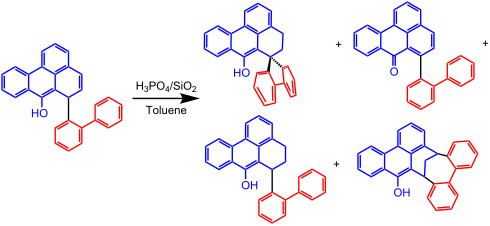
Scheme 3: Conversion of the enol 4 under acidic conditions and reaction products.

Scheme 4: Proposed mechanism for the formation of spiro compound 11 and bicyclo[4.3.1]decane derivative 12.

Scheme 5: Proposed mechanism for the formation of 13.

Scheme 6: Proposed mechanism for the formation of 18 as a hydride source and further conversion to 7.

Figure 2: Ellipsoid representation (50% level) of compound 7 in the crystal.

Figure 3: Packing diagram of compound 7 viewed parallel to b; hydrogen bonds C-H···O are indicated by dashed ...
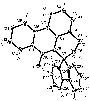
Figure 4: Ellipsoid representation (50% level) of compound 11 in the crystal.

Figure 5: Packing diagram of compound 11 viewed perpendicular to the bc plane; hydrogen bonds C-H···π are ind...
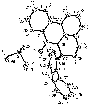
Figure 6: Ellipsoid representation (50% level) of compound 13 (d6-DMSO solvate) in the crystal. Hydrogen bond...

Figure 7: Packing diagram of compound 13 viewed parallel to c; DMSO molecules (including their hydrogen bonds...



