


Search results
Search for "regioselectivity" in Full Text gives 559 result(s) in Beilstein Journal of Organic Chemistry. Showing first 200.
On Reuben G. Jones synthesis of 2-hydroxypyrazines
Beilstein J. Org. Chem. 2022, 18, 935–943, doi:10.3762/bjoc.18.93
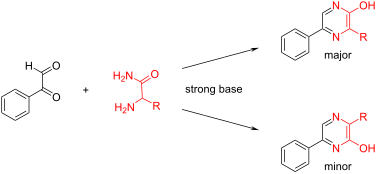
- . Across the years, it was employed to prepare 2-hydroxypyrazines but some of its limits, notably regioselectivity issues when starting from α-ketoaldehydes, certainly hampered a full-fledged generation of pyrazine-containing new chemical entities of potential interest in medicinal chemistry. The present
- text describes some insights and improvements, such as the unprecedented use of tetraalkylammonium hydroxide, in the reaction parameters affecting the regioselectivity and yield when starting from phenylglyoxal and two α-aminoamides. We also suggest a mechanism explaining the counterintuitive
- expected 3,5-substituted-2-hydroxypyrazine isomer (3, R1 = H, R2 ≠ H) which is isolated sometimes along with a much smaller amount of the alternative 3,6-substituted-2-hydroxypyrazines (4, R1 = H, R2 ≠ H) [6][13][18][19][20][21][22][23][24][25][26][27][28]. This regioselectivity appears counterintuitive


Tri(n-butyl)phosphine-promoted domino reaction for the efficient construction of spiro[cyclohexane-1,3'-indolines] and spiro[indoline-3,2'-furan-3',3''-indolines]
Beilstein J. Org. Chem. 2022, 18, 669–679, doi:10.3762/bjoc.18.68
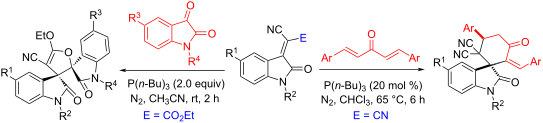
- functionalized spiro[cyclohexane-1,3'-indolines] in good yields and with good diastereoselectivity. On the other hand, the tri(n-butyl)phosphine-catalyzed reaction of 3-(ethoxycarbonylmethylene)oxindoles and bis-chalcones gave functionalized spiro[cyclohexane-1,3'-indolines] with different regioselectivity
- should be pointed out that the exocyclic benzylidene group exists on the C3-position in the newly formed cyclohexyl ring, while it exists on the C6-position in the above obtained spiro compounds 3a–z. This result clearly indicated that these two reactions have the opposite regioselectivity. Another kind
- of the zwitterion A to the isatylidene malononitrile 2 and 3-(ethoxycarbonylmethylene)oxindole 4 results in the different regioselectivity in the formation of the spiro compounds 3 and 5. For further demonstrate the synthetic value of this procedure, ethyl isatylidene cyanoacetates 6 were also


Synthesis of 3,4,5-trisubstituted isoxazoles in water via a [3 + 2]-cycloaddition of nitrile oxides and 1,3-diketones, β-ketoesters, or β-ketoamides
Beilstein J. Org. Chem. 2022, 18, 446–458, doi:10.3762/bjoc.18.47

- alkynes to activate them for a decent yield of the isoxazole products, thus limiting the scope of the substrates in this method. In addition, this method requires high heat and produces very poor regioselectivity of the products [17][18]. The addition of copper catalysts in this route can help the
- reaction proceed at room temperature and improve both the regioselectivity and yields of the isoxazoles. However, these catalysts only work for the reaction with terminal alkynes and only produce 3,5-disubstituted isoxazole products (Figure 1) [19][20]. The synthesis of 3,4,5-trisubstituted isoxazoles from
- highly substituted non-terminal alkynes does not proceed with copper catalysts at room temperature. As an alternative, the usage of ruthenium(II) catalysts enables the reaction to proceed smoothly at room temperature and produces high yields and regioselectivity for both, 3,5-disubstituted and 3,4,5



Regioselectivity of the SEAr-based cyclizations and SEAr-terminated annulations of 3,5-unsubstituted, 4-substituted indoles
Beilstein J. Org. Chem. 2022, 18, 293–302, doi:10.3762/bjoc.18.33
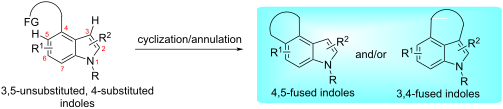
- summarizing recent relevant literature reports. Keywords: annulation; cyclization; fused indoles; regioselectivity; SEAr; Introduction Over the decades, countless cyclization and annulation reactions of substituted arenes/heteroarenes involving an electrophilic aromatic substitution (SEAr) reaction as the
- published in the last decade [5][6][7], this is the first time the regioselectivity of the SEAr-based/terminated cyclization and annulation reactions of 3,5-unsubstituted, 4-substituted indolesis is sytematized as a dedicated topic. Discussion The Tsuji–Trost reaction serves as a powerful tool in
- regioselectivity in favor of the 4,5-fused indole system. Based on their experimental and computational investigations, the researchers hypothesized that Thorpe–Ingold effect could induce dispersive interactions between the indole and styrene moieties, triggering the preferential formation of the 3,4-fused indoles


Iridium-catalyzed hydroacylation reactions of C1-substituted oxabenzonorbornadienes with salicylaldehyde: an experimental and computational study
Beilstein J. Org. Chem. 2022, 18, 251–261, doi:10.3762/bjoc.18.30
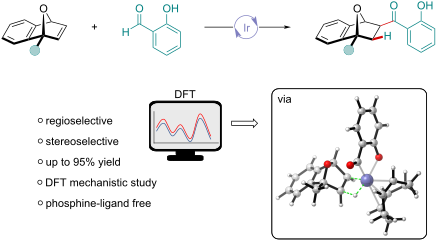
- regioselectivity. The mechanism and origins of selectivity in the iridium-catalyzed hydroacylation reaction has been examined at the M06/Def2TZVP level of theory. The catalytic cycle consists of three key steps including oxidative addition into the aldehyde C–H bond, insertion of the olefin into the iridium
- hydride, and C–C bond-forming reductive elimination. Computational results indicate the origin of regioselectivity is involved in the reductive elimination step. Keywords: C–H activation; density functional theory; hydroacylation; iridium catalysis; regioselectivity; Introduction Organic synthesis is
- , the regioselectivity of such reactions is still undefined (Scheme 1) [58]. While the chemistry of symmetric OBD derivatives is well established, their unsymmetrically substituted counterparts 5 have remained underexplored (Scheme 1). Upon C1-substitution, the reactivity of C1-substituted OBDs 5 can


Synthesis of novel [1,2,4]triazolo[1,5-b][1,2,4,5]tetrazines and investigation of their fungistatic activity
Beilstein J. Org. Chem. 2022, 18, 243–250, doi:10.3762/bjoc.18.29
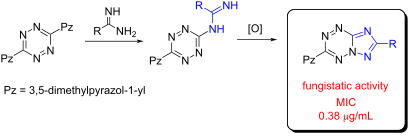
- inherent in the known triazolo[4,3-b][1,2,4,5]tetrazine system. However, their reactions have a low regioselectivity, thus leading to a large number of byproducts, thus making it difficult to separate the reaction mixture. All synthesized [1,2,4]triazolo[1,5-b][1,2,4,5]tetrazines 3–5 were screened in vitro


Organocatalytic asymmetric nitroso aldol reaction of α-substituted malonamates
Beilstein J. Org. Chem. 2022, 18, 217–224, doi:10.3762/bjoc.18.25

- using a silver-BINAP catalyst combination [25]. Later, the same group could successfully tune the catalytic system to control the regioselectivity in the addition of metal enolate to nitrosoarenes to achieve an α-hydroxyamination [26]. Since then, several groups have shown the use of metal-catalyzed




Diametric calix[6]arene-based phosphine gold(I) cavitands
Beilstein J. Org. Chem. 2022, 18, 190–196, doi:10.3762/bjoc.18.21
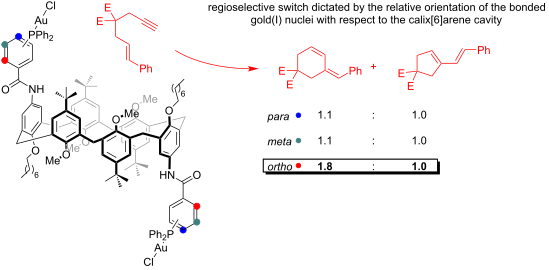
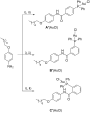
- catalytic activity was demonstrated in promoting gold(I)-catalyzed cycloisomerization of 1,6-enynes, with ample scope and high regioselectivity. However, preliminary studies suggested that the catalytic event occurs outside the macrocyclic cavity. In order to get more insights on the role of the cavity to


Chemical and chemoenzymatic routes to bridged homoarabinofuranosylpyrimidines: Bicyclic AZT analogues
Beilstein J. Org. Chem. 2022, 18, 95–101, doi:10.3762/bjoc.18.10
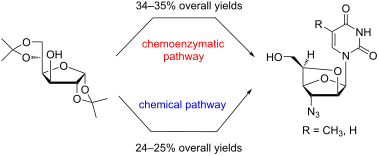
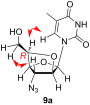
- reusability of the recovered Lipozyme® TL IM was also checked and it was found that the lipase could be used up to seven cycles of selective acetylation of 3′-azido-3′-deoxy-β-ᴅ-allofuranosyl nucleosides 14a,b without noticeable loss of regioselectivity and efficiency. Thus, trihydroxy nucleosides 14a,b were



Efficient and regioselective synthesis of dihydroxy-substituted 2-aminocyclooctane-1-carboxylic acid and its bicyclic derivatives
Beilstein J. Org. Chem. 2022, 18, 77–85, doi:10.3762/bjoc.18.7
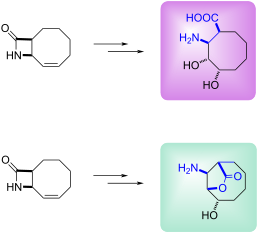
- cyclic β-amino acid derivative, was achieved by oxirane ring opening in epoxide 7 with HCl(g)–MeOH, NaHSO4, or NH4Cl–DMF. The regioselectivity of oxirane ring-opening in 7 was attributed to the conformational effects. The mechanism for the formation of compound 10 was elucidated with DFT computations


Recent advances and perspectives in ruthenium-catalyzed cyanation reactions
Beilstein J. Org. Chem. 2022, 18, 37–52, doi:10.3762/bjoc.18.4
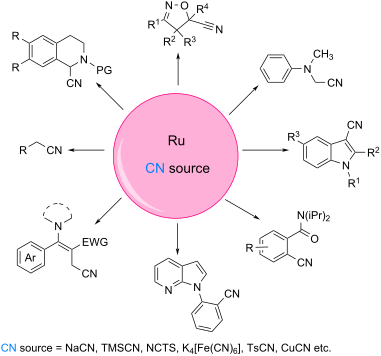
- essential for promoting this reaction (Scheme 12). Both electron-rich and electron-deficient indoles afforded the desired products in good yields. The major advantages of this method include high regioselectivity, mild reaction conditions, and reusability of the catalyst. Two years later, in 2014, Ackermann


Iron-catalyzed domino coupling reactions of π-systems
Beilstein J. Org. Chem. 2021, 17, 2848–2893, doi:10.3762/bjoc.17.196
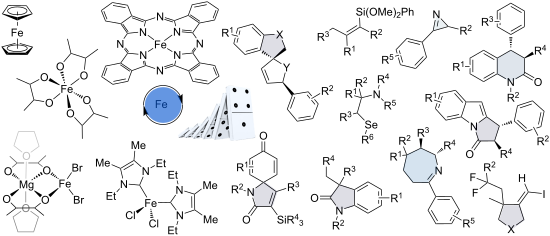
- heteroarenes were all well-tolerated; however, monosubstituted aryl rings suffered from low regioselectivity which is in accordance with HAS-type reactions [138]. In 2020, the Wu group expanded on the radical cyclization chemistry of γ,δ-unsaturated oxime esters, describing a carbonylative cyclization with













The PIFA-initiated oxidative cyclization of 2-(3-butenyl)quinazolin-4(3H)-ones – an efficient approach to 1-(hydroxymethyl)-2,3-dihydropyrrolo[1,2-a]quinazolin-5(1H)-ones
Beilstein J. Org. Chem. 2021, 17, 2787–2794, doi:10.3762/bjoc.17.189
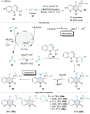
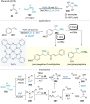
- (see Scheme 1C) [10]. Appropriately 2-functionalized quinazolinones of type 5 might be good starting materials for the intramolecular cyclization providing the target compounds (see Scheme 1D); however, this approach was rarely used [33][34][35][36], possibly due to low regioselectivity of the ring
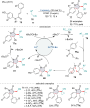
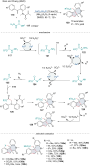
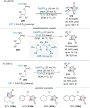
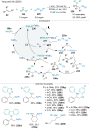
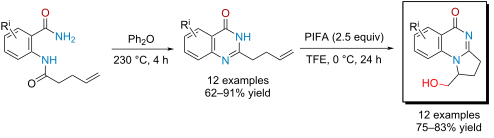
- reaction proceeded with high regioselectivity as 5-exo-trig cyclization. The substituent in the quinazoline ring had virtually no effect at the yield or selectivity of the heterocyclization. Two pathways seem to be possible for the oxidative heterocyclization of quinazolinones 7 (see Scheme 2). The first
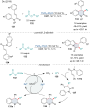
- )-ones was found. The reaction proceeds with high regioselectivity when 2.5 equivalents of PIFA are used in 2,2,2-trifluoroethanol solution at 0 °С over 24 h. The synthesized compounds represent a new class of functionalized pyrroloquinazolinones – close analogs of naturally occurring vasicinone


Recent advances in the asymmetric phosphoric acid-catalyzed synthesis of axially chiral compounds
Beilstein J. Org. Chem. 2021, 17, 2729–2764, doi:10.3762/bjoc.17.185
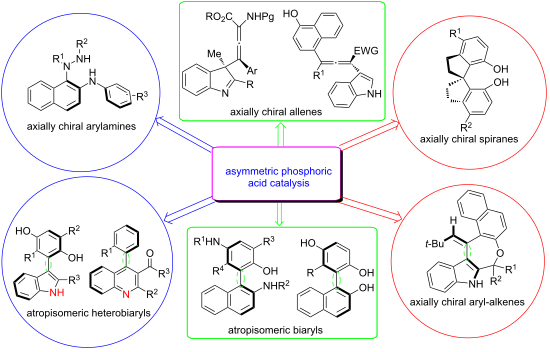
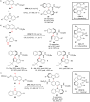
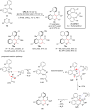
- substrates and the chiral phosphoric acid, with the substituent at the 1-position of the 2-naphthol playing a key role in controlling the regioselectivity [107]. Conclusion In recent decades, chiral phosphoric acids have been recognized as privileged chiral catalysts and ligands and have therefore become an












Recent advances in organocatalytic asymmetric aza-Michael reactions of amines and amides
Beilstein J. Org. Chem. 2021, 17, 2585–2610, doi:10.3762/bjoc.17.173
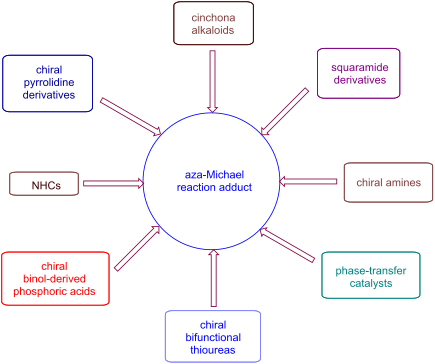
- yields ranged 57–89% with ee 70–97% [52]. A similar chiral multifunctional thiourea/boronic acid was used as an organocatalyst by Michigami et al. for the enantioselective synthesis of N-hydroxyaspartic acid derivatives 76 with perfect regioselectivity and high enantioselectivity (Table 17) [53


Recent advances in the tandem annulation of 1,3-enynes to functionalized pyridine and pyrrole derivatives
Beilstein J. Org. Chem. 2021, 17, 2462–2476, doi:10.3762/bjoc.17.163
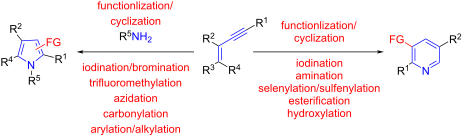
- performed well in the reaction with 1,3-enynes 54, providing moderate yield and regioselectivity. The CuH-catalyzed intramolecular coupling of enyne containing a nitrile group worked smoothly and gave a moderate yield under standard conditions at a decreased concentration. A plausible mechanism according to




Synthesis and investigation on optical and electrochemical properties of 2,4-diaryl-9-chloro-5,6,7,8-tetrahydroacridines
Beilstein J. Org. Chem. 2021, 17, 2450–2461, doi:10.3762/bjoc.17.162

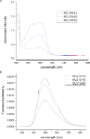
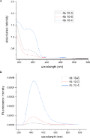
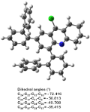
- -5,6,7,8-tetrahydroacridine (4a) (Table 1, entries 1–6). Towards a better understanding of the regioselectivity of the coupling, we carried out a series of experiments with decreased amounts of phenylboronic acid. In all cases, the cross-coupling took place at both bromine atoms of 4a and we could never






Advances in mercury(II)-salt-mediated cyclization reactions of unsaturated bonds
Beilstein J. Org. Chem. 2021, 17, 2348–2376, doi:10.3762/bjoc.17.153
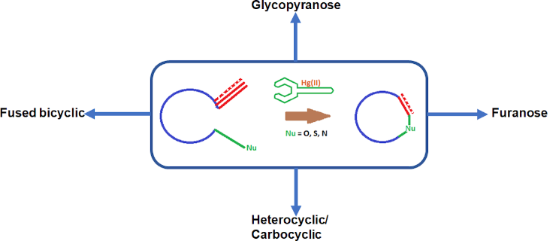
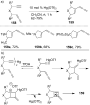
- electrophilic addition (Scheme 26). Schwartz et al. developed a new route for the synthesis of exocyclic enol ether 83 and endocyclic enol ether 85 involving a Hg(II)-induced cyclization of acetylenic alcohols 82 and 84, respectively [79]. This work revealed that the regioselectivity of the Hg(II) addition to
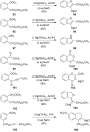
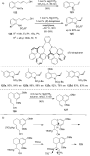
- group (101), chromone derivatives 102 were formed. On the introduction of the methylene moiety in between the aryl and methoxy group, 103 yielded isofuran derivatives 104 due to the change in regioselectivity during the cyclization. Dihydronapthalenes 106 were synthesized by cyclization of the












A visible-light-induced, metal-free bis-arylation of 2,5-dichlorobenzoquinone
Beilstein J. Org. Chem. 2021, 17, 2315–2320, doi:10.3762/bjoc.17.149
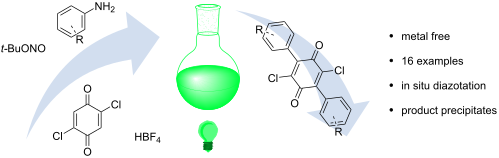
- multistep procedures requiring large amounts of toxic metal complexes [12][33][34]. Later improvements still demand prefunctionalization of the quinone substrate [35][36][37]. While effectively eliminating this requirement, CH bis-arylation using palladium complexes still suffers from regioselectivity
- combining photoredox and diazonium chemistry. By starting from the commercially available 2,5-dichlorobenzoquinone (1), we eliminate the issue of regioselectivity and effectively create a green synthesis pathway towards a versatile bis-electrophile. Results and Discussion We initiated our investigation by


Halides as versatile anions in asymmetric anion-binding organocatalysis
Beilstein J. Org. Chem. 2021, 17, 2270–2286, doi:10.3762/bjoc.17.145
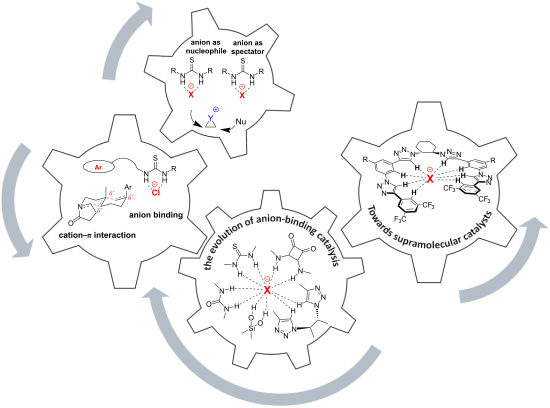
- enantioselectivity, but this system also allowed the control over regioselectivity (C2 vs C4 cyclization) through alteration of the N-substituent of the pyrrole substrate and the acylating reagent (Scheme 4a) [34]. This example showcases that next to the counterion, the acylating group can have a major influence on



Photoredox catalysis in nickel-catalyzed C–H functionalization
Beilstein J. Org. Chem. 2021, 17, 2209–2259, doi:10.3762/bjoc.17.143
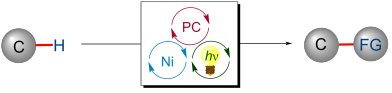
- nickel catalysis enables these protocols at room temperature with ample substrate scope (Scheme 8). Unsymmetrical amine substrates favored arylation at the methylene C‒H over methyl C‒H with good regioselectivity [59]. In 2017, Doyle utilized the photoredox nickel catalysis approach for the formylation
- arylated with moderate to good yields. When both primary and secondary C(sp3)‒H bonds are present in the substrate, regioselectivity favors the secondary position. The catalytic reaction conditions were compatible with the C(sp3)‒H arylation of tetrahydrothiophene (28a) as well [68]. The enantioselective C
- reaction, TIPS-protected ynones, ynoates, and ynamides smoothly transformed into the corresponding trisubstituted alkenes 63 in high regio- and stereoselectivities. A possible mechanism was proposed similar to the one shown in Figure 15 to account for the observed high regioselectivity. Allylation The














A study on selective transformation of norbornadiene into fluorinated cyclopentane-fused isoxazolines
Beilstein J. Org. Chem. 2021, 17, 2051–2066, doi:10.3762/bjoc.17.132
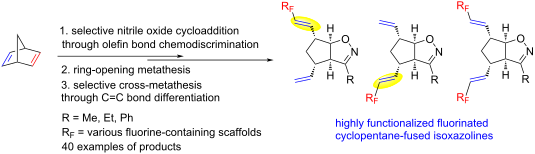
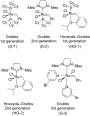
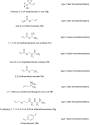
- mixture. Similar to Table 1, HG-2 provided the lowest combined yield of monocoupled products, but it had the highest regioselectivity (ratio of (±)-10a and (±)-10b: 3.3:1 with HG-2 and 1.66:1 with G-2 and G-3, respectively). The highest yield for the (±)-10a and (±)-10b mixture (23%) was achieved with G-2
- monometathesized products were separable. Interestingly, regioselectivity was reversed compared to those in Tables 1–3: the main product was (±)-11b (26% with HG-2, 25% with G-2), while isomeric product (±)-11a was formed in lower yield (15% with HG-2 and 10% with G-2). G2 catalyst showed better regioselectivity
- ) accompanied by some (±)-13c. Interestingly, regioselectivity of all three catalysts was the same, with a 1.4:1 ratio of (±)-13a and (±)-13b. We continued our work with the study of CM reactions of compound (±)-5, which has a slightly longer alkyl chain on the heteroring compared to that of (±)-4. Similar to




Recent advances in the syntheses of anthracene derivatives
Beilstein J. Org. Chem. 2021, 17, 2028–2050, doi:10.3762/bjoc.17.131
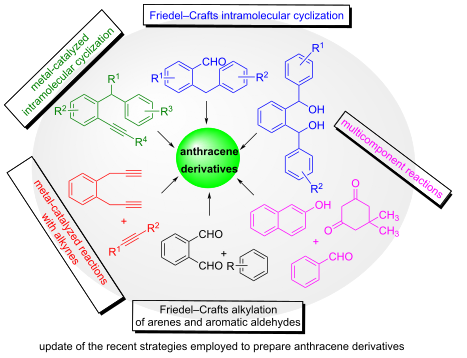
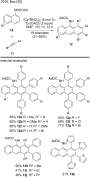
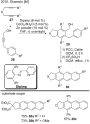
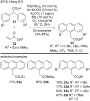
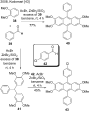
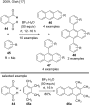
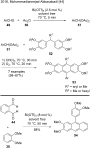
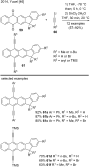
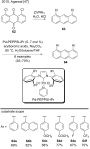
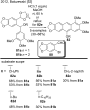
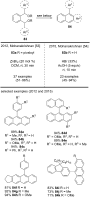
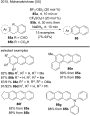
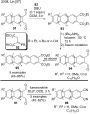
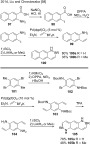
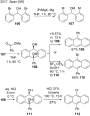
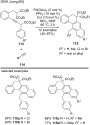
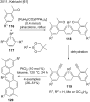
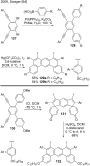
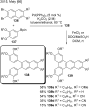
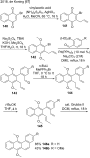
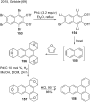
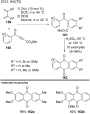
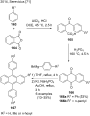
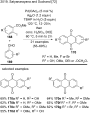
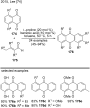
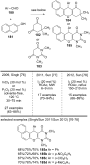
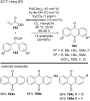
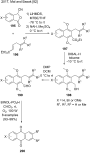
- ]anthracene [62]. Sakaguchi, Nakae, and co-workers synthesized halogenated dibenzo[a,h]anthracenes 126a–c and 5,8-diiodopicenes from dibromo- or diiodoethynylterphenyl compounds 125 via a AuCl-catalyzed intramolecular double cyclization (Scheme 29) [63]. The authors investigated the regioselectivity of the
















Progress and challenges in the synthesis of sequence controlled polysaccharides
Beilstein J. Org. Chem. 2021, 17, 1981–2025, doi:10.3762/bjoc.17.129
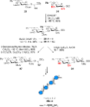
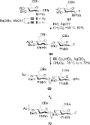
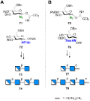
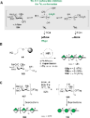
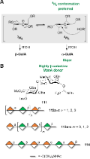
- 2,3-diol 4,6-O-benzylidene acceptor permitted to access various β(1–3)-glucans, ranging from trimer to 13mer [126]. Regioselectivity was also achieved using a gold-catalyzed glycosylation, to give a linear β(1–3)-linked 11mer and a branched 14mer in a convergent manner [139]. Collection of linear as












Regioselective N-alkylation of the 1H-indazole scaffold; ring substituent and N-alkylating reagent effects on regioisomeric distribution
Beilstein J. Org. Chem. 2021, 17, 1939–1951, doi:10.3762/bjoc.17.127
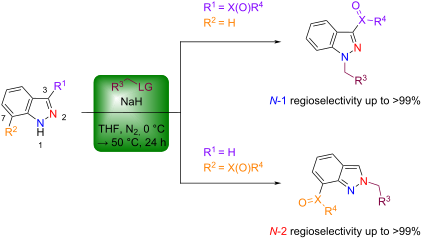
- observed > 99% N-1 regioselectivity for 3-carboxymethyl, 3-tert-butyl, 3-COMe, and 3-carboxamide indazoles. Further extension of this optimized (NaH in THF) protocol to various C-3, -4, -5, -6, and -7 substituted indazoles has highlighted the impact of steric and electronic effects on N-1/N-2 regioisomeric
- distribution. For example, employing C-7 NO2 or CO2Me substituted indazoles conferred excellent N-2 regioselectivity (≥ 96%). Importantly, we show that this optimized N-alkylation procedure tolerates a wide structural variety of alkylating reagents, including primary alkyl halide and secondary alkyl tosylate
- electrophiles, while maintaining a high degree of N-1 regioselectivity. Keywords: indazole; N-alkylation; regioselective; sodium hydride; tetrahydrofuran; Introduction Indazole (benzo[c]pyrazole) is an aromatic bicyclic heterocycle and can be viewed as a (bio)isostere of indole [1]. While only a few naturally





