


Search results
Search for "resolution" in Full Text gives 818 result(s) in Beilstein Journal of Organic Chemistry. Showing first 200.
Optimizing reaction conditions for the light-driven hydrogen evolution in a loop photoreactor
Beilstein J. Org. Chem. 2024, 20, 74–91, doi:10.3762/bjoc.20.9
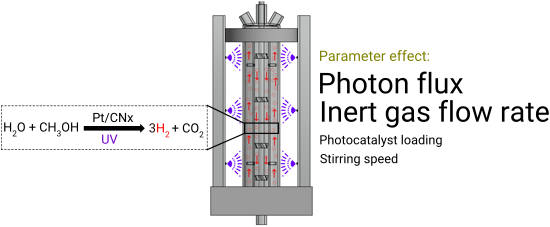
- substrate and allowed to dry at room temperature. To improve the conductivity and achieve higher resolution SEM imaging, a 20 nm thick layer of Au was sputtered onto the sample surface. For EDS mapping, the samples were not sputtered with Au to avoid interference during the determination of Pt. UV–vis


NMRium: Teaching nuclear magnetic resonance spectra interpretation in an online platform
Beilstein J. Org. Chem. 2024, 20, 25–31, doi:10.3762/bjoc.20.4

- and zero-filling are now applied automatically by common software packages using presets. While this provides convenience, it also leads to a loss of knowledge for new users on their impact on properties such as resolution and signal-to-noise ratio and the balance between them. For teaching labs


Cycloaddition reactions of heterocyclic azides with 2-cyanoacetamidines as a new route to C,N-diheteroarylcarbamidines
Beilstein J. Org. Chem. 2024, 20, 17–24, doi:10.3762/bjoc.20.3
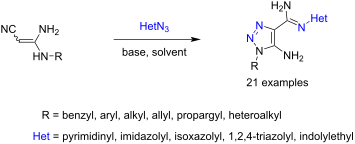
- effect on the yield of the final compounds 3 observed. The structures of compounds 3a–u were confirmed by IR, 1H and 13C NMR spectroscopy (Figures S1‒S44 in Supporting Information File 1) as well as by high-resolution mass spectrometry (HRMS). X-ray data obtained for compound 3g gave us final proof of



Identification of the p-coumaric acid biosynthetic gene cluster in Kutzneria albida: insights into the diazotization-dependent deamination pathway
Beilstein J. Org. Chem. 2024, 20, 1–11, doi:10.3762/bjoc.20.1
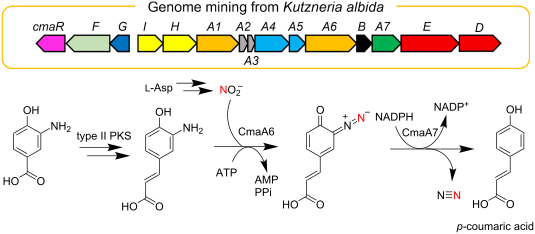
- result indicated that CmaG is a component of Cma PKS. From NMR analysis and high-resolution (HR)MS analysis ([M + H]+ ion at m/z = 222.0766, which corresponds to C11H12NO4+, calcd. 222.0761) of purified 6, the structure of 6 was determined as N-acetyl-3-aminocoumaric acid (Figures S9–S13 and Table S1 in


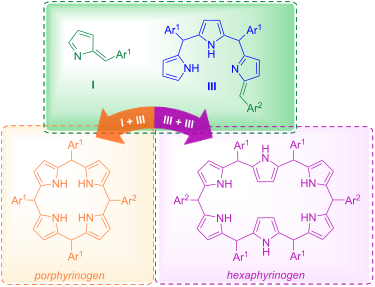
Substituent-controlled construction of A4B2-hexaphyrins and A3B-porphyrins: a mechanistic evaluation
Beilstein J. Org. Chem. 2023, 19, 1832–1840, doi:10.3762/bjoc.19.135
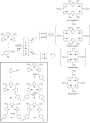
- certain time intervals within 2 hours and examined by ESI LC–MS. Throughout the high-resolution electrospray-ionization time-of-flight (HRESI–TOF) mass analysis of the reaction mixture at 0 °C, the following peaks were observed: m/z = 246.0366 ([M + H]+ calcd for C11H5F5N, 246.0337), m/z = 857.1468 ([M
- predominately observed (Figure S48 in Supporting Information File 1). According to high-resolution electrospray-ionization time-of-flight (HRESI–TOF) analysis, at the beginning of the reaction, mass peaks of intermediates II and IV arose as a result of tripyrrane 1 addition to N-tosylimine 2d. Further
- aryl-bearing N-tosylimines, but a 4-(CF3)C6H4 group led only to the formation of porphyrin compounds. A mechanistic perspective for the formation of porphyrinic products was acquired via a set of high-resolution mass analyses of selected model reactions. The results indicated that azafulvene-ended



GlAIcomics: a deep neural network classifier for spectroscopy-augmented mass spectrometric glycans data
Beilstein J. Org. Chem. 2023, 19, 1825–1831, doi:10.3762/bjoc.19.134
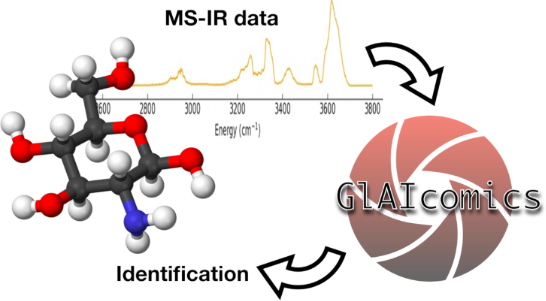
- ), thus providing valuable additional isomer resolution [4]. We demonstrated that this multidimensional MS–IR molecular fingerprint is unique to each carbohydrate building block and can be used to resolve their full sequence, including their monosaccharide content and the detail of their linkages
- a change in binning. To take this into account, data were binned with downgraded resolution then re-binned with 1 cm−1 step. The down sampling factor was randomly picked in a range from 1 to 5. Small variations of the calibration of the laser wavenumber may occur from day to day, leading to a shift
- a maximum accuracy variation of 0.5%. We demonstrated that the neural network is suitable for MS–IR classification in experimental conditions with variable resolution, noise or energy jitter. The question remains on how to discriminate unknown molecules or to identify problematic spectra, such as


A novel recyclable organocatalyst for the gram-scale enantioselective synthesis of (S)-baclofen
Beilstein J. Org. Chem. 2023, 19, 1811–1824, doi:10.3762/bjoc.19.133
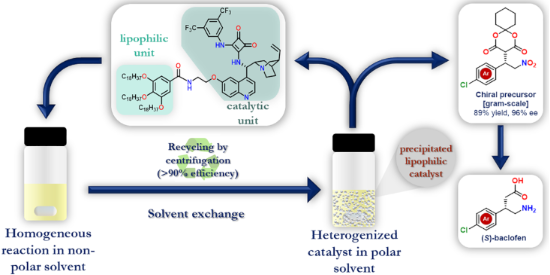
- on a Bruker 300 Avance spectrometer (at 300 and 75.5 MHz for the 1H and 13C spectra, respectively) or on a Bruker Avance III HD (at 600 MHz for 1H and at 150 MHz for 13C spectra) at specified temperatures. High-resolution MS was measured on a Bruker MicroTOF II instrument using positive electrospray


Recent advancements in iodide/phosphine-mediated photoredox radical reactions
Beilstein J. Org. Chem. 2023, 19, 1785–1803, doi:10.3762/bjoc.19.131
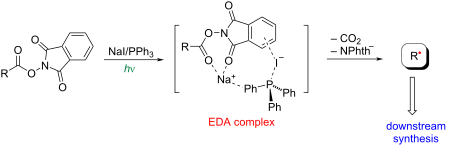
- several synthetic challenges that require further investigation and resolution: First, the current reliance on redox-active esters as radical precursors in iodide/phosphine-mediated conversions restricts the potential applications of these conversions in synthesis. Therefore, it is highly recommended to




Active-metal template clipping synthesis of novel [2]rotaxanes
Beilstein J. Org. Chem. 2023, 19, 1776–1784, doi:10.3762/bjoc.19.130
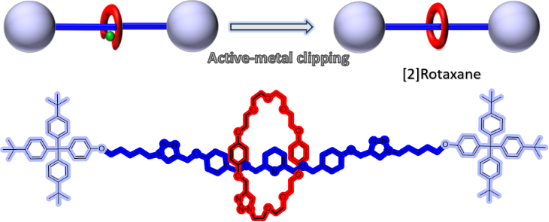
- ) relative to the residual solvent peak. High-resolution mass spectra were recorded on a ThermoScientific (LTQ XL, Orbitrap) spectrometer, in positive ion mode, using Electrospray or APCI techniques. Experimental procedures and characterization of compounds Compound 2: In a round-bottom flask compound 1


Selectivity control towards CO versus H2 for photo-driven CO2 reduction with a novel Co(II) catalyst
Beilstein J. Org. Chem. 2023, 19, 1766–1775, doi:10.3762/bjoc.19.129
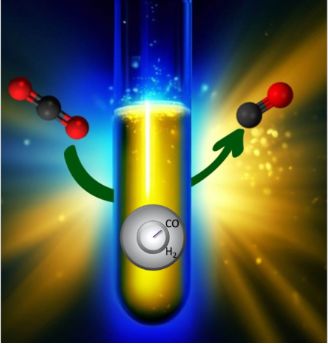
- high-resolution mass spectrometry (ESI), where it was shown the fragment corresponding to complex 1 that lost one isothiocyanate, [M − NCS]+, as the primary signal. Elemental analysis matched the calculated values, incorporating an additional MeOH molecule. Recrystallization was afforded by re


Unprecedented synthesis of a 14-membered hexaazamacrocycle
Beilstein J. Org. Chem. 2023, 19, 1728–1740, doi:10.3762/bjoc.19.126
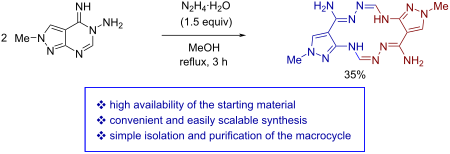
- -standard approach [44] (see the Supporting Information File 1 for details). The high-resolution mass spectrum (ESI+) of a mixture of 5 and the impurity, in addition to a peak at m/z = 329.1696 [M + H]+ for compound 5, shows a peak at m/z = 319.1862 [M + H]+, consistent with the molecular formula of
- structure (see Supporting Information File 1). The high-resolution mass spectrum (ESI+) confirmed its chemical formula as C12H16N12. Thus, we found that, in contrast to the reported data [40], the reaction between imidate 4 and hydrazine hydrate (4 equiv) in refluxing EtOH for 2 h afforded macrocycle 5 in a
- decoupling, DEPT-135 experiments as well as HMQC, HMBC, and NOESY correlation techniques were used to aid in the assignment of 1H and 13C NMR signals. Elemental analyses (CHN) were performed using a Thermo Finnigan Flash EA1112 apparatus. High-resolution mass spectra (HRMS) were obtained using a Bruker


A deep-red fluorophore based on naphthothiadiazole as emitter with hybridized local and charge transfer and ambipolar transporting properties for electroluminescent devices
Beilstein J. Org. Chem. 2023, 19, 1664–1676, doi:10.3762/bjoc.19.122
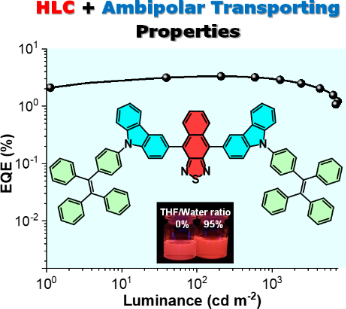
- )diboron catalyzed by Pd(dpf)Cl2/KOAc. Finally, TPECNz was obtained as red solid in a reasonable yield by a Suzuki-type cross-coupling reaction between 3 and 4,9-dibromonaphtho[2,3-c][1,2,5]thiadiazole. The chemical structure and purity of compound 3 were verified by 1H NMR, 13C NMR, and high-resolution
- purchased from commercial resources and used without further purification. 1H NMR and 13C NMR spectra were recorded with a Bruker AVANCE III HD 600 (600 MHz for 1H and 151 MHz for 13C) using CDCl3 as a solvent containing TMS as an internal standard. High-resolution mass spectrometry (HRMS) analysis was


Synthesis of 7-azabicyclo[4.3.1]decane ring systems from tricarbonyl(tropone)iron via intramolecular Heck reactions
Beilstein J. Org. Chem. 2023, 19, 1615–1619, doi:10.3762/bjoc.19.118
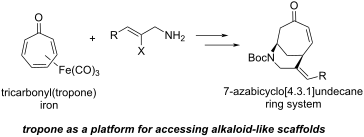
- (Colby College) and Prof. Bruce Foxman (Brandeis University) for X-ray analysis of compound 8. High-resolution mass spectra were obtained at the Mass Spectrometry Lab at the University of Illinois. Funding We thank the donors of the American Chemical Society Petroleum Research Fund (Grant No. 59202-UNI1


Sulfur-containing spiroketals from Breynia disticha and evaluations of their anti-inflammatory effect
Beilstein J. Org. Chem. 2023, 19, 1604–1614, doi:10.3762/bjoc.19.117
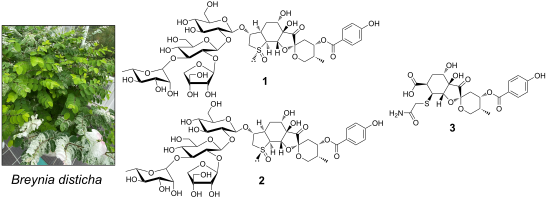
- disticha. The structures of compounds 1–7 were elucidated by extensive 1D and 2D NMR spectroscopic analyses, including 1D total correlation spectroscopy (TOCSY), HSQC, HMBC, double quantum-filtered (DQF)-COSY, heteronuclear two-bond correlation (H2BC), and HSQC-TOCSY experiments, as well as high-resolution



Radical chemistry in polymer science: an overview and recent advances
Beilstein J. Org. Chem. 2023, 19, 1580–1603, doi:10.3762/bjoc.19.116

- soluble upon radiation, respectively. Some early negative photoresists undergo a photochemical crosslinking process of 1,3-diene cyclic polymers [190] (cf. section 3.2), but such systems are no longer studied due to the poor resolution and sensitivity. On the other hand, positive resists based on




Secondary metabolites of Diaporthe cameroonensis, isolated from the Cameroonian medicinal plant Trema guineensis
Beilstein J. Org. Chem. 2023, 19, 1555–1561, doi:10.3762/bjoc.19.112
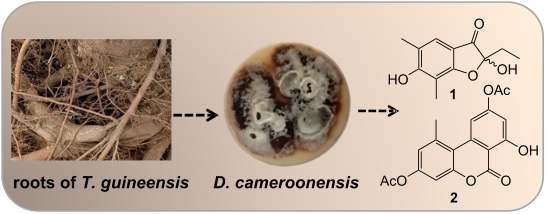
- cameroonensis, isolated from the root of Trema guineensis, a Cameroonian medicinal plant from the family Ulmaceae [11]. Results Structural elucidation Diaporthe cameroonensis, which showed an interesting high-performance liquid chromatography–diode array detector–high-resolution mass spectrometry (HPLC–DAD–HRMS


Organic thermally activated delayed fluorescence material with strained benzoguanidine donor
Beilstein J. Org. Chem. 2023, 19, 1289–1298, doi:10.3762/bjoc.19.95
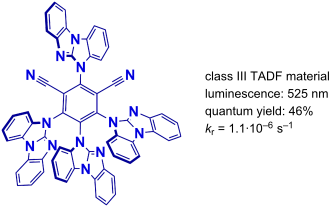
- deprotonation the latter with sodium hydride base. The compound shows poor solubility in most common organic solvents with moderate solubility in dichloromethane, 1,2-dichlorobenzene and dimethyl sulfoxide (DMSO). Compound 4BGIPN was characterized by high-resolution mass spectrometry (HRMS), elemental analysis


Unravelling a trichloroacetic acid-catalyzed cascade access to benzo[f]chromeno[2,3-h]quinoxalinoporphyrins
Beilstein J. Org. Chem. 2023, 19, 1216–1224, doi:10.3762/bjoc.19.89
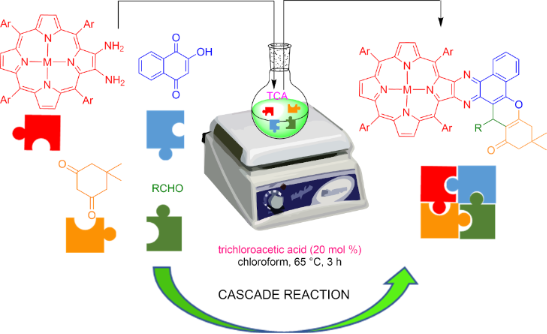
- . Acknowledgements The authors are grateful to the USIC, University of Delhi, Delhi, India for providing the NMR and high-resolution mass data. Funding MN is thankful to IoE, University of Delhi, India for providing a FRP grant. CT and PS are thankful to UGC, New Delhi, India for the award of Senior Research


Cyanothioacetamides as a synthetic platform for the synthesis of aminopyrazole derivatives
Beilstein J. Org. Chem. 2023, 19, 1191–1197, doi:10.3762/bjoc.19.87
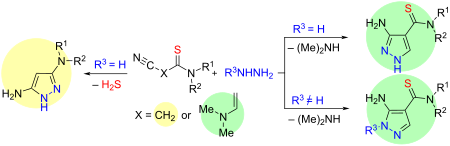
- -diaminopyrazoles 4a–c (Scheme 2). The structures of compounds 4a–c were confirmed by 1H and 13C NMR spectroscopy data, as well as high-resolution mass spectrometry (HRMS). Compound 4a was previously obtained by another method [18]. The spectral characteristics of diaminopyrazole 4a reported in [18] correspond to




Synthesis of imidazo[4,5-e][1,3]thiazino[2,3-c][1,2,4]triazines via a base-induced rearrangement of functionalized imidazo[4,5-e]thiazolo[2,3-c][1,2,4]triazines
Beilstein J. Org. Chem. 2023, 19, 1047–1054, doi:10.3762/bjoc.19.80
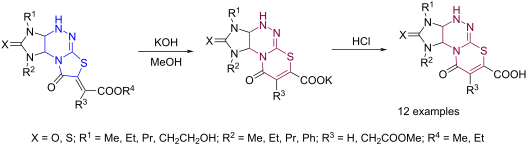
- in the thiazine ring leads to the cleavage of the triazine C–N bond. Further proton transfer gives product 9. The structures of the synthesized compounds 3a,b,j and 5a–k,m were confirmed by IR, 1H and 13C NMR spectroscopy, and high-resolution mass spectrometry. the potassium salts 3c–i,k,m were



The effect of dark states on the intersystem crossing and thermally activated delayed fluorescence of naphthalimide-phenothiazine dyads
Beilstein J. Org. Chem. 2023, 19, 1028–1046, doi:10.3762/bjoc.19.79
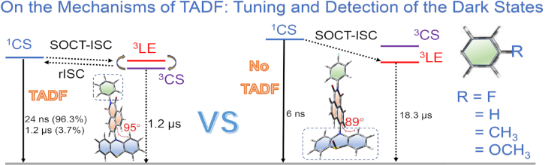
- resolution is 100 fs. Excitation pulses at 340 nm were produced by a commercial parametric amplifier. The pump beam polarization was set to the magic angle with respect to the probe beam. The probe beam was obtained by focusing a small portion of the fundamental 800 nm beam on a 2 mm CaF2 crystal, kept under


Intermediates and shunt products of massiliachelin biosynthesis in Massilia sp. NR 4-1
Beilstein J. Org. Chem. 2023, 19, 909–917, doi:10.3762/bjoc.19.69
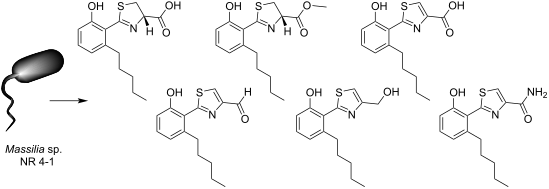
- formula of 1 was assigned to be C15H19NO3S by high-resolution (HR) ESIMS (m/z 294.1180 [M + H]+; calcd. 294.1169 for C15H20NO3S), which indicated the presence of seven double bond equivalents (DBEs). Upon analyzing the 13C NMR spectrum, the DBEs were assigned to two ring structures, two carbon–heteroatom
- metabolites that are structurally related to the siderophore massiliachelin were recovered from a culture extract of Massilia sp. NR 4-1. The structures of the natural products were verified by high-resolution mass spectrometry as well as 1D and 2D NMR analyses. The newly found compounds are assumed to


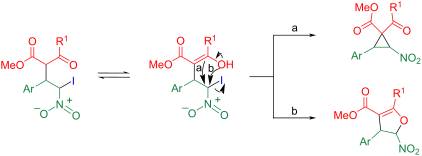
First synthesis of acylated nitrocyclopropanes
Beilstein J. Org. Chem. 2023, 19, 892–900, doi:10.3762/bjoc.19.67
- ) in CDCl3 using TMS as an internal standard. The assignments of the 13C NMR signals were performed by DEPT experiments. IR spectra were recorded on a JASCO FT/IR-4200 spectrometer equipped with an ATR detector. High-resolution mass spectra were obtained on AB SCIEX Triplet TOF 4600 and Bruker Compact


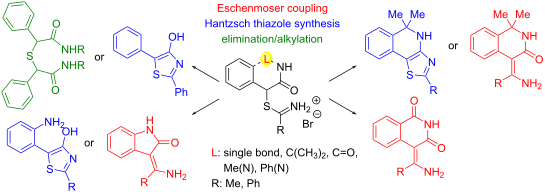
Eschenmoser coupling reactions starting from primary thioamides. When do they work and when not?
Beilstein J. Org. Chem. 2023, 19, 808–819, doi:10.3762/bjoc.19.61
- recorded on a Bruker Avance III 400 MHz or on a Bruker Ascend 500 MHz instrument. Chemical shifts (δ) are referenced to TMS (δ = 0) or solvent residual peaks δ(CDCl3) = 7.24 ppm (1H) and 77.0 ppm (13C), δ(DMSO-d6) = 2.50 ppm (1H) and 39.6 ppm (13C). High-resolution mass spectra were recorded on a MALDI LTQ


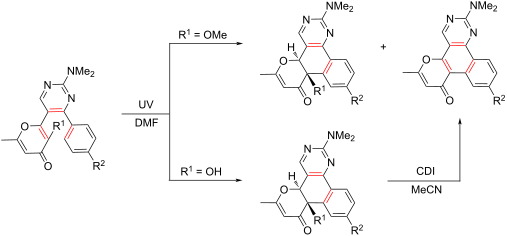
Synthesis of substituted 8H-benzo[h]pyrano[2,3-f]quinazolin-8-ones via photochemical 6π-electrocyclization of pyrimidines containing an allomaltol fragment
Beilstein J. Org. Chem. 2023, 19, 778–788, doi:10.3762/bjoc.19.58
- 11g–j were confirmed by 1H, 13C NMR spectroscopy and high-resolution mass spectrometry. In the 1H NMR spectra of the products, characteristic singlets corresponding to the protons of the dihydropyranone fragment in the region δ 5.3–5.4 ppm and the protons of the hydroxy group in the region δ 5.4–5.5





