Search results
Search for "separation" in Full Text gives 886 result(s) in Beilstein Journal of Organic Chemistry. Showing first 200.
Photoredox catalysis harvesting multiple photon or electrochemical energies
Beilstein J. Org. Chem. 2023, 19, 1055–1145, doi:10.3762/bjoc.19.81

























The effect of dark states on the intersystem crossing and thermally activated delayed fluorescence of naphthalimide-phenothiazine dyads
Beilstein J. Org. Chem. 2023, 19, 1028–1046, doi:10.3762/bjoc.19.79
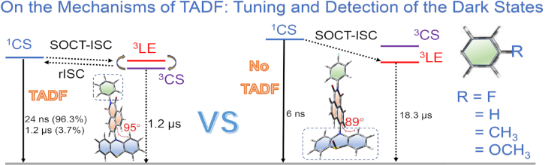
- transient absorption spectra showed that the charge separation takes ca. 0.6 ps, and admixtures of locally excited (3LE) state and charge separated (1CS/3CS) states formed (in n-hexane). The subsequent charge recombination from the 1CS state takes ca. 7.92 ns. Upon oxidation of the PTZ unit, the beginning
- of charge separation is at 178 fs and formation of 3LE state takes 4.53 ns. Nanosecond transient absorption (ns-TA) spectra showed that both 3CS and 3LE states were observed for the dyads showing TADF, whereas only 3LE or 3CS states were observed for the systems lacking TADF. This is a rare but
- . The Gibbs free energy changes (ΔGCS) for charge separation (CS) as well as the energy of the charge transfer states (ECS) were calculated using the Rehm–Weller equation (Equations 1–3) and the obtained values are listed in Table 4 [62][63][64]. It should be noted that the E00 values used in the


Intermediates and shunt products of massiliachelin biosynthesis in Massilia sp. NR 4-1
Beilstein J. Org. Chem. 2023, 19, 909–917, doi:10.3762/bjoc.19.69
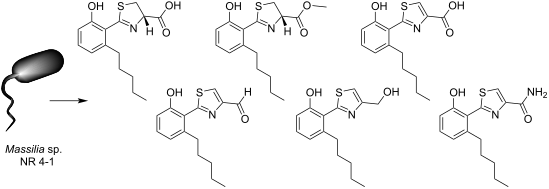
- resin with methanol. The resulting extract was concentrated to dryness. For an initial separation of its components, the raw extract was resuspended in water and extracted three times with ethyl acetate. The organic phases were pooled. A testing in the CAS assay indicated the presence of iron-chelating


First synthesis of acylated nitrocyclopropanes
Beilstein J. Org. Chem. 2023, 19, 892–900, doi:10.3762/bjoc.19.67
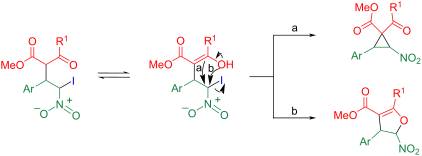
- ), 133.8 (CH), 135.1 (C), 137.8 (C), 167.0 (C), 192.7 (C). Although the adduct was obtained as a mixture of diastereomeric isomers (54:46), these isomers were subjected to subsequent cyclization without separation. When other 1,3-dicarbonyl compounds 3 or nitrostyrene 2b were used, the reaction was


Cyclodextrins as building blocks for new materials
Beilstein J. Org. Chem. 2023, 19, 889–891, doi:10.3762/bjoc.19.66
- solubilizers, stabilizers, permeation enhancers, cryoprotectors, sequestrants of toxic compounds, taste and odor maskers, coating materials of solid surfaces, and chiral receptors has been successfully explored in food, packaging, cosmetics, textiles, separation processes, environmental remediation, extraction
A new oxidatively stable ligand for the chiral functionalization of amino acids in Ni(II)–Schiff base complexes
Beilstein J. Org. Chem. 2023, 19, 566–574, doi:10.3762/bjoc.19.41
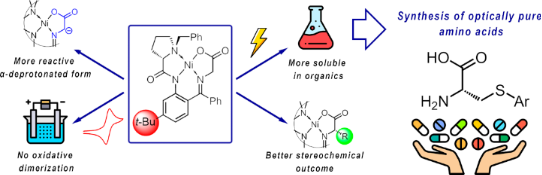
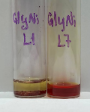
- including the thiolation discussed above). Insertion of the t-Bu group also makes the (GlyNi)L7 complex more soluble in diethyl ether as compared to the parent (GlyNi)L1 complex (21.3 mg/1 mL vs <1 mg/1 mL in Et2O; see Figure 3). This is beneficial for electrosynthesis, simplifying the separation of the
- the C=N bond), diffusion controlled (the slope of the ln ipc vs ln v dependence is 0.48), and reversible; the direct and reverse peak separation value was 57 mV at 100 mV/s, and Ia/Ic peak current ratio was close to unity. This means that the radical anion of (GlyNi)L7 is stable, at least in the



Discrimination of β-cyclodextrin/hazelnut (Corylus avellana L.) oil/flavonoid glycoside and flavonolignan ternary complexes by Fourier-transform infrared spectroscopy coupled with principal component analysis
Beilstein J. Org. Chem. 2023, 19, 380–398, doi:10.3762/bjoc.19.30
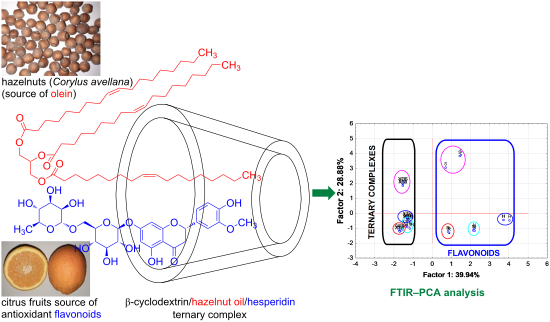
- with 300 mL of anhydrous petroleum ether (ACS reagent, 40–60 °C boiling range, Sigma-Aldrich, St. Louis, MO, USA). The extract was distilled and evaporated to dryness until no petroleum ether remained. The oil separation yield was ≈50%. The hazelnut oil was kept at −20 °C until further analyses and β
- ) of the FA glycerides to the corresponding FA methyl esters (FAMEs) [11][13]. The derivatization involved methanol–boron trifluoride (20% BF3), hexane (GC grade) and anhydrous sodium sulfate, all purchased from Merck & Co., Inc., Rahway, NJ, USA. Sodium chloride (reagent grade) used for the separation



CuAAC-inspired synthesis of 1,2,3-triazole-bridged porphyrin conjugates: an overview
Beilstein J. Org. Chem. 2023, 19, 349–379, doi:10.3762/bjoc.19.29
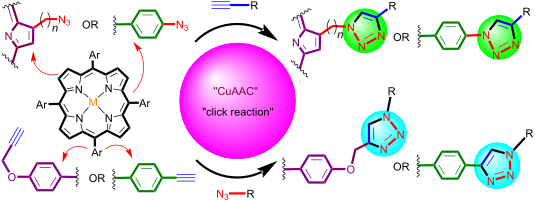
- fluorescence investigation of hybrid 96 revealed that the fluorescence of zinc porphyrin was strongly quenched, and the electron-transfer quenching mechanism was validated by easy oxidation. Furthermore, femtosecond transient-absorption spectrum investigations offered proof of the charge-separation process
- . The ultrafast pump-probe technique was used to determine the photoinduced charge separation in zinc porphyrin 96 and the rate constant was found on the order of 1010 s−1, clearly showing ultrafast electron-transfer between graphene and porphyrin units. Hence, these hybrids could be useful for light
- -triazole linker significantly influences the charge separation, charge recombination, and photoinduced electron transfer processes. Since, the through-bond distance is approximately the same for all the synthesized ZnP-Tri-C60 conjugates, therefore, the variation in charge separation and charge




An accelerated Rauhut–Currier dimerization enabled the synthesis of (±)-incarvilleatone and anticancer studies
Beilstein J. Org. Chem. 2023, 19, 204–211, doi:10.3762/bjoc.19.19
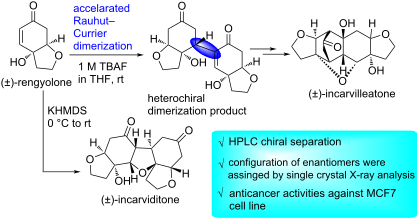
- (±)-incarvilleatone (1) by utilizing an unexplored accelerated Rauhut-Currier (RC) dimerization as a key step. In addition to that HPLC separation of (±)-incarvilleatone (1) into its enantiomers (−)-incarvilleatone (−)-1 and (+)-incarvilleatone (+)-1 and their X-ray crystallographic analysis which has not yet been
- (±)-incarvilleatone (1) was confirmed by single crystal X-ray analysis [16]. We then undertook separation of both the enantiomers of (±)-incarvilleatone 1 (40 mg, Scheme 6) by HPLC using a Chiralpak IA analytical column with the mobile phase MeCN/H2O (70:30). HPLC on a chiral stationary phase resulted in the
- separation of enantiomers, (−)-incarvilleatone [(−)-1, 15 mg] and (+)-incarvilleatone [(+)-1, 14 mg]. The optical rotations of the individual enantiomers were recorded and compared with the ones of Zhang and co-workers [1] reported data and were found to be nearly the same, i.e., optical rotation of −13.0 (c


Identification and determination of the absolute configuration of amorph-4-en-10β-ol, a cadinol-type sesquiterpene from the scent glands of the African reed frog Hyperolius cinnamomeoventris
Beilstein J. Org. Chem. 2023, 19, 167–175, doi:10.3762/bjoc.19.16
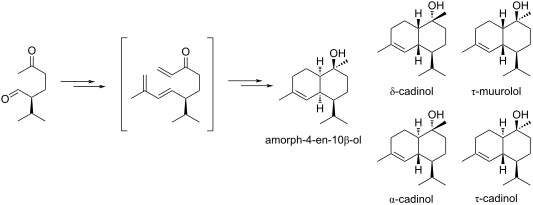
- ) (for mass spectra see Supporting Information File 1). A minor diastereomer 14 was obtained in 9% yield after isolation by RP-HPLC using a LiChroPrep RP-18 phase because conventional column chromatography did not allow for good separation from the major products. Only one face of the carbonyl groups
- scent gland macrolides can be biosynthesized by the frogs [7], although the macrolides are produced from the fatty acid biosynthetic pathway. The gas chromatographic separation obtained with the chiral phase also allowed the determination of the identity of the minor diastereomers formed during the


Nostochopcerol, a new antibacterial monoacylglycerol from the edible cyanobacterium Nostochopsis lobatus
Beilstein J. Org. Chem. 2023, 19, 133–138, doi:10.3762/bjoc.19.13
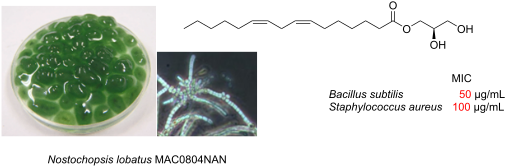
- reason for the low yield of compound 1 was eventually understood after it was determined to be a monoacylglycerol, which has a surface-active property and should have deteriorated the separation capacity of the chromatographic resins. The molecular formula of compound 1 was established to be C19H34O4
- ) to see the separation of activity at the top two and slow-eluting fractions. The top fraction was purified by repeated HPLC first on an ODS column (Cosmosil AR-II 1 × 25 cm) and second on a styrene-divinylbenzene polymer column (Hamilton PRP-1 1 × 25 cm) both eluted with MeCN/50 mM NaClO4 75:25 to


Catalytic aza-Nazarov cyclization reactions to access α-methylene-γ-lactam heterocycles
Beilstein J. Org. Chem. 2023, 19, 66–77, doi:10.3762/bjoc.19.6

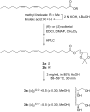
- suitable mobile phase for the column chromatographic separation of the diastereomeric esters 16a and 16b. With the successful isolation of these esters in pure form, both were converted to the corresponding acyl chlorides 6ba and 6bb via an initial basic hydrolysis followed by treatment with oxalyl



Improving the accuracy of 31P NMR chemical shift calculations by use of scaling methods
Beilstein J. Org. Chem. 2023, 19, 36–56, doi:10.3762/bjoc.19.4
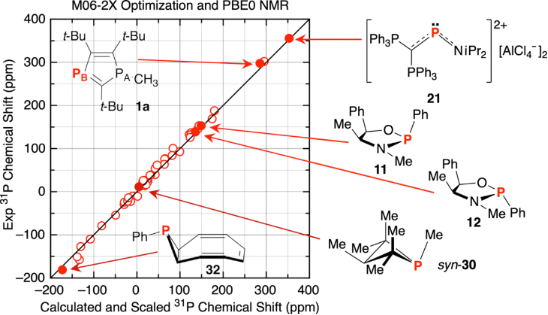
- higher MAD/RMSD for the points other than that for 32 makes sense. We conclude this section by examining separation of the P–P-bonded compounds or the P–C multiple-bonded compounds. Separating out first the P–P-bonded compounds 8–10 showed that the Latypov PBE0/PBE0 method was by far the best for those




Inline purification in continuous flow synthesis – opportunities and challenges
Beilstein J. Org. Chem. 2022, 18, 1720–1740, doi:10.3762/bjoc.18.182
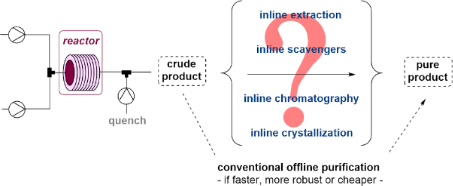
- two columns respectively. Automatically, the systems run different methods for sample separation, alternating columns so that one is engaged with the chromatography method while the other is being loaded. Depending on the synthesis flow rate and method duration, the injected volume of crude mixture
- the rotating column by centrifugal forces. This technique resembles a liquid–liquid preparative chromatography technique, where both the stationary and mobile phases are liquids, and separation is based on the partitioning of the solutes between the immiscible liquid phases. The crude product solution
- containing a fused polyhistidine tag. The preceding examples clearly showcase the diversity of applications that have been developed by academic laboratories to enable a particular chromatographic separation. While early versions may still be complex and not trialed by many users outside these groups, it is




Total synthesis of grayanane natural products
Beilstein J. Org. Chem. 2022, 18, 1707–1719, doi:10.3762/bjoc.18.181
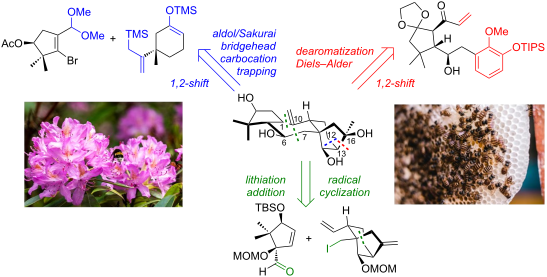
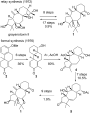
- . This first total synthesis of principinol D, in 19 steps as the longest linear sequence, is asymmetric even though a separation of the mixture of diastereomers resulting from fragment coupling is necessary. The SmI2-mediated reductive ring-closure of the 7-membered ring is among the most remarkable
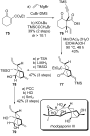
- required. Luo's team used Davis’ oxaziridine followed by treatment with K2CO3 to equilibrate the hydroxyketone, delivering an inseparable epimeric mixture (1:3) of 63 in 31% overall yield. An additional TBS protection allowed separation of the epimers. After acidic treatment, pure rhodomollein XX and 3-epi





Redox-active molecules as organocatalysts for selective oxidative transformations – an unperceived organocatalysis field
Beilstein J. Org. Chem. 2022, 18, 1672–1695, doi:10.3762/bjoc.18.179
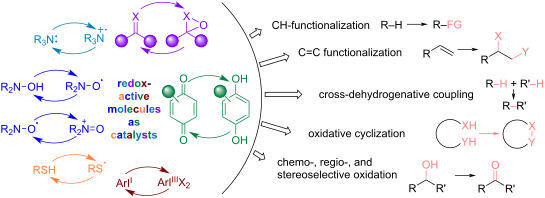
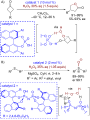
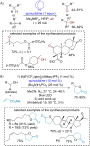
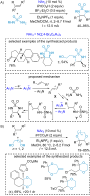
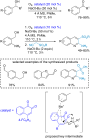
- under visible light irradiation. The advantages of this mixed hetero-/homogeneous catalytic system include the easy separation of the products from NHPI and TiO2, recyclability, selectivity control by TiO2/NHPI ratio, and high efficiency at low TiO2 loading due to the radical chain nature of the











One-pot double annulations to confer diastereoselective spirooxindolepyrrolothiazoles
Beilstein J. Org. Chem. 2022, 18, 1607–1616, doi:10.3762/bjoc.18.171
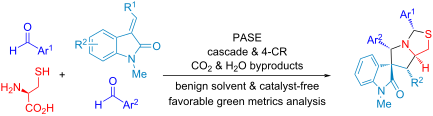
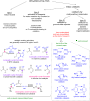
- separation (process A) and the single-step method (process B) for the synthesis of spirooxindolepyrrolothiazoles 5a according to the reaction conditions shown in Scheme 6. Green chemistry metrics data including atom economy (AE), atom efficiency (AEf), carbon efficiency (CE), reaction mass efficiency (RME


Preparation of β-cyclodextrin-based dimers with selectively methylated rims and their use for solubilization of tetracene
Beilstein J. Org. Chem. 2022, 18, 1596–1606, doi:10.3762/bjoc.18.170
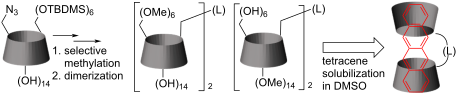
- , which can be easily done by shaking the reaction mixture with NaI ethanol/water solution in a separation funnel. The click reaction of compound 8 proceeds at a different rate than 3 under the same conditions. The coupling of 3 can be finished overnight with high yields, whereas the coupling of 8 is much


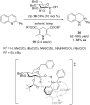
Design, synthesis, and evaluation of chiral thiophosphorus acids as organocatalysts
Beilstein J. Org. Chem. 2022, 18, 1471–1478, doi:10.3762/bjoc.18.154
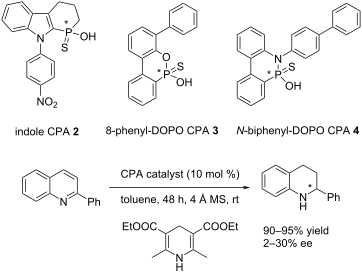
- separation of the (S)-1-phenylethylamine-derived phosphonamide diastereoisomers) with SP-3 and RP-3 obtained in 13% and 9% respectively starting from 2,6-diphenylphenol. Finally, N-biphenyl-DOPO CPA 4 was synthesized in four steps as shown in Scheme 4. Although compound 16 is commercially available, it was
- showed a modest induction (entry 3). Conclusion Exploratory efforts toward new C1-symmetrical CPAs were described. Four CPAs were synthesized and three evaluated. The syntheses are straightforward, inexpensive, and scalable. Resolution via the separation of diastereoisomeric phosphorus amides could be
- , however, that the enantiomeric excess increases with an increase in bond length separation between the phosphorus and the R group. From the reaction evaluation we found that dual activation might be required from the catalyst in certain enantioselective reactions. Thus, CPA platforms that reintroduce a


Supramolecular approaches to mediate chemical reactivity
Beilstein J. Org. Chem. 2022, 18, 1463–1465, doi:10.3762/bjoc.18.152
- and sometimes even unachievable separation and purification procedures. Rui Wang and Yang Yu [16] reported an interesting review in which they summarized various site-selective reactions mediated by molecular containers. They focused their attention on reactions that give different product
Naphthalimide-phenothiazine dyads: effect of conformational flexibility and matching of the energy of the charge-transfer state and the localized triplet excited state on the thermally activated delayed fluorescence
Beilstein J. Org. Chem. 2022, 18, 1435–1453, doi:10.3762/bjoc.18.149
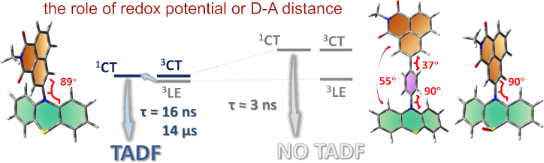
- , confirming that the CT absorption band strongly depends on the electron-donating ability of the donor. In both NI-Ph-PTZ and NI-PhMe2-PTZ, the CT band is negligible, due to the large separation between the NI and PTZ moieties. Note that in NI-Ph-PTZ, the electronic coupling between the NI and the phenyl
- , ΦΔ are much larger, up to 100% in dichloromethane (DCM) and ACN, likely due to the heavy-atom effect. Electrochemistry study The redox potentials of the dyads were studied with cyclovoltammetry (Figure 6, Table 3), and the Gibbs free energy changes of the charge separation (ΔGCS) and charge
- separation states energy levels (ECS) of the compounds were calculated (Table 4). A reversible oxidation wave at +0.36 V (vs Fc/Fc+) was observed for NI-PTZ, which is attributed to the oxidation of the PTZ units. A reversible reduction wave at −1.75 V (vs Fc/Fc+) was observed, which is attributed to the
Cyclodextrin-based Schiff base pro-fragrances: Synthesis and release studies
Beilstein J. Org. Chem. 2022, 18, 1346–1354, doi:10.3762/bjoc.18.140
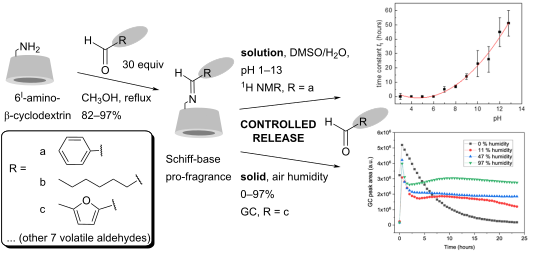
- –97%). This method allows for easy recovery of the unreacted aldehyde as well as separation of the product (just by extraction by hexane and drying under reduced pressure) without its decomposition. The structure of the final imines was confirmed by 1H NMR, 13C NMR, ESI–MS, and the release of the VOCs
Thermally activated delayed fluorescence (TADF) emitters: sensing and boosting spin-flipping by aggregation
Beilstein J. Org. Chem. 2022, 18, 1177–1187, doi:10.3762/bjoc.18.122
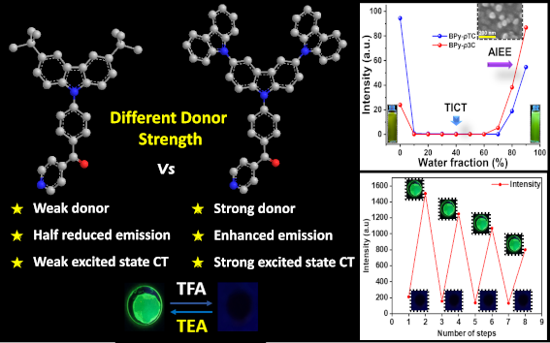
- ) interactions [15]. Several molecular designs were proposed to adjust the ICT interactions through covalent D–A linking. The separation of the highest occupied molecular orbital (HOMO) and the lowest unoccupied molecular orbital (LUMO) of the donor and acceptor molecules leads to a reduction of the singlet


Experimental and theoretical studies on the synthesis of 1,4,5-trisubstituted pyrrolidine-2,3-diones
Beilstein J. Org. Chem. 2022, 18, 1140–1153, doi:10.3762/bjoc.18.118
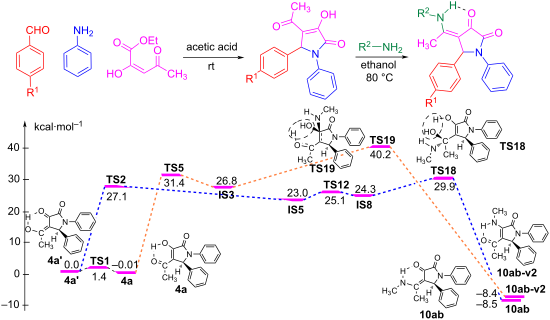
- is minimal, about 0.1 kcal·mol−1). In this case, the kinetic factor mainly determines the predominant product. With a difference of potential barrier of ca. 4.4 kcal·mol−1 in the first stage (to form intermediate), or 7.8 kcal·mol−1 in the final stage (for H2O separation) (IS5 isomerization to yield
- remaining two reaction routes are to form the intermediates IS9, IS10 with the separation of a H2O molecule from the O–H and N–H bonds resulting in 10ab and 10ab-v2, respectively, which are evaluated lower than the above two pathways in releasing H2O molecule from two –OH groups. Hence, from the calculated


Heterogeneous metallaphotoredox catalysis in a continuous-flow packed-bed reactor
Beilstein J. Org. Chem. 2022, 18, 1123–1130, doi:10.3762/bjoc.18.115
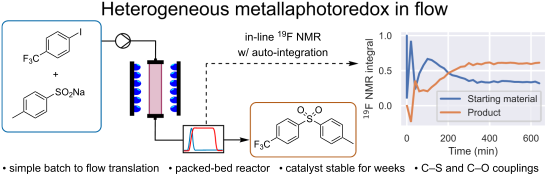
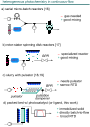
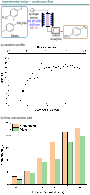
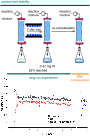
- (catalyst) separation in one step. The use of a packed bed simplifies the translation of optimized batch reaction conditions to continuous flow, as the only components present in the reaction mixture are the substrate and a base. The metallaphotoredox cross-coupling of sulfinates with aryl halides was used
- processes [5] (Figure 1d): The heterogeneous catalyst remains located in a specific part of the reactor through which the reaction mixture is pumped, which reduces material damage through attrition and the confinement of the catalysts in the packed bed lifts the need for solid separation. If the catalyst is
- these heterogeneous catalysts, using a packed-bed reactor. The use of a packed-bed reactor for these solid–liquid reactions is attractive as reaction and separation can be combined in one step. This is particularly notable in our case since, after complexing poly-czbpy with nickel (Ni@poly-czbpy), the