


Search results
Search for "sustainability" in Full Text gives 132 result(s) in Beilstein Journal of Organic Chemistry.
Continuous flow nitration in miniaturized devices
Beilstein J. Org. Chem. 2014, 10, 405–424, doi:10.3762/bjoc.10.38
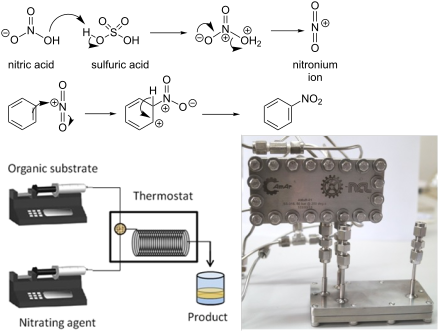
- with in terms of the sustainability of individual processes a few large scale consortia have focused on continuous flow nitration using miniaturized devices [20][21]. An analysis of the literature shows that as many as 45% of the nitrations are for liquid phase systems both homogeneous (miscible) and


Garner’s aldehyde as a versatile intermediate in the synthesis of enantiopure natural products
Beilstein J. Org. Chem. 2013, 9, 2641–2659, doi:10.3762/bjoc.9.300
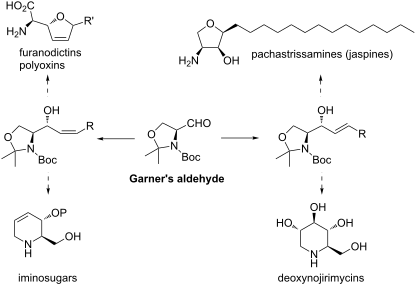
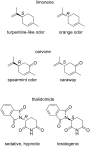
- , strategies to avoid this undesired reaction have been developed. However, despite these important achievements, much more research needs to be done to increase the scopes of these reactions, the overall efficiency, and environmental sustainability. Structures of limonene, carvone and thalidomide. Structure





Hypervalent iodine/TEMPO-mediated oxidation in flow systems: a fast and efficient protocol for alcohol oxidation
Beilstein J. Org. Chem. 2013, 9, 1437–1442, doi:10.3762/bjoc.9.162
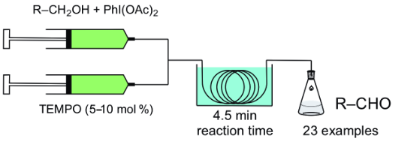
- platforms to perform reactions under continuous flow rather than in batch mode has led to improvements regarding safety and sustainability. Microreactor technology can be beneficial over classical approaches in a variety of chemical reactions. Many reactions can benefit from the properties of microreactors


Metal-free aerobic oxidations mediated by N-hydroxyphthalimide. A concise review
Beilstein J. Org. Chem. 2013, 9, 1296–1310, doi:10.3762/bjoc.9.146
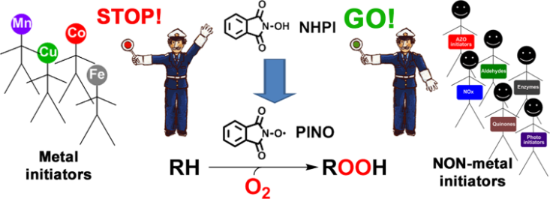
- as co-catalysts for NHPI activation. However, once again their use should be avoided in order to improve the sustainability of the process. For this reason, in the past decade several efforts have been devoted to the development of catalytic systems for the metal-free activation of NHIs under mild


The synthesis of well-defined poly(vinylbenzyl chloride)-grafted nanoparticles via RAFT polymerization
Beilstein J. Org. Chem. 2013, 9, 1226–1234, doi:10.3762/bjoc.9.139
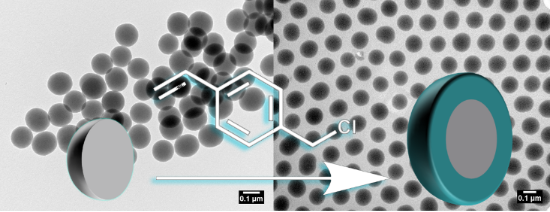
- Sustainability, School of Chemistry, The University of Sydney, NSW 2006, Australia 10.3762/bjoc.9.139 Abstract We describe the use of one of the most advanced radical polymerization techniques, the reversible addition fragmentation chain transfer (RAFT) process, to produce highly functional core–shell particles


Easy and direct conversion of tosylates and mesylates into nitroalkanes
Beilstein J. Org. Chem. 2013, 9, 533–536, doi:10.3762/bjoc.9.58

- contribution for the preparation of nitroalkanes, making alcohols a strategic source for their availability. Moreover, the mildness of our reaction conditions permits the survival of important functionalities. Furthermore, our protocol presents an interesting peculiarity from the sustainability point of view


PEG-embedded KBr3: A recyclable catalyst for multicomponent coupling reaction for the efficient synthesis of functionalized piperidines
Beilstein J. Org. Chem. 2011, 7, 1334–1341, doi:10.3762/bjoc.7.157

- exposure time (12 h). The synthesis of [K+PEG]Br3− involves the reaction of [K+PEG]Br− with liquid bromine involving the indirect use of toxic bromine, which makes this reagent undesirable from the point of view of sustainability. However, the inexpensive nature, easy availability of PEGs, higher stability


Other Beilstein-Institut Open Science Activities



