Search results
Search for "switching" in Full Text gives 332 result(s) in Beilstein Journal of Organic Chemistry. Showing first 200.
A photochemical determination of luminescence efficiency of upconverting nanoparticles
Beilstein J. Org. Chem. 2019, 15, 2671–2677, doi:10.3762/bjoc.15.260
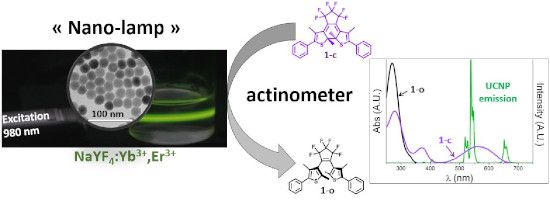
- (Figure 1) [25][27]. Switching of such diarylethene dyes in both directions (ring closure/coloration or ring opening/discoloration) by UCNPs has been documented for years, with a seminal work reported in 2009 by the team of Branda [28]. In the following we will show how this photochromic compound can be


Arylisoquinoline-derived organoboron dyes with a triaryl skeleton show dual fluorescence
Beilstein J. Org. Chem. 2019, 15, 2612–2622, doi:10.3762/bjoc.15.254
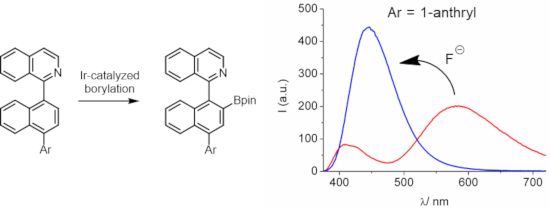
- these dyes such as intramolecular charge-transfer processes and tunable red-shifted emission bands. Generally, the so far investigated borylated arylisoquinoline dyes show principally fluorescence quenching (on-off switching) on the formation of the corresponding fluoroboronate complexes [37]. Herein



A new approach to silicon rhodamines by Suzuki–Miyaura coupling – scope and limitations
Beilstein J. Org. Chem. 2019, 15, 2569–2576, doi:10.3762/bjoc.15.250
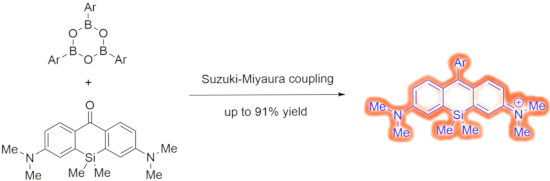
- internal salt (protonated pyridine ring and deprotonated boronic acid) and ensuing difficult formation of boroxine 29b (Table 2, entry 10). Switching to the neutral heterocyclic boronic acid 30a, the corresponding thienyl-substituted silicon rhodamine 30c could be obtained in 37% (56% brsm) yield with the


A toolbox of molecular photoswitches to modulate the CXCR3 chemokine receptor with light
Beilstein J. Org. Chem. 2019, 15, 2509–2523, doi:10.3762/bjoc.15.244
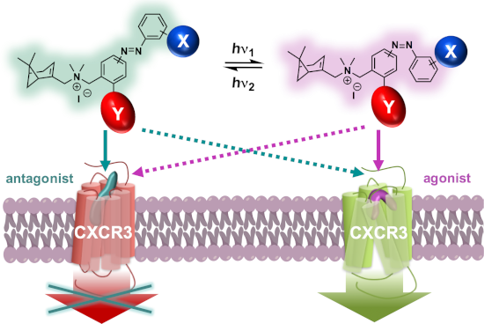
- also activate the receptor to varying degrees. In all, our efforts deliver a spectrum of (subtle) efficacy differences. Notable tool compounds are VUF15888 (4d) switching from antagonism to partial agonism (PDE = 0.43), VUF16620 (6e) switching from partial agonism to full agonism (PDE = 0.51), and



In search of visible-light photoresponsive peptide nucleic acids (PNAs) for reversible control of DNA hybridization
Beilstein J. Org. Chem. 2019, 15, 2500–2508, doi:10.3762/bjoc.15.243
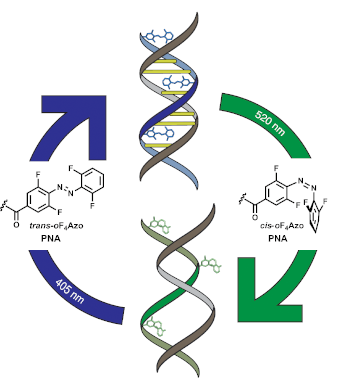
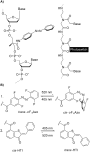
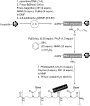
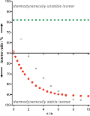
- switching capacities and duplex formation were analyzed. Our group has recently demonstrated that photoresponsive peptides can affect the transcription of genes via inhibition of histone-modifying enzymes [37]. Repression of enzymes is achievable at nucleic acid level too. Therefore, in this project we



Ultrafast processes triggered by one- and two-photon excitation of a photochromic and luminescent hydrazone
Beilstein J. Org. Chem. 2019, 15, 2438–2446, doi:10.3762/bjoc.15.236
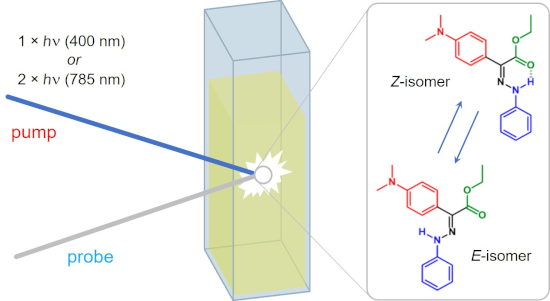
- stimulus, raise particular interest among the different classes of switches which have been developed to date. Light enables very specific spatial and temporal control of the switching event, allowing for selective response and bidirectional operation. It is thus not surprising that different classes of
- patterns, yielding systems that absorb in the red part of the visible spectrum [28]. Recently, a new hydrazone-based photochromic compound, exhibiting outstanding properties, has been synthetized and characterized [29]. This molecule presents fluorescence ON/OFF switching under both one-photon and two
- , fluorescence toggling and two-photon induced switching. Using a combination of time-resolved fluorescence and transient absorption spectroscopies we were able to gain new insights into the isomerization process of this molecule. Time-resolved luminescence measurements allowed us to determine the excited state



Effect of ring size on photoisomerization properties of stiff stilbene macrocycles
Beilstein J. Org. Chem. 2019, 15, 2408–2418, doi:10.3762/bjoc.15.233
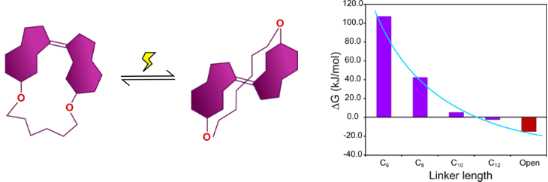
- ][9][10][11]. The interplay between the forces involved in the switching action and the pull from groups attached to the stiff stilbene has been investigated, e.g., as molecular force probes [12][13][14][15][16][17][18]. While these do incorporate other isomerizable units in addition to stiff stilbene




Reversible switching of arylazopyrazole within a metal–organic cage
Beilstein J. Org. Chem. 2019, 15, 2398–2407, doi:10.3762/bjoc.15.232
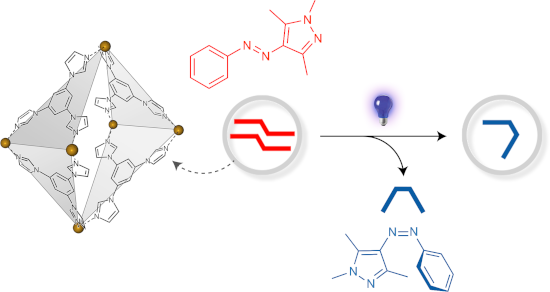
- switching to the Z isomer was accompanied by the release of one of the two guests from the cage and the formation of a 1:1 cage/Z-arylazopyrazole inclusion complex. DFT calculations suggest that this process involves a dramatic change in the conformation of the cage. Back-isomerization was induced with
- ] and, using larger cages, the synthesis of 4 nm silica nanoparticles, which would be difficult to obtain otherwise [15]. One class of organic compounds that exhibit various intriguing properties under confinement is photochromic molecules. In a seminal contribution, unusual switching patterns have been
- ), the signal due to H1 shifted upfield by 0.20 ppm. This behavior is analogous to our previous findings, which showed that shifts of H1 protons are indicative of switching of the bound guest and/or (de)encapsulation [18][49]. Integrating the signals due to E-1’s Hc protons (cyan in Figure 6) allowed us


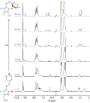
![[Graphic 1]](/bjoc/content/inline/1860-5397-15-232-i3.svg?max-width=637&scale=1.18182) 2 (500 MHz, D2O, 298 K).
2 (500 MHz, D2O, 298 K).




Targeted photoswitchable imaging of intracellular glutathione by a photochromic glycosheet sensor
Beilstein J. Org. Chem. 2019, 15, 2380–2389, doi:10.3762/bjoc.15.230
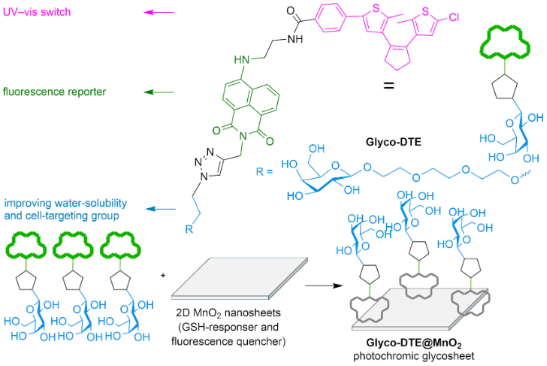
- emission fatigue resistance was also examined and found to tolerate more than five switching cycles in PBS buffer (Figure 1D). Similar performances were also observed for control reporter 8o (Supporting Information File 1, Figure S1). The characteristic photoswitchable ON/OFF fluorescence signals as well
- intensity at 535 nm performed an ON/OFF switching cycle upon irradiation of UV–vis light with a decent fatigue resistance (Figure 3D), which is in good accordance with the results of Glyco-DTE in buffer solution. The selectivity of Glyco-DTE@MnO2 towards other intracellular species was next tested by
- (3 min) with a reaction constant of k = 2.39 × 10⁻² s−1 (Supporting Information File 1, Figure S3D), demonstrating a fast response of the hybrid sensor on GSH sensing. The investigation above verifies that the photochromic glycosheet we designed can perform as an “activation and photo-switching



Excited state dynamics for visible-light sensitization of a photochromic benzil-subsituted phenoxyl-imidazolyl radical complex
Beilstein J. Org. Chem. 2019, 15, 2369–2379, doi:10.3762/bjoc.15.229
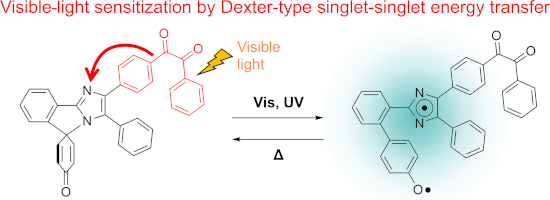
- switching speed of PIC opened up various potential applications, no photosensitivity to visible light limits its applications. In this study, we synthesized a visible-light sensitized PIC derivative conjugated with a benzil unit. Femtosecond transient absorption spectroscopy revealed that the benzil unit



Mono- and bithiophene-substituted diarylethene photoswitches with emissive open or closed forms
Beilstein J. Org. Chem. 2019, 15, 2344–2354, doi:10.3762/bjoc.15.227
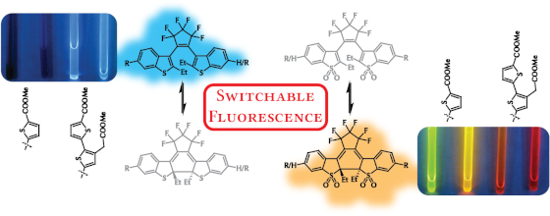
- (470 nm, 530 nm). The on-switching of fluorescence due to the ring-closure reaction was observed also with visible light of 470 nm (to an extent of 10% for compound SyOTh1) and attributed to the Urbach tail effect. Due to a high degree of fluorescence modulation (>270), good fatigue resistance and
- path, even at “one side” of the molecule (in asymmetric compounds) would enable switching with focusable light of 375 nm and above. To test this hypothesis, we designed a series of DAEs with mono- and bithiophene substituents attached to positions 6 and 6′ of an oxidized or a nonoxidized 2-alkylbenzo[b
- diluted solutions at a known concentration prior to irradiation. Solutions were irradiated in a home-made setup [5] with 355 nm light until the photostationary state (PSS365 nm). Figure 2 shows changes of absorption and emission spectra in the course of the switching process for compound SyTh2. Irradiated


Aggregation-induced emission effect on turn-off fluorescent switching of a photochromic diarylethene
Beilstein J. Org. Chem. 2019, 15, 2204–2212, doi:10.3762/bjoc.15.217
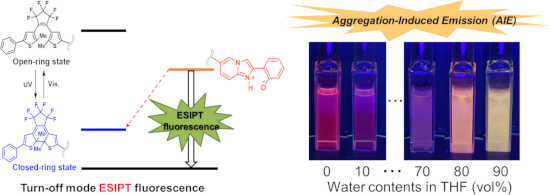
- . In addition, it shows turn-off type fluorescence switching in an aprotic solvent and in crystals. The fluorescence is quenched as the content of closed-ring isomers increases upon UV light irradiation. Conclusions: A diarylethene containing an ESIPT functional group was prepared. It showed
- fluorescent turn-off behavior during photochromism in aprotic solvents as well as in crystalline state upon UV light irradiation. Furthermore, it showed AIE in THF/water mixtures with blue-shift of the emission. Keywords: AIE; diarylethene; ESIPT fluorescent switching; turn-off fluorescence; Introduction
- Diarylethenes are well-known photochromic molecules and are widely applied to molecular switches and systems [1][2]. Recently, the photo-switching of fluorescence signals by using diarylethene switches has attracted much attention because of the potential in various optoelectronic applications [3]. For example


Azologization and repurposing of a hetero-stilbene-based kinase inhibitor: towards the design of photoswitchable sirtuin inhibitors
Beilstein J. Org. Chem. 2019, 15, 2170–2183, doi:10.3762/bjoc.15.214
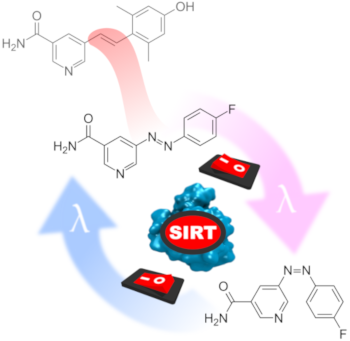
- enzyme assay. The long irradiation periods that were necessary to obtain significant amounts of the (Z)-isomers did not permit switching of the inhibitors in the enzyme assay mixture, as the fluorescent substrate and the enzyme would be harmed by long-term UV radiation. We envisioned to replace the
- photoisomerization, but was not as effective as 452 nm radiation. 630 nm irradiation, in contrast, did not lead to an altered PSS composition obtained by UV irradiation of 365 nm. Switching between the two PSS could be repeated several times without any observable fatigue of the compound (Figure 5). The
- EtOH and 16 mL water) or vanillin/sulfuric acid (3.0 g vanillin and 0.5 mL H2SO4 in 100 mL EtOH) reagent. Synthesis was additionally monitored using high speed SFC/MS runs performed by a Nexera SFE-SFC/UHPLC switching system (Shimadzu Corporation, Kyoto, Japan) consisting of a pumping system (one LC


1,2,3-Triazolium macrocycles in supramolecular chemistry
Beilstein J. Org. Chem. 2019, 15, 2142–2155, doi:10.3762/bjoc.15.211
- , indicating that the DN24C8 unit moved toward the N-methyl-1,2,3-triazolium station and was now close to the NDI moiety. This pH-controlled switching process is reversible (e.g., after addition of trifluoroacetic acid the original state is regained). On the other hand, there were no considerable changes in
- the 1H NMR spectra or color changes, upon addition of DIEA to the corresponding triazole analogue (precursor to 17a) because of only weak interaction between the crown ether and the triazole unit. This clearly proves the importance of the triazolium moiety for the switching process. Color changes with
- catenane 17b upon addition of base were less noticeable because of a weaker CT band in the case of a dibenzo-fused crown ether. Thus, the authors have proven that the movement of macrocyclic rings within catenanes can be controlled by switching the pH, and the bisnaphtho crown ethers can act either as




Fluorinated azobenzenes as supramolecular halogen-bonding building blocks
Beilstein J. Org. Chem. 2019, 15, 2013–2019, doi:10.3762/bjoc.15.197
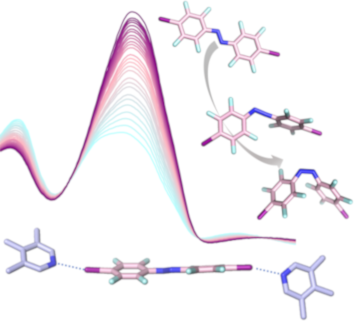
- supramolecular assemblies, the halogen donors need to bind both in the E- and Z-state. This is the case according to our computations, as isodensity values remain almost identical upon switching (Figure S14 in Supporting Information File 1). We therefore turned our attention to elucidate the change of


Tautomerism as primary signaling mechanism in metal sensing: the case of amide group
Beilstein J. Org. Chem. 2019, 15, 1898–1906, doi:10.3762/bjoc.15.185
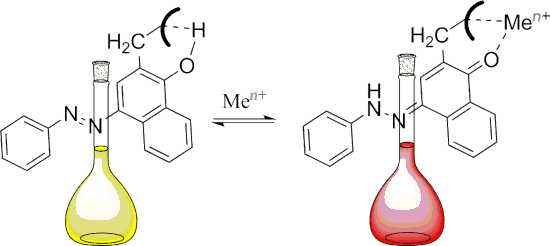
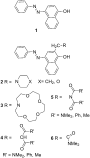
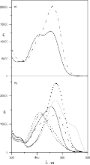
- , the stabilization between the E and K forms is a result of the competition between the strength of the hydrogen bonding in the enol tautomer and the effect of simple alkyl substitution in the keto form skeleton. The calculations also suggest that the efficient switching towards the enol form can be





Application of chiral 2-isoxazoline for the synthesis of syn-1,3-diol analogs
Beilstein J. Org. Chem. 2019, 15, 1840–1847, doi:10.3762/bjoc.15.179
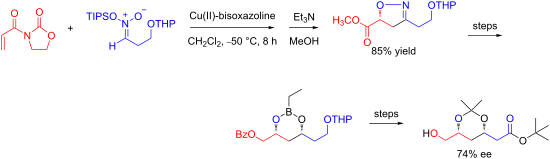
- in our lab (Table 1) [49]. The synthesis of the triisopropylsilyl nitronate was initially attempted starting with 3-nitropropionic acid methyl ester but no desired product was observed. However, switching to 3-nitropropanol, protected as the THP ether, succeeded to prepare the required


Norbornadiene-functionalized triazatriangulenium and trioxatriangulenium platforms
Beilstein J. Org. Chem. 2019, 15, 1815–1821, doi:10.3762/bjoc.15.175
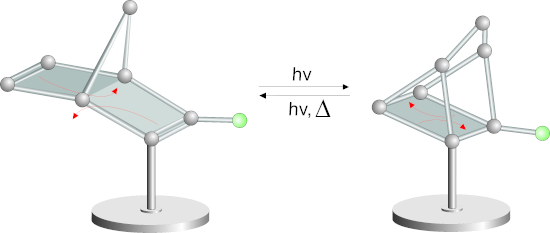
- platform 2 (44%). The photophysical properties and the switching behaviour of 1, 2 and 3 were determined in solution (THF). The UV–vis spectra of the norbornadienes (NBD, black, 1a, 2a, 3a) and quadricylanes (QC, red, 1b, 2b, 3b) and the spectra of the QCs after irradiation with 311 nm for 1b and 2b or 254
- the cycloreversion was determined by linear fit of ln (k) as a function of 1/T. The cycloreversion of QC 1b to NBD 1a has an activation energy of 111 kJ mol−1 (degassed deuterated benzene). The switching efficiency of NBD 2a to QC 2b is quantitative (≈100%) after irradiation with 385 nm, whereas the
- switching between the norbornadiene and quadricyclane isomers with two different wavelengths was investigated. Norbornadienes 1 and 2 are quantitatively converted to the corresponding quadricyclanes upon irradiation with light of 385 nm. Back-isomerization with 311 nm to the norbornadiene isomer 1a is less


Design, synthesis and biological evaluation of immunostimulating mannosylated desmuramyl peptides
Beilstein J. Org. Chem. 2019, 15, 1805–1814, doi:10.3762/bjoc.15.174

- hindrance of the mannose and peptide part during the inclusion process of the adamantane [37][39]. It is well known that vaccine adjuvants can enhance or modulate the Th1/Th2-bias of an induced immune response. Interferon-γ (as a Th1 cytokine) and IL-4 (as a Th2 cytokine) induce isotype switching to IgG2a


Metal-free mechanochemical oxidations in Ertalyte® jars
Beilstein J. Org. Chem. 2019, 15, 1786–1794, doi:10.3762/bjoc.15.172
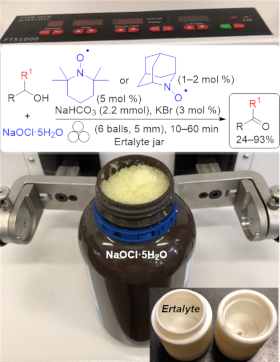
- significantly by switching to an Ertalyte® jar (86%) [68] which could be further enhanced (93%) by slightly increasing the amount of the oxidant agent (1.5 equiv). Ertalyte® jars (Figure S1b, in Supporting Information File 1) are composed of polyethylene terephthalate (PET-P) and characterized by wear- and


An azobenzene container showing a definite folding – synthesis and structural investigation
Beilstein J. Org. Chem. 2019, 15, 1534–1544, doi:10.3762/bjoc.15.156
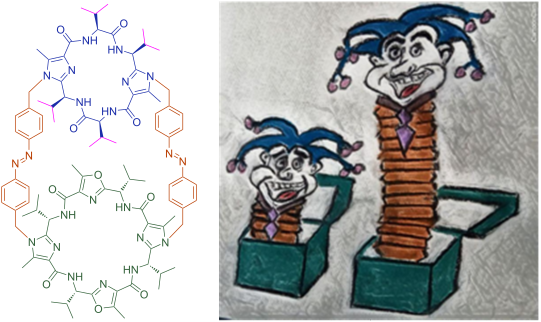
- chemistry. Here, we present the synthesis of a foldable container consisting of two different types of Lissoclinum macrocyclic peptides which are connected via two azobenzene units. The container is controllable by light: irradiation with UV light causes a switching process to the compact cis,cis-isomer
- is the design of artificial Lissoclinum cyclopeptides which can be switched by the incorporation of a suitable switching unit into the scaffold. A switching process would allow to vary the orientation and the distance between the recognition units. Examples for such switching units are photochromic
- molecules which can be reversibly changed between two isomers of different structures [26][27][28][29]. One prominent switching unit is azobenzene and its derivatives [30][31][32][33][34][35][36][37][38][39][40][41]. The trans-isomer features a stretched and the cis-isomer has a compact geometry. In general


Diazocine-functionalized TATA platforms
Beilstein J. Org. Chem. 2019, 15, 1485–1490, doi:10.3762/bjoc.15.150
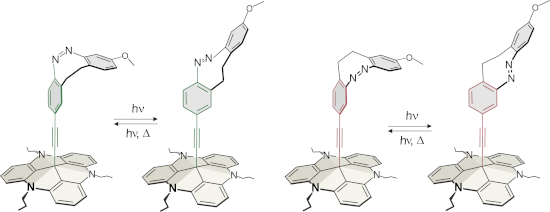
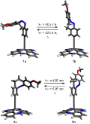
- for dibenzoyl 7 (Scheme 1). Diazocine 13 was obtained by reduction and oxidation in moderate yields (22%). The reaction of diazocine 13 with the TATA ion 9 gave the target diazocine 2 (88%, Scheme 2). The photophysical properties and the switching behavior of 1 and 2 were determined in solution (THF
- different diazocines mounted on TATA platforms (1, 2). The photochemical switching between the stable cis and metastable trans-isomers was investigated. Upon irradiation with light of 405 nm diazocine-TATAs 1 and 2 convert to their trans-configurations in moderate to good yields. The metastable trans
- support by the Deutsche Forschungsgesellschaft within the Sonderforschungsbereich 677, “Function by Switching”.



Reversible end-to-end assembly of selectively functionalized gold nanorods by light-responsive arylazopyrazole–cyclodextrin interaction
Beilstein J. Org. Chem. 2019, 15, 1407–1415, doi:10.3762/bjoc.15.140
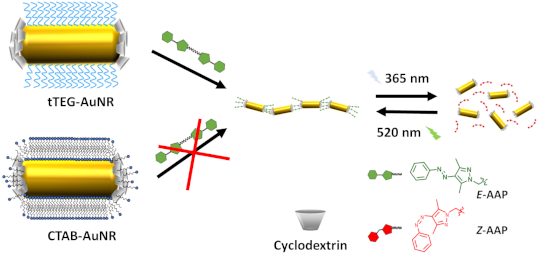
- reversibility of the switching behavior. The dispersion of AuNR assemblies after visible light irradiation can also be verified by TEM bright field images (Figure 4d) showing that the disassembly is possible without the combination of irradiation and sonication. This can be attributed to the favorable
- reversibly be shifted back and forth ending at the original wavelength. Switching of the end-to-end assembly was possible over four cycles without fatigue appearance. Previously reported limited feasibilities of azobenzenes could be resolved by the implementation of arylazopyrazoles. This report shows a


Selective detection of DABCO using a supramolecular interconversion as fluorescence reporter
Beilstein J. Org. Chem. 2019, 15, 1371–1378, doi:10.3762/bjoc.15.137
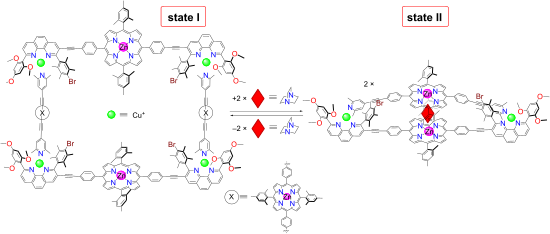
- -component rectangle [Cu4(1)2(2)2]4+ and the four-component sandwich complex [Cu2(1)(2)(4)]2+ is triggered by inclusion and release of DABCO (4). The fully reversible and clean switching between two multicomponent supramolecular architectures can be monitored by fluorescence changes at the zinc porphyrin
- [29][30][31] with high selectivity. Results and Discussion To realize the aspired switching protocol, we have tested metal-ion and guest-dependent completive and incomplete self-sorting scenarios [32] by mixing ligands 4, 8, 9, 10 and [Cu(CH3CN)4]PF6 in a ratio of 1:1:1:2:1 (Scheme 2). Ligand 8 was
- . Partial spectra (400 MHz, CD2Cl2, 298 K) showing the reversible switching between rectangle and sandwich complexes over 2.0 cycles; (a) after mixing of [Cu(CH3CN)4]PF6, 1, and 2 in 2:1:1 ratio, furnishing rectangle 5 (state I); (b) after adding 2.0 equiv of DABCO, furnishing sandwich complex 6 (state II


Precious metal-free molecular machines for solar thermal energy storage
Beilstein J. Org. Chem. 2019, 15, 1096–1106, doi:10.3762/bjoc.15.106
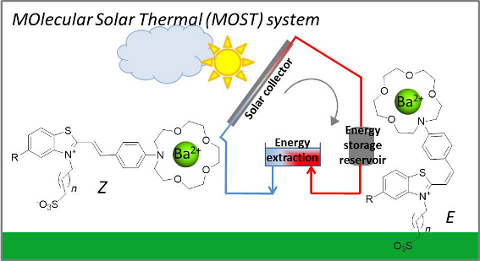
- . First of all, the azacrown nitrogen atom is linked directly to the dye and it is part of the chromophore system, responsible for the “push–pull” effect and the photophysical properties of the dye. This provides control over the “push–pull” effect in the chromophore by switching on and off states (i.e