


Search results
Search for "π–π stacking" in Full Text gives 156 result(s) in Beilstein Journal of Organic Chemistry.
En route to photoaffinity labeling of the bacterial lectin FimH
- Thisbe K. Lindhorst,
- Michaela Märten,
- Andreas Fuchs and
- Stefan D. Knight
Beilstein J. Org. Chem. 2010, 6, 810–822, doi:10.3762/bjoc.6.91
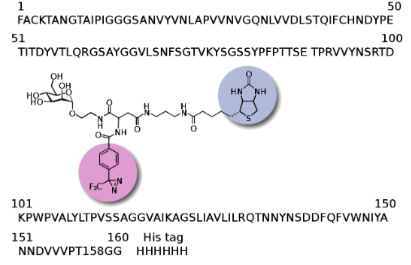
- residues Tyr48 and Tyr137 (‘tyrosine gate’) that can form favorable interactions with appropriate mannosidic aglycone moieties, such as π-π-stacking with the phenyl group of benzyl mannosides [14]. In a preceding work, we synthesized the three corresponding photoactive α-D-mannosides, 1, 2, and 3 (Figure

Graphical Abstract

Figure 1: The photoaffinity technique allows the identification of ligand binding sites of a receptor protein...

Figure 2: a) Three known photolabile α-D-mannosides that differ in the nature of the photoactive functional g...

Scheme 1: Synthesis of photoactive glycoamino acids 11 and 12. i) Fmoc-Asp-OtBu (for 7), Fmoc-Asp(OtBu)-OH (f...

Scheme 2: Photo-crosslinking experiments with the model peptide angiotensin II and the photoactive mannosides ...
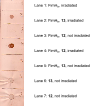
Figure 3: Affino dot–blot with FimHtr and photoactive mannosides applied to nitrocellulose disks. It was irra...

Figure 4: MS/MS spectra of angiotensin II (a) and of angiotensin II, photo-crosslinked with diazirine 2 (b), ...
Synthesis of 2a,8b-Dihydrocyclobuta[a]naphthalene-3,4-diones
- Kerstin Schmidt and
- Paul Margaretha
Beilstein J. Org. Chem. 2010, 6, No. 76, doi:10.3762/bjoc.6.76
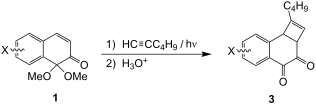
- compounds tend to associate via π–π-stacking, and b) radical additions to alkynes usually proceed with significantly lower relative rates (30–50%) than those to the corresponding alkenes [7]. Taking these findings and the observed regioselectivity of the cycloaddition into consideration, the maximum

Graphical Abstract

Scheme 1: Synthesis of 2a,8b-dihydrocyclobuta[a]naphthalene-3,4-diones.
9,10-Dioxa-1,2-diaza-anthracene derivatives from tetrafluoropyridazine
- Graham Pattison,
- Graham Sandford,
- Dmitrii S. Yufit,
- Judith A. K. Howard,
- John A. Christopher and
- David D. Miller
Beilstein J. Org. Chem. 2010, 6, No. 45, doi:10.3762/bjoc.6.45

- , parallel to the [101] direction and π···π stacking interactions (shortest interatomic distance C5···C3 is 3.336 Å), and short C–H···O contacts (C···O 3.387 Å) bind adjacent chains in the [100] and [010] directions, respectively. Again, the regiospecificity of these reaction processes occurs because of the

Graphical Abstract

Scheme 1: Synthesis of novel tricyclic heterocycles from pentafluoropyridine.

Scheme 2: Synthetic route to dioxa-diaza-anthracene derivatives.

Scheme 3: Reactions of tetrafluoropyridazine 3 with sodium phenoxide.

Scheme 4: Synthesis of dioxa-1,2-diaza-anthracene scaffold 5.

Scheme 5: Mechanism of formation of 5.

Scheme 6: Reactions of dioxa-1,2-diaza-anthracene scaffold 5 with nucleophiles.

Figure 1: Molecular structure of 4-allylamino-3-fluoro-9,10-dioxa-1,2-diaza-anthracene (9b).
Molecular recognition of organic ammonium ions in solution using synthetic receptors
- Andreas Späth and
- Burkhard König
Beilstein J. Org. Chem. 2010, 6, No. 32, doi:10.3762/bjoc.6.32
- enantiomeric discrimination (Table 4): With preference for the R-enantiomers, the benzo- and naphtho-18-crown-6 33a and 33b generally revealed a larger flux of the aromatic amino acids or their salts than hosts 32a and 32b [164]. This was attributed to a strong π–π stacking interaction. The highest flux values

Graphical Abstract

Figure 1: Biologically important amines and quaternary ammonium salts: histamine (1), dopamine (2) and acetyl...

Figure 2: Crown ether 18-crown-6.

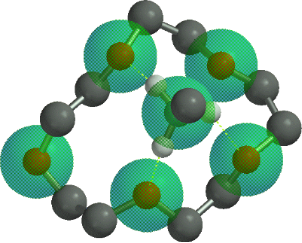
Figure 3: Conformations of 18-crown-6 (4) in solvents of different polarity.

Figure 4: Binding topologies of the ammonium ion depending on the crown ring size.
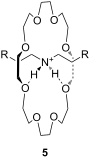
Figure 5: A “pseudorotaxane” structure consisting of 24-crown-8 and a secondary ammonium ion (5); R = Ph.

Figure 6: Typical examples of azacrown ethers, cryptands and related aza macrocycles.

Figure 7: Binding of ammonium to azacrown ethers and cryptands [111-113].

Figure 8: A 19-crown-6-ether with decalino blocking groups (11) and a thiazole-dibenzo-18-crown-6-ether (12).

Figure 9: 1,3-Bis(6-oxopyridazin-1-yl)propane derivatives 13 and 14 by Campayo et al.

Figure 10: Fluorescent azacrown-PET-sensors based on coumarin.

Figure 11: Two different pyridino-cryptands (17 and 18) compared to a pyridino-crown (19); chiral ammonium ion...

Figure 12: Pyridino-18-crown-6 ligand (21), a similar acridino-18-crown-6 ligand (22) and a structurally relat...

Figure 13: Ciral pyridine-azacrown ether receptors 24.

Figure 14: Chiral 15-crown-5 receptors 26 and an analogue 18-crown-6 ligand 27 derived from amino alcohols.

Figure 15: C2-symmetric chiral 18-crown-6 amino alcohol derivatives 28 and related macrocycles.

Figure 16: Macrocycles with diamide-diester groups (30).

Figure 17: C2-symmetric chiral aza-18-crown-6 ethers (31) with phenethylamine residues.

Figure 18: Chiral C-pivot p-methoxy-phenoxy-lariat ethers.

Figure 19: Chiral lariat crown ether 34.

Figure 20: Sucrose-based chiral crown ether receptors 36.
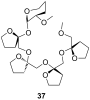
Figure 21: Permethylated fructooligosaccharide 37 showing induced-fit chiral recognition.

Figure 22: Biphenanthryl-18-crown-6 derivative 38.

Figure 23: Chiral lariat crown ethers derived from binol by Fuji et al.

Figure 24: Chiral phenolic crown ether 41 with “aryl chiral barriers” and guest amines.
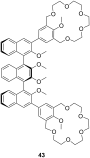
Figure 25: Chiral bis-crown receptor 43 with a meso-ternaphthalene backbone.

Figure 26: Chromogenic pH-dependent bis-crown chemosensor 44 for diamines.

Figure 27: Triamine guests for binding to receptor 44.

Figure 28: Chiral bis-crown phenolphthalein chemosensors 46.

Figure 29: Crown ether amino acid 47.

Figure 30: Luminescent receptor 48 for bis-alkylammonium guests.

Figure 31: Luminescent CEAA (49a), a bis-CEAA receptor for amino acids (49b) and the structure of lysine bindi...

Figure 32: Luminescent CEAA tripeptide for binding small peptides.

Figure 33: Bis crown ether 51a self assembles co-operatively with C60-ammonium ion 51b.

Figure 34: Triptycene-based macrotricyclic dibenzo-[24]-crown-8 ether host 52 and guests.

Figure 35: Copper imido diacetic acid azacrown receptor 53a and the suggested His-Lys binding motif; a copper ...

Figure 36: Urea (54) and thiourea (55) benzo crown receptor for transport and extraction of amino acids.

Figure 37: Crown pyryliums ion receptors 56 for amino acids.

Figure 38: Ditopic sulfonamide bridged crown ether receptor 57.

Figure 39: Luminescent peptide receptor 58.

Figure 40: Luminescent receptor 59 for the detection of D-glucosamine hydrochloride in water/ethanol and lumin...

Figure 41: Guanidinium azacrown receptor 61 for simple amino acids and ditopic receptor 62 with crown ether an...

Figure 42: Chiral bicyclic guanidinium azacrown receptor 63 and similar receptor 64 for the enantioselective t...

Figure 43: Receptors for zwitterionic species based on luminescent CEAAs.

Figure 44: 1,10-Azacrown ethers with sugar podand arms and the anticancer agent busulfan.

Figure 45: Benzo-18-crown-6 modified β-cyclodextrin 69 and β-cyclodextrin functionalized with diaza-18-crown-6...

Figure 46: Receptors for colorimetric detection of primary and secondary ammonium ions.

Figure 47: Porphyrine-crown-receptors 72.

Figure 48: Porphyrin-crown ether conjugate 73 and fullerene-ammonium ion guest 74.

Figure 49: Calix[4]arene (75a), homooxocalix[4]arene (75b) and resorcin[4]arene (75c) compared (R = H, alkyl c...

Figure 50: Calix[4]arene and ammonium ion guest (R = H, alkyl, OAcyl etc.), possible binding sites; A: co-ordi...

Figure 51: Typical guests for studies with calixarenes and related molecules.
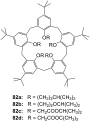
Figure 52: Lower rim modified p-tert-butylcalix[5]arenes 82.

Figure 53: The first example of a water soluble calixarene.

Figure 54: Sulfonated water soluble calix[n]arenes that bind ammonium ions.
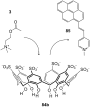
Figure 55: Displacement assay for acetylcholine (3) with a sulfonato-calix[6]arene (84b).

Figure 56: Amino acid inclusion in p-sulfonatocalix[4]arene (84a).

Figure 57: Calixarene receptor family 86 with upper and lower rim functionalization.

Figure 58: Calix[6]arenes 87 with one carboxylic acid functionality.
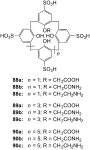
Figure 59: Sulfonated calix[n]arenes with mono-substitution at the lower rim systematically studied on their r...

Figure 60: Cyclotetrachromotropylene host (91) and its binding to lysine (81c).

Figure 61: Calixarenes 92 and 93 with phosphonic acids groups.

Figure 62: Calix[4]arene tetraphosphonic acid (94a) and a double bridged analogue (94b).
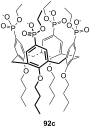
Figure 63: Calix[4]arene tetraphosphonic acid ester (92c) for surface recognition experiments.

Figure 64: Calixarene receptors 95 with α-aminophosphonate groups.

Figure 65: A bridged homocalix[3]arene 95 and a distally bridged homocalix[4]crown 96.

Figure 66: Homocalix[3]arene ammonium ion receptor 97a and the Reichardt’s dye (97b) for colorimetric assays.

Figure 67: Chromogenic diazo-bridged calix[4]arene 98.

Figure 68: Calixarene receptor 99 by Huang et al.
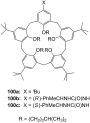
Figure 69: Calixarenes 100 reported by Parisi et al.

Figure 70: Guest molecules for inclusion in calixarenes 100: DAP × 2 HCl (101a), APA (101b) and Lys-OMe × 2 HC...

Figure 71: Different N-linked peptido-calixarenes open and with glycol chain bridges.

Figure 72: (S)-1,1′-Bi-2-naphthol calixarene derivative 104 published by Kubo et al.

Figure 73: A chiral ammonium-ion receptor 105 based on the calix[4]arene skeleton.

Figure 74: R-/S-phenylalaninol functionalized calix[6]arenes 106a and 106b.

Figure 75: Capped homocalix[3]arene ammonium ion receptor 107.

Figure 76: Two C3 symmetric capped calix[6]arenes 108 and 109.

Figure 77: Phosphorous-containing rigidified calix[6]arene 110.

Figure 78: Calix[6]azacryptand 111.

Figure 79: Further substituted calix[6]azacryptands 112.

Figure 80: Resorcin[4]arene (75c) and the cavitands (113).

Figure 81: Tetrasulfonatomethylcalix[4]resorcinarene (114).
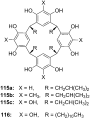
Figure 82: Resorcin[4]arenes (115a/b) and pyrogallo[4]arenes (115c, 116).
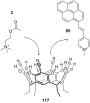
Figure 83: Displacement assay for acetylcholine (3) with tetracyanoresorcin[4]arene (117).

Figure 84: Tetramethoxy resorcinarene mono-crown-5 (118).

Figure 85: Components of a resorcinarene based displacement assay for ammonium ions.

Figure 86: Chiral basket resorcin[4]arenas 121.

Figure 87: Resorcinarenes with deeper cavitand structure (122).

Figure 88: Resorcinarene with partially open deeper cavitand structure (123).
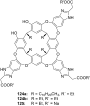
Figure 89: Water-stabilized deep cavitands with partially structure (124, 125).
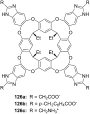
Figure 90: Charged cavitands 126 for tetralkylammonium ions.

Figure 91: Ditopic calix[4]arene receptor 127 capped with glycol chains.

Figure 92: A calix[5]arene dimer for diammonium salt recognition.

Figure 93: Calixarene parts 92c and 129 for the formation molecular capsules.
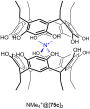
Figure 94: Encapsulation of a quaternary ammonium cation by two resorcin[4]arene molecules (NMe4+@[75c]2 × Cl−...

Figure 95: Encapsulation of a quaternary ammonium cation by six resorcin[4]arene molecules (NMe3D+@[130]6 × Cl−...

Figure 96: Structure and schematic of cucurbit[6]uril (CB[6], 131a).
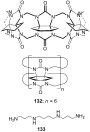
Figure 97: Cyclohexanocucurbit[6]uril (CB′[6], 132) and the guest molecule spermine (133).

Figure 98: α,α,δ,δ-Tetramethylcucurbit[6]uril (134).

Figure 99: Structure of the cucurbituril-phthalhydrazide analogue 135.

Figure 100: Organic cavities for the displacement assay for amine differentiation.

Figure 101: Displacement assay methodology for diammonium- and related guests involving cucurbiturils and some ...

Figure 102: Nor-seco-Cucurbituril (±)-bis-ns-CB[6] (140) and guest molecules.

Figure 103: The cucurbit[6]uril based complexes 141 for chiral discrimination.
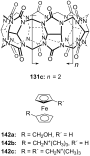
Figure 104: Cucurbit[7]uril (131c) and its ferrocene guests (142) opposed.

Figure 105: Cucurbit[7]uril (131c) guest inclusion and representative guests.

Figure 106: Cucurbit[7]uril (131c) binding to succinylcholine (145) and different bis-ammonium and bis-phosphon...

Figure 107: Paraquat-cucurbit[8]uril complex 149.
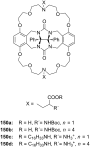
Figure 108: Gluconuril-based ammonium receptors 150.
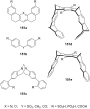
Figure 109: Examples of clefts (151a), tweezers (151b, 151c, 151d) and clips (151e).

Figure 110: Kemp’s triacid (152a), on example of Rebek’s receptors (152b) and guests.

Figure 111: Amino acid receptor (154) by Rebek et al.

Figure 112: Hexagonal lattice designed hosts by Bell et al.

Figure 113: Bell’s amidinium receptor (156) and the amidinium ion (157).
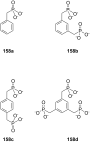
Figure 114: Aromatic phosphonic acids.

Figure 115: Xylene phosphonates 159 and 160a/b for recognition of amines and amino alcohols.
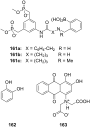
Figure 116: Bisphosphonate recognition motif 161 for a colorimetric assay with alizarin complexone (163) for ca...

Figure 117: Bisphosphonate/phosphate clip 164 and bisphosphonate cleft 165.

Figure 118: N-Methylpyrazine 166a, N-methylnicotinamide iodide (166b) and NAD+ (166c).

Figure 119: Bisphosphate cavitands.
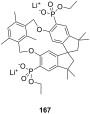
Figure 120: Bisphosphonate 167 of Schrader and Finocchiaro.
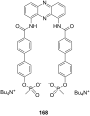
Figure 121: Tweezer 168 for noradrenaline (80b).

Figure 122: Different tripods and heparin (170).
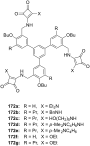
Figure 123: Squaramide based receptors 172.
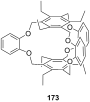
Figure 124: Cage like NH4+ receptor 173 of Kim et al.

Figure 125: Ammonium receptors 174 of Chin et al.

Figure 126: 2-Oxazolin-based ammonium receptors 175a–d and 176 by Ahn et al.

Figure 127: Racemic guest molecules 177.

Figure 128: Tripods based on a imidazole containing macrocycle (178) and the guest molecules employed in the st...

Figure 129: Ammonium ion receptor 180.

Figure 130: Tetraoxa[3.3.3.3]paracyclophanes 181 and a cyclophanic tetraester (182).

Figure 131: Peptidic bridged paraquat-cyclophane.
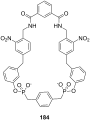
Figure 132: Shape-selective noradrenaline host.

Figure 133: Receptor 185 for binding of noradrenaline on surface layers from Schrader et al.

Figure 134: Tetraphosphonate receptor for binding of noradrenaline.

Figure 135: Tetraphosphonate 187 of Schrader and Finocchiaro.

Figure 136: Zinc-Porphyrin ammonium-ion receptors 188 and 189 of Mizutani et al.
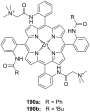
Figure 137: Zinc porphyrin receptor 190.

Figure 138: Zinc porphyrin receptors 191 capable of amino acid binding.

Figure 139: Zinc-porphyrins with amino acid side chains for stereoinduction.

Figure 140: Bis-zinc-bis-porphyrin based on Tröger’s base 193.

Figure 141: BINAP-zinc-prophyrin derivative 194 and it’s guests.

Figure 142: Bisaryl-linked-zinc-porphyrin receptors.
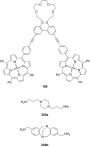
Figure 143: Bis-zinc-porphyrin 199 for diamine recognition and guests.

Figure 144: Bis-zinc-porphyrin crown ether 201.

Figure 145: Bis-zinc-porphyrin 202 for stereodiscrimination (L = large substituent; S = small substituent).

Figure 146: Bis-zinc-porphyrin[3]rotaxane and its copper complex and guests.

Figure 147: Dien-bipyridyl ligand 206 for co-ordination of two metal atoms.

Figure 148: The ligand and corresponding tetradentate co-complex 207 serving as enantioselective receptor for a...

Figure 149: Bis(oxazoline)–copper(II) complex 208 for the recognition of amino acids in aqueous solution.

Figure 150: Zinc-salen-complexes 209 for the recognition tertiary amines.

Figure 151: Bis(oxazoline)–copper(II) 211 for the recognition of amino acids in aqueous solution.

Figure 152: Zn(II)-complex of a C2 terpyridine crown ether.

Figure 153: Displacement assay and receptor for aspartate over glutamate.

Figure 154: Chiral complex 214 for a colorimetric displacement assay for amino acids.

Figure 155: Metal complex receptor 215 with tripeptide side arms.

Figure 156: A sandwich complex 216 and its displaceable dye 217.

Figure 157: Lanthanide complexes 218–220 for amino acid recognition.
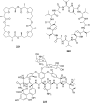
Figure 158: Nonactin (221), valinomycin (222) and vancomycin (223).

Figure 159: Monesin (224a) and a chiral analogue for enantiodiscrimination of ammonium guests (224b).

Figure 160: Chiral podands (226) compared to pentaglyme-dimethylether (225) and 18-crown-6 (4).

Figure 161: Lasalocid A (228).

Figure 162: Lasalocid derivatives (230) of Sessler et al.

Figure 163: The Coporphyrin I tetraanion (231).

Figure 164: Linear and cyclic peptides for ammonium ion recognition.

Figure 165: Cyclic and bicyclic depsipeptides for ammonium ion recognition.
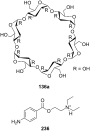
Figure 166: α-Cyclodextrin (136a) and novocaine (236).
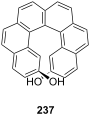
Figure 167: Helical diol receptor 237 by Reetz and Sostmann.

Figure 168: Ammonium binding spherand by Cram et al. (238a) and the cyclic[6]metaphenylacetylene 238b in compar...

Figure 169: Receptor for peptide backbone and ammonium binding (239).

Figure 170: Anion sensor principle with 3-hydroxy-2-naphthanilide of Jiang et al.

Figure 171: 7-bromo-3-hydroxy-N-(2-hydroxyphenyl)naphthalene 2-carboxamide (241) and its amine binding.

Figure 172: Naturally occurring catechins with affinity to quaternary ammonium ions.

Figure 173: Spiropyran (244) and merocyanine form (244a) of the amino acid receptors of Fuji et al.

Figure 174: Coumarin aldehyde (245) and its iminium species with amino acid bound (245a) by Glass et al.
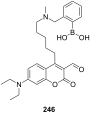
Figure 175: Coumarin aldehyde appended with boronic acid.

Figure 176: Quinolone aldehyde dimers by Glass et al.

Figure 177: Chromogenic ammonium ion receptors with trifluoroacetophenone recognition motifs.

Figure 178: Chromogenic ammonium ion receptor with trifluoroacetophenone recognition motif bound on different m...
Templated versus non-templated synthesis of benzo-21-crown-7 and the influence of substituents on its complexing properties
- Wei Jiang and
- Christoph A. Schalley
Beilstein J. Org. Chem. 2010, 6, No. 14, doi:10.3762/bjoc.6.14
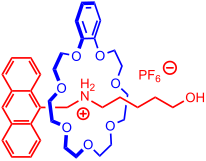
- of guest from secondary dibenzylammonium hexafluorophosphate (360 M−1, 1.0 mM, in acetone-d6) [31] to the anthracenyl methyl-substituted analogue 5-H•PF6 (496 M−1, 1.0 mM, in acetone-d6) [26] increases the binding affinity with DB24C8, which is mainly attributed to stronger π-π stacking interactions
- reasons for this remarkable difference between C7 and the larger analogue dibenzo-24-crown-8. (i) According to related crystal structures [23][24][25], no π-π stacking interactions operate between hosts C7 or 4 and guests 6-H•PF6 or 7-H•PF6. (ii) Even more important, however, are the polarized methylene

Graphical Abstract

Scheme 1: Two synthetic procedures for the preparation of benzo-21-crown-7 (C7) and its formyl analogue 4: To...

Scheme 2: Molecular structures of guests 5-H•PF6, 6-H•PF6, and 7-H•PF6, and their complexes with 2-(n), C7 an...

Figure 1: 1H NMR spectra (500 MHz, 298 K, CDCl3:CD3CN = 2:1, 10.0 mM) of 5-H•PF6 (a), mixture of 5-H•PF6 and ...

Figure 2: ESI-FTICR mass spectrum of a mixture of 5-H•PF6 and 2-(n) in dichloromethane.

Figure 3: 1H NMR spectra (500 MHz, 298 K, CDCl3, 10.0 mM) of (a) C7, (b) C7 in the presence of 1 eq. KPF6, (c...

Figure 4: 1H NMR spectra (500 MHz, 298 K, CDCl3:CD3CN = 2:1, 10.0 mM) of (a) 6-HoPF6, (b) mixture of 6-HoPF6 ...

Figure 5: 1H NMR spectra (500 MHz, 298 K, CDCl3:CD3CN = 2:1, 10.0 mM) of (a) 6-H•PF6, equimolar mixtures of (b...
Crystal engineering of analogous and homologous organic compounds: hydrogen bonding patterns in trimethoprim hydrogen phthalate and trimethoprim hydrogen adipate
- Packianathan Thomas Muthiah,
- Savarimuthu Francis,
- Urszula Rychlewska and
- Beata Warżajtis
Beilstein J. Org. Chem. 2006, 2, No. 8, doi:10.1186/1860-5397-2-8
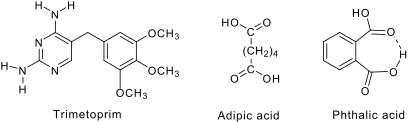
- leading to base-pairing, quadruple hydrogen bonded arrays, DDAA and DADA (D- donor, A = acceptor), etc. C-H...π, π-π stacking, etc are further stabilizing the crystal structures. The quadruple hydrogen bonded arrays have been observed in the crystal structures of TMP m-chlorobenzoate, [11] TMP-sorbate

Graphical Abstract
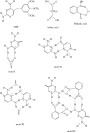
Figure 1: The schematic diagram for the various hydrogen-bonded motifs observed in compound (1).

Figure 2: The schematic diagram for the various hydrogen-bonded motifs observed in compound (2).

Figure 3: The ORTEP 3 view of the asymmetric unit of the compound 1.

Figure 4: The ORTEP 3 view of the asymmetric unit of the compound 2.

Figure 5: The hydrogen-bonded supramolecular ladder in the compound 1.

Figure 6: The hydrogen-bonded DDAA array in the compound 2.

Figure 7: The supramolecular chain made up of hydrogen adipate in the compound 2.

Figure 8: Scatterplot illustrating the distribution of the two torsion angles (C4-C5-C7-C8 (TOR1) and C5-C7-C...



