


Search results
Search for "Organocatalysis" in Full Text gives 205 result(s) in Beilstein Journal of Organic Chemistry. Showing first 200.
Modulating NHC catalysis with fluorine
Beilstein J. Org. Chem. 2013, 9, 2812–2820, doi:10.3762/bjoc.9.316
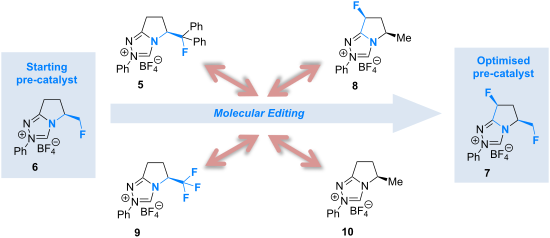
- of functional small molecules [13][14][15][16][17][18][19][20][21][22], often for application in organocatalysis [1]. Common to these studies has been the strategic incorporation of a fluoro substituent vicinal to a catalytically active amino group. Subsequent generation of a (partial) positive




Stereoselectively fluorinated N-heterocycles: a brief survey
Beilstein J. Org. Chem. 2013, 9, 2696–2708, doi:10.3762/bjoc.9.306
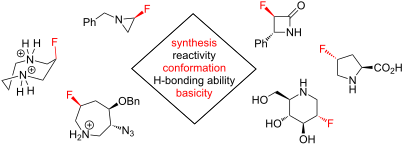
- changes can be rationally exploited for the benefit of diverse fields such as medicinal chemistry and organocatalysis. This brief review will examine some of the effects that fluorine substitution can have in N-heterocycles, including changes to the molecules’ stability, their conformational behaviour
- clear that medicinal chemistry is not the only field that stands to benefit from a deeper understanding of these fascinating molecules: for example, attractive prospects are also clear in the field of organocatalysis [13]. 2. Fluorination can influence N-heterocycles’ stability and reactivity If a
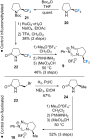
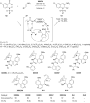
- the context of organocatalysis. Fluorination of proline itself, as well as related N-heterocycles, has been shown to increase enantioselectivity in certain organocatalytic processes [13]. For example, Alexakis and co-workers found that the non-fluorinated catalyst 13 (Scheme 2) catalysed an alkylation


A combined continuous microflow photochemistry and asymmetric organocatalysis approach for the enantioselective synthesis of tetrahydroquinolines
Beilstein J. Org. Chem. 2013, 9, 2457–2462, doi:10.3762/bjoc.9.284
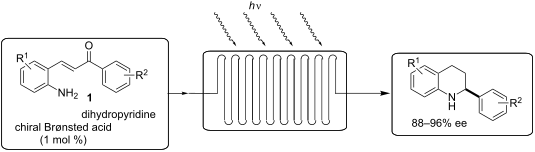
- dihydropyridine as hydrogen source providing the desired products in good yields and with excellent enantioselectivities. Keywords: asymmetric transfer hydrogenation; binolphosphate; continuous-flow reactors; flow chemistry; microreactors; organocatalysis; photochemistry; Introduction Tetrahydroquinolines [1][2


An investigation of the observed, but counter-intuitive, stereoselectivity noted during chiral amine synthesis via N-chiral-ketimines
Beilstein J. Org. Chem. 2013, 9, 2103–2112, doi:10.3762/bjoc.9.247

- amines). Amines are known to be potent pharmacophores, and medicinal chemists have further leveraged their beneficial properties by using chiral versions to enhance protein binding affinities. Furthermore, chiral amines continue to find expanded roles: in organocatalysis [1][2][3][4], as ligands for


Organocatalyzed enantioselective desymmetrization of aziridines and epoxides
Beilstein J. Org. Chem. 2013, 9, 1677–1695, doi:10.3762/bjoc.9.192
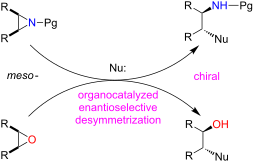
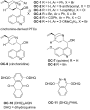
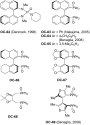
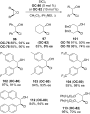
- Ping-An Wang Department of Medicinal Chemistry, School of Pharmacy, Fourth Military Medical University, Changle Xilu 17, Xi-An, 710032, P. R. China 10.3762/bjoc.9.192 Abstract Enantioselective desymmetrization of meso-aziridines and meso-epoxides with various nucleophiles by organocatalysis has
- emerged as a cutting-edge approach in recent years. This review summarizes the origin and recent developments of enantioselective desymmetrization of meso-aziridines and meso-epoxides in the presence of organocatalysts. Keywords: aziridine; desymmetrization; enantioselectivity; epoxide; organocatalysis








An organocatalytic route to 2-heteroarylmethylene decorated N-arylpyrroles
Beilstein J. Org. Chem. 2013, 9, 1480–1486, doi:10.3762/bjoc.9.168
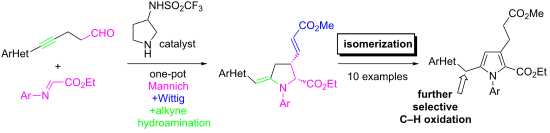
- regioselective oxidation of these substrates is demonstrated, extending the molecular diversity and versatility of these scaffolds. Keywords: C–H oxidation; isomerization; N-arylpyrrole; organocatalysis; Introduction Due to their presence in some natural products [1] and pharmaceuticals [2][3][4], the


Thiourea-catalyzed Diels–Alder reaction of a naphthoquinone monoketal dienophile
Beilstein J. Org. Chem. 2013, 9, 1414–1418, doi:10.3762/bjoc.9.158

- tricycle of beticolin 0 (1) and is also a valuable model substrate for the total synthesis of related natural products. Keywords: beticolin 0; Diels–Alder reaction; natural product; organocatalysis; thiourea catalysis; total synthesis; Introduction In the past few years, many different types of
- pioneering research in organocatalysis. C.S.K. acknowledges the Fonds der Chemischen Industrie for a Kekulé scholarship.


Transition-metal and organocatalysis in natural product synthesis
Beilstein J. Org. Chem. 2013, 9, 1192–1193, doi:10.3762/bjoc.9.134
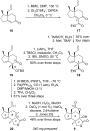
Synthesis of the tetracyclic core of Illicium sesquiterpenes using an organocatalyzed asymmetric Robinson annulation
Beilstein J. Org. Chem. 2013, 9, 1135–1140, doi:10.3762/bjoc.9.126
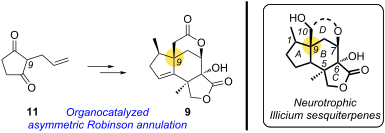
- . Keywords: natural products; neurodegenerative diseases; neurotrophic small molecule; organocatalysis; total synthesis; Introduction Neurotrophins are a family of endogenous proteins that are vital for neuron function, survival, and regeneration [1][2][3]. As such, they have prompted intense studies toward
- (Figure 2). Results and Discussion During the past 20 years, organocatalysis has emerged as an important field in asymmetric stereoselective synthesis due to its advantages, which include high enantioselectivity, environmental friendliness and ease of handling [27][28][29][30][31][32][33][34][35][36][37


1-n-Butyl-3-methylimidazolium-2-carboxylate: a versatile precatalyst for the ring-opening polymerization of ε-caprolactone and rac-lactide under solvent-free conditions
Beilstein J. Org. Chem. 2013, 9, 647–654, doi:10.3762/bjoc.9.73

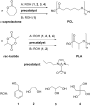
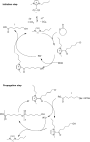
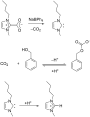
- under vacuo (method A) or by addition of NaBPh4 (method B). Possible catalytic and deactivation mechanisms are proposed. Keywords: aliphatic polyesters; green polymerization reaction; imidazolium-2-carboxylates; N-heterocarbene precursor; organocatalysis; Introduction Poly(ε-caprolactone) (PCL) and


Enantioselective reduction of ketoimines promoted by easily available (S)-proline derivatives
Beilstein J. Org. Chem. 2013, 9, 633–640, doi:10.3762/bjoc.9.71

- studies were also performed in order to elucidate the origin of the stereoselection. Keywords: chiral prolines; imine reduction; Lewis bases; organocatalysis; trichlorosilane; Introduction The reaction with stoichiometric amounts of trichlorosilane in the presence of a chiral catalyst is a well
- stereoselettiva di molecole funzionali" is gratefully acknowledged. M. B. thanks COST action CM9505 “ORCA” Organocatalysis. We thank Prof. Franco Cozzi for helpful discussions.


NHC-catalysed highly selective aerobic oxidation of nonactivated aldehydes
Beilstein J. Org. Chem. 2013, 9, 602–607, doi:10.3762/bjoc.9.65

- -free oxidation; N-heterocyclic carbene; organocatalysis; Introduction The development of efficient and selective aerobic oxidation methods for organic substrates is of increasing interest and an attractive goal in green chemistry [1][2][3]. In a recent communication we reported on selective oxidation


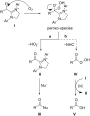
Metal-mediated aminocatalysis provides mild conditions: Enantioselective Michael addition mediated by primary amino catalysts and alkali-metal ions
Beilstein J. Org. Chem. 2013, 9, 155–165, doi:10.3762/bjoc.9.18
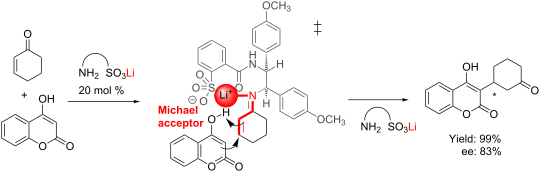
- catalysis provides an effective alternative to conventional primary amino catalysis were strong acid additives are essential components. Keywords: alkali metals; aminocatalysis; DFT-calculations; Lewis acids; Michael addition; Introduction Organocatalysis based on primary or secondary amines enables a
- famous examples are Mac Millan’s secondary-amine-based catalysts [6] or 9-amino-9-deoxy-epihydroquinine salts used by Jørgensen et al. [7][8]. Another growing field of catalysis is metal-promoted organocatalysis, which is closely related to tandem reactions of metal- and organocatalysis [9][10][11][12


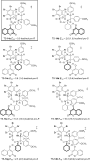

Mechanochemistry assisted asymmetric organocatalysis: A sustainable approach
Beilstein J. Org. Chem. 2012, 8, 2132–2141, doi:10.3762/bjoc.8.240
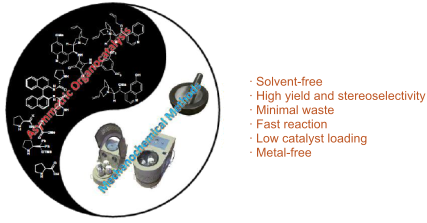
- methods for the development of environmentally benign chemical transformations. Recently, the use of these mechanochemical techniques in asymmetric organocatalysis has increased. This review highlights the progress in asymmetric organocatalytic reactions assisted by mechanochemical techniques. Keywords
- : ball-milling; enantioselective synthesis; mechanochemistry; organocatalysis; solvent-free; Introduction Green chemistry involves innovation in chemical research and engineering that encourages the design of processes to minimize the use and production of hazardous materials and also reduce the use of
- amplified in recent times. In this regard, catalytic asymmetric synthesis involving the use of chiral organocatalysts has emerged as a powerful tool from the infancy to the maturity of asymmetric organocatalysis [13][14][15][16][17][18][19][20][21][22][23][24][25][26]. The use of organocatalysts for


Design and synthesis of a photoswitchable guanidine catalyst
Beilstein J. Org. Chem. 2012, 8, 1825–1830, doi:10.3762/bjoc.8.209
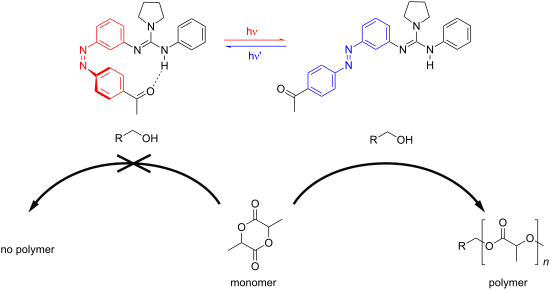
- rac-lactide in order to explain the findings. Keywords: azobenzenes; guanidines; molecular switches; organocatalysis; photochromism; ring opening polymerization; Introduction The macroscopic properties of a given polymer, e.g., the glass-transition temperature, morphology, density and tensile


Asymmetric Brønsted acid-catalyzed aza-Diels–Alder reaction of cyclic C-acylimines with cyclopentadiene
Beilstein J. Org. Chem. 2012, 8, 1819–1824, doi:10.3762/bjoc.8.208
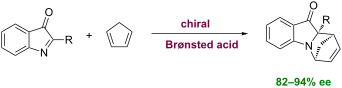
- optically active aza-tetracycles in good yields with high diastereo- and enantioselectivities under mild reaction conditions. Keywords: BINOL phosphate; [4 + 2] cycloaddition; Diels–Alder reaction; organocatalysis; Introduction The enantioselective aza-Diels–Alder reaction is an important method for the
- compounds. Acknowledgements Financial support by the DFG priority programme Organocatalysis is gratefully acknowledged.


Automated three-component synthesis of a library of γ-lactams
Beilstein J. Org. Chem. 2012, 8, 1804–1813, doi:10.3762/bjoc.8.206
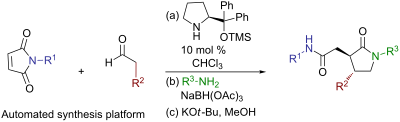
- ; maleimide; organocatalysis; parallel synthesis; reductive amination; Introduction In recent years, the rapid access to structurally diverse and complex small molecules has grown in importance within the context of high-throughput screening of biologically relevant targets. The need for such compounds, both


Imidazolinium and amidinium salts as Lewis acid organocatalysts
Beilstein J. Org. Chem. 2012, 8, 1798–1803, doi:10.3762/bjoc.8.205
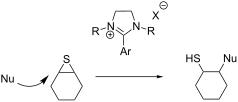
- desulfurization of the products containing a thiol or thiocarbonyl group. Keywords: Diels–Alder; ionic liquids; organocatalysis; soft Lewis acids; thiiranes; thioesters; Introduction Salts with melting points below 100 °C are known as ionic liquids and are often used as novel solvents for reactions and
- the C(2) position as catalysts for the aza-Diels–Alder reaction [11][12]. These catalysts do not activate the substrate through hydrogen bonding, but instead, like other carbon-cation based catalysts, through their positive center [8][9][10][13][14][15], and belong also to the field of organocatalysis





Asymmetric desymmetrization of meso-diols by C2-symmetric chiral 4-pyrrolidinopyridines
Beilstein J. Org. Chem. 2012, 8, 1778–1787, doi:10.3762/bjoc.8.203
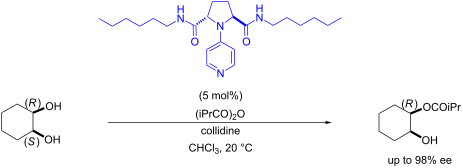
- pyrrolidinopyridine framework as a catalytic site. Some of these organocatalysts effectively promoted asymmetric desymmetrization of meso-diols via enantioselective acylation. Keywords: acylation; desymmetrization; hydrogen bond; meso-diol; nucleophilic catalyst; organocatalysis; Introduction Since the pioneering


Synthesis and ring openings of cinnamate-derived N-unfunctionalised aziridines
Beilstein J. Org. Chem. 2012, 8, 1747–1752, doi:10.3762/bjoc.8.199
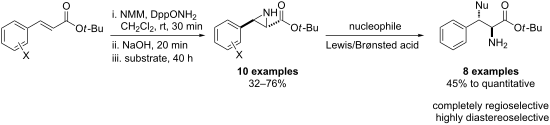
- -diphenylphosphinyl hydroxylamine. The resulting N-unfunctionalised aziridines are shown to be versatile synthetic building blocks that undergo highly selective ring-opening reactions with a wide range of nucleophiles. Keywords: amino acids; aziridination; organocatalysis; ring opening; stereoselectivity


Organocatalytic cascade aza-Michael/hemiacetal reaction between disubstituted hydrazines and α,β-unsaturated aldehydes: Highly diastereo- and enantioselective synthesis of pyrazolidine derivatives
Beilstein J. Org. Chem. 2012, 8, 1710–1720, doi:10.3762/bjoc.8.195
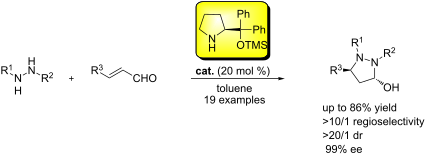
- good results (up to 86% yield, >10/1 regioselectivity, >20:1 dr, 99% ee) in the presence of (S)-diphenylprolinol trimethylsilyl ether catalyst. Keywords: aza-Michael; domino; hydrazine; organocatalysis; pyrazolidine; Introduction Pyrazolidines are privileged and valuable heterocyclic compounds, which
- synthesis of pyrazolidine derivatives by Wolfe et al. [33]. In the past decade, the research area of organocatalysis has grown rapidly and become a third brand of catalysis besides the well-established biocatalysis and metal catalysis [34][35][36][37][38][39][40][41][42][43][44]. Particularly
- stereoselective cascade reaction for the synthesis of the pyrazolidine compounds through organocatalysis. In this paper, we present a convenient access to racemic and enantioenriched 5-hydroxypyrazolidines through a domino aza-Michael/hemiacetal organocatalytic sequence of disubstituted hydrazines to α,β


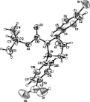
Enantioselective total synthesis of (R)-(−)-complanine
Beilstein J. Org. Chem. 2012, 8, 1695–1699, doi:10.3762/bjoc.8.192

- ; organocatalysis; Introduction The marine fireworm Eurythoe complanata resides in the shallow water and sands of temperate and sub-tropical regions. Its small setae cause skin inflammation upon contact, the causative agent having been identified as complanine. This novel amphipathic substance was first isolated


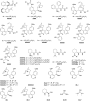
Organocatalytic tandem Michael addition reactions: A powerful access to the enantioselective synthesis of functionalized chromenes, thiochromenes and 1,2-dihydroquinolines
Beilstein J. Org. Chem. 2012, 8, 1668–1694, doi:10.3762/bjoc.8.191

- organocatalysis has become a field of central importance within asymmetric chemical synthesis and appears to be efficient approach toward the construction of complex chiral molecules from simple achiral materials in one-pot transformations under mild conditions with high stereocontrol. This review addresses the




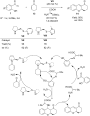


Cyclization of ortho-hydroxycinnamates to coumarins under mild conditions: A nucleophilic organocatalysis approach
Beilstein J. Org. Chem. 2012, 8, 1630–1636, doi:10.3762/bjoc.8.186
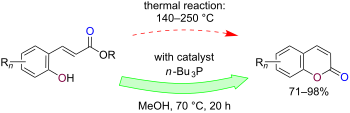
- -hydroxycinnamates, followed by the phosphane catalyzed cyclization. Keywords: catalysis; coumarins; heterocycles; mechanisms; organocatalysis; phosphanes; Introduction Coumarins are important structural motifs in natural products and bioactive compounds, in which they exhibit broad biological activity, e.g., as


N-Heterocyclic carbene-catalyzed direct cross-aza-benzoin reaction: Efficient synthesis of α-amino-β-keto esters
Beilstein J. Org. Chem. 2012, 8, 1499–1504, doi:10.3762/bjoc.8.169
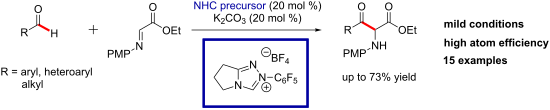
- -amino-β-keto esters; cross-aza-benzoin; α-imino ester; N-heterocyclic carbenes; organocatalysis; umpolung reactions; Introduction α-Amino-β-keto ester derivatives are one of the fundamental structural subunits in natural products such as miuraenamides [1], and important building blocks for the
- Supporting Information File 334: Experimental details and characterization of the synthesized compounds. Acknowledgements This work was supported in part by a Grant-in-Aid for Scientific Research on Innovative Areas “Advanced Molecular Transformations by Organocatalysis” and “Targeted Proteins Research





