Search results
Search for "building blocks" in Full Text gives 942 result(s) in Beilstein Journal of Organic Chemistry. Showing first 200.
Quinoxaline derivatives as attractive electron-transporting materials
Beilstein J. Org. Chem. 2023, 19, 1694–1712, doi:10.3762/bjoc.19.124
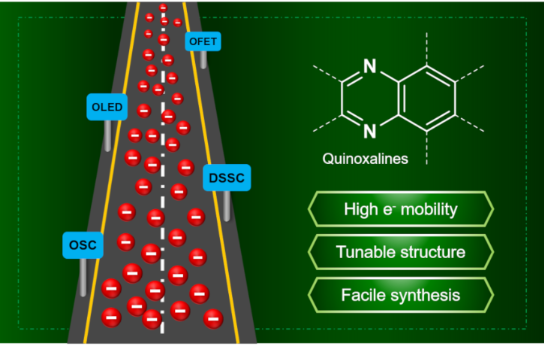
- high electron mobility and efficient charge transfer. In particular, Qx derivatives find use as non-fullerene acceptors (NFAs) in OSCs and as essential building blocks in sensitizers for DSSCs. The significance of Qx extends beyond to thermally activated delayed fluorescence (TADF) emitters and
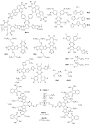
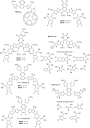
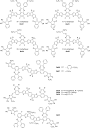
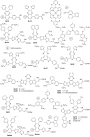
- absorption, good dye regeneration, and promising NLO properties underscored the multifunctional nature of Qx derivatives as auxiliary acceptors [49]. Figure 5 depicts molecular structures of Qx derivatives used as building blocks of dyes and sensitizers. The device properties of such prominent materials are




A deep-red fluorophore based on naphthothiadiazole as emitter with hybridized local and charge transfer and ambipolar transporting properties for electroluminescent devices
Beilstein J. Org. Chem. 2023, 19, 1664–1676, doi:10.3762/bjoc.19.122
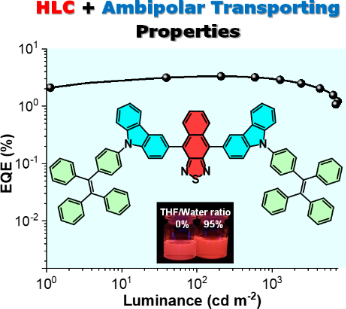
- . It has been reported that the performance of HLCT fluorophores greatly depends on the strength of donors, acceptors, and π spacers and the building blocks of HLCT should be carefully selected to regulate appropriate electron push–pull strength [32][35][47][48]. Here, a novel chromophore, 4,9-bis(9-(4


Morpholine-mediated defluorinative cycloaddition of gem-difluoroalkenes and organic azides
Beilstein J. Org. Chem. 2023, 19, 1545–1554, doi:10.3762/bjoc.19.111
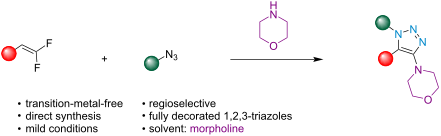
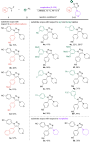
- with an organic azide. A relatively wide range of 1,4,5-trisubstituted-1,2,3-triazoles was obtained in 30–70% yields with high regioselectivity and modest functional group tolerability. This work demonstrates that gem-difluoroalkenes can serve as versatile fluorinated building blocks in lieu of alkynes




One-pot nucleophilic substitution–double click reactions of biazides leading to functionalized bis(1,2,3-triazole) derivatives
Beilstein J. Org. Chem. 2023, 19, 1399–1407, doi:10.3762/bjoc.19.101
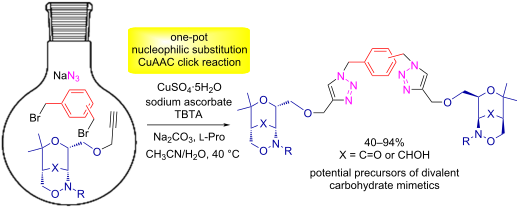
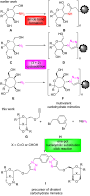
- -catalyzed version can generally be executed at room temperature and it affords exclusively 1,4-disubstituted 1,2,3-triazole derivatives, thus allowing a controlled and highly efficient connection of a variety of molecular building blocks. This “Lego-approach” found countless applications and the bestowal of



Consecutive four-component synthesis of trisubstituted 3-iodoindoles by an alkynylation–cyclization–iodination–alkylation sequence
Beilstein J. Org. Chem. 2023, 19, 1379–1385, doi:10.3762/bjoc.19.99
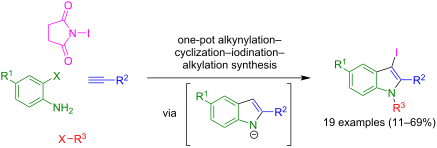
- prior to terminal alkylation could provide a straightforward entry to trisubstituted 3-iodoindoles, which are valuable building blocks for accessing highly decorated (aza)indoles (Scheme 1). Here, we report the concise consecutive four-component synthesis of trisubstituted 3-iodoindoles. Results and
- N-iodosuccinimide prior to N-alkylation to give substituted 3-iodoindoles in a concise consecutive four-component fashion in modest to good yields. These target compounds are versatile building blocks for instance for a Suzuki coupling to give 1-alkyl-2,3-diarylindoles that can be of particular




Visible-light-induced nickel-catalyzed α-hydroxytrifluoroethylation of alkyl carboxylic acids: Access to trifluoromethyl alkyl acyloins
Beilstein J. Org. Chem. 2023, 19, 1372–1378, doi:10.3762/bjoc.19.98
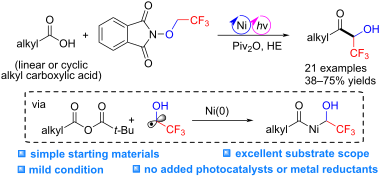
- ; Introduction Acyloins (also known as α-hydroxy ketones) are widely found as structural motif in natural products [1][2][3][4][5][6][7] and bioactive molecules [8][9][10][11] (Figure 1). They can also be used as building blocks in organic synthesis [12][13][14], involved in numerous transformations to other


Synthesis of ether lipids: natural compounds and analogues
Beilstein J. Org. Chem. 2023, 19, 1299–1369, doi:10.3762/bjoc.19.96
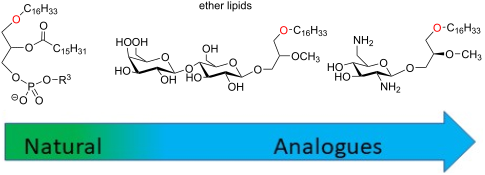
- ). The review of Lemaire et al., dedicated to the synthesis of glycerol ether, is complemental to this review article [57]. Of note, the review of Godfroid and Braquet attempted to decipher the binding site of PAF via a QSAR study [58]. 1.1 Synthesis of PAF and some building blocks The platelet


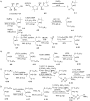


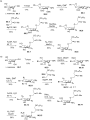
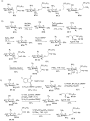


Non-noble metal-catalyzed cross-dehydrogenation coupling (CDC) involving ether α-C(sp3)–H to construct C–C bonds
Beilstein J. Org. Chem. 2023, 19, 1259–1288, doi:10.3762/bjoc.19.94
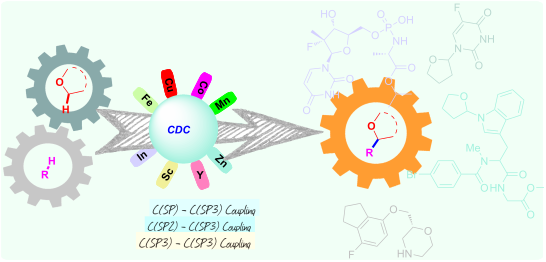
- are widespread as essential building blocks in various drugs, natural products, agrochemicals, and materials. Modern economy requires developing green strategies with improved efficiency and reduction of waste. Due to its atom and step-economy, the cross-dehydrogenative coupling (CDC) reaction has
- CDC reaction to be a new generation method for the construction of C–C bonds and it has received extensive attention and in-depth research [16][17][18][19][20][21][22][23][24]. The building blocks of ethers are widely found in biomass, chemical feedstocks, biologically active drugs, and natural

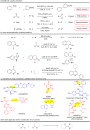


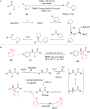
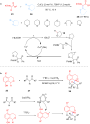


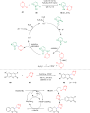

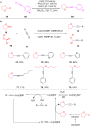


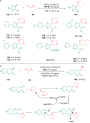


Acetaldehyde in the Enders triple cascade reaction via acetaldehyde dimethyl acetal
Beilstein J. Org. Chem. 2023, 19, 1243–1250, doi:10.3762/bjoc.19.92
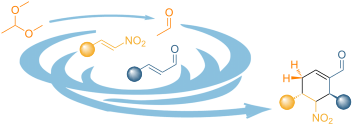
- condensation coproducts, such as water, hydrogen chloride or other small molecules [1][2][3]. MCRs have a great advantage over the classical two-component reactions; they allow the construction of complex molecular motifs in only one synthetic operational step starting from simpler building blocks. For this


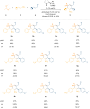
Selective construction of dispiro[indoline-3,2'-quinoline-3',3''-indoline] and dispiro[indoline-3,2'-pyrrole-3',3''-indoline] via three-component reaction
Beilstein J. Org. Chem. 2023, 19, 1234–1242, doi:10.3762/bjoc.19.91
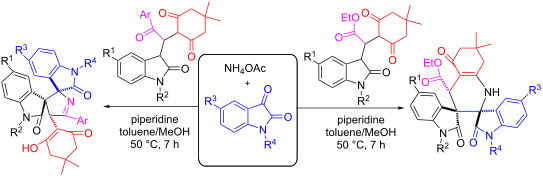
- methodologies for diverse spirooxindoles have become one of the hottest research fields in organic and pharmaceutical chemistry [10][11]. In order to synthesize diverse spirooxindole derivatives, commercially available isatins and easily obtainable 3-methyleneoxindolines were the most employed building blocks



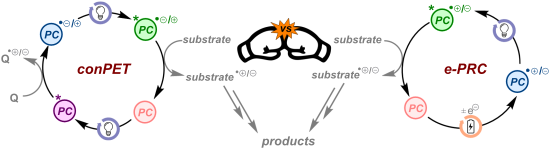
Photoredox catalysis harvesting multiple photon or electrochemical energies
Beilstein J. Org. Chem. 2023, 19, 1055–1145, doi:10.3762/bjoc.19.81




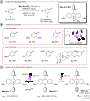
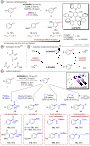
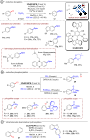

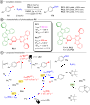
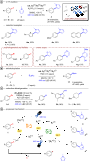


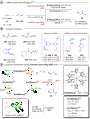
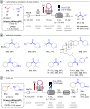
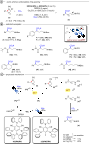
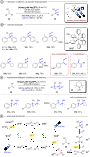






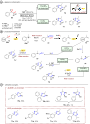
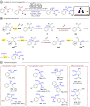


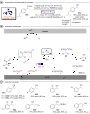


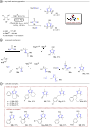
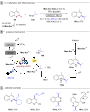


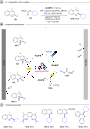
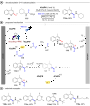
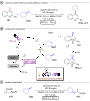






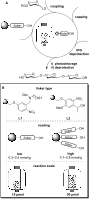
Linker, loading, and reaction scale influence automated glycan assembly
Beilstein J. Org. Chem. 2023, 19, 1015–1020, doi:10.3762/bjoc.19.77
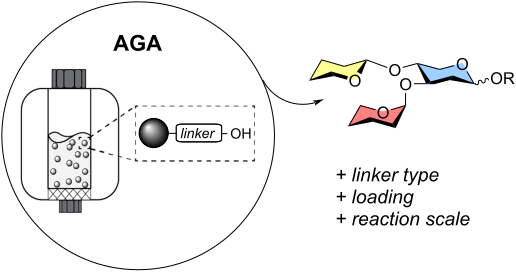
- purification steps. Keywords: automated glycan assembly; photocleavable linker; polysaccharides; solid-phase synthesis; Introduction Automated glycan assembly (AGA) is a solid-phase method that enables the rapid synthesis of complex oligo- and polysaccharides from protected monosaccharide building blocks

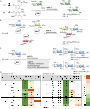
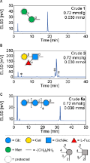
Intermediates and shunt products of massiliachelin biosynthesis in Massilia sp. NR 4-1
Beilstein J. Org. Chem. 2023, 19, 909–917, doi:10.3762/bjoc.19.69
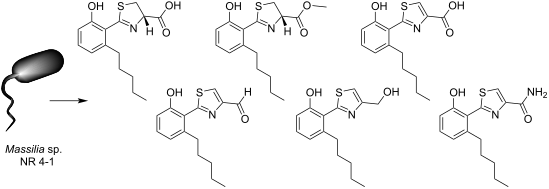
- ] and the photoxenobactins [32]. A unifying theme in the biosynthesis of these natural products is the use of a thiotemplate-based assembly strategy [33]. The molecular building blocks that are needed for the biosynthesis are covalently bound via thioester bonds to multi-domain enzymes. The domains
- fulfill specific functions, ranging from the selection and linkage of building blocks to their chemical modification. A plausible scenario for the formation of compounds 1–6 involves the enzymatic machinery for massiliachelin biosynthesis, namely the protein RS02200 [18]. According to our proposal (Figure


Cyclodextrins as building blocks for new materials
Beilstein J. Org. Chem. 2023, 19, 889–891, doi:10.3762/bjoc.19.66
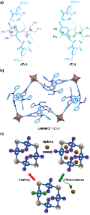
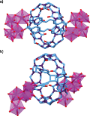
- Miriana Kfoury Sophie Fourmentin Université du Littoral Côte d'Opale, Unité de Chimie Environnementale et Interactions sur le Vivant (UCEIV, UR 4492), 59140 Dunkerque, France 10.3762/bjoc.19.66 Keywords: building blocks; cyclodextrins; new materials; The continuous increase in the number of
- , and catalysis [2][5][12]. Molecular encapsulation is not the only application area for these macrocyclic components at present. CDs are versatile molecules. Their 3D structure makes them exceptional building blocks for the design of innovative supramolecular architectures due to the differential
Asymmetric tandem conjugate addition and reaction with carbocations on acylimidazole Michael acceptors
Beilstein J. Org. Chem. 2023, 19, 881–888, doi:10.3762/bjoc.19.65

- its applications in the total syntheses of complex natural products and other molecules of biological relevance [13][14]. Acylimidazoles proved to be versatile building blocks broadly applicable in asymmetric catalysis and organic synthesis. Today, acylimidazoles are used as ester/amide surrogates




Light-responsive rotaxane-based materials: inducing motion in the solid state
Beilstein J. Org. Chem. 2023, 19, 873–880, doi:10.3762/bjoc.19.64
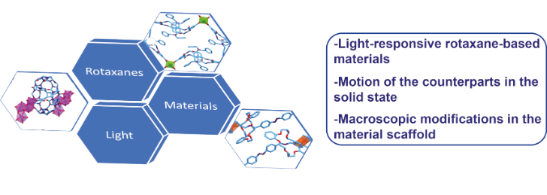
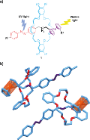
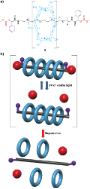
- struts and the photoresponsive linkers. The use of ditopic interlocked building blocks, such as that employed to form mainly a cyclic hetero[4]pseudorotaxane from a self-complementary [2]rotaxane [73], is also envisioned as a strategy that will be employed in the future to dynamically change the

Pyridine C(sp2)–H bond functionalization under transition-metal and rare earth metal catalysis
Beilstein J. Org. Chem. 2023, 19, 820–863, doi:10.3762/bjoc.19.62
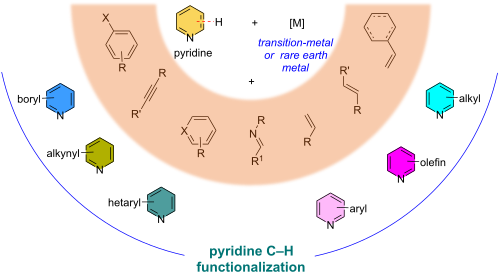
- (0)/PR3-catalyzed C3 or C4-arylation of nicotinic and isonicotinic acids using amide as a directing group (Scheme 27) [97]. This method provides a way for arylated nicotinic acid derivatives which serve as building blocks for biologically important molecules. This was the first report for a directing
















Facile access to 3-sulfonylquinolines via Knoevenagel condensation/aza-Wittig reaction cascade involving ortho-azidobenzaldehydes and β-ketosulfonamides and sulfones
Beilstein J. Org. Chem. 2023, 19, 800–807, doi:10.3762/bjoc.19.60
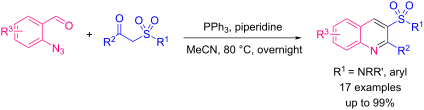
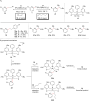
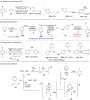
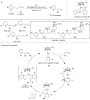
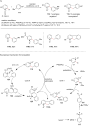
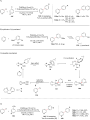
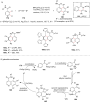
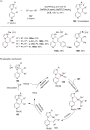
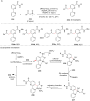
- have developed a new convenient protocol for the synthesis of 3-sulfonyl-substituted quinolines (sulfonamides and sulfones). The approach is based on a Knoevenagel condensation/aza-Wittig reaction cascade involving o-azidobenzaldehydes and ketosulfonamides or ketosulfones as key building blocks. The
- synthesis of 3-sulfonyl-substituted quinolines (sulfonamides and sulfones). The approach is based on a Knoevenagel condensation/aza-Wittig reaction cascade for the quinoline core assembly. Hence, o-azidobenzaldehyde, ketosulfonamide or ketosulfone were utilized as key building blocks. The method devised


Palladium-catalyzed enantioselective three-component synthesis of α-arylglycine derivatives from glyoxylic acid, sulfonamides and aryltrifluoroborates
Beilstein J. Org. Chem. 2023, 19, 719–726, doi:10.3762/bjoc.19.52
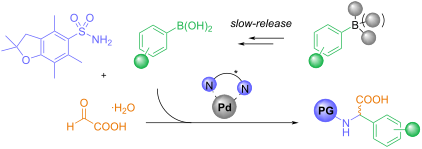
- , sulfonamides and aryltrifluoroborates is described. This process provides modular access to the important α-arylglycine motif in moderate to good yields and enantioselectivies. The formed α-arylglycine products constitute useful building blocks for the synthesis of peptides or arylglycine-containing natural
- modular access to arylglycines from three readily available building blocks [10][11][12]. The Petasis borono-Mannich reaction usually proceeds in the absence of any external catalyst via zwitterionic intermediates and an intramolecular transfer of the aryl residue form the activated boronate to the
- decrease of the isolated yields. As already demonstrated in our previous work, the Pbf-protected arylglycine products can be directly used as building blocks for peptide synthesis [22]. Finally, we utilized our method for the preparation of a protected version of p-hydroxyphenylglycine (Scheme 5), a common




Synthesis of medium and large phostams, phostones, and phostines
Beilstein J. Org. Chem. 2023, 19, 687–699, doi:10.3762/bjoc.19.50
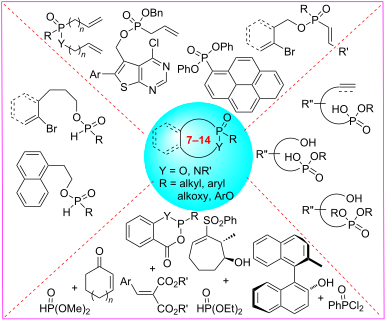
- phosphorus-containing heterocyclic compounds [1][2] and significant agrochemicals [3], medicinal agents [4], and organic materials [5]. They are also organic synthetic intermediates and building blocks [6][7]. To date, only limited four-membered β-phostams [8][9], β-phostones and β-phostines [10] have been




Enolates ambushed – asymmetric tandem conjugate addition and subsequent enolate trapping with conventional and less traditional electrophiles
Beilstein J. Org. Chem. 2023, 19, 593–634, doi:10.3762/bjoc.19.44
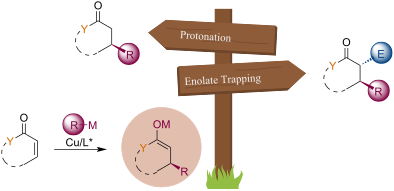
- Peter Kisszekelyi Radovan Sebesta Department of Organic Chemistry, Faculty of Natural Sciences, Comenius University Bratislava, Mlynská dolina, Ilkovičova 6, 842 15 Bratislava, Slovakia 10.3762/bjoc.19.44 Abstract Metal enolates are useful intermediates and building blocks indispensable in many
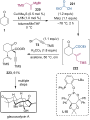
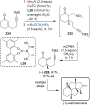
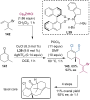
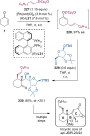
- building blocks providing an aminomethyl moiety upon adding nucleophiles. Protected formaldehyde aminals are useful synthetic equivalents to formaldehyde imines. The imine functionality can be unmasked (68) in the reaction medium by Lewis acids such as TiCl4. The formed Mg enolates 66 readily react with
- formylation products. The methodology was later exploited in the expedient synthesis of the Taxol core (Scheme 34) [71]. Tandem conjugate borylations and silylations Chiral organoboron compounds are well-known synthetic building blocks with diverse possibilities for subsequent derivatization (e.g., oxidation









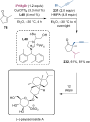
C3-Alkylation of furfural derivatives by continuous flow homogeneous catalysis
Beilstein J. Org. Chem. 2023, 19, 582–592, doi:10.3762/bjoc.19.43
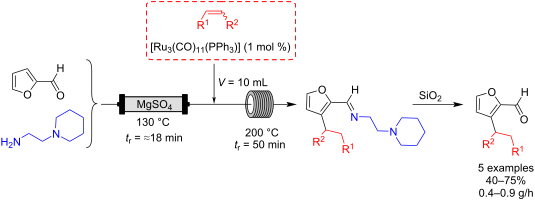
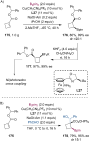
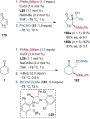
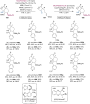
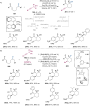
- relevant building blocks on a large scale. Experimental Triphenylphosphine triruthenium undecacarbonyl (comp4) Following a slightly modified procedure compared to the one reported [41], triruthenium dodecacarbonyl (1.4 g, 2.19 mmol, 1 equiv) was dissolved in freshly distilled and degassed THF (0.036 M) at


Phenanthridine–pyrene conjugates as fluorescent probes for DNA/RNA and an inactive mutant of dipeptidyl peptidase enzyme
Beilstein J. Org. Chem. 2023, 19, 550–565, doi:10.3762/bjoc.19.40
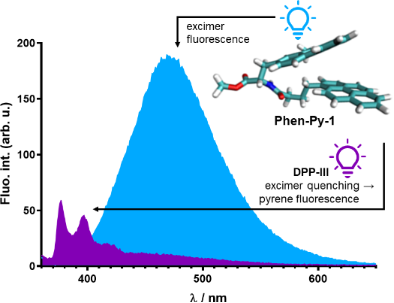
- were built using chiral amino acid building blocks and consequently have an intrinsic CD spectrum. While changes of poly rA–poly rU spectra upon titration with Phen-Py-1 and Phen-Py-2 were negligible (Figures S20 and S21, Supporting Information File 1), the addition of Phen-Py-1 and Phen-Py-2 to the ct




Access to cyclopropanes with geminal trifluoromethyl and difluoromethylphosphonate groups
Beilstein J. Org. Chem. 2023, 19, 541–549, doi:10.3762/bjoc.19.39
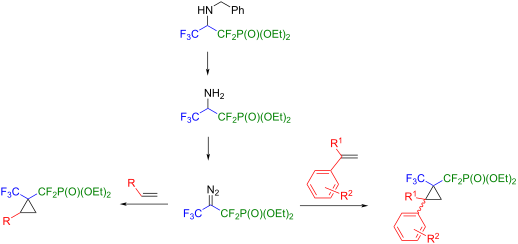
- ]. Therefore, as relevant building blocks, tremendous efforts have been made to develop reliable methods for their synthesis. Transition-metal-catalyzed cyclopropanation of alkenes with trifluoromethyldiazoalkanes is a commonly used synthetic strategy for the construction of trifluoromethylcyclopropanes



Transition-metal-catalyzed C–H bond activation as a sustainable strategy for the synthesis of fluorinated molecules: an overview
Beilstein J. Org. Chem. 2023, 19, 448–473, doi:10.3762/bjoc.19.35
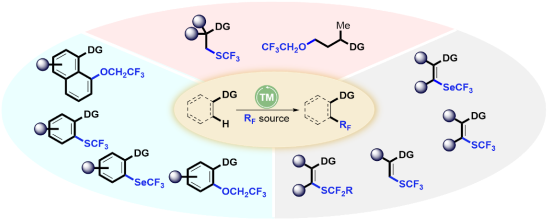
- provide the reader a nice overview. Since reviews dealing with transition-metal-catalyzed functionalization of compounds by C–H bond activation with fluorinated reagents [60][61][62][63][64][65][66][67][68][69][70][71][72][73][74][75][76][77] and vinylic, allylic or propargylic fluorinated building blocks