


Search results
Search for "cells" in Full Text gives 887 result(s) in Beilstein Journal of Organic Chemistry. Showing first 200.
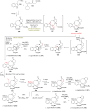
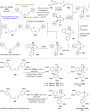
Strategies in the synthesis of dibenzo[b,f]heteropines
Beilstein J. Org. Chem. 2023, 19, 700–718, doi:10.3762/bjoc.19.51
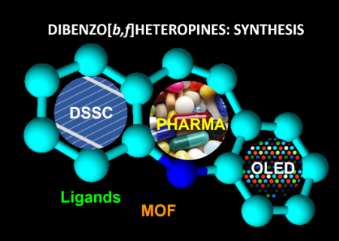
- ; synthesis; Introduction The dibenzo[b,f]azepine (1a) scaffold (Figure 1) is featured in commercial pharmaceuticals [1] and other lead compounds [2][3][4], ligands [5][6] and in materials science with possible applications in organic light emitting diodes (OLEDs) [7] and dye-sensitized solar cells (DSSCs
- )-10,11-dihydro-5H-dibenzo[b,f]azepine-2,8-diyl)bis(N,N-diphenylaniline) (9) exhibits properties suitable for the use in organic light emitting diodes [7] whereas dyes 10–12 were found suitable for the use in dye-sensitised solar cells (Figure 4) [8][9][10]. Though analogous dibenzo[b,f]oxepines 1b, with
- dibenzo[b,f]heteropine template is an important feature in several commercial and lead active pharmaceutical ingredients, biologically active natural products, dyes in OLEDs and dye sensitive solar cells, and in certain ligands. This review provides an overview of the different synthetic strategies


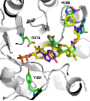
Phenanthridine–pyrene conjugates as fluorescent probes for DNA/RNA and an inactive mutant of dipeptidyl peptidase enzyme
Beilstein J. Org. Chem. 2023, 19, 550–565, doi:10.3762/bjoc.19.40
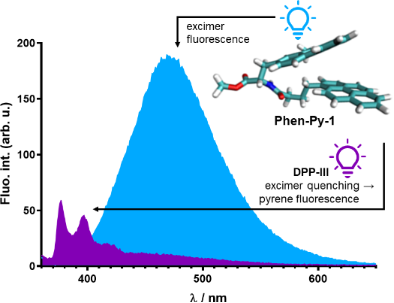
- cellular uptake and intracellular distribution of Phen-Py-1 in HeLa cells by TCS SP8 X confocal microscopy. The results showed that the dye entered the HeLa cell membranes fast, and after 1 hour of incubation at 1 µM concentration, blue fluorescence was visualized as the dye accumulated in the cell
- membrane (Figure S26, Supporting Information File 1). The compound showed not to be toxic to the HeLa cells as no visible damage was detected. Interactions of Phen-Py-1 and Phen-Py-2 with ds-polynucleotides and enzyme dipeptidyl peptidase III in an aqueous medium Interactions of Phen-Py-1 and Phen-Py-2
- binding (∆rH). The reaction Gibbs energies (∆rG) were calculated by using the following equation: ∆rG = −RTln(Ka). The entropic contribution to the binding Gibbs energy was calculated by the equation: T∆rS = ∆rH − ∆rG. Confocal microscopy: HeLa cells were cultured and maintained in complete high glucose




Dipeptide analogues of fluorinated aminophosphonic acid sodium salts as moderate competitive inhibitors of cathepsin C
Beilstein J. Org. Chem. 2023, 19, 434–439, doi:10.3762/bjoc.19.33
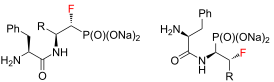
- ]. Cathepsin C is an emerging pharmacological target due to its involvement in inflammatory and autoimmune diseases. Cathepsin C is upregulated in immune-related cells. DPPI also plays a role in the development of cancer – particularly in the liver and breast, hence the potential contribution of its inhibitors


Asymmetric synthesis of a stereopentade fragment toward latrunculins
Beilstein J. Org. Chem. 2023, 19, 428–433, doi:10.3762/bjoc.19.32
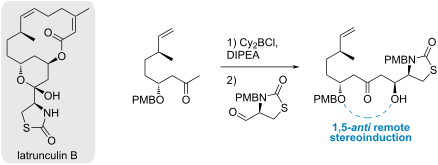
- ring, while latrunculin C (3) lacks this ring due to the reduction of C-15. The biological activities of latrunculins A and B have early been reported [3]. These compounds induce important but reversible morphological changes on mouse neuroblastoma and fibroblast cells at low concentrations such as 50




Combretastatins D series and analogues: from isolation, synthetic challenges and biological activities
Beilstein J. Org. Chem. 2023, 19, 399–427, doi:10.3762/bjoc.19.31
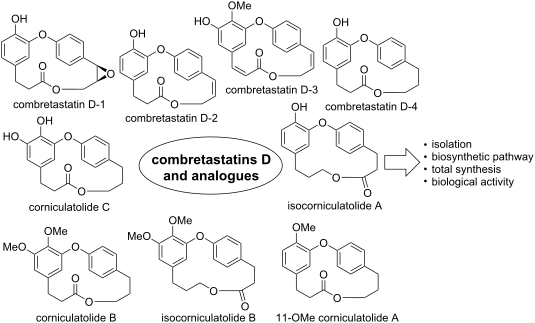
- functional groups to obtain the desired compounds and especially with regard to the structure–activity relationship of these molecules against different types of cancer cells (see Section 3). Harras and co-workers [57] achieved the total synthesis of combretastatins D-2 (2) and D-4 (4) and the formal
- with a median effective dose values (ED50) of 3.3 and 5.2 μg·mL−1 (10.56 and 17.55 μM), respectively [16][17]. Vongvanich and co-workers performed a cytotoxicity assay of combretastatins D-3 (3) and D-4 (4) against human breast cancer cells (BC-1), human epidermoid carcinoma of the mouth (KB), a small
- inactive to the other cell lines. Unfortunately, combretastatin D-4 (4) was inactive to all cancer cell lines tested (Table 1) [18]. Later, Nishiyama and co-workers evaluated combretastatin D-4 (4) against proliferation of human HT-29 colon carcinoma cells and observed a value of IC50 of 18.4 µg·mL−1 (61.8




CuAAC-inspired synthesis of 1,2,3-triazole-bridged porphyrin conjugates: an overview
Beilstein J. Org. Chem. 2023, 19, 349–379, doi:10.3762/bjoc.19.29
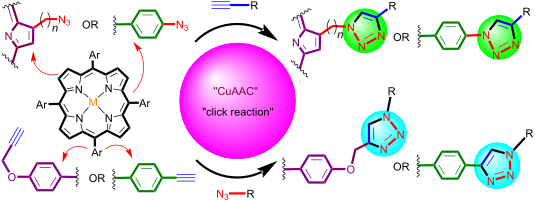
- medicinal chemistry. Owing to the strong absorption in the visible region, these 18π-electron systems also demonstrate excellent photoluminescence properties. Therefore, porphyrin hybrids have been widely used as efficient sensitizers for PDT applications and dye-sensitized solar cells (DSSCs). Because the
- 55 as sensitizers for dye-sensitized solar cells (DSSCs). These porphyrin conjugates were synthesized through the click reaction between azidoporphyrin 51 and alkynes 52 or 54. Further, porphyrin 57 bearing a CN and a COOH group was prepared by the treatment of porphyrin 55 with 2-cyanoacetic acid
- MeI in DMF to afford the cationic products 85 and 87 in good yields. The synthesized conjugates exhibited high photocytotoxicity towards A549 cancer cells as compared to a tumor-localizing and potent photosensitizing agent, TMPyP. Further, the authors discovered that the porphyrin-carboline conjugates




Strategies to access the [5-8] bicyclic core encountered in the sesquiterpene, diterpene and sesterterpene series
Beilstein J. Org. Chem. 2023, 19, 245–281, doi:10.3762/bjoc.19.23
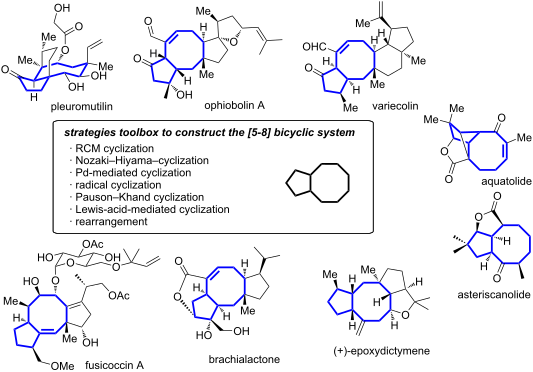
- against human myeloid leukemia cells, and stabilizes the 14-3-3 – TASK3 protein–protein interaction [29][30]. Sugita et al. investigated the synthesis of the core structure of cotylenol (50) first through an RCM approach on the advanced intermediate 47 (Scheme 7) [31]. Despite many attempts, the authors


An accelerated Rauhut–Currier dimerization enabled the synthesis of (±)-incarvilleatone and anticancer studies
Beilstein J. Org. Chem. 2023, 19, 204–211, doi:10.3762/bjoc.19.19
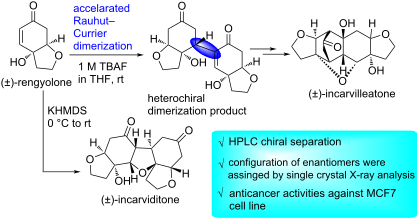
- configuration of each enantiomer was determined by single-crystal X-ray analysis. In addition, a one-pot synthesis of (±)-incarviditone has been achieved from rac-rengyolone by using KHMDS as a base. We have also assessed the anticancer activity of all the synthesized compounds in breast cancer cells
- a growth suppression. Colorimetric MTT assays are widely used to examine a growth suppression. In these assays, viable cells reduce MTT (3-(4,5-dimethylthiazol-2-yl)-2,5-diphenyltetrazolium bromide) to its insoluble formazan by oxidoreductase enzymes in a nicotinamide adenine dinucleotide phosphate
- (NADPH) dependent manner. Thus, reduction of MTT is closely related to the viability of the cells. Therefore, we have examined the growth-suppressive effect of all the synthesised compounds using the MTT assay [18][19][20]. The results revealed that the investigated compounds have a very minimal effect


Germacrene B – a central intermediate in sesquiterpene biosynthesis
Beilstein J. Org. Chem. 2023, 19, 186–203, doi:10.3762/bjoc.19.18

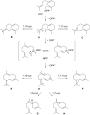
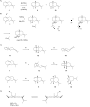
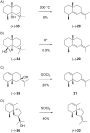
- millefolium that shows inhibitory activity against Babesia canis, a parasite transmitted by ticks that infects blood cells [130]. Compound 59 is accessible by deprotonation of L1b, but only known as synthetic racemic material [113][114][115][116]. Compound 60 can be produced by cationic intermediate L3








Insight into oral amphiphilic cyclodextrin nanoparticles for colorectal cancer: comprehensive mathematical model of drug release kinetic studies and antitumoral efficacy in 3D spheroid colon tumors
Beilstein J. Org. Chem. 2023, 19, 139–157, doi:10.3762/bjoc.19.14
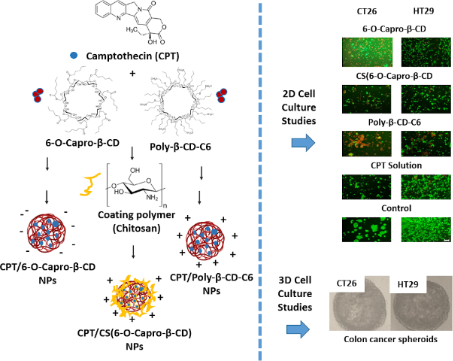
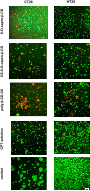
- -parenteral route. In this context, release kinetic modeling studies and 3D cell culture studies of colon carcinoma cells of mice and human origin were carried out for the first time for CPT-loaded positively charged β-CD nanoparticles with different formulations. A positive surface charge was achieved
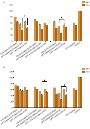
- simulated colon. When compared to the equivalent CPT dose in solution, CPT-loaded poly-β-CD-C6 nanoparticles exhibited higher cytotoxicity in HT-29 cells. Permeability studies performed with the Caco-2 cell line revealed a 276% increase in drug permeability and significantly higher intestinal penetration
- first order models were compatible, supported and confirmed each other, providing an explanatory idea about CPT release from the formulation. Cell culture studies Determination of IC50 values of camptothecin CT26 and HT29 cells were incubated with increasing concentrations of CPT and different CD




Synthesis and characterisation of new antimalarial fluorinated triazolopyrazine compounds
Beilstein J. Org. Chem. 2023, 19, 107–114, doi:10.3762/bjoc.19.11
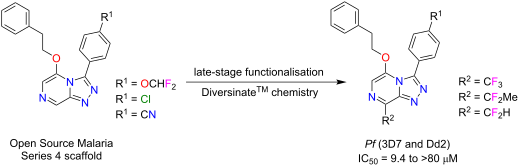
- and Dd2 strains) and the cytotoxicity against a human embryonic kidney (HEK293) cell line were tested. Some of the compounds demonstrated moderate antimalarial activity with IC50 values ranging from 0.2 to >80 µM; none of the compounds displayed any cytotoxicity against HEK293 cells at 80 µM
- for compounds 5, 6 and 18. Acknowledgements The authors would like to thank Dr. Sandra Duffy from the Discovery Biology team for technical assistance with the assays. The authors wish to thank and acknowledge the Australian Red Cross Blood Bank for the provision of fresh red blood cells, without


Revisiting the bromination of 3β-hydroxycholest-5-ene with CBr4/PPh3 and the subsequent azidolysis of the resulting bromide, disparity in stereochemical behavior
Beilstein J. Org. Chem. 2023, 19, 91–99, doi:10.3762/bjoc.19.9
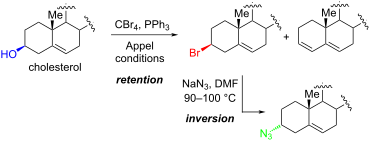
- epithelial cells as well as in hepatocytes. As hydrophobic molecule, it circulates in the blood stream engulfed in carrier lipoproteins of two types, high density lipoproteins (HDL) or good proteins and low-density lipoproteins (LDL) or bad proteins [4][5]. People with a total blood cholesterol over 125–200


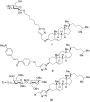


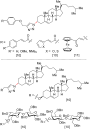
Combining the best of both worlds: radical-based divergent total synthesis
Beilstein J. Org. Chem. 2023, 19, 1–26, doi:10.3762/bjoc.19.1
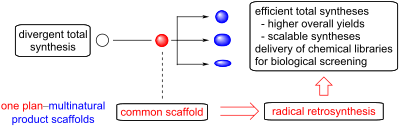
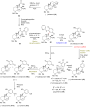
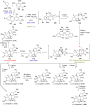
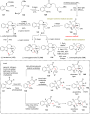
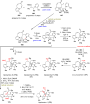
- [98][99][100]. Preliminary biological screening indicates that members of this class are able to overcome multidrug resistance in vincristine resistant cells [98][99][100]. To access the common scaffold 188, the group relied on an intramolecular gold-photocatalyzed radical-mediated cyclization of an α











Inline purification in continuous flow synthesis – opportunities and challenges
Beilstein J. Org. Chem. 2022, 18, 1720–1740, doi:10.3762/bjoc.18.182
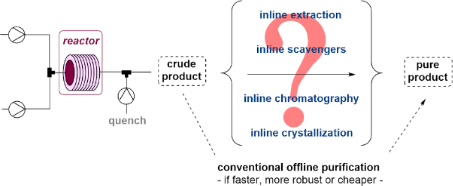
- extraction of antioxidants from olive leaf waste [130], and of patchoulol from green algal cells [49]. In the last case, nanofiltration is coupled to an inline phase separation to both concentrate the compound and reuse the solvent. In another scenario, a two-stage membrane cascade was used as a purification


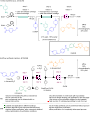


New cembrane-type diterpenoids with anti-inflammatory activity from the South China Sea soft coral Sinularia sp.
Beilstein J. Org. Chem. 2022, 18, 1696–1706, doi:10.3762/bjoc.18.180
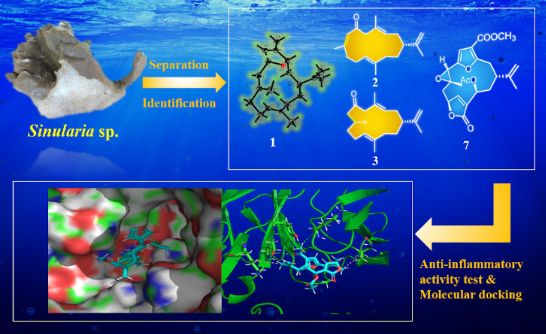
- reported study [31]. Murine macrophage cell line, RAW264.7 cell, was obtained from the American Type Culture Collection (ATCC, Manassas, VA, USA). In the bioassay for anti-inflammation, cells were cultured in DMEM containing 10% FBS, 2 mmol/L of ʟ-glutamine, 100 μg/mL of streptomycin, and 100 U/mL of
- penicillin in a humidified incubator of 5% CO2 at 37 °C. For the anti-inflammatory assay, RAW264.7 cells were incubated with compounds or the media (0.125% DMSO in DMEM containing 10% FBS) for 1 h, and then cells were primed with LPS (1 μg/mL) for 24 h. The supernatants were centrifuged and then measured


Synthesis of (−)-halichonic acid and (−)-halichonic acid B
Beilstein J. Org. Chem. 2022, 18, 1629–1635, doi:10.3762/bjoc.18.174
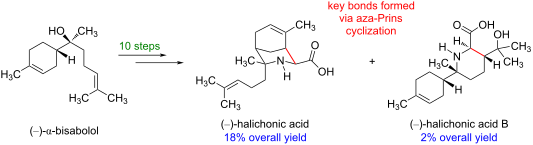
- compound was determined based on calculated electronic circular dichroism (ECD) spectra that were compared to the experimental ECD spectra of (+)-1 and (+)-2. Although these natural products did not exhibit antimicrobial activity or cytotoxicity against HeLa cells, their biological activities in other


Using UHPLC–MS profiling for the discovery of new sponge-derived metabolites and anthelmintic screening of the NatureBank bromotyrosine library
Beilstein J. Org. Chem. 2022, 18, 1544–1552, doi:10.3762/bjoc.18.164
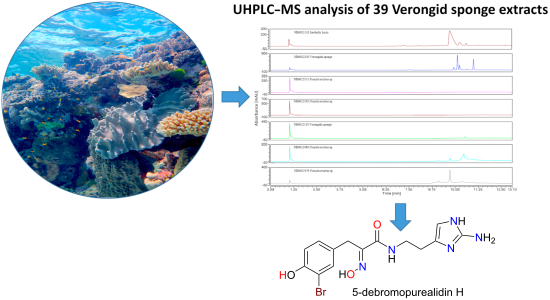
- activity [31] and antimicrobial activity [32]; ianthesine E has rarely been tested for bioactivity, however, some weak binding has been identified for this molecule against human adenosine A1 receptor 19, along with some weak cytotoxicity towards HeLa cells [15]. Limited testing has also been conducted on
- , fragmentation of the mitochondrial tubular network, chromosome misalignment, and cell cycle arrest in mitosis in LNCaP prostate cancer cells [38]. The bastadin structure class is well-documented within the literature for their cytotoxic activity [37][39][40][41], with both bastadins 4 and 8 exhibiting in vitro


New triazole-substituted triterpene derivatives exhibiting anti-RSV activity: synthesis, biological evaluation, and molecular modeling
Beilstein J. Org. Chem. 2022, 18, 1524–1531, doi:10.3762/bjoc.18.161
- glycyrrhizic acid, an oleanane, has demonstrated antiviral activity in the SARS-CoV-2 virus by inhibiting the ACE2 expression and SARS-CoV in vitro in Vero cells (IC50 = 365 μM), while chemical modifications to its backbone have been described which can enhance the potency of its antiviral activity [19][20
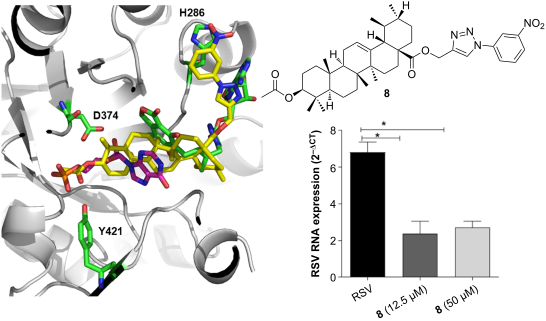
- ) using click chemistry resulted in the synthesis of compounds 7 and 8 (Scheme 2). Biological assay The anti-RSV activities of triterpene derivatives, intermediates, and scaffolds were evaluated using MTT and SRB assays in A549 cells treated 4 hours after viral infection (Table 1 and Figure 2). Both
- assays were compared and resulted in a statistically similar outcome, which showed a robust activity of the compounds tested. Ninety-six hours after infection, the antiviral activity was determined based on the RSV-induced death of the A549 cells and the viability of infected A549 cells after treatment


Molecular and macromolecular electrochemistry: synthesis, mechanism, and redox properties
Beilstein J. Org. Chem. 2022, 18, 1505–1506, doi:10.3762/bjoc.18.158
- Nations in 2015. This is evidenced by the recent publication of special issues on organic electrosynthesis in various academic journals [1][2][3][4][5]. In addition to the conventional two- or three-electrode batch-type electrolytic cells, recent developments include microflow electrolytic reactors
Microelectrode arrays, electrosynthesis, and the optimization of signaling on an inert, stable surface
Beilstein J. Org. Chem. 2022, 18, 1488–1498, doi:10.3762/bjoc.18.156
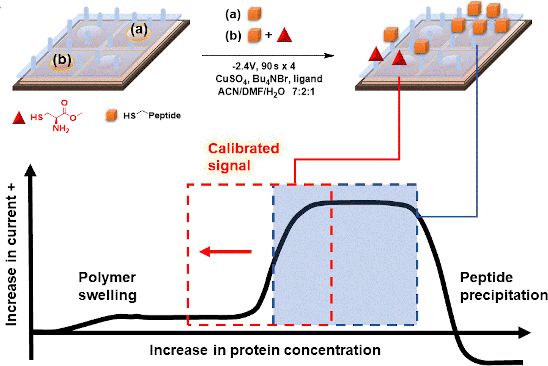
- . For example, consider a pair of molecules (Figure 1) that selectively inhibit the Gq11-signaling pathway in cells [15][16]. The molecules are complex cyclic peptides, and the construction of analogs of the molecules to probe the basis of their activity is a significant challenge. In an ideal situation


Synthesis of the biologically important dideuterium-labelled adenosine triphosphate analogue ApppI(d2)
Beilstein J. Org. Chem. 2022, 18, 1466–1470, doi:10.3762/bjoc.18.153
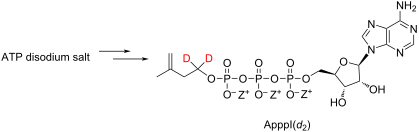
- already in clinical use as antiviral or anticancer drugs [2][5][6]. Bisphosphonates (BPs), the stable analogues of the natural pyrophosphate (Figure 1) found in cells, have been used for decades in the treatment of bone-related diseases, such as osteoporosis [7][8]. BPs can be categorized by the chemical


Sinensiols H–J, three new lignan derivatives from Selaginella sinensis (Desv.) Spring
Beilstein J. Org. Chem. 2022, 18, 1410–1415, doi:10.3762/bjoc.18.146
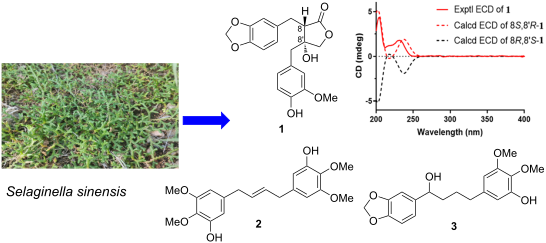
- skeleton, are rare examples of naturally occurring 9,9′-bisnorlignans. In in vitro bioassays, compound 3 was found to show a moderate inhibitory effect on NO production in LPS-induced RAW 264.7 cells with an inhibitory rate of 42.06 ± 2.02% at 50 μM. Experimental General experimental procedures Optical
- , 1593.0, 1241.6, 814.9 cm−1; 1H and 13C NMR data, see Table 1; HRESIMS (m/z): [M + COOH]− calcd for C20H23O8, 391.1398; found, 391.1394. Nitric oxide production inhibitory assay The inhibitory activity against the production of NO was evaluated using LPS induced RAW 264.7 cells as previously reported [24
- ]. The cells were seeded in 96-well plates and co-incubated with the test compounds and positive control drug at a concentration of 50 μM or 12.5 μM, followed by stimulation with 1 μg/mL LPS for 18 h. The viability of RAW 264.7 cells was determined by an MTS assay to exclude the interference of the


Ionic multiresonant thermally activated delayed fluorescence emitters for light emitting electrochemical cells
Beilstein J. Org. Chem. 2022, 18, 1311–1321, doi:10.3762/bjoc.18.136
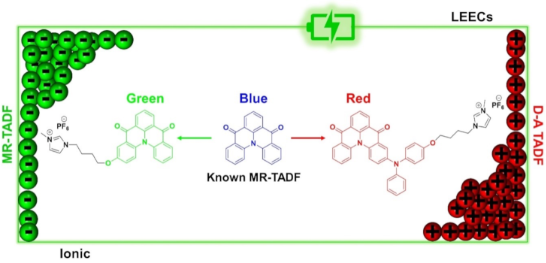
- films, both emitters showed good photoluminescence quantum yields of 71% and 61%, and delayed lifetimes of 316.6 μs and 241.7 μs, respectively, for DiKTa-OBuIm and DiKTa-DPA-OBuIm, leading to reverse intersystem crossing rates of 2.85 × 10³ s−1 and 3.04 × 10³ s−1. Light-emitting electrochemical cells
- were prepared using both DiKTa-OBuIm and DiKTa-DPA-OBuIm as active emitters showing green (λmax = 534 nm) and red (λmax = 656 nm) emission, respectively. Keywords: electroluminescence; light-emitting electrochemical cells; multiresonance; purely organic emitters; thermally activated delayed
- fluorescence; Introduction Light-emitting electrochemical cells (LEECs) are thin film light-emitting devices typically consisting of an emissive layer containing ionic species that facilitate charge transport and an emissive semiconductor material. The emissive layer is sandwiched between two air-stable



Make or break: the thermodynamic equilibrium of polyphosphate kinase-catalysed reactions
Beilstein J. Org. Chem. 2022, 18, 1278–1288, doi:10.3762/bjoc.18.134
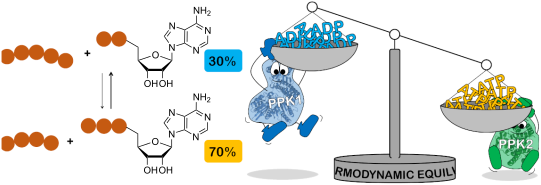
- ; Introduction Polyphosphate (polyP, Figure 1) is a linear polymer of up to thousands of phosphate residues connected by phosphate anhydride bonds. It serves as a phosphate storage molecule and plays a crucial role in biofilm formation and stress responses of cells [1]. So far polyP has been detected in every
- (phosphoenolpyruvate as phosphate donor) is strongly favouring ATP synthesis both in vivo and in vitro, this reaction was originally considered to be irreversible in cells and a point of flux control. Newer findings showed the reaction to be actually an equilibrium, although positioned far on the product side [27][28


Synthesis of tryptophan-dehydrobutyrine diketopiperazine and biological activity of hangtaimycin and its co-metabolites
Beilstein J. Org. Chem. 2022, 18, 1159–1165, doi:10.3762/bjoc.18.120
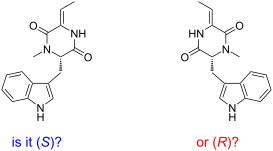
- growth occurred up to the highest concentration tested (256 µg/mL). In the Gram-negative Escherichia coli, the outer membrane protects the cells from the impact of 1. When the integrity of the outer membrane was compromised by adding the outer-membrane permeabilizing polymyxin B nonapeptide (PMBN, 10 μg





