


Search results
Search for "chirality" in Full Text gives 314 result(s) in Beilstein Journal of Organic Chemistry. Showing first 200.
Polarization spectroscopy methods in the determination of interactions of small molecules with nucleic acids – tutorial
Beilstein J. Org. Chem. 2018, 14, 84–105, doi:10.3762/bjoc.14.5
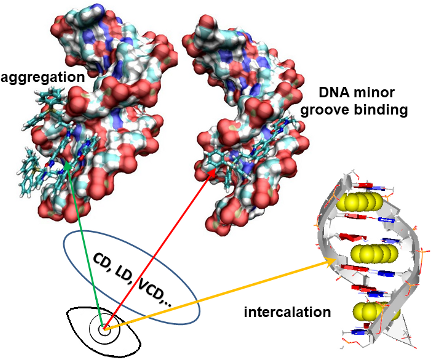
- [5]. As nucleic acids are characterized by a dominant helical chirality and exhibit a rather small set of secondary structures, each characterized by a different polarization spectroscopy signature, they are convenient targets to monitor structural changes induced by outer stimuli. Linear dichroism
- polynucleotides, particularly in the double-stranded helix of DNA or RNA, introduces helical chirality, whereby the helical axis is almost perpendicular to the aromatic base-pair plane. In this situation, the ECD changes dramatically as a consequence of the so-called coupled oscillator or exciton coupling
- spectrum, which is by the way diagnostic for the supramolecular chirality [21][22]. Particular attention should be a paid to the UV–vis and ECD spectrum shapes and baselines as well as to an opalescence of the solution in the cuvette. An apparent positive drift of the baseline during ligand concentration






From dipivaloylketene to tetraoxaadamantanes
Beilstein J. Org. Chem. 2018, 14, 1–10, doi:10.3762/bjoc.14.1

- exhibit axial chirality [21], as has been demonstrated by 1H NMR spectroscopy using the optically active shift reagent Eu(hfc)3 [19]. The enantiomers of the dicarboxylic acid 11 have been separated by flash chromatography of their diastereomeric salts with 1-phenethylamine, and the structures of the acids
- was achieved by fractional crystallization [24]. Chirality of the bisdioxine dicarbaldehyde, 2,6,9-trioxabicyclo[3.3.l]nona-3,7-diene-4,8-dicarbaldehyde, obtained by extrusion of water from triformylmethane, has also been demonstrated [25], and X-ray crystallography confirmed the structure of this
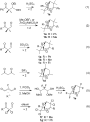
- [29]. It should be noted that both the bisdioxines [19] and the tetraoxaadamantanes [29] exhibit axial chirality as confirmed by 1H NMR spectroscopy with the Eu(hfc)3 chiral shift reagent. Bisdioxine oxime and hydrazine derivatives 26 and 27 (Scheme 8) are formed from 3 at room temperature without the





Nucleophilic dearomatization of 4-aza-6-nitrobenzofuroxan by CH acids in the synthesis of pharmacology-oriented compounds
Beilstein J. Org. Chem. 2017, 13, 2854–2861, doi:10.3762/bjoc.13.277
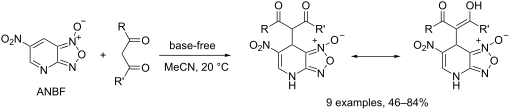
- a mixture of diketo-adduct 6a and a pair of enol tautomers 6b, NMR spectra in DMSO exhibited two sets of signals with relative intensities about 3:5 at 27 °C. The chirality of carbon atom C7 in compound 6a makes two methyl groups nonequivalent (δ 2.14 and 2.36 ppm, Table 2). In addition, two
- chirality of C7, the two ethoxy groups are non-equivalent. It causes splitting of the signals of CH3, CH2 and C=O groups in 1H and 13C NMR spectra of 13. Like all other diketones studied, 1,1,1-trifluoro-2,4-pentanedione gave the corresponding adduct with ANBF (Table 1, entry 9). However, all attempts to
- the chirality of carbon atom C7, the protons HA and HB of the methylene group are diastereotopic and therefore have different chemical shifts (3.34 and 3.74 ppm). The geminal protons and H7 represent a well-resolved AMX system, Figure 2. The structure of compound 15 was additionally studied using X


Binding abilities of polyaminocyclodextrins: polarimetric investigations and biological assays
Beilstein J. Org. Chem. 2017, 13, 2751–2763, doi:10.3762/bjoc.13.271
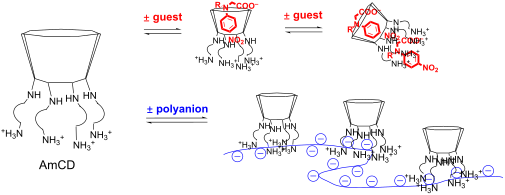
- Coulomb repulsion between cationic tail groups. Considering that the polarimetric response of CDs depends on both their intrinsic chirality and on their conformational dynamism, the behaviour observed indicates that our AmCDs experience their most extensive conformational rearrangements as the first



Binding abilities of a chiral calix[4]resorcinarene: a polarimetric investigation on a complex case of study
Beilstein J. Org. Chem. 2017, 13, 2698–2709, doi:10.3762/bjoc.13.268

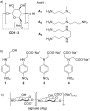
- occurring in host–guest complex formation processes involving calixarenes in general. This can be particularly useful, even because CAP and structurally related ligands might find various interesting applications, due to their amphiphilic character, chirality and coordination ability towards metal cations




Synthesis of 1,3-cis-disubstituted sterically encumbered imidazolidinone organocatalysts
Beilstein J. Org. Chem. 2017, 13, 2577–2583, doi:10.3762/bjoc.13.254

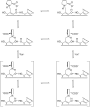
- subtle differences in the substitution pattern a modular approach for their preparation is highly desirable. A simple retrosynthetic cut of the five-membered ring delivers an amino acid methyl amide and a carbaldehyde as starting materials. Chirality is commonly introduced by the use of derivatives of


Asymmetric synthesis of propargylamines as amino acid surrogates in peptidomimetics
Beilstein J. Org. Chem. 2017, 13, 2428–2441, doi:10.3762/bjoc.13.240
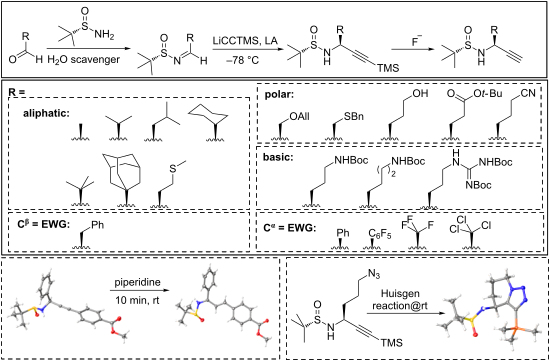
- Supporting Information File 1). Independent on the substituent, solvent and Lewis acid used, the direction of the nucleophilic attack of (trimethylsilyl)ethynyllithium was always the same, forming the new centers of chirality of all N-sulfinyl propargylamines 7 configured as expected. As already described by
- ], it provides a versatile protective group for the amine during the conversion of the alkyne. Additionally, it’s chirality indicates epimerization and, for example in the Pauson–Khand reaction [14], allows the determination of the stereoselectivity of asymmetric conversions by simple 1H NMR experiments


Phosphonic acid: preparation and applications
Beilstein J. Org. Chem. 2017, 13, 2186–2213, doi:10.3762/bjoc.13.219
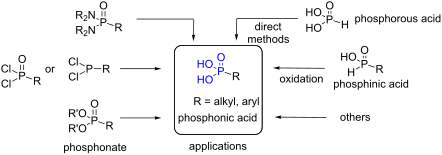
- chiral auxiliary to control the chirality of the carbon atom in α-position of the phosphorus atom as exemplified by the alkylation of the phosphonodiamide 88 (Figure 27). Furthermore, phosphonodiamide can be purified by different methods including chromatography and their transformation to phosphonic


Remarkable functions of sn-3 hydroxy and phosphocholine groups in 1,2-diacyl-sn-glycerolipids to induce clockwise (+)-helicity around the 1,2-diacyl moiety: Evidence from conformation analysis by 1H NMR spectroscopy
Beilstein J. Org. Chem. 2017, 13, 1999–2009, doi:10.3762/bjoc.13.196
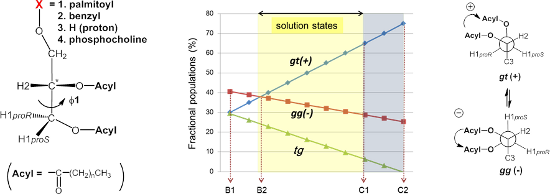
- Yoshihiro Nishida Mengfei Yuan Kazuo Fukuda Kaito Fujisawa Hirofumi Dohi Hirotaka Uzawa Nanobiology Course in Graduate School of Advanced Integration Science & Molecular Chirality Research Center, Chiba University, Matsudo 271-8510, Chiba, Japan Nanomaterials Research Institute, National Institute
- used. From the 1H NMR analysis, the helical conformational properties around the 1,2-diacyl moiety conformed to a simple empirical rule, which permitted the proposal of a conformational diagram for 1,2-dipalmitoyl-sn-glycerols in the solution states. Keywords: cell membrane; chirality; conformation
- chiral biomolecules have an asymmetric sn-glycerol backbone. Although sn-glycerol is symmetric, an sn-3 phosphate group makes it chiral with an (R)-configuration at the sn-2 position [4]. Such molecular chirality is crucial to not only their biological activities but also for their metaphysical




Molecular recognition of N-acetyltryptophan enantiomers by β-cyclodextrin
Beilstein J. Org. Chem. 2017, 13, 1572–1582, doi:10.3762/bjoc.13.157
- the enhancement of solubility, bioavailability and stability of drugs [2][3][4][5]. Moreover, being oligomers of α-D-glucopyranose, CDs possess an intrinsic chirality, thus they form diastereomeric inclusion complexes with enantiomeric pairs and frequently they exhibit enantioselectivity in aqueous
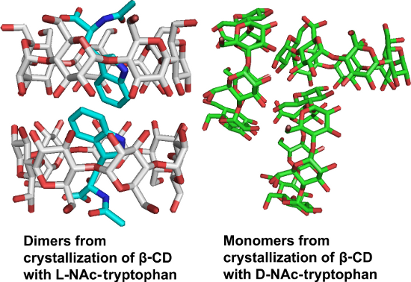
- The molecular models of D-NAcTrp complexes were based (a) on the geometry of the major orientation of β-CD–L-NAcTrp by changing the chirality of the Cα atom and (b) on β-CD non-hydrogen atoms of the corresponding lattice. To relieve steric clashes, restrained energy minimization of D-NAcTrp have been
- cavity with the aliphatic part protruding from its primary side towards the empty space formed by three neighboring β-CD monomers of the lattice (Figure 4b), whereas for the β-CD–D-NAcTrp dimer model the crystallographic coordinates of the β-CD–L-NAcTrp dimer were employed after changing the chirality of


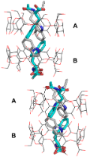


Bifunctional organocatalysts for the asymmetric synthesis of axially chiral benzamides
Beilstein J. Org. Chem. 2017, 13, 1518–1523, doi:10.3762/bjoc.13.151

- . Moderate to good enantioselectivities were afforded with a range of benzamide substrates. Mechanistic investigations were also carried out. Keywords: axial chirality; benzamide; bifunctional organocatalyst; molecular conformation; multipoint recognition; Introduction Bifunctional organocatalysts have
- resolution [42][43][44][45][46][47], desymmetrization [48][49][50][51][52][53][54], de novo annulation [55][56][57][58][59][60][61], and point-to-axial chirality transfer [58][59] (for reviews, see references [31][62][63]), motivated us to expand on the utility of this class of small-molecule catalysts. We
- axial chirality [36][37]. Thus, we assumed that this method could be further applied to the enantioselective synthesis of a range of axially chiral compounds. In this study, we present the enantioselective synthesis of 3-hydroxybenzamides via aromatic electrophilic bromination [28][29]. The 3


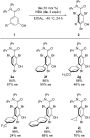


Base-promoted isomerization of CF3-containing allylic alcohols to the corresponding saturated ketones under metal-free conditions
Beilstein J. Org. Chem. 2017, 13, 1507–1512, doi:10.3762/bjoc.13.149

- the toluene refluxing temperature, and utilization of the corresponding optically active substrates unambiguously demonstrated that this transformation proceeded in a highly stereoselective fashion. Keywords: allylic alcohols; chirality; computation; 1,3-proton shift; trifluoromethyl; Introduction
- chirality transmission (CT) on the basis of the chiral HPLC analysis (Table 4, entries 1, 4, and 5). Unanimous formation of (R)-stereoisomers at the 3 position of 7 from (R,E)-6 led to confirmation that the proton attached to C1 was migrated to C3 from its si face, thus from the same back side if (R,E)-6
- tractable tertiary amine as DBU, thus under metal-free conditions like the cases of the Ando [14] and Martín-Matute groups [15]. Moreover, this intriguing proton shift was clarified to be applied for optically active allylic alcohols whose chirality was transmitted almost in a perfect fashion. These results


Synthesis of alkynyl-substituted camphor derivatives and their use in the preparation of paclitaxel-related compounds
Beilstein J. Org. Chem. 2017, 13, 1230–1238, doi:10.3762/bjoc.13.122
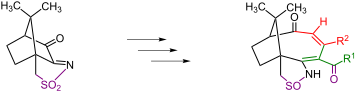
- the addition of organometallic reagents to the camphor carbonyl group allows for selective introduction of additional substituents and functional groups (e.g., as in [7]). Camphor was the source of chirality in Holton’s taxol synthesis [8] and other approaches to the taxane group of compounds [9][10




Cycloheximide congeners produced by Streptomyces sp. SC0581 and photoinduced interconversion between (E)- and (Z)-2,3-dehydroanhydrocycloheximides
Beilstein J. Org. Chem. 2017, 13, 1039–1049, doi:10.3762/bjoc.13.103
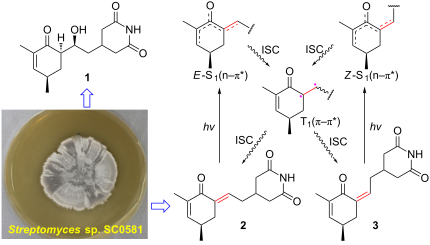
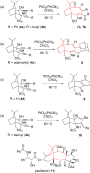
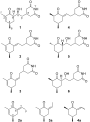
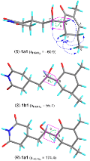
- geometries around torsion angles (C1–C6–Cα–Cβ, Φ) of 90° and −90° in the S1 surface, for which optimizations failed to converge. Due to the presence of the stereogenic center C4 in 2a and 3a, the twisted structures around Φ 90º and −90° are diastereomeric in chirality [15]. Thus, two twisted minima, P and P




Inclusion complexes of β-cyclodextrin with tricyclic drugs: an X-ray diffraction, NMR and molecular dynamics study
Beilstein J. Org. Chem. 2017, 13, 714–719, doi:10.3762/bjoc.13.70
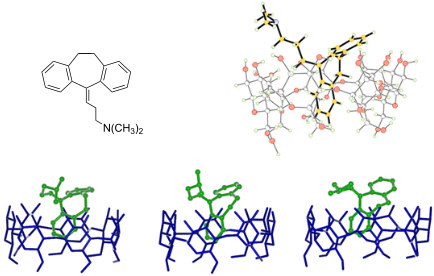
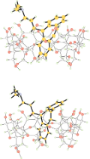
- compound 1. Compounds 1 and 2 are not planar and the exocyclic double bond prevents the free rotation of the side chain with respect to the ring system. Consequently, 1 and 2 show inherent chirality [9] as lacking of symmetry elements. The main purpose of the work is the comparison of the structural




Studies directed toward the exploitation of vicinal diols in the synthesis of (+)-nebivolol intermediates
Beilstein J. Org. Chem. 2017, 13, 571–578, doi:10.3762/bjoc.13.56

- Runjun Devi Sajal Kumar Das Department of Chemical Sciences, Tezpur University, Napaam, Tezpur, Assam-784028, India 10.3762/bjoc.13.56 Abstract While the exploitation of the Sharpless asymmetric dihydroxylation as the source of chirality in the synthesis of acyclic molecules and saturated
- that a large number of racemic and asymmetric syntheses of nebivolol and their intermediates have been described in the literature, however, the Sharpless asymmetric dihydroxylation has never been employed as the sole source of chirality for this purpose. Keywords: dihydroxylation; epoxide-ring
- Sharpless asymmetric dihydroxylation as the sole source of chirality [27]. For the synthesis of chroman derivative 2, first a base-mediated intramolecular SNAr reaction was envisioned for the aryl C–O bond formation under transition-metal-free conditions [28][29][30]. The additional benefit of this strategy


Polyketide stereocontrol: a study in chemical biology
Beilstein J. Org. Chem. 2017, 13, 348–371, doi:10.3762/bjoc.13.39
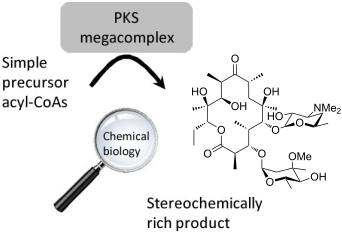
- controlling the configurational outcomes. Finally, where chirality is introduced, post-PKS processing reactions also proceed with defined stereochemistry, although this aspect will also not be discussed in this article. The following sections will address the role of each of the principal PKS domains in




New approaches to organocatalysis based on C–H and C–X bonding for electrophilic substrate activation
Beilstein J. Org. Chem. 2016, 12, 2834–2848, doi:10.3762/bjoc.12.283
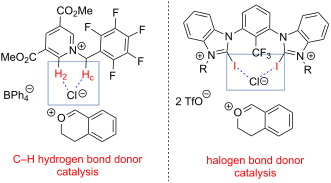
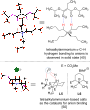
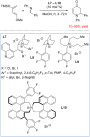
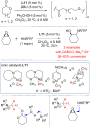
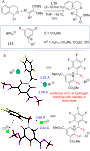
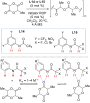
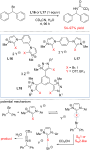
- form the corresponding salts, and these generated in situ ion pairs were treated with silyl enol ethers in the presence of chiral catalysts L2–L4 to form chiral addition products. High levels of chirality transfer were generally observed for various 6-membered nitrogen-containing heterocyclic
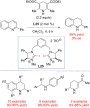
- as potential catalysts, and chiral catalyst L25 was identified as the catalyst of choice. Although no chirality transfer was observed during the reduction of 2-phenylquinoline, L25 was found to be a very active catalyst promoting transfer hydrogenation of a C=N group containing heterocycles and










Biomimetic synthesis and HPLC–ECD analysis of the isomers of dracocephins A and B
Beilstein J. Org. Chem. 2016, 12, 2523–2534, doi:10.3762/bjoc.12.247

- conjugates of racemic naringenin ((±)-1) with pyrrolidine-2-one with C-6–C-5” and C-8–C-5” linkage, respectively. Due to the two chirality centers, four possible stereoisomers exist for each regioisomer, and accordingly, the isolated substances were verified to be 1:1 mixtures of two diastereoisomeric


A new and expeditious synthesis of all enantiomerically pure stereoisomers of rosaprostol, an antiulcer drug
Beilstein J. Org. Chem. 2016, 12, 2234–2239, doi:10.3762/bjoc.12.215
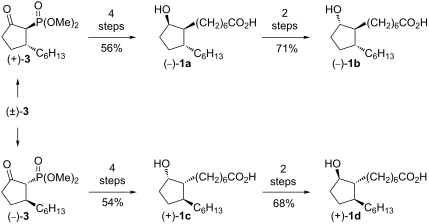
- (−)-1a obtained herein has the absolute configuration R at the C-2 stereogenic center. As the chirality at this carbon atom remains unchanged in the four-step conversion of (+)-3 into (−)-1a, the same chirality has to be assigned to the corresponding carbon atom (now C-3) in (+)-3. Taking into account a



Determination of the absolute stereostructure of a cyclic azobenzene from the crystal structure of the precursor containing a heavy element
Beilstein J. Org. Chem. 2016, 12, 2211–2215, doi:10.3762/bjoc.12.212
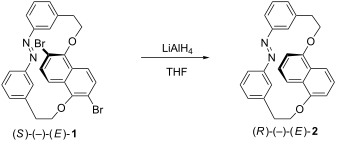
- ; cyclic compound; enantiomer; stereostructure; X-ray crystal analysis; Introduction Chirality is a topic of fundamental importance in several branches of science [1][2][3][4][5]. Homochirality in nature was one of the most important challenges for researchers and the origin is still unsolved [6][7][8
- pharmaceutical ingredients [11]. In addition to the special interest in molecular chirality in diverse fields of biology and pharmaceutical chemistry, several chiral molecules have been synthesised and studied for their stereostructure-dependent physical properties such as optical activity [12][13][14][15][16
- chirality methods [28][29], NMR spectroscopy [30][31][32], X-ray diffraction [33][34][35], etc. In addition to these methods, many researchers explored a combination of vibrational circular dichroism and quantum mechanical calculations to determine the absolute stereostructures [36][37][38]. Among various


Varioloid A, a new indolyl-6,10b-dihydro-5aH-[1]benzofuro[2,3-b]indole derivative from the marine alga-derived endophytic fungus Paecilomyces variotii EN-291
Beilstein J. Org. Chem. 2016, 12, 2012–2018, doi:10.3762/bjoc.12.188
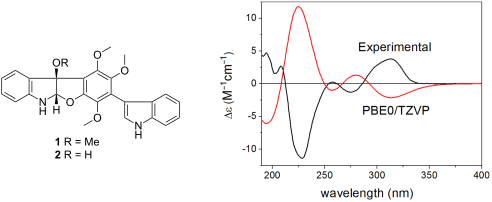
- Cotton effects (CEs) had the same sign for conformer A and B, while the lower-wavelength (<250 nm) CEs were significantly different. The hindered rotation along the biaryl linkage may have implied an additional stereogenic element, which would have enabled atropodiastereomers with axial chirality. In
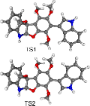
- order to explore the possibility of axial chirality, torsional angle scans were performed on the lowest-energy M (conformer A) and P (conformer B) helicity gas-phase conformers or atropodiastereomers. Rotational energy barriers between the two isomers were estimated to be ca. 35–42 kJ/mol for TS1 (ωC12
- showed that there is no axial chirality in 1, and equilibrating conformers with M and P helicity are present in solution as obtained in the conformational analysis. The Boltzmann-weighted ECD spectra calculated for both the gas-phase and the solvent model conformers of (2R,3R)-1 at B3LYP/TZVP, BH&HLYP



Enantioselective addition of diphenyl phosphonate to ketimines derived from isatins catalyzed by binaphthyl-modified organocatalysts
Beilstein J. Org. Chem. 2016, 12, 1551–1556, doi:10.3762/bjoc.12.149
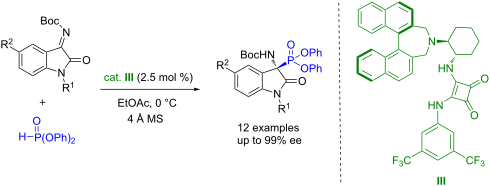
- properties [5], enzyme inhibition [6], peptide mimetic function [7], and herbicidal properties [8]. Since the biological activity of α-aminophosphonate derivatives is dependent upon the chirality of the α-position to the phosphorus atom, asymmetric synthesis of α-aminophosphonates has received considerable


Stereodynamic tetrahydrobiisoindole “NU-BIPHEP(O)”s: functionalization, rotational barriers and non-covalent interactions
Beilstein J. Org. Chem. 2016, 12, 1453–1458, doi:10.3762/bjoc.12.141
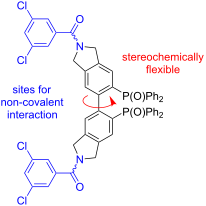
- ][6], palladium [7][8], platinum [9][10] and gold [11][12][13] in combination with chiral co-ligands or counter ions that are used after alignment of the ligand’s axial chirality. One major advantage of stereodynamic ligands is that there is no need for separate preparation of one ligand enantiomer as
- long as their chirality can be controlled by chiral additives or auxiliaries. In addition, the simultaneous presence of both axially chiral BIPHEP enantiomers can be beneficial as this allows bidirectional control of enantioselectivity depending on temperature [14][15]. In this approach, both product


A practical way to synthesize chiral fluoro-containing polyhydro-2H-chromenes from monoterpenoids
Beilstein J. Org. Chem. 2016, 12, 648–653, doi:10.3762/bjoc.12.64
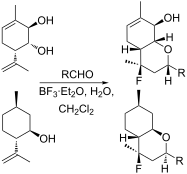
- -fluorohexahydro-2H-chromenes under the developed conditions, the reaction occurs with inversion of configuration. Keywords: chirality; fluorine; halo-Prins reaction; isopulegol; monoterpene; Introduction Recently, we have found that a reaction between para-mentha-6,8-dien-2,3-diol (1) and aromatic aldehydes in





