Search results
Search for "cross-coupling" in Full Text gives 616 result(s) in Beilstein Journal of Organic Chemistry. Showing first 200.
Recent advances and perspectives in ruthenium-catalyzed cyanation reactions
Beilstein J. Org. Chem. 2022, 18, 37–52, doi:10.3762/bjoc.18.4
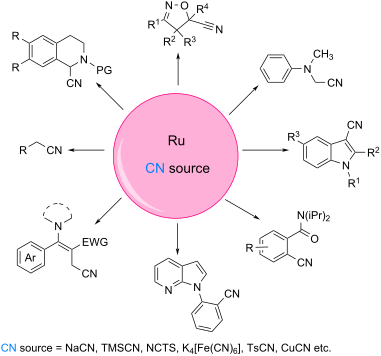
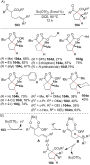
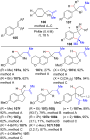
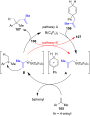
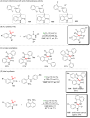
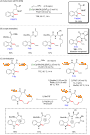
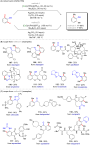
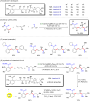
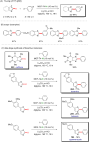
- oxidative cyanation of aza-Baylis–Hillman adducts. Synthesis of 1° alkyl nitriles using [Ru(bpy)3](PF6)2 as the photocatalyst. Synthesis of 2° and 3° alkyl nitriles using [Ru(bpy)3](PF6)2 as the photocatalyst. Photoredox cross coupling reaction. Synthesis of α-amino nitriles from amines via a one-pot


Peptide stapling by late-stage Suzuki–Miyaura cross-coupling
Beilstein J. Org. Chem. 2022, 18, 1–12, doi:10.3762/bjoc.18.1
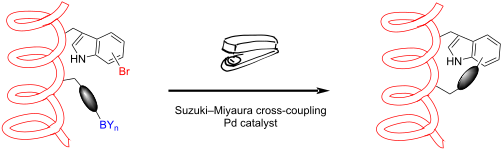
- –Miyaura cross-coupling of bromotryptophan-containing peptides of the catenin-binding domain of axin. Optimisation of the linker length in order to find a compromise between both sufficient linker rigidity and flexibility resulted in a peptide with an increased α-helicity and enhanced binding affinity to
- –Miyaura cross-coupling; Introduction Peptide cyclisation emerged as a popular approach to limit conformational mobility in order to enhance the binding affinity towards a biological target. Moreover, cyclic peptides are more stable against proteolytic digestion and can provide an improved membrane
- ]. Additionally, halotryptophans were incorporated in pentapeptides as building blocks for macrocyclisation by Suzuki–Miyaura cross-coupling (SMC) aiming at the preparation of bicyclic peptides [71]. Recently, intramolecular SMC has been successfully applied to side chain-to-tail cyclisation between


DABCO-promoted photocatalytic C–H functionalization of aldehydes
Beilstein J. Org. Chem. 2021, 17, 2959–2967, doi:10.3762/bjoc.17.205
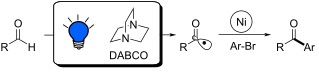
- strategy for aldehyde C–H activation. The acyl radicals generated in this step were arylated with aryl bromides through a well stablished nickel cross-coupling methodology, leading to a variety of interesting aryl ketones in good yields. We also performed computational calculations to shine light in the
- through this step were used in a well-stablished nickel-catalyzed cross-coupling reaction [19][27][28][29][30] with aryl bromides as a proof of concept, leading to the synthesis of aryl ketones. We also present computational calculations of the HAT reaction step with the DABCO radical cation as the




Iron-catalyzed domino coupling reactions of π-systems
Beilstein J. Org. Chem. 2021, 17, 2848–2893, doi:10.3762/bjoc.17.196
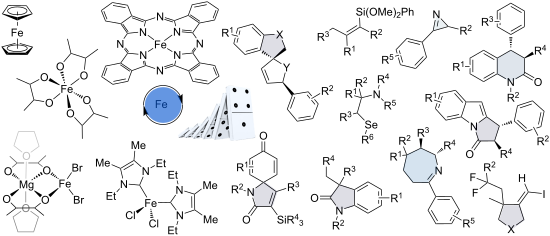
- the design of novel domino reactions. Keywords: cascade; catalysis; coupling; earth-abundant; iron; Introduction Over the past couple decades, the use of transition-metal-catalyzed cross-coupling reactions have become a staple within the organic chemist’s arsenal of carbon–carbon and carbon
- first Fe-catalyzed cross-coupling reaction between Grignard reagents and vinyl halides [37]. As of late, the development of Fe-catalyzed cross-coupling methodology and mechanistic rationales have burgeoned [38]. Today, the rate of growth within the field of iron catalysis is much greater than that
- compared to the more studied late TMs [39][40][41][42][43]. Besides the more recognized concept of TM cross-coupling reactions revolving around an organic electrophile bearing a leaving group and an organometallic nucleophile, there is another large area of cross-coupling reactions that have been under


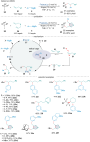


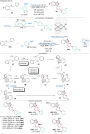
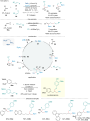
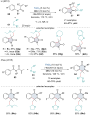









The PIFA-initiated oxidative cyclization of 2-(3-butenyl)quinazolin-4(3H)-ones – an efficient approach to 1-(hydroxymethyl)-2,3-dihydropyrrolo[1,2-a]quinazolin-5(1H)-ones
Beilstein J. Org. Chem. 2021, 17, 2787–2794, doi:10.3762/bjoc.17.189
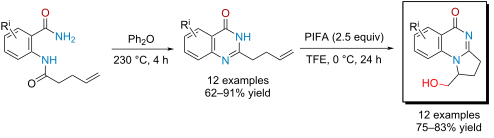
- [13], as well as Ir-catalyzed intramolecular dehydrative cross-coupling of 2-(pyrrolidine-1-yl)benzamide [14]. Another approach to compounds of type 1 that relies on a cascade formation of the pyrimidine and pyrrole rings have found much wider application (see Scheme 1B). One of its variations


Recent advances in the asymmetric phosphoric acid-catalyzed synthesis of axially chiral compounds
Beilstein J. Org. Chem. 2021, 17, 2729–2764, doi:10.3762/bjoc.17.185
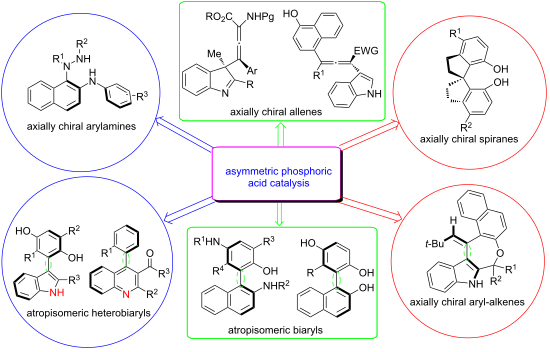
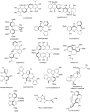
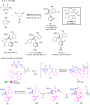
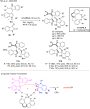
- acids are widely used in stereoselective oxidative/cross-coupling of two aryl counterparts, asymmetric control of aromatic ring formation, atroposelective functionalization of biaryl compounds, and so on [17][29][30]. In this context, Akiyama (2004) described that chiral phosphoric acids (CPAs) have
- aryl–aryl cross-coupling using various transition-metal catalysts has rarely been successful for the enantioselective construction of hindered biaryls [39] due to the discord between the temperature tolerance of the rotational axis and the high temperature required for C–H activation and suffered from
- poor chemoselectivity [40]. However, the realization of this redox-neutral aryl–aryl cross-coupling is a formidable challenge. Therefore, the discovery of efficient catalysts and ligands to achieve high stereoselectivity is a fundamental issue in catalytic asymmetric synthesis [14]. In this section, we












Synthesis of highly substituted fluorenones via metal-free TBHP-promoted oxidative cyclization of 2-(aminomethyl)biphenyls. Application to the total synthesis of nobilone
Beilstein J. Org. Chem. 2021, 17, 2668–2679, doi:10.3762/bjoc.17.181
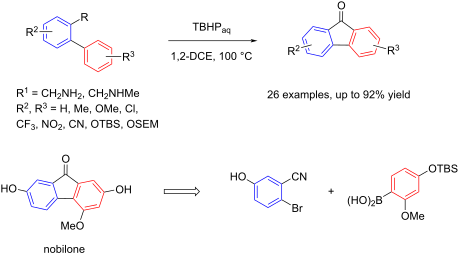
- radical cyclizations [22], Pschorr reactions [23], and diverse cycloaddition protocols [24][25]. Especially transition-metal-catalyzed cross-coupling reactions starting from benzophenones, benzoic acids, dihalogenated benzene building blocks and others have emerged as new approaches in recent years [26
- ][27][28]. Various approaches starting from functionalized biaryls have hereby attracted considerable interest, since the precursors are readily available by established cross-coupling reactions. Beyond transition-metal-catalyzed reactions, acid-mediated cyclizations of biphenylcarboxylic acids and
- Suzuki cross-coupling reactions, followed by reduction or reductive amination. The oxidative cyclization conditions are compatible with many functional groups on the aromatic rings (methoxy, chloro, cyano, nitro, and phenol protecting groups like TBS and SEM – but not benzyl and methylenedioxy


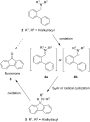



Ligand-dependent stereoselective Suzuki–Miyaura cross-coupling reactions of β-enamido triflates
Beilstein J. Org. Chem. 2021, 17, 2657–2662, doi:10.3762/bjoc.17.179
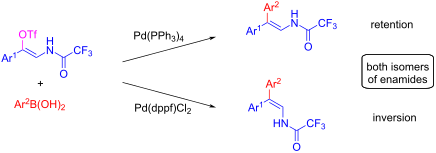
- 43 Prague 2, Czech Republic 10.3762/bjoc.17.179 Abstract The stereoselective Suzuki–Miyaura cross-coupling of (Z)-β-enamido triflates is demonstrated. Depending on the nature of the ligand in the palladium catalyst, either retention or inversion of the configuration during the synthesis of β,β
- of cytotoxic, antifungal, or antibiotic properties [10][11][12]. Modern stereoselective syntheses leading to highly substituted enamides include cross-coupling of vinyl (pseudo)halides or organoboron compounds [13], hydroamidation of alkynes [14][15][16], ynamide functionalization [17][18][19], or
- were found to undergo cross-coupling reactions with retention of configuration on the double bond and served as valuable starting materials for the synthesis of functionalized β,β-disubstituted enamides (Scheme 1A) [21][23]. In the last decade, only a few reports describing isomerization of the double



Electrocatalytic C(sp3)–H/C(sp)–H cross-coupling in continuous flow through TEMPO/copper relay catalysis
Beilstein J. Org. Chem. 2021, 17, 2650–2656, doi:10.3762/bjoc.17.178
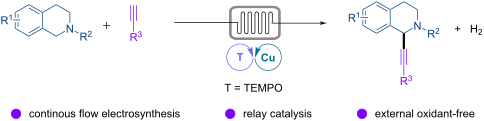
- Bin Guo Hai-Chao Xu Key Laboratory of Chemical Biology of Fujian Province and College of Chemistry and Chemical Engineering, Xiamen University, People’s Republic of China 10.3762/bjoc.17.178 Abstract Electrocatalytic dehydrogenative C(sp3)–H/C(sp)–H cross-coupling of tetrahydroisoquinolines with
- and sustainable access to 2-functionalized tetrahydroisoquinolines. Keywords: continuous flow; copper; catalysis; dehydrogenative cross-coupling; electrochemistry; Introduction The dehydrogenative cross-coupling of two C–H bonds represents an ideal strategy for the construction of C–C bonds [1][2
- ]. In this context, few methods have been developed for the dehydrogenative cross-coupling of tetrahydroisoquinolines with terminal alkynes because of the prevalence of the tetrahydroisoquinoline moiety in natural products and bioactive molecules [3][4][5][6][7][8][9][10]. These methods proceed through




Visible-light-mediated copper photocatalysis for organic syntheses
Beilstein J. Org. Chem. 2021, 17, 2520–2542, doi:10.3762/bjoc.17.169
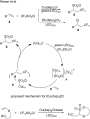
- salts or the substitution of thermal heating for LED irradiation resulted in a low yield of the cross-coupling products 22 and 23, indicating the necessity of the copper salt and LED irradiation. Mild conditions, such as Pd-free and high reaction yields at room temperature, make this method a very
- promising, scalable green process that can be used as an alternative to the conventional Sonogashira cross-coupling reactions. In 2018, Lalic and co-workers [66] extended this approach to alkyl halides and reported the photoinduced copper-catalyzed Sonogashira coupling of alkynes and alkyl iodide 21. The
- ester acted as an ideal radical precursor and accepted a single electron from the excited state CuI-acetylide complex. The copper catalyst plays a dual role, namely, as a photoredox catalyst and a cross-coupling catalyst. NHP-type esters inhibited the homodimerization of the alkyl radical and terminal






Synthesis and investigation on optical and electrochemical properties of 2,4-diaryl-9-chloro-5,6,7,8-tetrahydroacridines
Beilstein J. Org. Chem. 2021, 17, 2450–2461, doi:10.3762/bjoc.17.162

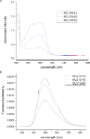
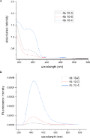
- /bjoc.17.162 Abstract A facile synthesis of 2,4-diaryl-9-chloro-5,6,7,8-tetrahydroacridine derivatives is reported which is based on POCl3-mediated cyclodehydration followed by double Suzuki–Miyaura cross-coupling. The absorption and fluorescence properties of the obtained products were investigated and
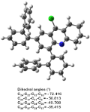
- their HOMO/LUMO energy levels were estimated by cyclic voltammetry measurements. Besides, density functional theory calculations were carried out for further exploration of their electronic properties. Keywords: catalysis; cross-coupling; cyclization; fluorescence; palladium; Introduction π-Conjugated
- their optoelectronic properties, the search for new candidates is of ongoing interest. Recently, considerable attention has been given to acridines in our laboratory and we developed new synthetic methods for dibenzoacridines and acridones based on Pd-catalyzed cross-coupling reactions [55][56]. More






Allylic alcohols and amines by carbenoid eliminative cross-coupling using epoxides or aziridines
Beilstein J. Org. Chem. 2021, 17, 2385–2389, doi:10.3762/bjoc.17.155

- Matthew J. Fleming David M. Hodgson Department of Chemistry, Chemistry Research Laboratory, University of Oxford, Mansfield Road, Oxford OX1 3TA, United Kingdom 10.3762/bjoc.17.155 Abstract α-Lithiated terminal epoxides and N-(tert-butylsulfonyl)aziridines undergo eliminative cross-coupling with
- (Scheme 1). The eliminative cross-coupling of carbenoids can provide a way to unsymmetrical alkenes, provided the differential reactivity of the two carbenoids is suitably matched [2]. In the current letter, we report preliminary results on the latter strategy to form alkenes which possess an allylic
- with cross-coupling using the same carbenoid and epoxide 5 (Scheme 5), where the presence of LTMP also proved necessary. A cinnamylamine 23 could be obtained in a tin-free process (Scheme 10), which utilises the increased acidity of a benzylic ether 22. In this case, the presence of LTMP was necessary


Synthesis of phenanthridines via a novel photochemically-mediated cyclization and application to the synthesis of triphaeridine
Beilstein J. Org. Chem. 2021, 17, 2340–2347, doi:10.3762/bjoc.17.152
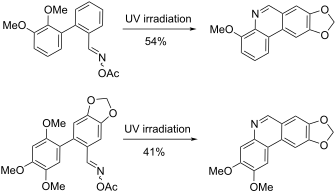
- –Miyaura cross-coupling reaction of a variety of halogenated methoxybenzene-containing compounds with 2-(formylphenyl)boronic acids in generally good yields [15]. As a next step, the biaryl aldehydes 13a–f were converted into their corresponding oximes 14a–f in good yields as a mixture of (E) and (Z




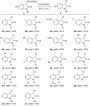
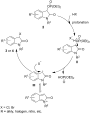
A novel methodology for the efficient synthesis of 3-monohalooxindoles by acidolysis of 3-phosphate-substituted oxindoles with haloid acids
Beilstein J. Org. Chem. 2021, 17, 2321–2328, doi:10.3762/bjoc.17.150
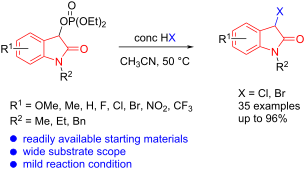
- recently as precursors in Friedel–Crafts reactions of arenes [30][31] and cross-coupling reactions of arylboronic reagents [32]. However, the direct SN1 reaction of such isatin-derived 3-phosphate-substituted oxindoles by halide ions as nucleophiles has not been developed yet and remains an unsolved




Photoredox catalysis in nickel-catalyzed C–H functionalization
Beilstein J. Org. Chem. 2021, 17, 2209–2259, doi:10.3762/bjoc.17.143
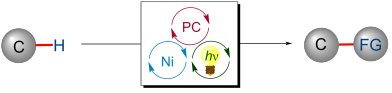
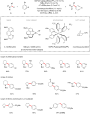
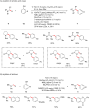
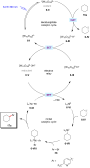
- powerful strategy in organic synthesis due to the improved atom-, step- and resource economy in comparison with cross-coupling or classical organic functional group transformations. Despite the significant advances in the metal-catalyzed C‒H activations, recent developments in the field of
- a reliable strategy in modern organic synthesis. Palladium-catalyzed cross-coupling reactions such as Mizoroki–Heck [5][6][7][8], Suzuki–Miyaura [9][10][11], Buchwald–Hartwig [12][13], Negishi [14][15], Migita–Stille [16], Sonogashira [17], among others [18][19][20], significantly changed the design
- of synthetic routes for modern pharmaceuticals [21][22]. Over the past two decades, nickel has emerged as an attractive alternative to palladium due to its relative earth-abundance, less toxicity, and inexpensiveness. Despite the fact that the nickel-catalyzed cross-coupling reactions represent a














Chemical syntheses and salient features of azulene-containing homo- and copolymers
Beilstein J. Org. Chem. 2021, 17, 2164–2185, doi:10.3762/bjoc.17.139
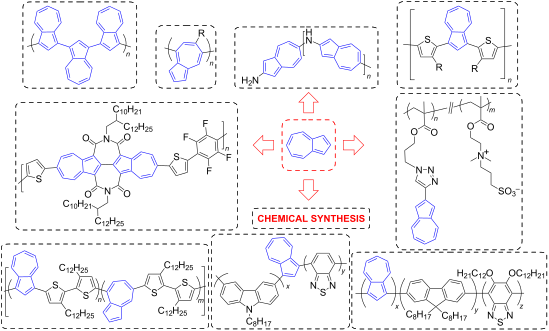
- -(n-dodecyl)azulene (16) is shown in Scheme 5A. The Sonogashira cross-coupling reaction between 4,7-dibromo-6-(n-dodecyl)azulene (13) and 4,7-diethynyl-6-(n-dodecyl)azulene (16) yielded 4,7-polyazulene 17 linked through ethynyl bridges (Scheme 5B). Similarly, the Yamamoto cross-coupling reaction
- -azulene) units capable of absorbing in the near IR region (1.0 to 2.5 μm). Their synthetic strategy involved employing 1,3-dibromo-[2-(3-dodecylthien-2-yl)]azulene (46) as a key precursor and Suzuki and Stille cross-coupling reactions as polymerization tools. The polymer 50 was synthesized from the 1,3
- In 2009, Xu and co-workers [40] synthesized various examples of azulene-fluorene conjugated polymers by using Suzuki cross-coupling reactions. The first set of polymers, poly[2,7-(9,9-dialkylfluorenyl)-alt-(1’,3’-azulenyl)] 106–109 was prepared by the reaction of 1,3-dibromoazulene (4) with 9,9


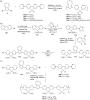

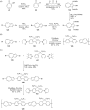


Catalyzed and uncatalyzed procedures for the syntheses of isomeric covalent multi-indolyl hetero non-metallides: an account
Beilstein J. Org. Chem. 2021, 17, 2102–2122, doi:10.3762/bjoc.17.137

- indolyl amines through Buchwald–Hartwig cross coupling. Synthesis of 3,3’-bis(indolyl) ethers. C–H silylation of indoles. n-BuLi-mediated syntheses of bis(indol-3-yl)silanes. Acid-catalyzed syntheses of bis(indol-3-yl)silanes and mechanisms. B(C6F5)3 and Al(C6F5)3-catalyzed syntheses of bis(indol-3-yl


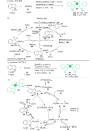


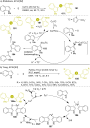
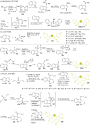

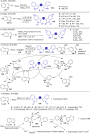


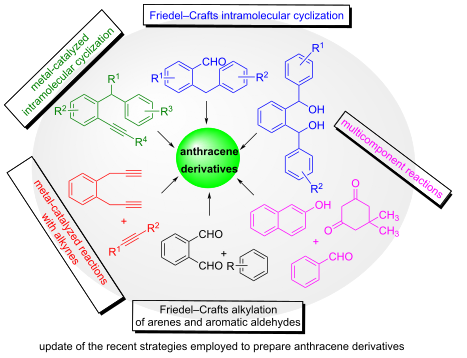
Recent advances in the syntheses of anthracene derivatives
Beilstein J. Org. Chem. 2021, 17, 2028–2050, doi:10.3762/bjoc.17.131
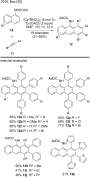
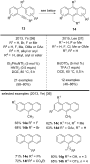
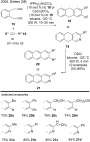
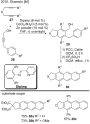
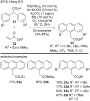
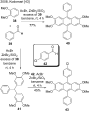
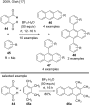
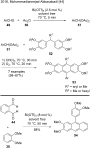
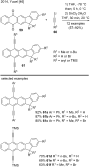
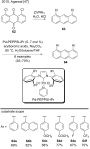
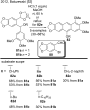
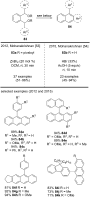
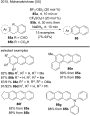
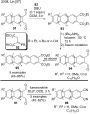
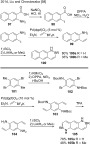
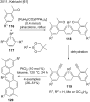
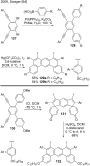
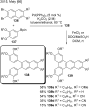
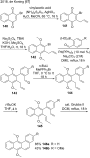
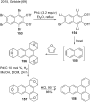
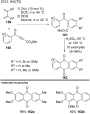
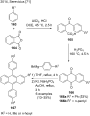
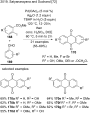
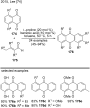
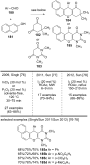
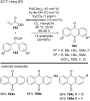
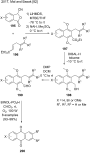
- 3-amino-2-naphthoic acid (97) to a Sandmeyer reaction and obtained 98. Then, a Curtius rearrangement of 98 by using diphenylphosphoryl azide (DPPA) yielded 3-iodonaphthalen-2-amine, that was subjected to a Suzuki cross-coupling with potassium vinyltrifluoroborate resulting in aminostyrene 99. The
- -dibromo-2,5-dimethylbenzene (101), with subsequent Suzuki cross-coupling of compound 102 with potassium vinyltrifluoroborate, removal of the N-Boc protecting group of 103 with trifluoroacetic acid, and borylative cyclization of precursor aminostyrene 104 [58]. Sparr’s research group developed the 1,5
















Asymmetric organocatalyzed synthesis of coumarin derivatives
Beilstein J. Org. Chem. 2021, 17, 1952–1980, doi:10.3762/bjoc.17.128
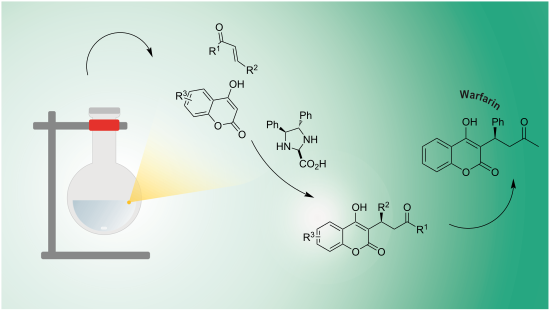
- -catalyzed cross-coupling reactions of coumarin derivatives [24]. Coumarins are a promising scaffold for design and development of bioactive agents, however it possesses a flat system [25]. One of the attractive benefits of introducing chirality in a drug candidate is that it leads to increased complexity to


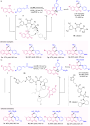


On the application of 3d metals for C–H activation toward bioactive compounds: The key step for the synthesis of silver bullets
Beilstein J. Org. Chem. 2021, 17, 1849–1938, doi:10.3762/bjoc.17.126
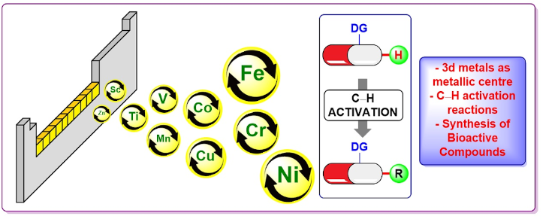
- in a cheaper way leading to an easier access of currently expensive treatments to the general population. Chromium-catalyzed C–H activation Chromium is a relatively abundant transition metal that has been used for oxidative reactions, including cross-coupling and carbon–carbon bond formation
- high importance in the field of Alzheimer’s disease studies [169]. In 2020, Xu and co-workers described an unprecedented dual C–H functionalization of indolin-2-ones and benzofuran-2-ones via an oxidative C(sp3)–H cross-coupling protocol catalyzed by inexpensive FeCl3 and ligand-free conditions (Scheme
- ] and batteries [174]. Due to its accessibility, it is well explored in catalysis for many fields, such as cycloaddition reactions [175], polymerization [176], and C–C cross-coupling methods [177]. Several biologically active compounds have been obtained through cobalt catalysis [178][179][180


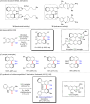


























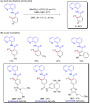
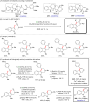
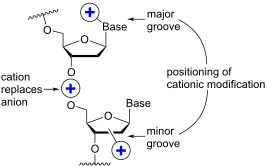
Cationic oligonucleotide derivatives and conjugates: A favorable approach for enhanced DNA and RNA targeting oligonucleotides
Beilstein J. Org. Chem. 2021, 17, 1828–1848, doi:10.3762/bjoc.17.125
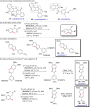
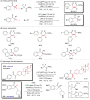
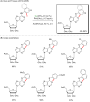
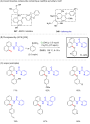
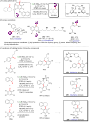
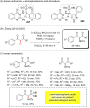
- containing a stretch of four DNA nucleotides in the middle, flanked by the modifications in a ´mixmer´ design, which is important for designing gapmer ASOs [31]. Another well-established method for C-5 pyrimidine modification involves the Sonogashira cross-coupling reaction between an alkyne group and a 5


Sustainable manganese catalysis for late-stage C–H functionalization of bioactive structural motifs
Beilstein J. Org. Chem. 2021, 17, 1733–1751, doi:10.3762/bjoc.17.122

- selectivity, which is observed at the more electron-rich and the less sterically hindered position. Manganese-catalyzed late-stage C–H alkynylation Alkynes are invaluable intermediates in organic synthesis and are conventionally prepared via palladium-catalyzed cross-coupling reactions [62]. Moreover, they









2,4-Bis(arylethynyl)-9-chloro-5,6,7,8-tetrahydroacridines: synthesis and photophysical properties
Beilstein J. Org. Chem. 2021, 17, 1629–1640, doi:10.3762/bjoc.17.115
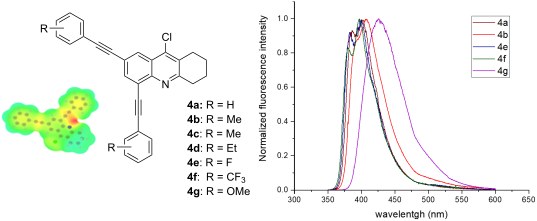
- properties. Herein, starting from readily available anthranilic acid, an efficient synthesis of 2,4-bis(arylethynyl)-9-chloro-5,6,7,8-tetrahydroacridine derivatives was accomplished via a one-pot double Sonogashira cross-coupling method. The UV-visible absorption and emission properties of the synthesized
- molecules have been examined. Additionally, theoretical studies based on density functional theory (DFT/B3LYP/6-31G(d)) were carried out. Keywords: alkynes; catalysis; cross-coupling; heterocycles; palladium; Introduction The development and design of small π-conjugated molecules have attracted increasing
- )-9-chloro-5,6,7,8-tetrahydroacridine derivatives via a double Sonogashira cross-coupling method. The arylethynyl groups expand the π-conjugation of the tetrahydroacridine core. The substituents located at the aryl group influenced the photophysical properties of the prepared molecules. In particular


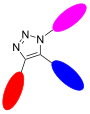
A recent overview on the synthesis of 1,4,5-trisubstituted 1,2,3-triazoles
Beilstein J. Org. Chem. 2021, 17, 1600–1628, doi:10.3762/bjoc.17.114
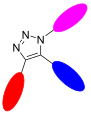
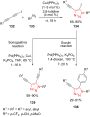
- 134 were used as starting material in the Sonogashira and Suzuki reactions. The Sonogashira−Hagihara cross-coupling led to alkynylation at position 5 of the triazole ring in the presence of CuI and Pd(PPh3)4 as catalytic system as well as K3PO4 as base in THF as solvent at 65 °C. However, the Suzuki
- −Miyaura cross-coupling produced a series of 5-aryl-4-ethynyl triazoles 136 in the presence of Pd(PPh3)4 as catalyst and K3PO4 as base in 1,4-dioxane as solvent at 100 °C (Scheme 39) [62]. A paper by Sekar et al. described the synthesis of polycyclic triazoles 142 through a domino alkyne insertion and C–H















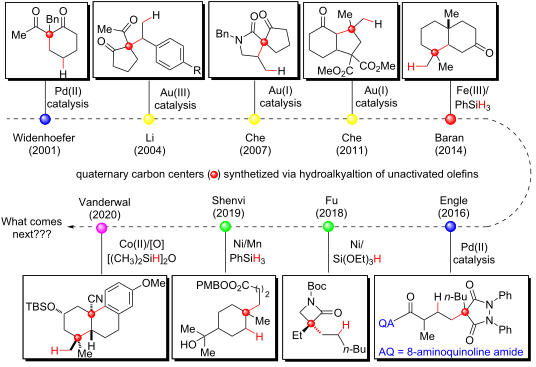
Methodologies for the synthesis of quaternary carbon centers via hydroalkylation of unactivated olefins: twenty years of advances
Beilstein J. Org. Chem. 2021, 17, 1565–1590, doi:10.3762/bjoc.17.112
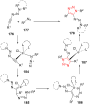
- C, which undergoes an oxidation process to generate carbocation D. A proton abstraction from D then affords the observed product. Cross-coupling reaction between unactivated olefins and alkyl halides under nickel catalysis The use of alkyl halides in transition-metal-catalyzed cross-couplings to
- form new C(sp3)–C(sp3) bonds remains a formidable challenge. The main issues associated with obtaining these cross-coupling products are the tendency of the alkylmetal intermediate generated during the reaction to undergo a β-hydride elimination and the slow rate of the oxidation step [100][101
- ]. Nickel catalysis is a viable alternative for this kind of cross-coupling reactions due to its particular radical mechanism, instead of the common metal-oxidative addition to organohalides [102][103][104]. Examples of the coupling between primary, secondary, and even tertiary alkyl halides with