


Search results
Search for "dye" in Full Text gives 278 result(s) in Beilstein Journal of Organic Chemistry. Showing first 200.
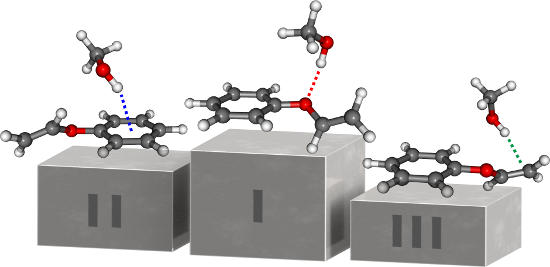
The phenyl vinyl ether–methanol complex: a model system for quantum chemistry benchmarking
Beilstein J. Org. Chem. 2018, 14, 1642–1654, doi:10.3762/bjoc.14.140
- is obtained via second harmonic generation in a BBO crystal using the output of a dye laser (Cobra-Stretch and PrecisionScan, Sirah). They are pumped by the second harmonic (532 nm) of a Nd:YAG laser (SpitLight 600 and SpitLight 1000, Innolas). The IR laser radiation in the range of 3520–3750 cm−1 is
- generated by difference frequency mixing (DFM) in a LiNbO3 crystal using the fundamental (1064 nm) of a seeded Nd:YAG laser (Quanta-Ray Pro-230, Spectra-Physics) and the output of a further dye laser (PrecisionScan, Sirah), which is pumped by the second harmonic (532 nm) of the same Nd:YAG laser


Hyper-reticulated calixarene polymers: a new example of entirely synthetic nanosponge materials
Beilstein J. Org. Chem. 2018, 14, 1498–1507, doi:10.3762/bjoc.14.127

- and shape of the guest. It is worth noting that CaNS4 shows better sequestration abilities than CaNS2 towards 6 and 8. This may be justified admitting that the presence of the aromatic linker unit favors the interaction with the aromatic dye, due to the occurrence of effective π···π interactions with


Metal-free formal synthesis of phenoxazine
Beilstein J. Org. Chem. 2018, 14, 1491–1497, doi:10.3762/bjoc.14.126
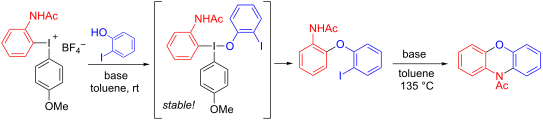
- ][8], are present in a variety of dyes [9], and can be applied in chemosensors and dye-sensitized solar cells (Figure 1) [10][11][12]. N-Arylphenoxazines were recently employed as photoredox catalysts in metal-free polymerizations [13]. The first synthesis of phenoxazine dates back more than 100 years


An overview of recent advances in duplex DNA recognition by small molecules
Beilstein J. Org. Chem. 2018, 14, 1051–1086, doi:10.3762/bjoc.14.93
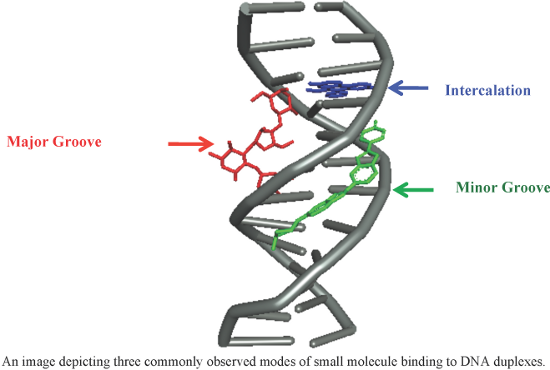
- challenging tandem hairpin Py/Im polyamides which could recognize >10 base pairs with flexible linker conjugated with a fluorescent dye (either Texas Red (TR) or Cyanine 3 (Cy3)) using a Fmoc-based solid phase synthetic approach; two of the representative conjugates 23 and 24 are shown in the Figure 8 [86][87






Diels–Alder cycloadditions of N-arylpyrroles via aryne intermediates using diaryliodonium salts
Beilstein J. Org. Chem. 2018, 14, 354–363, doi:10.3762/bjoc.14.23
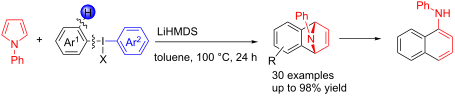
- °C resulted in N-phenylnaphthalen-1-ylamine (4) in 93% yield [23], which was widely used in dye-sensitized solar cells [24], hole transport materials [25][26] and organic light-emitting diodes (OLEDs, Scheme 2a) [27]. In another similar reaction with 3am, a novel N-phenylamine derivative 5 was


Fluorogenic PNA probes
Beilstein J. Org. Chem. 2018, 14, 253–281, doi:10.3762/bjoc.14.17
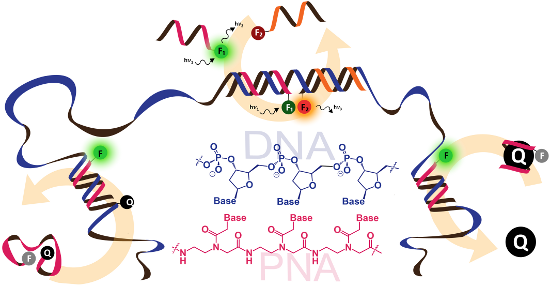
- fluorescence dye and quencher to be in close proximity, resulting in quenching of the dye. Binding to the complementary DNA target opened the hairpin structure and restored the fluorescence. In Armitage’s design [42], the entire beacon was purely PNA, while in the Ortiz design [41], PNA was employed as the DNA
- can be used directly without having to modify the synthetic protocols, but it is difficult to vary the positions of the label attachment. The use of pre-formed dye labeled PNA monomers [42][52][53] or post-synthetically functionalizable PNA monomers [54][55][56][57][58][59] (Figure 8) permits facile
- the biomolecular interactions to be investigated by adjusting the length and sequence of the PNA stem. PNA-based binary probes and DNA/RNA-templated reaction of PNA probes The working principle of binary probes involves the co-hybridization of two dye-labeled probes at adjacent positions on the same




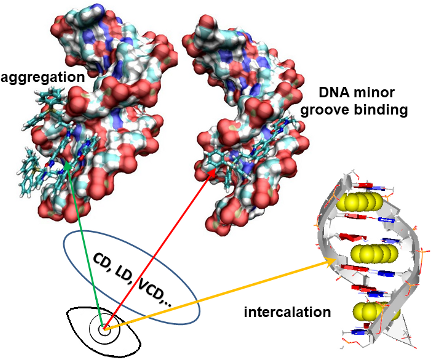
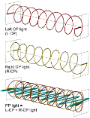
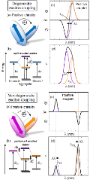
Polarization spectroscopy methods in the determination of interactions of small molecules with nucleic acids – tutorial
Beilstein J. Org. Chem. 2018, 14, 84–105, doi:10.3762/bjoc.14.5






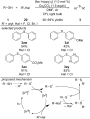
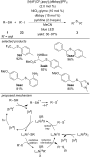
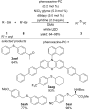
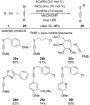
Photocatalytic formation of carbon–sulfur bonds
Beilstein J. Org. Chem. 2018, 14, 54–83, doi:10.3762/bjoc.14.4
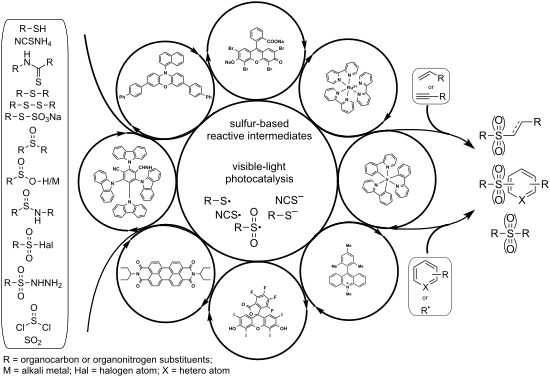
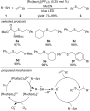
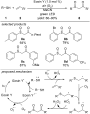
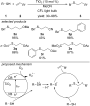
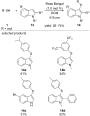
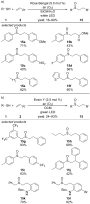
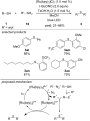
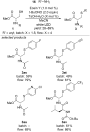
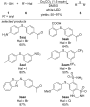
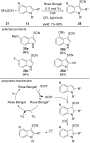
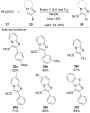
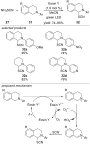
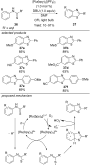
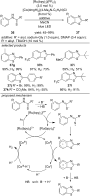
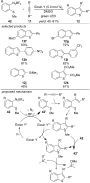
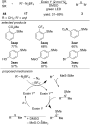
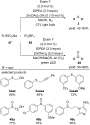
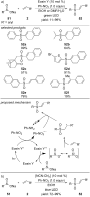
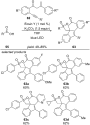
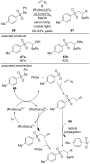
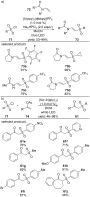
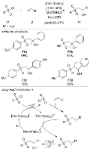
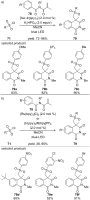
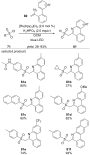
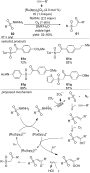
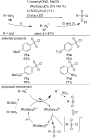
- authors propose that the photo-excited state of the organic dye Eosin Y is reductively quenched by the aryl thiol to form the Eosin Y radical anion and the respective aryl thiyl radical cation. Neutral Eosin Y is regenerated through oxidation of the radical anion by dioxygen. The resulting superoxide
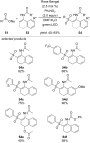
- steps. Applying the organic dye Eosin Y as photocatalyst avoids this problem. The single-electron oxidation of aryl thiols by the excited state of Eosin Y is thermodynamically feasible and forms a thiyl radical cation, which subsequently can be deprotonated by pyridine to the respective thiyl radical
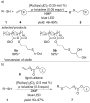
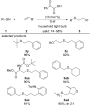
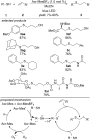
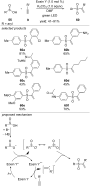
- (Scheme 46) [83]. By using Eosin Y as organic dye, aryl sulfinic acids could efficiently be cross-coupled with terminal alkynes. The Markovnikov regioselectivity is rationalized by a radical/radical cross-coupling pathway, instead of radical addition to an unsaturated system. The authors propose that





























Halogen-containing thiazole orange analogues – new fluorogenic DNA stains
Beilstein J. Org. Chem. 2017, 13, 2902–2914, doi:10.3762/bjoc.13.283
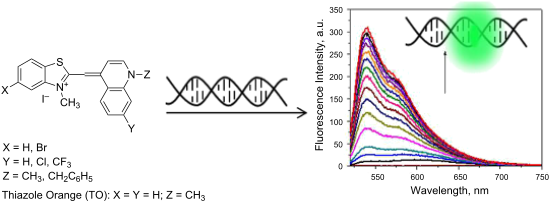
- fluorescence spectroscopy) and theoretical (DFT and TDDFT calculations) methods. Keywords: cyanine dyes; DFT calculations; green synthesis; nucleic acids; thiazole orange; Introduction Since the discovery by Lee and co-workers [1][2] that the old photographic dye thiazole orange, TO, (Scheme 1) has excellent
- also noteworthy that the presence of the Br substituent in the C-5 position of the benzothiazole system does not influence the positions of the absorption maxima (cf. 5a vs 5c and 5b vs 5d) but does lead to a decrease in the molar absorptivity (up to 20% from 5b to 5d). The addition of dsDNA to the dye
- solutions in TE buffer led to clear bathochromic (in the range 6 to 10 nm) and hypohromic shifts and this is illustrated as an example for 5b in Figure 2. Such a spectral change is generally accepted as evidence for the intercalation of dye molecules into DNA [39][40][41]. Emission All dyes have a




Binding abilities of polyaminocyclodextrins: polarimetric investigations and biological assays
Beilstein J. Org. Chem. 2017, 13, 2751–2763, doi:10.3762/bjoc.13.271
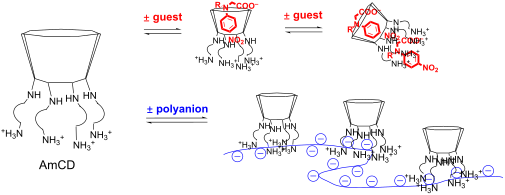
- cyclodextrin core/number of phosphate groups of pDNA). The pH value of the reaction medium was kept at 7.5 using TE buffer as the solvent [59]. Ten µL of each binding reaction sample (mixed with bromophenol blue dye at a 1:1 ratio) was loaded on a 0.8% agarose gel containing ethidium bromide in TBE 0.5× (5.4 g



Pyrene–nucleobase conjugates: synthesis, oligonucleotide binding and confocal bioimaging studies
Beilstein J. Org. Chem. 2017, 13, 2521–2534, doi:10.3762/bjoc.13.249
- final concentrations were 3 µM template and 45 µM dye. To enable an assessment about the assembly, also a negative sample was prepared in every case with 45 µM dye and without template strand and both samples were centrifuged at 14000 rpm for 20 min. This excludes the solubility of the dyes in water
- the dye for 15 minutes. The imaging was performed using a LSM 780 confocal system (Zeiss), equipped with an AxioObserver Z1 inverted microscope, a 63× oil immersion objective (NA 1.4), a 355 nm DPSS laser (50 mW), a 561 nm DPSS laser (20 mW), and a multi-anode PMT (32 elements). The luminescence




Synthesis and application of trifluoroethoxy-substituted phthalocyanines and subphthalocyanines
Beilstein J. Org. Chem. 2017, 13, 2273–2296, doi:10.3762/bjoc.13.224
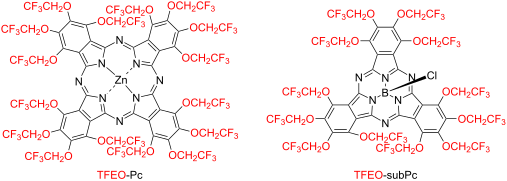
- years, the term “functional dyes” was proposed [9][10][11]. Functional dye is a generic name for dyes that exceed the framework of coloration and show various chemical and physical responses. In modern times, unlike the concept of colorants in the past, dyes have been developed for various applications
- novel material in the future. Besides blue organic pigments such as ink and colorants, it is expected to be widely applied to electronic devices in the medical field such as color filters for liquid crystal screens [12][13], storage media [14], dye-sensitized solar cells [15][16], photodynamic cancer
- dye because it absorbs light of long wavelengths with high tissue transparency. However, ordinary phthalocyanines cause the deterioration of spectroscopic properties and solubility by forming aggregates, so it is necessary to suppress this aggregation [87]. As described above, the ability of the








Phosphonic acid: preparation and applications
Beilstein J. Org. Chem. 2017, 13, 2186–2213, doi:10.3762/bjoc.13.219
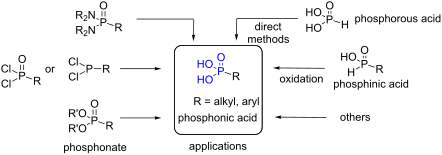
- dots [107] and used as anchoring group for dye-sensitized solar cells [108][109][110] or for the immobilization of organocatalyst [111][112]. Phosphonic acid was also used for coating superparamagnetic iron oxide (e.g., magnetite) assessed as contrast agent in magnetic resonance imaging [113] or to


Superstructures with cyclodextrins: Chemistry and applications IV
Beilstein J. Org. Chem. 2017, 13, 2157–2159, doi:10.3762/bjoc.13.215
- nanoparticles with the sensitizer Zn-phthalocyanine and the antineoplastic drug docetaxel. These materials might be applicable for dual cancer therapy [15]. Another self-assembled CD nanocarrier for the photoreactive dye squaraine that is useful for photodynamic therapy is described in this Thematic Series [16
β-Cyclodextrin- and adamantyl-substituted poly(acrylate) self-assembling aqueous networks designed for controlled complexation and release of small molecules
Beilstein J. Org. Chem. 2017, 13, 1879–1892, doi:10.3762/bjoc.13.183
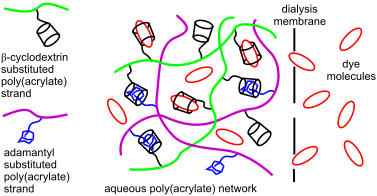
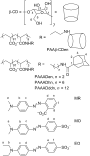
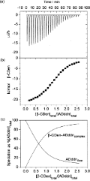
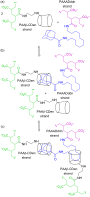
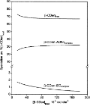
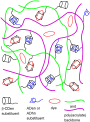
- PAAβ-CDen alone provides insight into the factors affecting dye complexation. The rates of release of the dyes through a dialysis membrane from the three aqueous networks show a high dependence on host–guest complexation between the β-CDen substituents and the dyes as well as the structure and the
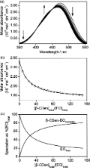
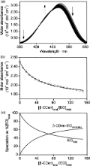
- ADddn protons and the methylene protons of its dodecyl tether are also observed for solutions of β-CD and PAAADddn [14].) UV–vis dye complexation studies The complexations of the three dyes by β-CD alone in aqueous solution are used as a basis for assessing the effects of the substitution of β-CDen onto
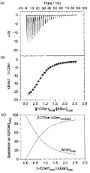
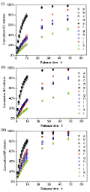
- poly(acrylate) in PAAβ-CDen and the subsequent network formation with PAAADen, PAAADhn and PAAADddn on dye complexation. The variation of absorbance of all three dyes with added β-CD is consistent with the dominant formation of 1:1 β-CD–dye complexes (Equation 4 and Equation 5 where A, εdye and εβ-CD




The chemistry and biology of mycolactones
Beilstein J. Org. Chem. 2017, 13, 1596–1660, doi:10.3762/bjoc.13.159


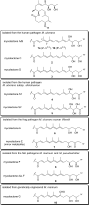


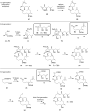


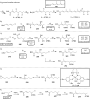


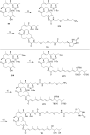

2-Methyl-2,4-pentanediol (MPD) boosts as detergent-substitute the performance of ß-barrel hybrid catalyst for phenylacetylene polymerization
Beilstein J. Org. Chem. 2017, 13, 1498–1506, doi:10.3762/bjoc.13.148
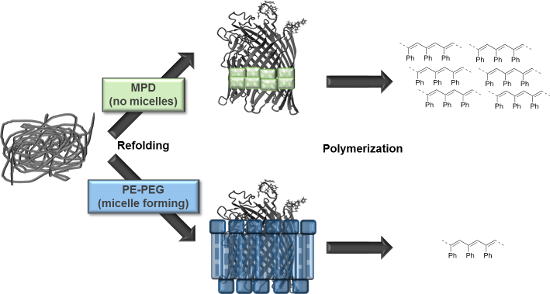
- of the cysteine function of 2 (Cys545) using the fluorescence dye ThioGlo® 1 (fluorescent thiol reagent, Figure S2, Supporting Information File 1). More than 90% of the cysteines are occupied, showing a very high coupling efficiency of the rhodium catalyst. Further, the biohybrid conjugate was


Detection of therapeutic radiation in three-dimensions
Beilstein J. Org. Chem. 2017, 13, 1325–1331, doi:10.3762/bjoc.13.129
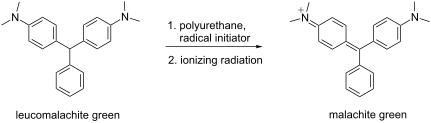
- leuco dye, which is radiolytically oxidized to a dye absorbing at 630 nm. Keywords: dosimeters; leuco dyes; polymers; radiation; triarylmethane synthesis; Introduction Radiotherapy treatment is a complex 3D process, which is the principle treatment modality for most cancers [1]. The two main types of
- dosimeter would be firm in structure and tissue equivalent [14]. This review describes such a 3D dosimeter, which we have been studying since 2004, composed primarily of the polymer polyurethane containing a radiochromic leuco dye and a radical initiator [15]. Review Leuco dyes and radical initiators Our
- radiation doses. Consequently, radical initiators were necessary to promote the transformation. A variety of leuco dyes and radical initiators were screened for response to ionizing radiation. Initially the most promising leuco dye was leucomalachite green (LMG) which is a N,N-dimethyl-substituted




BODIPY-based fluorescent liposomes with sesquiterpene lactone trilobolide
Beilstein J. Org. Chem. 2017, 13, 1316–1324, doi:10.3762/bjoc.13.128
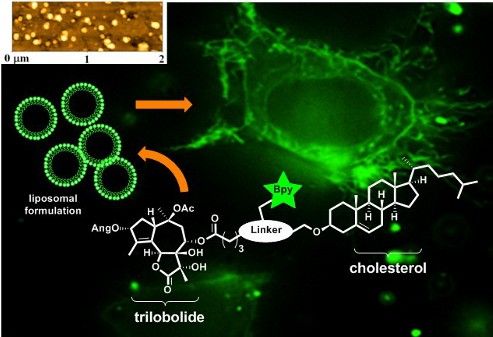
- reduces its potential medicinal applications. The targeted delivery of hydrophobic drugs can be achieved using liposome-based carriers. Therefore, we designed a traceable liposomal drug delivery system for trilobolide. The fluorescent green-emitting dye BODIPY, cholesterol and trilobolide were used to
- describe the synthesis and application of a fluorescent construct (further called construct 6, depicted in Scheme 1) based on a green-emitting BODIPY dye and trilobolide–cholesterol (Tb-ChL) in a liposome formulation. Trilobolide (Tb, Figure 1) is a potent natural compound of the sesquiterpene lactone
- , trilobolide. More specifically, we synthesized and characterized a fluorescent construct of Tb conjugated to cholesterol and a green-emitting BODIPY dye, which was successfully incorporated into liposomes. The immunomodulatory activity tested in primary rat macrophages revealed significant dose-dependent NO


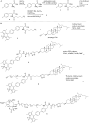


Regioselective (thio)carbamoylation of 2,7-di-tert-butylpyrene at the 1-position with iso(thio)cyanates
Beilstein J. Org. Chem. 2017, 13, 1032–1038, doi:10.3762/bjoc.13.102

- ; pyrene; thioamide; Introduction Direct functionalization of pyrene 1 has attracted a great deal of attention in recent years because it is the most straightforward route to novel organic molecular materials for optoelectronic devices (OLEDs, field-effect transistors, fluorescent sensors, dye lasers, etc




Glyco-gold nanoparticles: synthesis and applications
Beilstein J. Org. Chem. 2017, 13, 1008–1021, doi:10.3762/bjoc.13.100
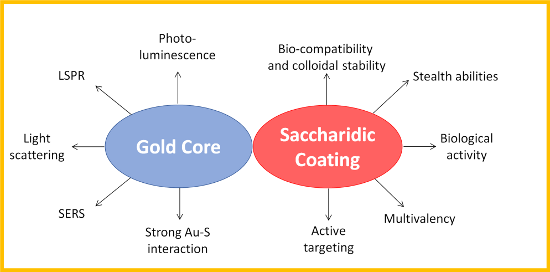
- convenient for the biosensing application, considering that the light scattered by a single AuNP can be about 1 million times more intense than the fluorescence emitted by a dye [49][50]. Gold core: the size and the shape role AuNP core dimension and shape are important parameters to take into consideration


The effect of cyclodextrin complexation on the solubility and photostability of nerolidol as pure compound and as main constituent of cabreuva essential oil
Beilstein J. Org. Chem. 2017, 13, 835–844, doi:10.3762/bjoc.13.84
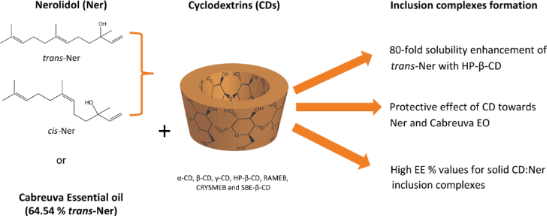
- Landy et al. [23] was used to determine the formation constants (Kf) of HP-β-CD/Ner inclusion complexes. Methylorange (MO), an azo dye, was used as a competitor. First, the Kf of the HP-β-CD/MO inclusion complex was calculated by a direct titration method. Then, a spectral displacement method was


Energy down converting organic fluorophore functionalized mesoporous silica hybrids for monolith-coated light emitting diodes
Beilstein J. Org. Chem. 2017, 13, 768–778, doi:10.3762/bjoc.13.76
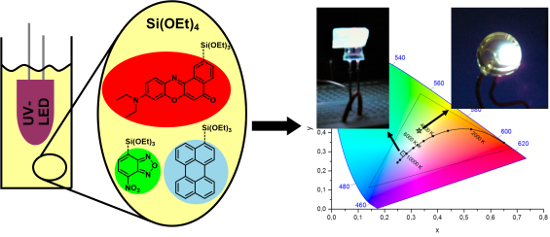
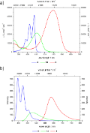
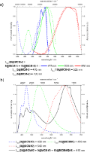
- synthesis of mesoporous hybrid materials by postsynthetic grafting to commercially available MCM-41. These individually dye-functionalized hybrid materials are mixed in variable ratios to furnish a powder capable of emitting white light with CIE chromaticity coordinates of x = 0.33, y = 0.33 and an external
- inherent robustness and stability of the rigid inorganic silica material can be combined with the functionality and tunability of the organic chromophore. In addition, these mesoporous materials possess defined pore structures in which the organic dye can be homogeneously distributed [13]. Thereby
- aggregation induced self-quenching and singlet oxygen dependent dye degradation can be efficiently prevented [14][15]. By the rigid silica host framework bimolecular photochemical reactions are also suppressed [16]. Additionally, mesoporous materials possess the crucial advantage that they can be synthesized








Novel β-cyclodextrin–eosin conjugates
Beilstein J. Org. Chem. 2017, 13, 543–551, doi:10.3762/bjoc.13.52
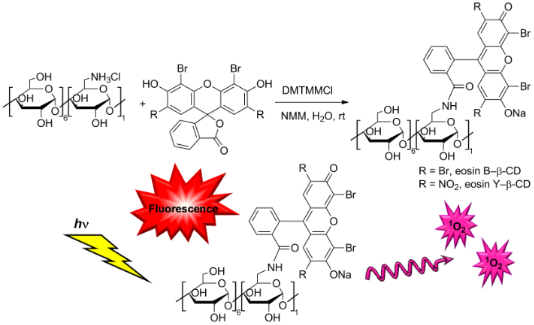
- /bjoc.13.52 Abstract Eosin B (EoB) and eosin Y (EoY), two xanthene dye derivatives with photosensitizing ability were prepared in high purity through an improved synthetic route. The dyes were grafted to a 6-monoamino-β-cyclodextrin scaffold under mild reaction conditions through a stable amide linkage
- xanthene-type PSs in conjugation with CDs is very scarce. The reasons behind this fact are most probably the difficulties in selective CD functionalization and limitations in xanthene-dye modification. Xanthene dyes can be introduced into the CD scaffold most easily through an ester linkage between the
- available hydroxy groups of the CD and the carboxylic acid group of the dye [21]. These conjugates, however, cannot be used in biomedical applications because of the lability of the ester bond towards enzymatic degradation. Any cleavage of the conjugate would result in an increased free dye concentration in



Investigation of the action of poly(ADP-ribose)-synthesising enzymes on NAD+ analogues
Beilstein J. Org. Chem. 2017, 13, 495–501, doi:10.3762/bjoc.13.49
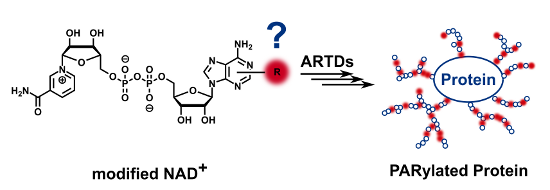
- -ribosylation, whereas in case of ARTD6 both are used as substrates in both assays with similar efficiencies. Dye-modified NAD+ analogues Because the alkyne-tag induces only small alterations to the NAD+ scaffold, we also investigated how these enzymes would act on bulkier substitutions. For this purpose, we
- selected bulky, dye-modified NAD+ analogues 5 and 6, which were previously prepared by our group [21], in order to have a direct, fluorescent read-out. The outcome is summarised in Table 2 and the SDS PAGE gels obtained are depicted in Figure 4 and Supporting Information File 1, Figures S3 and S4. As shown
- the employed substitutions in adenine at position 7 and 8 completely abrogated the processing towards PAR. The DNA-dependent ARTDs ARTD1 and ARTD2 can process 2-modified analogues best as also sterically demanding compounds such as dye-modified 5 are processed. Thus, 2-modified analogues are the best





