


Search results
Search for "ether" in Full Text gives 1414 result(s) in Beilstein Journal of Organic Chemistry. Showing first 200.
Synthesis of spiropyridazine-benzosultams by the [4 + 2] annulation reaction of 3-substituted benzoisothiazole 1,1-dioxides with 1,2-diaza-1,3-dienes
Beilstein J. Org. Chem. 2024, 20, 280–286, doi:10.3762/bjoc.20.29
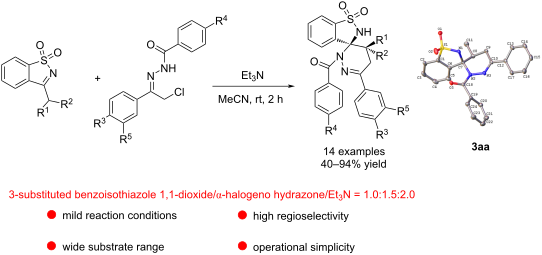
- ketimine and its subsequent [4 + 2] annulation reaction with 1,2-diaza-1,3-diene in the presence of Et3N (2.0 equiv) in diethyl ether at room temperature (Table 1, entry 1). However, no product was detected under these conditions. We then replaced diethyl ether with toluene, which resulted in the desired




Optimizations of lipid II synthesis: an essential glycolipid precursor in bacterial cell wall synthesis and a validated antibiotic target
Beilstein J. Org. Chem. 2024, 20, 220–227, doi:10.3762/bjoc.20.22
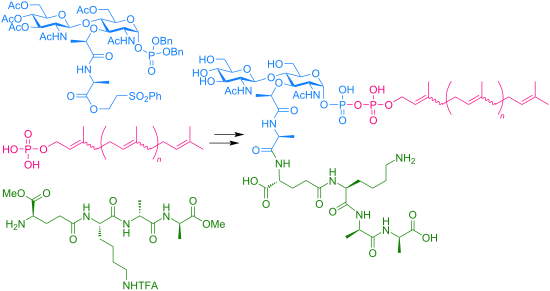
- -anomers of compound 5. It is noteworthy to mention that the benzyl ether in compound 4 exhibited successful cleavage upon treatment with sodium bromate/sodium dithionite in ethyl acetate/water, while other protecting functionalities like acetyl and phenylsulfonylethyl ester groups remained intact [45


Copper-catalyzed multicomponent reaction of β-trifluoromethyl β-diazo esters enabling the synthesis of β-trifluoromethyl N,N-diacyl-β-amino esters
Beilstein J. Org. Chem. 2024, 20, 212–219, doi:10.3762/bjoc.20.21
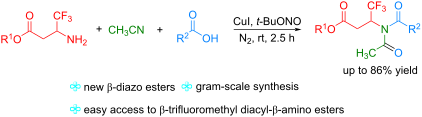
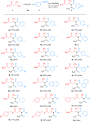
- . Stirring was continued at room temperature for 2.5 h and the solvent was removed in vacuum. Products 4 were purified on a TLC plate of 20 cm × 20 cm using petroleum ether/ethyl acetate 7:1 (v/v) as eluent. Mumm-type rearrangement of diazo compounds. Substrate scope study of this Cu-catalyzed reaction




Chiral phosphoric acid-catalyzed transfer hydrogenation of 3,3-difluoro-3H-indoles
Beilstein J. Org. Chem. 2024, 20, 205–211, doi:10.3762/bjoc.20.20
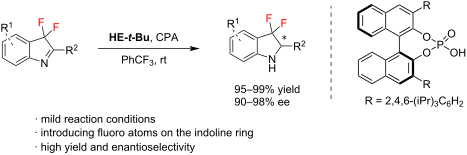
- and the reaction mixture was stirred at room temperature for 3 h. After concentrating the mixture, the residue was purified by column chromatography on silica gel using a mixture of petroleum ether/ethyl acetate 30:1 (v/v) as the eluent to afford products 2. The yields were determined by 19F NMR


Comparison of glycosyl donors: a supramer approach
Beilstein J. Org. Chem. 2024, 20, 181–192, doi:10.3762/bjoc.20.18
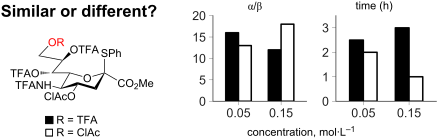
- complete consumption of the starting material (TLC monitoring, Rf = 0.10 (5), Rf = 0.49 (6), EtOAc/petroleum ether 35:65). Saturated aqueous NaHCO3 (5 mL) was added, and the mixture was well shaken and then allowed to warm to ≈20 °C, diluted with CH2Cl2 (50 mL), washed with water (100 mL), 1 M aqueous
- residue was purified by silica gel chromatography (column volume 140 mL, eluent EtOAc/petroleum ether 25:75) to give 6 as a colorless foam (1.06 g, 90%). [α]D23 −105.5 (c 1.0, CHCl3); Rf 0.58 (benzene/CH2Cl2/acetone 2:2:0.8); 1H NMR (300 MHz, CDCl3, δ, ppm, J, Hz) 1.31 (s, 3H, Me), 1.34 (s, 3H, Me), 2.21
- . The residue was purified by silica gel column chromatography (column volume 140 mL, elution with gradient CH2Cl2 → acetone/CH2Cl2 20:80). The crude product was dissolved in acetone (3 mL) and t-BuOMe (3 mL), then petroleum ether was slowly added until crystallization commenced. The precipitate formed



1-Butyl-3-methylimidazolium tetrafluoroborate as suitable solvent for BF3: the case of alkyne hydration. Chemistry vs electrochemistry
Beilstein J. Org. Chem. 2023, 19, 1966–1981, doi:10.3762/bjoc.19.147
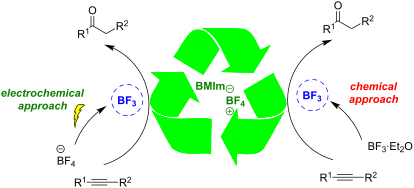
- and to optimize the reaction conditions for hydration. All reactions were carried out in sealed vials, in 1 mL BMIm-BF4 at 80 °C for the time indicated in Table 1. At the end of the reaction the mixture was extracted with diethyl ether and the extracts were washed with water to obtain the crude, which
- spectrum) [106], we never detected such a peak in 19F NMR spectra of the neat IL, analysed after reaction work-up, keeping it under vacuum to completely eliminate diethyl ether traces before NMR analysis. It should be mentioned that the solution was kept in the NMR tubes only for the time necessary to
- diethyl ether traces and then analysed by NMR to check for BMIm-F presence, whereas the fluoride ion could originate from IL decomposition in the presence of water or from the evolution of electrogenerated F2. However, the 19F NMR spectrum showed no detectable peak around −122 ppm, reported in the


Aldiminium and 1,2,3-triazolium dithiocarboxylate zwitterions derived from cyclic (alkyl)(amino) and mesoionic carbenes
Beilstein J. Org. Chem. 2023, 19, 1947–1956, doi:10.3762/bjoc.19.145
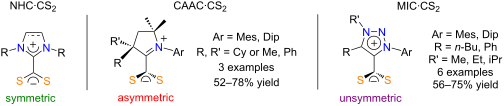
- equiv) in THF at 0 °C. The potassium iodide byproduct was filtered off and carbon disulfide (3.3 equiv) was added to the carbene solution leading to an immediate color change. After 30 min at room temperature, the solvent was evaporated under vacuum. The residue was washed with petroleum ether and dried
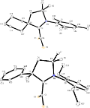
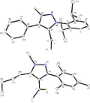
- layered with petroleum ether or n-hexane and kept at −18 °C for a few weeks. This procedure successfully afforded single crystals of products 6b and 6e suitable for XRD analysis (Figure 4). Orange prisms of zwitterion 6b belonged to the monoclinic P21/n space group, while the dark red-brown blocks of


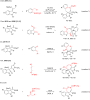
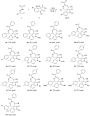
Construction of diazepine-containing spiroindolines via annulation reaction of α-halogenated N-acylhydrazones and isatin-derived MBH carbonates
Beilstein J. Org. Chem. 2023, 19, 1923–1932, doi:10.3762/bjoc.19.143
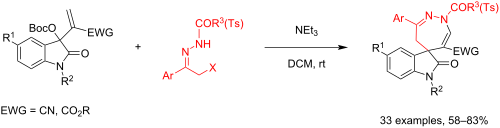
- evaporation at reduced pressure, the residue was subjected to column chromatography with ethyl acetate, dichloromethane and petroleum ether 1:3:7 (v/v/v) to give pure product for analysis. 1'-Benzoyl-1-benzyl-5-methyl-2-oxo-3'-phenyl-1',4'-dihydrospiro[indoline-3,5'-[1,2]diazepine]-6'-carbonitrile (3a
- rotatory evaporation at reduced pressure, the residue was subjected to column chromatography with ethyl acetate, dichloromethane and petroleum ether 1:3:7 (v/v/v) to give pure product for analysis. Methyl 1'-benzoyl-1-benzyl-5-chloro-2-oxo-3'-phenyl-1',4'-dihydrospiro[indoline-3,5'-[1,2]diazepine]-6
- at reduced pressure, the residue was subjected to column chromatography with ethyl acetate, dichloromethane, and petroleum ether 1:3.7 (v/v/v) to give pure product for analysis. 1-Benzyl-2-oxo-3'-(p-tolyl)-1'-tosyl-1',4'-dihydrospiro[indoline-3,5'-[1,2]diazepine]-6'-carbonitrile (7a): white solid, 64



Biphenylene-containing polycyclic conjugated compounds
Beilstein J. Org. Chem. 2023, 19, 1895–1911, doi:10.3762/bjoc.19.141
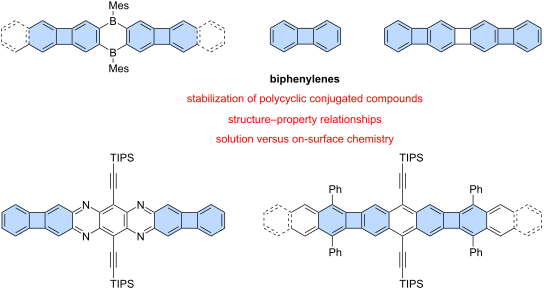
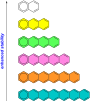
- structural designs. NICS (nucleus independent chemical shift) analysis revealed that the linear structures within the series exhibited reduced antiaromaticity in the CBD ring compared to other structural arrangements. By employing a methoxy group on the oxonorbornene, the methyl ether moiety can be removed



Anion–π catalysis on carbon allotropes
Beilstein J. Org. Chem. 2023, 19, 1881–1894, doi:10.3762/bjoc.19.140
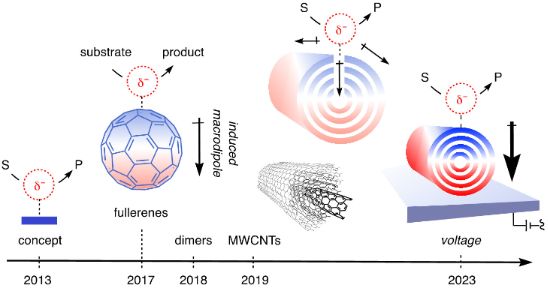
- introduced in 2017, followed by carbon nanotubes in 2019. Consistent with expectations from theory, anion–π catalysis on carbon allotropes generally increases with polarizability. Realized examples reach from enolate addition chemistry to asymmetric Diels–Alder reactions and autocatalytic ether cyclizations
- catalysis; electromicrofluidics; enolate addition; ether cyclizations; fullerenes; Introduction Anion–π catalysis was introduced ten years ago [1]. The idea is to stabilize anionic transition states on electron-deficient, π-acidic aromatic surfaces (Figure 1A). The true beginning is arguably in 2015
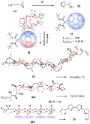
- tested anion–π catalysts. This result was consistent with the stabilization of the anionic intermediates IX and X and the respective transition states on the polarized fullerene surface. Anion–π autocatalysis on fullerenes The autocatalysis of epoxide-opening ether cyclization on π-acidic aromatic




Aromatic systems with two and three pyridine-2,6-dicarbazolyl-3,5-dicarbonitrile fragments as electron-transporting organic semiconductors exhibiting long-lived emissions
Beilstein J. Org. Chem. 2023, 19, 1867–1880, doi:10.3762/bjoc.19.139
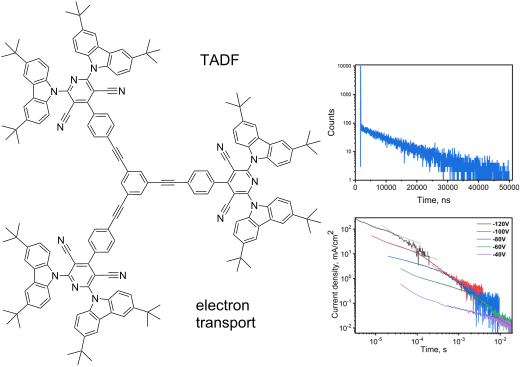
- dried over Na2SO4. After the solvent was removed, the crude yellow product was carefully washed twice with acetonitrile to remove the starting materials. Further purification was achieved using flash chromatography on silica gel (eluent: dichloromethane/petroleum ether 1:2). Compound 4 (0.86 g, 61%) was
- dried over Na2SO4. After evaporation of the solvent, the crude residue was purified by flash chromatography on silica gel using a mixture of chloroform/petroleum ether/acetone 9:12:0.4 as eluent. 2,6-Bis(3,6-di-tert-butyl-9H-carbazol-9-yl)-4-(4-(trimethylsilylethynyl)phenyl)pyridine-3,5-dicarbonitrile
- -dicarbonitrile (430 mg, 0.5 mmol, 1 equiv) in methanol (70 mL) and diethyl ether (20 mL) and the mixture was stirred under Ar for 1 h (TLC control). Then, the reaction mixture was diluted with dichloromethane and poured into water. The aqueous layer was extracted with dichloromethane (2 × 50 mL), the combined


Thienothiophene-based organic light-emitting diode: synthesis, photophysical properties and application
Beilstein J. Org. Chem. 2023, 19, 1849–1857, doi:10.3762/bjoc.19.137
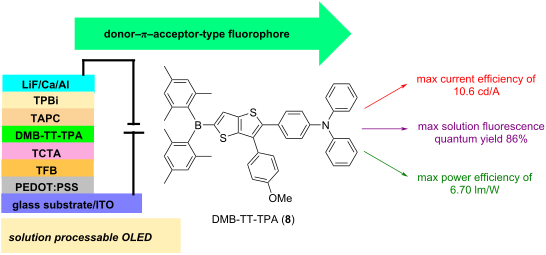
- ), dimesitylboronfluoride (90%, Sigma-Aldrich), 4,4,5,5-tetramethyl-1,3,2-dioxaborolane (Sigma-Aldrich), tetrakis(triphenylphosphine)palladium(0) (Pd(PPh3)4, 99%, Sigma-Aldrich), were used as received. Diethyl ether and THF were dried over metallic sodium. Dimethylformamide (HPLC grade) was stored over activated molecular


A novel recyclable organocatalyst for the gram-scale enantioselective synthesis of (S)-baclofen
Beilstein J. Org. Chem. 2023, 19, 1811–1824, doi:10.3762/bjoc.19.133
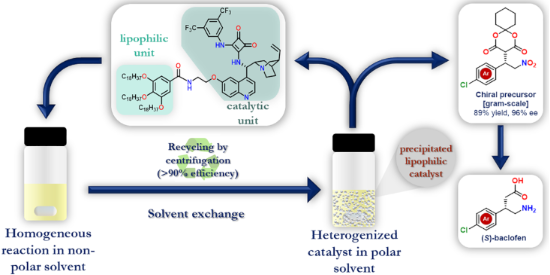
- cinchona squaramide organocatalyst 7 with a linker (Scheme 1). The lipophilic unit from methyl gallate (8) was gained by following a literature procedure [32] with minor modifications. The octadecyl groups were attached to the hydroxy groups using Williamson-type ether synthesis. The octadecylated gallic


Active-metal template clipping synthesis of novel [2]rotaxanes
Beilstein J. Org. Chem. 2023, 19, 1776–1784, doi:10.3762/bjoc.19.130
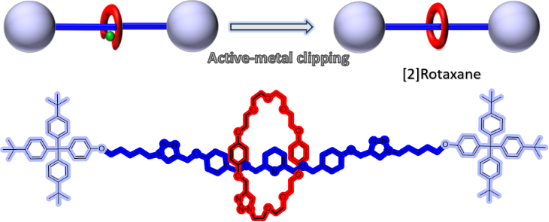
- presence of supramolecular interactions that pre-organize rotaxane’s components is crucial for an efficient synthesis. The precursors of rotaxanes are supramolecular architectures held together by numerous interactions leading to diverse motifs such as ammonium crown ether (ion-dipole, hydrogen bonding
- after filtration and solvent evaporation. The compound was purified by column chromatography (silica, toluene/petroleum ether = 1:4) to afford a white solid (1.44 g, 73%); mp 222–225 °C, Rf = 0.44 (silica, toluene/petroleum ether = 1:4). 1H NMR (CDCl3, 600 MHz) δ 7.23 (d, 3J = 8.6 Hz, 6H, HAr), 7.10
- (1.90 g, 92%); mp 72–73 °C, Rf = 0.47 (silica, ethyl acetate/petroleum ether = 1:3);1H NMR (CDCl3, 600 MHz) δ 7.49 (s, 1H, HAr), 7.42–7.36 (overlapped signals, 3H, HAr), 6.93 (s, 8H, HAr), 5.03 (s, 4H, CH2), 4.65 (d, 4H, 4J= 2.3 Hz, CH2(propargyl)), 2.52 (t, 4J = 2.3 Hz, CH2(propargyl)) ppm; 13C NMR


Selectivity control towards CO versus H2 for photo-driven CO2 reduction with a novel Co(II) catalyst
Beilstein J. Org. Chem. 2023, 19, 1766–1775, doi:10.3762/bjoc.19.129
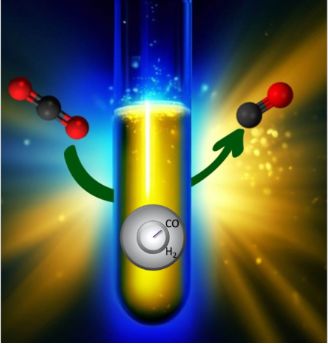
- -dissolving the powder in acetonitrile and layering on top of diethyl ether (Et2O). Slow diffusion of the antisolvent Et2O allowed the growth of magenta-colored crystals. Interestingly, two different sets of data could be solved, which is an indication that compound 1 has two polymorphs, 1a and 1b (Figure 2
- interested in the development of earth-abundant systems. In particular, we chose the heteroleptic complex [Cu(dmp)DPEPhos](BF4), where dmp is 2,9-dimethyl-1,10-phenanthroline and DPEPhos is bis[(2-diphenylphosphino)phenyl] ether, which had been already successfully employed in other artificial photosynthesis


Unprecedented synthesis of a 14-membered hexaazamacrocycle
Beilstein J. Org. Chem. 2023, 19, 1728–1740, doi:10.3762/bjoc.19.126
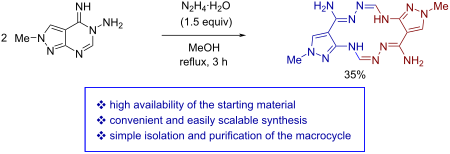
- useful for the preparation of other polyunsaturated annulated 14-membered 1,2,4,8,9,11-hexaazamacrocycles. Experimental All solvents and liquid reagents purchased from commercial sources were distilled prior to use. Petroleum ether had a distillation range of 40–70 °C. 100% Hydrazine hydrate was used in
- under reflux for 23 h. After the reaction had completed (monitored by 1H NMR spectroscopy), the obtained solution was concentrated under water pump vacuum upon heating in a water bath at 65 °C. The product was extracted from the resulting dense brown oil by trituration 4 times with a mixture of ether
- (25 mL) and petroleum ether (50 mL), and 1 time with a mixture of ether (10 mL) and petroleum ether (20 mL) at room temperature. The extraction was considered as completed when the brown oil solidified. The product precipitated upon concentration of the combined extracts under reduced pressure. The


Tying a knot between crown ethers and porphyrins
Beilstein J. Org. Chem. 2023, 19, 1630–1650, doi:10.3762/bjoc.19.120
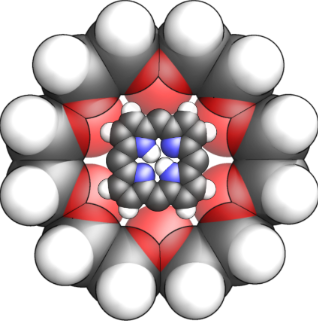
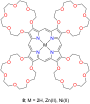
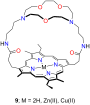
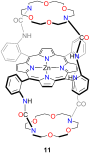
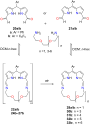
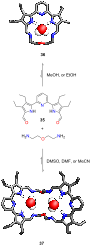
- Maksym Matviyishyn Bartosz Szyszko Faculty of Chemistry, University of Wrocław, 14 F. Joliot-Curie St., 50-383 Wrocław, Poland 10.3762/bjoc.19.120 Abstract Porphyrins and crown ether hybrids have emerged as a promising class of molecules composed of elements of a tetrapyrrole macrocycle and an
- oligo(ethylene glycol) segment. These hybrid systems constitute a broad group of compounds, including crowned porphyrins, crownphyrins, and calixpyrrole-crown ether systems forming Pacman complexes with transition metals. Their unique nature accustoms them as excellent ligands and hosts capable of
- metals. In this perspective article, the overview of both the early designs of porphyrin-crown ether hybrids, as well as the most recent advances in the synthesis and characterisation of this remarkable group of macrocyclic systems, are addressed. The discussion covers the strategies employed in









Radical chemistry in polymer science: an overview and recent advances
Beilstein J. Org. Chem. 2023, 19, 1580–1603, doi:10.3762/bjoc.19.116
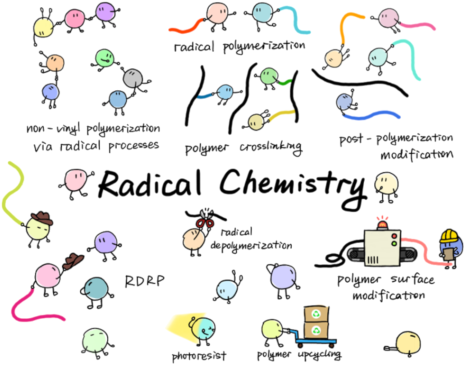
- necessary. MF-ROMP, also termed photo-ROMP, is a novel technique to polymerize cyclic olefins. It begins with the reductive quenching of an photoexcited photocatalyst (PC) at an enol ether initiator to produce a radical cation carrier [90]. Then, the carrier undergoes cyclic addition with a cyclic olefin
- (Scheme 12B). Boydston and co-workers [91], systematically studied various pyrylium and thiopyrylium PCs (Scheme 13). It is necessary for these PCs having a high excited-state redox potential to oxidize the enol ether initiators. A range of enol ether initiators that has been successfully applied in metal
- functionalization of optically active polymers [106]. Theato and co-workers introduced vinyl/alkyne-bearing poly(vinyl ether)s [107], poly(vinylcyclopropanes) [108], and poly(allyl 2-ylideneacetate) [109] as promising new platforms compatible to thiol–ene chemistry. Atom transfer radical addition (ATRA) is another


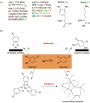


Cyclodextrins permeabilize DPPC liposome membranes: a focus on cholesterol content, cyclodextrin type, and concentration
Beilstein J. Org. Chem. 2023, 19, 1570–1579, doi:10.3762/bjoc.19.115
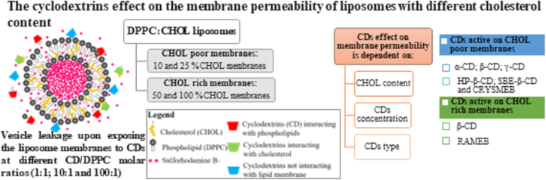
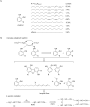
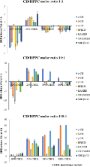
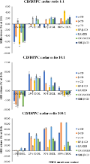
- exposed to the native CDs (α-CD, β-CD, γ-CD) and four β-CD derivatives: the randomly methylated-β-CD (RAMEB), the low methylated-β-CD (CRYSMEB), the hydroxypropyl-β-CD (HP-β-CD) and the sulfobutyl ether-β-CD (SBE-β-CD) at different CD/DPPC molar ratios (1:1, 10:1, and 100:1). The membrane permeability was
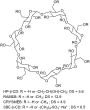
- methylated-β-CD (CRYSMEB), the hydroxypropyl-β-CD (HP-β-CD), and the sulfobutyl ether-β-CD (SBE-β-CD). A schematic representation of the chemical structure of the native CDs and their dimensions is depicted in Figure 1, reprinted with permission from [21]. The structures of β-CD derivatives and their degrees
- hydroxypropyl-β-CD (HPBCD, DS = 5.6) were provided by Roquette Frères (Lestrem, France). Sulfobutyl ether-β-CD (SBE-β-CD, DS = 6.5) was provided by LIGAND Pharmaceuticals (San Diego, CA, USA). Dipalmitoylphosphatidylcholine (DPPC) and trizma base (buffer reagent) were purchased from Sigma-Aldrich, Switzerland


Lewis acid-promoted direct synthesis of isoxazole derivatives
Beilstein J. Org. Chem. 2023, 19, 1562–1567, doi:10.3762/bjoc.19.113

- TLC monitoring. Upon completion, the solution was cooled to room temperature and the solvent was removed under vacuum directly. The crude residue was purified by column chromatography on silica gel (ethyl acetate/petroleum ether 40:1) to afford product 3a with 87% yield. Natural products and drug


Synthesis and biological evaluation of Argemone mexicana-inspired antimicrobials
Beilstein J. Org. Chem. 2023, 19, 1511–1524, doi:10.3762/bjoc.19.108
- . Conversion of naphthols to naphthylamines is typically achieved through a three-step sequence whereby the naphthol is first O-alkylated with 2-bromo-2-methylpropionamide and this ether undergoes a Smiles rearrangement to the hydroxyamide, which is hydrolyzed to the free naphthylamine [44][45]. It has


Application of N-heterocyclic carbene–Cu(I) complexes as catalysts in organic synthesis: a review
Beilstein J. Org. Chem. 2023, 19, 1408–1442, doi:10.3762/bjoc.19.102
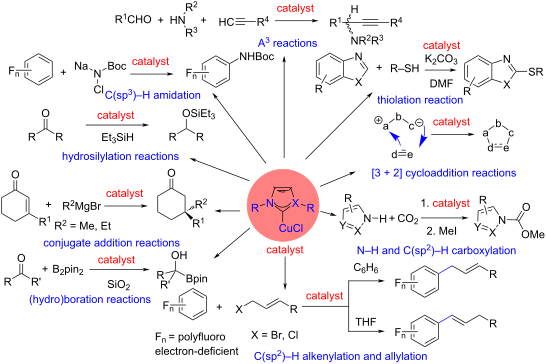
- . Two complexes, 61 and 65 (see Scheme 21), were found equally efficient. The products were obtained in 95 to 99% yield and the range of functionalities tolerated included nitro, nitrile, ether, carbonyl, alcohol, and amine [35]. Gautier and co-workers studied the effect of the addition of aromatic N
- -naphthol moiety 193 afforded the highest yield and enantioselectivity. On protecting the hydroxy group in the ligand as methyl ether, the reaction efficiency decreased remarkably. However, on using NHC ligands without oxygen atom, such as analogues of 193, IMes, and SIMes, no conversion occurred. 2.8 C(sp2


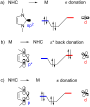


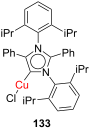


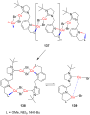


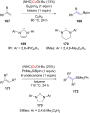


One-pot nucleophilic substitution–double click reactions of biazides leading to functionalized bis(1,2,3-triazole) derivatives
Beilstein J. Org. Chem. 2023, 19, 1399–1407, doi:10.3762/bjoc.19.101
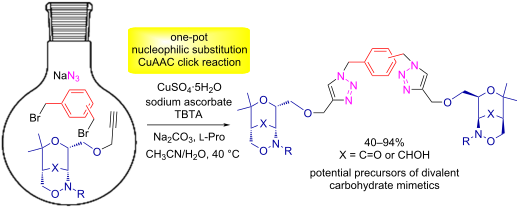
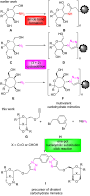
- conditions found were studied with a second model reaction in order to examine its suitability for the synthesis of potential carbohydrate mimetic precursors (Scheme 3). Sodium azide, benzyl bromide (5) and enantiopure bicyclic 1,2-oxazin-4-one derivative 6 [53] which bears a propargylic ether moiety as



Synthesis of ether lipids: natural compounds and analogues
Beilstein J. Org. Chem. 2023, 19, 1299–1369, doi:10.3762/bjoc.19.96
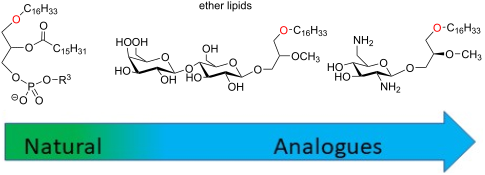
- Marco Antonio G. B. Gomes Alicia Bauduin Chloe Le Roux Romain Fouinneteau Wilfried Berthe Mathieu Berchel Helene Couthon Paul-Alain Jaffres Univ. Brest, CNRS, CEMCA UMR 6521, 6 Avenue Victor Le Gorgeu, 29238 Brest, France 10.3762/bjoc.19.96 Abstract Ether lipids are compounds present in many
- living organisms including humans that feature an ether bond linkage at the sn-1 position of the glycerol. This class of lipids features singular structural roles and biological functions. Alkyl ether lipids and alkenyl ether lipids (also identified as plasmalogens) correspond to the two sub-classes of
- naturally occurring ether lipids. In 1979 the discovery of the structure of the platelet-activating factor (PAF) that belongs to the alkyl ether class of lipids increased the interest in these bioactive lipids and further promoted the synthesis of non-natural ether lipids that was initiated in the late 60’s






Organic thermally activated delayed fluorescence material with strained benzoguanidine donor
Beilstein J. Org. Chem. 2023, 19, 1289–1298, doi:10.3762/bjoc.19.95
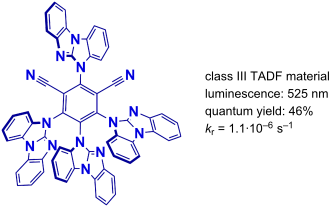
- mineral oil with diethyl ether and dried prior to use. 5H-Benzo[d]benzo[4,5]imidazo[1,2-a]imidazole (benzoguanidine) was obtained according to the literature protocol [10] while 2,4,5,6-tetrafluoroisophthalonitrile was purchased from Fluorochem Ltd. and used as received. 1H and 13C{1H} NMR spectra were
- /petroleum ether into dichloromethane solution for 4BGIPN at room temperature. Crystals were mounted in oil on a MiTeGen loop and fixed on the diffractometer in a cold nitrogen stream. Data were collected using dual wavelength Rigaku FR-X rotating anode diffractometer using Cu Kα (λ = 1.54146 Å) radiation





