Search results
Search for "ligands" in Full Text gives 1022 result(s) in Beilstein Journal of Organic Chemistry. Showing first 200.
Studying specificity in protein–glycosaminoglycan recognition with umbrella sampling
Beilstein J. Org. Chem. 2023, 19, 1933–1946, doi:10.3762/bjoc.19.144
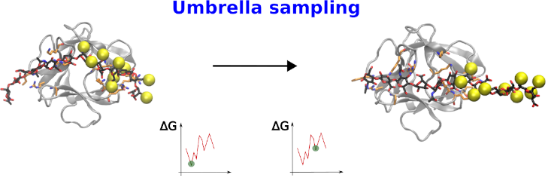
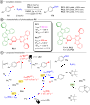
- in the 1BFC [12] and 2AXM [13] complexes and chondroitin sulfate-4 in the case of 3C9E [36]/4N8W [37]), where the length is dp6 (dp stands for degree of polymerization) and 2. an additional part with different degree of sulfation or sulfation pattern (in case of ligands 1 and 2 for 1BFC and 2AXM dp6
- 1C4 conformation for the IdoA2S ring was chosen as it was shown to be the essentially dominant conformation in the microsecond scale simulations performed by Sattelle et al. as it is energetically more favorable than the 2SO conformation [40]. Complex preparation The obtained ligands were docked using
- RS-REMD (replica exchange with repulsive scaling), an MD-based docking method [41], to assure proper binding poses of the whole ligand and ring puckering and to be consistent with further simulations. The docked ligands cover the binding site the same way as ligands in the experimental structures




N-Boc-α-diazo glutarimide as efficient reagent for assembling N-heterocycle-glutarimide diads via Rh(II)-catalyzed N–H insertion reaction
Beilstein J. Org. Chem. 2023, 19, 1841–1848, doi:10.3762/bjoc.19.136
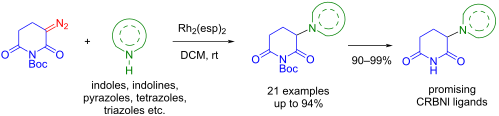
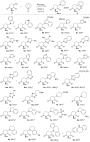
- , including both aromatic and saturated NH-substrates. This yields structures that are appealing for generating cereblon ubiquitin-ligase ligands and for potential use in crafting PROTAC molecules. Keywords: CRBN ligands; diazocarbonyl compounds; N–H insertion reaction; N-heterocycles; Rh(II)-catalysis
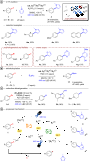
- strategies is cereblon (CRBN), the target focus of a collection of immunomodulatory drugs containing the glutarimide moiety such as thalidomide, pomalidomide, lenalidomide [12][13], and avadomide [14] (Figure 1). These ligands, although prevalent recruiters in PROTAC design, present several drawbacks
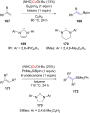
- space of cereblon ligands. Research teams and pharmaceutical companies worldwide are actively conducting studies to discover new CRBN ligands based on α-hetaryl-substituted glutarimides of general formula 1 (Scheme 1). Consequently, a significant number of patents describing the synthesis of new PROTAC




Selectivity control towards CO versus H2 for photo-driven CO2 reduction with a novel Co(II) catalyst
Beilstein J. Org. Chem. 2023, 19, 1766–1775, doi:10.3762/bjoc.19.129
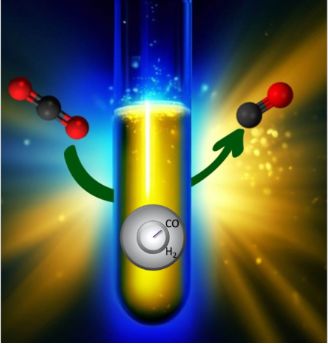
- (26.6 ppm) in the Earth crust [26]. Although it should not be considered a cost-effective option at present, as several social and environmental concerns are associated with its extraction, the high stability of the Co(II) ion and the versatility of the ligands used for coordination offer some
- advantages for tailoring new catalysts to specific reactions and optimize selectivity [22][27]. Cobalt catalysts successfully employed in CO2 reduction are mainly based on macrocyclic ligands, such as tetraazacyclodecene and its derivatives [3][28][29], porphyrins [30][31][32][33][34], or phthalocyanines [35
- ) [39][40], and two thiocyanate ligands. As observed for other cobalt complexes [21], the photoinduced CO2 reduction gave preferentially molecular hydrogen, when performed in acetonitrile. Moreover, we targeted a photocatalytic system that is fully earth-abundant. For this reason, we selected the known


Effects of the aldehyde-derived ring substituent on the properties of two new bioinspired trimethoxybenzoylhydrazones: methyl vs nitro groups
Beilstein J. Org. Chem. 2023, 19, 1713–1727, doi:10.3762/bjoc.19.125
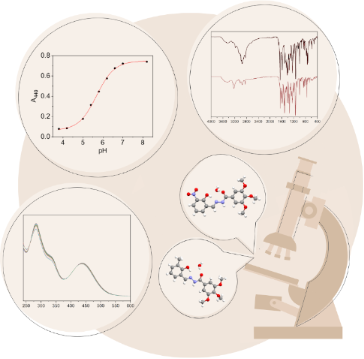
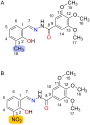
- thus less side-effects in therapy [23]. In this sense, we have reported dicopper(II) complexes from different N-acylhydrazonic binucleating ligands with potent antiproliferative activity against a panel of cancer cell lines [24][25][26]. On the field of neurodegeneration, our research group was the





Tying a knot between crown ethers and porphyrins
Beilstein J. Org. Chem. 2023, 19, 1630–1650, doi:10.3762/bjoc.19.120
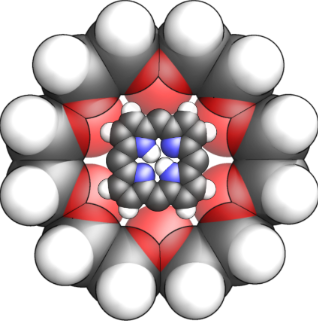
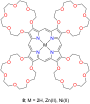
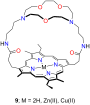
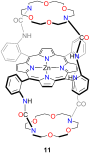
- oligo(ethylene glycol) segment. These hybrid systems constitute a broad group of compounds, including crowned porphyrins, crownphyrins, and calixpyrrole-crown ether systems forming Pacman complexes with transition metals. Their unique nature accustoms them as excellent ligands and hosts capable of
- /electrostatic interactions [18][19][20]. Replacing oxygen atoms with other elements, such as nitrogen, sulfur, etc., alters the crown ethers' affinity toward cations, extending their role as macrocyclic ligands to transition metals [21]. One can say that in many aspects, porphyrins and crown ethers are
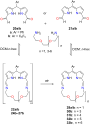
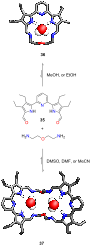
- laid the ground for a whole new research area of hybrid imine-porphyrinoids [52][53][54]. Bowman-James' work provided an exciting insight into accordion porphyrins' coordination chemistry, demonstrating the tremendous potential of iminoporphyrinoids as macrocyclic ligands. Independently the Sessler









Application of N-heterocyclic carbene–Cu(I) complexes as catalysts in organic synthesis: a review
Beilstein J. Org. Chem. 2023, 19, 1408–1442, doi:10.3762/bjoc.19.102
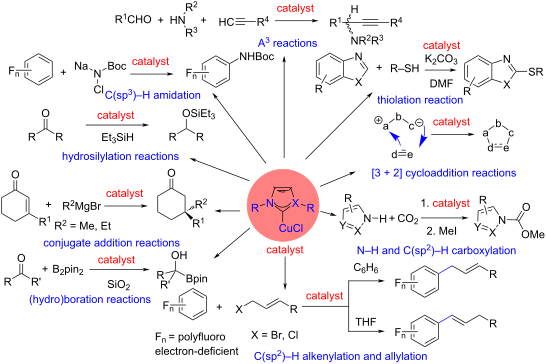
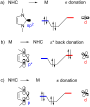
- caused by its structural features. NHCs constitute a well-established class of new ligands in organometallic chemistry. Although initially NHCs were regarded as pure σ-donor ligands, later experimental and theoretical studies established the presence of a significant back donation from the d-orbital of
- . A number of excellent reviews on different aspects of NHC chemistry has been published during this period [12][13][14]. NHCs have been widely employed in homogeneous catalysis [12] and as ligands for the preparation of coordination compounds of different metals [13]. The M–NHC bond is relatively
- ligands in organometallic chemistry. After the first synthesis of stable monomeric NHCs, spectroscopic studies promptly revealed their similarity with phosphines. Indeed, both these classes of ligands are σ-donor ligands with low π-backdonating character [16][17]. In the beginning, the NHCs were perceived










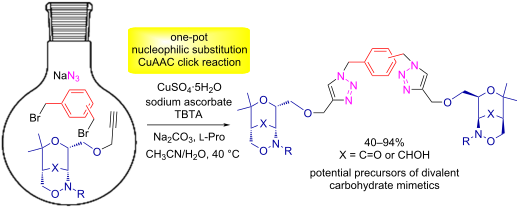
One-pot nucleophilic substitution–double click reactions of biazides leading to functionalized bis(1,2,3-triazole) derivatives
Beilstein J. Org. Chem. 2023, 19, 1399–1407, doi:10.3762/bjoc.19.101
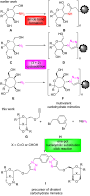
- abstained from the conversion of compounds 24, 25 or 26 into their sulfated form due to the presence of the impurities in these samples. However, only the sulfated forms of this type of multivalent carbohydrate mimetics had earlier shown respectable biological activity as ligands of P- and L-selectins [44



Organic thermally activated delayed fluorescence material with strained benzoguanidine donor
Beilstein J. Org. Chem. 2023, 19, 1289–1298, doi:10.3762/bjoc.19.95
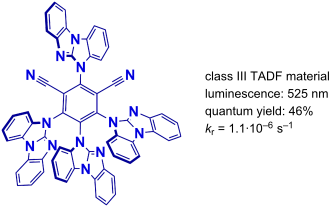
- performance in OLED devices [1]. 4CzIPN is a donor–acceptor-type system where carbazole donor ligands are bound to the benzonitrile acceptor core moiety. In this work we have substituted the carbazole donors with 5H-benzo[d]benzo[4,5]imidazo[1,2-a]imidazole (benzoguanidine) ligands to give 4BGIPN, see Figure
- donor ligands above or below the central 4,6-dicyanobenzene ring. In the monoclinic form the two independent molecules of 4BGIPN are related by a pseudo glide plane that do not completely align when superimposed through a glide operation. There is no evidence for systematic absences relating to the
- experiment from 1.402(5) to 1.420(5), giving an average of 1.407(13) Å for 4BGIPN, which is closely similar to 1.405(8) Å reported for the benchmark 4CZIPN compound. Unlike carbazole, the benzoguanidine ligand lacks C2 rotational symmetry, thus enabling the benzoguanidine ligands to project above and below


Radical ligand transfer: a general strategy for radical functionalization
Beilstein J. Org. Chem. 2023, 19, 1225–1233, doi:10.3762/bjoc.19.90
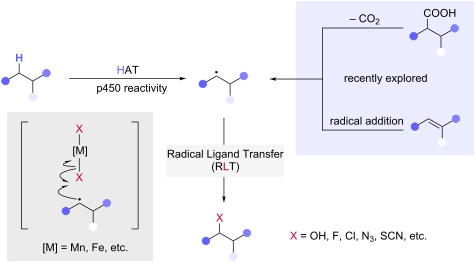
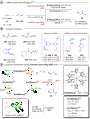
- demonstrated to be particularly privileged in delivery of various ligands to alkyl radicals (Scheme 2). These developments have been supported by discovery of the compatibility of RLT with many different reaction paradigms leading to alkyl radical intermediates under catalytic conditions, including radical
- functionalization via the canonical organometallic steps of oxidative addition/reductive elimination was ruled out via catalytic reaction of the macrocyclic Groves-type porphyrin catalyst V, a species that is unable to accommodate the mutual cis-orientation of ligands for metal-centered reductive elimination. The
- the dual catalytic ATRA-RLT cycle. III: Our lab and Xu reported photochemical diazidation of alkenes carried out using iron and trimethylsilyl azide. IV: The proposed mechanism for photoinduced LMCT between iron and azide ligands as well as RLT on azidoalkyl radical intermediates. Pioneering and


Exploring the role of halogen bonding in iodonium ylides: insights into unexpected reactivity and reaction control
Beilstein J. Org. Chem. 2023, 19, 1171–1190, doi:10.3762/bjoc.19.86
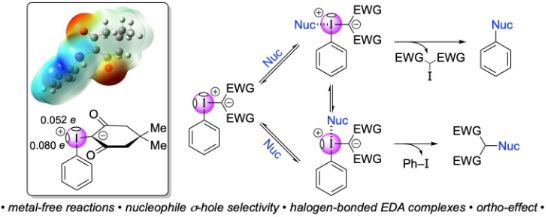
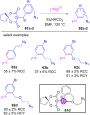
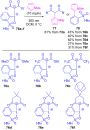
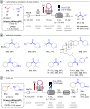
- generate intermediates 2 or 3, where the cis-oriented ligands may reductively eliminate to generate either a functionalized β-dicarbonyl (4, most common) or a substituted arene (5, rare). Interestingly, when the first iodonium ylide was synthesized by Neiland and co-workers in 1957, they also evaluated its
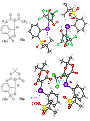
- analogous free-carbene mediated reactions, and they instead proposed iodine to have engaged with Lewis basic ligands and coordinated their coupling within its ligand sphere. An ylide’s positively charged iodine was consistently proposed to accept ligands, via either concerted or ionic steps, ultimately
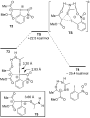
- - and hydrogen intermolecular bonds. This adduct decomposed by reductive elimination of the iodoarene via a three-membered transition state (TS), coupling the syn thioamide and β-dicarbonyl ligands to give thiocarbenium ion 74. The authors determined similar activation energies (≈20 kcal/mol) when








Selective and scalable oxygenation of heteroatoms using the elements of nature: air, water, and light
Beilstein J. Org. Chem. 2023, 19, 1146–1154, doi:10.3762/bjoc.19.82
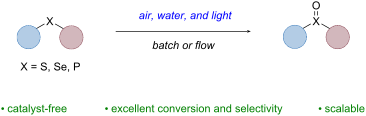
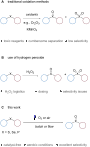
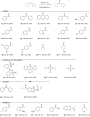
- phosphine oxide, and selenides to selenoxides. Sulfoxide, phosphine oxide, and selenoxide-containing molecules have diverse applications in the pharmaceutical industry [10], as chiral auxiliaries or as ligands for asymmetric metal catalysis [11], and in materials such as polymers [12][13] and flame
- retardants [14]. Sulfoxides are prominent pharmaceutical ingredients, while phosphine oxides improve solubility of corresponding compounds [15] and have applications in catalysis and materials science [16]. Selenoxides find use as oxygen transfer agents and donor ligands in metal catalysis and organic





Photoredox catalysis harvesting multiple photon or electrochemical energies
Beilstein J. Org. Chem. 2023, 19, 1055–1145, doi:10.3762/bjoc.19.81
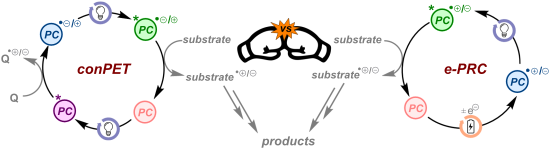
- excited state lifetimes [95][96], most reactions employing such photocatalysts require special reaction design (e.g., coordination of substrates as ligands to enable intramolecular metal to ligand charge transfer (MLCT)). Only recently have a few examples been reported that observed bimolecular quenching










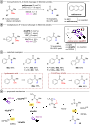
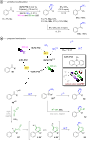
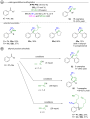
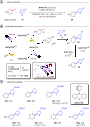















Copper-catalyzed N-arylation of amines with aryliodonium ylides in water
Beilstein J. Org. Chem. 2023, 19, 1008–1014, doi:10.3762/bjoc.19.76
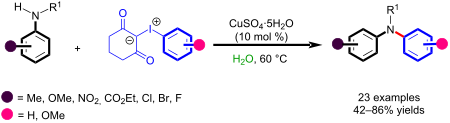
- strategies for C–N bond formation have been extensively explored by various research groups for the N-arylation of amines. Specifically, seminal contributions by Buchwald [15] and Hartwig [16] involving the use of palladium complexes as catalysts in the presence of either phosphine or diamine ligands for C–N
- bond formation. However, these methods suffer from limitations such as moisture sensitivity, the requirement of specific ligands, and the use of expensive palladium catalysts [17]. Also, Chan Lam, Evans, and other research groups have developed copper-catalyzed C–N bond formation reactions by careful



Aromatic C–H bond functionalization through organocatalyzed asymmetric intermolecular aza-Friedel–Crafts reaction: a recent update
Beilstein J. Org. Chem. 2023, 19, 956–981, doi:10.3762/bjoc.19.72

- reactions include mild reaction conditions and the use of a sole catalyst without the need of other chiral ligands [4][5]. In these reactions, stereoinduction in the products is achieved by the chiral environment present in the catalyst itself. Depending upon the reactivities, organocatalysts can be




Clauson–Kaas pyrrole synthesis using diverse catalysts: a transition from conventional to greener approach
Beilstein J. Org. Chem. 2023, 19, 928–955, doi:10.3762/bjoc.19.71
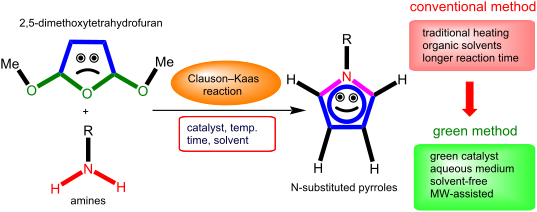
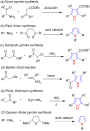
- method using a zinc catalyst. The synthesis of pyrrole derivatives 47 were achieved in moderate to excellent yields without using any co-catalyst, ligands or bases by stirring various aniline derivatives 46 with 2,5-dimethoxytetrahydrofuran (2) in the presence of 5 mol % of Zn(OTf)2 for 8 hours at 70 °C




Cyclodextrins as building blocks for new materials
Beilstein J. Org. Chem. 2023, 19, 889–891, doi:10.3762/bjoc.19.66
- reactivity of their alcohol functions. This allows regioselective chemical modification at either the primary or secondary rim [13]. As a result, these molecular hosts can be specifically linked either covalently or noncovalently to a wide variety of ligands. CDs are a significant part of almost all areas of
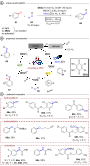
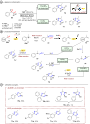
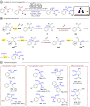
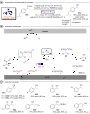
Pyridine C(sp2)–H bond functionalization under transition-metal and rare earth metal catalysis
Beilstein J. Org. Chem. 2023, 19, 820–863, doi:10.3762/bjoc.19.62
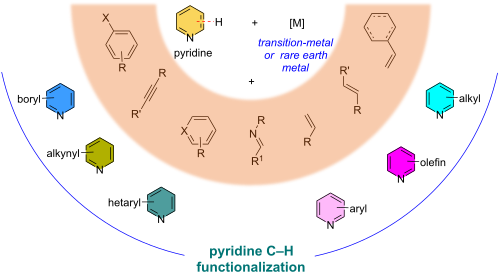
- demonstrated that the reaction in the presence of cationic zirconium complexes derived from zirconium dibenzyl complexes bearing tridentate [ONO]-type amine-bridged bis(phenolato) ligands and [Ph3C][B(C6F5)4] (Scheme 5), gave rise to ortho-selective C–H alkylated pyridines 19 and 21. It was observed that the
- dialkylpyridines with alkenes. It is to be noted that the ligands’ backbones were found to be crucial for the regioselectivity of the addition to benzylic C(sp3)–H bonds, as N-arylamine-bridged bis(phenolato) Zr complexes provided branched products whereas N-alkylamine-bridged bis(phenolato) Zr complexes provided
- imines 25 (Scheme 6). The authors also demonstrated the enantioselective aminoalkylation, using chiral diamines as ligands. The introduction of chiral diamines in the metal complex produced the aminoalkylated products enantioselectivity with good ratio of enantiomeric excess. The plausible mechanism
















Strategies in the synthesis of dibenzo[b,f]heteropines
Beilstein J. Org. Chem. 2023, 19, 700–718, doi:10.3762/bjoc.19.51
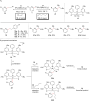
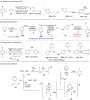
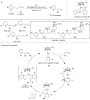
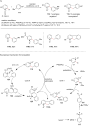
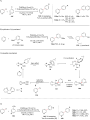
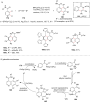
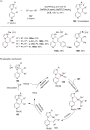
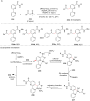
- frameworks with dibenzo[b,f]azepine derived ligands have also been reported. This review provides a brief overview of the different synthetic strategies to dibenzo[b,f]azepines and other dibenzo[b,f]heteropines. Keywords: dibenzo[b,f]azepine; dibenzo[b,f]heteropine; dibenzo[b,f]oxepine; iminostilbene
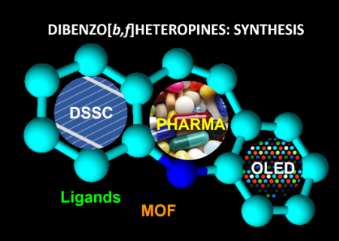
- ; synthesis; Introduction The dibenzo[b,f]azepine (1a) scaffold (Figure 1) is featured in commercial pharmaceuticals [1] and other lead compounds [2][3][4], ligands [5][6] and in materials science with possible applications in organic light emitting diodes (OLEDs) [7] and dye-sensitized solar cells (DSSCs
- 31). The reaction conditions were screened with several biarylphosphine ligands and Pd sources. Excellent yields were achieved with a low catalyst loading of RuPhos (L6) fourth generation palladacycle precatalyst L6 Pd G4 (Scheme 31). The authors evaluated an extensive series of aryl halides. The


Synthesis of medium and large phostams, phostones, and phostines
Beilstein J. Org. Chem. 2023, 19, 687–699, doi:10.3762/bjoc.19.50
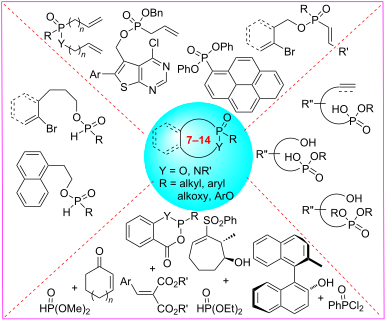
- the catalytic antibody [24]. They are also potential chiral ligands in asymmetric catalysis [25] (Figure 1). Cyclizations and annulations are two major strategies for the synthesis of medium and large phostam, phostone, and phostine derivatives. The cyclizations have been applied in the construction
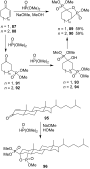
- –elimination. Both they are potential chiral phosphorus ligands (Scheme 20) [25]. When Fuchs and co-workers investigated the conversion of cyclic vinyl sulfones to vinylphosphonates, they found that the reaction of (1S,2R)-2-methyl-3-(phenylsulfonyl)cyclohept-3-en-1-ol (100) and diethyl phosphonate generated
- because the P–O bond is more stable than the corresponding P–N bond. Much attention should be paid to the synthesis of different ring size phostams in the future. Biologically active agents and chiral ligands containing medium and large phostams, phostones, and phostines. Synthetic strategies for the




Enolates ambushed – asymmetric tandem conjugate addition and subsequent enolate trapping with conventional and less traditional electrophiles
Beilstein J. Org. Chem. 2023, 19, 593–634, doi:10.3762/bjoc.19.44
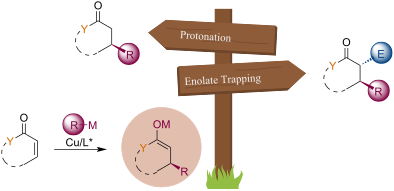
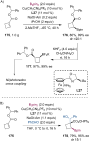
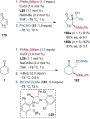
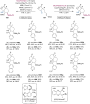
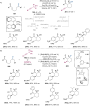
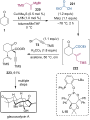
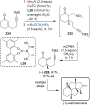
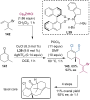
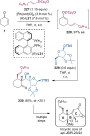
- (Scheme 16). Within the framework of these domino reactions, we have mainly employed ferrocenyl phosphane ligands such as Taniaphos or Josiphos. In collaboration with Prof. Schmalz from Cologne University, we have also tested phosphite-phosphine ligands (e.g., L15) from their lab. The advantage of these
- ligands is that they can also promote the conjugate additions of aryl-based or branched Grignard reagents (Scheme 17) [49]. Further extending this methodology, we have investigated formaldehyde imine equivalents. These kinds of imines are not readily available, but they are highly important synthetic
- ring, while flavylium triflate and 2,4,6-triphenylpyrylium tetrafluoroborate were not compatible with our reaction conditions. Heterodonor ferrocenyl phosphane–carbene ligands efficiently promote the conjugate addition of Grignard reagents to α,β-unsaturated lactones [58]. Building on this knowledge









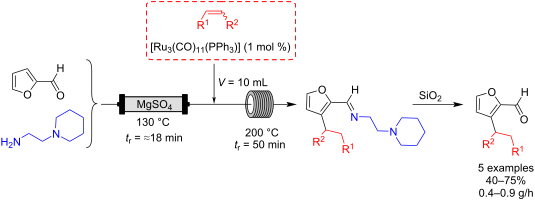
C3-Alkylation of furfural derivatives by continuous flow homogeneous catalysis
Beilstein J. Org. Chem. 2023, 19, 582–592, doi:10.3762/bjoc.19.43
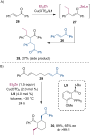
- (L1)3] (comp3) catalysts allowed to show, on the one hand, the absence of solubility problems, and to discover, on the other hand, that the presence of three L1 ligands (comp3) leads to a reaction rate clearly lower than that of a catalyst carrying one or two ligands (see p. S7 of Supporting
- Information File 1 for the reaction kinetic curves of catalysts). In addition, the catalyst with a single L1 ligand (comp1) was found to be more reactive than the one with two ligands (comp2), and was therefore selected for further optimization. In contrast, comparison of its reaction kinetic curve with that


A new oxidatively stable ligand for the chiral functionalization of amino acids in Ni(II)–Schiff base complexes
Beilstein J. Org. Chem. 2023, 19, 566–574, doi:10.3762/bjoc.19.41
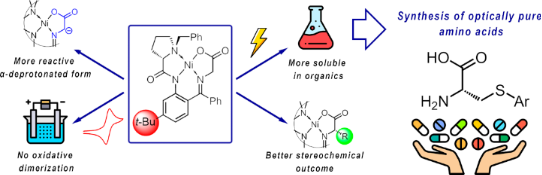
- complexes derived from various chiral ligands. The oxidation potential can be determined from the voltammetry curve measured for the quantitatively deprotonated complex. The electrochemical deprotonation using an electro-generated base is the most convenient approach [37][44]. Comparison with the Eox values
- )L1 is given for comparison. Selected examples of the chiral ligands used for synthesis of the Ni(II)–Schiff base complexes. Synthesis of the chiral ligand L7 and its Ni(II) complexes with glycine, serine, dehydroalanine, and cysteine derivatives. The yields and the thermodynamically controlled
- from ligands L7 and L4. Oxidation and reduction potential values for (GlyNi)L7 and (ΔAlaNi)L7 and comparison with previously reported data for (GlyNi)L1, (ΔAlaNi)L1, (GlyNi)L4 and (ΔAlaNi)L4 [36][37] (Pt, CH3CN, 0.1 M Bu4NBF4, vs Ag/AgCl/KCl(sat.), 100 mV/s). Supporting Information Supporting



Phenanthridine–pyrene conjugates as fluorescent probes for DNA/RNA and an inactive mutant of dipeptidyl peptidase enzyme
Beilstein J. Org. Chem. 2023, 19, 550–565, doi:10.3762/bjoc.19.40
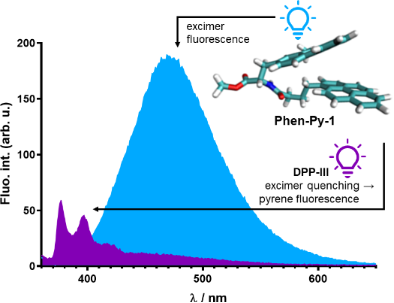
- don't indicate unambiguously particular binding modes of ligands to polynucleotides. Quenching of excimer fluorescence upon addition of ds-polynucleotides combined with a hypsochromic shift of the emission maxima could be explained both by unstacking of the dye and a partial intercalation of one




CuAAC-inspired synthesis of 1,2,3-triazole-bridged porphyrin conjugates: an overview
Beilstein J. Org. Chem. 2023, 19, 349–379, doi:10.3762/bjoc.19.29
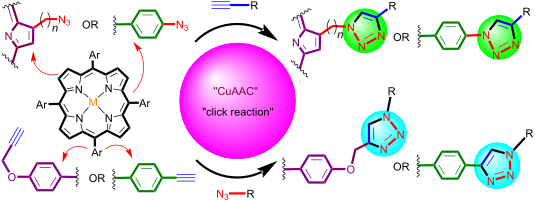
- . Since all of the triazole-linked porphyrins discussed in this review were prepared for different applications, most of the discussion focuses on the clicked synthetic parts under different reaction conditions that include different Cu catalysts, solvent systems, ligands, and temperatures. Most of the
- -triazole-ruthenium(II) conjugates 112a,b and 116a,b in 18–20% yield. Their photophysical and electrochemical studies revealed that the orbital energies depend on the ligands/linker, connecting pattern of linkers, and the presence of Zn metal ions in the porphyrin core. Ligand exchange studies also
- (I)-catalysts such as CuI, (SIMes)CuBr, Cu(MeCN)4PF6, and CuBr(PPh3)3 have been also used in some reactions. Furthermore, a few reports describe the use of ligands like DIPEA, TBTA, NMP, Et3N, etc. along with copper catalysts to stabilize the Cu(I)-oxidation state and speed up the click reaction. It




Synthesis and reactivity of azole-based iodazinium salts
Beilstein J. Org. Chem. 2023, 19, 317–324, doi:10.3762/bjoc.19.27
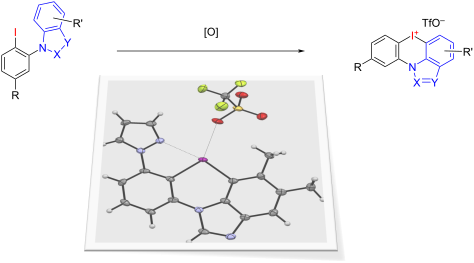
- chemistry of hypervalent iodine species in all their variety, particularly those containing N-heterocycles either as tethered stabilizing ligands or as an inclusive part of a cyclic iodonium salt [26][27][28][29][30][31]. We prepared five-membered, N-heterocycle-containing iodoliums 2 and investigated their