


Search results
Search for "potassium" in Full Text gives 648 result(s) in Beilstein Journal of Organic Chemistry. Showing first 200.
Amino- and polyaminophthalazin-1(2H)-ones: synthesis, coordination properties, and biological activity
Beilstein J. Org. Chem. 2021, 17, 558–568, doi:10.3762/bjoc.17.50
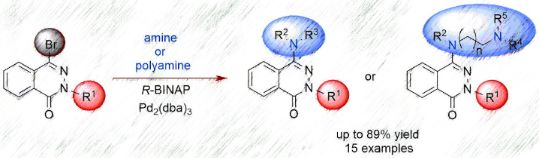
- reported by us [30]. It is known that the alkylation of phthalazinones depends on the reaction conditions and can proceed in two ways involving either the nitrogen or the oxygen atom (lactam–lactim tautomerism). It has been proven that potassium salts of phthalazinones or the bromo derivatives are
- In conclusion, we have demonstrated an efficient synthesis of 2-substituted (alkyl, aminoalkyl) 4-aminophthalazinones 5 and 6 via the direct bromination of phthalazin-1(2H)-one (1) with potassium tribromide, followed by the alkylation of 4-bromophthalazinone 2 with methyl iodide, isopropyl iodide or






Synthetic strategies of phosphonodepsipeptides
Beilstein J. Org. Chem. 2021, 17, 461–484, doi:10.3762/bjoc.17.41
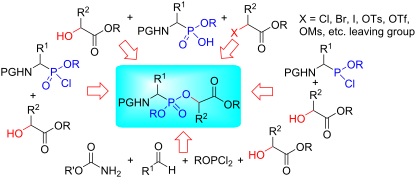
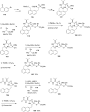
- nucleophilic esterification of potassium 1-(N-benzyloxycarbonylamino)alkylphosphonates 172 with alkyl halides in the presence of 18-crown-6. They also prepared a phosphonodepsidipeptide 174 with ethyl chloroacetate (173) as an electrophile (Scheme 33) [53]. The macrocyclic peptidyl phosphonodepsipeptide 180




Synthesis of trifluoromethyl ketones by nucleophilic trifluoromethylation of esters under a fluoroform/KHMDS/triglyme system
Beilstein J. Org. Chem. 2021, 17, 431–438, doi:10.3762/bjoc.17.39
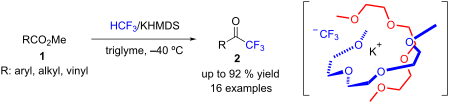
- group reported novel DMF-free systems for the nucleophilic trifluoromethylation reaction using HCF3, including the phosphazene base P4-t-Bu (P4-t-Bu), in 2013 (Scheme 1c) [45] and a potassium tert-butoxide (t-BuOK) or potassium hexamethyldisilazide (KHMDS)/glyme combination in 2018 (Scheme 1d) [46]. The


Regioselective chemoenzymatic syntheses of ferulate conjugates as chromogenic substrates for feruloyl esterases
Beilstein J. Org. Chem. 2021, 17, 325–333, doi:10.3762/bjoc.17.30
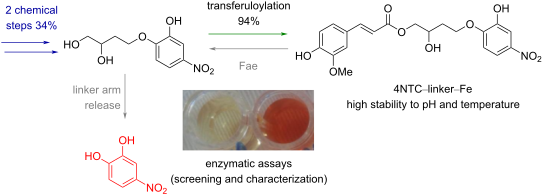
- DMF (8 mL) were added potassium carbonate (1.06 g, 7.67 mmol, 1.2 equiv) and homoallylic bromide (670 µL, 6.51 mmol, 1 equiv) at 40 °C. After overnight stirring at 40 °C, the reaction mixture was concentrated under reduced pressure. The residue was redissolved in ethyl acetate, washed with a saturated


Annulation of a 1,3-dithiole ring to a sterically hindered o-quinone core. Novel ditopic redox-active ligands
Beilstein J. Org. Chem. 2021, 17, 273–282, doi:10.3762/bjoc.17.26
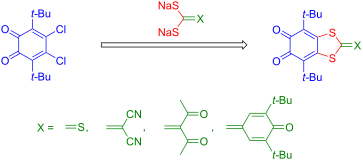
- yield EPR signals of the same multiplicity as they were observed in the case of spectra of monoreduced species of 6d, but the value of hyperfine splitting constant on protons of the methyl groups of the acetylacetonate fragment (0.17 G for potassium semiquinonate, see Table S4 in Supporting Information
- File 1) is less than that in 6d (0.31 G for potassium semiquinonate). This could be explained by the fact that unlike 6d, the acetylacetonate fragment in 7 lies in an almost orthogonal plane relative to the semiquinone ring that disfavors delocalization of the spin density on the methyl groups. The EPR


The preparation and properties of 1,1-difluorocyclopropane derivatives
Beilstein J. Org. Chem. 2021, 17, 245–272, doi:10.3762/bjoc.17.25
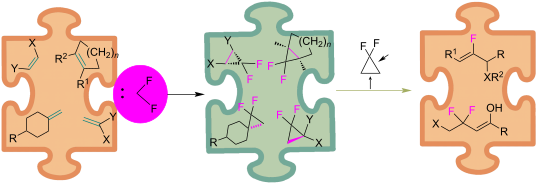
- were increased when potassium fluoride and 18-crown-6 were added to the reaction mixture [20]. Dehydrohalogenation of dichlorodifluoromethane under phase-transfer catalysis: Difluorocarbene can be generated from chlorodifluoromethane by phase-transfer catalysis (PTC) through the reaction with NaOH or




Synthesis of aryl 2-bromo-2-chloro-1,1-difluoroethyl ethers through the base-mediated reaction between phenols and halothane
Beilstein J. Org. Chem. 2021, 17, 89–96, doi:10.3762/bjoc.17.9

- ether was the reaction of phenol with 2-chloro-1,1,1-trifluoroethane, also known as HCFC-133a, in the presence of potassium hydroxide (KOH) to give the gem-difluoromethyl ethers along with the formation of 1-fluoro-2-chlorovinyl ether (route (d), Scheme 1) [41]. On the basis of our previous reports, we
- did not occur at all when potassium carbonate was used as a base, because the deprotonation of phenol became slow due to the low basicity (Table 1, entry 9). With the optimal reaction conditions (Table 1, entry 8) in hand, we next examined the scope of the reaction (Table 2). When an electron-rich
- the product 2a in 27% yield and 1a was recovered in 54% (Scheme 4a). Based on these results, we speculated that the initially generated phenoxide 4 or potassium hydroxide remaining in the reaction mixture could deprotonate halothane to provide the fully halogenated ethylene 5 (Scheme 4b) [32][33][45


Recent progress in the synthesis of homotropane alkaloids adaline, euphococcinine and N-methyleuphococcinine
Beilstein J. Org. Chem. 2021, 17, 28–41, doi:10.3762/bjoc.17.4
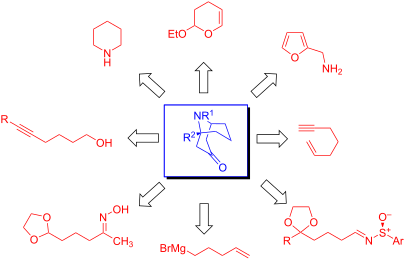
- a 6-step sequence from 3,4-dihydro-2-ethoxy-2H-pyran (58) [50]. Treatment of 58 with a mixture of butyllithium and potassium tert-butoxide in the presence of TMEDA and pentane, followed by reaction with the corresponding alkyl iodides in THF, and finally, acidic cleavage of the generated acetal
- tetroxide and potassium periodate, to provide (−)-adaline (1) and (−)-euphococcinine (2). Originally, Yu et al. synthesized (−)-adaline (1) with good yields and high enantiomeric excess using catalytic asymmetric allylation from commercially available 58. Additionally, intramolecular allylic transfer led to
- stereospecific semipinacol rearrangement in 78% yield over two steps. The resulting terminal alkene (−)-70 was submitted to Vacker's conditions to produce methyl ketone (−)-71 in 93% yield. The treatment of this ketone with potassium trimethylsilanolate induced a 1,5-Michael type reaction, via attack of tethered


Synthesis of imidazo[1,5-a]pyridines via cyclocondensation of 2-(aminomethyl)pyridines with electrophilically activated nitroalkanes
Beilstein J. Org. Chem. 2020, 16, 2903–2910, doi:10.3762/bjoc.16.239

- (3.01 g, 10 mmol) in DMF (16 mL) was added potassium phthalimide (1.85 g, 10 mmol) in portions. The mixture was stirred at room temperature for 5 h. Then, water (30 mL) was added, and the formed precipitate was collected by filtration and washed with water. Recrystallization from ethanol afforded


Bifurcated synthesis of methylene-lactone- and methylene-lactam-fused spirolactams via electrophilic amide allylation of γ-phenylthio-functionalized γ-lactams
Beilstein J. Org. Chem. 2020, 16, 2769–2775, doi:10.3762/bjoc.16.227
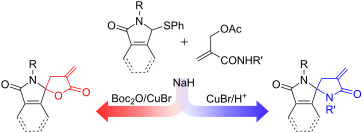
- such as potassium tert-butoxide or sodium hydride resulted in no formation of the desired product 3a because 2a was decomposed under the harsh reaction conditions (Table 1, entries 2 and 3). Thus we opted to employ another substrate 2b bearing a phenylthio group which polarizes the α-C–H bond to lead
- the corresponding stabilized anion [20] and is readily transformed into a hydroxy group by treatment with copper bromide according to our previous work [21]. Allylation of 2b with 1a at room temperature proceeded in the presence of a catalytic amount of Pd(PPh3)4 by using potassium tert-butoxide or



Optical detection of di- and triphosphate anions with mixed monolayer-protected gold nanoparticles containing zinc(II)–dipicolylamine complexes
Beilstein J. Org. Chem. 2020, 16, 2687–2700, doi:10.3762/bjoc.16.219
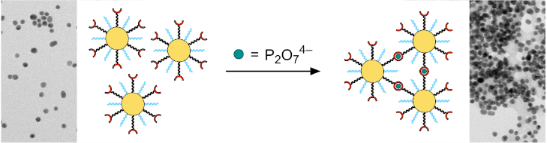
- with a complementary base sequence [10], the AuNPs with peripheral carboxylate groups introduced by the Hupp group [11] that responded to divalent transition metal ions, or Chen at al.’s crown ether-decorated AuNPs that allowed the sensing of potassium ions [12]. Numerous other such probes have been
- nanoparticle surface after immobilization. Compound 2 was prepared by starting from potassium phthalimide and 1,12-dibromododecane (Scheme 2). The product resulting from this step was treated with bis(2-pyridylmethyl)amine to give a DPA derivative that was coupled to (R)-lipoic acid after deprotection to
- . Conditions: i) potassium phthalimide, DMF, 25 °C, 18 h, 67%; ii) 2,2'-dipicolylamine, K2CO3, KI, acetone, reflux 14 h, 50%; iii) N2H4⋅H2O, ethanol, 25 °C, 16 h, 56%; iv) (R)-lipoic acid, EDC⋅HCl, DMAP, CH2Cl2, 25 °C, 18 h, 52%. Minimum salt concentrations required to precipitate and to subsequently


Particle size effect in the mechanically assisted synthesis of β-cyclodextrin mesitylene sulfonate
Beilstein J. Org. Chem. 2020, 16, 2598–2606, doi:10.3762/bjoc.16.211

- %) and potassium hydroxide (90%) were purchased from Sigma-Aldrich. All chemicals were used without further purification. Preparation of β-CD samples Analogously as described in [14]. General procedure for the synthesis of mono-6-O-(2-mesitylenesulfonyl)-β-cyclodextrin β-CD (1500 mg, 1.32 mmol) and MtsCl




Synthesis of novel fluorinated building blocks via halofluorination and related reactions
Beilstein J. Org. Chem. 2020, 16, 2562–2575, doi:10.3762/bjoc.16.208
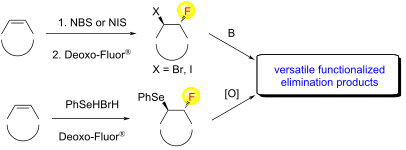
- interactions are marked with two-headed arrows. Mechanism of the halofluorination reactions of the substrate 19. X = Br (compounds a), I (compounds b), Cl (compounds c). Synthesis and halofluorination of the imide 24. Cyclizations of halofluorinated diesters with potassium tert-butoxide. Relevant NOESY


Water-soluble host–guest complexes between fullerenes and a sugar-functionalized tribenzotriquinacene assembling to microspheres
Beilstein J. Org. Chem. 2020, 16, 2551–2561, doi:10.3762/bjoc.16.207
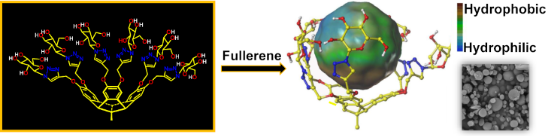
- Discussion Synthesis of the host TBTQ-(OG)6. The sugar-functionalized host TBTQ-(OG)6 was synthesized starting from the known compound TBTQ-(OH)6 (Scheme 1) [31][32][33]. The reaction of TBTQ-(OH)6 with propargyl bromide in the presence of potassium carbonate gave the hexakis-propargyl ether, TBTQ-(OP)6, in
- imaging. Freeze drying was conducted on a Scientz-18N freeze dryer (Scientz Biotech, Zhejiang, China). Synthesis of TBTQ-(OP)6. A mixture of TBTQ-(OH)6 (2.17 g, 5.56 mmol), potassium carbonate (9.23 g, 66.8 mmol), and propargyl bromide (5.40 g, 44.5 mmol, 98 wt %) in acetonitrile (100 mL) was stirred and


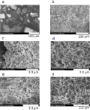
![[Graphic 2]](/bjoc/content/inline/1860-5397-16-207-i3.svg?max-width=637&scale=1.18182) C60 [TBTQ-(OG)6: 50 μM; C60: 50 μM] and (b) TBTQ-(OG)6
C60 [TBTQ-(OG)6: 50 μM; C60: 50 μM] and (b) TBTQ-(OG)6 


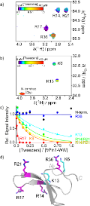
NMR Spectroscopy of supramolecular chemistry on protein surfaces
Beilstein J. Org. Chem. 2020, 16, 2505–2522, doi:10.3762/bjoc.16.203
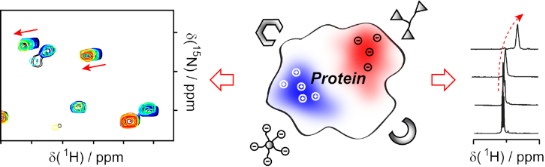
- been used to design custom plugs for the negatively charged central cavity of tetrameric proteins, exploiting the four-fold symmetry of the ligand [39][40]. In the case of tetrameric voltage-dependent potassium channels, binding of the calixarene to the central pore of the channel results in reversible
- inhibition of potassium ion transport [39]. Another guanidinium-calixarene variant was designed to hold together the four tetramer subunits of a p53-R337H tumor suppressor mutant and thus restore tetramer stability [40]. Further examples for ligands targeting negatively charged patches on proteins include




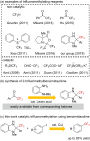
Catalytic trifluoromethylation of iodoarenes by use of 2-trifluoromethylated benzimidazoline as trifluoromethylating reagent
Beilstein J. Org. Chem. 2020, 16, 2442–2447, doi:10.3762/bjoc.16.198
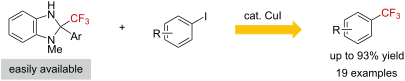
- synthesis. Experimental General procedure of trifluoromethylation: Aryl iodide 1 (0.1 mmol), 2 (56 mg, 0.2 mmol), CuI (3.8 mg, 0.02 mmol), 2,2’-bipyridyl (12.5 mg, 0.08 mmol), and potassium carbonate (55.6 mg, 0.4 mmol) were mixed in benzonitrile (1.0 mL), and the mixture heated to 90 °C. After 48 h



Design and synthesis of a bis-macrocyclic host and guests as building blocks for small molecular knots
Beilstein J. Org. Chem. 2020, 16, 2314–2321, doi:10.3762/bjoc.16.192

- bromide in 1-bromo-4-chlorobutane (16) with sodium azide to give azide 17 in 52% yield (Scheme 5). Treatment of 17 with potassium phthalimide and catalytic potassium iodide was followed by hydrazine unmasking to give the desired aminoazide 18 in 37% over the two steps. Reductive amination of 18 with dial


The B & B approach: Ball-milling conjugation of dextran with phenylboronic acid (PBA)-functionalized BODIPY
Beilstein J. Org. Chem. 2020, 16, 2272–2281, doi:10.3762/bjoc.16.188
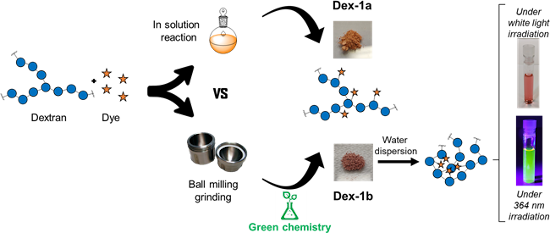
- recorded on an Inova 400 instrument. Fourier transform infra red absorption spectroscopy (FTIR) was carried out with a Shimadzu IRAffinity-1S spectrometer. Potassium bromide (KBr) pellets were prepared using 100 mg of potassium bromide and 1.0 mg of sample. The spectra were recorded under inert atmosphere
- and a pure potassium bromide pellet was used as background. Inductively coupled plasma atomic emission spectroscopy (ICP-AES) was used to determine the boron (B) concentrations and was performed in triplicate using a Varian 720-ES Inductively Coupled Plasma Atomic Emission Spectrometer (ICP-AES). An


Synthetic approaches to bowl-shaped π-conjugated sumanene and its congeners
Beilstein J. Org. Chem. 2020, 16, 2212–2259, doi:10.3762/bjoc.16.186
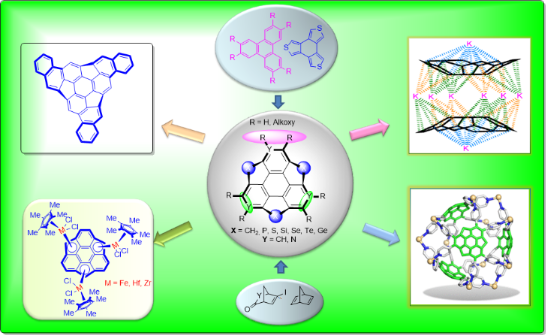
- tripotassiumsumanenide [68]. As can be inspected from Scheme 36, this complex was prepared by treating the sumanene molecule with an excess of potassium metal. After stirring the reaction for 56 h, the suspension was filtered off and the filtrate was layered in hexanes at 10 °C to yield the beautiful dark-red blocks of
- generate the corresponding pyrazine-fused sumanene networks 169a–f and 170a–f in low-to-good yields (Scheme 44). As can be inspected from Scheme 45, oxidation of 155 and 160 with both oxone (potassium peroxymonosulfate) and H2O2 afforded the one-ring-opened product 177. Interestingly, when these compounds











Access to highly substituted oxazoles by the reaction of α-azidochalcone with potassium thiocyanate
Beilstein J. Org. Chem. 2020, 16, 2108–2118, doi:10.3762/bjoc.16.178
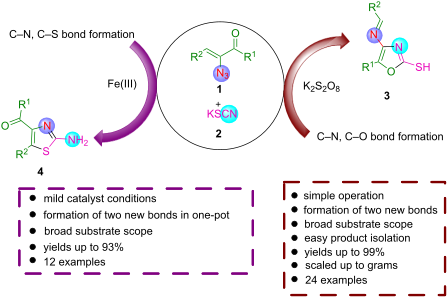
- azidochalcones, when treated with potassium thiocyanate in the presence of potassium persulfate, lead to 2,4,5-trisubstituted oxazoles in good yields. Incidentally, 2-aminothiazoles are the products when ferric nitrate is employed instead of persulfate in the above reaction. Keywords: aminothiazole; oxazole
- ; potassium persulfate; thiazole; vinyl azide; Introduction Vinyl azide is one of the most versatile and potent building blocks explored in the synthesis of several heterocycles [1][2][3][4][5]. It can undergo photolysis or thermolysis to afford highly strained three-membered 2H-azirine, which can act as the
- substituted α-azidochalcones with potassium thiocyanate. Thiocyanate is a known ambident reagent with two potential sites of attack, enabling the selective and efficient construction of C–C and C–N bonds towards biologically important heterocyclic skeletons [62][63][64]. Results and Discussion Previously, we




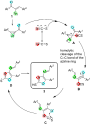


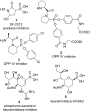
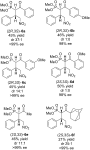
Convenient access to pyrrolidin-3-ylphosphonic acids and tetrahydro-2H-pyran-3-ylphosphonates with multiple contiguous stereocenters from nonracemic adducts of a Ni(II)-catalyzed Michael reaction
Beilstein J. Org. Chem. 2020, 16, 2073–2079, doi:10.3762/bjoc.16.174
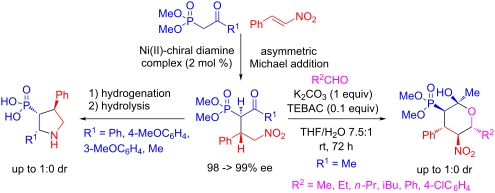
- detected in the reaction even after 72 h in the presence of 1 equiv of potassium phosphate or carbonate with TEBAC (0.1 equiv, Table 1, entries 4 and 5). If potassium fluoride or cesium carbonate were used as a base, the initial phosphonate 6e was consumed in a few hours, but unidentified products were



The biomimetic synthesis of balsaminone A and ellagic acid via oxidative dimerization
Beilstein J. Org. Chem. 2020, 16, 2026–2031, doi:10.3762/bjoc.16.169
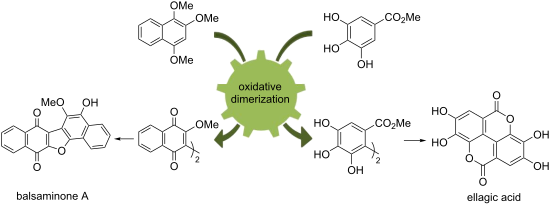
- ), was subjected to the oxidants activated carbon (Act-C), potassium ferricyanide (K3[Fe(CN)6]), p-benzoquinone and stannic chloride (SnCl4). As shown in Scheme 4, with the exception of SnCl4, all oxidants resulted in the re-oxidation of the hydroxylated substrate to naphthoquinone 7. SnCl4, however


Syntheses of spliceostatins and thailanstatins: a review
Beilstein J. Org. Chem. 2020, 16, 1991–2006, doi:10.3762/bjoc.16.166

- -methyl-3-buten-1-yl tosylate in the presence of Grubbs’ 2nd generation catalyst yielded 59, which, upon elimination with potassium tert-butoxide led to the diene 50. The reductive amination of 50 afforded an inseparable mixture of the C-14 amines (6:1 ratio). However, the amidation of this mixture with


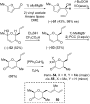
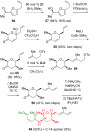


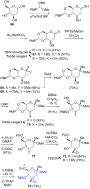


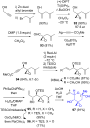


Metal-free synthesis of phosphinoylchroman-4-ones via a radical phosphinoylation–cyclization cascade mediated by K2S2O8
Beilstein J. Org. Chem. 2020, 16, 1974–1982, doi:10.3762/bjoc.16.164

- afforded the title compounds in moderate yields. Keywords: chroman-4-ones; diphenylphosphine oxide; metal-free; potassium persulfate; radical cyclization; Introduction The chroman-4-one framework is a privileged structural motif found in numerous natural products and pharmaceuticals with extraordinary
- potassium persulfate [42][43][44]. Based on literature precedent [29][30][42][43][44][45][46] and preliminary mechanistic experiments, a plausible mechanism was proposed in Scheme 5 which was different from the predominant mechanism observed in the Ag-catalyzed radical cascade for the preparation of




Regiodivergent synthesis of functionalized pyrimidines and imidazoles through phenacyl azides in deep eutectic solvents
Beilstein J. Org. Chem. 2020, 16, 1915–1923, doi:10.3762/bjoc.16.158
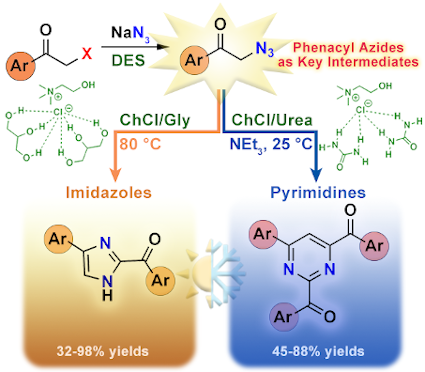
- -azido ketones in iPrOH in the presence of potassium ethylxanthate as a catalyst [28], (b) by exploiting the reaction of arylglyoxals with an excess amount of ammonium acetate in water [29], (c) by the cathodic reduction of 2-azido-1-phenylethanone in a DMF/LiClO4 medium [30], (d) by radical chain





