Search results
Search for "pyrrole" in Full Text gives 310 result(s) in Beilstein Journal of Organic Chemistry. Showing first 200.
Self-assembled coordination thioether silver(I) macrocyclic complexes for homogeneous catalysis
Beilstein J. Org. Chem. 2019, 15, 2465–2472, doi:10.3762/bjoc.15.239
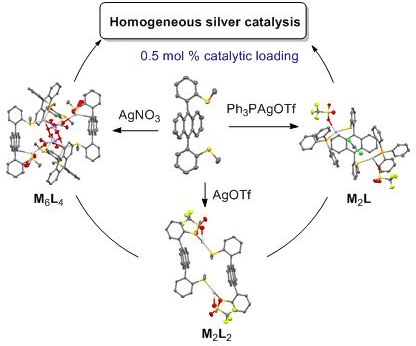
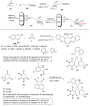
- of silver(I) complexes 1a–d, we investigated their performance in the cyclization [63] of alkynone 3 [63][64][65] in the presence of benzylamine, as a nucleophile (Table 2) that lead to substituted pyrrole 5. This tandem condensation/cycloisomerization was previously reported in 78% yield using AgOTf
- % were employed (Table 2, entries 2–6). Interestingly, a lower catalytic loading of 0.5 mol % allowed the isolation of 73% of pyrrole 5 in the presence of catalysts 1a and 1b (Table 2, entries 7 and 8). Under the same conditions, the catalytic efficiency of 1c and 1d was slightly lower (64–67 % yield
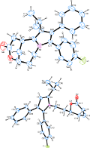
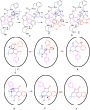
- acetate 70:1) to obtain pyrrole 5. X-ray structures of complex 1a, as two diastereoisomeric macrocycles (R,S-1)2·(AgOTf)2 with ligands assembled in: (a) a head-to-head fashion and, (b) a head-to-tail mode. Hydrogen atoms are omitted for clarity. X-ray structure of complex 1c, as a (R,S-1)4·(AgNO3)6 cage


Combining the Ugi-azide multicomponent reaction and rhodium(III)-catalyzed annulation for the synthesis of tetrazole-isoquinolone/pyridone hybrids
Beilstein J. Org. Chem. 2019, 15, 2447–2457, doi:10.3762/bjoc.15.237

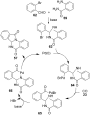
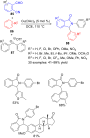
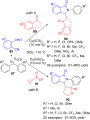
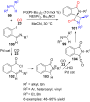
- isoquinolones is very wide and may be extended to the preparation of complex compounds having heterocyclic moieties such as pyridone, furan, thiophene and pyrrole, as well as the corresponding benzo-fused derivatives. The developed procedure is simple, reproducible and does not require inert conditions
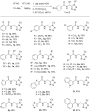
- rings, such as furan, benzofuran, pyrrole, benzopyrrole, thiophene, benzothiophene and naphthalene were also successfully synthesized (5d–l) in moderate to very good yields. The exceptions were the cases of indolopyridone 5i and thiazolopyridone 5k, the latter one could not be obtained even after many




1,2,3-Triazolium macrocycles in supramolecular chemistry
Beilstein J. Org. Chem. 2019, 15, 2142–2155, doi:10.3762/bjoc.15.211
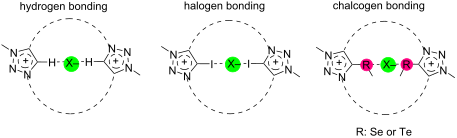
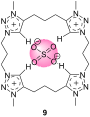
- selectivity of this receptor for chloride anion is due to the cavity size (see Figure 3) [37]. 2.2. Optical anion sensing by 1,2,3-triazolium macrocycles within porphyrin cages Various porphyrin-based host supramolecules containing hydrogen-bond donor groups such as integrated amide, urea, pyrrole, ammonium
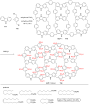
- donors: The benefits of combining the triazolium motif with other hydrogen bond donor motifs has been explored by Sessler et al. and they have synthesized a pyrrole based tetra-1,2,3-triazolium macrocycle 10 (Figure 10) via the tetraalkylation of a triazole macrocycle originally prepared via click
- chemistry. Different hydrogen bond donors such as pyrrole N–H and benzene C–H along with the triazolium C5–H have been successfully incorporated within a single macrocyclic framework. The complex formation of anions with the hydrogen bond donors varied according to the polarity of the solvent. It was found




Characterization of two new degradation products of atorvastatin calcium formed upon treatment with strong acids
Beilstein J. Org. Chem. 2019, 15, 2085–2091, doi:10.3762/bjoc.15.206
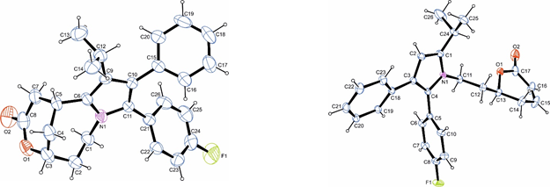
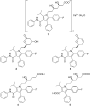
- /dehydration process in the side chain), treatment with conc. aqueous hydrochloric acid gave a complex, bridged molecule under C–C-bond formation of the lactone moiety with the pyrrole, migration of the isopropyl group and loss of the carboxanilide residue. The novel degradation products were characterized by
- , no signal was observed which could be attributed to a C–H group at the pyrrole ring. The 13C NMR data showed one carbonyl resonance at 170.3 ppm, assignable to a lactone moiety. The HMBC experiment showed a cross peak between the proposed lactone carbonyl carbon and a neighboring CH-O group
- anhydrous acid conditions, the entire carboxanilide residue was removed to give the (S)-configured 4-unsubstituted pyrrole 7, as exemplified by a typical CH resonance at 6.20 ppm in the 1H NMR spectrum. This structure was further confirmed by X-ray data (see Figure 2 and Supporting Information File 1). HPLC




Identification of optimal fluorescent probes for G-quadruplex nucleic acids through systematic exploration of mono- and distyryl dye libraries
Beilstein J. Org. Chem. 2019, 15, 1872–1889, doi:10.3762/bjoc.15.183
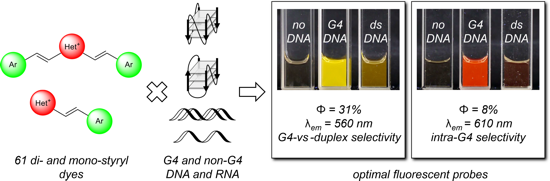
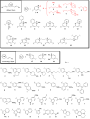
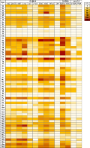
- analytes. Although our results do not allow to formulate comprehensive structure–properties relationships, we identified several structural motifs, such as indole- or pyrrole-substituted distyryl dyes, as well as simple mono-stryryl dyes such as DASPMI [2-(4-(dimethylamino)styryl)-1-methylpyridinium iodide
- containing pyrrole residues (1x, 7x: blue dots in Figure 6) also demonstrate outstanding fluorescence enhancement in the presence of G4-DNA analytes (1x: up to 690-fold with TERRA; 7x: up to 220-fold with c-kit2). However, in the case for 1x, a marked loss of selectivity with respect to non-G4 analytes can
- dot distribution in the plot, the mono-styryl motif and the pyrrole substituent within the distyryl motif (1x, 7x) clearly promote the selectivity for the parallel G4 structures. On the other side, the effect of the indole motif is less clear, with most of the dyes not displaying any well-defined






Functional panchromatic BODIPY dyes with near-infrared absorption: design, synthesis, characterization and use in dye-sensitized solar cells
Beilstein J. Org. Chem. 2019, 15, 1758–1768, doi:10.3762/bjoc.15.169
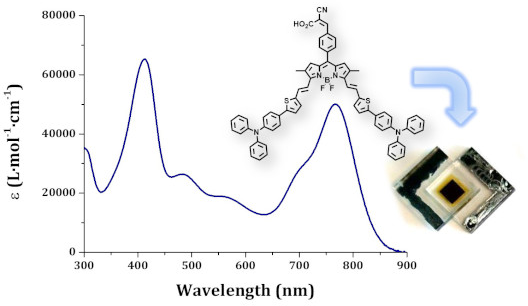
- synthesis of the target materials is schemed in Figure 4. To introduce the selected substitution pattern, 2,3-dimethylpyrrole 1 is first synthesized through a Trofimov reaction in a one-pot two-step reaction [29]. The condensation of the aforementioned pyrrole on para-iodobenzoyl chloride affords the




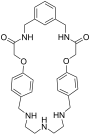
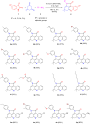
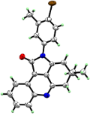
A heteroditopic macrocycle as organocatalytic nanoreactor for pyrroloacridinone synthesis in water
Beilstein J. Org. Chem. 2019, 15, 1505–1514, doi:10.3762/bjoc.15.152
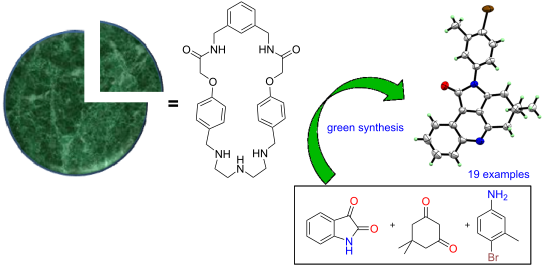
- apoptotic cells, the investigation of the morphology of nuclei, the direct counting of cultivable bacteria, DNA intercalators, etc. [1][2][3][4]. Pyrrole, another biologically active heterocyclic compound, when fused with acridines affords promising bioactive pyrroloacridinone moieties demonstrating






Synthesis of pyrrolo[1,2-a]quinolines by formal 1,3-dipolar cycloaddition reactions of quinolinium salts
Beilstein J. Org. Chem. 2019, 15, 1480–1484, doi:10.3762/bjoc.15.149
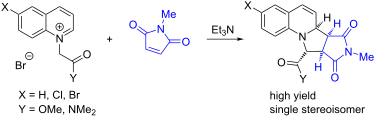
- with electron-poor alkenes occurs through a stepwise conjugate addition–cyclization process [23]. We were interested in the related quinolinium ylides that, on (formal) cycloaddition would provide pyrrolo[1,2-a]quinolines as products. These are tricyclic compounds consisting of a pyrrole ring fused


Introduction of an isoxazoline unit to the β-position of porphyrin via regioselective 1,3-dipolar cycloaddition reaction
Beilstein J. Org. Chem. 2019, 15, 1434–1440, doi:10.3762/bjoc.15.143
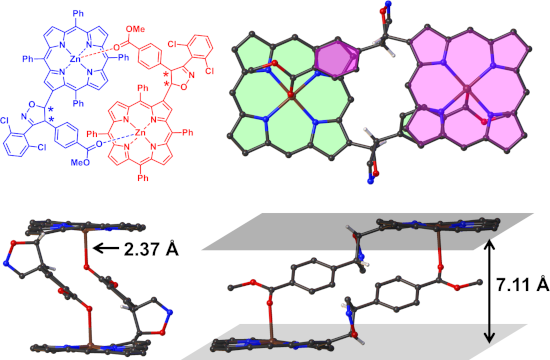
- four pyrrole rings with respect to the porphyrin mean plane, which are more twisted than that in normal Zn-porphyrin [49]. The lengths of Zn–N bonds range from 2.041 Å to 2.073 Å. The new formed five-membered isoxazoline ring is almost vertical (with a dihedral angle of 82.7°) to the mean plane of the


Selenophene-containing heterotriacenes by a C–Se coupling/cyclization reaction
Beilstein J. Org. Chem. 2019, 15, 1379–1393, doi:10.3762/bjoc.15.138

- of 0.49 V, is much easier to oxidize due to the electron-rich character of the pyrrole ring [47]. The HOMO energy levels were determined from the onset of the oxidation wave and accordingly gradually decreased from 1 to 4 (−5.92 eV to −5.80 eV) (Table 4, Figure 7). Due to the absence of reduction


Extending mechanochemical porphyrin synthesis to bulkier aromatics: tetramesitylporphyrin
Beilstein J. Org. Chem. 2019, 15, 1149–1153, doi:10.3762/bjoc.15.111
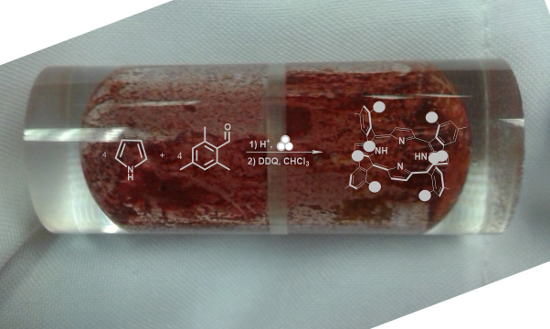
- mechanochemical condensation with pyrrole to give meso-tetrakis[2,4,6-(trimethyl)phenyl]porphyrin (TMP) after oxidation in solution. Yields are similar to those obtained using high-temperature porphyrin synthesis, although they remain significantly lower than some optimized room-temperature, solution-based
- materials, namely: pyrrole and an aldehyde (Scheme 1). Porphyrin synthesis is interesting to study as a mechanochemical reaction because it involves the combination of reactive molecules under appropriate conditions to give a very stable, aromatic product. Furthermore, depending on the nature of the
- work on mechanochemical porphyrin synthesis has demonstrated that it is possible to synthesize tetraphenylporphyrin (TPP) by grinding benzaldehyde and pyrrole (two liquids) in the presence of an acid catalyst, followed by oxidation with DDQ in minimal amounts of solvent [19]. TPP was produced in a


Multicomponent reactions (MCRs): a useful access to the synthesis of benzo-fused γ-lactams
Beilstein J. Org. Chem. 2019, 15, 1065–1085, doi:10.3762/bjoc.15.104
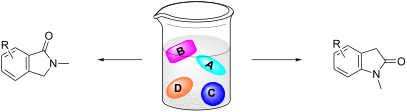
- (Scheme 4). In this case, copper catalyst and alkynes are also used but, unlike the above method, alkynes 18 are monosubstituted. The third component is an indole or pyrrole derivative 19 and the result of the reaction is a 3,3-disubstituted isoindolinone derivative 20, which contains a newly formed
- quaternary centre [79]. The reaction takes places in water, even in the presence of air, and with nanodomain cuprous oxide as an inexpensive and reusable catalyst. The scope includes aryl, alkyl and carboxyl groups at 2- and 3-positions of the lactam ring. Pyrrole reacts across the 2-carbon while indole
- similar way to that described in Scheme 3. In this case, the coupled alkyne moiety is again activated by Cu(I) and then base-promoted cyclization occurs. A new copper complex formation with the alkene analogue to 13 (see Scheme 3) facilitates the aromatic nucleophilic substitution by indole or pyrrole










Novel (2-amino-4-arylimidazolyl)propanoic acids and pyrrolo[1,2-c]imidazoles via the domino reactions of 2-amino-4-arylimidazoles with carbonyl and methylene active compounds
Beilstein J. Org. Chem. 2019, 15, 1032–1045, doi:10.3762/bjoc.15.101
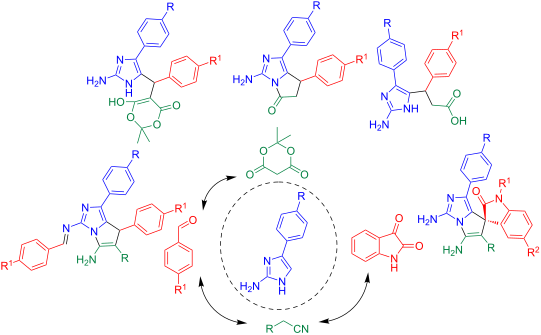
- compounds of both natural and synthetic origin, containing in their structure pyrrole and imidazole rings, display a wide set of pharmacologically significant activities. The most important natural sources of such systems are marine sponges. Since the 70's of 20th century up to date more than 150
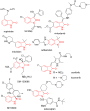
- derivatives containing pyrrole and 2-aminoimidazole fragments in their structure were found among the metabolites of these marine organisms [1]. This group of compounds is characterized by an exceptional molecular diversity. The main structural types of these substances are shown in Figure 1. The metabolites
- . are a source of alkaloids with core structures containing simultaneously pyrrole carboxamide and 2-aminoimidazole moieties such as the simple achiral compound oroidine (V) and spatially organized molecules in a complex manner with a large number of chiral centres like (−)-palau’amine (VI) [3


The LANCA three-component reaction to highly substituted β-ketoenamides – versatile intermediates for the synthesis of functionalized pyridine, pyrimidine, oxazole and quinoxaline derivatives
Beilstein J. Org. Chem. 2019, 15, 655–678, doi:10.3762/bjoc.15.61
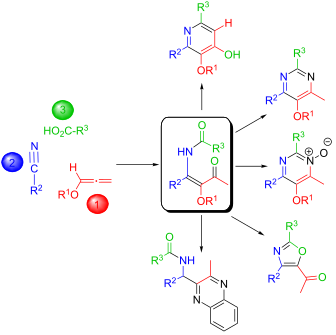
- , who treated pivalonitrile (1) with lithiated methoxyallene 2 and isolated the expected primary addition product 3 [21]. This intermediate was subjected to different cyclization conditions (Scheme 1) and the desired pyrrole derivative 4 was produced under specific conditions employing silver nitrate as






Annulation of 1H-pyrrole-2,3-diones by thioacetamide: an approach to 5-azaisatins
Beilstein J. Org. Chem. 2019, 15, 364–370, doi:10.3762/bjoc.15.32
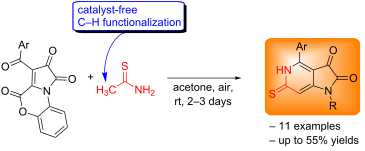
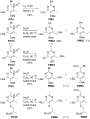
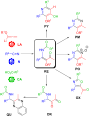
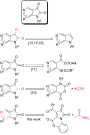
- approaches towards this tempting scaffold are reported in the literature. They can be divided into two groups: oxidation of pyrrolo[3,2-c]pyridines [13][15][16] and annulation of pyridine by a pyrrole-2,3-dione moiety (cyclization of 2-(4-((alkoxycarbonyl)amino)pyridin-3-yl)-2-oxoacetates [11], interaction
- of 5-azaisatoic anhydride with cyanides followed by hydrolysis [10], Scheme 1). Herein, we report a distinct synthetic approach to 5-azaisatins via annulation of pyrrole-2,3-dione by a pyridine ring based on an unprecedented interaction of 1H-pyrrole-2,3-diones with thioacetamide (Scheme 1). Results
- '-pyrroles] 3. It could be either a molecule of the spiro[thiazolo-5,2'-pyrrole] 3 or a molecule of the PBT 2. To determine the most possible one, we investigated the effect of the ratio of the reagents. When we used excessive amounts of thioacetamide (fivefold excess to PBT 2a), a significant decrease in





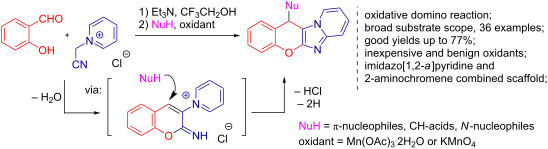
Mn-mediated sequential three-component domino Knoevenagel/cyclization/Michael addition/oxidative cyclization reaction towards annulated imidazo[1,2-a]pyridines
Beilstein J. Org. Chem. 2018, 14, 3078–3087, doi:10.3762/bjoc.14.287
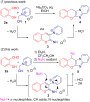
- nucleophiles was tested under selected conditions. Thus, employment of pyrrole as a nucleophile gave product 7a in 43% yield, and N-methylpyrrole facilitated desired compound 7b in 23% yield (Scheme 4). Isomeric 5-, 6- and 7-azaindoles were found to be appropriate nucleophiles too, producing the corresponding





An overview on recent advances in the synthesis of sulfonated organic materials, sulfonated silica materials, and sulfonated carbon materials and their catalytic applications in chemical processes
Beilstein J. Org. Chem. 2018, 14, 2745–2770, doi:10.3762/bjoc.14.253
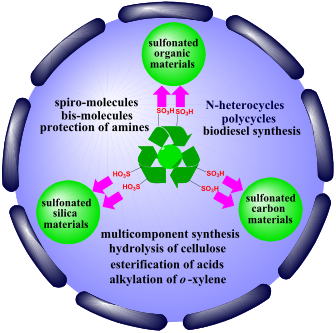
- , triazolo[1,2-a]indazoletrione derivatives, tetrasubstituted imidazole derivatives, aromatic/aliphatic sulfide derivatives, and N-substituted pyrrole derivatives. These catalysts were used in cellulose hydrolysis, cellobiose hydrolysis, production of fatty acid ethyl ester, the transesterification of
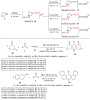
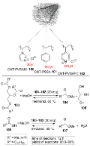
- derivatives. The synthetic route for MWCNT-SO3H and its catalytic application for the synthesis of N-substituted pyrrole derivatives. The sulfonic acid-functionalized polymers (P-SO3H) covalently









Unprecedented nucleophile-promoted 1,7-S or Se shift reactions under Pummerer reaction conditions of 4-alkenyl-3-sulfinylmethylpyrroles
Beilstein J. Org. Chem. 2018, 14, 2722–2729, doi:10.3762/bjoc.14.250
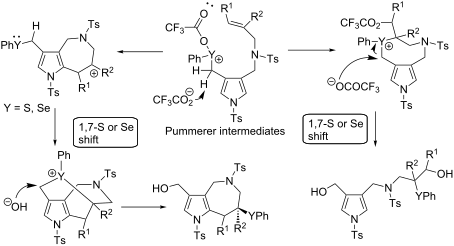
- (diols). Seleno-Pummerer reactions of 3-selanylmethylpyrroles also proceeded via in situ generation of selenoxides, followed by a treatment with TBAH. Keywords: hydroamination; Pummerer reaction; pyrrole; pyrroloazepine; 1,7-sulfur shift; Introduction Pyrrolo- and indoloazepine skeletons are chemical
- radical cyclisations [28] and the 1,7-electrocyclisation of azomethine ylides or ring expansion sequences [29]), most of these approaches are ineffective for synthesising pyrrolo[3,2-c]azepines. Recently, Echavarren and Beller reported a novel Au- or Pt-catalysed cycloisomerisation reaction of pyrrole-2
- determined by analysing the single-crystal X-ray diffraction spectrum of the corresponding sulfone of 4a; the structure was a pyrrole bearing both 3-sulfanylmethyl and 4-allylaminomethyl groups (see Supporting Information File 1). To develop a useful Pummerer reaction procedure, we selected allylamine


Synthesis of aryl sulfides via radical–radical cross coupling of electron-rich arenes using visible light photoredox catalysis
Beilstein J. Org. Chem. 2018, 14, 2520–2528, doi:10.3762/bjoc.14.228
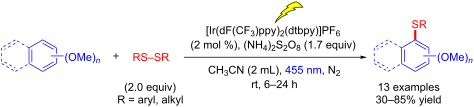
- -methoxyphenyl) disulfide was employed as the thiolating agent (3h). With symmetrical arenes, diarylation was observed. The initially formed mono-arylated product is more reactive than the starting material and reacts to the diarylthiol product. When 1-phenyl-1H-pyrrole-2,5-dione was employed as the arene, the


Calixazulenes: azulene-based calixarene analogues – an overview and recent supramolecular complexation studies
Beilstein J. Org. Chem. 2018, 14, 2488–2494, doi:10.3762/bjoc.14.225
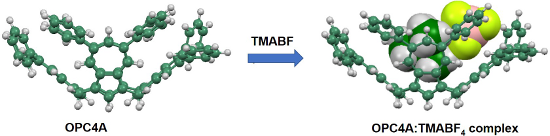
- reported in the literature [7]. Besides the classical calixarene phenolic subunits linked by methylene groups, “calixarenes” incorporating other subunits include, but are not limited to, resorcinol [8], hydroquinone [9], naphthols [10], pyrrole [11], heteroaromatics [12] and triptycene [13] in their cavity


Hydroarylations by cobalt-catalyzed C–H activation
Beilstein J. Org. Chem. 2018, 14, 2266–2288, doi:10.3762/bjoc.14.202
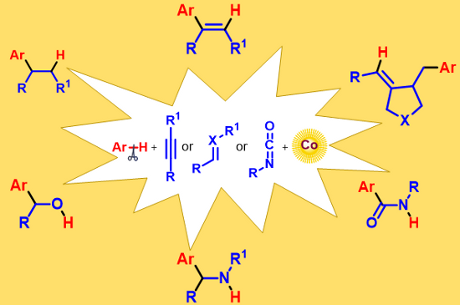
- in the presence of CoCp*(CO)I2 and AgNTf2 (Scheme 38) [98]. The reaction tolerated various pyrimidine containing arenes, such as indole, phenyl, and pyrrole with different ketenimines to form enaminylation products 61. Subsequently, the hydroarylation products 61 were further converted into bioactive




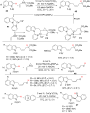


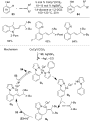


Investigation of the electrophilic reactivity of the biologically active marine sesquiterpenoid onchidal and model compounds
Beilstein J. Org. Chem. 2018, 14, 2229–2235, doi:10.3762/bjoc.14.197

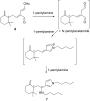
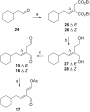
- aminated pyrrole adducts. Somewhat surprisingly, no reaction was observed between onchidal and n-pentanethiol. Structurally simplified n-pentyl 11–13 and cyclohexylmethyl 15–17 analogues of onchidal were prepared and demonstrated similar amine-selective reactivity. Onchidal and analogues reacted with the
- model protein lysozyme, forming covalent adducts and leading to protein cross-linking. These results provide preliminary evidence supporting the molecular mechanism of biological activity exhibited by onchidal. Keywords: dialdehyde; lysozyme; mollusc; onchidal; pyrrole; Introduction More than 80
- binneyi) also exhibit biological properties including feeding deterrence, antibacterial and anticholinesterase activities. Chemical reactivity studies using polygodial (1), scalaradial (2) and caulerpenyne (3) have demonstrated evidence of pyrrole formation upon reaction with primary amines, with






Applications of organocatalysed visible-light photoredox reactions for medicinal chemistry
Beilstein J. Org. Chem. 2018, 14, 2035–2064, doi:10.3762/bjoc.14.179
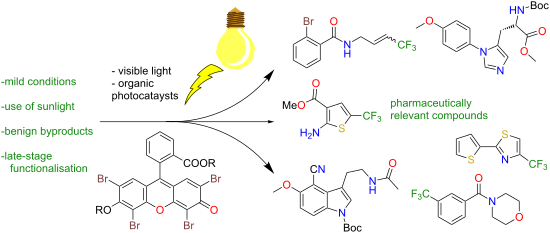
- ). The reaction uses 2H-azirines and aldehydes to access the functionalised heterocycles [61]. Unlike the pyrrole-forming reaction, this protocol requires an oxidising agent, DDQ, for the desired oxazole to be obtained. This means that access to the corresponding 2,5-oxazolines is also possible




Synthesis and characterization of π–extended “earring” subporphyrins
Beilstein J. Org. Chem. 2018, 14, 1956–1960, doi:10.3762/bjoc.14.170
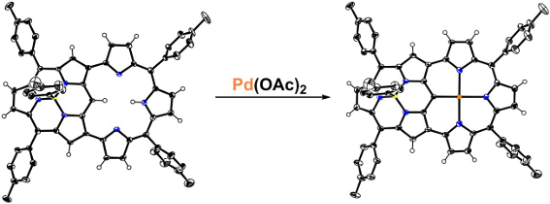
- subporphyrin moiety are not ideally coplanar. This feature can be proved by the dihedral angles of two adjacent pyrrole units in the tripyrrin moiety, which are as large as 15.8(1)° and 16.1(1)°, respectively. We assume that the twisted structure results from the strain transmitted from the subporphyrin moiety
- of which are shorter than that of 3. This contraction is probably due to a slight mismatch of the radii between the Pd center and the cavity. In addition, this mismatch also leads to a further twist of the pyrrole units in the tripyrrin moiety. The dihedral angles of two adjacent pyrrole units in the


Hypervalent organoiodine compounds: from reagents to valuable building blocks in synthesis
Beilstein J. Org. Chem. 2018, 14, 1508–1528, doi:10.3762/bjoc.14.128
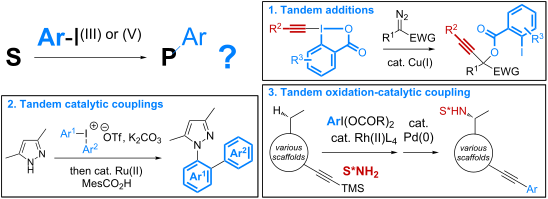
- introduction of the iodobenzoic acid motif onto the pyrrole ring. 5-Aroyloxy-γ-lactams 4 can be isolated with yields in the 56–96% range, however, the reaction requires 2.5 equivalents of the λ5-iodane reagent, a result that supports its limited efficiency in terms of atom economy (Scheme 3) [31]. λ3-Iodane