Search results
Search for "pyrrolidine" in Full Text gives 267 result(s) in Beilstein Journal of Organic Chemistry. Showing first 200.
Iodination of carbohydrate-derived 1,2-oxazines to enantiopure 5-iodo-3,6-dihydro-2H-1,2-oxazines and subsequent palladium-catalyzed cross-coupling reactions
Beilstein J. Org. Chem. 2016, 12, 2898–2905, doi:10.3762/bjoc.12.289

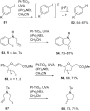
- proceeded well and afforded the expected 5-(1,2,3-triazolyl)-substituted 1,2-oxazine syn-26 in moderate yield (54%). Hydrogenolysis belongs to the well-established transformations of 1,2-oxazines, often successfully leading to valuable compounds including 1,4-amino alcohols or pyrrolidine derivatives. We
- alcohol derivative 27 in 51% yield as 96:4 mixture of two diastereomers (Scheme 9). Subsequent ring closure of γ-amino alcohol 27 by treatment with mesyl chloride in the presence of triethylamine [53] furnished the N-mesylated pyrrolidine derivative 28 in 65% yield with excellent diastereoselectivity (dr
- alcohols 27a,b and subsequent ring closure to pyrrolidine derivatives 28a,b. Hydrogenation of 1,2-oxazine anti-24 to products anti-29 and anti-30. Supporting Information Supporting Information File 399: General information, all experimental procedures and analytical data. Supporting Information File 400




Multicomponent synthesis of spiropyrrolidine analogues derived from vinylindole/indazole by a 1,3-dipolar cycloaddition reaction
Beilstein J. Org. Chem. 2016, 12, 2893–2897, doi:10.3762/bjoc.12.288
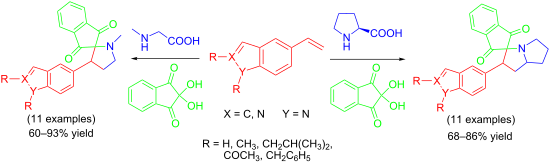
- the compounds are provided in Supporting Information File 1. The 1H NMR spectrum of compound 7a (X–R = CH, Y–R = N–CH3) proved the formation of the desired product which showed a characteristic doublet of doublets for the H1 proton at δ 3.99 ppm. The CH2 group adjacent to the pyrrolidine nitrogen
- appeared as a triplet of doublets (δ 3.42 ppm) and multiplet (δ 3.59 ppm), and the N–CH3 of the pyrrolidine ring as a singlet at δ 2.36 ppm. Further, the structures of 7a and 7f were confirmed by single crystal X-ray diffraction studies and the corresponding ORTEP representations are given in Figure 2


Synthesis of spiro[isoindole-1,5’-isoxazolidin]-3(2H)-ones as potential inhibitors of the MDM2-p53 interaction
Beilstein J. Org. Chem. 2016, 12, 2793–2807, doi:10.3762/bjoc.12.278
- , 129.2, 129.0, 128.9, 128.5, 128.4, 128.2, 127.8, 127.6, 127.3, 126.8, 125.0, 124.4, 123.0, 100.0, 66.1, 65.5, 62.9, 59.7, 53.5, 44. 7, 43.4, 41.9; HRMS–ESI (m/z): [M + H]+ calcd for C29H30N3O4, 484.2236; found, 484.2271. (1RS,4'RS)-2'-Benzyl-2-butyl-4'-(pyrrolidine-1-carbonyl)spiro[isoindoline-1,5


New syntheses of (±)-tashiromine and (±)-epitashiromine via enaminone intermediates
Beilstein J. Org. Chem. 2016, 12, 2609–2613, doi:10.3762/bjoc.12.256

- piperidine or a pyrrolidine-based precursor, with few reports of alternative approaches. The approach adopted by our research group to the synthesis of these and related bicyclic alkaloids takes advantage of enaminone chemistry [10][11][12][13][14][15][16][17][18][19]. Our interest in the enaminone manifold
- approach most commonly comprise a nitrogen atom in a pyrrolidine or piperidine ring conjugated at C-2 through an exocyclic vinyl fragment to an ester (vinylogous urethane) or another electron-withdrawing substituent (usually ketone, nitrile, nitro or sulfone). When suitable carbon chains bearing terminal


Biomimetic synthesis and HPLC–ECD analysis of the isomers of dracocephins A and B
Beilstein J. Org. Chem. 2016, 12, 2523–2534, doi:10.3762/bjoc.12.247

- conjugates of racemic naringenin ((±)-1) with pyrrolidine-2-one with C-6–C-5” and C-8–C-5” linkage, respectively. Due to the two chirality centers, four possible stereoisomers exist for each regioisomer, and accordingly, the isolated substances were verified to be 1:1 mixtures of two diastereoisomeric
- showed 2D NOESY cross peaks between multiplets of the pyrrolidine ring and H-2’, corresponding to dracocephins B. Aliquots of sample (±)-2a–d and sample (±)-3a–d were dissolved in DMSO-d6 in order to allow comparison with literature data. The 1H chemical shifts of the herein synthesized dracocephins A


A new paradigm for designing ring construction strategies for green organic synthesis: implications for the discovery of multicomponent reactions to build molecules containing a single ring
Beilstein J. Org. Chem. 2016, 12, 2420–2442, doi:10.3762/bjoc.12.236
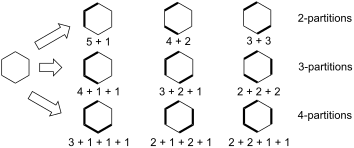
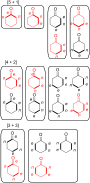
- -membered ring but contains a pivoting nucleophilic centre instead of an electrophilic one. These results may be contrasted with the analogous five-membered ring compounds cyclopentanone and pyrrolidine in Figures S4 to S7 in Supporting Information File 1. The nucleophilic–electrophilic connectivity
- patterns for cyclohexanone are the inverse of those for piperidine. The same observation is made when the patterns for cyclopentanone and pyrrolidine are compared. We may conclude that the fewer nucleophilic or electrophilic centres exist in a ring, the more bonding possibilities there are to consider for
- - and 3-partition fragment possibilities for pyrrolidine; Schemes S4 and S5 showing new [3 + 2 + 1] and [4 + 1 + 1] strategies to synthesize the Biginelli adduct; Schemes S6 to S32 showing superposition of 3-partition templates for various heterocycles. Supporting Information File 366: Application of








An effective one-pot access to polynuclear dispiroheterocyclic structures comprising pyrrolidinyloxindole and imidazothiazolotriazine moieties via a 1,3-dipolar cycloaddition strategy
Beilstein J. Org. Chem. 2016, 12, 2240–2249, doi:10.3762/bjoc.12.216

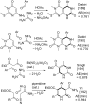
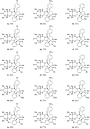
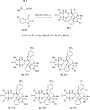
- regio- and diastereoselective one-pot method for the synthesis of new polynuclear dispiroheterocyclic systems with five stereogenic centers (dispiro[imidazo[4,5-e]thiazolo[3,2-b]-1,2,4-triazine-6,3′-pyrrolidine-2′,3′′-indoles]) comprising pyrrolidinyloxindole and imidazo[4,5-e]thiazolo[3,2-b]-1,2,4
- the synthesis of dispiro compounds comprising pyrrolidine, oxindole, and other heterocycle moieties and to the evaluation of their physiological properties [24][26][27][28][29][30][31][32]. In this regard, our attention was directed towards hetero-annelated 1,2,4-triazines, because this motif is part
- pyrrolidine ring was detected by the appearance of triplets for the ring CH2 and CH group protons at 3.56, 3.95, and 4.45 ppm. Doublets for the C-3a and C-9a phenyl ortho-protons in compound 4a (6.13 and 6.55 ppm, respectively) were observed at higher field than those of compound 1a (6.75 and 6.83 ppm). The





Stereoselective synthesis of fused tetrahydroquinazolines through one-pot double [3 + 2] dipolar cycloadditions followed by [5 + 1] annulation
Beilstein J. Org. Chem. 2016, 12, 2204–2210, doi:10.3762/bjoc.12.211
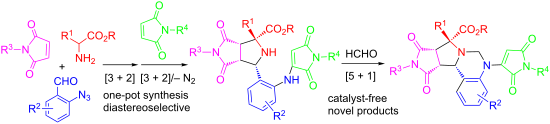
- formaldehyde through [5 + 1] annulation to afford a novel polycyclic scaffold bearing tetrahydroquinazoline, pyrrolidine, pyrrolidinedione, and N-substituted maleimide in stereoselective fashion. Keywords: [5 + 1] annulation; [3 + 2] cycloaddition; one-pot reactions; stereoselective synthesis
- [12][13][14][15][16][17], our lab has introduced a series of synthetic methods for heterocyclic compounds I–VI bearing heterocyclic rings such as hydantoin, pyrrolidine, pyrrolidinedione, piperazinedione, and dihydrobenzodiazepinedione (Scheme 1) [4][18][19][20][21]. All these scaffolds were prepared
- new sequence initiated with a three-component [3 + 2] cycloaddition for preparing polycyclic scaffold 1 bearing tetrahydroquinazoline, pyrrolidine, pyrrolidinedione, and N-substituted maleimide rings. Those heterocyclic fragments could be found in bioactive compounds such as bromodomain, thrombin


Stereo- and regioselectivity of the hetero-Diels–Alder reaction of nitroso derivatives with conjugated dienes
Beilstein J. Org. Chem. 2016, 12, 1949–1980, doi:10.3762/bjoc.12.184
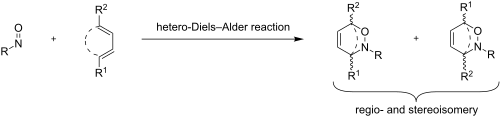
- pyrrolidine-substituted acylnitroso dienophiles 133a–g with a number of different cyclic and acyclic dienes 132 have been carried out and the corresponding hetero-Diels–Alder products 134a–g were obtained with improved stereoselectivity (Table 4). Ghosez reported a number of reactions of pyrrolidine
- chiral acylnitroso dienophiles 133d and 133e with cyclohexadiene [107] and cyclopentadiene [117]. However, it is interesting that both groups showed that the dominant diastereomer could be altered based on the stereochemistry of the attached pyrrolidine. The imidazolidin-2-one auxiliary 133g was also






Unusual reactions of diazocarbonyl compounds with α,β-unsaturated δ-amino esters: Rh(II)-catalyzed Wolff rearrangement and oxidative cleavage of N–H-insertion products
Beilstein J. Org. Chem. 2016, 12, 1904–1910, doi:10.3762/bjoc.12.180
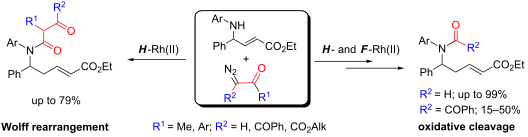
- products. These oxidation processes are mediated by Rh(II) catalysts possessing perfluorinated ligands. The formation of pyrrolidine structures, characteristic for catalytic reactions of diazoesters, was not observed in these processes at all. Keywords: diazo compounds; N–H-insertion; oxidation cleavage


Synthesis of pyrrolo[2,1-f][1,2,4]triazin-4(3H)-ones: Rearrangement of pyrrolo[1,2-d][1,3,4]oxadiazines and regioselective intramolecular cyclization of 1,2-biscarbamoyl-substituted 1H-pyrroles
Beilstein J. Org. Chem. 2016, 12, 1780–1787, doi:10.3762/bjoc.12.168
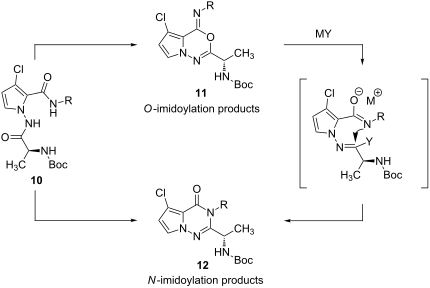
- rearrangement reaction of pyrrolooxadiazine 11a to pyrrolotriazinone 12a was explored (Table 2). For nucleophile-induced cyclization, pyrrolidine, Li(Me3AlSPh) [22], NaSMe, and NaOMe were assessed. Attempting the Mazurciewitcz–Ganesan procedure [23], using pyrrolidine as a nucleophile, was not successful (entry


Biosynthesis of oxygen and nitrogen-containing heterocycles in polyketides
Beilstein J. Org. Chem. 2016, 12, 1512–1550, doi:10.3762/bjoc.12.148
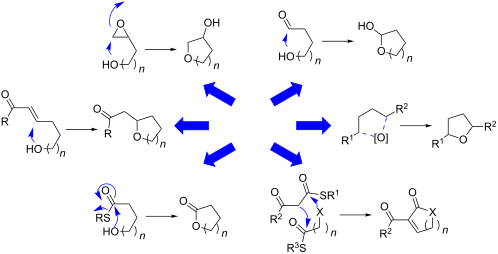
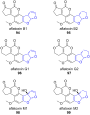
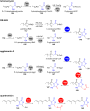
- elements, like a pyrrolidine, a furan-2-one, an oxazolidinone and particularly a 3,4-furylidene moiety in the polyketide part. An analysis of the gene cluster as well as feeding experiments with isotope-labelled precursors led to a proposal for the formation of the furan ring [69][70]. The anticipated






Development of chiral metal amides as highly reactive catalysts for asymmetric [3 + 2] cycloadditions
Beilstein J. Org. Chem. 2016, 12, 1447–1452, doi:10.3762/bjoc.12.140

- Schiff bases of glycine ester that proceed with low catalyst loadings (ca. 0.01 mol %). Catalytic asymmetric [3 + 2] cycloadditions of Schiff bases of α-amino esters to olefins are useful for synthesizing optically active pyrrolidine derivatives [10][11][12], and many highly stereoselective reactions
- through the efficient formation of pseudo-intramolecular transition state A. Intermediate B reacted with maleimide 2a to form Cu-pyrrolidine intermediate C. H-HMDS then reacted with the latter to regenerate the chiral CuHMDS and release the product to complete the catalytic cycle. The result obtained by
- using a mesitylcopper catalyst suggests that the reaction could also proceed through a product base mechanism in which the Cu-pyrrolidine intermediate C deprotonates the Schiff base 1a directly; however, the higher reactivity observed upon catalysis by CuHMDS and the basicity of the intermediate


Chiral cyclopentadienylruthenium sulfoxide catalysts for asymmetric redox bicycloisomerization
Beilstein J. Org. Chem. 2016, 12, 1136–1152, doi:10.3762/bjoc.12.110
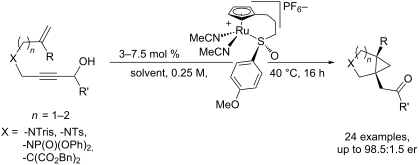
- opening of either 49 or its vinylcyclopropane precursor 48 was observed. Finally, styrenyl substrates like 50 can be used for redox bicycloisomerization, but their pyrrolidine products are isolated in somewhat diminished enantioselectivities. After examining the scope of the redox bicycloisomerization




Antibacterial structure–activity relationship studies of several tricyclic sulfur-containing flavonoids
Beilstein J. Org. Chem. 2016, 12, 1065–1071, doi:10.3762/bjoc.12.100

- amino group bound to the 1,3-dithiolium cycle (ring D). Upon testing these flavonoids against Staphylococcus aureus and comparing the results with those obtained for 1, we concluded that the antibacterial activity for tricyclic flavonoids of type 5 decreases in the order NEt2 > pyrrolidine > NMe2


Opportunities and challenges for direct C–H functionalization of piperazines
Beilstein J. Org. Chem. 2016, 12, 702–715, doi:10.3762/bjoc.12.70
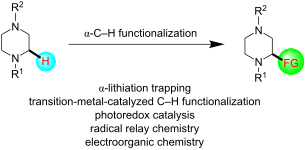
- -studied pyrrolidine and piperidine systems, the existence of the second ring-bound nitrogen in piperazines either causes various side reactions or inhibits or diminishes the reactivity of the C–H bond. This review summarizes the current status and challenges of direct C–H bond functionalization of
- atoms [30][31]. Corresponding enantioselective versions have also been developed using chiral diamines as ligands to allow access to enantioenriched α-substituted nitrogen heterocycles. However, most of the success has been made in the territory of N-Boc-pyrrolidine [32][33] and N-Boc-piperidine [34][35
- the corresponding substituents on the α-carbon of N-Boc-N’-benzylpiperazines in good yield. Notably, the O’Brien–Campos conditions work well for N-Boc-pyrrolidine and imidazolidine, but not for N-Boc-piperidine (cf. 20). Asymmetric direct α-C–H lithiation trapping Advances of enantioselective α





cis–trans-Amide isomerism of the 3,4-dehydroproline residue, the ‘unpuckered’ proline
Beilstein J. Org. Chem. 2016, 12, 589–593, doi:10.3762/bjoc.12.57

- Pro structural analogues, azetidine-2-carboxylic acid (norproline) and pipecolic acid (homoproline) [4], it appears that the high isomerization barrier is a feature associated with the 5-membered pyrrolidine ring of Pro [5]. The pyrrolidine ring of Pro can be found in several conformations, designated
- pyrrolidine ring, approaching to C3 and C4 atoms [47]. Repulsion between the oxygen lone pairs and the double bond in the Dhp residue could cause the experimentally evident increase in the rotation barriers. Conclusion In summary, we performed the experimental characterization of proline analogues with a 3,4


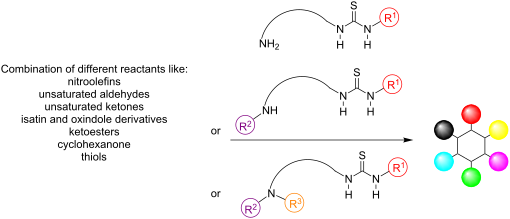
(Thio)urea-mediated synthesis of functionalized six-membered rings with multiple chiral centers
Beilstein J. Org. Chem. 2016, 12, 462–495, doi:10.3762/bjoc.12.48
- is highly noted that the difference to the moiety at the 4-position of the pyrrolidine ring, where a fluorine atom exists, gives to the organocatalyst 50 the ability to catalyze this tandem Michael–Henry reaction in brine, giving excellent diastereoselectivity and enantiomeric excess, unlike the
- previously employed catalyst 47, which worked only in organic solvent. The key component for the achievement of catalyst’s 50 catalytic ability is the known "gauche effect" of fluorine in the pyrrolidine ring, where σ*(C–F) and σ(C–H) vicinal orbitals tend to overlap [28]. For a more efficient overlap of
- order to complete the cascade, the authors employed a bifunctional thiourea 156 and pyrrolidine in an one-pot protocol. Overall, the reaction proceeded smoothly and the products were obtained in moderate to good yields (up to 70%), but in excellent selectivities (>95:5 dr and up to 99% ee). Recently


Tandem processes promoted by a hydrogen shift in 6-arylfulvenes bearing acetalic units at ortho position: a combined experimental and computational study
Beilstein J. Org. Chem. 2016, 12, 260–270, doi:10.3762/bjoc.12.28
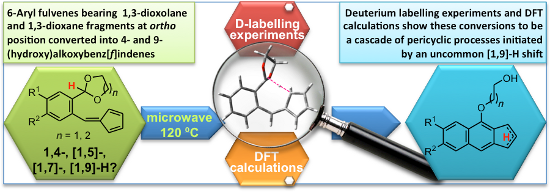
- [f]indenes 5 and 6. Reagents and conditions: i) cyclopentadiene, pyrrolidine, anhydrous methanol, rt, 10 h; ii) DMSO, microwave, 120 °C, 120 W, 20–40 min. Postulated reaction path for the conversion 3a → 5a + 6a initiated by a [1,4]-hydride shift. Alternative mechanistic paths for the conversion 3a
- ) triethylamine (10%), DMSO, rt, 2 h. Preparation of benz[f]indenes 25 and 26. Reagents and conditions: i) cyclopentadiene, pyrrolidine, anhydrous methanol, rt, 10 h; ii) DMSO, microwave, 120 °C, 120 W, 20–40 min. Mechanistic paths for the conversion of fulvene 3a into the benz[f]indenes 5a and 6a showing the


Asymmetric α-amination of β-keto esters using a guanidine–bisurea bifunctional organocatalyst
Beilstein J. Org. Chem. 2016, 12, 198–203, doi:10.3762/bjoc.12.22
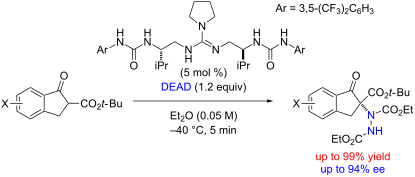
- the guanidine moiety (Table 1, entries 5 and 6). A catalyst bearing a six-membered ring at R1 and R2 (1e) gave excellent yield, but with only 27% ee (Table 1, entry 5). Interestingly, catalyst 1f bearing a pyrrolidine ring at R1 and R2 showed the highest selectivity, and 5a was obtained in 99% yield


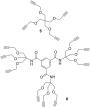
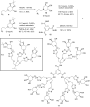
Exploring architectures displaying multimeric presentations of a trihydroxypiperidine iminosugar
Beilstein J. Org. Chem. 2015, 11, 2631–2640, doi:10.3762/bjoc.11.282

- bioactive molecules (namely pyrrolidine- and pyrrolizidine-based iminosugars) [19][20][21]. Moreover, trivalent pyrrolidine derivatives have been recently employed to probe the multivalent effect towards α-L-fucosidase inhibition [22], which may be clinically relevant in the treatment of fucosidosis




Beyond catalyst deactivation: cross-metathesis involving olefins containing N-heteroaromatics
Beilstein J. Org. Chem. 2015, 11, 2223–2241, doi:10.3762/bjoc.11.241
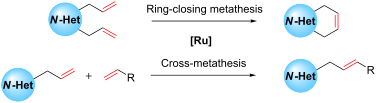
- by focusing on amine-mediated degradation of GII and they highlighted various plausible decomposition pathways depending on the nature of the amine [45]. At first, the reaction between GII and various amines such as n-butylamine (a), pyrrolidine (b), morpholine (c) and DBU (d) were examined by 1H NMR
- NMR experiments [45]. The steric hindrance of the amine appeared to be a critical parameter. The non-bulky primary amine n-butylamine (a) induced a fast decomposition of the methylidene 2 (Table 1, entry 1) whereas secondary amines such as pyrrolidine (b) and morpholine (c) are less detrimental to the
- increased Brønsted basicity of the amine seemed to induce a faster deactivation of the catalyst. In addition, when the self-metathesis of styrene was performed in the presence of pyrrolidine, DBU or Et3N, olefin 22 was formed as the major product (Scheme 9). To explain these observations, a deactivation


Photoinduced 1,2,3,4-tetrahydropyridine ring conversions
Beilstein J. Org. Chem. 2015, 11, 2166–2170, doi:10.3762/bjoc.11.234
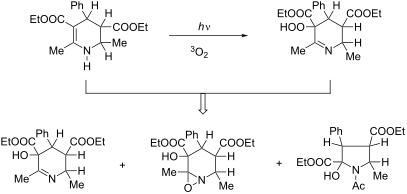
- ; photoinduced electron transfer; pyrrolidine; tetrahydropyridine; Introduction Increased attention has been paid to the chemistry of cyclic organic peroxides since it was found that naturally occurring representatives of this group possess biological activity, particular antimalarial [1][2]. Significantly less


Recent applications of ring-rearrangement metathesis in organic synthesis
Beilstein J. Org. Chem. 2015, 11, 1833–1864, doi:10.3762/bjoc.11.199
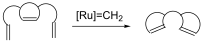
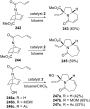
- generated the spiroannulated pyrrolidine 249 in 68% yield. However, when the reaction was performed in toluene at 80 °C, the isomeric tricyclic compound 250 was afforded in 34% yield and tricyclic derivative 249 was obtained in 37% yield (Scheme 51). Rainier’s group [52] has successfully demonstrated the










Preparative semiconductor photoredox catalysis: An emerging theme in organic synthesis
Beilstein J. Org. Chem. 2015, 11, 1570–1582, doi:10.3762/bjoc.11.173

- in an aqueous dispersion of a Pt-TiO2 catalyst, an interesting self-reaction occurred. Ohtani and co-workers isolated modest yields of secondary amines 13 that were formed via C–N coupling (Scheme 4, top) [48]. Terminal diamines reacted by ring closure resulting in cyclic amines 14; pyrrolidine was