


Search results
Search for "separation" in Full Text gives 886 result(s) in Beilstein Journal of Organic Chemistry. Showing first 200.
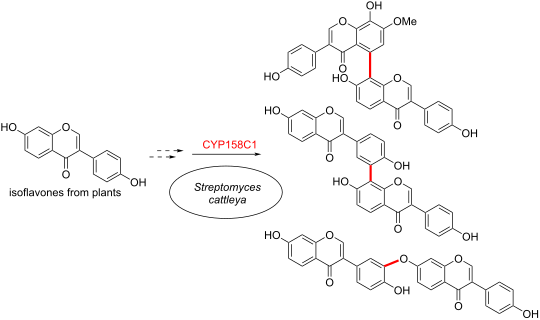
A Streptomyces P450 enzyme dimerizes isoflavones from plants
Beilstein J. Org. Chem. 2022, 18, 1107–1115, doi:10.3762/bjoc.18.113
- range of m/z 50–1600. For MS–MS analysis, the collision-induced dissociation (CID) energy was set to 15–40 eV or 30–50 eV depending on the compounds. The HPLC–UV analysis of the chiral separation was conducted with a CHIRALCEL OX-3R column (150 mm × 4.6 mm, 3 μm, DAICEL) with isocratic 35% B at a flow


First example of organocatalysis by cathodic N-heterocyclic carbene generation and accumulation using a divided electrochemical flow cell
Beilstein J. Org. Chem. 2022, 18, 979–990, doi:10.3762/bjoc.18.98
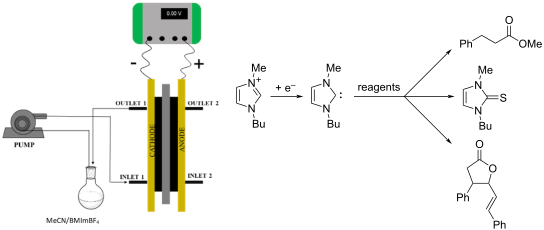
- reactions and usually the product separation is easy [4][5]. Among ILs, imidazolium derivatives are the most studied, in part due to their ease of synthesis, low cost and diverse applications from solvents and reagents in synthesis, to supporting electrolytes in electrochemistry [6]. The imidazolium cation


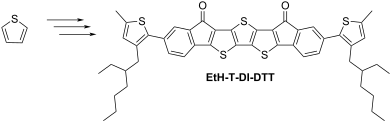
Introducing a new 7-ring fused diindenone-dithieno[3,2-b:2',3'-d]thiophene unit as a promising component for organic semiconductor materials
Beilstein J. Org. Chem. 2022, 18, 944–955, doi:10.3762/bjoc.18.94
- triethylamine to the eluent [44]. Also, using a solvent mixture with a low polarity, which is necessary to receive a good separation from the side products, led to a precipitation of the compound on the column, and many attempts were necessary to find an ideal solvent mixture. Additionally, the reaction was


On Reuben G. Jones synthesis of 2-hydroxypyrazines
Beilstein J. Org. Chem. 2022, 18, 935–943, doi:10.3762/bjoc.18.93
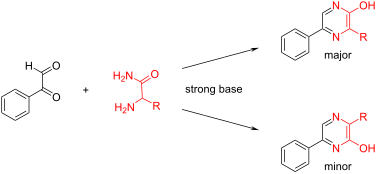
- previously reported [13], the separation (by any mean) of the 2-hydroxypyrazine isomers 3 and 4 is challenging. To overcome this, we used water-heated columns and preheated eluent mixtures (see the experimental part) which allowed to run chromatography over silica gel at 60 °C. At this temperature and using


Anti-inflammatory aromadendrane- and cadinane-type sesquiterpenoids from the South China Sea sponge Acanthella cavernosa
Beilstein J. Org. Chem. 2022, 18, 916–925, doi:10.3762/bjoc.18.91
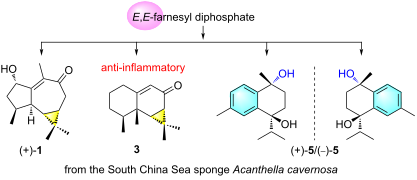
- anti-inflammatory activity by the inhibition of LPS-induced TNF-α and CCL2 release in RAW 264.7 macrophages. Keywords: Acanthella cavernosa; anti-inflammatory; biosynthetic pathway; chiral separation; marine sponge; sesquiterpenoid; Introduction Marine sponges of the genus Acanthella (class
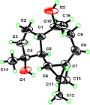
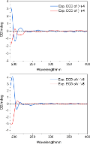
- with five related known ones [2, 3, (−)-4, 6, and 7] (Figure 1), were obtained. Herein, we report the isolation, chiral separation of racemic mixtures of 4 and 5, structural elucidation, plausible biosynthetic pathway, and biological evaluation of these isolated compounds. Results and Discussion By the
- equipped with a DAD G1315D detector and an Agilent Eclipse XDB-C18 column (5 μm, 9.4 × 250 mm). In contrast, chiral HPLC separation was operated on the chromatography equipped with CHIRALPAK IB N-3 column (5 μm, 4.6 × 250 mm). All solvents used for CC and HPLC were analytical grade (Shanghai Chemical






The stereochemical course of 2-methylisoborneol biosynthesis
Beilstein J. Org. Chem. 2022, 18, 818–824, doi:10.3762/bjoc.18.82
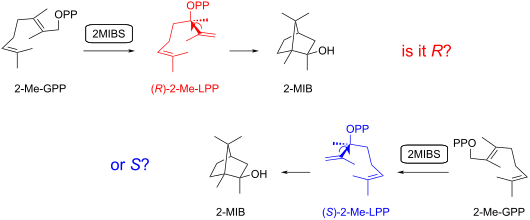
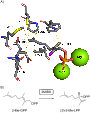
- Sharpless epoxidation as a key step and purification of enantiomerically enriched intermediates through HPLC separation on a chiral stationary phase. Their enzymatic conversion with 2-methylisoborneol synthase (2MIBS) demonstrates that (R)-2-Me-LPP is the on-pathway intermediate, while a minor formation of
- Supporting Information File 56: Experimental. Acknowledgements We thank Andreas Schneider for HPLC separation of the enantiomers of 2-methyllinalool. Funding This work was supported by the German Research Foundation (DI1536/11-1) and the International Postdoctoral Exchange Fellowship Program (No. 2020038).




Synthesis of α-(perfluoroalkylsulfonyl)propiophenones: a new set of reagents for the light-mediated perfluoroalkylation of aromatics
Beilstein J. Org. Chem. 2022, 18, 788–795, doi:10.3762/bjoc.18.79
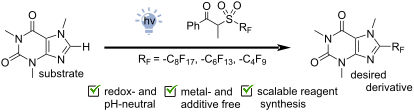
- as N-phenylpyrrole and 2-phenylindole were found to produce large quantities of the desired perfluorohexyl and perfluorooctyl analogues as observed by both 1H NMR and GC–MS analysis. However, these molecules generated large concentrations of fluorinated byproducts which rendered separation of the


Continuous flow synthesis of azobenzenes via Baeyer–Mills reaction
Beilstein J. Org. Chem. 2022, 18, 781–787, doi:10.3762/bjoc.18.78
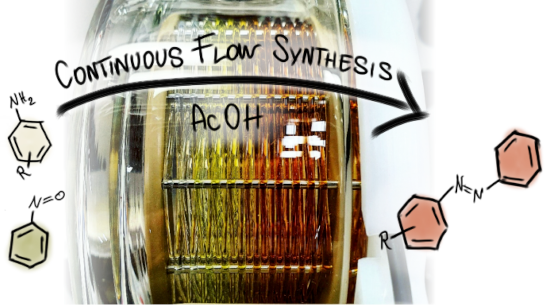
- cyclohexane to the reaction mixture after the tube reactor (Figure 3). The reaction solution with cyclohexane was continuously fed into a separating funnel containing brine. After phase separation, drying of the organic phase with MgSO4, and evaporation of the solvent, AB (1a) could be obtained in 98% yield


Synthesis of odorants in flow and their applications in perfumery
Beilstein J. Org. Chem. 2022, 18, 754–768, doi:10.3762/bjoc.18.76
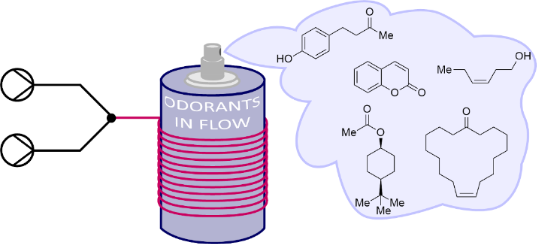
- formation of hydrazone 28. As one equivalent of water is formed in this condensation process, which is detrimental for the subsequent Shapiro reaction, water is continuously removed by in-line separation of the reaction mixture using a PTFE-membrane separator. The organic layer is then mixed with a solution
- conducting both generation and pyrolysis of triperoxide 55 in flow reactors, while phase separation of the biphasic mixture containing triperoxide 55 is realized in a PTFE membrane reactor [50]. Since many macrocyclic musks (or their precursors) contain internal olefins, they are frequently prepared by ring
- at low temperatures or instable intermediates, e.g., endoperoxide (55), benefit from the superior reaction control and safety profile of flow reactors. Many of the transformations in this review demonstrate the utilization of solid-supported reagents in cartridges that allow to avoid separation of


Identification of the new prenyltransferase Ubi-297 from marine bacteria and elucidation of its substrate specificity
Beilstein J. Org. Chem. 2022, 18, 722–731, doi:10.3762/bjoc.18.72
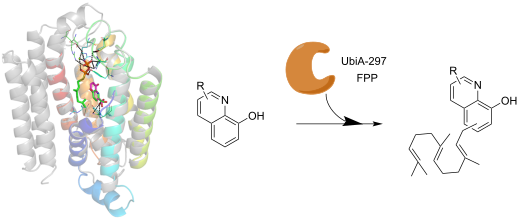
- of the enzymatic products: UHPLC-HESI-HRMS measurement was performed on a Dionex Ultimate3000 system combined with a Q-Exactive Plus mass spectrometer (Thermo Scientific) with a heated electrospray ion source (HESI). Metabolite separation was carried out by reversed-phase liquid chromatography at 40


New synthesis of a late-stage tetracyclic key intermediate of lumateperone
Beilstein J. Org. Chem. 2022, 18, 653–659, doi:10.3762/bjoc.18.66

- recently described in a patent application [24] by a direct trifluoroacetylation of tetrahydroquinoxaline (37) with 0.92 equiv of TFAA, followed by chromatographic product separation. We carried out the same reaction (Scheme 6) and in addition to the expected compound 31 (39%), a significant amount of bis


Heteroleptic metallosupramolecular aggregates/complexation for supramolecular catalysis
Beilstein J. Org. Chem. 2022, 18, 597–630, doi:10.3762/bjoc.18.62
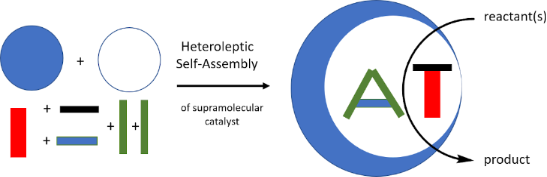
- , introduced by Lehn, uses maximum site occupancy to afford heteroleptic aggregates [35]. While this principle is limited, the charge-separation approach by Stang is of much wider use [36]. Probably, most contributions in the literature, though, are based on using steric constraints in heteroleptic aggregation
- (73%) and 109b (82%) in high yield (Figure 23b) [110], although the relevant distances in the pseudo-rotaxane 110a,b (prior to the second click reaction) are 14.3 and 21.1 Å. Actually, the yield with [FeCu2(104)2]4+ was far better than with a dicopper reference catalyst, where the separation of the











Shift of the reaction equilibrium at high pressure in the continuous synthesis of neuraminic acid
Beilstein J. Org. Chem. 2022, 18, 567–579, doi:10.3762/bjoc.18.59
- initial activity was analyzed using a standard activity assay. High-performance liquid chromatography (HPLC) For quantification of the product N-acetylneuraminic acid, an Agilent HPLC system connected with a variable wavelength detector at 210 nm was used. Separation was realized with a Nucleogel Sugar
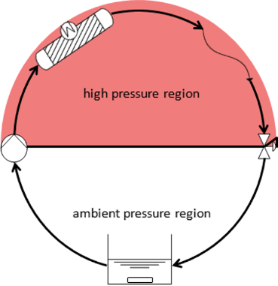
- , and as the mean residence time. The RDT was measured by placing the reactor into an HPLC, replacing the regular separation column. Hereby, the mean residence time of the reactor was calculated to be 66% of the quotient of reactor volume and flow rate. When kinetic parameters were calculated by


Comparative study of thermally activated delayed fluorescent properties of donor–acceptor and donor–acceptor–donor architectures based on phenoxazine and dibenzo[a,j]phenazine
Beilstein J. Org. Chem. 2022, 18, 459–468, doi:10.3762/bjoc.18.48
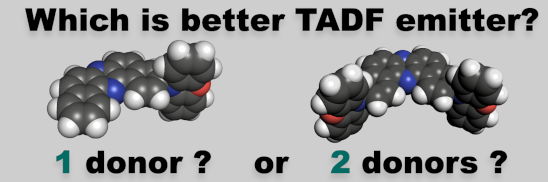
- the efficacy of introducing two electronic donors on the acceptor unit. The calculations employed density functional theory (DFT) with the long-range corrected ωPBE functional and the 6-31G(d,p) basis set. Tuning of the range separation parameter was performed for both molecules [20] with the results


The asymmetric Henry reaction as synthetic tool for the preparation of the drugs linezolid and rivaroxaban
Beilstein J. Org. Chem. 2022, 18, 438–445, doi:10.3762/bjoc.18.46
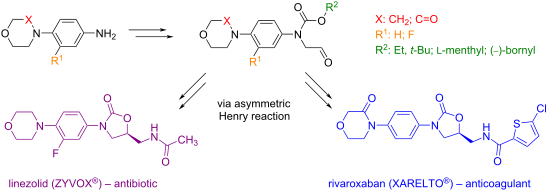
- the starting aldehydes on the enantioselectivity of the Henry reaction was examined. Moreover, the resulting nitroaldols 22, 24, and 26 were formed as a pair of epimers, and therefore, a possible separation of the individual stereoisomers of these compounds was assumed. Hence, it should be noted that
- of stereoisomers that are easier to separate by standard techniques than enantiomers. In particular, an exploration of convenient chromatographic conditions was performed. Unfortunately, none of the conditions was successful even though all derivatives were tested. Subsequently, the separation of the
- experiments with de values of 84% and 88%, respectively. Hence, the higher temperature led to a slight drop of the de, nevertheless, the higher amount of the undesired diastereomer was considered as convenient here, in terms of the study of its separation. The nitroaldols 24 and 26 were isolated as an oil


Menadione: a platform and a target to valuable compounds synthesis
Beilstein J. Org. Chem. 2022, 18, 381–419, doi:10.3762/bjoc.18.43
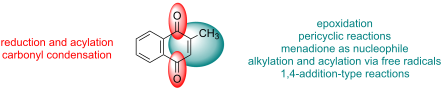
- steps whose main difficulties are the separation of pyridine byproducts and inorganic phosphate (Scheme 20). Kulkarni and co-workers reported a method for menadione reduction mediated by 5,6-O-isopropylidene-ʟ-ascorbic acid (70, R = H) under UV light irradiation [120]. Initial studies were carried out


Site-selective reactions mediated by molecular containers
Beilstein J. Org. Chem. 2022, 18, 309–324, doi:10.3762/bjoc.18.35
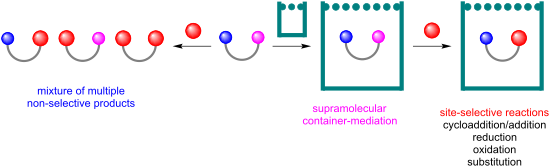
- there is more than one potential reactive site in a certain substrate, because poor site-selectivity would result in complicated and sometimes even unachievable separation and purification procedures. Hence, in order to drive reactions economically and efficiently, organic chemists have made great






Recent developments and trends in the iron- and cobalt-catalyzed Sonogashira reactions
Beilstein J. Org. Chem. 2022, 18, 262–285, doi:10.3762/bjoc.18.31
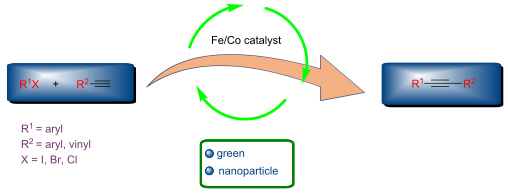
- nanorods was found to increase with respect to Fe3+ ions-to-ligand ratio and vice versa. The reusability and separation of the ferromagnetic α-Fe2O3 nanoparticle catalyst were very effective, simple and economical due to its magnetic nature. The in situ-generated α-Fe2O3 nanoparticles showed better







Flow synthesis of oxadiazoles coupled with sequential in-line extraction and chromatography
Beilstein J. Org. Chem. 2022, 18, 232–239, doi:10.3762/bjoc.18.27
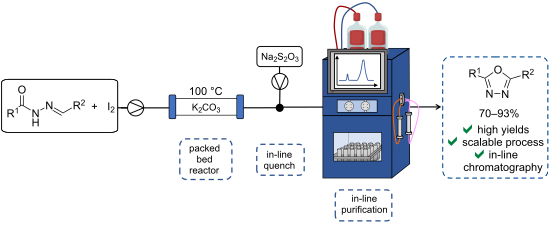
- using sodium thiosulphate solution. To avoid the hazards associated with handling of iodine on multi-gram scale, in addition to eliminating unit operations, an in-line quench and separation was developed. The in-line quench consisted of employing a 4-way mixer, through which sodium thiosulphate solution
- ], however, many of them involve the use of expensive and complex membrane filters. To reduce cost and increase simplicity we opted to use a ‘home-made’ setup to achieve continuous separation which consisted of a laboratory separating funnel, into which we collect the biphasic reaction output following
- aqueous workup (Scheme 5). Dichloromethane (DCM) was selected as the organic solvent of choice due to its increased density compared to DMSO and water. Separation in a continuous manner could then be simply achieved by adjusting the outlet tap of the separating funnel such that a constant volume is


Trichloroacetic acid fueled practical amine purifications
Beilstein J. Org. Chem. 2022, 18, 225–231, doi:10.3762/bjoc.18.26
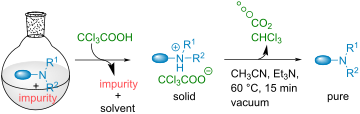
- their protonated salt formation, enabling the separation with the impurities. From these amine salts, simple decarboxylation of TCA liberates volatile CO2 and chloroform affording directly the pure amines. Through this approach, a broad range of diversely substituted amines could be isolated with
- since the beginning of the 19th century as highlighted by the Sertürner isolation of morphine [4]. However, after formation of the amine acid (ammonium) salt and separation of the impurities, another separation is required to liberate again the free amine resulting in the undesired generation of waste
- . Most notably, this step can go through a liquid–liquid separation that requires multiple operations generating large amounts of waste notably arising from the different organic and aqueous layers. In the context of the development of more eco-compatible organic synthesis limiting the number of


Diametric calix[6]arene-based phosphine gold(I) cavitands
Beilstein J. Org. Chem. 2022, 18, 190–196, doi:10.3762/bjoc.18.21
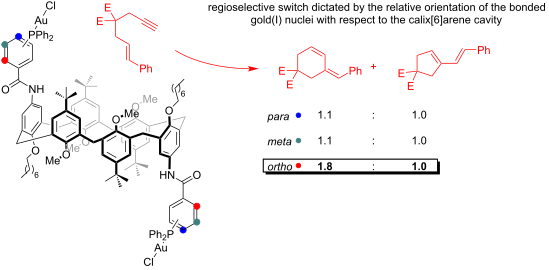
- via conventional protocols using (Me2S)AuCl. Notably, the organometallic macrocycles A,B,C(AuCl)2 could be isolated via column chromatography separation. Gold(I) catalysts were subsequently fully characterized by NMR analysis and high-resolution mass spectrometry. The conformation of the catalysts, in


Green synthesis of C5–C6-unsubstituted 1,4-DHP scaffolds using an efficient Ni–chitosan nanocatalyst under ultrasonic conditions
Beilstein J. Org. Chem. 2022, 18, 133–142, doi:10.3762/bjoc.18.14
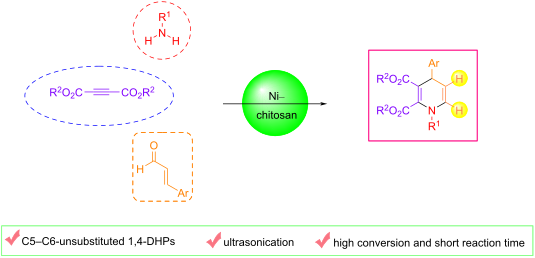
- towards heterogenization of the catalytic systems used in the field of environmental chemistry keep growing day by day. These allow complete separation of novel or harmful catalysts from the mixture and reuse for further treatment. This makes the whole catalytic processes more efficient and cost-effective
- . In contrast, our work unites various aspects of green chemistry, such as a minimal reaction time, a high conversion rate, a green solvent, environmentally friendly reaction conditions, and an effortless separation and recyclability of the catalyst. Altogether, the detailed summary in Table 3




Recent advances and perspectives in ruthenium-catalyzed cyanation reactions
Beilstein J. Org. Chem. 2022, 18, 37–52, doi:10.3762/bjoc.18.4
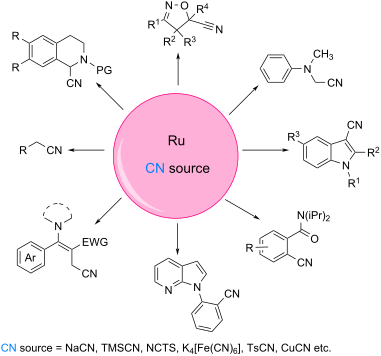
- reactive complexes of ruthenium and the high reusability and easy separation procedures of heterogeneous catalysts have proven the fact that this metal serve as highly effective catalyst for a wide range of organic transformations. It will surely motivate the scientific community to develop more


Stepwise PEG synthesis featuring deprotection and coupling in one pot
Beilstein J. Org. Chem. 2021, 17, 2976–2982, doi:10.3762/bjoc.17.207

- using the expensive catalyst that was used in the literature [32] due to cost considerations. Another method we tried was to react excess TsO(PEG)4OTs with 2-phenylethan-1-ol under basic conditions to give 2 (Scheme 3). However, separation of 2 from TsO(PEG)4OTs and Ph(CH2)2O(PEG)4O(CH2)2Ph required


Total synthesis of the O-antigen repeating unit of Providencia stuartii O49 serotype through linear and one-pot assemblies
Beilstein J. Org. Chem. 2021, 17, 2915–2921, doi:10.3762/bjoc.17.199
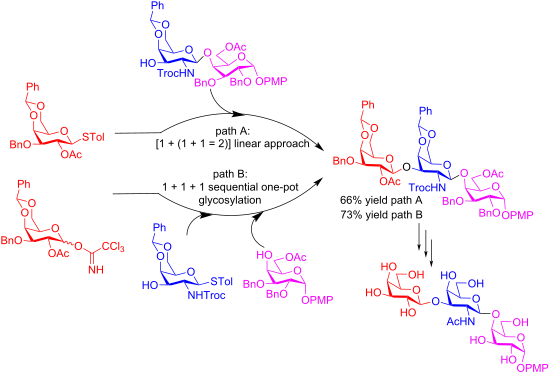
- step synthesis, though the former involved two extra steps for the synthesis of the first glycosidic donor and one chromatographic separation. The synthesis of the desired product was achieved through manipulations of the appropriate protecting group on the monosaccharides and subsequent realization of





