


Search results
Search for "13C NMR" in Full Text gives 1801 result(s) in Beilstein Journal of Organic Chemistry. Showing first 200.
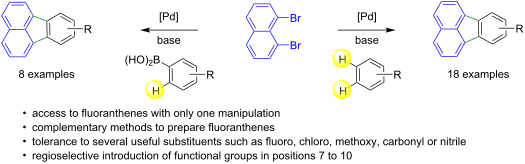
Mono or double Pd-catalyzed C–H bond functionalization for the annulative π-extension of 1,8-dibromonaphthalene: a one pot access to fluoranthene derivatives
Beilstein J. Org. Chem. 2024, 20, 427–435, doi:10.3762/bjoc.20.37
- from Acros. KOPiv (95%) was purchased from Doug Discovery. These compounds were not purified before use. All reagents were weighed and handled in air. All reactions were carried out under an inert atmosphere with standard Schlenk techniques. 1H, 19F and 13C NMR spectra were recorded on Bruker Avance
- data of synthesized compounds. Supporting Information File 44: Copies of 1H, 19F, and 13C NMR spectra. Acknowledgements We are grateful to Dr. Elsa Caytan for NMR experiments. Part of this work has been performed using the PRISM core facility (Biogenouest, Univ Rennes, Univ Angers, INRAE, CNRS, FRANCE


Spatial arrangements of cyclodextrin host–guest complexes in solution studied by 13C NMR and molecular modelling
Beilstein J. Org. Chem. 2024, 20, 331–335, doi:10.3762/bjoc.20.33
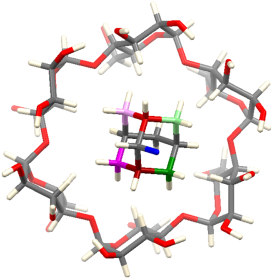
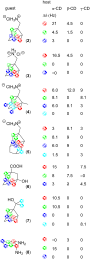
- 2026/5, 121 16 Praha, Czech Republic Department of Inorganic Chemistry, Faculty of Science, Charles University, Hlavova 8, 128 43 Praha, Czech Republic 10.3762/bjoc.20.33 Abstract 13C NMR spectroscopic analyses of Cs symmetric guest molecules in the cyclodextrin host cavity, combined with molecular
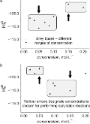
- signals in 13C NMR spectra. This signal split can be correlated to the distance of the guest atoms from the wall of the host cavity and to the spatial separation of binding sites preferred by pairs of prochiral carbon atoms. These measurements complement traditional solid-state analyses, which rely on the
- crystallization of host–guest complexes and their crystallographic analysis. Keywords: anisotropy; 13C NMR; cyclodextrin; host–guest complexes; Introduction Complexation of organic and inorganic compounds with α-, β-, or γ-cyclodextrins and their derivatives [1] is an established tool used in medicine for drug




Discovery of unguisin J, a new cyclic peptide from Aspergillus heteromorphus CBS 117.55, and phylogeny-based bioinformatic analysis of UngA NRPS domains
Beilstein J. Org. Chem. 2024, 20, 321–330, doi:10.3762/bjoc.20.32
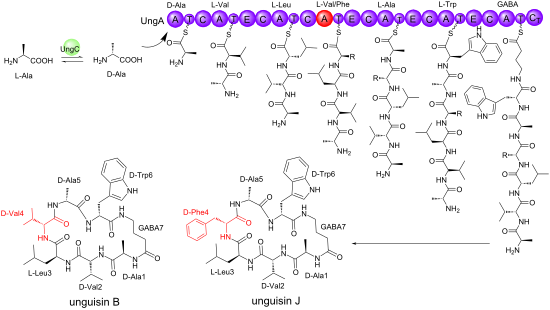
- compound 1 was elucidated by 1D and 2D NMR and HRESIMS/MS. Unguisin B was identified by the 1H and 13C NMR data with the reported data [1][5]. Compound 1 was obtained as a white amorphous solid optically active, with +23.4 (c 0.1, MeOH). Its molecular formula was established as C41H56N8O7 by HRMS ([M + H
- . The 1H and 13C NMR spectra of 1 revealed the presence of seven amide NH signals between δH 7.43 and 8.44 ppm supported by the amide carbonyl signals at δC 173.1, 172.6, 172.6, 172.1, 172.1, 171.1 and 171.0 ppm (Table 1). An additional NH signal at δH 10.82 ppm and four aromatic signals at δH 7.50
- powder, +37 (c 0.1, EtOH) [lit +40 (c 1.0, EtOH)] [5]; for the 1H and 13C NMR spectroscopic data, see Table S2 in Supporting Information File 1. By comparison with literature data this compound was identified as unguisin B (2) [1][5], further corroborating the identification of the new unguisin J (1


Synthesis of spiropyridazine-benzosultams by the [4 + 2] annulation reaction of 3-substituted benzoisothiazole 1,1-dioxides with 1,2-diaza-1,3-dienes
Beilstein J. Org. Chem. 2024, 20, 280–286, doi:10.3762/bjoc.20.29
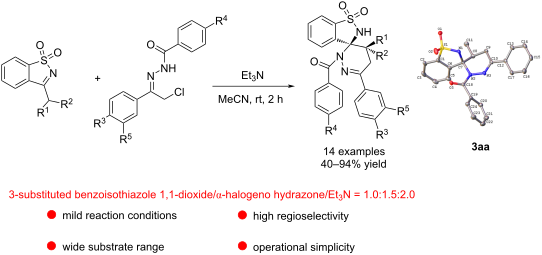
- investigated the performance of other organic and inorganic bases, but they did not improve the yield (Table 1, entries 8–12). The structure of spiropyridazine-benzosultam 3aa was determined by 1H NMR, 13C NMR, HRMS analysis and single-crystal X-ray crystallography [33]. Further experiments conducted with




Metal-catalyzed coupling/carbonylative cyclizations for accessing dibenzodiazepinones: an expedient route to clozapine and other drugs
Beilstein J. Org. Chem. 2024, 20, 193–204, doi:10.3762/bjoc.20.19
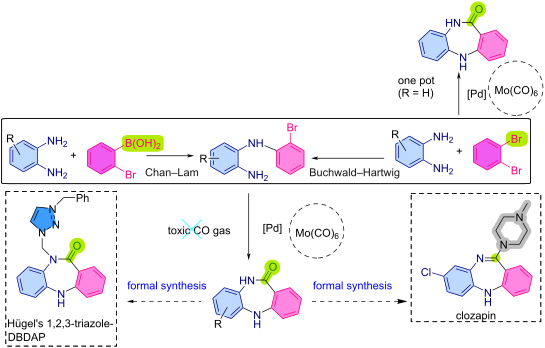
- = 8 Hz, Ar, 1H), 6.79–6.83 (t, J = 8 Hz, Ar, 1H), 6.85–6.87 (d, J = 8 Hz, Ar, 1H), 7.09–7.13 (m, Ar, 3H), 7.49–7.51 (d, J = 8 Hz, Ar, 1H); 13C NMR (CDCl3, 100 MHz) δ 110.42, 114.41, 116.47, 119.48, 119.70, 127.00, 127.04, 128.39, 132.62, 142.45, 143.03; HRESIMS (m/z): [M + H+] calcd for C12H11BrN2
- °C; 1H NMR (DMSO-d6, 400 MHz) δ 6.87–7.00 (m, Ar, 6H), 7.31–7.35 (t, J = 8 Hz, Ar, 1H), 7.66–7.68 (d, J = 8 Hz, Ar,1H), 7.84 (s, Ar, 1H), 9.85 (s, Ar, 1H); 13C NMR (CDCl3, 100 MHz) δ 119.52, 120.23, 121.17, 121.73, 123.24, 123.40, 124.95, 130.29, 132.56, 133.67, 140.43, 150.92, 168.40; ESIMS (m/z


Comparison of glycosyl donors: a supramer approach
Beilstein J. Org. Chem. 2024, 20, 181–192, doi:10.3762/bjoc.20.18
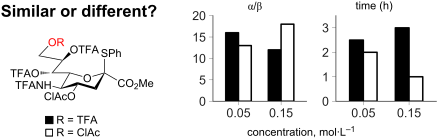
- = 11.7, J4,5 = 10.3, J4,3e = 4.8, 1H, H-4), 7.27 (d, JNH,5 = 9.9, 1H, NH), 7.33–7.49 (m, 5H, Ph); 13C NMR (75 MHz, CDCl3, δ, ppm, J, Hz) 37.0 (C-3), 40.1 (CH2Cl), 40.3 (CH2Cl), 49.8 (C-5), 53.1 (OMe), 62.5 (C-9), 70.1 (C-4), 71.5, 71.8 (C-6, C-7), 75.5 (C-8), 88.2 (C-2), 114.1 (q, JC,F = 285, CF3), 114.2
- ); 13C NMR (75 MHz, CDCl3, δ, ppm, J, Hz) 25.0 (Me), 26.2 (Me), 37.7 (C-3), 40.3 (CH2Cl), 40.6 (CH2Cl), 50.2 (C-5), 52.7 (OMe), 65.2 (C-9), 70.5 (C-4), 70.7 (C-7), 71.2 (C-6), 74.7 (C-8), 88.7 (C-2), 108.6 (CMe2), 115.3 (q, JC,F = 288, CF3), 128.5, 129.0, 130.2, 136.1 (Ph), 157.8 (q, JC,F = 38, COCF3
- –7.42 (m, 1H, p-Ph), 7.61–7.63 (m, 2H, o-Ph), 8.74 (d, JNH,5 = 8.1 Hz, 1H, NH); 13C NMR (151 MHz, acetone-d6, δ, ppm, J, Hz) 38.2 (C-3), 41.5 (CH2Cl), 41.8 (CH2Cl), 50.9 (C-5), 52.7 (OMe), 69.0 (C-9), 69.4 (C-8), 70.2 (C-7), 71.8 (C-4), 72.3 (C-6), 90.3 (C-2), 117.0 (q, JC,F = 288, CF3), 129.8, 130.6



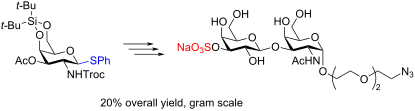
Synthesis of the 3’-O-sulfated TF antigen with a TEG-N3 linker for glycodendrimersomes preparation to study lectin binding
Beilstein J. Org. Chem. 2024, 20, 173–180, doi:10.3762/bjoc.20.17
- , Reveleris® silica cartiges 40 μm, Büchi Labortechnik AG®) and Biotage® SP4 HPFC (UV 200–500 nm, Biotage® SNAP KP-Sil 50 μm irregular silica, Biotage® AB). Instrumentation 1H NMR and 13C NMR spectra were recorded on Varian Inova spectrometers at 25 °C in chloroform-d (CDCl3), methanol-d4 (CD3OD), deuterium
- oxide (D2O) or DMSO-d6 ((CD3)2SO). 1H NMR spectra were standardised against the residual solvent peak (CDCl3, δ = 7.26 ppm; CD3OD, δ = 3.31 ppm; D2O, δ = 4.79 ppm; (CD3)2SO δ = 2.50 ppm); or internal trimethylsilane, δ = 0.00 ppm). 13C NMR spectra were standardised against the residual solvent peak
- (CDCl3, δ = 77.16 ppm; CD3OD, δ = 49.00 ppm; (CD3)2SO δ = 39.52 ppm and 13C NMR spectra recorded in D2O are unreferenced. All 13C NMR spectra are 1H decoupled. All NMR data are represented as follows: chemical shift (δ ppm), multiplicity (s = singlet, br s = broad singlet, d = doublet, app d = apparent


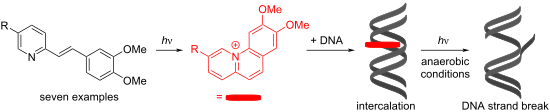
Photoinduced in situ generation of DNA-targeting ligands: DNA-binding and DNA-photodamaging properties of benzo[c]quinolizinium ions
Beilstein J. Org. Chem. 2024, 20, 101–117, doi:10.3762/bjoc.20.11
- 4.07 (s, 3H, OCH3), 4.09 (s, 3H, CO2CH3), 4.23 (s, 3H, OCH3), 7.71 (s, 1H, 7-H), 8.11 (s, 1H, 10-H), 8.15 (d, 3J = 9 Hz, 1H, 5-H), 8.49 (d, 3J = 9 Hz, 1H, 4-H), 8.61 (d, 3J = 9 Hz, 1H, 6-H), 8.67 (dd, 3J = 9 Hz, 4J = 1 Hz, 1H, 3-H), 10.15 (s, 1H, 1-H); 13C NMR (150 MHz, CD3CN) δ 54.3 (CO2CH3), 57.4
- , 3J = 9 Hz, 4J = 1 Hz, 1H, 3-H), 8.40 (d, 3J = 9 Hz, 1H, 4-H), 8.53 (d, 3J = 9 Hz, 1H, 6-H), 9.88 (d, 4J = 1 Hz, 1H, 1-H); 13C NMR (125 MHz, CD3CN) δ 57.4 (OCH3), 58.3 (OCH3), 100.0 (C10), 109.9 (C7), 121.5 (C5), 124.5 (C6a), 130.2 (C4), 131.0 (C10a), 131.8 (C1), 132.7 (C2), 137.8 (C6), 138.4 (C3
- ), 4.20 (s, 1H, OCH3), 7.63 (s, 1H, 7-H), 8.01 (d, 3J = 9 Hz, 1H, 5-H), 8.05 (s, 1H, 10-H), 8.26 (dd, 3J = 9 Hz, 4J = 2 Hz, 1H, 3-H), 8.33 (d, 3J = 9 Hz, 1H, 4-H), 8.40 (d, 3J = 9 Hz, 1H, 6-H), 9.56 (s, 1H, 1-H); 13C NMR (125 MHz, CD3CN) δ 15.6 (CH3), 27.0 (CH2), 57.3 (OCH3), 58.1 (OCH3), 99.9 (C10




Multi-redox indenofluorene chromophores incorporating dithiafulvene donor and ene/enediyne acceptor units
Beilstein J. Org. Chem. 2024, 20, 59–73, doi:10.3762/bjoc.20.8
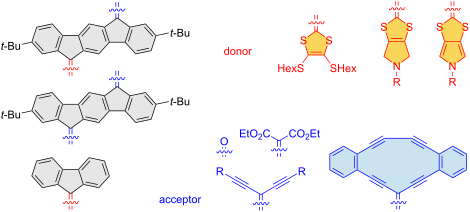
- Systems X10/X50: 40–63 μm). TLC was performed using aluminum sheets covered with silica gel coated with fluorescent indicator. NMR spectra were recorded on a Bruker instrument at 500 MHz and 126 MHz for 1H and 13C NMR, respectively. Deuterated chloroform (CDCl3, 1H = 7.26 ppm, 13C = 77.16 ppm), deuterated
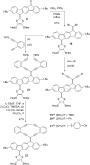
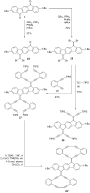
- –7.71 (m, 2H), 7.68 (d, J = 8.0 Hz, 1H), 7.58–7.44 (m, 2H), 7.44–7.35 (m, 3H), 4.50 (s, 4H), 2.44 (s, 3H), 1.43 (s, 9H), 1.36 (s, 9H) ppm; 13C NMR (126 MHz, CDCl3) δ 194.1, 152.7, 151.1, 148.7, 148.0, 144.7, 143.5, 142.3, 142.3, 138.8, 137.1, 135.5, 135.1, 133.6, 132.3, 131.4, 130.4, 129.1, 128.8, 127.7
- = 8.4 Hz, 4H), 7.64 (d, J = 8.0 Hz, 2H), 7.50 (d, J = 8.0 Hz, 2H), 7.34 (m, 6H), 7.29 (d, J = 8.4 Hz, 2H), 7.23 (s, 2H), 7.20 (s, 2H), 2.42 (s, 6H), 1.44 (s, 18H), 1.27 (s, 18H) ppm (E:Z ratio 4:1; 1H NMR signals reported for the E isomer); 13C NMR (126 MHz, CDCl3) δ 150.2, 149.9, 145.8, 143.6, 140.7







Using the phospha-Michael reaction for making phosphonium phenolate zwitterions
Beilstein J. Org. Chem. 2024, 20, 41–51, doi:10.3762/bjoc.20.6
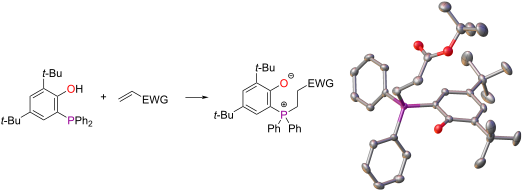
- similar phosphonium salt 2,4-di-tert-butyl-6-(triphenylphosphonium)phenolate features this particular signal at 6.27 ppm (4JHH = 2.7 Hz, 3JPH = 14.4 Hz [30]). In the 13C NMR spectra, the chemical shifts of the carbon atoms in positions 1 and 6 of the phenolate unit are particularly noteworthy. In the
- = 3.9 Hz) [30]. Compared to the parent phosphine 1 (155.9 ppm, 2JPC = 19.3 Hz) [35] a pronounced down-field shift occurred upon adduct formation, which suggests a considerable contribution of a quinonic resonance structure as benzoquinones exhibit 13C NMR shifts of about 188 ppm and hydroquinones of


NMRium: Teaching nuclear magnetic resonance spectra interpretation in an online platform
Beilstein J. Org. Chem. 2024, 20, 25–31, doi:10.3762/bjoc.20.4

- students, examples with combined 1D, 2D, and even some heteronuclear spectra can be used [42]. Here, one set including eight examples consisting exclusively of one-dimensional 1H and 13C NMR spectra and eight additional exercises including a combination of 1H, 13C, COSY, HSQC, and HMBC experiments provide


Cycloaddition reactions of heterocyclic azides with 2-cyanoacetamidines as a new route to C,N-diheteroarylcarbamidines
Beilstein J. Org. Chem. 2024, 20, 17–24, doi:10.3762/bjoc.20.3
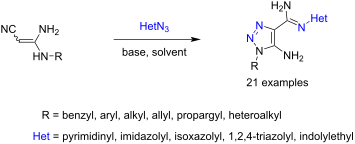
- effect on the yield of the final compounds 3 observed. The structures of compounds 3a–u were confirmed by IR, 1H and 13C NMR spectroscopy (Figures S1‒S44 in Supporting Information File 1) as well as by high-resolution mass spectrometry (HRMS). X-ray data obtained for compound 3g gave us final proof of
- , 0.5 mmol; 1,4-dioxane (2 mL)) as a colorless powder; mp 225–226 °C; 1H NMR (400 MHz, DMSO-d6) δ 3.16 (s, 3H), 3.21 (s, 3H), 5.08 (s, 1H), 5.46 (s, 2H), 6.52 (s, 1H), 6.53 (s, 1H), 7.19 (br. s, 2H), 7.25–7.39 (m, 5H); 13C NMR (101 MHz, DMSO-d6) δ 27.1, 29.8, 48.4, 87.4, 120.9, 127.4, 127.6, 128.5
- NMR (400 MHz, DMSO-d6) δ 5.48 (s, 2H), 6.68 (s, 1H), 6.69 (s, 1H), 7.10 (d, J = 3.9 Hz, 1H), 7.24 (d, J = 6.9 Hz, 2H), 7.28–7.38 (m, 3H), 7.43 (d, J = 3.9 Hz, 1H), 8.42 (br. s, 1H), 9.15 (br. s, 1H); 13C NMR (101 MHz, DMSO-d6) δ 48.5, 112.6, 121.2, 127.2, 127.6, 128.5, 135.7, 138.8, 143.6, 153.5



1-Butyl-3-methylimidazolium tetrafluoroborate as suitable solvent for BF3: the case of alkyne hydration. Chemistry vs electrochemistry
Beilstein J. Org. Chem. 2023, 19, 1966–1981, doi:10.3762/bjoc.19.147
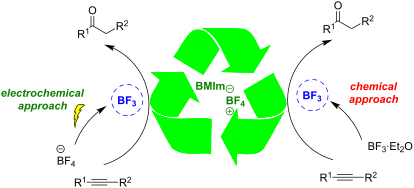
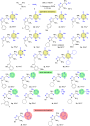
- -chelate. In fact, the following convincing peaks were found in the NMR spectra: a singlet at 6.11 ppm, along with a quartet at 4.68 ppm (1H NMR spectrum), a peak at 83.3 ppm (13C NMR spectrum) and a singlet at −139.1 ppm (19F NMR spectrum) [109]. A simple washing with distilled water gave the
- In order to have an idea of the current efficiency in the electrogeneration of BF3 in BMIm-BF4 (a monoelectronic process, Scheme 1), we tried to quantitatively capture the electrogenerated BF3 with a tertiary base just at the end of the electrolysis. By a comparison between the 13C NMR peaks of the
- anolyte and the mixture was kept under stirring at room temperature for 30 min. Then, the neat anolyte was analysed by NMR (19F and 13C). The 19F NMR spectrum showed a new peak at −148.7 ppm and, to our great astonishment, we found only one set of signals in the 13C NMR spectrum (55.0, 42.8, 17.4, 16.0


Aldiminium and 1,2,3-triazolium dithiocarboxylate zwitterions derived from cyclic (alkyl)(amino) and mesoionic carbenes
Beilstein J. Org. Chem. 2023, 19, 1947–1956, doi:10.3762/bjoc.19.145
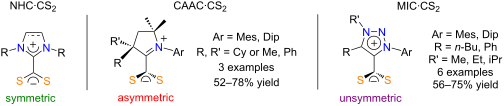
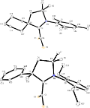
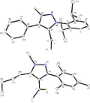
- cyclic (alkyl)(amino) or mesoionic carbenes (CAACs or MICs) onto carbon disulfide. Nine novel compounds were isolated and fully characterized by 1H and 13C NMR, FTIR, and HRMS techniques. Moreover, the molecular structures of two CAAC·CS2 and two MIC·CS2 betaines were determined by X-ray diffraction
- on 13C NMR spectroscopy (see below). We suspect that deleterious hydrophilic effects caused the subsequent decomposition of the CAAC·CS2 and MIC·CS2 zwitterions when an aqueous work-up was applied. Structural analysis Several analytical techniques were employed to characterize the nine aldiminium and
- significantly altered by the nature of the adjacent heterocycle, in line with a lack of electronic communication between these two moieties, as further discussed below. Contrastingly, the 13C NMR resonance for the carbenoid center of all the reagents and products used in this study was clearly affected by the


Construction of diazepine-containing spiroindolines via annulation reaction of α-halogenated N-acylhydrazones and isatin-derived MBH carbonates
Beilstein J. Org. Chem. 2023, 19, 1923–1932, doi:10.3762/bjoc.19.143
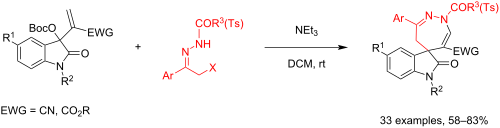
- spiro[indoline-3,5'-[1,2]diazepine]-6'-carboxylates 5a–g in 63–77% yields (Scheme 3). The substituents on both substrates also showed little effect on the yields. The chemical structures were fully characterized by HRMS, IR, 1H and 13C NMR spectra. For demonstrating the synthetic value of this protocol
- (d, J = 8.0 Hz, 1H, ArH), 4.95–4.90 (m, 2H, CH2), 3.47 (d, J = 14.0 Hz, 1H, CH), 3.24 (d, J = 14.0 Hz, 1H, CH), 2.16 (s, 3H, CH3) ppm; 13C NMR (100 MHz, CDCl3) δ 173.8, 170.9, 159.6, 139.6, 138.4, 136.2, 135.2, 133.3, 133.2, 131.8, 130.7, 130.3, 130.0, 129.2, 128.9, 128.4, 127.9, 127.8, 127.4, 127.3
- –6.85 (m, 1H, ArH), 6.70 (d, J = 8.4 Hz, 1H, ArH), 5.02 (s, 2H, CH2), 3.65 (s, 3H, OCH3), 3.49 (d, J = 13.6 Hz, 1H, CH), 3.10 (d, J = 13.6 Hz, 1H, CH) ppm; 13C NMR (100 MHz, CDCl3) δ 176.3, 171.3, 165.8, 160.6, 141.1, 137.3, 135.9, 135.5, 133.8, 131.6, 130.6, 129.7, 128.9, 128.5, 128.4, 127.9, 127.8



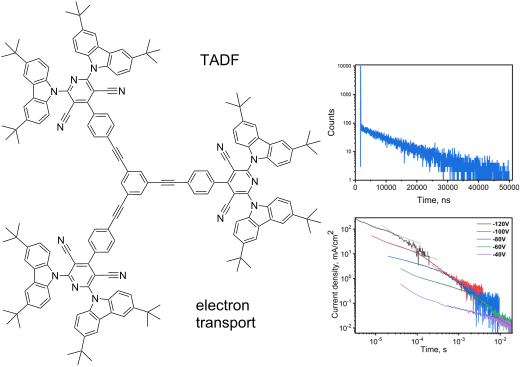
Aromatic systems with two and three pyridine-2,6-dicarbazolyl-3,5-dicarbonitrile fragments as electron-transporting organic semiconductors exhibiting long-lived emissions
Beilstein J. Org. Chem. 2023, 19, 1867–1880, doi:10.3762/bjoc.19.139
- purification. Thin-layer chromatography (TLC) was performed using Merck Silica gel 60 F254 plates and visualized by UV (254 nm) fluorescence. Zeochem silica gel (ZEOprep 60/35–70 microns – SI23501) was used for column chromatography. 1H and 13C NMR spectra were recorded on a Bruker 400 spectrometer at 400 and
- (0.90 g, 89%) was obtained as bright yellow powder. Mp > 200 °C; 1H NMR (400 MHz, CDCl3) 8.11 (d, J = 1.9 Hz, 4H), 7.87–7.76 (m, 4H), 7.72 (d, J = 8.9 Hz, 4H), 7.49 (dd, J = 8.8, 1.9 Hz, 4H), 1.47 (s, 36H), 0.31 (d, J = 1.0 Hz, 9H); 13C NMR (101 MHz, CDCl3) 163.16, 154.51, 146.43, 136.98, 132.85, 132.58
- ) 8.11 (dd, J = 2.0, 0.6 Hz, 8H), 7.90 (s, 8H), 7.73 (dd, J = 8.8, 0.5 Hz, 8H), 7.49 (dd, J = 8.8, 2.0 Hz, 8H), 1.46 (s, 72H); 13C NMR (101 MHz, CDCl3) 162.83, 154.53, 154.50, 146.56, 146.52, 136.96, 133.59, 133.50, 133.11, 129.93, 129.72, 126.17, 125.78, 125.76, 125.54, 124.23, 124.21, 116.61, 114.01


Thienothiophene-based organic light-emitting diode: synthesis, photophysical properties and application
Beilstein J. Org. Chem. 2023, 19, 1849–1857, doi:10.3762/bjoc.19.137
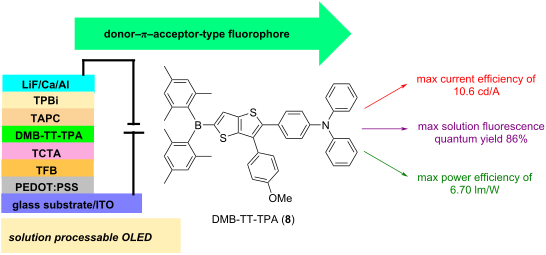
- properties indicated that the composition of thienothiophene, triphenylamine, and boron is a highly suitable combination for fluorescent organic electronics in display technology. Experimental General methods 1H and 13C NMR spectra were recorded on a Varian model NMR spectrometer (500 and 126 MHz) and
- = 8.7 Hz, 5H), 7.20 (d, J = 8.7 Hz, 2H), 7.13 (d, J = 7.6 Hz, 4H), 7.05 (t, J = 7.3 Hz, 2H), 6.95 (d, J = 8.7 Hz, 2H), 6.92 (d, J = 8.8 Hz, 2H), 3.86 (s, 3H); 13C NMR (126 MHz, CDCl3) δ 158.89, 147.36, 147.17, 142.04, 139.51, 135.73, 130.12, 129.87, 129.29, 128.34, 127.96, 125.86, 124.80, 123.24, 122.53
- ), 2.17 (s, 12H); 13C NMR (126 MHz, CDCl3) δ 158.92, 153.46, 151.26, 147.60, 147.20, 143.95, 141.05, 140.90, 138.50, 137.96, 132.59, 130.25, 129.86, 129.49, 129.33, 128.14, 127.85, 127.57, 125.01, 123.45, 122.08, 114.12, 55.23, 23.54, 21.22. Absorption and emission of DMB-TT-TPA (8) in THF. Figure 1 was


Substituent-controlled construction of A4B2-hexaphyrins and A3B-porphyrins: a mechanistic evaluation
Beilstein J. Org. Chem. 2023, 19, 1832–1840, doi:10.3762/bjoc.19.135
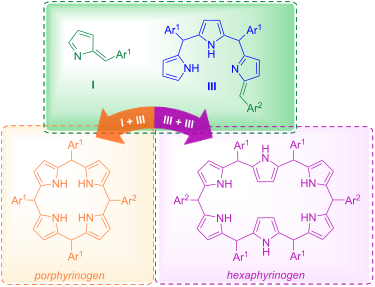
- -tosylimines. Experimental General method: All reagents and solvents were purchased from Sigma-Aldrich, Fisher Scientific, or Acros Organics and were used without further purification. 1H NMR (400 MHz), 13C NMR (100 MHz), and 19F NMR (376 MHz) spectra were recorded on a Bruker 400, Ultra Shield high
- -performance digital FT-NMR spectrometer. Data for 1H NMR, 13C NMR, and 19F NMR are reported as follows: chemical shift (δ, ppm), multiplicity (s = singlet, d = doublet, t = triplet, m = multiplet, q= quartet, bs = broad singlet, dd = doublet of doublets, td = triplet of doublets, qd = quartet of doublets



A novel recyclable organocatalyst for the gram-scale enantioselective synthesis of (S)-baclofen
Beilstein J. Org. Chem. 2023, 19, 1811–1824, doi:10.3762/bjoc.19.133
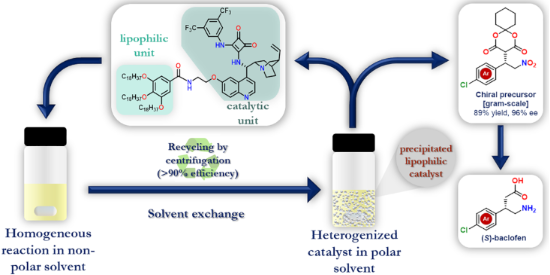
- (m, 1H), 2.86 (m, 1H), 2.82 (m, 1H), 2.41 (bs, 1H), 1.69 (m, 1H), 1.68 (m, 2H), 1.54 (m, 1H), 0.85 (m, 1H); 13C NMR (methanol-d4, 150 MHz, 295 K) δ 185.7, 182.1, 170.4, 164.8, 158.3, 147.6, 145.3, 144.6, 142.5, 142.3, 133.9 (q, 2JC,F = 33.4 Hz), 131.7, 129.7, 124.5 (q, 1JC,F = 272.0 Hz), 123.9, 120.0
- (m, 2H), 3.69–3.59 (m, 1H), 3.56–3.47 (m, 1H), 3.30–3.27 (m, overlapped, 1H), 2.99 (s, 1H), 2.93–2.86 (m, 1H), 2.86 (s, 1H), 2.84–2.76 (m, 1H), 2.43–2.37 (m, 1H), 1.70–1.61 (m, overlapped, 4H), 1.27 (m, 1H), 0.73–0.66 (m, 1H) ppm; 13C NMR (126 MHz, MeOH-d4, 298 K) δ 186.4, 182.8, 170.9, 165.9, 159.7
- , 2H), 6.30 (br s, 1H), 5.70 (m, 1H), 5.21–4.90 (m, 2H), 4.45 (m, 2H), 4.06–3.88 (m, overlapped, 10H), 3.76–3.69 (m, 2H), 3.61–3.19 (m, 2H), 3.09–2.65 (m, 2H), 1.93–1.61 (m, overlapped, 7H), 1.52–1.11 (m, overlapped, 94H), 0.88 (t, J = 7.0 Hz, 9H,) ppm; 13C NMR (75 MHz, CDCl3, 318 K) δ 185.4, 180.3


Active-metal template clipping synthesis of novel [2]rotaxanes
Beilstein J. Org. Chem. 2023, 19, 1776–1784, doi:10.3762/bjoc.19.130
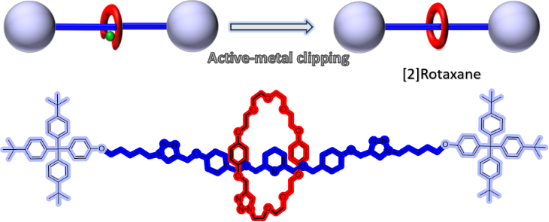
- –7.04 (overlapped signals, 8H, HAr), 6.75 (d, 3J = 8.9 Hz, 2H, HAr), 3.94 (t, 3J = 6.3 Hz, 2H, OCH2), 3.43 (t, 3J = 6.8 Hz, 2H, CH2Br), 1.93 (qv, 3J = 6.9 Hz, 2H, CH2), 1.83–1.77 (m, 2H, CH2), 1.65–1.58 (m, 2H, CH2), 1.30 (s, 27H, C(CH3)3) ppm; 13C NMR (CDCl3, 150 MHz) δ 156.9, 148.5, 144.3, 139.7
- (1.90 g, 92%); mp 72–73 °C, Rf = 0.47 (silica, ethyl acetate/petroleum ether = 1:3);1H NMR (CDCl3, 600 MHz) δ 7.49 (s, 1H, HAr), 7.42–7.36 (overlapped signals, 3H, HAr), 6.93 (s, 8H, HAr), 5.03 (s, 4H, CH2), 4.65 (d, 4H, 4J= 2.3 Hz, CH2(propargyl)), 2.52 (t, 4J = 2.3 Hz, CH2(propargyl)) ppm; 13C NMR
- = 6.4 Hz, 4H, CH2), 3.73 (t, 3J = 5.1 Hz, 2H, CH2), 3.70–3.64 (overlapped signals, 6H, CH2), 3.60–3.51 (overlapped signals, 12H, CH2), 1.75 (qv, 3J = 7.6 Hz, 4H, CH2), 1.64 (qv, 3J = 7.3 Hz, 4H, CH2), 1.35–1.28 (overlapped signals, 58H, CH2, C(CH3)3) ppm; 13C NMR (CD2Cl2, 150 MHz) δ 158.6, 158.57, 157.4


Unprecedented synthesis of a 14-membered hexaazamacrocycle
Beilstein J. Org. Chem. 2023, 19, 1728–1740, doi:10.3762/bjoc.19.126
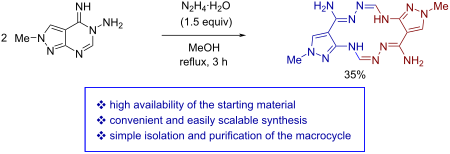
- C11H18N12 for bis-pyrazole 6. According to NMR spectroscopic data, the amount of bis-pyrazole 6 in the crude product formed under above conditions was about 18 mol %. The structure of macrocycle 5 was confirmed by comparing its 1H and 13C NMR spectra with those reported in ref. [40]. It should be noted that
- (1 h instead of 5 h). The precipitated compound 8 was isolated by filtration in a 96% yield (Scheme 4). Previously, the structure of 8 was assigned based on 1H and 13C NMR spectroscopic data [40]. However, these data are insufficient to distinguish compound 8 and its isomer 9 resulting from a Dimroth
- rearrangement that is known to proceed in 3-substituted 4-iminopyrimidine systems [40][45][46][47]. Our analysis of 1H, 13C NMR, and 2D NMR spectra (DMSO-d6 solution) of the prepared product confirmed its structure as compound 8. For example, the 1H,13C-HMBC spectrum showed correlation of the NH2 protons with


Effects of the aldehyde-derived ring substituent on the properties of two new bioinspired trimethoxybenzoylhydrazones: methyl vs nitro groups
Beilstein J. Org. Chem. 2023, 19, 1713–1727, doi:10.3762/bjoc.19.125
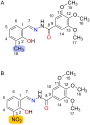
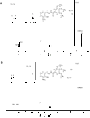
- and hdz-NO2 (Figure 5A and 5B, respectively). 13C NMR and 2D homonuclear (COSY) and heteronuclear (13C,1H-HSQC and HMBC) experiments were employed for the full characterization of these hydrazones, and the spectra can be seen in Supporting Information File 1, Figures S5–S12. Both compounds exhibit





A deep-red fluorophore based on naphthothiadiazole as emitter with hybridized local and charge transfer and ambipolar transporting properties for electroluminescent devices
Beilstein J. Org. Chem. 2023, 19, 1664–1676, doi:10.3762/bjoc.19.122
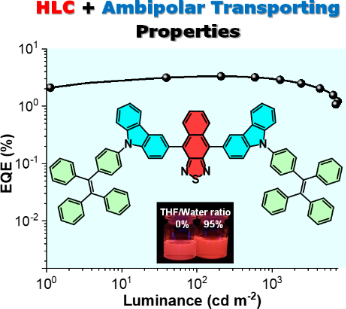
- )diboron catalyzed by Pd(dpf)Cl2/KOAc. Finally, TPECNz was obtained as red solid in a reasonable yield by a Suzuki-type cross-coupling reaction between 3 and 4,9-dibromonaphtho[2,3-c][1,2,5]thiadiazole. The chemical structure and purity of compound 3 were verified by 1H NMR, 13C NMR, and high-resolution
- purchased from commercial resources and used without further purification. 1H NMR and 13C NMR spectra were recorded with a Bruker AVANCE III HD 600 (600 MHz for 1H and 151 MHz for 13C) using CDCl3 as a solvent containing TMS as an internal standard. High-resolution mass spectrometry (HRMS) analysis was
- chromatography over silica gel eluting with CH2Cl2/hexane 1:4 to give white solids (2.11 g, 87%). 1H NMR (600 MHz, CDCl3) δ 8.12 (d, J = 7.7 Hz, 2H), 7.40 (t, J = 7.8 Hz, 2H), 7.34 (d, J = 8.2 Hz, 2H), 7.28 (t, J = 8.0 Hz, 4H), 7.24 (d, J = 8.1 Hz, 2H), 7.21–7.07 (m, 15H); 13C NMR (151 MHz, CDCl3) δ 143.55


Benzoimidazolium-derived dimeric and hydride n-dopants for organic electron-transport materials: impact of substitution on structures, electrochemistry, and reactivity
Beilstein J. Org. Chem. 2023, 19, 1651–1663, doi:10.3762/bjoc.19.121
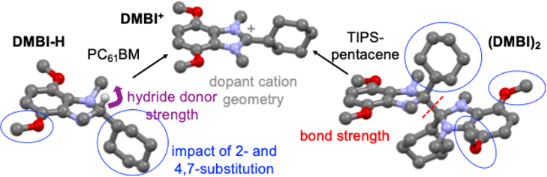
- [34]. In the case of molecules with aryl Y-substituents – 1b2 and 1g2 – the room-temperature 1H and 13C NMR spectra (see Supporting Information File 1, Figures S2, S26 and S27, and reference [26]) display more resonances than expected based on the highest symmetry possible for the molecule indicating


A series of perylene diimide cathode interlayer materials for green solvent processing in conventional organic photovoltaics
Beilstein J. Org. Chem. 2023, 19, 1620–1629, doi:10.3762/bjoc.19.119
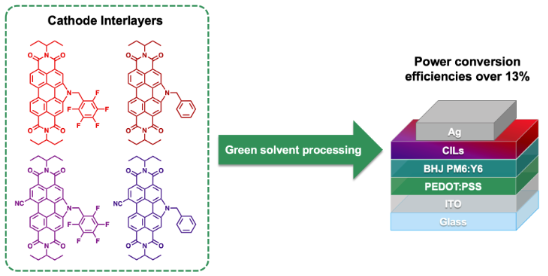
- adding a methanol/water mixture; thus, no lengthy purification steps were required for any of the syntheses. Yields of 52.4%, 80.2%, 58.1%, and 68.3% were obtained for PDIN-FB, PDIN-B, CN-PDIN-FB, and CN-PDIN-B, respectively. All compounds were structurally characterized using 1H NMR spectroscopy, 13C
- NMR spectroscopy, mass spectrometry, and elemental analysis. See Supporting Information File 1 for full synthetic and characterization details. Optical properties Using UV–visible spectroscopy, the optical properties for PDIN-FB, PDIN-B, CN-PDIN-FB, and CN-PDIN-FB in both solution and film form were





