Search results
Search for "decomposition" in Full Text gives 825 result(s) in Beilstein Journal of Organic Chemistry. Showing first 200.
A study of the photochemical behavior of terarylenes containing allomaltol and pyrazole fragments
Beilstein J. Org. Chem. 2022, 18, 588–596, doi:10.3762/bjoc.18.61
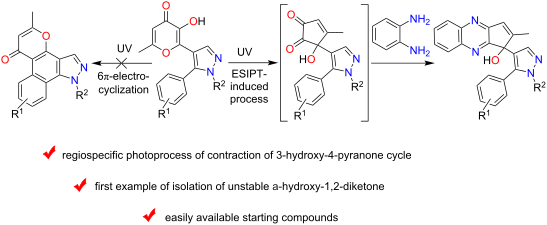
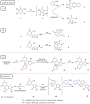
- darkness at room temperature for 5 days resulted in complete decomposition. Despite the labile nature of α-hydroxy-1,2-diketone 14a we attempted to isolate this product in pure form. It should be noted that in contrast to the methylated derivative 16, pyrazole 12a has a low solubility in most organic
- medium accelerates the decomposition of target α-hydroxy-1,2-diketone 14a. Subsequently, we used DMF as a solvent for carrying out the studied photoreaction. Unexpectedly, the starting pyrazole 12a was isolated unchanged after 24 hours of UV irradiation, indicating that DMF also is not suitable for the
- were unsuccessful due to the low stability of the resulting α-hydroxy-1,2-diketone 14 and their partial decomposition during purification. Thus, the purity of the obtained compounds 14 does not allow a complete characterization by various analytical methods. Based on this fact we made attempts to





Unusual highly diastereoselective Rh(II)-catalyzed dimerization of 3-diazo-2-arylidenesuccinimides provides access to a new dibenzazulene scaffold
Beilstein J. Org. Chem. 2022, 18, 533–538, doi:10.3762/bjoc.18.55
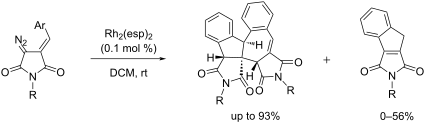
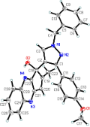
- Federal University, Kaliningrad 236041, Russian Federation 10.3762/bjoc.18.55 Abstract Formation of unusual unsymmetrical dimers or/and indenes via Rh2(esp)2-catalyzed decomposition of 3-diazo-2-arylidenesuccinimides has been investigated. The reaction proceeded under mild conditions, and its result was
- against the A549 human lung adenocarcinoma cell line while N-aryl analogs were non-cytotoxic. Keywords: diazo arylidene succinimides; dibenzoazulenodipyrroles; indenopyrroles; Rh2(esp)2-catalyzed decomposition; unsymmetrical dimers; Introduction 3-Diazo-2-arylidenesuccinimides 1 (DAS) are heterocyclic
- diazocarbonyl compounds [5]. The close spatial arrangement of the conjugate aryl fragment and the diazo group in the DAS molecule favors both intramolecular and intermolecular cyclizations involving the arylidene group. Thus, under catalytic decomposition, DAS containing a 2-pyridyl or 2-hydroxyaryl substituent


Menadione: a platform and a target to valuable compounds synthesis
Beilstein J. Org. Chem. 2022, 18, 381–419, doi:10.3762/bjoc.18.43
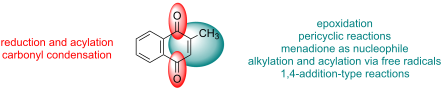
- -naphthoquinone (18) were obtained in 80% yield with a 75:25 ratio, respectively (Scheme 2, method A). In the methylation reaction using methyl radicals generated by the redox decomposition of H2O2 in DMSO solution, compounds 10 and 18 were obtained in an overall yield of 80–90% with a 77:23 ratio, respectively
- (Scheme 2, method B). Finally, the use of H2O2 thermal decomposition in acetone with catalytic methanesulfonic acid, led to compounds 10 and 18 in 47% yield with 86:14 ratio (Scheme 2, method C). In all cases, the monomethylation was not selective and even at partial conversions of naphthoquinone


Borylated norbornadiene derivatives: Synthesis and application in Pd-catalyzed Suzuki–Miyaura coupling reactions
Beilstein J. Org. Chem. 2022, 18, 368–373, doi:10.3762/bjoc.18.41
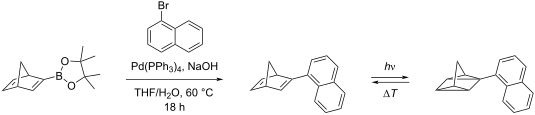
- all, as neither the reaction of 2a with NaIO4 and hydrochloric acid, nor the reaction of 2a with LiOH and subsequent addition of acid (ammonium chloride, hydrochloric acid) gave the desired boronic acid, but led to decomposition, instead. Obviously, the 2-borylated norbornadiene derivatives are acid


Amamistatins isolated from Nocardia altamirensis
Beilstein J. Org. Chem. 2022, 18, 360–367, doi:10.3762/bjoc.18.40
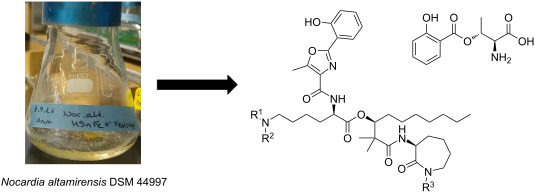
- been reported before. The isolated metabolite 5 represents the previously described siderophore amamistatin B [7], while compound 6 was before only known as a decomposition product of a synthetically prepared obafluorin derivative [8]. Results and Discussion To induce siderophore biosynthesis in N


Synthesis of piperidine and pyrrolidine derivatives by electroreductive cyclization of imine with terminal dihaloalkanes in a flow microreactor
Beilstein J. Org. Chem. 2022, 18, 350–359, doi:10.3762/bjoc.18.39
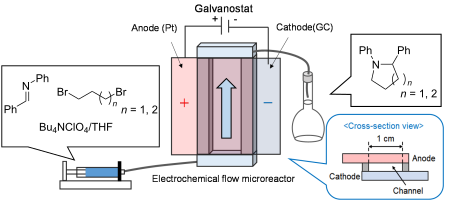
- electrodes and subjected to the electrolytic reaction. Tetrahydrofuran (THF), which is easily oxidized, was employed as the electrolytic solvent, so the reaction at the anode (counter electrode) is thought to be preferentially caused by the oxidative decomposition of THF, and the re-oxidation of the cathodic


Regioselectivity of the SEAr-based cyclizations and SEAr-terminated annulations of 3,5-unsubstituted, 4-substituted indoles
Beilstein J. Org. Chem. 2022, 18, 293–302, doi:10.3762/bjoc.18.33
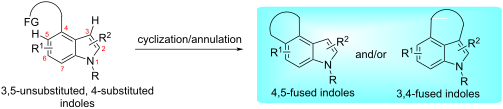
- this methodology to related substrates with free indolyl NH as such reactions resulted into a complex mixture (not shown here), possibly due to the decomposition of the substrates. Nevertheless, the same regioselectivity was observed when the FC-acylation of N-protected 3-(4-indolyl)propanoic acids 28g


Flow synthesis of oxadiazoles coupled with sequential in-line extraction and chromatography
Beilstein J. Org. Chem. 2022, 18, 232–239, doi:10.3762/bjoc.18.27
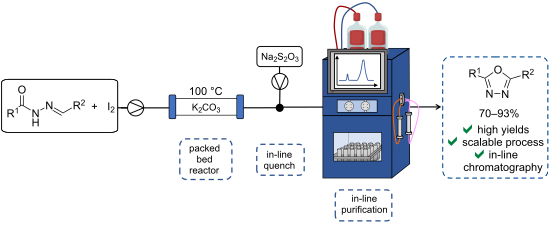
- in a slight decrease in yield, and an increase in decomposition was observed with an increase in temperature despite the short residence times (entries 6 and 7, Table 2). The lack of solubility of the hydrazone substrates limited options with regards to variation in reaction solvent, with adequate
- prove useful for accessing small quantities of medicinally interesting BCP-1,3,4-oxadiazole compounds for biological testing. Additionally, the reaction of 1,3-substituted isoxazole 1m under these conditions was investigated. Despite high degrees of decomposition, it was possible to isolate the desired


Chemoselective N-acylation of indoles using thioesters as acyl source
Beilstein J. Org. Chem. 2022, 18, 89–94, doi:10.3762/bjoc.18.9

- , Scheme 3). The results indicate that this N-acylation reaction of indole has great potential in practical synthesis. Some control experiments were conducted to explore the reaction mechanism of this transformation (Scheme 4). When S-methyl decanethioate (2i) was adopted without Cs2CO3, no decomposition


A two-phase bromination process using tetraalkylammonium hydroxide for the practical synthesis of α-bromolactones from lactones
Beilstein J. Org. Chem. 2021, 17, 2906–2914, doi:10.3762/bjoc.17.198
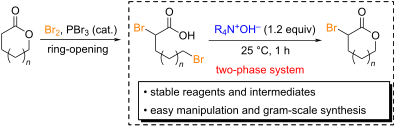
- in a dramatically lower yield of 3a (8%), most likely because 3a is unstable to base at room temperature and may decompose or polymerize (see Supporting Information File 1). To avoid decomposition or polymerization, 3a produced in situ by the intramolecular cyclization of 2a should be separated


Synthesis of new pyrazolo[1,2,3]triazines by cyclative cleavage of pyrazolyltriazenes
Beilstein J. Org. Chem. 2021, 17, 2773–2780, doi:10.3762/bjoc.17.187
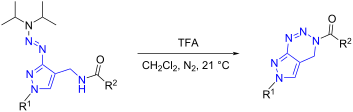
- transformations without decomposition [37][38][39]. In the herein presented study, we apply the cyclative cleavage reaction to pyrazolyltriazenes instead of aryltriazenes, which results in the synthesis of diverse pyrazolo[3,4-d][1,2,3]-3H-triazine derivatives 5. Results and Discussion According to the literature
- of the target compounds of class 5 were chosen as they were available in sufficient amounts and showed no decomposition during storage and dilution in DMSO. Also, most of the intermediates showed no reduction of cell viability; however, compounds 9b, 12b,c, 13a,b, and 13f–h showed some cytotoxic


Ligand-dependent stereoselective Suzuki–Miyaura cross-coupling reactions of β-enamido triflates
Beilstein J. Org. Chem. 2021, 17, 2657–2662, doi:10.3762/bjoc.17.179
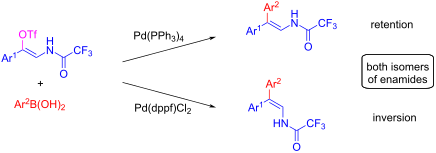
- study. Substituted phenylboronic acids and vinyl triflates led to the formation of enamides 2 with high stereoselectivity and in good to high NMR yields (Scheme 2). However, isolated yields were found to be lower due to the decomposition of the formed enamides 2 during column chromatography on silica
- -trifluoromethylphenyl group which gave enamides 3da (2da/3da, 20:80) and 3dd (2dd/3dd, <1:99). It is worth mentioning that the reaction of vinyl triflate 1c with 3-methoxyphenylboronic acid led to full decomposition of the starting material. The stereochemistry of the double bond in compounds 2 and 3 was determined by


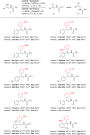

Silica gel and microwave-promoted synthesis of dihydropyrrolizines and tetrahydroindolizines from enaminones
Beilstein J. Org. Chem. 2021, 17, 2543–2552, doi:10.3762/bjoc.17.170
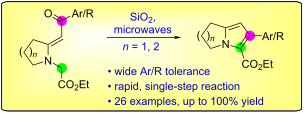
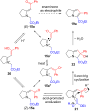
- , methanesulfonic acid, boron trifluoride etherate) resulted in decomposition if the reactions were left at room temperature overnight, or within ten minutes if the temperature was raised, even to 50 °C (Table 1, entries 6–13). The enaminone appeared to be protonated at room temperature, presumably on the oxygen
- was heated, in which case decomposition took place (Table 1, entry 15). Solutions of 15a in dichloromethane also decomposed rapidly when treated with aluminum trichloride or boron trifluoride at 50 °C, although no reaction was apparent at room temperature even after 18 hours (Table 1, entries 16–19
- in a good yield of 84%, although prolonged exposure even at ambient temperature led to decomposition (Table 1, entries 22 and 23). However, the most successful microwave-assisted reactions took place with the somewhat less acidic silica gel (200–400 mesh) as the promotor [45]. Mixing a solution of





Synthesis of new substituted 7,12-dihydro-6,12-methanodibenzo[c,f]azocine-5-carboxylic acids containing a tetracyclic tetrahydroisoquinoline core structure
Beilstein J. Org. Chem. 2021, 17, 2511–2519, doi:10.3762/bjoc.17.168
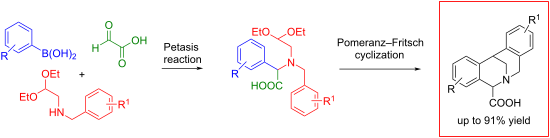
- 5a, glyoxylic acid hydrate (4), and O-benzylvanilin-derived aminoacetal 3e (Scheme 4), when treated with 20% HCl or 70% HClO4 gave a colored complex mixture of decomposition products, probably due to the hydrolysis of the benzyl ether. Iwakuma et al. [15] reported the synthesis of 1,2,3,4


Copper-catalyzed monoselective C–H amination of ferrocenes with alkylamines
Beilstein J. Org. Chem. 2021, 17, 2488–2495, doi:10.3762/bjoc.17.165
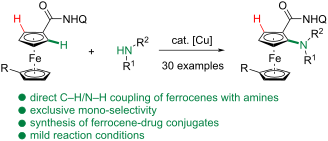
- metals. Second, both amines and the resulting aminated products could coordinate with metal catalysts and cause the deactivation of catalysts. Besides, high reaction temperature could lead to a mixture of byproducts or the decomposition of the ferrocene products. Herein, we described a Cu-catalyzed
- decomposition of the aminated product 3a was observed. Consequently, we exclusively evaluated the reaction temperature and time (Table 1, entries 13–16). To our delight, 3a could be obtained in 80% yield under relatively lower temperature (80 °C) and shorter time (4 hours). To note, this reaction showed




Chemical syntheses and salient features of azulene-containing homo- and copolymers
Beilstein J. Org. Chem. 2021, 17, 2164–2185, doi:10.3762/bjoc.17.139
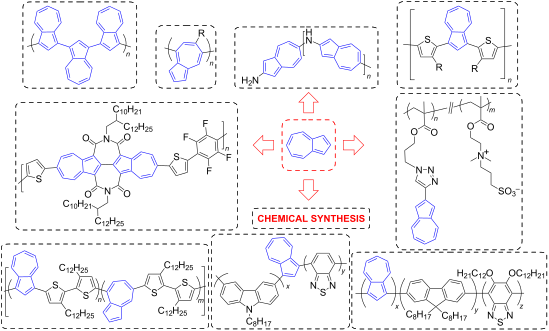
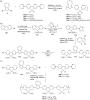
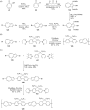
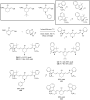
- decomposition temperature, which was over 350 °C. The polymers 50, 54, and 56 exhibited absorption bands in the 400–450 nm range due to π–π* transition. However, polymer 52, which contains a benzothiadiazole ring was an exception, as it showed a highly red-shifted band at 550 nm. The important feature of these





Preparation of mono-substituted malonic acid half oxyesters (SMAHOs)
Beilstein J. Org. Chem. 2021, 17, 2085–2094, doi:10.3762/bjoc.17.135

- temperature of addition was also an important parameter and we found that an initial cooling to −15 °C was optimal (Table 4, entries 3–5), presumably by limiting the decomposition of the malonic acid derivative. We also studied the influence of the stoichiometry of the different reagents (Table 4, entries 6–9


Towards new NIR dyes for free radical photopolymerization processes
Beilstein J. Org. Chem. 2021, 17, 2067–2076, doi:10.3762/bjoc.17.133

- polymerization is much more efficient when borate is used as the counter anion with both a higher polymerization rate and FC. The results show that the formation of initiating radicals can be related to the decomposition of the borate moiety. This can be explained by the fact that the borate counter ion can act




A study on selective transformation of norbornadiene into fluorinated cyclopentane-fused isoxazolines
Beilstein J. Org. Chem. 2021, 17, 2051–2066, doi:10.3762/bjoc.17.132
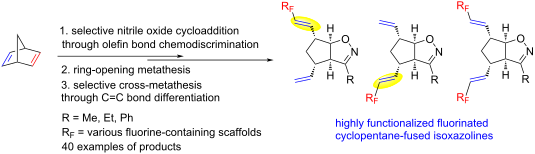
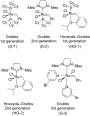
- catalyst HG-2 was used (Table 1, entries 1 and 2), decomposition of the catalyst with NaHCO3 in aqueous MeOH during workup improved the yield. Therefore, catalyst decomposition was incorporated into the workup procedure of all other CM reactions. The outcome of the reaction between (±)-4 and 7c was




Development of N-F fluorinating agents and their fluorinations: Historical perspective
Beilstein J. Org. Chem. 2021, 17, 1752–1813, doi:10.3762/bjoc.17.123
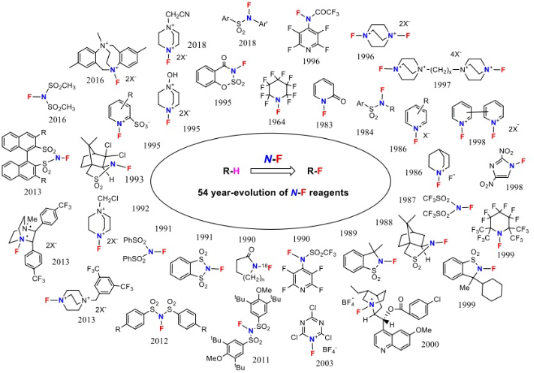
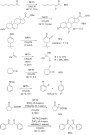
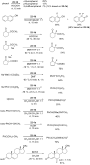
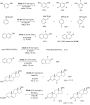
- decomposition process that is observed with N-F reagents that have an α-proton and occurs under strong base conditions. 1-11. Perfluoro[N-fluoro-N-(4-pyridyl)methanesulfonamide] In 1990, Banks and co-worker reported perfluoro[N-fluoro-N-(4-pyridyl)methanesulfonamide] (11-2) [54]. Starting from
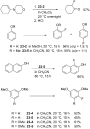
- crystalline solid with a high decomposition point of ca. 170 °C. The bisOTf salt 22-1a, bisBF4 22-1d, bisSbF6 22-1e, and bisPF6 22-1f are easy-to-handle because they are non-hygroscopic and stable crystals. As shown in Figure 6, 22-1a,d,e mediated a quantitative conversion of anisole to isomers of
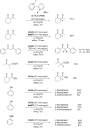
- carbanions [90]. The precursor 27-1, which was prepared in a three step protocol from saccharin, was fluorinated with FClO3 to give 27-2 in good yield (Scheme 60). Direct fluorination of 27-1 with 10% F2/N2 had failed because of decomposition. Various ketone enolates were successfully fluorinated with






























Electron-rich triarylphosphines as nucleophilic catalysts for oxa-Michael reactions
Beilstein J. Org. Chem. 2021, 17, 1689–1697, doi:10.3762/bjoc.17.117
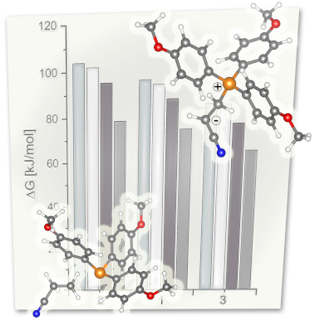
- formation of the corresponding phosphine oxide derivative as the only decomposition product was observed. The results, shown in Figure 3, reveal that the oxidation stability is decreasing in the order TPP > MMTPP > TMTPP, which is in line with electrochemical studies showing a decrease of the oxidation


Breaking paracyclophane: the unexpected formation of non-symmetric disubstituted nitro[2.2]metaparacyclophanes
Beilstein J. Org. Chem. 2021, 17, 1518–1526, doi:10.3762/bjoc.17.109
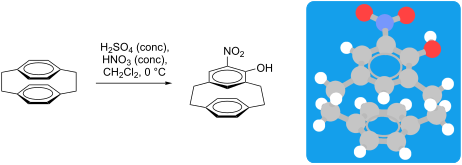
- suggesting rearrangement does not occur. Reaction of the electron-rich 4-hydroxy[2.2]paracyclophane led to decomposition while the electron-poor derivatives barely reacted. Treatment of [2.2]paracyclophane (1) with various acids (nitric, sulfuric, perchloric, and acetic acid) led to differing results




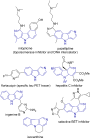
Synthesis of 1-indolyl-3,5,8-substituted γ-carbolines: one-pot solvent-free protocol and biological evaluation
Beilstein J. Org. Chem. 2021, 17, 1453–1463, doi:10.3762/bjoc.17.101
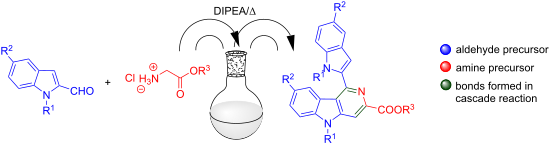
- decomposition of N-pyridylbenzotriazoles. Later, the reaction conditions were modified to make this reaction more versatile and operationally simple such as by the use of microwave irradiation [12]. Meanwhile, the Fischer indole synthesis was successfully extended for the synthesis of significant biologically
- -indole-2-carbaldehyde (1h), impeded the conversion to γ-carboline 3ha (structure not shown) due to probable decomposition and decrease in nucleophilicity at the 3-position in substrate 1h. Plausible mechanism for the formation of γ-carbolines The probable mechanistic explanation (Scheme 3) for the







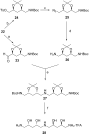
Total synthesis of ent-pavettamine
Beilstein J. Org. Chem. 2021, 17, 1440–1446, doi:10.3762/bjoc.17.99
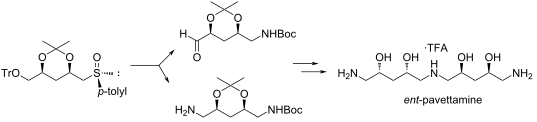
- tosylate under basic conditions affording 24 in a yield of 83%. The displacement of the tosyl group with an azide whilst heating the reaction at 80 °C allowed for the isolation of azide 25 in a good yield of 75%. Heating at higher temperatures resulted in product decomposition. Hydrogenation of the azide
- neutralize the TFA salt to obtain the free amine were unsuccessful, most often resulting in product decomposition. Also the attempted product purification by recrystallization from methanol did not improve the purity of the product. Spectroscopic data of the synthesized ent-pavettamine and the pavettamine


Icilio Guareschi and his amazing “1897 reaction”
Beilstein J. Org. Chem. 2021, 17, 1335–1351, doi:10.3762/bjoc.17.93
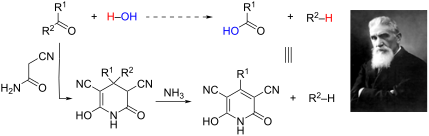
- and can interfere with the color reaction and tests used to detect plant poisons in forensic investigations. There is currently a resurrection of interest in nitrogenous small molecules associated with corpse decomposition since the profile of these compounds can be useful to assess postmortem