Search results
Search for "yellow" in Full Text gives 822 result(s) in Beilstein Journal of Organic Chemistry. Showing first 200.
Unsaturated fatty acids and a prenylated tryptophan derivative from a rare actinomycete of the genus Couchioplanes
Beilstein J. Org. Chem. 2021, 17, 2939–2949, doi:10.3762/bjoc.17.203
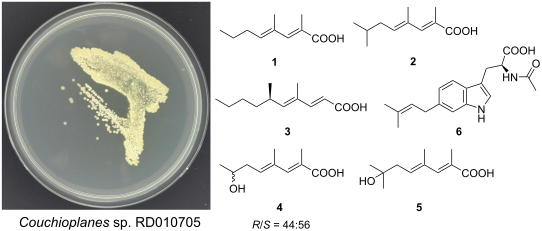
- mg, tR = 32.1 min). (2E,4E)-2,4-Dimethyl-2,4-octadienoic acid (1): yellow oil; UV (MeOH) λmax (log ε) 264 (4.08) nm; IR (ATR) νmax: 2959, 2610, 1679, 1622, 1417, 1269, 1138, 1012, 926 cm–1; 1H and 13C NMR data, see Table 1 and Table 2; HR–ESI–TOFMS (m/z): [M + Na]+ calcd for C10H16NaO2, 191.1043
- ; found, 191.1044. (2E,4E)-2,4,7-Trimethyl-2,4-octadienoic acid (2): yellow oil; UV (MeOH) λmax (log ε) 260 (4.04) nm; IR (ATR) νmax: 2957, 1681, 1622, 1417, 1269, 1137 cm–1; 1H and 13C NMR data, see Table 1 and Table 2; HR–ESI–TOFMS (m/z): [M + Na]+ calcd for C11H18NaO2, 205.1199; found, 205.1202. (R
- )-(−)-Phialomustin B (3): yellow oil; [α]D27 −12 (c 0.035, CHCl3), [α]D22 −76 (c 0.05, MeOH); UV (MeOH) λmax (log ε) 256 (4.19) nm; IR (ATR) νmax: 2958, 2956, 1686, 1620, 1279, 982 cm–1; 1H and 13C NMR data, see Table 1 and Table 2; HR–ESI–TOFMS (m/z): [M + Na]+ calcd for C12H20NaO2, 219.1356; found, 219.1356. (2E


Biological properties and conformational studies of amphiphilic Pd(II) and Ni(II) complexes bearing functionalized aroylaminocarbo-N-thioylpyrrolinate units
Beilstein J. Org. Chem. 2021, 17, 2812–2821, doi:10.3762/bjoc.17.192
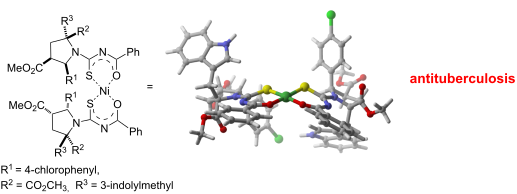
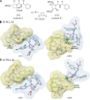
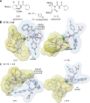
- (2RS,4SR,5RS)-1-(benzoylcarbamothioyl)-2-benzyl-5-(2,4-dichlorophenyl)pyrrolidine-2,4-dicarboxylate}2Pd (L1-Pd): Brownish yellow solid, 99 mg, 78% yield; mp 187–189 °C (MeOH, decomp.); 1H NMR (400 MHz) δ 8.18–8.15 (m, 6H, minor and major), 8.01–7.94 (m, 4H, minor and major), 7.54–7.14 (m, 16H, minor
- ): Brownish yellow solid, 112 mg, 89% yield; mp 253–255 °C (MeOH, decomp.); 1H NMR (400 MHz) δ 8.18–8.15 (m, 4H, minor and major), 7.79 (d, J = 8.6 Hz, 1H, minor), 7.72 (d, J = 8.6 Hz, 1H, major), 7.51–7.29 (m, 12H, minor and major), 7.22–7.13 (m, 4H, minor and major), 6.47 (dd, J = 8.6 Hz, 2.4 Hz, 1H, minor
- )pyrrolidine-2,4-dicarboxylate}2Pd (L3-Pd): Brownish yellow solid, 100 mg, 78% yield; mp 217–219 °C (MeOH, decomp.). 1H NMR (400 MHz) δ 8.26 (d, J = 1.9 Hz, 2H), 8.21–8.15 (m, 4H,), 7.63 (d, J = 7.9 Hz, 2H), 7.52–7.39 (m, 6H), 7.29–7.25 (m, 6H), 7.23–7.18 (m, 4H), 7.15–7.11 (m, 4H), 7.02 (d, J = 2.2 Hz, 2H

Photophysical, photostability, and ROS generation properties of new trifluoromethylated quinoline-phenol Schiff bases
Beilstein J. Org. Chem. 2021, 17, 2799–2811, doi:10.3762/bjoc.17.191
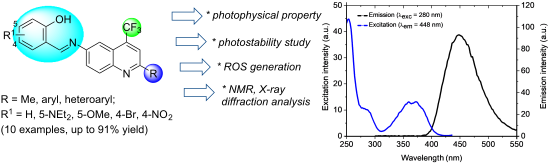
- -Methyl-4-(trifluoromethyl)quinolin-6-yl)imino)methyl)phenol (3aa): Yellow solid, yield 20%; mp 129–132 °C; 1H NMR (400 MHz, CDCl3) δ 12.98 (s, 1H, OH), 8.72 (s, 1H, CH=N), 8.15 (d, J = 8.9 Hz, 1H, H-8), 7.85 (bs, J = 2.1 Hz, 1H, H-5), 7.74 (dd, J = 9.0, 2.3 Hz, 1H, H-7), 7.61 (s, 1H, H-3), 7.48–7.39 (m
- ]+ calcd for C18H14F3N2O, 331.1053; found, 331.1037. (E)-2-(((2-Phenyl-4-(trifluoromethyl)quinolin-6-yl)imino)methyl)phenol (3ba): Yellow solid, yield 90%; mp 183–186 °C; 1H NMR (600 MHz, CDCl3) δ 12.96 (s, 1H, OH), 8.71 (s, 1H, CH=N), 8.27 (d, J = 8.9 Hz, 1H, H-8), 8.20–8.14 (m, 3H, Ph, H-3), 7.87 (bs, 1H
- (565 MHz, CDCl3) δ −61.62 (CF3); FTIR (ATR) ν: 3057 (ν OH), 1625 (ν CH=N), 1029 (ν C-O) cm−1; HRMS–ESI (m/z): [M + Na]+ calcd for C23H15F3N2NaO, 415.1029; found, 415.1007. (E)-2-(((2-(p-Tolyl)-4-(trifluoromethyl)quinolin-6-yl)imino)methyl)phenol (3ca): Yellow solid, yield 81%; mp 210–213 °C; 1H NMR




Adjusting the length of supramolecular polymer bottlebrushes by top-down approaches
Beilstein J. Org. Chem. 2021, 17, 2621–2628, doi:10.3762/bjoc.17.175
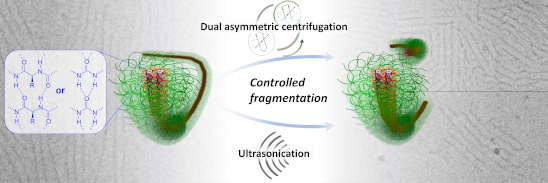
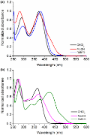
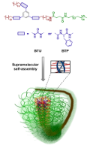
- s (blue), 10 s (magenta), 30 s (green), and 50 s (yellow) for BTU (A) and BTP (C). The injection peaks were omitted for clarity. cryoTEM images of BTU (B) and BTP (D) after 30 s of US exposure (c = 1 mg⋅mL−1). Supporting Information Supporting Information File 316: Synthesis, procedures, and



Silica gel and microwave-promoted synthesis of dihydropyrrolizines and tetrahydroindolizines from enaminones
Beilstein J. Org. Chem. 2021, 17, 2543–2552, doi:10.3762/bjoc.17.170
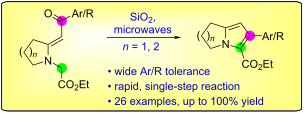
- alkylation of the anion of pyrrolidin-2-one (16) with ethyl bromoacetate to afford the known compound ethyl 2-(2-oxopyrrolidin-1-yl)acetate (17) [31][32][33] in 77% yield. Thionation of 17 with Lawesson’s reagent in toluene at 80 °C gave the thione 18 as a yellow oil (86%). Reaction of 18 with phenacyl





Exfoliated black phosphorous-mediated CuAAC chemistry for organic and macromolecular synthesis under white LED and near-IR irradiation
Beilstein J. Org. Chem. 2021, 17, 2477–2487, doi:10.3762/bjoc.17.164
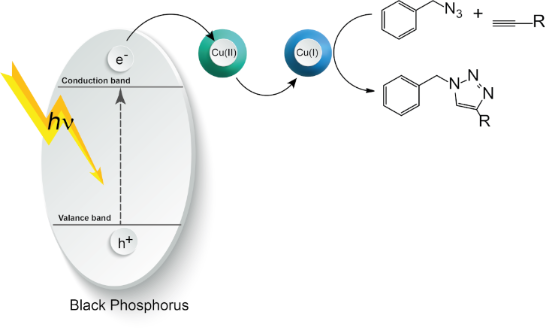
- polymer are shown in Figure 7. From the TEM images, it can be concluded that the process leads to the formation of BPNs-embedded cross-linked polymers. The darker regions circled with yellow dashed line in Figure 6a were attributed to the BPNs while the other relatively lighter regions were ascribed to
- ]. Product was obtained pale yellow oil, yield 96%. 1H NMR (500 MHz, DMSO-d6) δ 7.43–7.34 (m, 5H, -C6H5), 4.43 (s, 2H, CH2-N3). FTIR: 2108 cm−1. Synthesis of (azidomethyl)anthracene (Az-2) A literature procedure was used [45]. 9-Hydroxymethylanthracene (7.40 mmol, 1 equiv) was added to DCM (50 mL) and cooled
- the reaction was stirred at 50 °C. After 1 h, the reaction mixture was allowed to cool down, diluted with water and extracted with EtOAc. The combined organic phases were washed with brine, dried with anhydrous MgSO4, filtered, and concentrated under vacuum. Brownish yellow crystalline solid, yield


Synthesis and investigation on optical and electrochemical properties of 2,4-diaryl-9-chloro-5,6,7,8-tetrahydroacridines
Beilstein J. Org. Chem. 2021, 17, 2450–2461, doi:10.3762/bjoc.17.162

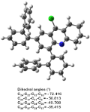
- surfaces around the phenyl groups leading to a significant decrease in their electronic densities. However, thanks to the π-donating effect of two methoxy groups for 4b and 4d, yellow-red regions are present in the phenyl groups and quinoline core. The electrochemical behavior of compound 4c was studied by






Targeting active site residues and structural anchoring positions in terpene synthases
Beilstein J. Org. Chem. 2021, 17, 2441–2449, doi:10.3762/bjoc.17.161
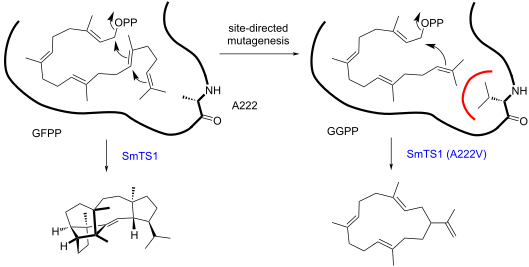
- incubation of GGPP with the SmTS1 A222V variant. Relative activities of SmTS1 and its variants towards GFPP (blue bars) and GGPP (yellow bars), and the production of compounds 8 (red bars) and 9 (grey bars). Wildtype activity towards GFPP was set to 100%. Means from triplicates, for standard deviations cf


Isolation and characterization of new phenolic siderophores with antimicrobial properties from Pseudomonas sp. UIAU-6B
Beilstein J. Org. Chem. 2021, 17, 2390–2398, doi:10.3762/bjoc.17.156
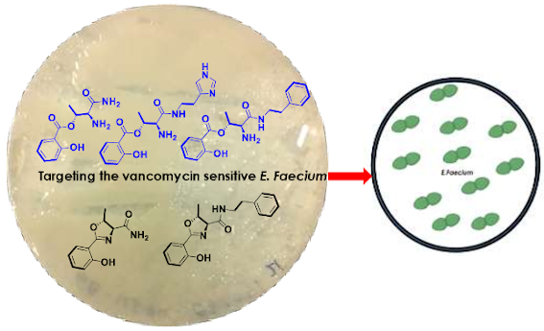
- : 3341, 2927, 1670, 1633, 1205; NMR data, see Table 1; HRESIMS (m/z): [M + H]+ calcd for C19H23N2O4, 343.1652; found, 343.1653, Δ = 2.01 ppm. Pseudomobactin A (4): yellow amorphous solid; [α]D25 −17.7 (c 0.05, MeOH); UV (MeOH) λmax, nm (log ε): 260 (3.59), 302 (4.12); IR (cm−1) νmax: 3320, 2930, 1675


Synthesis and antimicrobial activity of 1H-1,2,3-triazole and carboxylate analogues of metronidazole
Beilstein J. Org. Chem. 2021, 17, 2377–2384, doi:10.3762/bjoc.17.154
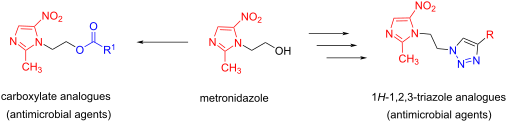
- with MeCN as a solvent. The reaction furnished the desired product metronidazole 1H-1,2,3-triazole derivative 5a as a pale yellow solid in 85% yield [19][20]. Similarly, using the same reaction conditions and procedure described for the synthesis of the 1H-1,2,3-triazole derivative of metronidazole 5a
- . Crystal structure of compound 3. Colour codes: carbon = grey, mitrogen = blue, oxygen = red, hydrogen = white. Crystal structure of 1H-1,2,3-triazole compound 5c: Colour codes: carbon = grey, nitrogen = blue, oxygen = red, fluorine = yellow, hydrogen = white. Crystal structures of compound 7b. Colour


Phenolic constituents from twigs of Aleurites fordii and their biological activities
Beilstein J. Org. Chem. 2021, 17, 2329–2339, doi:10.3762/bjoc.17.151

- -tetrahydrodehydrodiconiferyl alcohol 4-O-α-ʟ-rhamnopyranoside and was named aleuritiside C. Compound 15 was obtained as a yellow gum. The [M + Na]+ ion peak at m/z 411.1260 (calcd for 411.1267) in the HRESIMS corresponded to the molecular formula C17H24O10. The IR spectrum exhibited signals at 3321 cm−1 and 1675 cm−1


Post-functionalization of drug-loaded nanoparticles prepared by polymerization-induced self-assembly (PISA) with mitochondria targeting ligands
Beilstein J. Org. Chem. 2021, 17, 2302–2314, doi:10.3762/bjoc.17.148
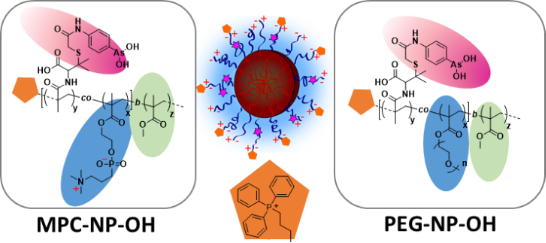
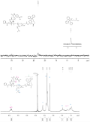
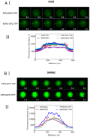
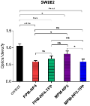
- nuclei of SW982 cells. The particles carry fluorescein (green), the mitochondria and lysosomes were stain with Mito and Lyso Tracker, respectively (red) and the nuclei was stained with Hoechst 33342 (blue). Merged images show co-localisation (yellow fluorescence). Cytotoxicity study of PPM-NP4-TPP and






(Phenylamino)pyrimidine-1,2,3-triazole derivatives as analogs of imatinib: searching for novel compounds against chronic myeloid leukemia
Beilstein J. Org. Chem. 2021, 17, 2260–2269, doi:10.3762/bjoc.17.144
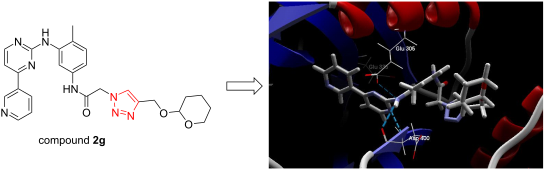
- NMR spectra. For structural confirmation of these new derivatives, we also carried out an X-ray diffraction study of compound 2b. Yellow single crystals suitable for X-ray diffraction analysis were obtained by slow evaporation of a solution of 2b in dichloromethane. Based on the X-ray crystallographic


An initiator- and catalyst-free hydrogel coating process for 3D printed medical-grade poly(ε-caprolactone)
Beilstein J. Org. Chem. 2021, 17, 2095–2101, doi:10.3762/bjoc.17.136
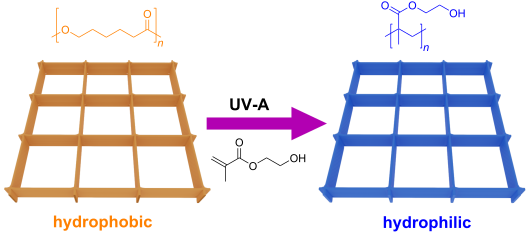
- ). The coating is clearly irregular, even where fibers are fully coated, with seemingly thicker strands of PHEMA covering the PCL scaffold (Figure 3C and Figure 3E, yellow arrow). We assume that these thicker strands may originate from UV-induced HEMA polymerization in solution which are then deposited
- shown in (D), where the yellow arrows point at PHEMA strands, in contrast to the irregularities caused by the printing (orange arrows). E and F) SEM images of scaffolds with a hatch spacing of 500 µm under the same conditions as C). The yellow arrow in (E) points at a border line of PHEMA and the red
- arrow in (F) at pure PHEMA in between fibers. G) SEM image of a scaffold with a hatch spacing of 500 µm under the same conditions as C), but freeze dried, with inset shown in (H), where the yellow arrows point at irregularities within the PHEMA coating. False colored blue for G and H indicates the


Correction: Amine–borane complex-initiated SF5Cl radical addition on alkenes and alkynes
Beilstein J. Org. Chem. 2021, 17, 1725–1726, doi:10.3762/bjoc.17.120

- shown in Scheme 1. A corrected version of Supporting Information File 1 is also part of this Correction. The new Supporting Information File 1 is the complete file with the corrections marked in yellow color. Finally, the Table of Content graphic was also corrected. The corrected version of the original


Chemical approaches to discover the full potential of peptide nucleic acids in biomedical applications
Beilstein J. Org. Chem. 2021, 17, 1641–1688, doi:10.3762/bjoc.17.116




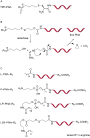

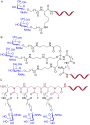
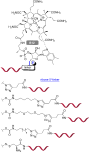


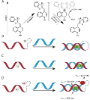


2,4-Bis(arylethynyl)-9-chloro-5,6,7,8-tetrahydroacridines: synthesis and photophysical properties
Beilstein J. Org. Chem. 2021, 17, 1629–1640, doi:10.3762/bjoc.17.115
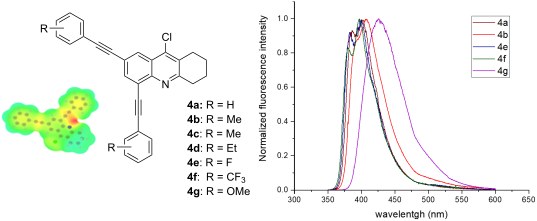
- . Due to their low donating effect, the methyl group in product 4b induce an addition of yellow regions into the external phenyl rings. However, the electron-deficient fluorine atom in derivative 4e results in a decrease of the electron density of the tetrahydroacridine core and the external phenyl
- rings. For product 4f, the high electron-deficient effect of the trifluoromethyl groups induces the appearance of blue surfaces around the tetrahydroacridine core, the ethynyl groups and the external phenyl rings, indicating a significant decrease of their electronic densities. However, a yellow-red
- cooled to room temperature and concentrated to give a slurry. The residue was diluted with dichloromethane, neutralized with aqueous NaHCO3, and washed with brine. The organic layer was dried over anhydrous K2CO3 and concentrated to afford a yellow solid. It was recrystallized from acetone to give 2 as


Copper-mediated oxidative C−H/N−H activations with alkynes by removable hydrazides
Beilstein J. Org. Chem. 2021, 17, 1591–1599, doi:10.3762/bjoc.17.113
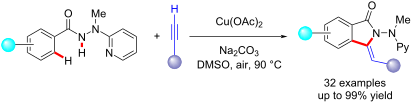
- by column chromatography on silica gel (petroleum/EtOAc 20:1, with 1% Et3N) yielded 3aa (87.4 mg, 89%, Z/E = 13:1) as a light yellow solid. mp 67–68 °C; 1H NMR (CDCl3, 600 MHz) δ 8.13 (ddd, J = 5.0; 1.9; 0.9 Hz, 1H), 7.90 (dd, J = 7.6; 1.0 Hz, 1H), 7.85–7.82 (m, 1H), 7.70 (d, J = 1.2 Hz, 1H), 7.56




Breaking paracyclophane: the unexpected formation of non-symmetric disubstituted nitro[2.2]metaparacyclophanes
Beilstein J. Org. Chem. 2021, 17, 1518–1526, doi:10.3762/bjoc.17.109
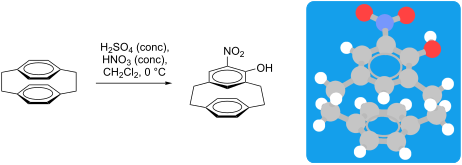
- ]paracyclophane 1 (10.00 g, 48.06 mmol, 1.0 equiv) in CH2Cl2 (0.20 M, 240 mL) at 0 °C was added a solution of HNO3 (4.00 mL, 96.2 mmol, 2.0 equiv) and H2SO4 (10.10 mL, 192.3 mmol, 4.0 equiv). The reaction mixture was stirred at 0 °C for 8 h, observing a colour change from clear to yellow. The reaction was poured
- silica-gel chromatography (100% hexane), to furnish (±)-4 as a yellow solid (6.70 g, 26.5 mmol, 55%), (±)-5 as a yellow crystalline solid (1.68 g, 6.24 mmol, 13%), and 6 as light yellow crystals (2.61 g, 9.15 mmol, 19%). 4-Nitro[2.2]paracyclophane (4) 1H NMR (500 MHz, CDCl3) δ (ppm) 7.22 (d, J = 1.2 Hz




A straightforward conversion of 1,4-quinones into polycyclic pyrazoles via [3 + 2]-cycloaddition with fluorinated nitrile imines
Beilstein J. Org. Chem. 2021, 17, 1509–1517, doi:10.3762/bjoc.17.108
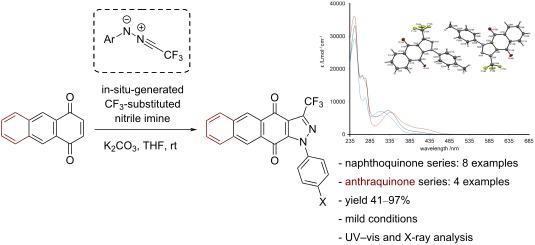
- case, the subsequent elimination step leading to an aromatized product cannot take place. All products of the type 9 are colored, typically pale yellow, both in the solid state and in solution. The UV–vis spectroscopic analysis of the naphthoquinone-derived series (compounds 9a–h) revealed less intense
- stationary phase and either petroleum ether (or hexanes)/dichloromethane or petroleum ether/AcOEt mixtures as eluent to give analytically pure products 9a–h and 10c. 1-Phenyl-3-(trifluoromethyl)-1H-benzo[f]indazole-4,9-dione (9a) Reaction time 2 d; CC (SiO2, petroleum ether/CH2Cl2 2:1); 320 mg (93%); yellow
- -dihydro-1H-indazole-4,7-dione (10c) Reaction time 2 d; CC (SiO2, petroleum ether/AcOEt 20:1); 193 mg (53%); yellow oil; 1H NMR (CDCl3, 600 MHz) δ 1.39 (s, 3H, Me), 1.52 (qbr, J = 0.5 Hz, 3H, Me), 2.05–2.07 (m, 6H, 2 Me), 2.32 (s, 3H, Me), 6.95–6.97, 7.10–7.12 (2 m, 2H each, Tol); 13C NMR (CDCl3, 151 MHz


Total synthesis of ent-pavettamine
Beilstein J. Org. Chem. 2021, 17, 1440–1446, doi:10.3762/bjoc.17.99
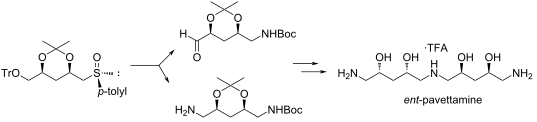
- products were light yellow solids with the same melting point of 115–116 °C and both had the same measured mass when analyzed by HRMS. The differences were that the specific optical rotation was measured to be +67.0° for compound 8 and +91.4° for compound 9 and their 1H NMR spectra differed for the signals
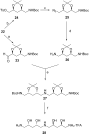
- reductive amination employing sodium triacetoxyborohydride as the reducing agent. The desired product precursor 27 was successfully recovered as a yellow oil in a yield of 95%. HRMS showed the desired mass whilst NMR spectroscopy showing a single set of signals for each half of the structure, confirmed the


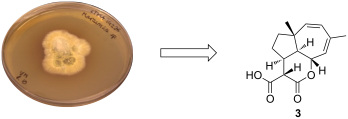
Analogs of the carotane antibiotic fulvoferruginin from submerged cultures of a Thai Marasmius sp.
Beilstein J. Org. Chem. 2021, 17, 1385–1391, doi:10.3762/bjoc.17.97
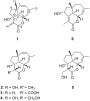
- are provided in Supporting Information File 1. Fulvoferruginin B (2): faint yellow solid; [α]D20 +14 (c 1, MeOH); UV (MeOH) λmax (log ε) 200 (3.7), 249 (3.5) nm; 1H NMR and 13C NMR data (1H 700 MHz, 13C 175 MHz) in CD3OD: see Table 1; HRMS–ESI (m/z): [M + H]+ calcd for C15H21O3+, 249.1477; found
- –ESI (m/z): [M + H]+ calcd for C15H18O4+, 263.1283; found, 263.1276. Fulvoferruginin D (4): light yellow solid; [α]D20 +19 (c 1, MeOH); UV (MeOH) λmax (log ε) 201 (4.4), 249 (4.2) nm; 1H (700 MHz) and 13C NMR (175 MHz) data in CD3OD are collected in Table 1 and copies of spectra are collected in



Design, synthesis and photophysical properties of novel star-shaped truxene-based heterocycles utilizing ring-closing metathesis, Clauson–Kaas, Van Leusen and Ullmann-type reactions as key tools
Beilstein J. Org. Chem. 2021, 17, 1374–1384, doi:10.3762/bjoc.17.96
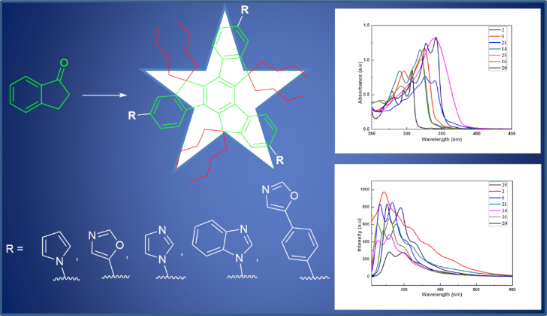
- chromatography to deliver the required compound 8 as yellow solid (4.15 g, 99%); Rf = 0.52 (10% EtOAc/petroleum ether); 1H NMR (300 MHz, CDCl3) δ 8.53 (d, J = 8.7 Hz, 3H), 8.37 (d, J = 9 Hz, 6H), 2.99–2.90 (m, 6H), 2.21–2.23 (m, 6H), 0.99–0.82 (m, 12H), 0.58-0.52 (m, 30H); 13C NMR (75 MHz, CDCl3) δ 154.86
- with CH2Cl2, acetone, and finally with ethyl acetate to give 11 (3.13 g, 92%) as a yellow solid. Synthesis of 2,7,12-tribromo-5,5,10,10,15,15-hexabutyl-10,15-dihydro-5H-diindeno[1,2-a:1',2'-c]fluorene (5): Compound 11 (1.5 g, 2.59 mmol), dimethyl sulfoxide (20 mL), and potassium tert-butoxide (2.61 g
- , 59%) as a yellow solid; Rf = 0.60 (8% MeOH/petroleum ether); 1H NMR (400 MHz, CDCl3) δ 8.39 (d, J = 8 Hz, 3H), 7.96 (s, 3H), 7.40 (d, J = 12 Hz, 9H), 7.22 (s, 3H), 2.94–2.88 (m, 6H), 2.10–2.05 (m, 6H), 0.92–0.83 (m, 12H), 0.43–0.40 (t, J = 8 Hz, 30H); 13C NMR (101 MHz, CDCl3) δ 155.71, 145.45, 139.12


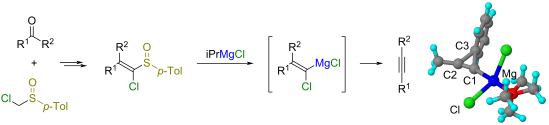
Fritsch–Buttenberg–Wiechell rearrangement of magnesium alkylidene carbenoids leading to the formation of alkynes
Beilstein J. Org. Chem. 2021, 17, 1352–1359, doi:10.3762/bjoc.17.94
- water (50 mL), dried over Na2SO4, and concentrated under reduced pressure. The residue was purified by column chromatography on silica gel (hexane/EtOAc 1:1) to give the alcohol [6.90 g, 16.7 mmol, 83%, Rf = 0.45 (hexane/EtOAc 1:1)] as a single diastereomer; yellow solid; mp 102.5–104.0 °C; IR (ATR





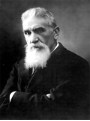
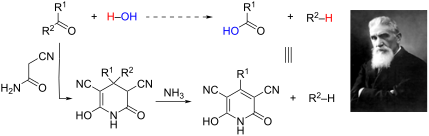
Icilio Guareschi and his amazing “1897 reaction”
Beilstein J. Org. Chem. 2021, 17, 1335–1351, doi:10.3762/bjoc.17.93
- the recognition of thymol (3) [5]. The nature of the color depends on the number of phenolic hydroxy groups and the substituents. With thymol (3) and charvacrol, the color is red-violet and with resorcinol blue-violet, in both cases turning to yellow upon acidification. Compared to other color