


Search results
Search for "MeSO3H" in Full Text gives 11 result(s) in Beilstein Journal of Organic Chemistry.
Tandem diazotization/cyclization approach for the synthesis of a fused 1,2,3-triazinone-furazan/furoxan heterocyclic system
- Yuri A. Sidunets,
- Valeriya G. Melekhina and
- Leonid L. Fershtat
Beilstein J. Org. Chem. 2024, 20, 2342–2348, doi:10.3762/bjoc.20.200
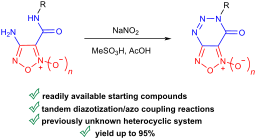
- obtained using NaNO2 in an AcOH + MeSO3H [1:1] solution (Table 1, entry 7). Organic solvents (CH2Cl2, MeCN) were not applied due to a known rapid decomposition of the generated (1,2,5-oxadiazolyl)diazonium salts [42]. The optimized conditions were applied for the preparation of [1,2,5]oxadiazolo[3,4-d

Graphical Abstract

Figure 1: Examples of bioactive compounds containing the 1,2,3-triazin-4-one core.

Scheme 1: Tandem diazotization/azo coupling reactions of (1,2,5-oxadiazolyl)carboxamides containing an amino ...

Scheme 2: Synthesis of target furoxanotriazinones 1a–h.

Scheme 3: The synthesis of furazanotriazinones 7a–h.

Figure 2: The X-ray structure of compound 1b (CCDC 2363621) and 7h (CCDC 2363622).

Scheme 4: Control experiment with Na15NO2.

Figure 3: NO release data.
Green and sustainable approaches for the Friedel–Crafts reaction between aldehydes and indoles
- Periklis X. Kolagkis,
- Eirini M. Galathri and
- Christoforos G. Kokotos
Beilstein J. Org. Chem. 2024, 20, 379–426, doi:10.3762/bjoc.20.36
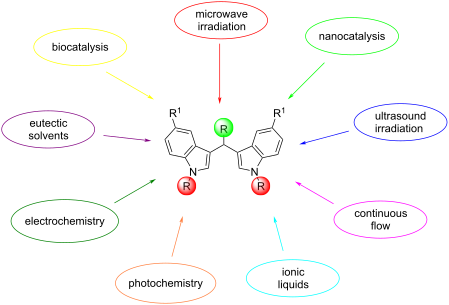
- , such as camphorsulfonic acid (CSA) [44], diammonium hydrogen phosphate (DAHP) [45], Amberlyst 15 [46], P2O5/MeSO3H [47], p-sulfonic acid calix[4]arene [48], xanthan sulfuric acid (XSA) [49], H5PW10V2O40/pyridino-santa barbara amorphous-15 (SBA-15) [50], TiO2-SO42− [51][52], humic acid [53] or Lewis

Graphical Abstract

Scheme 1: Examples of BIMs used for their medicinal properties.

Scheme 2: Mechanisms for the synthesis of BIMs using protic or Lewis acids as catalysts.

Scheme 3: Synthesis of bis(indolyl)methanes using DBDMH.

Scheme 4: Competition experiments and synthesis of bis(indolyl)methanes using DBDMH.

Scheme 5: Proposed mechanism for formation of BIM of using DBDMH.

Scheme 6: Synthesis of bis(indolyl)methanes using I2.

Scheme 7: General reaction mechanism upon halogen bonding.

Scheme 8: Synthesis of bis(indolyl)methanes using I2, introduced by Ji.

Scheme 9: Synthesis of bis(indolyl)methanes using Br2 in CH3CN.

Scheme 10: Βidentate halogen-bond donors.

Scheme 11: Synthesis of bis(indolyl)methanes using bidentate halogen-bond donor 26.

Scheme 12: Proposed reaction mechanism.

Scheme 13: Synthesis of bis(indolyl)methanes using iodoalkyne as catalyst.

Scheme 14: Proposed reaction mechanism.

Scheme 15: Optimized reaction conditions used by Ramshini.

Scheme 16: Activation of the carbonyl group by HPA/TPI-Fe3O4.

Scheme 17: Synthesis of BIMs in the presence of nanoAg-Pt/SiO2-doped silicate.

Scheme 18: Mechanism of action proposed by Khalafi-Nezhad et al.

Scheme 19: Activation of the carbonyl group by the Cu–isatin Schiff base complex.

Scheme 20: Optimum reaction conditions published by Jain.

Scheme 21: Organocatalytic protocol utilizing nanoparticles introduced by Bankar.
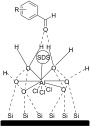
Scheme 22: Activation of the carbonyl group by the AlCl3·6H2O-SDS-SiO2 complex.

Scheme 23: Optimal reaction conditions for the aforementioned nano-Fe3O4 based catalysts.

Scheme 24: Nanocatalytic protocol proposed by Kaur et al.

Scheme 25: Microwave approach introduced by Yuan.

Scheme 26: Microwave approach introduced by Zahran et al.

Scheme 27: Microwave irradiation protocol introduced by Bindu.

Scheme 28: Silica-supported microwave irradiation protocol.

Scheme 29: Proposed mechanism for formation of BIM by Nongkhlaw.

Scheme 30: Microwave-assisted synthesis of BIMs catalyzed by succinic acid.

Scheme 31: Proposed mechanism of action of MMO-4.

Scheme 32: Catalytic approach introduced by Muhammadpoor-Baltork et al.

Scheme 33: Reaction conditions used by Xiao-Ming.

Scheme 34: Ultrasonic irradiation-based protocol published by Saeednia.

Scheme 35: Pyruvic acid-mediated synthesis of BIMs proposed by Thopate.

Scheme 36: Synthesis of BIMs using [bmim]BF4 or [bmim]PF6 ionic liquids.

Scheme 37: Synthesis of BIMs utilizing In(OTf)3 in octylmethylimidazolium hexafluorophosphate as ionic liquid.

Scheme 38: FeCl3·6H2O-catalyzed synthesis of BIMs with use of ionic liquid.

Scheme 39: Synthesis of BIMs utilizing the [hmim]HSO4/EtOH catalytic system.

Scheme 40: Synthesis of BIMs utilizing acidic ionic liquid immobilized on silica gel (ILIS-SO2Cl).

Scheme 41: The [bmim][MeSO4]-catalyzed reaction of indole with various aldehydes.

Scheme 42: The role of [bmim][MeSO4] in catalyzing the reaction of indole with aldehydes.

Scheme 43: Synthesis of BIMs utilizing FeCl3-based ionic liquid ([BTBAC]Cl-FeCl3) as catalyst.

Scheme 44: Synthesis of BIMs using [Msim]Cl at room temperature.

Scheme 45: [Et3NH][H2PO4]-catalyzed synthesis of bis(indolyl)methanes.

Scheme 46: PILs-catalyzed synthesis of bis(indolyl)methanes.

Scheme 47: FSILs-mediated synthesis of bis(indolyl)methanes.

Scheme 48: Possible “release and catch” catalytic process.

Scheme 49: Synthesis of bis(indolyl)methanes by [DABCO-H][HSO4].

Scheme 50: Synthesis of bis(indolyl)methanes by [(THA)(SO4)].

Scheme 51: Synthesis of BBSI-Cl and BBSI-HSO4.

Scheme 52: Synthesis of BIMs in the presence of BBSI-Cl and BBSI-HSO4.

Scheme 53: Chemoselectivity of the present method.

Scheme 54: Synthesis of BIMs catalyzed by chitosan-supported ionic liquid.

Scheme 55: Proposed mechanism of action of CSIL.

Scheme 56: Optimization of the reaction in DESs.

Scheme 57: Synthesis of BIMs using ChCl/SnCl2 as DES.

Scheme 58: Synthesis of BIMs derivatives in presence of DES.

Scheme 59: BIMs synthesis in choline chloride/urea (CC/U).

Scheme 60: Flow chemistry-based synthesis of BIMs by Ley.

Scheme 61: Flow chemistry-based synthesis of BIMs proposed by Nam et al.

Scheme 62: Amino-catalyzed reaction of indole with propionaldehyde.

Scheme 63: Aminocatalytic synthesis of BIMs.

Scheme 64: Proposed mechanism for the aminocatalytic synthesis of BIMs.

Scheme 65: Enzymatic reaction of indole with aldehydes.

Scheme 66: Proposed mechanism for the synthesis of BIMs catalyzed by TLIM.

Scheme 67: Proposed reaction mechanism by Badsara.

Scheme 68: Mechanism proposed by D’Auria.

Scheme 69: Photoinduced thiourea catalysis.

Scheme 70: Proposed mechanism of photoacid activation.

Scheme 71: Proposed mechanism of action for CF3SO2Na.

Scheme 72: Proposed mechanism for the synthesis of BIMs by Mandawad.

Scheme 73: Proposed mechanism for the (a) acid generation and (b) synthesis of BIMs.

Scheme 74: a) Reaction conditions employed by Khaksar and b) activation of the carbonyl group by HFIP.

Scheme 75: Activation of the carbonyl group by the PPy@CH2Br through the formation of a halogen bond.

Scheme 76: Reaction conditions utilized by Mhaldar et al.

Scheme 77: a) Reaction conditions employed by López and b) activation of the carbonyl group by thiourea.

Scheme 78: Infrared irradiation approach introduced by Luna-Mora and his research group.

Scheme 79: Synthesis of BIMs with the use of the Fe–Zn BMOF.
Catalyzed and uncatalyzed procedures for the syntheses of isomeric covalent multi-indolyl hetero non-metallides: an account
- Ranadeep Talukdar
Beilstein J. Org. Chem. 2021, 17, 2102–2122, doi:10.3762/bjoc.17.137

- , which possess AhR affinity [93]. Janosik presented a synthesis of such selenopyrans 132 via the bis(indol-2-yl)selanes 131 [73]. Treating these compounds with orthoformate esters in the presence of the Brønsted acid MeSO3H led to the target selenopyrans (Scheme 17b). The methylated analogs of 132

Graphical Abstract

Scheme 1: Synthesis of 2,2’-bis(indole)borinic ester 3.

Scheme 2: Synthesis of 2,2’-bisindole NHC·boranes by an SEAr mechanism.

Scheme 3: Syntheses of indolyl amines through Buchwald–Hartwig cross coupling.

Scheme 4: Synthesis of 3,3’-bis(indolyl) ethers.

Scheme 5: C–H silylation of indoles.

Scheme 6: n-BuLi-mediated syntheses of bis(indol-3-yl)silanes.
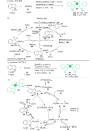
Scheme 7: Acid-catalyzed syntheses of bis(indol-3-yl)silanes and mechanisms.

Scheme 8: B(C6F5)3 and Al(C6F5)3-catalyzed syntheses of bis(indol-3-yl)silanes reported by Han.

Scheme 9: Base-mediated syntheses of bis and tris(indol-2-yl)phosphines.

Scheme 10: Synthesis of bis(indol-2-yl)sulfides using SL2-type reagents.

Scheme 11: Synthesis of 2,3’- and 2,2’-bis(indolyl)sulfides using disulfides as substrates.

Scheme 12: Synthesis of diindol-2-ylsulfide (84) from 2-iodoindole (92) and thiourea.

Scheme 13: Synthesis of bis(indol-3-yl)sulfides using N-silylated 3-bromoindole 93.

Scheme 14: Fischer indole synthesis of bis(indol-3-yl)sulfides using thio diketones.
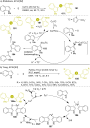
Scheme 15: Oxidative synthesis of bis(indol-3-yl)sulfides using indoles and elemental sulfur.
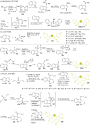
Scheme 16: Synthesis of bis(indol-3-yl)sulfides using sulfoxides as sulfur source.

Scheme 17: Syntheses of bis(indol-2-yl)selanes.
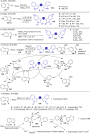
Scheme 18: Syntheses of bis(indol-3-yl)selanes.

Scheme 19: Synthesis of bis(indol-2-yl)tellane 147.

Scheme 20: Synthesis of tris(indolyl)borane 154.

Scheme 21: Synthesis of bis(indol-4-yl)amines 159.

Scheme 22: Synthesis of bis(indol-5-yl)amines.

Scheme 23: Synthesis of 6,5’/6,6’-bis(indolyl)amines.

Scheme 24: Synthesis of potent HIV-inhibitors 6,6’-bis(indolyl) ethers.

Scheme 25: Synthesis of bis(indol-7-yl) ether.

Scheme 26: Synthesis of di(indol-5-yl)sulfide (183).

Scheme 27: Syntheses of 2,2’-diformyl-7,7’-bis(indolyl)selenides.
Recent advances in the syntheses of anthracene derivatives
- Giovanni S. Baviera and
- Paulo M. Donate
Beilstein J. Org. Chem. 2021, 17, 2028–2050, doi:10.3762/bjoc.17.131
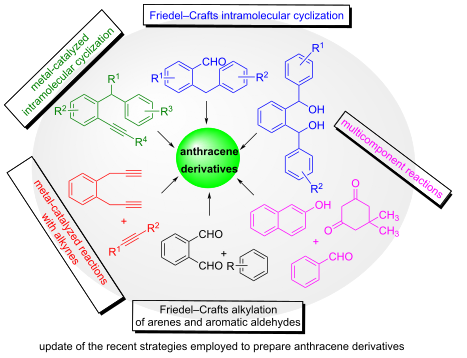
- 138. Then, an oxidative cyclization of 138 in the presence of FeCl3 afforded dibenzo[a,c]anthracenes 139a and 139b in moderate yields (58–68%). On the other hand, they obtained dibenzo[a,c]anthracenes 139c–e in low to moderate yields (15–54%) when they used DDQ/MeSO3H instead of FeCl3 [66]. In a study
- substituted anthraquinone derivatives 191 from phthalic anhydride (164) and several arenes 190 by using a combined system of AlCl3 and MeSO3H (Scheme 44) [80]. Arenes 190 containing electron-donating groups yielded the anthraquinone derivatives 191a–c in very good yields (80–93%). On the other hand, reactions
- multicomponent reactions employing 2-hydroxy-1,4-naphthoquinone (186), β-naphthol (181), and aromatic aldehydes. Synthesis of substituted anthraquinones catalyzed by an AlCl3/MeSO3H system. Palladium(II)-catalyzed/visible light-mediated synthesis of anthraquinones. [4 + 2] Anionic annulation reaction for the

Graphical Abstract

Figure 1: Examples of anthracene derivatives and their applications.

Scheme 1: Rhodium-catalyzed oxidative coupling reactions of arylboronic acids with internal alkynes.
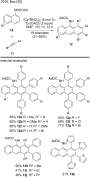
Scheme 2: Rhodium-catalyzed oxidative benzannulation reactions of 1-adamantoyl-1-naphthylamines with internal...
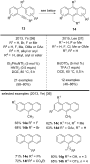
Scheme 3: Gold/bismuth-catalyzed cyclization of o-alkynyldiarylmethanes.
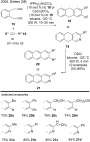
Scheme 4: [2 + 2 + 2] Cyclotrimerization reactions with alkynes/nitriles in the presence of nickel and cobalt...

Scheme 5: Cobalt-catalyzed [2 + 2 + 2] cyclotrimerization reactions with bis(trimethylsilyl)acetylene (23).
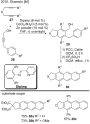
Scheme 6: [2 + 2 + 2] Alkyne-cyclotrimerization reactions catalyzed by a CoCl2·6H2O/Zn reagent.
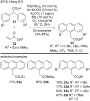
Scheme 7: Pd(II)-catalyzed sp3 C–H alkenylation of diphenyl carboxylic acids with acrylates.

Scheme 8: Pd(II)-catalyzed sp3 C–H arylation with o-tolualdehydes and aryl iodides.
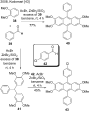
Scheme 9: Alkylation of arenes with aromatic aldehydes in the presence of acetyl bromide and ZnBr2/SiO2.
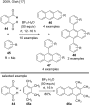
Scheme 10: BF3·H2O-catalyzed hydroxyalkylation of arenes with aromatic dialdehyde 44.
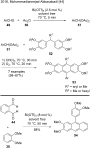
Scheme 11: Bi(OTf)3-promoted Friedel–Crafts alkylation of triarylmethanes and aromatic acylals and of arenes a...

Scheme 12: Reduction of anthraquinones by using Zn/pyridine or Zn/NaOH reductive methods.
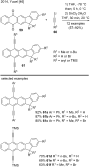
Scheme 13: Two-step route to novel substituted Indenoanthracenes.
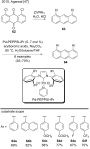
Scheme 14: Synthesis of 1,8-diarylanthracenes through Suzuki–Miyaura coupling reaction in the presence of Pd-P...

Scheme 15: Synthesis of five new substituted anthracenes by using LAH as reducing agent.

Scheme 16: One-pot procedure to synthesize substituted 9,10-dicyanoanthracenes.

Scheme 17: Reduction of bromoanthraquinones with NaBH4 in alkaline medium.

Scheme 18: In(III)-catalyzed reductive-dehydration intramolecular cycloaromatization of 2-benzylic aromatic al...
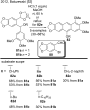
Scheme 19: Acid-catalyzed cyclization of new O-protected ortho-acetal diarylmethanols.
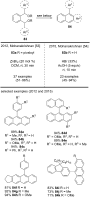
Scheme 20: Lewis acid-mediated regioselective cyclization of asymmetric diarylmethine dipivalates and diarylme...
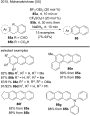
Scheme 21: BF3·OEt2/CF3SO3H-mediated cyclodehydration reactions of 2-(arylmethyl)benzaldehydes and 2-(arylmeth...

Scheme 22: Synthesis of 2,3,6,7-anthracenetetracarbonitrile (90) by double Wittig reaction followed by deprote...
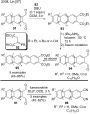
Scheme 23: Homo-elongation protocol for the synthesis of substituted acene diesters/dinitriles.
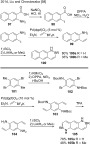
Scheme 24: Synthesis of two new parental BN anthracenes via borylative cyclization.
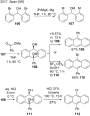
Scheme 25: Synthesis of substituted anthracenes from a bifunctional organomagnesium alkoxide.
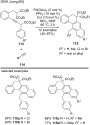
Scheme 26: Palladium-catalyzed tandem C–H activation/bis-cyclization of propargylic carbonates.
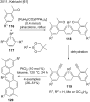
Scheme 27: Ruthenium-catalyzed C–H arylation of acetophenone derivatives with arenediboronates.

Scheme 28: Pd-catalyzed intramolecular cyclization of (Z,Z)-p-styrylstilbene derivatives.

Scheme 29: AuCl-catalyzed double cyclization of diiodoethynylterphenyl compounds.
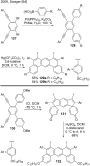
Scheme 30: Iodonium-induced electrophilic cyclization of terphenyl derivatives.

Scheme 31: Oxidative photocyclization of 1,3-distyrylbenzene derivatives.
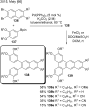
Scheme 32: Oxidative cyclization of 2,3-diphenylnaphthalenes.
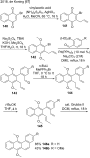
Scheme 33: Suzuki-Miyaura/isomerization/ring closing metathesis strategy to synthesize benz[a]anthracenes.

Scheme 34: Green synthesis of oxa-aza-benzo[a]anthracene and oxa-aza-phenanthrene derivatives.
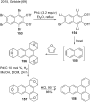
Scheme 35: Triple benzannulation of substituted naphtalene via a 1,3,6-naphthotriyne synthetic equivalent.
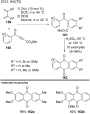
Scheme 36: Zinc iodide-catalyzed Diels–Alder reactions with 1,3-dienes and aroyl propiolates followed by intra...
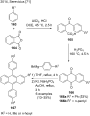
Scheme 37: H3PO4-promoted intramolecular cyclization of substituted benzoic acids.
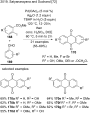
Scheme 38: Palladium-catalyzed intermolecular direct acylation of aromatic aldehydes and o-iodoesters.

Scheme 39: Cycloaddition/oxidative aromatization of quinone and β-enamino esters.
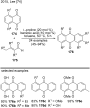
Scheme 40: ʟ-Proline-catalyzed [4 + 2] cycloaddition reaction of naphthoquinones and α,β-unsaturated aldehydes....

Scheme 41: Iridium-catalyzed [2 + 2 + 2] cycloaddition of a 1,2-bis(propiolyl)benzene derivative with alkynes.
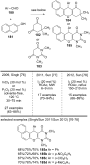
Scheme 42: Synthesis of several anthraquinone derivatives by using InCl3 and molecular iodine.

Scheme 43: Indium-catalyzed multicomponent reactions employing 2-hydroxy-1,4-naphthoquinone (186), β-naphthol (...

Scheme 44: Synthesis of substituted anthraquinones catalyzed by an AlCl3/MeSO3H system.
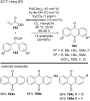
Scheme 45: Palladium(II)-catalyzed/visible light-mediated synthesis of anthraquinones.
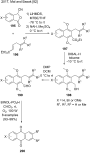
Scheme 46: [4 + 2] Anionic annulation reaction for the synthesis of substituted anthraquinones.
Preparation of 2-phospholene oxides by the isomerization of 3-phospholene oxides
- Péter Bagi,
- Réka Herbay,
- Nikolett Péczka,
- Zoltán Mucsi,
- István Timári and
- György Keglevich
Beilstein J. Org. Chem. 2020, 16, 818–832, doi:10.3762/bjoc.16.75
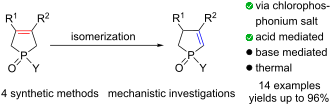
- to decomposition caused by the vigorous reaction conditions. Based on this promising preliminary result with MeSO3H, the effect of both the reaction temperature and the reaction time was investigated. It was found that complete isomerization to the 2-phospholene oxide derivative 4a could not be
- reached with MeSO3H at 25 °C even after prolonged reaction times. Setting the reaction temperature to 50 °C and the reaction time to 60 h seemed to be the reasonable choice, as nearly the same isomeric composition (96:4) could be achieved as at 160 °C, but with significantly increased yield (up to 81
- conditions via the formation of chlorophospholenium salts (Scheme 1, route I), or using MeSO3H or Cs2CO3 (Scheme 1, routes II or III). These results were compared with those obtained for the 1-phenyl-3-methyl-3-phospholene oxide (1a). Scheme 1 shows that, considering all reaction pathways, the highest extent

Graphical Abstract

Figure 1: Examples for catalytically or biologically active molecules containing five-membered P-heterocyclic...

Scheme 1: Comparison of the isomerization of 1-phenyl-3-phospholene oxide (5), 1-phenyl-3-methyl-3-phospholen...
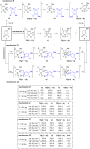
Scheme 2: Three possible reaction mechanisms considered in the theoretical studies for the isomerization of 3...

Figure 2: The full time experimental kinetic curves (a); The initial part of the kinetic curves of 1c–f and 1h...

Scheme 3: Computed reaction mechanism of the 3-phospholene oxide (1) 2-phospholene oxide (4) isomerization un...

Scheme 4: Computed reaction mechanism of the 3-phospholene oxide (1) 2-phospholene oxide (4) isomerization un...
N-(1-Phenylethyl)aziridine-2-carboxylate esters in the synthesis of biologically relevant compounds
- Iwona E. Głowacka,
- Aleksandra Trocha,
- Andrzej E. Wróblewski and
- Dorota G. Piotrowska
Beilstein J. Org. Chem. 2019, 15, 1722–1757, doi:10.3762/bjoc.15.168


Graphical Abstract

Figure 1: Examples of three-carbon chirons.

Figure 2: Structures of derivatives of N-(1-phenylethyl)aziridine-2-carboxylic acid 5–8.

Figure 3: Synthetic equivalency of aziridine aldehydes 6.

Scheme 1: Synthesis of N-(1-phenylethyl)aziridine-2-carboxylates 5. Reagents and conditions: a) TEA, toluene,...

Scheme 2: Absolute configuration at C2 in (2S,1'S)-5a. Reagents and conditions: a) 20% HClO4, 80 °C, 30 h the...

Scheme 3: Major synthetic strategies for a 2-ketoaziridine scaffold [R* = (R)- or (S)-1-phenylethyl; R′ = Alk...

Scheme 4: Synthesis of cyanide (2S,1'S)-13. Reagents and conditions: a) NH3, EtOH/H2O, rt, 72 h; b) Ph3P, CCl4...

Scheme 5: Synthesis of key intermediates (R)-16 and (R)-17 for (R,R)-formoterol (14) and (R)-tamsulosin (15)....

Scheme 6: Synthesis of mitotic kinesin inhibitors (2R/S,1'R)-23. Reagents and conditions: a) H2, Pd(OH)2, EtO...

Scheme 7: Synthesis of (R)-mexiletine ((R)-24). Reagents and conditions: a) TsCl, TEA, DMAP, CH2Cl2, rt, 1 h;...

Scheme 8: Synthesis of (−)-cathinone ((S)-27). Reagents and conditions: a) PhMgBr, ether, 0 °C; b) H2, 10% Pd...

Scheme 9: Synthesis of N-Boc-norpseudoephedrine ((1S,2S)-(+)-29) and N-Boc-norephedrine ((1R,2S)-29). Reagent...

Scheme 10: Synthesis of (−)-ephedrine ((1R,2S)-31). Reagents and conditions: a) TfOMe, MeCN then NaBH3CN, rt; ...

Scheme 11: Synthesis of xestoaminol C ((2S,3R)-35), 3-epi-xestoaminol C ((2S,3S)-35) and N-Boc-spisulosine ((2S...

Scheme 12: Synthesis of ʟ-tryptophanol ((S)-41). Reagents and conditions: a) CDI, MeCN, rt, 1 h then TMSI, MeC...

Scheme 13: Synthesis of ʟ-homophenylalaninol ((S)-42). Reagents and conditions: a) NaH, THF, 0 °C to −78 °C, 1...

Scheme 14: Synthesis of ᴅ-homo(4-octylphenyl)alaninol ((R)-47) and a sphingolipid analogue (R)-48. Reagents an...

Scheme 15: Synthesis of florfenicol ((1R,2S)-49). Reagents and conditions: a) (S)-1-phenylethylamine, TEA, MeO...

Scheme 16: Synthesis of natural tyroscherin ((2S,3R,6E,8R,10R)-55). Reagents and conditions: a) I(CH2)3OTIPS, t...

Scheme 17: Syntheses of (−)-hygrine (S)-61, (−)-hygroline (2S,2'S)-62 and (−)-pseudohygroline (2S,2'R)-62. Rea...

Scheme 18: Synthesis of pyrrolidine (3S,3'R)-68, a fragment of the fluoroquinolone antibiotic PF-00951966. Rea...

Scheme 19: Synthesis of sphingolipid analogues (R)-76. Reagents and conditions: a) BnBr, Mg, THF, reflux, 6 h;...

Scheme 20: Synthesis of ᴅ-threo-PDMP (1R,2R)-81. Reagents and conditions: a) TMSCl, NaI, MeCN, rt, 1 h 50 min,...

Scheme 21: Synthesis of the sphingolipid analogue SG-14 (2S,3S)-84. Reagents and conditions: a) LiAlH4, THF, 0...

Scheme 22: Synthesis of the sphingolipid analogue SG-12 (2S,3R)-88. Reagents and conditions: a) 1-(bromomethyl...

Scheme 23: Synthesis of sphingosine-1-phosphate analogues DS-SG-44 and DS-SG-45 (2S,3R)-89a and (2S,3R)-89a. R...

Scheme 24: Synthesis of N-Boc-safingol ((2S,3S)-95) and N-Boc-ᴅ-erythro-sphinganine ((2S,3R)-95). Reagents and...

Scheme 25: Synthesis of ceramide analogues (2S,3R)-96. Reagents and conditions: a) NaBH4, ZnCl2, MeOH, −78 °C,...

Scheme 26: Synthesis of orthogonally protected serinols, (S)-101 and (R)-102. Reagents and conditions: a) BnBr...

Scheme 27: Synthesis of N-acetyl-3-phenylserinol ((1R,2R)-105). Reagents and conditions: a) AcOH, CH2Cl2, refl...

Scheme 28: Synthesis of (S)-linezolid (S)-107. Reagents and conditions: a) LiAlH4, THF, 0 °C to reflux; b) Boc2...

Scheme 29: Synthesis of (2S,3S,4R)-2-aminooctadecane-1,3,4-triol (ᴅ-ribo-phytosphingosine) (2S,3S,4R)-110. Rea...

Scheme 30: Syntheses of ᴅ-phenylalanine (R)-116. Reagents and conditions: a) AcOH, CH2Cl2, reflux, 4 h; b) MsC...

Scheme 31: Synthesis of N-Boc-ᴅ-3,3-diphenylalanine ((R)-122). Reagents and conditions: a) PhMgBr, THF, −78 °C...

Scheme 32: Synthesis of ethyl N,N’-di-Boc-ʟ-2,3-diaminopropanoate ((S)-125). Reagents and conditions: a) NaN3,...

Scheme 33: Synthesis of the bicyclic amino acid (S)-(+)-127. Reagents and conditions: a) BF3·OEt2, THF, 60 °C,...

Scheme 34: Synthesis of lacosamide, (R)-2-acetamido-N-benzyl-3-methoxypropanamide (R)-130. Reagents and condit...

Scheme 35: Synthesis of N-Boc-norfuranomycin ((2S,2'R)-133). Reagents and conditions: a) H2C=CHCH2I, NaH, THF,...

Scheme 36: Synthesis of MeBmt (2S,3R,4R,6E)-139. Reagents and conditions: a) diisopropyl (S,S)-tartrate (E)-cr...

Scheme 37: Synthesis of (+)-polyoxamic acid (2S,3S,4S)-144. Reagents and conditions: a) AD-mix-α, MeSO2NH2, t-...

Scheme 38: Synthesis of the protected 3-hydroxy-ʟ-glutamic acid (2S,3R)-148. Reagents and conditions: a) LiHMD...

Scheme 39: Synthesis of (+)-isoserine (R)-152. Reagents and conditions: a) AcCl, MeCN, rt, 0.5 h then Na2CO3, ...

Scheme 40: Synthesis of (3R,4S)-N3-Boc-3,4-diaminopentanoic acid (3R,4S)-155. Reagents and conditions: a) Ph3P...

Scheme 41: Synthesis of methyl (2S,3S,4S)-4-(dimethylamino)-2,3-dihydroxy-5-methoxypentanoate (2S,3S,4S)-159. ...

Scheme 42: Syntheses of methyl (3S,4S) 4,5-di-N-Boc-amino-3-hydroxypentanoate ((3S,4S)-164), methyl (3S,4S)-4-N...

Scheme 43: Syntheses of (3R,5S)-5-(aminomethyl)-3-(4-methoxyphenyl)dihydrofuran-2(3H)-one ((3R,5S)-168). Reage...

Scheme 44: Syntheses of a series of imidazolin-2-one dipeptides 175–177 (for R' and R'' see text). Reagents an...

Scheme 45: Syntheses of (2S,3S)-N-Boc-3-hydroxy-2-hydroxymethylpyrrolidine ((2S,3S)-179). Reagents and conditi...

Scheme 46: Syntheses of enantiomers of 1,4-dideoxy-1,4-imino-ʟ- and -ᴅ-lyxitols (2S,3R,4S)-182 and (2R,3S,4R)-...

Scheme 47: Synthesis of 1,4-dideoxy-1,4-imino-ʟ-ribitol (2S,3S,4R)-182. Reagents and conditions: a) AcOH, CH2Cl...

Scheme 48: Syntheses of 1,4-dideoxy-1,4-imino-ᴅ-arabinitol (2R,3R,4R)-182 and 1,4-dideoxy-1,4-imino-ᴅ-xylitol ...

Scheme 49: Syntheses of natural 2,5-imino-2,5,6-trideoxy-ʟ-gulo-heptitol ((2S,3R,4R,5R)-184) and its C4 epimer...

Scheme 50: Syntheses of (−)-dihydropinidine ((2S,6R)-187a) (R = C3H7) and (2S,6R)-isosolenopsins (2S,6R)-187b ...

Scheme 51: Syntheses of (+)-deoxocassine ((2S,3S,6R)-190a, R = C12H25) and (+)-spectaline ((2S,3S,6R)-190b, R ...

Scheme 52: Synthesis of (−)-microgrewiapine A ((2S,3R,6S)-194a) and (+)-microcosamine A ((2S,3R,6S)-194b). Rea...

Scheme 53: Syntheses of ʟ-1-deoxynojirimycin ((2S,3S,4S,5R)-200), ʟ-1-deoxymannojirimycin ((2S,3S,4S,5S)-200) ...

Scheme 54: Syntheses of 1-deoxy-ᴅ-galacto-homonojirimycin (2R,3S,4R,5S)-211. Reagents and conditions: a) MeONH...

Scheme 55: Syntheses of 7a-epi-hyacinthacine A1 (1S,2R,3R,7aS)-220. Reagents and conditions: a) TfOTBDMS, 2,6-...

Scheme 56: Syntheses of 8-deoxyhyacinthacine A1 ((1S,2R,3R,7aR)-221). Reagents and conditions: a) H2, Pd/C, PT...

Scheme 57: Syntheses of (+)-lentiginosine ((1S,2S,8aS)-227). Reagents and conditions: a) (EtO)2P(O)CH2COOEt, L...

Scheme 58: Syntheses of 8-epi-swainsonine (1S,2R,8S,8aR)-231. Reagents and conditions: a) Ph3P=CHCOOMe, MeOH, ...

Scheme 59: Synthesis of a protected vinylpiperidine (2S,3R)-237, a key intermediate in the synthesis of (−)-sw...

Scheme 60: Synthesis of a modified carbapenem 245. Reagents and conditions: a) AcOEt, LiHMDS, THF, −78 °C, 1.5...
Studies towards the synthesis of hyperireflexolide A
- G. Hari Mangeswara Rao
Beilstein J. Org. Chem. 2018, 14, 2106–2111, doi:10.3762/bjoc.14.185

- reported from our laboratory the synthesis of γ-lactone-fused cyclopentane derivative 5 from the respective Diels–Alder adduct in 5 steps with an overall yield of 29% [32]. Hydrolysis of dimethyl ketal 5 with MeSO3H in 1,2-DCE furnished γ-lactone-fused cyclopentanone 6 in 97% yield. Cyclopentanone 6 exists

Graphical Abstract

Figure 1: Hyperireflexolide A.

Scheme 1: Retrosynthetic strategy.

Scheme 2: Hydrolysis of dimethyl ketal 5.

Scheme 3: Alkylation of γ-lactone-fused β-ketoester 6.

Scheme 4: Synthesis of α,β-unsaturated ketone 11.
Solvent-free and room temperature synthesis of 3-arylquinolines from different anilines and styrene oxide in the presence of Al2O3/MeSO3H
- Hashem Sharghi,
- Mahdi Aberi,
- Mohsen Khataminejad and
- Pezhman Shiri
Beilstein J. Org. Chem. 2017, 13, 1977–1981, doi:10.3762/bjoc.13.193
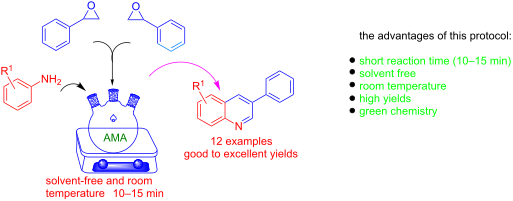
- been developed in the presence of Al2O3/MeSO3H via one-pot reaction of anilines and styrene oxide. This methodology provides very rapid access to 3-arylquinolines in good to excellent yields under solvent-free conditions at room temperature in air. Keywords: 3-arylquinolines; Al2O3; MeSO3H; one-pot
- MeSO3H has been previously used as an effective and mild reagent for organic transformations [14]. In continuation of our studies to develop new synthetic methods for heterocycles [15][16][17][18][19], herein, we disclose a novel route to the synthesis of 3-arylquinolines from aniline derivatives and
- optimized conditions for the synthesis of quinolines, the reaction of 3,4-dimethylaniline (1, 1.0 mmol) and styrene oxide (2, 2.0 mmol) in an open atmosphere was chosen as a model reaction (Table 1). Control experiments showed that in the absence of Al2O3 and MeSO3H, no quinoline 3a was observed (Table 1

Graphical Abstract

Scheme 1: Synthesis of 3-arylquinolines from anilines and styrene oxide. AMA = Al2O3/methanesulfonic acid

Figure 1: Investigation of the reusability of Al2O3.
Chemoselective O-acylation of hydroxyamino acids and amino alcohols under acidic reaction conditions: History, scope and applications
- Tor E. Kristensen
Beilstein J. Org. Chem. 2015, 11, 446–468, doi:10.3762/bjoc.11.51
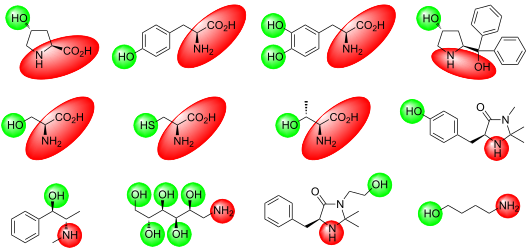
- hydroxyamino acids in the form of methanesulfonic acid (MeSO3H) was identified. In 1977, chemists in India had reported that L-tyrosine, hydroxy-L-proline, L-serine, DL-serine and DL-threonine could all be chemoselectively O-acetylated overnight in high chemical yields with acetic anhydride in glacial acetic
- acyl chlorides in MeSO3H (Scheme 6) [34]. After acylation of hydroxyproline at the >10 g scale in MeSO3H overnight at room temperature, the product was separated as the (usually oily) methanesulfonate salt by addition of Et2O. The salts were neutralized with aqueous NH3, and the free O-acylhydroxyamino
- acids were recrystallized from suitable solvents such as acetone, lower alcohols and H2O. Acylation reactions in MeSO3H are more vigorous and exothermic than in CF3CO2H since MeSO3H (pKa ≈ −2) is a stronger acid than CF3CO2H (pKa ≈ 0.5). Their densities are the same (1.48 g/mL at 25 °C), but the melting

Graphical Abstract

Scheme 1: Selective O-acetylation of hydroxyamino acids with acetic anhydride in perchloric acid-acetic acid ...

Scheme 2: Selective O-acetylation of L-tyrosine as reported by Bretschneider and Biemann in 1950 [13].

Scheme 3: Selective O-acetylation of L-serine in acetic acid saturated with hydrogen chloride as reported by ...

Scheme 4: Chemoselective O-acetylation of hydroxyamino acids with acetyl chloride in hydrochloric acid–acetic...

Scheme 5: Chemoselective O-acylation of hydroxyamino acids with acyl chlorides in anhydrous trifluoroacetic a...

Scheme 6: Chemoselective O-acylation of hydroxyproline with acyl chlorides or carboxylic anhydrides in methan...

Scheme 7: Chemoselective O-acetylation of L-DOPA as reported by Fuller, Verlander and Goodman in 1978 [35].

Scheme 8: Chemoselective O-acylation of L-tyrosine as reported by Huang, Kimura, Bawarshi-Nassar and Hussain ...

Scheme 9: Preparation of proline amphiphiles or acrylic proline monomers (for macromolecular synthesis) by ch...
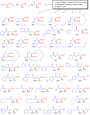
Scheme 10: Preparation of amphiphilic organocatalysts from serine, threonine and cysteine by chemoselective O-...
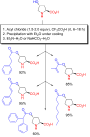
Scheme 11: Preparation of amphiphilic proline organocatalysts by chemoselective O-acylation with acyl chloride...
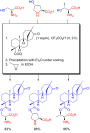
Scheme 12: Amphiphilic organocatalysts prepared from hydroxyamino acids and isosteviol by chemoselective O-acy...

Scheme 13: Preparation of acrylic proline precursors for polymeric organocatalysts by chemoselective O-acylati...

Scheme 14: Conversion of trans-4-hydroxy-L-proline to cis-4-hydroxy-D-proline·HCl and subsequent chemoselectiv...

Scheme 15: Some examples of chemoselective O-acylation of amino alcohols under acidic reaction conditions repo...

Scheme 16: An assembly of chiral acrylic building blocks useful in the synthesis of polymer-supported diphenyl...

Scheme 17: The chemoselective pentaacetylation of D-glucamine under acidic reaction conditions [95].
An efficient access to the synthesis of novel 12-phenylbenzo[6,7]oxepino[3,4-b]quinolin-13(6H)-one derivatives
- Wentao Gao,
- Guihai Lin,
- Yang Li,
- Xiyue Tao,
- Rui Liu and
- Lianjie Sun
Beilstein J. Org. Chem. 2012, 8, 1849–1857, doi:10.3762/bjoc.8.213

- alternative route would be desirable. Recently, the Eaton’s reagent, a mixture of P2O5 and MeSO3H [43], has gained wide application as an advantageous medium for cyclization reactions [44], and we have also reported the serendipitous discovery of its excellent performance in these types of transformations [32

Graphical Abstract

Scheme 1: Synthesis of ethyl 2-(chloromethyl)-4-phenylquinoline-3-carboxylate (2).

Scheme 2: Synthesis of 2-(phenoxymethyl)-4-phenylquinoline-3-carboxylic acid derivatives 3a–l.

Scheme 3: Synthesis of 12-phenylbenzo[6,7]oxepino[3,4-b]quinolin-13(6H)-ones 4a–h.

Scheme 4: Cyclization and de-tert-butylation reaction of 3l by using PPA.
Efficient, highly diastereoselective MS 4 Å-promoted one-pot, three-component synthesis of 2,6-disubstituted-4-tosyloxytetrahydropyrans via Prins cyclization
- Naseem Ahmed and
- Naveen Kumar Konduru
Beilstein J. Org. Chem. 2012, 8, 177–185, doi:10.3762/bjoc.8.19
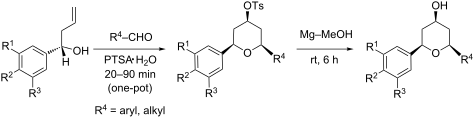
- , MeSO3H [13], Sc(OTf)3 [14], O3ReOSiPh3 [15], TMSBr [16] – or with Lewis acid catalysts such as AlCl3 [17], InCl3 [18][19], TiCl4, HBF4·OEt2 [20], InBr3 [21], TiBr4 [22], Fe(III) compounds [23], BF3·OEt2 [24], polymer supported [25], microwave accelerated with BiCl3 [26], and Pd0/SnII mediated by a three

Graphical Abstract

Figure 1: Tetrahydropyran ring containing natural products.

Scheme 1: Plausible side products mechanism.

Scheme 2: Plausible reaction mechanism via Prins cyclization.

Figure 2: Schematic NOE diagram of compound 3b.

Scheme 3: Deprotection of the hydroxy group.



