


Search results
Search for "cycloisomerisation" in Full Text gives 10 result(s) in Beilstein Journal of Organic Chemistry.
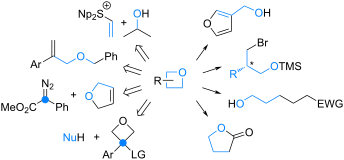
Oxetanes: formation, reactivity and total syntheses of natural products
- Peter Gabko,
- Martin Kalník and
- Maroš Bella
Beilstein J. Org. Chem. 2025, 21, 1324–1373, doi:10.3762/bjoc.21.101
- loadings were necessary for ortho-substituted phenyls. Control experiments and DFT calculations revealed that the oxetane ring is formed before the tetrahydrofuran in the domino process. In 2023, Shigehisa and co-workers published a new cycloisomerisation strategy for the construction of oxetane rings from

Graphical Abstract

Figure 1: Bond lengths and bond angles in oxetane at 140 K [2].

Figure 2: Analogy of 3-substituted oxetanes to carbonyl and gem-dimethyl groups [12].

Figure 3: Use of oxetanes in drug design – selected examples.

Figure 4: Examples of oxetane-containing natural products.

Scheme 1: Synthetic strategies towards construction of the oxetane ring.

Scheme 2: Overview of intramolecular Williamson etherification and competing Grob fragmentation.

Scheme 3: Synthesis of spiro-oxetanes via 1,4-C–H insertion and Williamson etherification.

Scheme 4: Use of phenyl vinyl selenone in the synthesis of spirooxindole oxetanes.

Scheme 5: Synthesis of bicyclic 3,5-anhydrofuranoses via double epoxide opening/etherification.

Scheme 6: Preparation of spirooxetanes by cycloisomerisation via MHAT/RPC.

Scheme 7: Oxetane synthesis via alcohol C–H functionalisation.

Scheme 8: Access to oxetanes 38 from α-acetyloxy iodides.

Scheme 9: The kilogram-scale synthesis of oxetane intermediate 41.

Scheme 10: Overview of the intramolecular opening of 3-membered rings.

Scheme 11: Synthesis of 4,7-dioxatricyclo[3.2.1.03,6]octane skeletons.

Scheme 12: Silicon-directed electrophilic cyclisation of homoallylic alcohols.

Scheme 13: Hydrosilylation–iodocyclisation of homopropargylic alcohols.

Scheme 14: Cu-catalysed intramolecular O-vinylation of γ-bromohomoallylic alcohols.

Scheme 15: Cu-catalysed intramolecular cross-coupling of hydroxyvinylstannanes.

Scheme 16: Isomerisation of oxiranyl ethers containing weakly carbanion-stabilising groups.

Scheme 17: Cyclisation of diethyl haloalkoxymalonates.

Scheme 18: Synthesis of oxetanes through a 1,5-HAT/radical recombination sequence.

Scheme 19: General approach to oxetanes via [2 + 2] cycloadditions.

Scheme 20: Synthesis of tricyclic 4:4:4 oxetanes through a photochemical triple cascade reaction.

Scheme 21: Iridium-catalysed Paternò–Büchi reaction between α-ketoesters and simple alkenes.

Scheme 22: Three-step synthesis of spirocyclic oxetanes 83 via Paternò–Büchi reaction, nucleophilic ring openi...

Scheme 23: Enantioselective Paternò–Büchi reaction catalysed by a chiral iridium photocatalyst.

Scheme 24: Synthesis of polysubstituted oxetanes 92 via Cu(II)-mediated formal [2 + 2] cycloadditions.
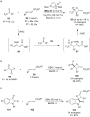
Scheme 25: Synthesis of alkylideneoxetanes via NHC- and DBU-mediated formal [2 + 2] cycloadditions.

Scheme 26: Use of sulphur-stabilised carbanions in ring expansions.

Scheme 27: Synthesis of α,α-difluoro(arylthio)methyl oxetanes.

Scheme 28: Ring expansion in an industrial synthesis of PF-06878031.

Scheme 29: Ring contraction of triflated 2-hydroxy-γ-lactones.

Scheme 30: Ring contraction in an industrial synthesis of PF-06878031.

Scheme 31: Photochemical ring contraction of 2,5-dihydrofurans by aryldiazoacetic acid esters.

Scheme 32: Synthesis of 3-oxetanones via O-H insertion of carbenes.

Scheme 33: Synthesis of phosphonate oxetanones via gold-mediated alkyne oxidation/O–H insertion.

Scheme 34: Syntheses and common derivatisations of 3-oxetanone.

Scheme 35: SN1 substitution of 3-aryloxetan-3-ols by thiols and alcohols.

Scheme 36: Fe–Ni dual-catalytic olefin hydroarylation towards 3-alkyl-3-(hetero)aryloxetanes.

Scheme 37: Synthesis of 3-aryloxetan-3-carboxylic acids.

Scheme 38: Decarboxylative alkylation of 3-aryloxetan-3-carboxylic acids.

Scheme 39: Synthesis of 3-amino-3-aryloxetanes via photoredox/nickel cross-coupling catalysis.
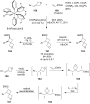
Scheme 40: Intermolecular cross-selective [2 + 2] photocycloaddition towards spirooxetanes.

Scheme 41: Synthesis of 3-aryl-3-aminooxetanes via defluorosulphonylative coupling.

Scheme 42: Two-step synthesis of amide bioisosteres via benzotriazolyl Mannich adducts 170.

Scheme 43: Functionalisation of oxetanyl trichloroacetimidates 172.

Scheme 44: Synthesis of oxetane-amino esters 176.

Scheme 45: Tandem Friedel–Crafts alkylation/intramolecular ring opening of 3-aryloxetan-3-ols.

Scheme 46: Synthesis of polysubstituted furans and pyrroles.

Scheme 47: Synthesis of oxazolines and bisoxazolines.

Scheme 48: Tandem, one-pot syntheses of various polycyclic heterocycles.

Scheme 49: Synthesis of 1,2-dihydroquinolines via skeletal reorganisation of oxetanes.

Scheme 50: Synthesis of benzoindolines and 2,3-dihydrobenzofurans and their derivatisations.

Scheme 51: Synthesis of polysubstituted 1,4-dioxanes.

Scheme 52: Preparation of various lactones via ring opening of oxetane-carboxylic acids 219.

Scheme 53: Tsuji-Trost allylation/ring opening of 3-aminooxetanes.

Scheme 54: Arylative skeletal rearrangement of 3-vinyloxetan-3-ols to 2,5-dihydrofurans.

Scheme 55: Reductive opening of oxetanes using catalytic Mg–H species.

Scheme 56: Opening of oxetanes by silyl ketene acetals.

Scheme 57: Rhodium-catalysed hydroacylation of oxetanes.

Scheme 58: Generation of radicals from oxetanes mediated by a vitamin B12-derived cobalt catalyst.

Scheme 59: Reductive opening of oxetanes by B–Si frustrated Lewis pairs.
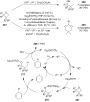
Scheme 60: Zirconocene-mediated reductive opening of oxetanes.

Scheme 61: Enantioselective syntheses of small and medium-size rings using chiral phosphoric acids.

Scheme 62: Asymmetric synthesis of 2,3-dihydrobenzo[b]oxepines catalysed by a chiral scandium complex.

Scheme 63: Enantioselective synthesis of 1,3-bromohydrins under a chiral squaramide catalysis.

Scheme 64: Enantioselective opening of 2-aryl-2-ethynyloxetanes by anilines.

Scheme 65: Ru-catalysed insertion of diazocarbonyls into oxetanes.

Scheme 66: Ring expansion of oxetanes by stabilised carbenes generated under blue light irradiation.

Scheme 67: Expansion of oxetanes via nickel-catalysed insertion of alkynyltrifluoroborates.

Scheme 68: Nickel-catalysed expansion of oxetanes into ε-caprolactones.

Scheme 69: Expansion of oxetanes via cobalt-catalysed carbonyl insertion.

Scheme 70: Gold-catalysed intramolecular 1,1-carboalkoxylation of oxetane-ynamides.

Scheme 71: Expansion of oxetanes by stabilised sulphoxonium ylides.

Scheme 72: Cu-catalysed ring expansion of 2-vinyloxetanes by diazoesters.

Scheme 73: Total synthesis of (+)-oxetin.

Scheme 74: Total synthesis of racemic oxetanocin A.

Scheme 75: Total synthesis of (−)-merrilactone A.
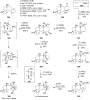
Scheme 76: Total synthesis of (+)-dictyoxetane.

Scheme 77: Total synthesis of ent-dichrocephone B.

Scheme 78: Total synthesis of (−)-mitrephorone A.
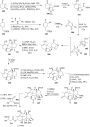
Scheme 79: Total synthesis of (−)-taxol.
Synthesis of benzo[f]quinazoline-1,3(2H,4H)-diones
- Ruben Manuel Figueira de Abreu,
- Peter Ehlers and
- Peter Langer
Beilstein J. Org. Chem. 2024, 20, 2708–2719, doi:10.3762/bjoc.20.228
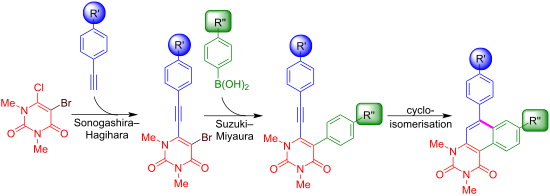
- and Suzuki–Miyaura cross-coupling reactions followed by Brønsted acid-mediated cycloisomerisation. The developed methodology tolerates various functional groups and leads to moderate up to quantitative yields of the final products. The impact of different functional groups on the optical properties
- of palladium-catalysed Sonogashira–Hagihara and Suzuki–Miyaura cross-coupling reactions (Scheme 1). The final cyclisation step is accomplished by an acid-mediated cycloisomerisation. The synthesis of starting materials 4 was carried out by our previously reported protocol [65]. While compounds 4a–f
- are known compounds, the synthesis of derivatives 4g–i has not been previously reported (Scheme 2). Yields were generally lower in case of the presence of electron-withdrawing substituents. Subsequently, the cyclisation of 4a–i to 5a–i by acid-mediated cycloisomerisation was studied. In our first

Graphical Abstract

Figure 1: Synthesis of uracil-based alkynes and aryl structures [51,62-65].

Figure 2: Structures of uracil derivatives A, B, and C.

Scheme 1: Strategy for the synthesis of the cyclised product 5. Conditions: i) Br2 (2 equiv), Ac2O (1.5 equiv...
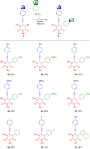
Scheme 2: Synthesis and isolated yields of 1,3-dimethyl-5-aryl-6-[2-(aryl)ethynyl]uracils 4a–i. Reaction cond...
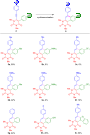
Scheme 3: Scope and isolated yields of the synthesis of 5. Reaction conditions: 4 (1 equiv), p-TsOH·H2O (20 e...

Scheme 4: Proposed reaction mechanism of the cyclisation with N,N-dimethylanilino functional groups.

Figure 3: UV–vis absorption (left) and emission (right, λex = 400 nm) spectra of 5a, 5d, 5f, 5g, 5h, and 5i i...
Unprecedented nucleophile-promoted 1,7-S or Se shift reactions under Pummerer reaction conditions of 4-alkenyl-3-sulfinylmethylpyrroles
- Takashi Go,
- Akane Morimatsu,
- Hiroaki Wasada,
- Genzoh Tanabe,
- Osamu Muraoka,
- Yoshiharu Sawada and
- Mitsuhiro Yoshimatsu
Beilstein J. Org. Chem. 2018, 14, 2722–2729, doi:10.3762/bjoc.14.250
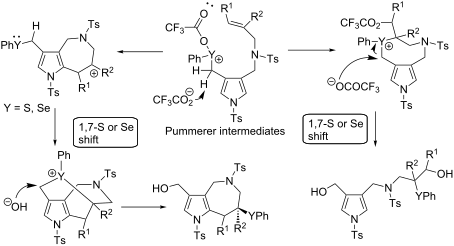
- radical cyclisations [28] and the 1,7-electrocyclisation of azomethine ylides or ring expansion sequences [29]), most of these approaches are ineffective for synthesising pyrrolo[3,2-c]azepines. Recently, Echavarren and Beller reported a novel Au- or Pt-catalysed cycloisomerisation reaction of pyrrole-2

Graphical Abstract

Scheme 1: Our synthetic plan for pyrrolo[3,2-c]azepines.

Scheme 2: Preparation of precursors for the Pummerer reactions.

Scheme 3: Substrate scope of 1,7-S and 1,7-Se shift reactions.

Scheme 4: Proposed mechanism.

Scheme 5: Crossover experiment.

Scheme 6: Lewis acid-catalysed cyclization of diols.

Scheme 7: Sequential process of sulfanyl-1,6-diyne 1 to 4H-pyrrolo[3,4-g]oxazine 25g.
Synthesis of alkynyl-substituted camphor derivatives and their use in the preparation of paclitaxel-related compounds
- M. Fernanda N. N. Carvalho,
- Rudolf Herrmann and
- Gabriele Wagner
Beilstein J. Org. Chem. 2017, 13, 1230–1238, doi:10.3762/bjoc.13.122
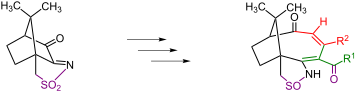
- reduction, and ring enlargement. One isomeric dialkyne additionally allows for the isolation of a pentacyclic compound lacking the ring enlargement step, which we have proposed as a potential intermediate in the catalytic cycle. Keywords: alkynes; camphor derivatives; catalysis; cycloisomerisation
- , leading to pure dialkynes with a well-defined substitution pattern. The reactivity of a pair of isomers containing a phenyl and a pentyl group attached to the triple bonds towards cycloisomerisation induced by Pt(II) catalysis was studied. The expected annulation–sulphur reduction–ring enlargement cascade
- derivatives by protection of the 3-oxo group as an acetal. Selective synthesis of 2-alkynyl derivatives by protection of the 3-oxo group as an imine. Synthesis of the bis-alkynyl derivatives bearing different alkyne substituents and their platinum-catalysed cycloisomerisation. Compounds 21a and 22a: R1 = Ph

Graphical Abstract

Scheme 1: Synthesis of 3-oxo-camphorsulfonylimine (3) [13,15] and its bis-alkynyl derivatives 4 from camphor-10-sulf...

Scheme 2: Reactions of bis-alkynyl camphor derivative 4a with TiCl4 and with Br2, respectively.
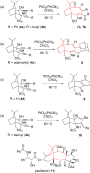
Scheme 3: Reactions of bis-alkynylcamphor derivatives 4a–e with catalytic amounts of PtCl2(PhCN)2.

Scheme 4: Attempted selective synthesis of 3-alkynyl derivatives via sulfonylimine reduction of oxoimide 3.

Scheme 5: Selective synthesis of 2-alkynyl derivatives by protection of the 3-oxo group as an acetal.

Scheme 6: Selective synthesis of 2-alkynyl derivatives by protection of the 3-oxo group as an imine.

Scheme 7: Synthesis of the bis-alkynyl derivatives bearing different alkyne substituents and their platinum-c...

Scheme 8: Proposed mechanism of the platinum-catalysed cycloisomerisation.
Asymmetric Diels–Alder reaction with >C=P– functionality of the 2-phosphaindolizine-η1-P-aluminium(O-menthoxy) dichloride complex: experimental and theoretical results
- Rajendra K. Jangid,
- Nidhi Sogani,
- Neelima Gupta,
- Raj K. Bansal,
- Moritz von Hopffgarten and
- Gernot Frenking
Beilstein J. Org. Chem. 2013, 9, 392–400, doi:10.3762/bjoc.9.40

- experimentally the InCl3-catalyzed cycloisomerisation of 1,6-enynes and demonstrated InCl2+ to be the actual catalytic species participating in the reaction. In this context, it has been emphasized that identifying the real catalytic species may be very challenging, because in many cases impurities in the

Graphical Abstract

Scheme 1: Diels–Alder reaction of 2-phosphaindolizines.

Scheme 2: Diels–Alder reaction of 2-phosphaindolizine-η1-P-aluminium(O-menthoxy) dichloride with 2,3-dimethyl...

Scheme 3: Formation of the cationic 1:1 complex of the dienophile and dialkylaluminium.

Scheme 4: Disproportionation of the 1:1 complex of 2-phosphaindolizine and Al(O-menthoxy)Cl2.

Scheme 5: Attack of 1,3-butadiene on Si and Re faces of >C=P– functionality of 2-phosphaindolizine complex.
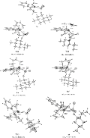
Figure 1: Geometries of 2-phosphaindolizine-η1-P-aluminium(O-menthoxy) dichloride, the transition structures,...
Flow photochemistry: Old light through new windows
- Jonathan P. Knowles,
- Luke D. Elliott and
- Kevin I. Booker-Milburn
Beilstein J. Org. Chem. 2012, 8, 2025–2052, doi:10.3762/bjoc.8.229
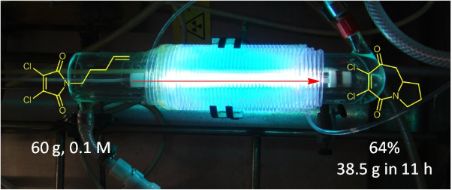

Graphical Abstract

Figure 1: An immersion-well batch reactor with 125 W medium pressure Hg lamp.

Figure 2: Transmission profile of a 0.05 M solution, ε = 200 M−1 cm−1.

Figure 3: Schematic of a typical microflow photochemical reactor (above) and detail of a triple-channel micro...

Figure 4: Schematic of a typical macroflow photochemical reactor (above) and images of the FEP photochemical ...

Scheme 1: [2 + 2] photocycloadditions of enones with enol derivatives.

Scheme 2: Competing reactions in an intramolecular [2 + 2] photocycloaddition.

Scheme 3: Diastereocontrolled cycloaddition of a cyclic enone with cyclopentene.

Scheme 4: Comparison of yields and reaction times for a batch reactor with a microflow system.

Scheme 5: Intramolecular [2 + 2] photocycloaddition.

Scheme 6: Paterno–Büchi reaction of benzophenone with an allylic alcohol.

Scheme 7: Photooxygenation of cyclopentadiene.

Scheme 8: Preparation of the anthelmintic ascaridole 23.

Scheme 9: Production of rose oxide 27 from (−)-β-citronellol (24).

Scheme 10: Photocatalytic alkylation of benzylamine.

Scheme 11: Photocatalytic reduction of 4-nitroacetophenone.

Scheme 12: Conversion of L-lysine to L-pipecolinic acid.

Scheme 13: Photocatalytic hydrodehalogenation.

Scheme 14: Photocatalytic aza-Henry reactions.

Scheme 15: Photocatalytic α-alkylation of aliphatic ketones.

Scheme 16: Decarboxylative photochemical additions.

Scheme 17: Photochemical addition of isopropanol to furanones.

Scheme 18: Photochemical addition of methanol to limonene.

Scheme 19: Light-promoted reduction of flavone.

Scheme 20: Photoreduction of benzophenone with benzhydrol.

Scheme 21: Barton reaction in a microflow system.

Scheme 22: Microflow synthesis of vitamin D3.

Scheme 23: photochemical chlorination of cyclohexane.

Scheme 24: photochemical cyanation of pyrene.

Scheme 25: Intermolecular [2 + 2] cycloaddition of maleimide (76) and intramolecular [2 + 2] cycloaddition of ...

Scheme 26: Intramolecular [5 + 2] cycloaddition of maleimide under flow conditions.

Scheme 27: Intramolecular [5 + 2] cycloaddition as a key step in the synthesis of (±)-neostenine.

Scheme 28: In situ generation of a thioaldehyde by photolysis of a phenacyl sulfide.

Scheme 29: Photodimerisation of maleic anhydride.

Scheme 30: [2 + 2] cycloaddition of a chiral enone with ethylene.

Scheme 31: Intramolecular [2 + 2] cycloaddition of a cyclopentenone.

Scheme 32: Photochemical Wolff rearrangement and cyclisation to β-lactams.

Scheme 33: Photochemical rearrangement of aryl azides.

Scheme 34: Rearrangement of quinoline N-oxides to quinolones.

Scheme 35: Photochemical rearrangement of cyclobutenones.

Scheme 36: Photoisomerisation en route to a vitamin-D derivative.

Scheme 37: Schematic of the Seeberger photooxygenation apparatus and sensitised photooxygenation of citronello...

Scheme 38: Sensitised photooxygenation of dihydroartemisinic acid.

Scheme 39: Photochemical preparation of CpRu(MeCN)3PF6.

Scheme 40: In situ photochemical generation and reaction of a [CpRu]+ catalyst.

Scheme 41: Intermolecular alkene–alkyne coupling with photogenerated catalyst.

Scheme 42: PET deoxygenation of nucleosides.

Scheme 43: Photochemical defluorination of DABFT.

Scheme 44: Aromatic azide reduction by visible-light-mediated photocatalysis.

Scheme 45: Examples of visible-light-mediated reactions.

Scheme 46: Visible-light-mediated formation of iminium ions.

Scheme 47: Examples of visible-light-mediated photocatalytic reactions.

Scheme 48: Anhydride formation from a visible-light-mediated process.

Scheme 49: Light-mediated conjugate addition of glycosyl bromide 141 to acrolein.

Scheme 50: Visible-light-mediated photocyclisation to [5]helicene.
Recent advances in the gold-catalyzed additions to C–C multiple bonds
- He Huang,
- Yu Zhou and
- Hong Liu
Beilstein J. Org. Chem. 2011, 7, 897–936, doi:10.3762/bjoc.7.103
- pyrroles 173 by gold-catalyzed ring expansion of alkynyl aziridines 172 [79]. In this study a combination of Ph3PAuCl and AgOTs generates a catalyst system that provides clean cycloisomerisation reactions. Similarly, N-Phth pyrrroles 175 are obtained via gold-catalyzed cycloisomerization of N-Phth alkynyl

Graphical Abstract

Scheme 1: Gold-catalyzed addition of alcohols.
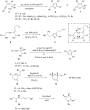
Scheme 2: Gold-catalyzed cycloaddition of alcohols.

Scheme 3: Ionic liquids as the solvent in gold-catalyzed cycloaddition.

Scheme 4: Gold-catalyzed cycloaddition of diynes.

Scheme 5: Gold(I) chloride catalyzed cycloisomerization of 2-alkynyl-1,5-diols.

Scheme 6: Gold-catalyzed cycloaddition of glycols and dihydroxy compounds.

Scheme 7: Gold-catalyzed ring-opening of cyclopropenes.

Scheme 8: Gold-catalyzed intermolecular hydroalkoxylation of alkynes. PR3 = 41–45.

Scheme 9: Gold-catalyzed intramolecular 6-endo-dig cyclization of β-hydroxy-α,α-difluoroynones.

Scheme 10: Gold-catalyzed intermolecular hydroalkoxylation of non-activated olefins.

Scheme 11: Preparation of unsymmetrical ethers from alcohols.

Scheme 12: Expedient synthesis of dihydrofuran-3-ones.

Scheme 13: Catalytic approach to functionalized divinyl ketones.
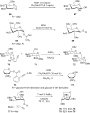
Scheme 14: Gold-catalyzed glycosylation.

Scheme 15: Gold-catalyzed cycloaddition of aldehydes and ketones.

Scheme 16: Gold-catalyzed annulations of 2-(ynol)aryl aldehydes and o-alkynyl benzaldehydes.

Scheme 17: Gold-catalyzed addition of carboxylates.

Scheme 18: Dual-catalyzed rearrangement reaction of allenoates.

Scheme 19: Meyer–Schuster rearrangement of propargylic alcohols.

Scheme 20: Propargylic alcohol rearrangements.

Scheme 21: Gold-catalyzed synthesis of imines and amine alkylation.

Scheme 22: Hydroamination of allenes and allenamides.

Scheme 23: Gold-catalyzed inter- and intramolecular amination of alkynes and alkenes.

Scheme 24: Gold-catalyzed cycloisomerization of O-propioloyl oximes and β-allenylhydrazones.

Scheme 25: Intra- and intermolecular amination with ureas.

Scheme 26: Gold-catalyzed cyclization of ortho-alkynyl-N-sulfonylanilines and but-3-yn-1-amines.

Scheme 27: Gold-catalyzed piperidine ring synthesis.

Scheme 28: Ring expansion of alkylnyl cyclopropanes.

Scheme 29: Gold-catalyzed annulations of N-propargyl-β-enaminones and azomethine imines.
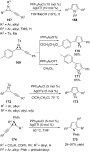
Scheme 30: Gold(I)-catalyzed cycloisomerization of aziridines.

Scheme 31: AuCl3/AgSbF6-catalyzed intramolecular amination of 2-(tosylamino)phenylprop-1-en-3-ols.

Scheme 32: Gold-catalyzed cyclization via a 7-endo-dig pathway.

Scheme 33: Gold-catalyzed synthesis of fused xanthines.

Scheme 34: Gold-catalyzed synthesis of amides and isoquinolines.

Scheme 35: Gold-catalyzed oxidative cross-coupling reactions of propargylic acetates.

Scheme 36: Gold-catalyzed nucleophilic addition to allenamides.

Scheme 37: Gold-catalyzed direct carbon–carbon bond coupling reactions.

Scheme 38: Gold-catalyzed C−H functionalization of indole/pyrrole heterocycles and non-activated arenes.

Scheme 39: Gold-catalyzed cycloisomerization of cyclic compounds.

Scheme 40: Gold-catalyzed cycloaddition of 1-aryl-1-allen-6-enes and propargyl acetates.

Scheme 41: Gold(I)-catalyzed cycloaddition with ligand-controlled regiochemistry.

Scheme 42: Gold(I)-catalyzed cycloaddition of dienes and enynes.

Scheme 43: Gold-catalyzed intramolecular cycloaddition of 3-alkoxy-1,5-enynes and 2,2-dipropargylmalonates.

Scheme 44: Gold-catalyzed intramolecular cycloaddition of 1,5-allenynes.

Scheme 45: Gold(I)-catalyzed cycloaddition of indoles.

Scheme 46: Gold-catalyzed annulation reactions.

Scheme 47: Gold–carbenoid induced cleavage of a sp3-hybridized C−H bond.

Scheme 48: Furan- and indole-based cascade reactions.

Scheme 49: Tandem process using aromatic alkynes.

Scheme 50: Gold-catalyzed cycloaddition of 1,3-dien-5-ynes.

Scheme 51: Gold-catalyzed cascade cyclization of diynes, propargylic esters, and 1,3-enynyl ketones.

Scheme 52: Tandem reaction of β-phenoxyimino ketones and alkynyl oxime ethers.

Scheme 53: Gold-catalyzed tandem cyclization of enynes, 2-(tosylamino)phenylprop-1-yn-3-ols, and allenoates.

Scheme 54: Cyclization of 2,4-dien-6-yne carboxylic acids.
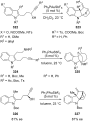
Scheme 55: Gold(I)-catalyzed tandem cyclization approach to tetracyclic indolines.
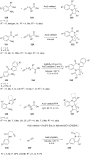
Scheme 56: Gold-catalyzed tandem reactions of alkynes.
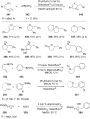
Scheme 57: Aminoarylation and oxyarylation of alkenes.

Scheme 58: Cycloaddition of 2-ethynylnitrobenzene with various alkenes.

Scheme 59: Gold-catalyzed tandem reactions of allenoates and alkynes.

Scheme 60: Gold-catalyzed asymmetric synthesis of 2,3-dihydropyrroles.

Scheme 61: Chiral [NHC–Au(I)]-catalyzed cyclization of enyne.
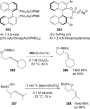
Scheme 62: Gold-catalyzed hydroaminations and hydroalkoxylations.

Scheme 63: Gold(I)-catalyzed asymmetric hydroalkoxylation of 1,3-dihydroxymethyl-2-alkynylbenzene chromium com...

Scheme 64: Gold-catalyzed synthesis of julolidine derivatives.

Scheme 65: Gold-catalyzed the synthesis of chiral fused heterocycles.

Scheme 66: Gold-catalyzed asymmetric reactions with 3,5-(t-Bu)2-4-MeO-MeOBIPHEP.

Scheme 67: Gold-catalyzed cyclization of o-(alkynyl) styrenes.

Scheme 68: Asymmetric gold(I)-catalyzed redox-neutral domino reactions of enynes.

Scheme 69: Gold(I)-catalyzed enantioselective polyene cyclization reaction.

Scheme 70: Gold(I)-catalyzed enantioselective synthesis of benzopyrans.

Scheme 71: Gold(I)-catalyzed enantioselective ring expansion of allenylcyclopropanols.
Isotopic labelling studies for a gold-catalysed skeletal rearrangement of alkynyl aziridines
- Paul W. Davies,
- Nicolas Martin and
- Neil Spencer
Beilstein J. Org. Chem. 2011, 7, 839–846, doi:10.3762/bjoc.7.96
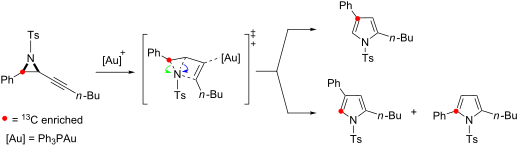
- Paul W. Davies Nicolas Martin Neil Spencer School of Chemistry, University of Birmingham, Edgbaston, Birmingham, B15 2TT, United Kingdom 10.3762/bjoc.7.96 Abstract Isotopic labelling studies were performed to probe a proposed 1,2-aryl shift in the gold-catalysed cycloisomerisation of alkynyl
- - and deuterium-labelled substrates. Keywords: 1,2-aryl shift; cycloisomerisation; gold; isotopic labelling; pyrrole; skeletal rearrangement; Introduction Gold-catalysed cycloisomerisation reactions have emerged as powerful methods to construct a diverse array of hetero- and carbocyclic motifs under
- reaction conditions resulted in selective cycloisomerisation to produce either the 2,5-disubstituted pyrrole 2 or the skeletally rearranged 2,4-disubstituted pyrrole 3 (Scheme 1) [18]. The nature of both the solvent, and the counter ion to the cationic gold catalyst, proved crucial to the reaction outcome

Graphical Abstract

Scheme 1: Gold-catalysed cycloisomerisations of aryl–alkynyl aziridine to pyrroles.

Scheme 2: Working mechanism to rationalise the formation of two regiosomeric pyrroles in the gold catalysed c...

Scheme 3: Bond fissions featured in the proposed mechanistic hypothesis and the initial mechanism probe.

Scheme 4: Preparation of D-labelled alkynyl aziridine 4. DMP = Dess–Martin periodinane.

Scheme 5: Reaction of deuterated alkynyl aziridine 4 in the skeletal rearrangement reaction.

Scheme 6: Preparation of 13C-enriched alkynyl aziridines.

Scheme 7: Cycloisomerisation of 11 in the skeletal rearrangement reaction.

Scheme 8: Cycloisomerisation of 11 to give 2,5-disubstituted pyrrole.

Scheme 9: Cycloisomerisation of 14 in the skeletal rearrangement reaction.

Scheme 10: Cycloisomerisation of 15 in the skeletal rearrangement reaction.

Scheme 11: Revised mechanism for the formation of 2,4-isomers by skeletal rearrangement.

Scheme 12: Synthesis of alkynyl aziridines 30 and 31.

Scheme 13: Electronic effects on the outcome of the skeletal rearrangement processes.

Scheme 14: Mechanistic rationale for the deuterium labelling study using Ph3PAuCl/AgOTf.
Halide exchanged Hoveyda-type complexes in olefin metathesis
- Julia Wappel,
- César A. Urbina-Blanco,
- Mudassar Abbas,
- Jörg H. Albering,
- Robert Saf,
- Steven P. Nolan and
- Christian Slugovc
Beilstein J. Org. Chem. 2010, 6, 1091–1098, doi:10.3762/bjoc.6.125
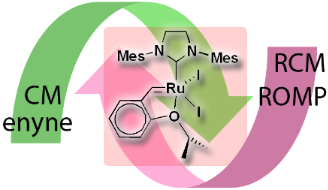
- catalytic performance of the complexes in ring opening metathesis polymerisation, ring closing metathesis, enyne cycloisomerisation and cross metathesis reactions. Keywords: cross metathesis; olefin metathesis; RCM; ROMP; ruthenium; Introduction Since the pioneering reports on the utilisation of N
- before the remaining monomer is completely consumed. RCM, enyne cycloisomerisation and cross metathesis Catalytic activities of 1, 2 and 3 were then evaluated in RCM of diethyl diallylmalonate (7). The reaction progress is shown in Figure 6 (for details see Table 3). While 1 and 2 perform equally, 3 is
- concentrated on further elucidating the catalytic potential of 3 in RCM, enyne cycloisomerisation and cross metathesis (CM). Benchmark substrates were selected according to protocols for testing of metathesis catalysts [33]. Substrates with low steric hindrance (Table 3, Entry 1 and 3) were transformed with

Graphical Abstract

Figure 1: General layout for modifications of ruthenium-based olefin metathesis catalysts (red: anionic ligan...

Scheme 1: Synthesis of 1, 2 and 3.

Figure 2: Details of the 1H NMR spectra acquired during the synthesis of 2 and the FD-MS spectrum of 2 isolat...

Figure 3: ORTEP drawing of 3. Thermal ellipsoids are drawn at 50% probability level. Hydrogen atoms are omitt...

Figure 4: Polymerisation of 4 as a function of time, initiated by 1, 2 or 3, monitored by 1H NMR spectroscopy...

Figure 5: Polymerisations of 6 as a function of time, initiated by 1–3, monitored by 1H NMR spectroscopy (sol...

Figure 6: The RCM reaction of 7 as a function of time, catalysed by 1, 2 or 3, monitored by 1H NMR spectrosco...
The use of silicon- based tethers for the Pauson- Khand reaction
- Adrian P. Dobbs,
- Ian J. Miller and
- Saša Martinović
Beilstein J. Org. Chem. 2007, 3, No. 21, doi:10.1186/1860-5397-3-21
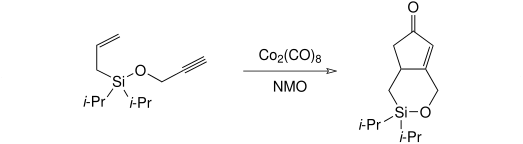
- . Saigo reported that the attempted P-K cyclisation of a variety of 3-sila-1,7-enynes underwent cycloisomerisation instead of the cycloaddition (Scheme 1).[7] Saigo's work showed that this cycloisomersiation was only applicable to 3-sila-1,7-enynes and any other chain length would undergo decomposition
- obtained, only the cycloisomerisation products predicted by Saigo.[7] Repeating the reactions under 1 atm pressure of carbon monoxide also gave only the isomerisation products, albeit in higher yields and more rapidly. In every example, the main product, accounting for the bulk of the mass balance, were
- of the silyl ether formed, figures in brackets the product recovered from the Pauson-Khand reaction. Possible structure of THF-oxidation/insertion product. Saigo's cycloisomerisation reaction under Pauson-Khand conditions. Pauson-Khand reaction and tether-cleavage in wet acetonitrile. Silyl-tethered

Graphical Abstract

Scheme 1: Saigo's cycloisomerisation reaction under Pauson-Khand conditions.

Scheme 2: Pauson-Khand reaction and tether-cleavage in wet acetonitrile.

Scheme 3: Silyl-tethered allenic Pauson-Khand reaction reported by Brummond.

Scheme 4: Intramolecular Pauson-Khand reaction of allyldimethyl- and allyldiphenylsilyl propargyl ethers repo...

Scheme 5: Synthesis and attempted Pauson-Khand reactions of vinyldimethylsilyl- and vinyldiphenylsilyl ethers....

Figure 1: Functionalised acetylenes prepared and used in silyl ether-tethered Pauson-Khand reactions. Yields ...

Figure 2: Chain-functionalised acetylenes prepared and used in silyl ether-tethered Pauson-Khand reactions. Y...

Figure 3: Possible structure of THF-oxidation/insertion product.

Scheme 6: Model Pauson-Khand reaction of allyltrimethylsilane.

Scheme 7: Preparation of allyldiisopropylsilyl ethers.

Scheme 8: Pauson-Khand reaction of allyldiisopropylsilyl ethers.

Scheme 9: Preparation of allyldiisopropylsilanes.

Scheme 10: Attempted Mitsunobu reactions of diisopropylsilanols.

Scheme 11: Preparation of alkynic diisopropylsilanes.

Scheme 12: Preparation of allyldiisopropylsilyl ethers.

Scheme 13: Preparation of acetals from dichlorodiphenylsilane.

Scheme 14: Attempted Pauson-Khand reaction of allylpropargyldiphenylsilyl acetal.

Scheme 15: Proposed diisopropylsilyl acetal formation.

Scheme 16: Attempted allylpropargyldiisopropylsilyl acetal formation.

Scheme 17: Attempted allylpropargyldiisopropylsilyl acetal formation.

Scheme 18: Preparation of silicon-tethered Pauson-Khand precursors.

Scheme 19: Failed Pauson-Khand reaction of a silicon-tethered substrate.



