


Search results
Search for "lipid membrane" in Full Text gives 10 result(s) in Beilstein Journal of Organic Chemistry.
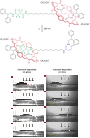
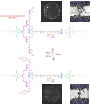
Effect of a photoswitchable rotaxane on membrane permeabilization across lipid compositions
Beilstein J. Org. Chem. 2025, 21, 2498–2512, doi:10.3762/bjoc.21.192
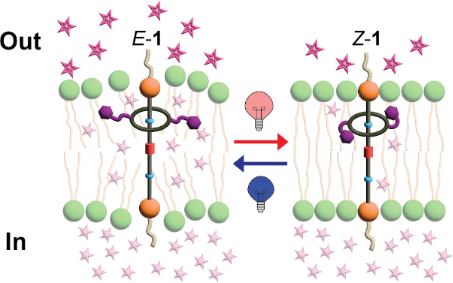
- photochemical process occurs, which triggers the release from only the vesicles containing EYPC. These findings underscore the significance of both the physical and chemical properties of the bilayer in enabling effective light-triggered cargo release through rotaxane activation. Keywords: lipid membrane


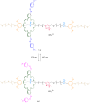
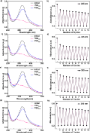


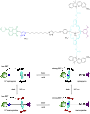
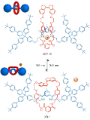
Rotaxanes with integrated photoswitches: design principles, functional behavior, and emerging applications
Beilstein J. Org. Chem. 2025, 21, 2345–2366, doi:10.3762/bjoc.21.179
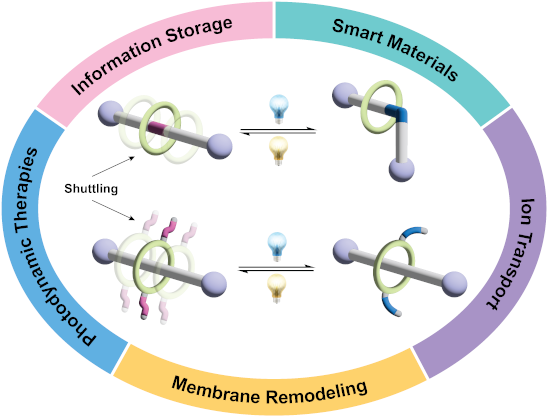
- lipid membrane, leading to reversible changes in giant lipid vesicles. In the trans isomer, the membrane tension decreased, resulting in deformation and pronounced membrane undulations. Isomerization to the cis form increased membrane tension, causing vesicle contraction. Molecular dynamics simulations





Interaction of a pyrene derivative with cationic [60]fullerene in phospholipid membranes and its effects on photodynamic actions
Beilstein J. Org. Chem. 2024, 20, 2732–2738, doi:10.3762/bjoc.20.231
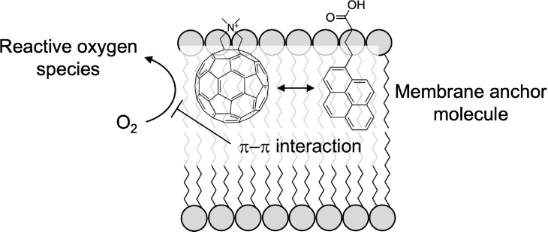
- until the lipid membrane had completely peeled off from the flask. To remove free catC60 and C60, the resulting suspension was centrifuged at 20,000g at room temperature for 10 min. The supernatant was collected and subjected to more than 20 extrusions using a Mini-Extruder equipped with a 100 nm-pore


Cyclodextrins permeabilize DPPC liposome membranes: a focus on cholesterol content, cyclodextrin type, and concentration
Beilstein J. Org. Chem. 2023, 19, 1570–1579, doi:10.3762/bjoc.19.115
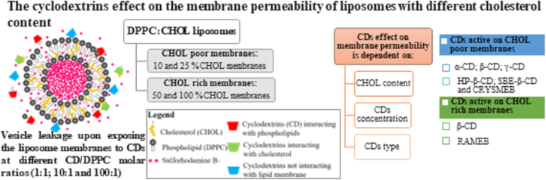
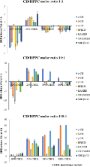
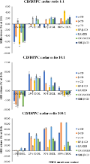
- permeability [8]. They are even able to extract the lipid membrane components leading the membrane to lose its integrity [8]. This behavior was attributed to the hemolytic activity of CDs previously observed on erythrocytes and other cell membranes [9]. Numerous reports highlighting the CDs-mediated lipid
- the CDs effect with regards to their affinity to lipid membrane components. It will also allow us to point out if the CDs-induced lipid extraction may occur in “lipid rafts”. Results and Discussion In this study, liposome membranes made of DPPC and various CHOL contents were prepared (10%, 25%, 50
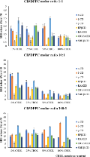
- CD concentration. The main reason behind these observations is the preferential lipid membrane extraction exhibited by the CDs. As a matter of fact, α-CD can remove phospholipids from membranes. A previous work reported that α-CD can extract DPPC through a special complex formation between the acyl


Enhanced target cell specificity and uptake of lipid nanoparticles using RNA aptamers and peptides
Beilstein J. Org. Chem. 2021, 17, 891–907, doi:10.3762/bjoc.17.75
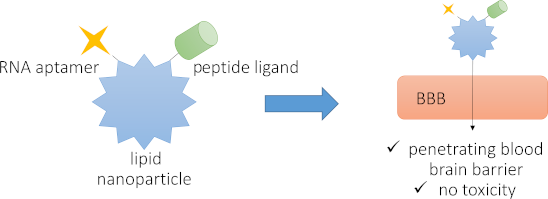
- dipalmitoyl-Dap-T7 and dipalmitoyl-Dap-Tat (Figure 1A). Double lipidation ensures a more stable lipid-membrane-anchoring compared to a single fatty acid chain or cholesteryl variant [27][28][29]. The careful choice of Dap and palmitic acid allows for the entire synthesis to be performed on solid support with



Sugar-derived oxazolone pseudotetrapeptide as γ-turn inducer and anion-selective transporter
Beilstein J. Org. Chem. 2019, 15, 2419–2427, doi:10.3762/bjoc.15.234
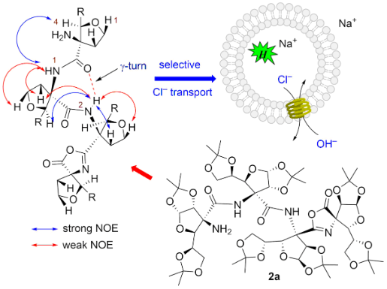
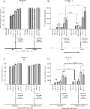
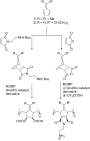
- the rate of quenching in fluorescence at λem = 535 nm (λex = 455 nm) was monitored using transporter 2a by creating a Cl– gradient across the lipid membrane by applying NaCl in the extravesicular buffer (Figure S14 in Supporting Information File 1). The compound 2a showed a significant decrease in the


![[Graphic 2]](/bjoc/content/inline/1860-5397-15-234-i4.svg?max-width=637&scale=1.18182) lucigenin (A). Conce...
lucigenin (A). Conce...
An overview of the cycloaddition chemistry of fulvenes and emerging applications
Beilstein J. Org. Chem. 2019, 15, 2113–2132, doi:10.3762/bjoc.15.209

- 21) [105][237]. ROMP of the monomers, followed by deprotection yielded facially amphiphilic polynorbornenes that displayed lipid membrane disruption and antimicrobial activities [237][238]. The facially amphiphilic polynorbornenes with pendent ammonium groups were found to disrupt negatively charged







Membrane properties of hydroxycholesterols related to the brain cholesterol metabolism
Beilstein J. Org. Chem. 2017, 13, 720–727, doi:10.3762/bjoc.13.71
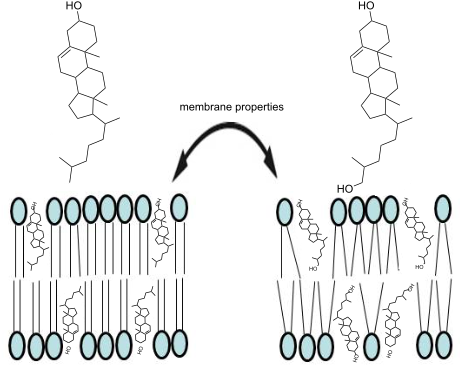
- of a human being [4][6]. Insoluble cholesterol is transported in the blood in small lipoprotein particles of varying density and the rate, at which cholesterol crosses the lipid membrane, is extremely low [7]. To overcome the blood–brain barrier, nature has developed efficient mechanisms to convert
- small increase compared to a pure lipid membrane without any cholesterol was observed, 24R-HC and 27-HC exhibited a decrease in lipid chain order again which was most pronounced in the middle chain region. Accordingly, the calculated lipid chain extents (Table 1) for the three hydroxycholesterols were
- close to the pure lipid membrane but significant smaller for a cholesterol containing membrane. Influence of hydroxylcholesterols on membrane permeability The permeability of POPC membranes in the absence and in the presence of the respective sterol (molar ratio 0.8:0.2) was measured by using a


Benzothiadiazole oligoene fatty acids: fluorescent dyes with large Stokes shifts
Beilstein J. Org. Chem. 2016, 12, 2739–2747, doi:10.3762/bjoc.12.270
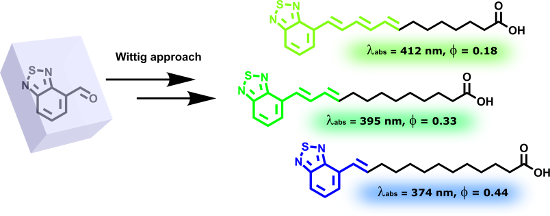
- isomerization are presented. The absorption properties are modulated by the number of conjugated C=C double bonds of the oligoene chain ranging from one to three. Large Stokes shifts of about 4900–5700 cm−1 and fluorescence quantum yields of up to 0.44 were observed. Keywords: fatty acid; fluorescence; lipid
- ; membrane; Stokes shift; Introduction The membrane of living cells consists of a variety of lipids. More than 40 years ago, biological membranes were first described as Fluid Mosaic in which proteins were embedded [1]. During recent decades it became more and more clear that such a simple model is not


Interactions between cyclodextrins and cellular components: Towards greener medical applications?
Beilstein J. Org. Chem. 2016, 12, 2644–2662, doi:10.3762/bjoc.12.261
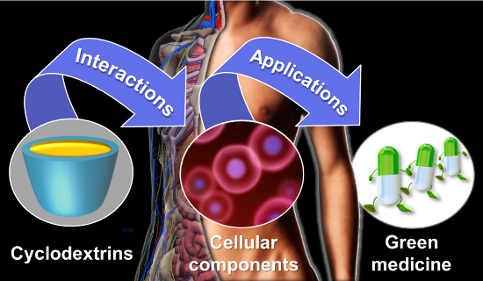
- molecules into the lipid membrane leading to increase its fluidity. In contrast, at higher concentrations, the extraction of membrane constituents is ensured by micellar solubilization [84][85]. ii) Complexation of peptides and proteins and some applications Proteins are polymers of amino acids covalently





