


Search results
Search for "metabolic engineering" in Full Text gives 9 result(s) in Beilstein Journal of Organic Chemistry.
C2 to C6 biobased carbonyl platforms for fine chemistry
- Jingjing Jiang,
- Muhammad Noman Haider Tariq,
- Florence Popowycz,
- Yanlong Gu and
- Yves Queneau
Beilstein J. Org. Chem. 2025, 21, 2103–2172, doi:10.3762/bjoc.21.165
- al. reported the valorization of C1 molecules (CH4, CO2, and CO) upgraded to the industrially important C2 chemical glycolic acid (GA) in a sustainable way. In the first step all the C1 source molecules are converted into formaldehyde. Metabolic engineering of E. coli-based biocatalysts allowed to

Graphical Abstract

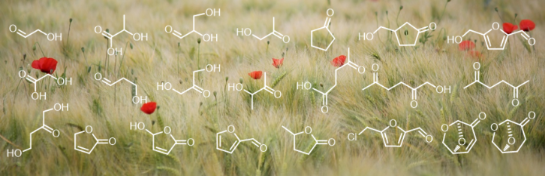
Figure 1: C2–C6 biobased carbonyl building blocks.

Scheme 1: Proposed (2 + 2) route to glycolaldehyde and glycolic acid from erythritol by Cu/AC catalyst (AC = ...

Scheme 2: Reductive amination of GCA.

Scheme 3: N-Formylation of secondary amines by reaction with GCA.

Scheme 4: Synthesis and conversion of hydroxy acetals to cyclic acetals.

Scheme 5: Synthesis of 3-(indol-3-yl)-2,3-dihydrofurans via three-component reaction of glycolaldehyde, indol...

Scheme 6: BiCl3-catalyzed synthesis of benzo[a]carbazoles from 2-arylindoles and α-bromoacetaldehyde ethylene...

Scheme 7: Cu/NCNSs-based conversion of glycerol to glycolic acid and other short biobased acids.

Scheme 8: E. coli-based biotransformation of C1 source molecules (CH4, CO2 and CO) towards C2 glycolic acid.

Scheme 9: N-Formylation of amines with C2 (a) or C3 (b) biomass-based feedstocks.

Scheme 10: Methods for the formation of propanoic acid (PA) from lactic acid (LA).

Scheme 11: Co-polymerization of biobased lactic acid and glycolic acid via a bicatalytic process.

Scheme 12: Oxidation of α-hydroxy acids by tetrachloroaurate(III) in acetic acid–sodium acetate buffer medium.

Figure 2: Selective catalytic pathways for the conversion of lactic acid (LA).

Scheme 13: Synthesis of 1,3-PDO via cross-aldol reaction between formaldehyde and acetaldehyde to 3-hydroxypro...

Scheme 14: Hydrothermal conversion of 1,3-dihydroxy-2-propane and 2,3-dihydroxypropanal to methylglyoxal.

Scheme 15: FLS-catalyzed formose reaction to synthesize GA and DHA.

Scheme 16: GCA and DHA oxidation products of glycerol and isomerization of GCA to DHA under flow conditions us...

Scheme 17: Acid-catalyzed reactions of DHA with alcohols.

Scheme 18: Synthesis of dihydroxyacetone phosphate from dihydroxyacetone.

Scheme 19: Bifunctional acid–base catalyst DHA conversion into lactic acid via pyruvaldehyde or fructose forma...

Scheme 20: Catalytic one-pot synthesis of GA and co-synthesis of formamides and formates from DHA.

Scheme 21: (a) Synthesis of furan derivatives and (b) synthesis of thiophene derivative by cascade [3 + 2] ann...

Scheme 22: Brønsted acidic ionic liquid catalyzed synthesis of benzo[a]carbazole from renewable acetol and 2-p...

Scheme 23: Asymmetric hydrogenation of α-hydroxy ketones to 1,2-diols.

Scheme 24: Synthesis of novel 6-(substituted benzylidene)-2-methylthiazolo [2,3-b]oxazol-5(6H)-one from 1-hydr...

Scheme 25: ʟ-Proline-catalyzed synthesis of anti-diols from hydroxyacetone and aldehydes.

Scheme 26: C–C-bond-formation reactions of a biomass-based feedstock aromatic aldehyde (C5) and hydroxyacetone...

Scheme 27: Ethanol upgrading to C4 bulk chemicals via the thiamine (VB1)-catalyzed acetoin condensation.

Scheme 28: One-pot sequential chemoenzymatic synthesis of 2-aminobutane-1,4-diol and 1,2,4-butanetriol via 1,4...

Scheme 29: Synthesis of 1,4-dihydroxybutan-2-one by microbial transformation.

Scheme 30: Conversion of polyols by [neocuproine)Pd(OAc)]2(OTf)2] to α-hydroxy ketones.

Scheme 31: Chemoselective oxidation of alcohols with chiral palladium-based catalyst 2.

Scheme 32: Electrochemical transformation of furfural to 5-hydroxy-2(5H)-furanone (HFO).

Scheme 33: Selective hydrodeoxygenation of HFO and oxidation to γ-butyrolactone (GBL).

Scheme 34: Photosensitized oxygenation of furan towards HFO via ozonide intermediates.

Scheme 35: Conversion of furfural to HFO and MAN by using mesoporous carbon nitride (SGCN) as photocatalyst.

Scheme 36: Synthesis of HFO from furan derivatives.

Scheme 37: Photooxidation of furfural to 5-hydroxy-2(5H)-furanone (HFO).

Scheme 38: Synthesis of Friedel–Crafts indole adduct from HFO.

Scheme 39: Conversion of HFO to α,γ-substituted chiral γ-lactones.

Scheme 40: Tautomeric transformation of HFO to formylacrylic acid.

Scheme 41: Hydrolysis of HFO to succinic acid in aqueous solution.

Scheme 42: Substitution and condensation reactions of 5-hydroxy-2(5H)-furanone (HFO).

Scheme 43: (a) Conversion of HFO towards valuable C4 chemicals and (b) anodic oxidation of 5-hydroxy-2(5H)-fur...

Figure 3: Conversion of HFO towards other natural and synthetic substances.

Scheme 44: Conversion of furfural to maleic anhydride (reaction a: VOx/Al2O3; reaction b: VPO).

Scheme 45: Conversion of furfural into succinic acid.

Scheme 46: Electro‑, photo‑, and biocatalysis for one-pot selective conversions of furfural into C4 chemicals.

Scheme 47: Production route of furfural from hemicellulose.

Scheme 48: Mechanism for xylose dehydration to furfural through a choline xyloside intermediate.

Scheme 49: Conversion of furfural to furfuryl alcohol and its derivatives.

Scheme 50: Conversion of furfural to furfuryl alcohol and 3-(2-furyl)acrolein.

Scheme 51: The aerobic oxidative condensation of biomass-derived furfural and linear alcohols.

Scheme 52: The single-step synthesis of 2-pentanone from furfural.

Scheme 53: Electrocatalytic coupling reaction of furfural and levulinic acid.

Scheme 54: Conversion of furfural to m-xylylenediamine.

Scheme 55: Conversion of furfural to tetrahydrofuran-derived amines.

Scheme 56: Formation of trans-4,5-diamino-cyclopent-2-enones from furfural.

Scheme 57: Production of pyrrole and proline from furfural.

Scheme 58: Synthesis of 1‑(trifluoromethyl)-8-oxabicyclo[3.2.1]oct-3-en-2-ones from furfural.

Scheme 59: Conversion of furfural to furfural-derived diacids.

Scheme 60: A telescope protocol derived from furfural and glycerol.

Scheme 61: A tandem cyclization of furfural and 5,5-dimethyl-1,3-cyclohexanedione.

Scheme 62: A Ugi four-component reaction to construct furfural-based polyamides.

Scheme 63: One-pot synthesis of γ-acyloxy-Cy7 from furfural.

Scheme 64: Dimerization–Piancatelli sequence toward humins precursors from furfural.

Scheme 65: Conversion of furfural to CPN.

Scheme 66: Synthesis of jet fuels range cycloalkanes from CPN and lignin-derived vanillin.

Scheme 67: Solar-energy-driven synthesis of high-density biofuels from CPN.

Scheme 68: Reductive amination of CPN to cyclopentylamine.

Scheme 69: Asymmetric hydrogenation of C=O bonds of exocyclic α,β-unsaturated cyclopentanones.

Scheme 70: Preparation of levulinic acid via the C5 route (route a) or C6 route (routes b1 and b2).

Scheme 71: Mechanism of the rehydration of HMF to levulinic acid and formic acid.

Scheme 72: Important levulinic acid-derived chemicals.

Scheme 73: Direct conversion of levulinic acid to pentanoic acid.

Scheme 74: Catalytic aerobic oxidation of levulinic acid to citramalic acid.

Scheme 75: Conversion of levulinic acid to 1,4-pentanediol (a) see ref. [236]; b) see ref. [237]; c) see ref. [238]; d) see r...

Scheme 76: Selective production of 2-butanol through hydrogenolysis of levulinic acid.

Scheme 77: General reaction pathways proposed for the formation of 5MPs from levulinic acid.

Scheme 78: Selective reductive amination of levulinic acid to N-substituted pyrroles.

Scheme 79: Reductive amination of levulinic acid to chiral pyrrolidinone.

Scheme 80: Reductive amination of levulinic acid to non-natural chiral γ-amino acid.

Scheme 81: Nitrogen-containing chemicals derived from levulinic acid.

Scheme 82: Preparation of GVL from levulinic acid by dehydration and hydrogenation.

Scheme 83: Ruthenium-catalyzed levulinic acid to chiral γ-valerolactone.

Scheme 84: Catalytic asymmetric hydrogenation of levulinic acid to chiral GVL.

Scheme 85: Three steps synthesis of ε-caprolactam from GVL.

Scheme 86: Multistep synthesis of nylon 6,6 from GVL.

Scheme 87: Preparation of MeGVL by α-alkylation of GVL.

Scheme 88: Ring-opening polymerization of five-membered lactones.

Scheme 89: Synthesis of GVL-based ionic liquids.

Scheme 90: Preparation of butene isomers from GVL under Lewis acid conditions.

Scheme 91: Construction of C5–C12 fuels from GVL over nano-HZSM-5 catalysts.

Scheme 92: Preparation of alkyl valerate from GVL via ring opening/reduction/esterification sequence.

Scheme 93: Construction of 4-acyloxypentanoic acids from GVL.

Scheme 94: Synthesis of 1,4-pentanediol (PDO) from GVL.

Scheme 95: Construction of novel cyclic hemiketal platforms via self-Claisen condensation of GVL.

Scheme 96: Copper-catalyzed lactamization of GVL.

Figure 4: Main scaffolds obtained from HMF.

Scheme 97: Biginelli reactions towards HMF-containing dihydropyrimidinones.

Scheme 98: Hantzsch dihydropyridine synthesis involving HMF.

Scheme 99: The Kabachnik–Fields reaction involving HMF.

Scheme 100: Construction of oxazolidinone from HMF.

Scheme 101: Construction of rhodamine-furan hybrids from HMF.

Scheme 102: A Groebke–Blackburn–Bienaymé reaction involving HMF.

Scheme 103: HMF-containing benzodiazepines by [4 + 2 + 1] cycloadditions.

Scheme 104: Synthesis of fluorinated analogues of α-aryl ketones.

Scheme 105: Synthesis of HMF derived disubstituted γ-butyrolactone.

Scheme 106: Functionalized aromatics from furfural and HMF.

Scheme 107: Diels–Alder adducts from HMF or furfural with N-methylmaleimide.

Scheme 108: Pathway of the one-pot conversion of HMF into phthalic anhydride.

Scheme 109: Photocatalyzed preparation of humins (L-H) from HMF mixed with spoiled HMF residues (LMW-H) and fur...

Scheme 110: Asymmetric dipolar cycloadditions on HMF.

Scheme 111: Dipolar cycloadditions of HMF based nitrones to 3,4- and 3,5-substituted isoxazolidines.

Scheme 112: Production of δ-lactone-fused cyclopenten-2-ones from HMF.

Scheme 113: Aza-Piancatelli access to aza-spirocycles from HMF-derived intermediates.

Scheme 114: Cross-condensation of furfural, acetone and HMF into C13, C14 and C15 products.

Scheme 115: Base-catalyzed aldol condensation/dehydration sequences from HMF.

Scheme 116: Condensation of HMF and active methylene nitrile.

Scheme 117: MBH reactions involving HMF.

Scheme 118: Synthesis of HMF-derived ionic liquids.

Scheme 119: Reductive amination/enzymatic acylation sequence towards HMF-based surfactants.

Scheme 120: The formation of 5-chloromethylfurfural (CMF).

Scheme 121: Conversion of CMF to HMF, levulinic acid, and alkyl levulinates.

Scheme 122: Conversion of CMF to CMFCC and FDCC.

Scheme 123: Conversion of CMF to BHMF.

Scheme 124: Conversion of CMF to DMF.

Scheme 125: CMF chlorine atom substitutions toward HMF ethers and esters.

Scheme 126: Introduction of carbon nucleophiles in CMF.

Scheme 127: NHC-catalyzed remote enantioselective Mannich-type reactions of CMF.

Scheme 128: Conversion of CMF to promising biomass-derived dyes.

Scheme 129: Radical transformation of CMF with styrenes.

Scheme 130: Synthesis of natural herbicide δ-aminolevulinic acid from CMF.

Scheme 131: Four step synthesis of the drug ranitidine from CMF.

Scheme 132: Pd/CO2 cooperative catalysis for the production of HHD and HXD.

Scheme 133: Different ruthenium (Ru) catalysts for the ring-opening of 5-HMF to HHD.

Scheme 134: Proposed pathways for preparing HXD from HMF.

Scheme 135: MCP formation and uses.

Scheme 136: Cu(I)-catalyzed highly selective oxidation of HHD to 2,5-dioxohexanal.

Scheme 137: Synthesis of N‑substituted 3‑hydroxypyridinium salts from 2,5-dioxohexanal.

Scheme 138: Ru catalyzed hydrogenations of HHD to 1,2,5-hexanetriol (a) see ref. [396]; b) see ref. [397]).

Scheme 139: Aviation fuel range quadricyclanes produced by HXD.

Scheme 140: Synthesis of HDGK from HXD and glycerol as a chain extender.

Scheme 141: Synthesis of serinol pyrrole from HXD and serinol.

Scheme 142: Synthesis of pyrroles from HXD and nitroarenes.

Scheme 143: Two-step production of PX from cellulose via HXD.

Scheme 144: Preparation of HCPN from HMF via hydrogenation and ring rearrangement.

Scheme 145: Suggested pathways from HMF to HCPN.

Scheme 146: α-Alkylation of HCPN with ethylene gas.

Scheme 147: Synthesis of 3-(hydroxymethyl)cyclopentylamine from HMF via reductive amination of HCPN.

Scheme 148: Production of LGO and Cyrene® from biomass.

Scheme 149: Synthesis of HBO from LGO and other applications.

Scheme 150: Construction of m-Cyrene® homopolymer.

Scheme 151: Conversion of Cyrene® to THFDM and 1,6-hexanediol.

Scheme 152: RAFT co-polymerization of LGO and butadienes.

Scheme 153: Polycondensation of HO-LGOL and diols with dimethyl adipate.

Scheme 154: Self-condensation of Cyrene® and Claisen–Schmidt reactions.

Scheme 155: Synthesis of 5-amino-2-(hydroxymethyl)tetrahydropyran from Cyrene®.
Research progress on the pharmacological activity, biosynthetic pathways, and biosynthesis of crocins
- Zhongwei Hua,
- Nan Liu and
- Xiaohui Yan
Beilstein J. Org. Chem. 2024, 20, 741–752, doi:10.3762/bjoc.20.68
- , aiming to lay the foundation for the large-scale production of these valuable natural products by using engineered microbial cell factories. Keywords: biosynthetic pathway; crocetin; crocins; metabolic engineering; pharmacological activity; Introduction Crocins are hydrophilic apocarotenoids mainly

Graphical Abstract

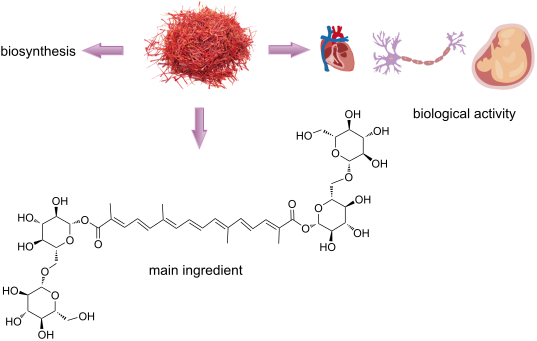
Figure 1: Principal structure of crocin and crocetin derivatives, including common substituents of the crocet...

Figure 2: The pharmacological activity and mechanisms of action of crocins.
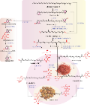
Figure 3: Crocin biosynthetic pathways in C. sativus and G. jasminoides. Enzyme abbreviations are as follows:...
Genome mining in Trichoderma viride J1-030: discovery and identification of novel sesquiterpene synthase and its products
- Xiang Sun,
- You-Sheng Cai,
- Yujie Yuan,
- Guangkai Bian,
- Ziling Ye,
- Zixin Deng and
- Tiangang Liu
Beilstein J. Org. Chem. 2019, 15, 2052–2058, doi:10.3762/bjoc.15.202
- . viride to date. Keywords: genome mining; metabolic engineering; natural products; sesquiterpene synthase; terpenes; Trichoderma viride J1-030; Introduction Terpenoids represent the most diverse group of natural products, with a wide distribution in microorganisms, plants, insects and various marine
- terpenoids have rarely been studied and the low concentrations of products under natural conditions have limited the pace of research in this field. Metabolic engineering makes the overproduction of different terpenoids from T. viride possible [21][24]. To increase the discovery efficiency of terpenoid
- products, heterologous expression of various sources of terpene synthases in Escherichia coli and Saccharomyces cerevisiae is a feasible approach [25][26]. In this study, a combination of genome mining and metabolic engineering was used for sesquiterpenoid discovery, utilizing farnesyl diphosphate

Graphical Abstract

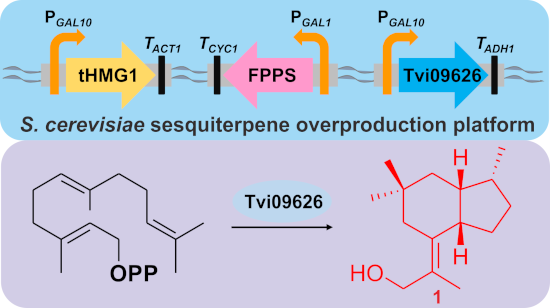
Figure 1: Schematic diagram of the S. cerevisiae sesquiterpene overproduction platform and the products of Tv...

Figure 2: Phylogenetic analysis of Tvi09626 with other characterised terpene synthases. Six clades are marked...

Figure 3: GC–MS chromatogram of products in vivo (I), in yeast YZL141 (II), in vitro Tvi09626 with FPP (III),...
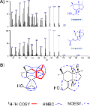
Figure 4: Characterisation of Tvi09626 products. (A) Mass spectra of compound 1 at tR = 13.46 min with m/z 22...

Figure 5: GC–MS chromatogram for the metal ion dependency assay.
Cyclopropene derivatives of aminosugars for metabolic glycoengineering
- Jessica Hassenrück and
- Valentin Wittmann
Beilstein J. Org. Chem. 2019, 15, 584–601, doi:10.3762/bjoc.15.54
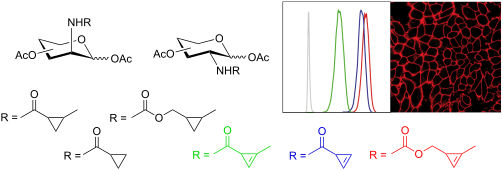
- Diels–Alder reaction; metabolic engineering; Introduction Carbohydrates are an important class of biological molecules involved in many fundamental biological processes [1]. An important tool to visualize glycoconjugates in vitro and in vivo is metabolic glycoengineering (MGE) [2][3][4]. In this

Graphical Abstract
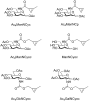
Figure 1: Cyclopropene-modified mannosamine, glucosamine and galactosamine derivatives employed for MGE.
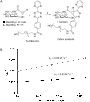
Figure 2: A) Reaction of ManNCyc and ManNCp, respectively, with Tz-PEG-OH to determine second-order rate cons...

Scheme 1: MGE with cyclopropene-modified mannosamines. Cells were grown with sugar for 48 hours and then incu...

Figure 3: HEK 293T cells were grown with 100 μM Ac4ManNCyc, Ac4ManNCp, Ac4ManNCyoc or DMSO only (negative con...

Scheme 2: Synthesis of Ac4ManNCp(H2) and Ac4ManNCyc(H2) and the corresponding DMB-labeled sialic acids. C/A =...

Scheme 3: Synthesis of Ac4ManNCyoc(H2) and the corresponding DMB-labeled sialic acid.

Scheme 4: Synthesis of Ac4GlcNCp and Ac4GalNCp.

Figure 4: HEK 293T cells were grown with 100 μM Ac4ManNCp, Ac4GlcNCp, Ac4GalNCp or DMSO only (negative contro...

Figure 5: HEK 293T cells were grown with 100 μM Ac4GlcNCp, Ac4GalNCp or DMSO only (negative control) for 48 h...

Figure 6: HEK 293T cells were grown with 50 μM (A) or 100 μM (B) Ac4GlcNCp, Ac4GlcNCyoc or DMSO only (negativ...
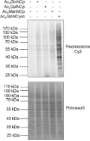
Figure 7: Western blot analysis of soluble glycoproteins. HEK 293T cells were grown for 48 h with 100 μM Ac4M...

Scheme 5: Synthesis of Ac4GlcNCp(H2) and Ac4GlcNCyoc(H2).
Back to the future: Why we need enzymology to build a synthetic metabolism of the future
- Tobias J. Erb
Beilstein J. Org. Chem. 2019, 15, 551–557, doi:10.3762/bjoc.15.49
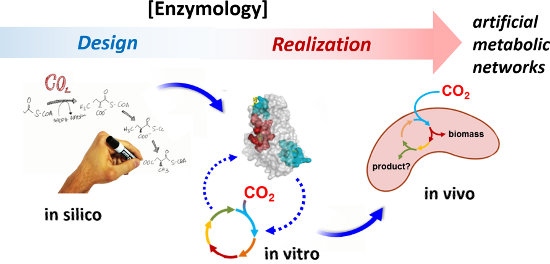
- analytical into a synthetic discipline. This is especially apparent in the field of metabolic engineering, where the concept of synthetic metabolism has been recently developed. Compared to classical metabolic engineering efforts, synthetic metabolism aims at creating novel metabolic networks in a rational
- to build synthetic metabolism. Here I discuss the current challenges and limitations in synthetic metabolic engineering and elucidate how modern day enzymology can help to build a synthetic metabolism of the future. Keywords: enzymes; in vitro biochemistry; metabolic engineering; synthetic biology
- systems has provided the intellectual as well as technological basis to create biological features that are new to nature. Review Classical metabolic engineering: Exploiting natural metabolic networks A fundamental feature of living systems is metabolism, which can be defined as the dynamic chemistry that

Graphical Abstract

Figure 1: The five levels of metabolic engineering and their definitions according to [11]. The enzyme solution s...

Figure 2: Two level 4 pathways that were recently realized in vitro. (a) The CETCH cycle for CO2 fixation [13] an...
Grip on complexity in chemical reaction networks
- Albert S. Y. Wong and
- Wilhelm T. S. Huck
Beilstein J. Org. Chem. 2017, 13, 1486–1497, doi:10.3762/bjoc.13.147
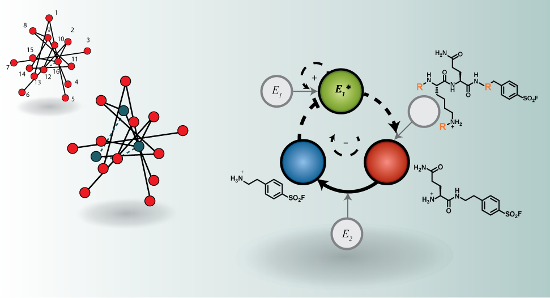
- synthetic and systems biology as well as metabolic engineering [27]. We must now learn how to apply retrosynthesis to network motifs, and we believe chemistry offers a unique opportunity to the design of chemical reaction networks (CRNs) [28][29][30]. A major challenge for systems chemistry is to translate

Graphical Abstract

Figure 1: Network motifs. (a) Examples of network motifs composed from different feedback loops. Each design ...

Figure 2: Belousov–Zhabotinsky (BZ) reaction. (a) Classical example of pattern formation in the BZ reaction w...

Figure 3: Examples of synthetic dissipative systems. (a) Feedback cycle of a bilayer network composed of the ...

Figure 4: Design principles applied in synthetic biology. (a) Network topology, mechanism, and the clockwise-...

Figure 5: A retrosynthetic design strategy to implement an oscillating enzymatic reaction network [94]. (a) Schem...
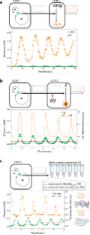
Figure 6: Functions obtained by linking multiple network modules in microfluidic flow reactors (depicted as C...

Figure 7: Influence of molecular structure on the properties of CRNs. (a) Molecular “Swiss army knives” showi...

Figure 8: Network motifs as building blocks for the step-wise build-up of complexity. Chemical reaction netwo...
Opportunities and challenges for the sustainable production of structurally complex diterpenoids in recombinant microbial systems
- Katarina Kemper,
- Max Hirte,
- Markus Reinbold,
- Monika Fuchs and
- Thomas Brück
Beilstein J. Org. Chem. 2017, 13, 845–854, doi:10.3762/bjoc.13.85
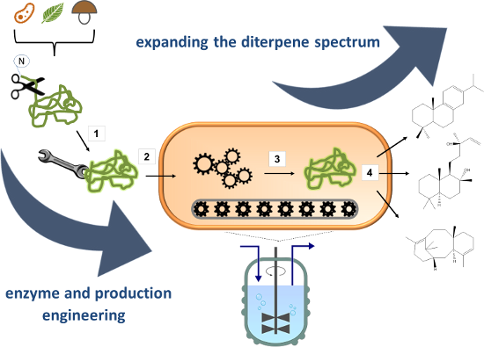
- of highly functionalized compounds. Novel approaches discussed in this review include metabolic engineering as well as site-directed mutagenesis to expand the natural terpene landscape. Focusing mainly on the validation of successful integration of engineered biosynthetic pathways into optimized
- describing the metabolic engineering of a bacterial host. Precursor formation All terpenes derive from the ubiquitous central metabolites isopentenyl diphosphate (IPP) and dimethylallyl diphosphate (DMAPP) [24] (see Scheme 1). Interestingly, only two metabolic pathways (MEP and MEV) have been identified for
- localization of diterpene biosynthesis in the plastids [31]. Metabolic engineering of plants to produce diterpenes remains challenging due to the required direction of biosynthetic enzymes into the specific organelles [32] and feedback inhibition of the 1-deoxy-D-xylulose-5-phosphate synthase (DXS) that can

Graphical Abstract

Scheme 1: Isoprenoid biosynthetic pathways and examples for their engineering in heterologous production syst...

Scheme 2: Mutational engineering of different classes of terpene synthases. Left side: The natural product of...
Figure 1: Implementation of a microbial cell factory. 1: Selection of enzymes from different species. P450 an...
Learning from the unexpected in life and DNA self-assembly
- Jennifer M. Heemstra
Beilstein J. Org. Chem. 2015, 11, 2713–2720, doi:10.3762/bjoc.11.292
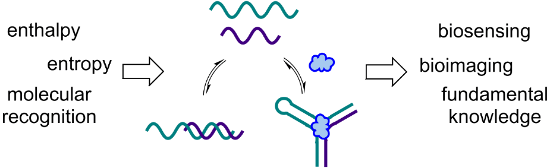
- applications such as metabolic engineering. Bringing these technologies to the point that they are routine and broadly applicable will clearly involve significant advances in molecular and cellular biology. However, contributions from supramolecular chemistry will also be critical, as these will provide the

Graphical Abstract

Figure 1: The common thread that is woven throughout our research program is the utilization of nucleic acid ...

Figure 2: Split aptamers use molecular recognition to drive the assembly of two DNA strands. Placing reactive...

Figure 3: Split aptamer ligation can be used to construct an enzyme-linked assay for small-molecule detection...
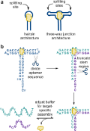
Figure 4: (a) In contrast to the more typical hairpin aptamer structure, we hypothesized that the three-way j...

Figure 5: Structure switching biosensors convert the presence of a target into a dose-dependent fluorescence ...

Figure 6: The author intensely focused on climbing the boulder problem “The Angler” during a research group o...
Coupled chemo(enzymatic) reactions in continuous flow
- Ruslan Yuryev,
- Simon Strompen and
- Andreas Liese
Beilstein J. Org. Chem. 2011, 7, 1449–1467, doi:10.3762/bjoc.7.169
- efficiency of the multistep synthesis of target compounds, due to the dissipation of intermediates in numerous side reactions. The amendment of continuous in vivo coupled-reaction processes by metabolic engineering [59] is a promising technology, which brings into play another crucial biological principle
Graphical Abstract

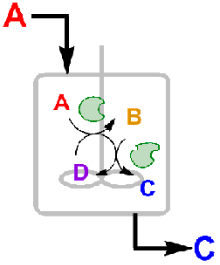
Figure 1: Metabolic pathways in a living cell as an example of efficient coupled-reaction processes. A: Subst...

Figure 2: Four generations of biotransformations. I: Single-reaction processes; II: Single-reaction processes...

Scheme 1: Production of L-leucine (3) in a continuously operating enzyme membrane reactor (EMR). E1: L-Leucin...

Scheme 2: Production of D-mandelic acid (5) in a continuously operating enzyme membrane reactor. E1: D-(−)-Ma...

Scheme 3: Simultaneous synthesis of gluconic acid (9) and glutamic acid (8) in a continuously operated membra...

Scheme 4: Production of L-tert-leucine (11) in a continuously operated enzyme membrane reactor equipped with ...

Scheme 5: Continuous oxidation of lactose (12) to lactobionic acid (13) in a dynamic membrane-aerated reactor...

Scheme 6: Production of N-acetylneuraminic acid (17) in a continuously operated enzyme membrane reactor. E1: ...

Scheme 7: Chemo-enzymatic epoxidation of 1-methylcyclohexene (18) in a packed-bed reactor (PBR) containing No...

Scheme 8: Continuous production of (R)-1-phenylethyl propionate (24) by dynamic kinetic resolution of (rac)-1...

Scheme 9: Synthesis of D-xylulose (28) from D,L-serine (26) and D,L-glyceraldehyde (25) in a continuously ope...

Scheme 10: Continuous production of L-alanine (31) from fumarate (29) in a two-stage enzyme membrane reactor. ...

Scheme 11: Continuous synthesis of 1-phenyl-(1S,2S)-propanediol (35) in a cascade of two enzyme membrane react...

Scheme 12: Production of a dipeptide 39 in a cascade of two continuously operated membrane reactors. E1: Carbo...

Scheme 13: Continuous production of GDP-mannose (43) from mannose 1-phosphate (40) in a cascade of two enzyme ...

Scheme 14: Continuous solvent-free chemo-enzymatic synthesis of ethyl (S)-3-(benzylamino)butanoate (48) in a s...

Scheme 15: Continuous chemo-enzymatic synthesis of grossamide (52) in a cascade of packed-bed reactors. E: Per...

Scheme 16: Chemo-enzymatic synthesis of 2-aminophenoxazin-3-one (56) in a cascade of continuously operating pa...

Scheme 17: Continuous conversion of 3-phospho-D-glycerate (57) into D-ribulose 1,5-bisphosphate (58) in a casc...

Scheme 18: Continuous hydrolysis of 4-cyanopyridine (59) to isonicotinic acid (61) in a cascade of two packed-...

Scheme 19: Continuous fermentative production of ethanol (64) from hardwood lignocellulose (62) in a stirred-t...

Scheme 20: Production of hydrogen by anaerobic fermentation of glucose (7) using Clostridium acetobutylicum ce...

Scheme 21: Continuous production of (2R,5R)-hexanediol (67) in an enzyme membrane reactor containing whole cel...

Scheme 22: Synthesis of L-phenylalanine (69) in a continuously stirred tank reactor equipped with a hollow-fib...

Scheme 23: Continuous epoxidation of 1,7-octadiene (70) to (R)-7-epoxyoctene (72) by a strain of Pseudomonas o...

Scheme 24: Oxidation of styrene (73) to (S)-styrene oxide (74) in a continuously operated biofilm tube reactor...

Scheme 25: Reduction of estrone (75) to β-estradiol (76) by Saccharomyces cerevisiae in a cascade of two stirr...



