


Search results
Search for "ortho-lithiation" in Full Text gives 22 result(s) in Beilstein Journal of Organic Chemistry.
1,4-Dithianes: attractive C2-building blocks for the synthesis of complex molecular architectures
- Bram Ryckaert,
- Ellen Demeyere,
- Frederick Degroote,
- Hilde Janssens and
- Johan M. Winne
Beilstein J. Org. Chem. 2023, 19, 115–132, doi:10.3762/bjoc.19.12
- 21 cannot be lithiated to give a stable vinyllithium species, and immediately expel a sulfide anion to afford phenylthioacetylene (Scheme 6a) [40], Brandsma showed that the lithiated derivatives of 1,4-dithiin (3) can be generated by ‘ortho-lithiation’-type reactions at −110 °C in THF (Scheme 6d) [41

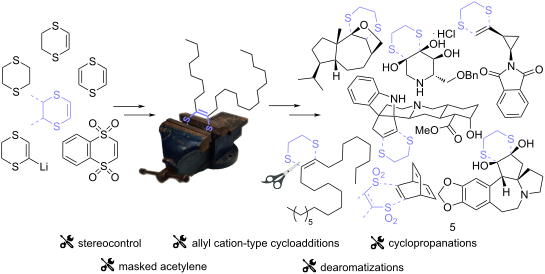
Graphical Abstract

Scheme 1: 1,3-Dithianes as useful synthetic building blocks: a) general synthetic utility (in Corey–Seebach-t...

Scheme 2: Metalation of other saturated heterocycles is often problematic due to β-elimination [16,17].

Scheme 3: Thianes as synthetic building blocks in the construction of complex molecules [18].
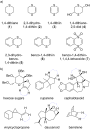
Figure 1: a) 1,4-Dithiane-type building blocks that can serve as C2-synthons and b) examples of complex targe...
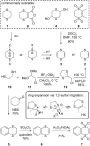
Scheme 4: Synthetic availability of 1,4-dithiane-type building blocks.

Scheme 5: Dithiins and dihydrodithiins as pseudoaryl groups [36-39].
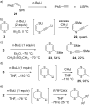
Scheme 6: Metalation of other saturated heterocycles is often problematic due to β-elimination [40-42].

Figure 2: Reactive conformations leading to β-fragmentation for lithiated 1,4-dithianes and 1,4-dithiin.

Scheme 7: Mild metalation of 1,4-dithiins affords stable heteroaryl-magnesium and heteroaryl-zinc-like reagen...
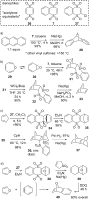
Scheme 8: Dithiin-based dienophiles and their use in synthesis [33,49-54].
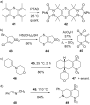
Scheme 9: Dithiin-based dienes and their use in synthesis [55-57].
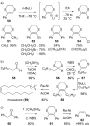
Scheme 10: Stereoselective 5,6-dihydro-1,4-dithiin-based synthesis of cis-olefins [42,58].
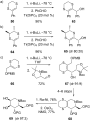
Scheme 11: Addition to aldehydes and applications in stereoselective synthesis.

Figure 3: Applications in the total synthesis of complex target products with original attachment place of 1,...

Scheme 12: Direct C–H functionalization methods for 1,4-dithianes [82,83].

Scheme 13: Known cycloaddition reactivity modes of allyl cations [84-100].
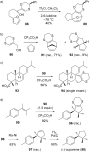
Scheme 14: Cycloadditions of 1,4-dithiane-fused allyl cations derived from dihydrodithiin-methanol 90 [101-107].

Scheme 15: Dearomative [3 + 2] cycloadditions of unprotected indoles with 1,4-dithiane-fused allyl alcohol 90 [30]....

Scheme 16: Comparison of reactivity of dithiin-fused allyl alcohols and similar non-cyclic sulfur-substituted ...
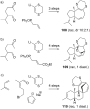
Scheme 17: Applications of dihydrodithiins in the rapid assembly of polycyclic terpenoid scaffolds [108,109].
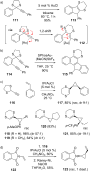
Scheme 18: Dihydrodithiin-mediated allyl cation and vinyl carbene cycloadditions via a gold(I)-catalyzed 1,2-s...

Scheme 19: Activation mode of ethynyldithiolanes towards gold-coordinated 1,4-dithiane-fused allyl cation and ...
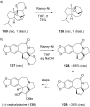
Scheme 20: Desulfurization problems.

Scheme 21: oxidative decoration strategies for 1,4-dithiane scaffolds.
Synthetic strategies for the preparation of γ-phostams: 1,2-azaphospholidine 2-oxides and 1,2-azaphospholine 2-oxides
- Jiaxi Xu
Beilstein J. Org. Chem. 2022, 18, 889–915, doi:10.3762/bjoc.18.90
- the Ortiz group investigated the directed ortho-lithiation of aminophosphazenes, they realized one example synthesis of (R)-1-phenyl-2-((R)-1-phenylethyl)-2-hydrobenzo[c][1,2]azaphosphol-3-one 1-oxide (239) from methyl (R)-(diphenyl((1-phenylethyl)amino)-λ5-phosphanylidene)carbamate (237) via the

Graphical Abstract

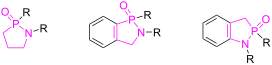
Figure 1: Biologically active 1,2-azaphospholine 2-oxide derivatives.

Figure 2: Diverse synthetic strategies for the preparation of 1,2-azaphospholidine and 1,2-azaphospholine 2-o...

Scheme 1: Synthesis of 1-phenyl-2-phenylamino-γ-phosphonolactam (2) from N,N’-diphenyl 3-chloropropylphosphon...

Scheme 2: Synthesis of 2-ethoxy-1-methyl-γ-phosphonolactam (6) from ethyl N-methyl-(3-bromopropyl)phosphonami...

Scheme 3: Synthesis of 2-aryl-1-methyl-2,3-dihydrobenzo[c][1,2]azaphosphole 1-oxides 13 from N-aryl-2-chlorom...

Scheme 4: Synthesis of 2,3-dihydrobenzo[c][1,2]azaphosphole 1-oxides from alkylarylphosphinyl or diarylphosph...

Scheme 5: Synthesis of 3-arylmethylidene-2,3-dihydrobenzo[c][1,2]azaphosphole 1-oxides via the TBAF-mediated ...
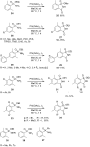
Scheme 6: Synthesis of 2-hydrobenzo[c][1,2]azaphosphol-3-one 1-oxides via the metal-free intramolecular oxida...

Scheme 7: Synthesis of 1,3-dihydrobenzo[d][1,2]azaphosphole 2-oxides 42 and 44 from ethyl/benzyl 2-bromobenzy...

Scheme 8: Synthesis of azaphospholidine 2-oxides/sulfide from 1,2-oxaphospholane 2-oxides/sulfides and 1,2-th...

Scheme 9: Synthesis of 1,3-dihydrobenzo[d][1,2]azaphosphole 2-oxides/sulfides from 2-aminobenzyl(phenyl)phosp...

Scheme 10: Synthesis of 1,3-dihydrobenzo[d][1,2]azaphosphole 2-sulfide (59) from zwitterionic 2-aminobenzyl(ph...

Scheme 11: Synthesis of 1,3-dihydrobenzo[d][1,2]azaphosphole 2-oxides from 2-aminobenzyl(methyl/phenyl)phosphi...

Scheme 12: Synthesis of ethyl 2-methyl-1,2-azaphospholidine-5-carboxylate 2-oxide 69 from 2-amino-4-(hydroxy(m...

Scheme 13: Synthesis of 2-methoxy-1,3-dihydrobenzo[d][1,2]azaphosphole 2-oxide 71 from dimethyl 2-(methylamino...

Scheme 14: Synthesis of tricyclic γ-phosphonolactams via formation of the P–C bond.

Scheme 15: Synthesis of γ-phosphonolactams 85 from ethyl 2-(3-chloropropyl)aminoalkanoates with diethyl chloro...

Scheme 16: Synthesis of N-phosphoryl- and N-thiophosphoryl-1,2-azaphospholidine 2-oxides 90/2-sulfides 91 from...

Scheme 17: Synthesis of 1-methyl-1,3-dihydrobenzo[d][1,2]azaphosphole 2-oxides 56a and 93 from P-(chloromethyl...

Scheme 18: Synthesis of 2-allylamino-1,5-dihydro-1,2-azaphosphole 2-oxides from N,N’-diallyl-vinylphosphonodia...

Scheme 19: Diastereoselective synthesis of 2-allylamino-1,5-dihydro-1,2-azaphosphole 2-oxides from N,N’-dially...

Scheme 20: Synthesis of 1-alkyl-3-benzoyl-2-ethoxy-1,3-dihydrobenzo[d][1,2]azaphosphole 2-oxides 106 from ethy...

Scheme 21: Synthesis of cyclohexadiene-fused γ-phosphinolactams from diphenyl-N-benzyl-N-methylphosphinamide (...

Scheme 22: Synthesis of cyclohexadiene-fused γ-phosphinolactams from diphenyl-N-alkyl-N-benzylphosphinamides.
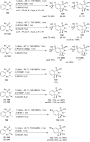
Scheme 23: Synthesis of cyclohexadiene-fused γ-phosphinolactams from diphenyl-N-methyl-N-(1-phenylethyl)phosph...
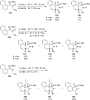
Scheme 24: Synthesis of benzocyclohexadiene-fused γ-phosphinolactams from dinaphth-1-yl-N-alkyl-N-benzylphosph...
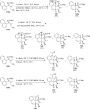
Scheme 25: Synthesis of benzocyclohexadiene-fused γ-phosphinolactams from dinaphth-1-yl-N-benzyl-N-methylphosp...
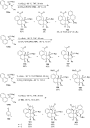
Scheme 26: Synthesis of carbonyl-containing benzocyclohexadiene-fused γ-phosphinolactams from dinaphth-1-yl-N-...

Scheme 27: Synthesis of benzocyclohexadiene-fused γ-phosphinolactams from dinaphthyl-N-benzyl-N-methylphosphin...
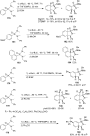
Scheme 28: Synthesis of cyclohexadiene-fused 1-(N-benzyl-N-methyl)amino-γ-phosphinolactams from aryl-N,N’-dibe...

Scheme 29: Synthesis of bis(cyclohexadiene-fused γ-phosphinolactam)s from bis(diphenyl-N-benzylphosphinamide)s....

Scheme 30: Synthesis of bis(hydroxymethyl-derived cyclohexadiene-fused γ-phosphinolactam)s from tetramethylene...

Scheme 31: Synthesis of 2-aryl/dimethylamino-1-ethoxy-2-hydrobenzo[c][1,2]azaphosphol-3-one 1-oxides from ethy...

Scheme 32: Synthesis of ethyl 2-ethoxy-1,2-azaphospholidine-4-carboxylate 2-oxides from ethyl 2-((chloro(ethox...

Scheme 33: Synthesis of (1S,3R)-2-(tert-butyldiphenylsilyl)-3-methyl-1-phenyl-2,3-dihydrobenzo[c][1,2]azaphosp...

Scheme 34: Synthesis of 2,3,3a,9a-tetrahydro-4H-1,2-azaphospholo[5,4-b]chromen-4-one (215) from 3-(phenylamino...

Scheme 35: Synthesis of quinoline-fused 1,2-azaphospholine 2-oxides from 2-azidoquinoline-3-carbaldehydes and ...

Scheme 36: Synthesis of 1-hydro-1,2-azaphosphol-5-one 2-oxide from cyanoacetohydrazide with phosphonic acid an...

Scheme 37: Synthesis of chromene-fused 5-oxo-1,2-azaphospolidine 2-oxides.

Scheme 38: Synthesis of (R)-1-phenyl-2-((R)-1-phenylethyl)-2-hydrobenzo[c][1,2]azaphosphol-3-one 1-oxide (239)...

Scheme 39: Synthesis of dihydro[1,2]azaphosphole 1-oxides from aryl/vinyl-N-phenylphosphonamidates and aryl-N-...

Scheme 40: Synthesis of 1,3-dihydro-[1,2]azaphospholo[5,4-b]pyridine 2-oxides.
Synthesis of 6,13-difluoropentacene
- Matthias W. Tripp and
- Ulrich Koert
Beilstein J. Org. Chem. 2020, 16, 2136–2140, doi:10.3762/bjoc.16.181
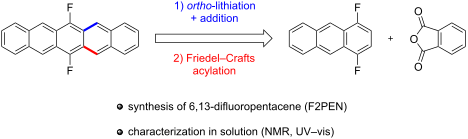
- subsequent reduction of the anthraquinone gave 1,4-difluoroanthracene. After ortho-lithiation and reaction with phthalic anhydride a carboxylic acid was obtained whose Friedel–Crafts acylation and subsequent reductive removal of the oxygen-functionalities resulted in the formation of the target compound. The
- HOMO–LUMO gap of 6,13-difluoropentacene was determined via UV–vis spectroscopy and compared to other fluorinated pentacenes. Keywords: fluorinated acenes; Friedel–Crafts reaction; ortho-lithiation; synthesis; Introduction Pentacenes are a prototype in the field of organic semiconductors due to their
- acid precursor could be prepared by reaction of the anthracenyllithium 7 with phthalic anhydride (8). Intermediate 7 could be accessed by ortho-lithiation of anthracene 9. The synthesis of 9 by two consecutive Friedel–Crafts acylation reactions and reduction of the resulting anthraquinone could start

Graphical Abstract
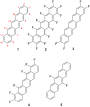
Figure 1: Structures of pentacene and fluorinated pentacenes.

Scheme 1: Retrosynthetic analysis of F2PEN 5.

Scheme 2: Synthesis of F2PEN 5.

Scheme 3: Decomposition of diol 13 in solution.

Figure 2: UV–vis spectrum of F2PEN 5 in CH2Cl2.
Architecture and synthesis of P,N-heterocyclic phosphine ligands
- Wisdom A. Munzeiwa,
- Bernard Omondi and
- Vincent O. Nyamori
Beilstein J. Org. Chem. 2020, 16, 362–383, doi:10.3762/bjoc.16.35
- dimethylamine or, by using ferrocenyl(dimethylamino)acetonitrile. The phosphine group is introduced by ortho-lithiation of the ferrocenylamine followed by subsequent trapping with chlorophosphine [114][115]. Preceding the ground breaking work by Pfaltz, many P,N ligands have been prepared for asymmetric
Graphical Abstract

Scheme 1: Synthesis of pyridylphosphine ligands.

Figure 1: Pyridylphosphine ligands.

Scheme 2: Synthesis of piperidyl- and oxazinylphosphine ligands.

Scheme 3: Synthesis of linear multi-chelate pyridylphosphine ligands.

Scheme 4: Synthesis of chiral acetal pyridylphosphine ligands.

Scheme 5: Synthesis of diphenylphosphine-substituted triazine ligands.
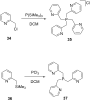
Scheme 6: Synthesis of (pyridine-2-ylmethyl)phosphine ligands.

Scheme 7: Synthesis of diphosphine pyrrole ligands.

Scheme 8: Synthesis of 4,5-diazafluorenylphosphine ligands.

Scheme 9: Synthesis of thioether-containing pyridyldiphosphine ligands starting from ethylene sulfide and dip...

Scheme 10: Synthesis of monoterpene-derived phosphine pyridine ligands.

Scheme 11: Synthesis of N-phenylphosphine-substituted imidazole ligands.

Scheme 12: Synthesis of triazol-4-ylphosphine ligands.

Scheme 13: Synthesis of phosphanyltriazolopyridines and product selectivity depending on the substituents’ eff...

Scheme 14: Synthesis of PTA-phosphine ligands.

Scheme 15: Synthesis of isomeric phosphine dipyrazole ligands by varying the reaction temperature.

Scheme 16: Synthesis of N-tethered phosphine imidazolium ligands (route A) and diphosphine imidazolium ligands...

Scheme 17: Synthesis of {1-[2-(pyridin-2-yl)- (R = CH) and {1-[2-(pyrazin-2-yl)quinazolin-4-yl]naphthalen-2-yl...

Scheme 18: Synthesis of oxazolylindolylphosphine ligands 102.

Scheme 19: Synthesis of pyrrolylphosphine ligands.

Scheme 20: Synthesis of phosphine guanidinium ligands.

Scheme 21: Synthesis of a polydentate aminophosphine ligand.

Scheme 22: Synthesis of quinolylphosphine ligands.

Scheme 23: Synthesis of N-(triazolylmethyl)phosphanamine ligands.

Figure 2: Triazolylphosphanamine ligands synthesized by Wassenaar’s method [22].

Scheme 24: Synthesis of oxazaphosphorines.

Scheme 25: Synthesis of paracyclophane pyridylphosphine ligands.

Scheme 26: Synthesis of triazolylphosphine ligands.

Figure 3: Click-phosphine ligands.

Scheme 27: Ferrocenyl pyridylphosphine imine ligands.

Scheme 28: Synthesis of phosphinooxazolines (PHOX).

Scheme 29: Synthesis of ferrocenylphosphine oxazoles.
A review of the total syntheses of triptolide
- Xiang Zhang,
- Zaozao Xiao and
- Hongtao Xu
Beilstein J. Org. Chem. 2019, 15, 1984–1995, doi:10.3762/bjoc.15.194
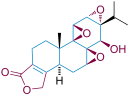
- triptolide (Figure 2, route I and Scheme 7) [74]. In this synthesis, commercially available 2-isopropylphenol (31) was used as starting material, protection of 31 with chloromethyl methyl ether (MOM), followed by ortho lithiation and methylation with iodomethane, provided intermediate 85, which was lithiated

Graphical Abstract

Figure 1: Structures of triptolide (1), triptonide (2), tripdiolide (3), 16-hydroxytriptolide (4), triptrioli...

Figure 2: Syntheses of triptolide.

Scheme 1: Berchtold’s synthesis of triptolide.

Scheme 2: Li’s formal synthesis of triptolide.

Scheme 3: van Tamelen’s asymmetric synthesis of triptonide and triptolide.

Scheme 4: Van Tamelen’s (method II) formal synthesis of triptolide.

Scheme 5: Sherburn’s formal synthesis of triptolide.

Scheme 6: van Tamelen’s biogenetic type total synthesis of triptolide.

Scheme 7: Yang’s total synthesis of triptolide.

Scheme 8: Key intermediates or transformations of routes J–N.
Recent applications of chiral calixarenes in asymmetric catalysis
- Mustafa Durmaz,
- Erkan Halay and
- Selahattin Bozkurt
Beilstein J. Org. Chem. 2018, 14, 1389–1412, doi:10.3762/bjoc.14.117
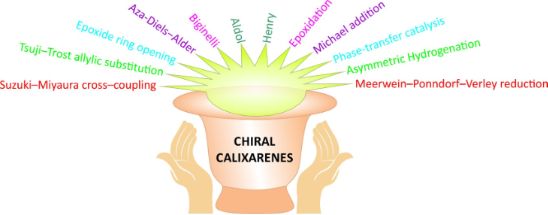
- anion with the two hydroxy groups of the calixarene ligand to selectively direct the nucleophile towards one carbon atom of the π-allyl intermediate in the presence of potassium cations. In 2009 and 2010, Arnott et al. utilized a chiral isopropyloxazoline as an ortho-lithiation directing group in order
- selectivity of ortho-lithiation could be tuned by changing the alkyllithium reagent employed. The performance of four inherently chiral bidentate calix[4]arene ligands in the asymmetric Tsuji–Trost allylation reaction (Scheme 10) has been evaluated and compared to that of the planar model ligands. Inherently

Graphical Abstract

Figure 1: Inherently chiral calix[4]arene-based phase-transfer catalysts.

Scheme 1: Asymmetric alkylations of 3 catalyzed by (±)-1 and (±)-2 under phase-transfer conditions.

Scheme 2: Synthesis of chiral calix[4]arene-based phase-transfer catalyst 7 and structure of O’Donnell’s N-be...

Scheme 3: Asymmetric alkylation of glycine derivative 3 catalyzed by calixarene-based phase-transfer catalyst ...

Figure 2: Calix[4]arene-amides used as phase-transfer catalysts.

Scheme 4: Phase-transfer alkylation of 3 catalyzed by calixarene-triamide 12.

Scheme 5: Synthesis of inherently chiral calix[4]arenes 20a/20b substituted at the lower rim. Reaction condit...

Scheme 6: Asymmetric Henry reaction between 21 and 22 catalyzed by 20a/20b.

Figure 3: Proposed transition state model of asymmetric Henry reaction.

Scheme 7: Synthesis of enantiomerically pure phosphinoferrocenyl-substituted calixarene ligands 27–29.

Scheme 8: Asymmetric coupling reaction of aryl boronates and aryl halides in the presence of calixarene mono ...

Scheme 9: Asymmetric allylic alkylation in the presence of calix[4]arene ligand (S,S)-29.

Figure 4: Structure of inherently chiral oxazoline calix[4]arenes applied in the palladium-catalyzed Tsuji–Tr...

Scheme 10: Asymmetric Tsuji–Trost reaction in the presence of calix[4]arene ligands 36–39.

Figure 5: BINOL-derived calix[4]arene-diphosphite ligands.

Scheme 11: Asymmetric hydrogenation of 41a and 41b catalyzed by in situ-generated catalysts comprised of [Rh(C...

Figure 6: Inherently chiral calix[4]arene 43 containing a diarylmethanol structure.

Scheme 12: Asymmetric Michael addition reaction of 44 with 45 catalyzed by 43.

Figure 7: Calix[4]arene-based chiral primary amine–thiourea catalysts.

Scheme 13: Asymmetric Michael addition of 48 with 49 catalyzed by 47a and 47b.

Scheme 14: Enantioselective Michael addition of 51 to 52 catalyzed by calix[4]arene thioureas.

Scheme 15: Synthesis of calix[4]arene-based tertiary amine–thioureas 54–56.

Scheme 16: Asymmetric Michael addition of 34 and 57 to nitroalkenes 49 catalyzed by 54b.

Scheme 17: Synthesis of p-tert-butylcalix[4]arene bis-squaramide derivative 64.

Scheme 18: Asymmetric Michael addition catalyzed by 64.

Scheme 19: Synthesis of chiral p-tert-butylphenol analogue 68.

Figure 8: Novel prolinamide organocatalysts based on the calix[4]arene scaffold.

Scheme 20: Asymmetric aldol reactions of 72 with 70 and 71 catalyzed by 69b.

Scheme 21: Synthesis of p-tert-butylcalix[4]arene-based chiral organocatalysts 75 and 78 derived from L-prolin...

Scheme 22: Synthesis of upper rim-functionalized calix[4]arene-based L-proline derivative 83.

Scheme 23: Synthesis and proposed structure of Calix-Pro-MN (86).

Figure 9: Calix[4]arene-based L-proline catalysts containing ester, amide and acid units.

Scheme 24: Synthesis of calix[4]arene-based prolinamide 92.

Scheme 25: Calixarene-based catalysts for the aldol reaction of 21 with 70.

Scheme 26: Asymmetric aldol reactions of 72 with cyclic ketones catalyzed by calix[4]arene-based chiral organo...

Figure 10: A proposed structure for catalyst 92 in H2O.

Scheme 27: Synthetic route for organocatalyst 98.

Scheme 28: Asymmetric aldol reactions catalyzed by 99.

Figure 11: Proposed catalytic environment for catalyst 99 in the presence of water.

Scheme 29: Asymmetric aldol reactions between 94 and 72 catalyzed by 55a.

Scheme 30: Enantioselective Biginelli reactions catalyzed by 69f.

Scheme 31: Synthesis of calix[4]arene–(salen) complexes.

Scheme 32: Enantioselective epoxidation of 108 catalyzed by 107a/107b.

Scheme 33: Synthesis of inherently chiral calix[4]arene catalysts 111 and 112.

Scheme 34: Enantioselective MPV reduction.

Scheme 35: Synthesis of chiral calix[4]arene ligands 116a–c.

Scheme 36: Asymmetric MPV reduction with chiral calix[4]arene ligands.

Scheme 37: Chiral AlIII–calixarene complexes bearing distally positioned chiral substituents.

Scheme 38: Asymmetric MPV reduction in the presence of chiral calix[4]arene diphosphites.

Scheme 39: Synthesis of enantiomerically pure inherently chiral calix[4]arene phosphonic acid.

Scheme 40: Asymmetric aza-Diels–Alder reactions catalyzed by (cR,pR)-121.

Scheme 41: Asymmetric ring opening of epoxides catalyzed by (cR,pR)-121.
Nucleophilic fluoroalkylation/cyclization route to fluorinated phthalides
- Masanori Inaba,
- Tatsuya Sakai,
- Shun Shinada,
- Tsuyuka Sugiishi,
- Yuta Nishina,
- Norio Shibata and
- Hideki Amii
Beilstein J. Org. Chem. 2018, 14, 182–186, doi:10.3762/bjoc.14.12
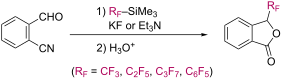
- been few reports on the preparation of fluoroalkyl phthalides [11][12][13][14][15][16][17][18][19]. The first synthesis of 3-(trifluoromethyl)phthalides was accomplished by Reinecke and Chen in 1993. They studied ortho-lithiation of phenyloxazolines and the subsequent reactions with pentafluoroacetone

Graphical Abstract

Scheme 1: Phthalide and fluorinated phthalides (1).

Scheme 2: Plausible reaction mechanism for the formation of phthalide 1a.
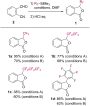
Scheme 3: Synthesis of fluorinated phthalides 1.

Scheme 4: Asymmetric synthesis of 1a using a chiral auxiliary.

Scheme 5: Catalytic asymmetric synthesis of 1a.
C–H bond halogenation catalyzed or mediated by copper: an overview
- Wenyan Hao and
- Yunyun Liu
Beilstein J. Org. Chem. 2015, 11, 2132–2144, doi:10.3762/bjoc.11.230
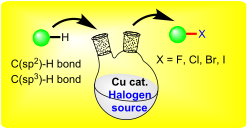
- electron-enriched arenes [7][8][9], diazotization/halogenations of anilines [10], and ortho-lithiation/halogenations sequence [11] among others are widely used as traditional strategies for creating C–X bonds. However, one or more problems such as poor site-selectivity, reliance on toxic halogen sources

Graphical Abstract

Scheme 1: Copper-catalyzed C–H bond halogenation of 2-arylpyridine.

Scheme 2: ortho-Chlorination of 2-arylpridines with acyl chlorides.

Scheme 3: Copper-catalyzed chlorination of 2-arylpyridines using LiCl.

Scheme 4: Copper-catalyzed C–H halogenation of 2-arylpyridines using LiX.

Scheme 5: Copper-mediated selective C–H halogenations of 2-arylpyridine.

Scheme 6: Copper-catalyzed C–H o-halogenation using removable DG.

Scheme 7: Copper-catalyzed C–H halogenations using PIP as DG.

Scheme 8: Copper-catalyzed quinoline C–H chlorination.

Scheme 9: Copper-catalyzed arene C–H fluorination of benzamides.

Scheme 10: Copper-catalyzed arene C–H iodination of 1,3-azoles.
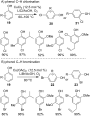
Scheme 11: Copper-catalyzed C–H halogenations of phenols.

Scheme 12: Proposed mechanism for the C–H halogenation of phenols.

Scheme 13: Copper-catalyzed halogenation of electron enriched arenes.

Scheme 14: Copper-catalyzed C–H bromination of arenes.

Scheme 15: CuI-mediated synthesis of iododibenzo[b,d]furans via C–H functionalization.

Scheme 16: Cu-Mn spinel oxide-catalyzed phenol and heteroarene halogenation.

Scheme 17: Copper-catalyzed halogenations of 2-amino-1,3thiazoles.

Scheme 18: Copper-mediated chlorination and bromination of indolizines.

Scheme 19: Copper-catalyzed three-component synthesis of bromoindolizines.

Scheme 20: Copper-mediated C–H halogenation of azacalix[1]arene[3]pyridines.

Scheme 21: Copper-mediated cascade synthesis of halogenated pyrrolones.

Scheme 22: Copper-mediated alkene C–H chlorination in spirothienooxindole.

Scheme 23: Copper-catalyzed remote C–H chlorination of alkyl hydroperoxides.
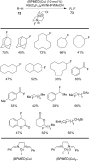
Scheme 24: Copper-catalyzed C–H fluorination of alkanes.
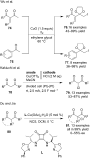
Scheme 25: Copper-catalyzed or mediated C–H halogenations of active C(sp3)-bonds.
Recent applications of the divinylcyclopropane–cycloheptadiene rearrangement in organic synthesis
- Sebastian Krüger and
- Tanja Gaich
Beilstein J. Org. Chem. 2014, 10, 163–193, doi:10.3762/bjoc.10.14
- followed by reductive epoxide opening furnished the desired alcohol 73 [72]. Alcohol-directed 1,4-reduction using LiAlH4 [73] followed by ether formation gave methyl ether 74. Reduction of the remaining ketone moiety gave the equatorial alcohol exclusively. Ortho-lithiation followed by the addition of

Graphical Abstract

Scheme 1: Vogel’s first approach towards the divinylcyclopropane rearrangement [4] and characterization of cis-d...

Scheme 2: Transition states for the Cope rearrangement and the related DVCPR. Ts = transition state.

Scheme 3: Two possible mechanisms of trans-cis isomerizations of divinylcyclopropanes.

Scheme 4: Proposed biosynthesic pathway to ectocarpene (21), an inactive degradation product of a sexual pher...

Scheme 5: Proposed biosynthesis of occidenol (25) and related natural compounds.

Scheme 6: Gaich’s bioinspired system using the DVCPR to mimick the dimethylallyltryptophan synthase. DMAPP = ...

Scheme 7: Iguchi’s total synthesis of clavubicyclone, part 1.

Scheme 8: Iguchi’s total synthesis of clavubicyclone, part 2.

Scheme 9: Wender’s syntheses of the two pseudoguainanes confertin (50) and damsinic acid (51) and Pier’s appr...
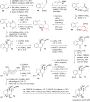
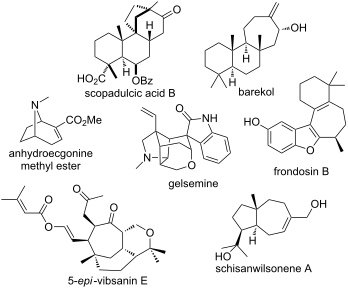
Scheme 10: Overman’s total synthesis of scopadulcic acid B.

Scheme 11: Davies’ total syntheses of tremulenolide A and tremulenediol A.

Scheme 12: Davies formal [4 + 3] cycloaddition approach towards the formal synthesis of frondosin B.

Scheme 13: Davies and Sarpongs formal [4 + 3]-cycloaddition approach towards barekoxide (106) and barekol (107...

Scheme 14: Davies formal [4 + 3]-cycloaddition approach to 5-epi-vibsanin E (115) containing an intermediate c...

Scheme 15: Echavarren’s total synthesis of schisanwilsonene A (126) featuring an impressive gold-catalzed casc...

Scheme 16: Davies early example of a formal [4 + 3]-cycloaddition in alkaloids synthesis.

Scheme 17: Fukuyama’s total synthesis of gelsemine, part 1.

Scheme 18: Fukuyama’s total synthesis of gelsemine, featuring a divinylcyclopropane rearrangement, part 2.

Scheme 19: Kende’s total synthesis of isostemofoline, using a formal [4 + 3]-cycloaddition, including an inter...

Scheme 20: Danishefsky’s total synthesis of gelsemine, part 1.

Scheme 21: Danishefsky’s total synthesis of gelsemine, part 2.

Scheme 22: Fukuyama’s total synthesis of gelsemoxonine.

Scheme 23: Wender’s synthetic access to the core skeleton of tiglianes, daphnanes and ingenanes.

Scheme 24: Davies’ approach towards the core skeleton of CP-263,114 (212).

Scheme 25: Wood’s approach towards actinophyllic acid.

Scheme 26: Takeda’s approach towards the skeleton of the cyanthins, utilitizing the divinylcyclopropane rearra...

Scheme 27: Donaldson’s organoiron route towards the guianolide skeleton.

Scheme 28: Stoltz’s tandem Wolff/DVCPR rearrangement.

Scheme 29: Stephenson’s tandem photocatalysis/arylvinylcyclopropane rearrangement.

Scheme 30: Padwa’s rhodium cascade involving a DVCPR.

Scheme 31: Matsubara’s version of a DVCPR.

Scheme 32: Toste’s tandem gold-catalyzed Claisen-rearrangement/DVCPR.

Scheme 33: Ruthenium- and gold-catalyzed versions of tandem reactions involving a DVCPR.

Scheme 34: Tungsten, platinum and gold catalysed cycloisomerizations leading to a DVCPR.

Scheme 35: Reisman’s total synthesis of salvileucalin B, featuring an (undesired) vinylcyclopropyl carbaldehyd...

Scheme 36: Studies on the divinylepoxide rearrangement.

Scheme 37: Studies on the vinylcyclopropanecarbonyl rearrangement.

Scheme 38: Nitrogen-substituted variants of the divinylcyclopropane rearrangement.
Halogenated volatiles from the fungus Geniculosporium and the actinomycete Streptomyces chartreusis
- Tao Wang,
- Patrick Rabe,
- Christian A. Citron and
- Jeroen S. Dickschat
Beilstein J. Org. Chem. 2013, 9, 2767–2777, doi:10.3762/bjoc.9.311
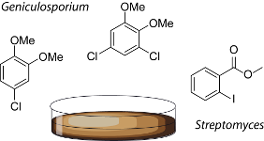
- Scheme 1. Surprisingly, no satisfying synthetic procedure for compound 4a was available from literature, but ortho-lithiation of veratrole (5) followed by treatment with trifluorosulfonyl chloride and triethylamine gave acceptable yields (47%). Conversion of 4-aminoveratrole (6) into the corresponding

Graphical Abstract

Figure 1: Total ion chromatogram of a CLSA headspace extract from Geniculosporium.

Figure 2: Mass spectra of A) the chlorinated volatile X and B) the chlorinated volatile Y.

Figure 3: Constitutional isomers of chlorodimethoxybenzene as candidate structures for X.

Scheme 1: Synthesis of chlorodimethoxybenzenes as reference compounds for X.
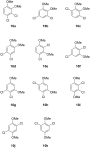
Figure 4: Constitutional isomers of dichlorodimethoxybenzene as candidate structures for Y.
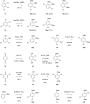
Scheme 2: Synthesis of chlorodimethoxybenzenes as reference compounds for Y.

Figure 5: Known natural products that are structurally related to 4b and 10b from Geniculosporium.

Figure 6: Total ion chromatograms of headspace extracts from S. chartreusis. A) Growth on 84 GYM showing prod...

Figure 7: Calicheamicin, a known iodinated compound from the actinomycete Micromonspora echinospora.
Inter- and intramolecular enantioselective carbolithiation reactions
- Asier Gómez-SanJuan,
- Nuria Sotomayor and
- Esther Lete
Beilstein J. Org. Chem. 2013, 9, 313–322, doi:10.3762/bjoc.9.36

- intermediates that can be converted into various types of chiral ferrocene derivatives through diastereoselective ortho-lithiation [21]. Some years ago, the concept of flash chemistry was proposed, involving fast chemical synthesis by using flow microreactors, which enabled the use of highly reactive

Graphical Abstract

Scheme 1: Intermolecular carbolithiation.

Scheme 2: Carbolithiation of cinnamyl and dienyl derivatives.

Scheme 3: Carbolithiation of cinnamyl alcohol.

Scheme 4: Carbolithiation of styrene derivatives.

Scheme 5: Carbolithiation of α-aryl O-alkenyl carbamates.

Scheme 6: Carbolithiation-rearrangement of N-alkenyl-N-arylureas.

Scheme 7: Carbolithiation of N,N-dimethylaminofulvene.

Scheme 8: Carbolithiation of enynes.

Scheme 9: Intramolecular carbolithiation.

Scheme 10: Carbolithiation of 5-alkenylcarbamates.

Scheme 11: Carbolithiation of cinnamylpiperidines.

Scheme 12: Carbolithiation of alkenylpyrrolidines.

Scheme 13: Enantioselective carbolithiation of N-allyl-2-bromoanilines.
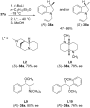
Scheme 14: Effect of the ligand in the carbolithiation reaction.

Scheme 15: Effect of the alkene substitution in the carbolithiation reaction.
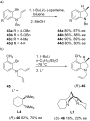
Scheme 16: Effect of the ring substitution in the carbolithiation reaction.

Scheme 17: Enantioselective carbolithiation of allyl aryl ethers.

Scheme 18: Formation of six-membered rings: pyrroloisoquinolines.

Scheme 19: Formation of six-membered rings: tetrahydroquinolines.
Rh(III)-catalyzed directed C–H bond amidation of ferrocenes with isocyanates
- Satoshi Takebayashi,
- Tsubasa Shizuno,
- Takashi Otani and
- Takanori Shibata
Beilstein J. Org. Chem. 2012, 8, 1844–1848, doi:10.3762/bjoc.8.212
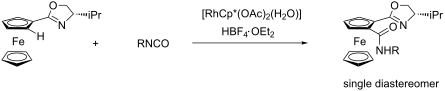
- ]. Planar chiral 1,2-disubstituted ferrocene derivatives are usually synthesized by using diastereoselective ortho-lithiation of monosubstituted ferrocenes with an appropriate chiral ortho-directing substituent such as chiral amines, sulfoxides, and oxazolines [3]. However, this method suffers from low atom
- reactivity. The absolute configuration of planar chirality in 3c was determined to be S by X-ray crystallography (Figure 1). The absolute configuration is consistent with the previous report of diastereoselective ortho-lithiation of 1b [27]. Conclusion In conclusion, a Cp*Rh(III)-catalyzed reaction between

Graphical Abstract

Figure 1: The ORTEP drawing of 3c with 30% probability ellipsoids, and Flack absolute structure parameter of ...
On the control of secondary carbanion structure utilising ligand effects during directed metallation
- Andrew E. H. Wheatley,
- Jonathan Clayden,
- Ian H. Hillier,
- Alison Campbell Smith,
- Mark A. Vincent,
- Laurence J. Taylor and
- Joanna Haywood
Beilstein J. Org. Chem. 2012, 8, 50–60, doi:10.3762/bjoc.8.5
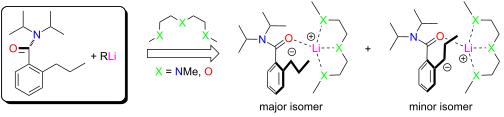
- approaches the reactive position (“ortho lithiation” when deprotonation occurs adjacent to the directing group [2][3], “directed remote metallation” when reaction is non-adjacent [12][13][14][15]). However, the presence of substituents at the ortho position of the aromatic ring introduces the possibility of

Graphical Abstract

Scheme 1: Molecular structures of 1/2-H and their corresponding ortho-lithiates [21].

Scheme 2: Molecular structures of 3/4-H and their corresponding lateral lithiates [23,24].

Scheme 3: Conversion of kinetic ortho-lithiate into the thermodynamic lateral lithiate under the influence of...

Scheme 4: Molecular structure of 5-H and its lateral and ortho-lithiates [20].

Scheme 5: Lateral metallation of 6-H using t-BuLi in the presence of Lewis base L.

Figure 1: Molecular structure of 6-Lil·PMDTA; H-atoms (excl. H8) omitted for clarity. Selected bond lengths (...

Scheme 6: Comparison of aromatic and aryl–(α-C) bond distances in 5-Lil·L [20] and 6-Lil·L (L = PMDTA).

Figure 2: Molecular structure of 6-Lil·DGME; H-atoms omitted. Selected bond lengths (Å) and angles (°): O1–Li...

Figure 3: Computed minimum energy conformers (B3LYP density functional/6-311++G(2d,2p) basis set; H-atoms omi...
Recent advances in direct C–H arylation: Methodology, selectivity and mechanism in oxazole series
- Cécile Verrier,
- Pierrik Lassalas,
- Laure Théveau,
- Guy Quéguiner,
- François Trécourt,
- Francis Marsais and
- Christophe Hoarau
Beilstein J. Org. Chem. 2011, 7, 1584–1601, doi:10.3762/bjoc.7.187
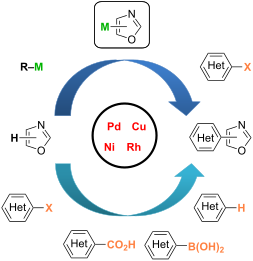
- regioselective functionalization. Ortho-lithiation by means of alkyllithium and lithium amides bases has been extensively developed as lithiated species display a high reactivity towards many electrophiles, leading to various substitutions (e.g., halogenation, carboxylation, acylation, hydroxymethylation

Graphical Abstract

Scheme 1: Stoichiometric and catalytic direct (hetero)arylation of arenes.

Scheme 2: Stille and Negishi cross-coupling methodologies in oxazole series [28,30,31,33,34].

Scheme 3: Stoichiometric direct (hetero)arylation of (benz)oxazole with magnesate bases [35].

Scheme 4: Ohta's pioneering catalytic direct C5-selective pyrazinylation of oxazole [36,37].

Scheme 5: Preparation of pharmaceutical compounds by following the pioneering Ohta protocol [38,39].

Scheme 6: Miura’s pioneering catalytic direct arylations of (benz)oxazoles [40]. aIsolated yield.

Scheme 7: Pd(0)- and Cu(I)-catalyzed direct C2-selective arylation of (benz)oxazoles [41-44].

Scheme 8: Cu(I)-catalyzed direct C2-selective arylations of (benz)oxazoles [40,45-47].

Scheme 9: Copper-free Pd(0)-catalyzed direct C5- and C2-selective arylation of oxazole-4-carboxylate esters [48-50,52].
Scheme 10: Iterative synthesis of bis- and trioxazoles [51].
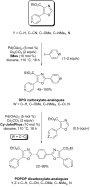
Scheme 11: Preparation of DPO- and POPOP-analogues [53].

Scheme 12: Pd(0)-catalyzed direct arylation of benzoxazole with aryl chlorides [54].

Scheme 13: Pd(0)-catalyzed direct C2-selective arylation of (benz)oxazoles with bromides and chlorides using b...

Scheme 14: Palladium-catalyzed direct arylation of oxazoles under green conditions; (a) Zhuralev direct arylat...

Scheme 15: Pd(0)-catalyzed C2- and C5-selective (hetero)arylation of oxazole [63].

Scheme 16: Pd(0)-catalyzed C2- and C5-selective (hetero)arylation of ethyl oxazole-4-carboxylate [64].

Scheme 17: Pd(0)-catalyzed direct C4-phenylation of oxazoles; (a) Miura’s procedure [65]; (b) Fagnou’s procedure [66].

Scheme 18: Catalytic cycles for Cu(I)-catalyzed (routeA) and Pd(0)/Cu(I)-catalyzed (route B) direct arylation ...
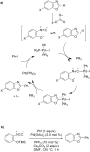
Scheme 19: Base-assisted, Pd(0)-catalyzed, C2-selective, direct arylation of benzoxazole proposed by Zhuralev [58]...

Scheme 20: Electrophilic substitution-type mechanism proposed by Hoarau [64].

Scheme 21: CMD-proceeding C5-selective direct arylation of oxazole proposed by Strotman and Chobabian [63].

Scheme 22: DFT calculations on methyl oxazole-4-carboxylate and consequently developed methodologies for the P...

Scheme 23: Pd(0)-catalyzed direct arylation of (benz)oxazoles with tosylates and mesylates [71].

Scheme 24: Pd(0)-catalyzed direct arylation of oxazoles with sulfamates [72].

Scheme 25: Pd(II)- and Cu(II)-catalyzed decarboxylative direct C–H coupling of oxazoles with 4- and 5-carboxyo...

Scheme 26: Pd(II)- and Ag(II)-catalyzed decarboxylative direct arylation of (benzo)oxazoles [74]; (a) procedure; (...

Scheme 27: Pd(II)- and Cu(II)-catalyzed direct arylation of benzoxazole with arylboronic acids [76]; (a) procedure...

Scheme 28: Ni(II)-catalyzed direct arylation of benzoxazoles with arylboronic acids under O2 [76]; (a) procedure; ...

Scheme 29: Rhodium-catalyzed direct arylation of benzoxazole [78,79].

Scheme 30: Ni(II)-catalyzed direct arylation of (benz)oxazoles with aryl halides; (a) Itami's procedure [80]; (b) ...
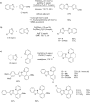
Scheme 31: Dehydrogenative cross-coupling of (benz)oxazoles; (a) Pd(II)- and Cu(II)-catalyzed cross-coupling o...
Asymmetric synthesis of quaternary aryl amino acid derivatives via a three-component aryne coupling reaction
- Elizabeth P. Jones,
- Peter Jones,
- Andrew J. P. White and
- Anthony G. M. Barrett
Beilstein J. Org. Chem. 2011, 7, 1570–1576, doi:10.3762/bjoc.7.185
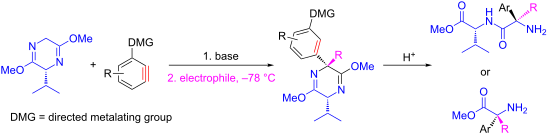
- reactions: The benzyne precursor 2a and Schöllkopf’s bislactim ether 1 were allowed to react with 2.5 equivalents of sec-butyllithium at –95 °C to carry out the required ortho-lithiation for benzyne formation from 2a and the deprotonation of bislactim 1. During warming to room temperature, fragmentation to
- publication, we demonstrated the scope of the methodology over a range of ortho-lithiation benzyne precursors. To establish that any one of these precursors could be used to form quaternary adducts, we subjected the benzylation conditions to precursor 2b and the allylation conditions to precursor 2c

Graphical Abstract

Scheme 1: 3-Component coupling reactions of arynes. E+ = electrophile.

Scheme 2: Aryne mediated α-arylation of amino acids. DMG = directed metallation group. BHT = 2,6-di-tert-buty...

Scheme 3: Proposed mechanism of α-arylation.

Scheme 4: Proposed extension of the methodology to synthesize quaternary adducts.

Scheme 5: Formation of α-methyl, α-aryl Schöllkopf adduct.

Figure 1: NOESY correlation observed for 6a.
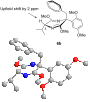
Figure 2: X-ray crystal structure of 6b.

Figure 3: Transition state analysis to explain the lack of diastereoselectivity at C-2.

Scheme 6: Formation of quaternary adducts.

Scheme 7: Hydrolysis of quaternary adducts.

Scheme 8: Hydrolysis to amino acids.

Scheme 9: Hydrolysis of analogue 6j.

Scheme 10: Epimerization at C-3 of 6g.
Directed ortho,ortho'-dimetalation of hydrobenzoin: Rapid access to hydrobenzoin derivatives useful for asymmetric synthesis
- Inhee Cho,
- Labros Meimetis,
- Lee Belding,
- Michael J. Katz,
- Travis Dudding and
- Robert Britton
Beilstein J. Org. Chem. 2011, 7, 1315–1322, doi:10.3762/bjoc.7.154
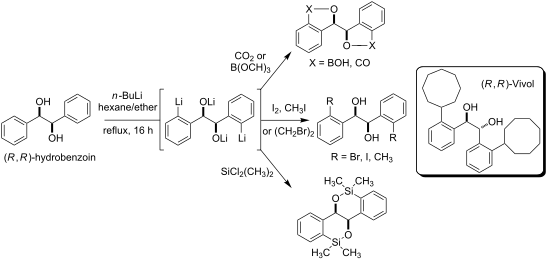
- undergo ortho-lithiation [30], reaction of the tetralithio intermediate 8 with dimethyldichlorosilane led to the formation of the bis(siloxane) 19 (not the 5-membered ring bis(siloxane) isomer), whose structure was unambiguously confirmed by X-ray crystallographic analysis (see Scheme 2, inset). As

Graphical Abstract

Figure 1: Chiral diols useful for asymmetric synthesis and the tetralithio intermediate 8.

Scheme 1: Directed ortho,ortho'-dimetalation of (R,R)-hydrobenzoin (3).

Figure 2: Percentage of (R,R)-hydrobenzoin (3) (○), monodeuterohydrobenzoin (13) (■), and dideuterohydrobenzo...

Figure 3: Percentage of methylhydrobenzoin (14) (■), and dimethylhydrobenzoin (15) (Δ) as determined by 1H NM...

Scheme 2: Formation of the tetralithio intermediate 8 and the X-ray crystal structure of the bis(siloxane) 19....

Scheme 3: Reaction of the tetralithio intermediate 8 with various electrophiles.

Scheme 4: Reactions of the diiodohydrobenzoin 12 and X-ray crystal structure of the dihydrosilepin 31.

Scheme 5: Cross coupling reactions of the bis(benzoxaborol) 20 and a short formal synthesis of (R,R)-Vivol (4...
Selectivity in C-alkylation of dianions of protected 6-methyluridine
- Ngoc Hoa Nguyen,
- Christophe Len,
- Anne-Sophie Castanet and
- Jacques Mortier
Beilstein J. Org. Chem. 2011, 7, 1228–1233, doi:10.3762/bjoc.7.143
- coordination [19][20]. Primary, allylic, and benzylic halides usually give good yields of laterally alkylated products. Secondary and acetylenic halides have been used in several instances. Successful reaction with these substrates is noteworthy since many aryllithiums arising from ortho-lithiation reactions

Graphical Abstract

Scheme 1: Synthesis of potent antiviral and antitumor cyclonucleosides 5.
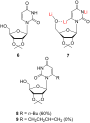
Figure 1: Lithiation of 2',3'-O-isopropylideneuridine (6).

Figure 2: Metalation of 5'-O-TMDMS protected nucleoside 10.

Figure 3: Lithiation/alkylation of 2',3',5'-tri-O-benzoyl-3,6-dimethyluridine (13) using LDA.

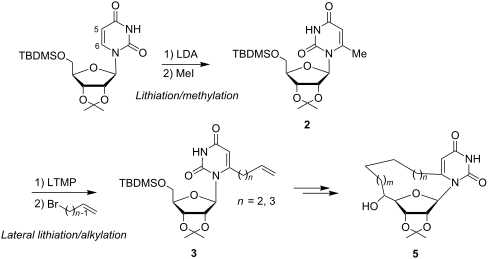
Scheme 2: Preparation of 2',3'-O-isopropylidene-5'-O-(tert-butyldimethylsilyl)-6-methyluridine (2).

Scheme 3: Lateral lithiation/alkylation of 6-methyluridine 2.

Figure 4: Bis-allylated products 20 and 21.
Lithium phosphonate umpolung catalysts: Do fluoro substituents increase the catalytic activity?
- Anca Gliga,
- Bernd Goldfuss and
- Jörg M. Neudörfl
Beilstein J. Org. Chem. 2011, 7, 1189–1197, doi:10.3762/bjoc.7.138

- ). The synthesis of diol 1 was conducted by an ortho lithiation of 1,1,1,3,3,3-hexafluoro-2-phenylpropan-2-ol and subsequent addition of the in situ generated carbanion to formaldehyde. For comparison, a nonfluorinated diol precursor 2 was synthesized. Diol 3 was used as the precursor to investigate the
- nine ring phosphonates. The synthesis of these diols was realized by a double ortho lithiation of biphenyl and subsequent addition to the corresponding carbonyl compound. By this procedure, two asymmetric carbon centres and a chiral axis, which is fixed by intramolecular hydrogen bonds (6

Graphical Abstract

Scheme 1: Proposed catalytic cycle of the lithium phosphonate catalyzed cross benzoin coupling [18].

Scheme 2: Phosphonate as precatalysts in benzoin coupling [18,26].

Scheme 3: Synthesis of diols 1–4, 6–7; diol 5 is commercially available.

Figure 1: X-ray crystal structure of 6. (M)-(S,S) and (P)-(R,R) pair of enantiomers; intermolecular O1–O2 dis...

Figure 2: X-ray crystal structure of 7. (M)-(S,S) and (P)-(R,R) pair of enantiomers; intermolecular O1–O2 dis...

Scheme 4: Synthesis of phosphonates 9–15.

Figure 3: 31P NMR of phosphonate 14 (a) and 15 (b).
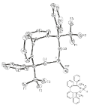
Figure 4: X-ray crystal structure of 15. (M)-(R,S) diastereomer; ellipsoids correspond to 50% probability lev...

Scheme 5: Lithium phosphonate catalysts in cross benzoin coupling.

Figure 5: Phosphonate precatalysts 9–15 in cross benzoin coupling.
An overview of the key routes to the best selling 5-membered ring heterocyclic pharmaceuticals
- Marcus Baumann,
- Ian R. Baxendale,
- Steven V. Ley and
- Nikzad Nikbin
Beilstein J. Org. Chem. 2011, 7, 442–495, doi:10.3762/bjoc.7.57
- up. Alternative routes to such trisubstituted benzenes include directed ortho-lithiation of 1,3-disubstituted benzenes followed by trapping of the anion with a nitrogen electrophile [63]. As a result a new route to access the key building block has been proposed which makes use of a less widely

Graphical Abstract
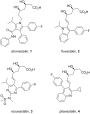
Figure 1: Structures of atorvastatin and other commercial statins.

Figure 2: Structure of compactin.

Scheme 1: Synthesis of pentasubstituted pyrroles.

Scheme 2: [3 + 2] Cycloaddition to prepare 5-isopropylpyrroles.

Scheme 3: Regiospecific [3 + 2] cycloaddition to prepare the pyrrole scaffold.

Scheme 4: Formation of the pyrrole core of atorvastatin via [3 + 2] cycloaddition.

Scheme 5: Formation of pyrrole 33 via the Paal–Knorr reaction.

Scheme 6: Convergent synthesis towards atorvastatin.

Figure 3: Binding pocket of sunitinib in the TRK KIT.

Scheme 7: Synthesis of sunitinib.

Scheme 8: Alternative synthesis of sunitinib.

Scheme 9: Key steps in the syntheses of sumatriptan and zolmitriptan.

Scheme 10: Introduction of the N,N-dimethylaminoethyl side chain.

Scheme 11: Japp–Klingemann reaction in the synthesis of sumatriptan.

Scheme 12: Synthesis of the intermediate sulfonyl chlorides 62 and 63.

Scheme 13: Alternative introduction of the sulfonamide.

Scheme 14: Negishi-type coupling to benzylic sulfonamides.

Scheme 15: Heck reaction used to introduce the sulfonamide side chain of naratriptan.

Scheme 16: Synthesis of the oxazolinone appendage of zolmitriptan.

Scheme 17: Grandberg indole synthesis used in the preparation of rizatriptan.

Scheme 18: Improved synthesis of rizatriptan.

Scheme 19: Larock-type synthesis of rizatriptan.

Scheme 20: Synthesis of eletriptan.

Scheme 21: Heck coupling for the indole system in eletriptan.

Scheme 22: Attempted Fischer indole synthesis of elatriptan.

Scheme 23: Successful Fischer indole synthesis for eletriptan.
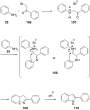
Scheme 24: Mechanistic rationale for the Bischler–Möhlau reaction.

Scheme 25: Bischler-type indole synthesis used in the fluvastatin sodium synthesis.

Scheme 26: Palladium-mediated synthesis of ondansetron.

Scheme 27: Fischer indole synthesis of ondansetron.

Scheme 28: Optimised Pictet–Spengler reaction towards tadalafil.

Figure 4: Structures of carvedilol 136 and propranolol 137.

Scheme 29: Synthesis of the carbazole core of carvedilol.

Scheme 30: Alternative syntheses of 4-hydroxy-9H-carbazole.

Scheme 31: Convergent synthesis of etodolac.

Scheme 32: Alternative synthesis of etodolac.

Figure 5: Structures of imidazole-containing drugs.

Scheme 33: Synthesis of functionalised imidazoles towards losartan.

Scheme 34: Direct synthesis of the chlorinated imidazole in losartan.

Scheme 35: Synthesis of trisubstituted imidazoles.

Scheme 36: Preparation of the imidazole ring in olmesartan.

Scheme 37: Synthesis of ondansetron.

Scheme 38: Alternative route to ondansetron and its analogues.

Scheme 39: Proton pump inhibitors and synthesis of esomeprazole.

Scheme 40: Synthesis of benzimidazole core pantoprazole.

Figure 6: Structure of rabeprazole 194.

Scheme 41: Synthesis of candesartan.

Scheme 42: Alternative access to the candesartan key intermediate 216.

Scheme 43: .Medicinal chemistry route to telmisartan.

Scheme 44: Improved synthesis of telmisartan.

Scheme 45: Synthesis of zolpidem.

Scheme 46: Copper-catalysed 3-component coupling towards zolpidem.

Figure 7: Structure of celecoxib.

Scheme 47: Preparation of celecoxib.

Scheme 48: Alternative synthesis of celecoxib.

Scheme 49: Regioselective access to celecoxib.

Scheme 50: Synthesis of pazopanib.

Scheme 51: Syntheses of anastrozole, rizatriptan and letrozole.

Scheme 52: Regioselective synthesis of anastrozole.

Scheme 53: Triazine-mediated triazole formation towards anastrozole.

Scheme 54: Alternative routes to 1,2,4-triazoles.

Scheme 55: Initial synthetic route to sitagliptin.

Figure 8: Binding of sitagliptin within DPP-IV.

Scheme 56: The process route to sitagliptin key intermediate 280.

Scheme 57: Synthesis of maraviroc.

Scheme 58: Synthesis of alprazolam.

Scheme 59: The use of N-nitrosoamidine derivatives in the preparation of fused benzodiazepines.

Figure 9: Structures of itraconazole, ravuconazole and voriconazole.

Scheme 60: Synthesis of itraconazole.

Scheme 61: Synthesis of rufinamide.

Scheme 62: Representative tetrazole formation in valsartan.

Figure 10: Structure of tetrazole containing olmesartan, candesartan and irbesartan.

Scheme 63: Early stage introduction of the tetrazole in losartan.

Scheme 64: Synthesis of cilostazol.

Figure 11: Structure of cefdinir.

Scheme 65: Semi-synthesis of cefdinir.

Scheme 66: Thiazole syntheses towards ritonavir.

Scheme 67: Synthesis towards pramipexole.

Scheme 68: Alternative route to pramipexole.

Scheme 69: Synthesis of famotidine.

Scheme 70: Efficient synthesis of the hyperuricemic febuxostat.

Scheme 71: Synthesis of ziprasidone.

Figure 12: Structure of mometasone.

Scheme 72: Industrial access to 2-furoic acid present in mometasone.

Scheme 73: Synthesis of ranitidine from furfuryl alcohol.

Scheme 74: Synthesis of nitrofurantoin.

Scheme 75: Synthesis of benzofuran.

Scheme 76: Synthesis of amiodarone.

Scheme 77: Synthesis of raloxifene.

Scheme 78: Alternative access to the benzo[b]thiophene core of raloxifene.

Scheme 79: Gewald reaction in the synthesis of olanzapine.

Scheme 80: Alternative synthesis of olanzapine.
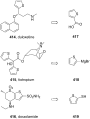
Figure 13: Access to simple thiophene-containing drugs.

Scheme 81: Synthesis of clopidogrel.

Scheme 82: Pictet–Spengler reaction in the preparation of tetrahydrothieno[3,2-c]pyridine (422).

Scheme 83: Alternative synthesis of key intermediate 422.

Figure 14: Co-crystal structures of timolol (left) and carazolol (right) in the β-adrenergic receptor.

Scheme 84: Synthesis of timolol.

Scheme 85: Synthesis of tizanidine 440.

Scheme 86: Synthesis of leflunomide.

Scheme 87: Synthesis of sulfamethoxazole.

Scheme 88: Synthesis of risperidone.

Figure 15: Relative abundance of selected transformations.

Figure 16: The abundance of heterocycles within top 200 drugs (5-membered rings).
α,β-Aziridinylphosphonates by lithium amide-induced phosphonyl migration from nitrogen to carbon in terminal aziridines
- David. M. Hodgson and
- Zhaoqing Xu
Beilstein J. Org. Chem. 2010, 6, 978–983, doi:10.3762/bjoc.6.110

- ]. More recently, Modro et al. reported a similar ortho-lithiation followed by [1,3]-shift of a phosphonyl group (6→7, Scheme 2) [18]; related processes have been observed with diazaphospholidine oxides [19] and bicyclic phosphoric triamides [20]. Benzylic lithiation-induced N- to C-[1,2]-anionic

Graphical Abstract

Scheme 1: Proposed aziridinyl anion induced N- to C-phosphonyl migration.
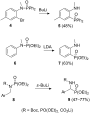
Scheme 2: Selected previously observed N- to C-phosphorous migrations [17,18,21].

Scheme 3: Partial N- to C-migration with N-diphenylphosphinylaziridine 10 [24].

Scheme 4: Synthesis and rearrangement of aziridine 1a.

Figure 1: Aziridines 1h–j.

Scheme 5: Synthesis and rearrangement of aziridine (S)-1k.

Scheme 6: Hydrogenolysis of aziridinylphosphonate (–)-3k.
Diastereoselective functionalisation of benzo-annulated bicyclic sultams: Application for the synthesis of cis-2,4-diarylpyrrolidines
- Susan Kelleher,
- Pierre-Yves Quesne and
- Paul Evans
Beilstein J. Org. Chem. 2009, 5, No. 69, doi:10.3762/bjoc.5.69

- vinyl bromides 24a and 24b in good yields, respectively (Scheme 7). Vinyl bromide 24a was then subjected to lithiation with t-BuLi, followed by a CO2 quench. The desired carboxylic acid recovered from this reaction was only formed in low yields possibly due to issues with competing directed ortho
- -lithiation [25]. Notwithstanding, this acid was transformed into the corresponding methyl ester 25 using a Steglich-type esterification. Alkenyl reduction of the α,β-unsaturated ester under standard conditions gave the product of hydrogenation as an undetermined 3:1 mixture of diastereoisomers. The likely

Graphical Abstract

Scheme 1: The diastereoselective intramolecular Heck-hydrogenation and double reduction sequence as a means o...

Scheme 2: The synthesis of 5a and 5b by an intramolecular Heck cyclisation reaction.

Scheme 3: Diastereoselective epoxidation of 5a and 5b.

Figure 1: X-ray structure of 7a; including a view along the S=O···C–O axis (Diamond representations) [O2···C9...

Scheme 4: cis-Selective dibromination of 5a (NOE indicated by arrows).

Figure 2: X-ray crystal structure of 13a (Diamond representation).

Scheme 5: Dibromination studies of 5b.

Figure 3: X-ray crystal structures of 18b and 19b (Diamond representations).

Scheme 6: Possible explanation for the products formed in the dibromination of 5a and 5b.

Scheme 7: Lithiation–CO2 quench approach for the synthesis of 26 from vinyl bromide 24a.

Figure 4: X-ray structure of 26 (Diamond representation).

Scheme 8: Suzuki–Miyaura cross-coupling of 24a and the diastereoselective hydrogenation of the resultant styr...

Figure 5: X-ray crystal structure of 31 (Diamond representation).

Scheme 9: Attempted sulfonamide double reduction of compounds 31–34.
Enantiospecific synthesis of [2.2]paracyclophane- 4-thiol and derivatives
- Gareth J. Rowlands and
- Richard J. Seacome
Beilstein J. Org. Chem. 2009, 5, No. 9, doi:10.3762/bjoc.5.9
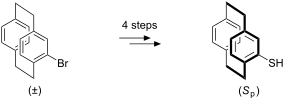
- by sulfinyl-directed ortho lithiation with n-butyllithium followed by reaction with tosyl azide. The resulting azo[2.2]paracyclophane was reduced in situ to give the amine (Rp,RS)-8 in good yield for the two steps (Scheme 2). Trichlorosilane-mediated deoxygenation proceeded uneventfully to furnished

Graphical Abstract

Figure 1: [2.2]Paracyclophane (1) showing standard numbering and [2.2]paracyclophane-4-thiol (2).

Scheme 1: Conversion of [2.2]paracyclophane to enantiomerically enriched [2.2]paracyclophane-4-thiol.

Scheme 2: Synthesis of [2.2](4,7)benzo[d]thiazoloparacyclophane (Rp)-10.



