
Search results
Search for "π-stacking" in Full Text gives 82 result(s) in Beilstein Journal of Nanotechnology.
Electrochemical sensing of sildenafil in pharmaceutical formulations using an (S,N)-doped reduced graphene oxide-modified electrode
Beilstein J. Nanotechnol. 2026, 17, 1087–1102, doi:10.3762/bjnano.17.74
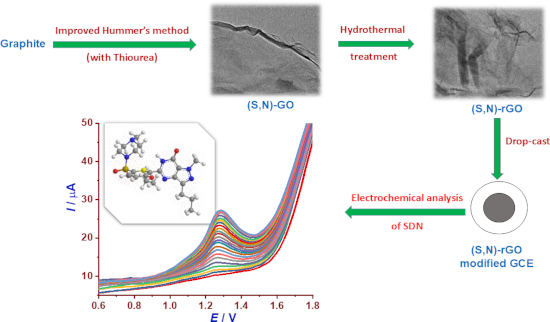
- electronic structure. These heteroatom-induced effects facilitate charge transfer across the electrode/electrolyte interface and lower the activation energy for the oxidation reaction. Furthermore, the aromatic structure of SDN can interact with the π-conjugated graphene surface through π–π stacking



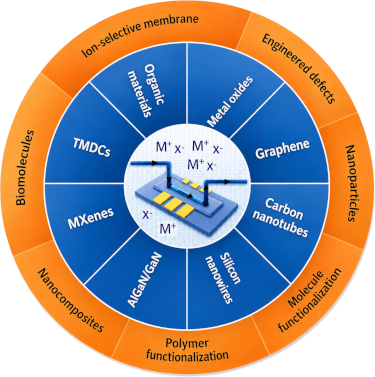
Materials challenges in solid-state sensors for continuous monitoring of ions in water
Beilstein J. Nanotechnol. 2026, 17, 935–973, doi:10.3762/bjnano.17.66


Supramolecular one-dimensional conducting nanofibers from a C3-symmetric tetrathiafulvalene derivative
Beilstein J. Nanotechnol. 2026, 17, 872–881, doi:10.3762/bjnano.17.63
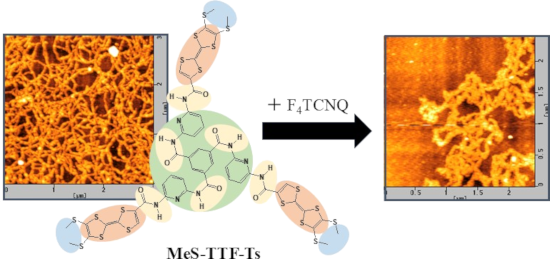
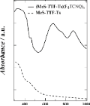
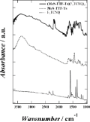
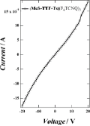
- molecular architecture contains three TTF units radially arranged around a rigid C3-symmetric core, enabling the formation of highly ordered one-dimensional assemblies through cooperative π–π stacking and directional intermolecular interactions. Solution casting of MeS-TTF-Ts produced nanorod and nanofiber
- such as hydrogen bonding, π–π stacking, and donor–acceptor interactions, resulting in three-dimensional interconnected nanofibrous networks [7][8]. Such one-dimensional nanostructures can be precisely controlled in terms of morphology and physical properties through molecular design, making them
- have been reported to form highly ordered one-dimensional stacked structures through cooperative hydrogen bonding and π–π stacking interactions, leading to the formation of nanowires via self-assembly [15][16][17][18][19][20]. These assemblies can be partially oxidized through charge-transfer


Light-driven ammonia electrooxidation via carbon nitride–ruthenium molecular interfaces
Beilstein J. Nanotechnol. 2026, 17, 854–862, doi:10.3762/bjnano.17.61
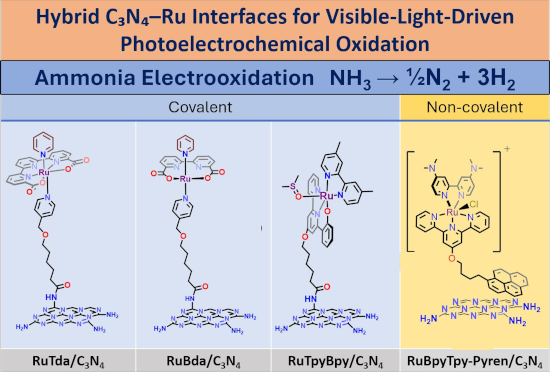
- the semiconductor surface where the molecular catalyst awaits [8]. Its medium bandgap means it can harvest blue and green photons that pass unused through many metal oxide photocatalysts. Its 2D layered structure, stabilised by π–π stacking interactions between heptazine sheets, provides a large, flat
- pyrene groups can adsorb spontaneously onto the C3N4 surface through a combination of π–π stacking between the pyrene unit and the heptazine rings, and C–H···π interactions between the aliphatic protons of the complex periphery and the aromatic surface. This one-pot process, that is, dissolving the
- geometrically regular array of π-stacking sites that can accommodate the flat pyrene anchor in a defined orientation, maximising electronic coupling between the catalyst and the semiconductor. Covalent and non-covalent bonding are not competing alternatives but complementary tools. Covalent anchoring


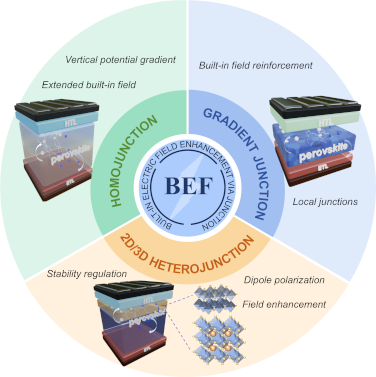
Recent progress in enhancing built-in electric fields of perovskite solar cells via junction engineering
Beilstein J. Nanotechnol. 2026, 17, 602–621, doi:10.3762/bjnano.17.42



Impacts of annealing on structural and photophysical properties of zinc phthalocyanine adsorbed on graphene
Beilstein J. Nanotechnol. 2026, 17, 576–585, doi:10.3762/bjnano.17.39
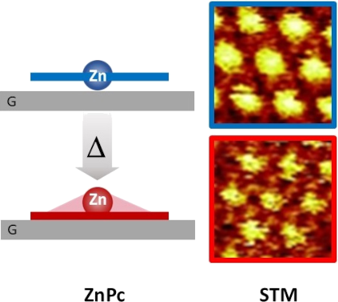
- molecular media, and are strongly influenced by various structural parameters at the molecular scale [13]. For example, face-on or edge-on orientation of π-conjugated molecules on graphene turns on or off π-stacking interactions with large consequences on hole conductivity and rectifying properties [14]. It
- of π-stacking of the Pc conjugated core on the nanotube surface and its observation here is consistent with an adsorption of ZnPc on graphene, the molecule lying flat on the surface. The frequencies of these three peaks are similar before and after annealing (1543, 1472, and 1374 cm−1), within our


Biomimetic nanoparticles in cancer photodynamic therapy: a review of targeted delivery systems and therapeutic outcomes
Beilstein J. Nanotechnol. 2026, 17, 396–422, doi:10.3762/bjnano.17.27
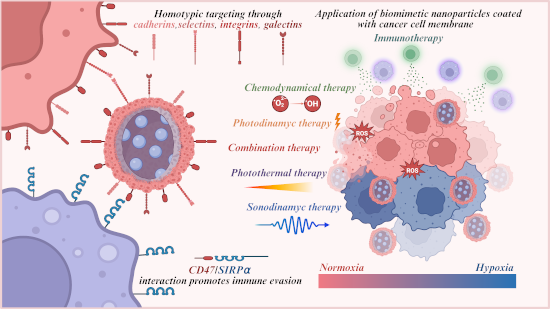
- rate of cancer cell apoptosis induced by the photodynamic effect by 50% and prolonged the circulation time of the nanoparticles in the bloodstream [112]. BNPs composed of materials such as melanin or polydopamine exploit strong π–π stacking interactions with aromatic PSs like Ce6 to achieve high


Polycatecholamine nanocoatings on stainless steel: the effect on attachment of human fibroblasts and platelets
Beilstein J. Nanotechnol. 2026, 17, 365–380, doi:10.3762/bjnano.17.25
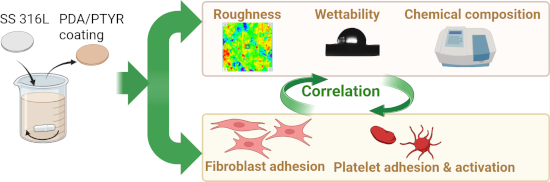
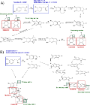
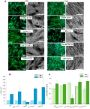
- aggregates stabilized by charge transfer, hydrogen bonding and π–π stacking interactions [12][27][28]. Mechanistic studies indicate that the first step of ʟ-tyrosine polymerization involves hydroxylation of the aromatic ring at the C3 position [12][28][29], after which the pathway resembles dopamine




Structure-dependent thermochromism of PAZO thin films: theory and experiment
Beilstein J. Nanotechnol. 2026, 17, 186–199, doi:10.3762/bjnano.17.12
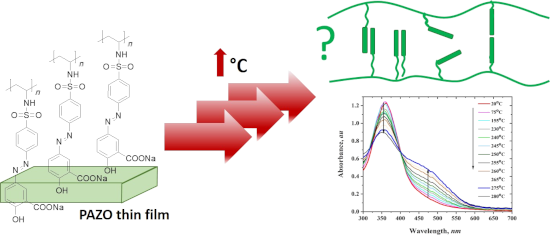
- exist in two isomeric forms: a stable trans (E) form and a metastable cis (Z) form (Figure 6B). The self-assembly of PAZO polymers into various nanostructures is mainly driven by the noncovalent interactions, such as π–π stacking between azobenzene groups. Azobenzene groups are photosensitive and can


Current status of using adsorbent nanomaterials for removing microplastics from water supply systems: a mini review
Beilstein J. Nanotechnol. 2025, 16, 1837–1850, doi:10.3762/bjnano.16.127
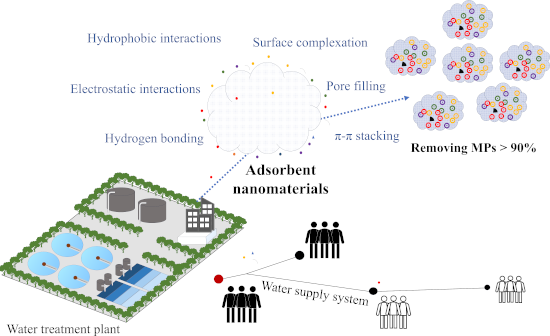
- conventional treatments removing only 40–70%, especially struggling with smaller particles. Based mainly on mechanisms like electrostatic interactions, hydrophobic interactions, pore filling, hydrogen bonding, π–π stacking, and surface complexation, adsorbent nanomaterials achieve over 90% removal of MPs and
- between oppositely charged functional groups (amino and carboxyl groups), hydrogen bonding between oxygen-containing groups and amine or carboxyl groups, and π–π stacking between GO and the aromatic rings of MPs [68]. Similarly, obtaining an MP adsorption capacity above 90.4% after three cycles, Ko et al


Prospects of nanotechnology and natural products for cancer and immunotherapy
Beilstein J. Nanotechnol. 2025, 16, 1644–1667, doi:10.3762/bjnano.16.116
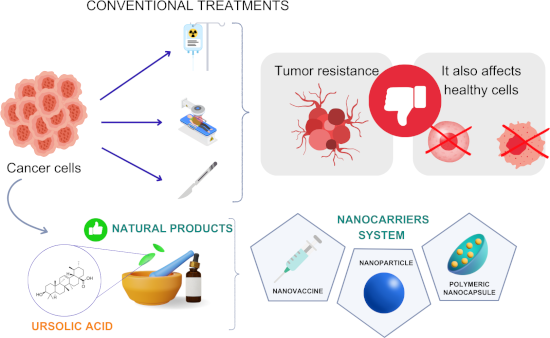
- spontaneously from the organization of active or natural compounds, without the presence of a carrier material or excipients. Their stability is due to the presence of intermolecular interactions, such as electrostatic forces, hydrogen bonding, π–π stacking, and hydrophobic interactions [104][105]. Among the



Soft materials nanoarchitectonics: liquid crystals, polymers, gels, biomaterials, and others
Beilstein J. Nanotechnol. 2025, 16, 1025–1067, doi:10.3762/bjnano.16.77
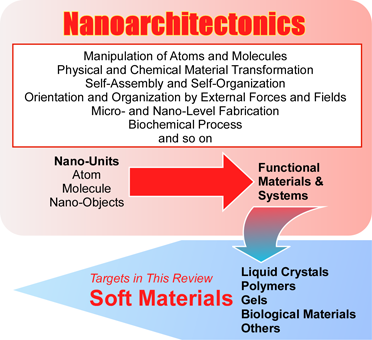
- . The ability to control the assembly structures of these molecules is crucial for the development of a range of functional materials. It is frequently observed that discotic liquid crystal molecules assume a columnar phase as a consequence of π–π stacking between the π-conjugated discotic cores. The






Colloidal few layered graphene–tannic acid preserves the biocompatibility of periodontal ligament cells
Beilstein J. Nanotechnol. 2025, 16, 664–677, doi:10.3762/bjnano.16.51
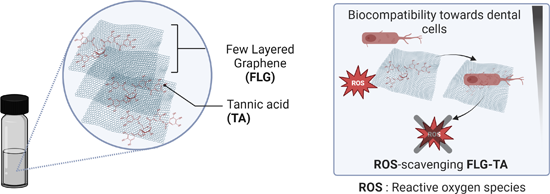
- , characterized by numerous hydroxy groups, is proposed to potentially form non-covalent interactions, such as π–π stacking, with the carbon network and oxygen atoms of graphite [16][20]. This interaction could exfoliate graphite, resulting in a stable colloidal dispersion of functionalized graphene sheets. The




Nanomaterials in targeting amyloid-β oligomers: current advances and future directions for Alzheimer's disease diagnosis and therapy
Beilstein J. Nanotechnol. 2025, 16, 561–580, doi:10.3762/bjnano.16.44
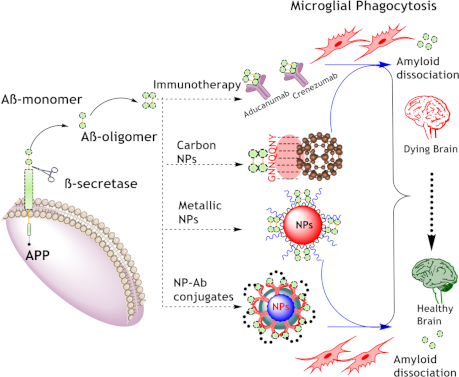
- . These studies reveal that SWCNTs interact with the hydrophobic residues of Aβ peptides, particularly through π-stacking interactions with aromatic amino acids such as phenylalanine. This interaction destabilizes the prefibrillar β-sheet structures, preventing the formation of toxic oligomers and


Pulsed laser in liquid grafting of gold nanoparticle–carbon support composites
Beilstein J. Nanotechnol. 2025, 16, 349–361, doi:10.3762/bjnano.16.26
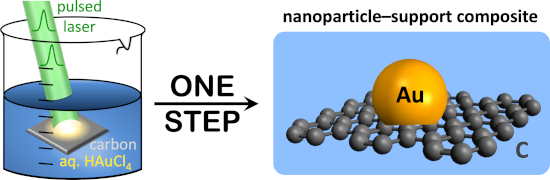
- pyrolytic graphite (HOPG); edge-plane HOPG is expensive, brittle, and not amenable to large electrode areas. In general, graphitic basal-plane carbon atoms are unreactive, unlike those in graphene, because of the π-stacking interactions of adjacent graphite sheets. We reported an environmentally friendly


A biomimetic approach towards a universal slippery liquid infused surface coating
Beilstein J. Nanotechnol. 2024, 15, 1376–1389, doi:10.3762/bjnano.15.111
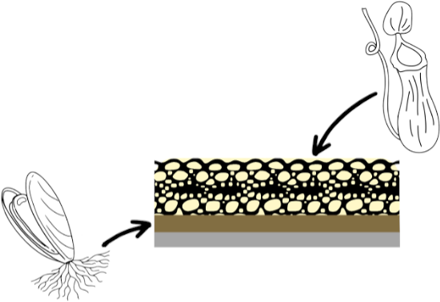
- carbonyl stretching at 1730 cm−1. Additionally, these modes are not observed in SSP, which further demonstrated that the ring structure and carbonyl groups of PDA lie in the interfacial plane or parallel to the surface. This would support the theory of π–π stacking proposed by Lynge et al., where PDA
- aggregates form and are joined together through π stacking [45]. As mentioned earlier, quantification of the activation of intrinsic coagulation on SLIPS surfaces have not been fully investigated. For biomaterials, the intrinsic pathway has been shown to activate upon exposure, whereas in vivo the extrinsic




Interaction of graphene oxide with tannic acid: computational modeling and toxicity mitigation in C. elegans
Beilstein J. Nanotechnol. 2024, 15, 1297–1311, doi:10.3762/bjnano.15.105
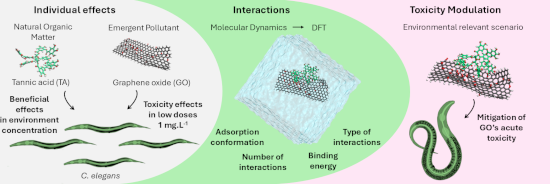
- , phototransformation, and degradation [8]. Furthermore, because of the presence of sites for different types of interaction mechanisms (i.e., hydrogen bonding, van der Waals interaction, and π–π stacking), its structure favors the adsorption of different molecules (i.e., biomolecules and organic pollutants) and metal


Metal-organic framework-based nanomaterials as opto-electrochemical sensors for the detection of antibiotics and hormones: A review
Beilstein J. Nanotechnol. 2023, 14, 631–673, doi:10.3762/bjnano.14.52
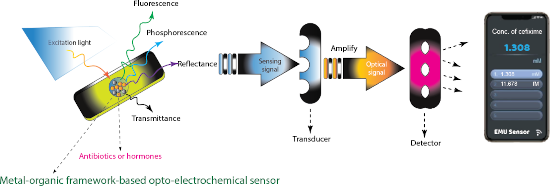
- redox reaction during the electron deactivation process. For effective quenching, a complex driven by either hydrophobic, van der Waals, or π–π-stacking interactions is generated between the electron donor and the electron acceptor with a separation on a sub-nanometre length scale. The complexation of


Single-step extraction of small-diameter single-walled carbon nanotubes in the presence of riboflavin
Beilstein J. Nanotechnol. 2022, 13, 1564–1571, doi:10.3762/bjnano.13.130
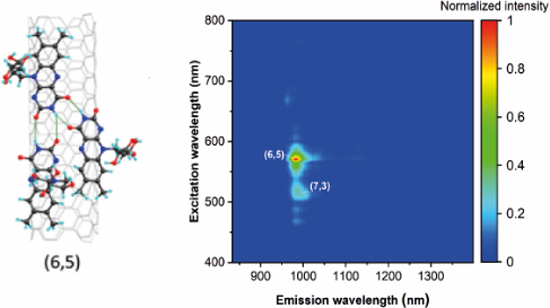
- riboflavin’s isoalloxazine fragments that emerges from interfragmentary binding and concentric π–π stacking with the surface of the underlying nanotube. According to this theoretical model and experimental data, we have studied (6,5)-, (7,5)-, and (7,6)-SWCNTs, which feature different riboflavin bonding


Facile preparation of Au- and BODIPY-grafted lipid nanoparticles for synergized photothermal therapy
Beilstein J. Nanotechnol. 2022, 13, 1432–1444, doi:10.3762/bjnano.13.118

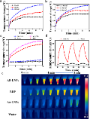
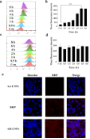
- delivery systems through van der Waals forces, hydrogen bonds, π–π stacking, or electrostatic or hydrophobic interactions [24]. Several BODIPYs have been reported to be loaded into liposomes for cancer therapy [25]. Therefore, we speculated that BODIPY can be associated with our previously reported




Design of surface nanostructures for chirality sensing based on quartz crystal microbalance
Beilstein J. Nanotechnol. 2022, 13, 1201–1219, doi:10.3762/bjnano.13.100
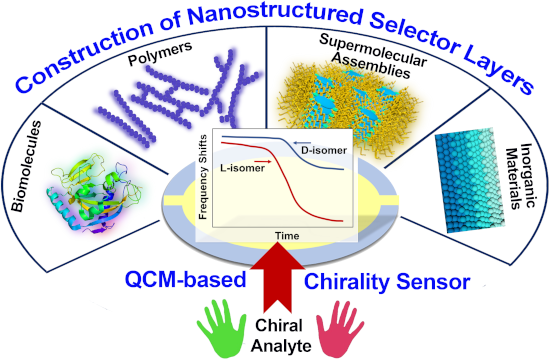
- enantioselective sensing of chiral amino acids [99]. The multiple noncovalent interactions, including metal coordination, hydrogen bonding, and π–π stacking between individual chiral amino acids and the MOF sensor enabled accurate determination of the absolute configuration and enantiomeric ratio of the target


DNA aptamer selection and construction of an aptasensor based on graphene FETs for Zika virus NS1 protein detection
Beilstein J. Nanotechnol. 2022, 13, 873–881, doi:10.3762/bjnano.13.78
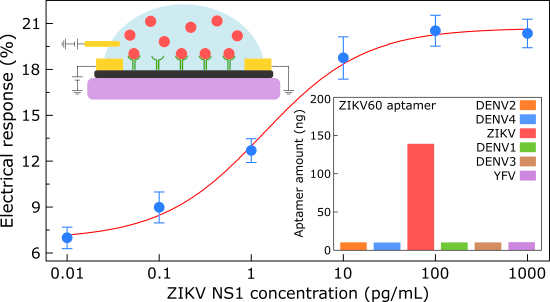
- immobilization on graphene via π–π stacking [34]. The qualitative confirmation of aptamer immobilization on graphene is illustrated in Figure 4a. For a representative device, Figure 4a exhibits curves of graphene resistance (RSD) as a function of the gate voltage (VG) before (black line) and after (red line



A nonenzymatic reduced graphene oxide-based nanosensor for parathion
Beilstein J. Nanotechnol. 2022, 13, 730–744, doi:10.3762/bjnano.13.65
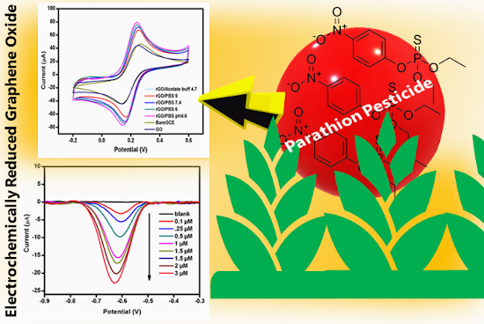
- absorption of PT through π stacking interaction between aromatic moieties of GO and the benzene ring of PT. In comparison, the highest cathodic/anodic peak was obtained at −0.58 and −0.05 V, respectively, for the electro-reduction/oxidation of PT on ERGO/GCE. The oxidation/reduction potentials of PT on ERGO


Self-assembly of amino acids toward functional biomaterials
Beilstein J. Nanotechnol. 2021, 12, 1140–1150, doi:10.3762/bjnano.12.85
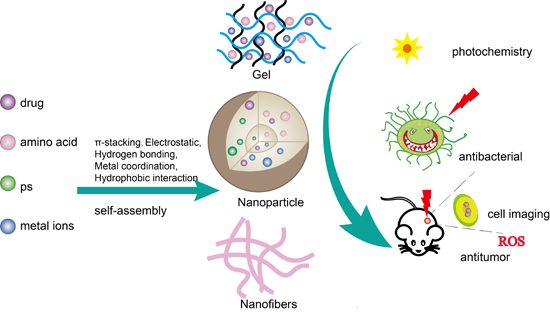
- ordered nanostructures through noncovalent interactions, including electrostatic, π–π stacking, van der Waals, and hydrophobic interactions. The self-assembly of single amino acids has the advantages of low synthesis cost, relatively easy modeling [27], and excellent biocompatibility and biodegradability
- and molecular forces play a key role in self-assembly, including hydrogen bonds, hydrophobic bonds, van der Waals force, ionic bonds, π–π stacking, and electrostatic forces [31]. Importantly, amino acids are simple building blocks that provide relevant noncovalent interactions to construct complex
- the aggregated state and can be used for imaging [51]. Importantly, NI exhibits hydrophobicity and π–π stacking due to the aromatic moieties, and is prone to dynamic aggregation, which can be used in self-assembled construction units [52]. For example, Hsu et al. [53] self-assembled NI and

Impact of fluorination on interface energetics and growth of pentacene on Ag(111)
Beilstein J. Nanotechnol. 2020, 11, 1361–1370, doi:10.3762/bjnano.11.120

- . The F4PEN monolayer was essentially lying on Ag(111), and multilayers adopted π-stacking. Our study shed light not only on the F4PEN–Ag(111) interface but also on the fundamental adsorption behavior of fluorinated pentacene derivatives on metals in the context of interface energetics and growth mode
- chemisorption of PEN [28][51] and physisorption of PFP [50]. Multilayers of PEN adopt a herringbone arrangement on virtually all substrates [47][56][57][58][59], whereas PFP multilayers exhibit π-stacking [18][56]. The different multilayer packing motifs of PEN and PFP can again be explained by electrostatic
- ][29]. PFP, in contrast, exhibits π-stacking on various substrates [18][56]. The X-ray scattering data shown in Supporting Information File 1, Figure S7 confirmed this ordering motif for the Ag(111) surface. The almost symmetric shape of the PFP HOMO in multilayers on Ag(111) resembled that of likewise