


Search results
Search for "metals" in Full Text gives 658 result(s) in Beilstein Journal of Nanotechnology. Showing first 200.
Nanoglasses: a trail towards uncharted regions of vitreous materials and their properties?
Beilstein J. Nanotechnol. 2026, 17, 1047–1062, doi:10.3762/bjnano.17.72
- resembles the discussion concerning the stability of so-called “non-equilibrium” grain boundaries in severely deformed metals and alloys [54][55]. Those defects are also observed over extended durations, even under thermal conditions that allow for significant diffusion distances, while presenting specific


Influence of an external electric field on the catalytic CO oxidation of nanoscaled CeO2 and its La3+ and Gd3+ congeners
Beilstein J. Nanotechnol. 2026, 17, 1028–1038, doi:10.3762/bjnano.17.70
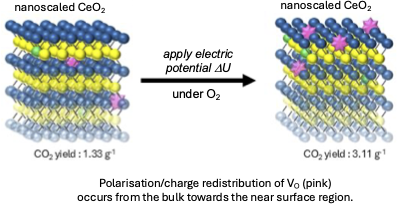
- properties, current studies still lack investigations of an external electric field to enhance CO oxidation in nanoscaled CeO2 (nCeO2) in the absence of any precious metals. An external electric field can modify a material’s crystal structure and lattice parameters; for example, it drives charge and mass



Synthesis and characterization of RF-sputtered ZnTe/Cu2−xTe thin films for solar cell applications
Beilstein J. Nanotechnol. 2026, 17, 1016–1027, doi:10.3762/bjnano.17.69
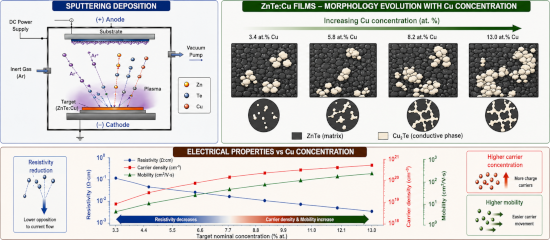
- conventional metals. As a consequence, Schottky barrier formation at the CdTe/metal interface may occur, leading to rollover effects and device degradation [1]. Copper-containing compounds have been widely employed to mitigate this issue as Cu acts as an acceptor dopant and promotes the formation of a hole



Materials challenges in solid-state sensors for continuous monitoring of ions in water
Beilstein J. Nanotechnol. 2026, 17, 935–973, doi:10.3762/bjnano.17.66
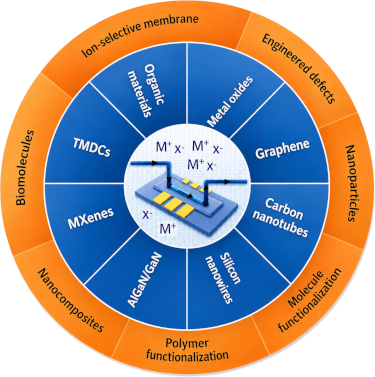
- must satisfy regulatory thresholds, for trace metals often in the low-micrograms-per-liter regime; for nutrients, typically milligrams per liter or lower [2][3][12]. (iii) Calibration stability and drift control are central for continuous operation because frequent recalibration is impractical. Sensors
- water sectors. Heavy metals Lead, mercury, arsenic, chromium, cadmium, manganese, iron, nickel, and copper are important heavy metals. Lead, iron, and copper may enter drinking water due to the corrosion of plumbing materials in the distribution system. Mercury can also appear in the form of
- methylmercury, the most toxic and environmentally prevalent species, alongside its ionic form. Arsenic can naturally occur in groundwater and unlike most of metals, which are typically present as cations, arsenic commonly exists as oxoanions (arsenite or arsenate). Other metals occur as oxoanions only in their



Nanocarrier strategies to overcome P-glycoprotein-mediated drug resistance in cancer therapy
Beilstein J. Nanotechnol. 2026, 17, 882–921, doi:10.3762/bjnano.17.64


Nanoparticle delivery systems for HIV pre-exposure prophylaxis (PrEP): advances and challenges
Beilstein J. Nanotechnol. 2026, 17, 839–853, doi:10.3762/bjnano.17.60
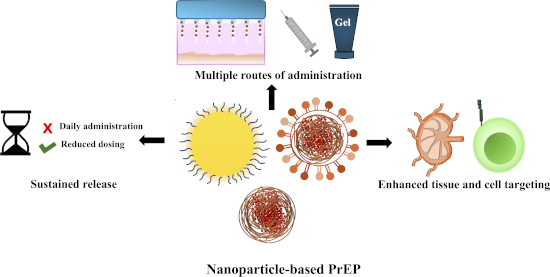
- . Inorganic nanoparticles Inorganic nanoparticles, particularly those made of metals (e.g., gold, silver) and mesoporous silicon have gained attention as antivirals as well as HIV drug delivery platforms due to their unique physicochemical properties that differ from biodegradable polymers or lipid-based


Tuning the electronic properties of defect-rich MoS2
Beilstein J. Nanotechnol. 2026, 17, 796–805, doi:10.3762/bjnano.17.56
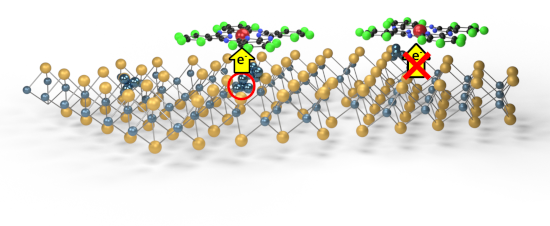
- strong local interactions accompanied by (integer) charge transfer [9]. A convenient side effect of this heterostructure is the strong interaction of the central Co atom of CoPcF16 with many metals such as Au, Ag, Cu, or Ni [11][12][13][14][15][16] such that it can be used as a probe for PES studies of
- previously documented interactions of CoPcF16 with relatively inert metals including oxygen-terminated copper or graphene-covered Ni [11][33][34]. Based on these similarities, we suggest that charge transfer and/or electron redistribution at the Co atom in the vicinity of such defect-rich MoS2 is responsible



Tailoring Ag–Pt nanoalloys through solid-state dewetting: structural and optical insights
Beilstein J. Nanotechnol. 2026, 17, 748–759, doi:10.3762/bjnano.17.52

- homogeneous elemental distribution, as measured by energy dispersive spectroscopy. Additionally, X-ray photoelectron spectroscopy measurements confirmed the coexistence of both metals in metallic states, with a slight Ag deficiency attributed to its higher instability and desorption during the annealing
- . Observations of alloy formation at the nanoscale confirm that the miscibility between different metals can significantly increase as particle size decreases [3][4][5][6][33]. Nevertheless, in the case of nanoalloy formation induced by thermal dewetting of alternately deposited thin metallic layers, it is
- calculations taking into account the film thicknesses, densities, molar masses, and resulting atomic concentrations of the constituent metals. The total thickness of the deposited multilayer was maintained at 8 nm, which constituted the main measurement series. Due to the well-known plasmonic properties of




Oxidative atmosphere-driven formation of single-phase spinel CuRh2O4 nanofibers for alkaline water oxidation
Beilstein J. Nanotechnol. 2026, 17, 737–743, doi:10.3762/bjnano.17.50
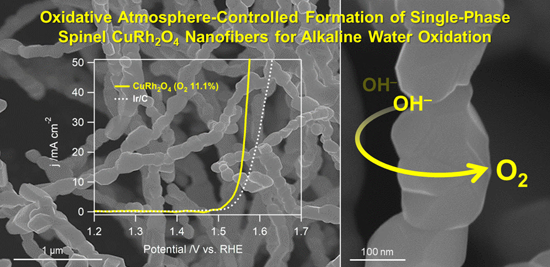
- versatile strategy for performance optimization. Incorporation of 4d transition metals such as Rh into the spinel lattice provides an effective approach to further tailor catalytic properties. The presence of Rh3+ [4][5], with its more delocalized electronic structure compared to conventional 3d cations




Environmental applications of silver nanoparticles: state-of-the-art review and emerging trends
Beilstein J. Nanotechnol. 2026, 17, 697–736, doi:10.3762/bjnano.17.49
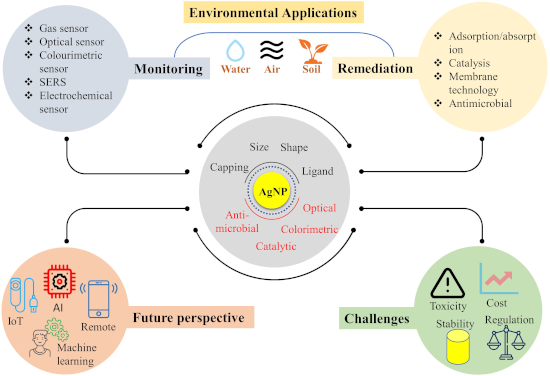
- , medical and research institutions, household waste, and agricultural practices are major contributors [1]. Pollution arises from any chemical, biological, physical, or radiological substance that impacts soil, water, air, or living beings. These include metals (e.g., lead, mercury, arsenic, cadmium
- three metals (Zn2+, Pb2+, and Fe3+) from the aqueous phase using AgNPs immobilised on banana leaf powder [96]. The study reported that pH-dependent metal adsorption capacities (190, 244, and 288 mg/g) and removal efficiencies (79, 88, and 91%) were achieved for Zn2+, Pb2+, and Fe3+ within 40 min of
- poses a significant threat to human health and the environment, necessitating the development of efficient and sustainable air purification technologies. The primary air pollutants include particulate matter (PM), gases (CO, NO2, SO2), metals (Pb), PAHs, volatile organic compounds (VOCs), and dioxins


Laser–material interactions in liquids for the synthesis of nanomaterials: current status and perspectives
Beilstein J. Nanotechnol. 2026, 17, 571–575, doi:10.3762/bjnano.17.38
- materials, including metals [2][3], oxides [4][5], semiconductors [6][7], and organics [8][9]. In addition, LSPC enables the synthesis of multicomponent nanomaterials, such as binary [10][11], ternary [12][13], and compositionally complex alloys [14][15], with a high degree of control over their composition
Synthesis of Cu–Mo/TiO2 and Co–Mo/TiO2 photocatalysts for the efficient degradation of organic pollutants in water
Beilstein J. Nanotechnol. 2026, 17, 559–570, doi:10.3762/bjnano.17.37
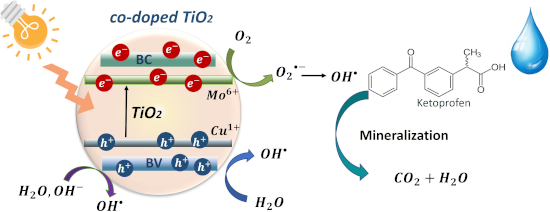
- co-doped TiO2 is to use transition metals, which are abundant and relatively cheap. A well-reported strategy is the charge compensation in metal/metal co-doped TiO2, which is achieved through the combination of ions with low and with high valences; the substitution by doping ions on the Ti4+ sites
- , there is no report in the literature about the specific photocatalysts Cu–Mo/TiO2 and Co–Mo/TiO2. However, due to the promising effects reported and previously described, the use of the metals Cu, Co, and Mo was considered for the synthesis of two photocatalytic systems. The synergetic strategy of co



Defects and defect-mediated engineering of two-dimensional materials: challenges and open questions
Beilstein J. Nanotechnol. 2026, 17, 454–488, doi:10.3762/bjnano.17.31

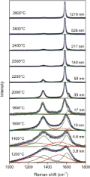


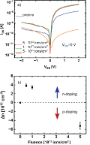


Nanoinformatics: spanning scales, systems and solutions
Beilstein J. Nanotechnol. 2026, 17, 423–427, doi:10.3762/bjnano.17.28
- carrier for other heavy metals such as Cd, Zn, Pb, Co or Ni into the cells – a so-called Trojan Horse mechanism. Using an ensemble learning approach that implements gradient boosting and bagging algorithms, four models were developed (i.e., a random forest, AdaBoost, Gradient Boost, and Extreme Gradient

Interconnection morphology effects on the radio frequency response of carbon nanotube sponges
Beilstein J. Nanotechnol. 2026, 17, 343–351, doi:10.3762/bjnano.17.23
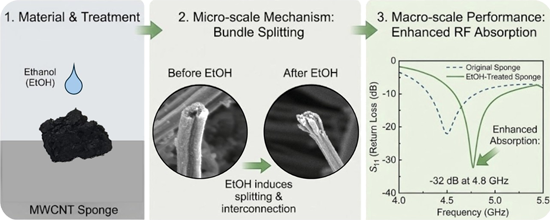
- resistivity, especially metals, which, when applied in antennas, guarantee good radiation of electromagnetic (EM) waves into free space. Applications of wireless technology are constantly expanding regarding short-range connections, like wireless local area networks and Bluetooth, and wide-area coverage, like
- increased from 0.5 to 5.0 μm, the gain changed from 14% up to 70% [19]. MWCNTs were also mixed with conductive polymers [20][21] or with metals [22], showing sizeable improvements in the response. More recently, a novel material based on a 3D self-standing CNT assembly, often denoted as carbon nanotube




Beam shaping techniques for pulsed laser ablation in liquids: Unlocking tunable control of nanoparticle synthesis in liquids
Beilstein J. Nanotechnol. 2026, 17, 309–342, doi:10.3762/bjnano.17.22
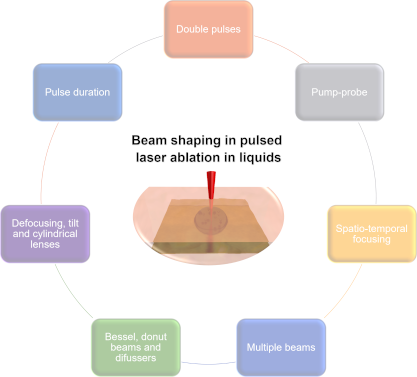
- ], including pure metals [40][41][42][43], semiconductors [44][45][46][47], or dielectric materials [48][49], in organic [41][50] or inorganic solvents [41][50][51][52]. Although initial NP production rates via PLAL were limited to a few milligram per hour, recent advancements in high-power, high-repetition
- , which makes CLAL unfeasible for continuous or large-scale nanoparticle production [5]. Nanosecond pulses significantly reduce the thermal interaction with the liquid, but their pulse duration is longer than the typical material electron–phonon relaxation time, of the order of 0.1–10 ps for metals
- spread through the material. Prolonged energy deposition enables heat conduction, causing a significant increase in temperature over a wider area of the material, leading to gradual heating, melting, and vaporisation [182]. Since the pulse duration exceeds the thermalisation time of most metals [162








Fast vortex dynamics and relaxation times in NbRe-based heterostructures
Beilstein J. Nanotechnol. 2026, 17, 292–302, doi:10.3762/bjnano.17.20
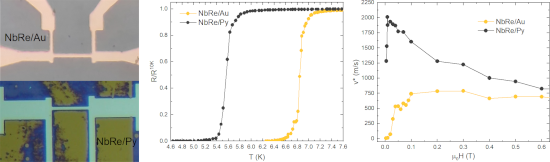
- the normal layer with vF the Fermi velocity and l the electron mean free path. For typical Fermi velocities [36] and low-temperature mean free paths measured in normal metals, ξN lies in the range of tens to hundreds of nanometers. According to Belzig et al. [37], the superconducting correlation in N
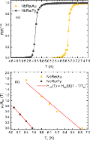
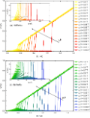
- function of the magnetic field was investigated to understand how normal metals and ferromagnetic materials affect vortex motion. The experimental data show that the NbRe/Py bilayer exhibits larger critical vortex velocities than those of the NbRe/Au structure. Furthermore, the estimation of the energy


Advancing nanolithography: a comprehensive review of materials for local anodic oxidation with AFM
Beilstein J. Nanotechnol. 2026, 17, 275–291, doi:10.3762/bjnano.17.19
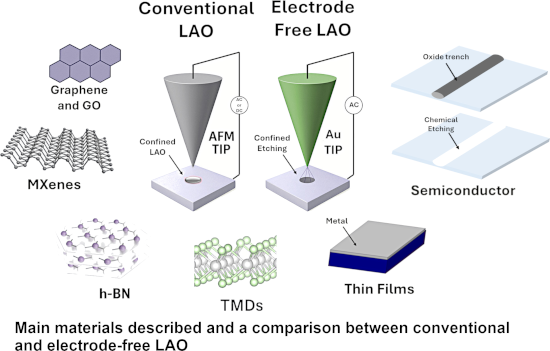
- technique for nanoscale patterning, leveraging the precision of scanning probe microscopy, relying specifically on atomic force microscopy. This review explores the materials utilized in LAO experiments, including semiconductors, metals, insulators, two-dimensional (2D) materials, and emerging
- heterostructures. Semiconductors such as silicon and silicon carbide remain foundational due to their controllable oxidation kinetics, while metals like titanium and aluminum offer opportunities for plasmonic and optical applications. 2D materials, including graphene, graphene oxide, and transition metal
- aims to highlight the capability of LAO to pattern two-dimensional (2D) materials such as graphene [20][21][22], hexagonal boron nitride [23] (hBN), transition metal dichalcogenides (TMDs) [21][24][25][26][27], metals [18][28][29], as well as traditional semiconductors such as silicon (Si) [6][10][30


Gold nanoparticle-decorated reduced graphene oxide as a highly effective catalyst for the selective α,β-dehydrogenation of N-alkyl-4-piperidones
Beilstein J. Nanotechnol. 2026, 17, 218–238, doi:10.3762/bjnano.17.15
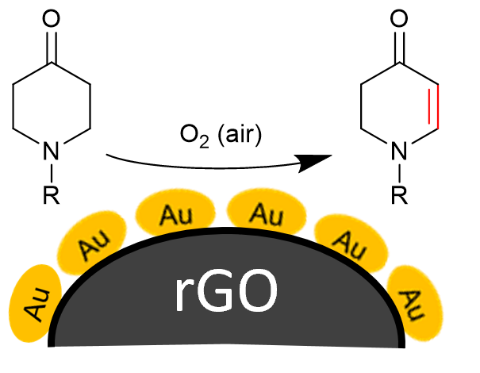
- type of transformation, particularly for the oxidative dehydrogenation of N-alkyl-4-piperidone to the corresponding N-alkyl-2,3-dihydropyridin-4(1H)-one. Table 3 compares the N-methyl-4-piperidone substrate in this work with the best results reported in the literature using supported metals. Notably


Time of flight secondary ion mass spectrometry imaging of contaminant species in chemical vapour deposited graphene on copper
Beilstein J. Nanotechnol. 2026, 17, 200–213, doi:10.3762/bjnano.17.13
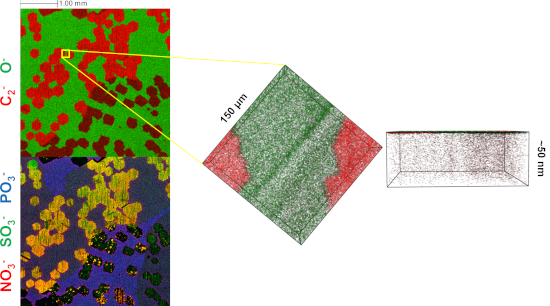
- three samples over the depth shown here, and to greater depth (>50 nm). Phosphorous is a common additive to copper metals during the smelting process, to aid removal of oxygen and improve the copper material performance, in terms of strength, ductility, and corrosion resistance, although there can be a








Functional surface engineering for cultural heritage protection: the role of superhydrophobic and superoleophobic coatings – a comprehensive review
Beilstein J. Nanotechnol. 2026, 17, 63–96, doi:10.3762/bjnano.17.6
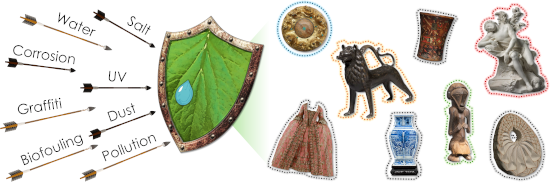
- the first testimonies of protection of artworks, in particular of those made of metals, can be traced back to around 50 C.E., in the Naturalis Historia by Pliny the Elder [18], using organic substances (bitumen, pitch, and oil) for preservation purposes. Pliny cited De Agri Cultura, by Cato
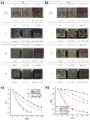
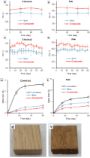
- exhibited self-cleaning behavior by breaking down organic pollutants (Figure 4a,b). The optimal formulations preserved activity outdoors and under accelerated ageing conditions (Figure 4c,d). Overall, the adopted methodology did not require heavy metals and employed biodegradable, low-cost precursors. These
- protection of such substrates are mainly focused on providing superhydrophobic properties of the artworks (see the dedicated section on superhydrophobic coatings). Metal substrates Metals are exposed to a wide range of threats from the environment, as well as from human actions. Thus, approaches have been





Geometry-controlled engineering of the low-temperature proximity effect in normal metal–superconductor junctions
Beilstein J. Nanotechnol. 2025, 16, 2265–2273, doi:10.3762/bjnano.16.155
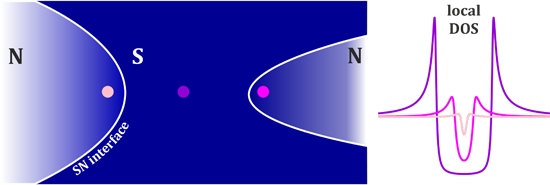
- Tc, in the ballistic regime, the pair amplitude decays exponentially in a NM according to the expression where the characteristic decay length is given by in clean metals and K−1 = ξn in dirty metals. Here, vn is the Fermi velocity in the NM, and z is the distance from the NS interface [2][7][26][27


Chiral plasmonic nanostructures fabricated with circularly polarized light
Beilstein J. Nanotechnol. 2025, 16, 2245–2264, doi:10.3762/bjnano.16.154
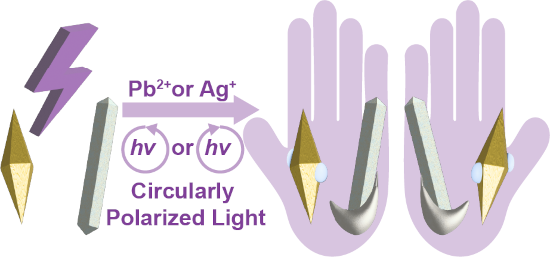
- detail due to the focus here on structurally intrinsic chiral plasmonic nanostructures (cPNSs). 2 Constructing chiral plasmonic nanostructures using CPL Light can drive the collective oscillation of the free electrons in metals, known as surface plasmons in a plasmonic metal nanostructure. Part of the
- with large g-factors. Section 2.3 will address this issue with the strategy of modifying the surface ligands on PNSs to create chiral PNSs. The non-radiative decay of hot carriers can heat the PNSs. Due to the high thermal conductivity of metals, isolated PNSs usually feature uniform temperature







Optical bio/chemical sensors for vitamin B12 analysis in food and pharmaceuticals: state of the art, challenges, and future outlooks
Beilstein J. Nanotechnol. 2025, 16, 2207–2244, doi:10.3762/bjnano.16.153



Microplastic pollution in Himalayan lakes: assessment, risks, and sustainable remediation strategies
Beilstein J. Nanotechnol. 2025, 16, 2144–2167, doi:10.3762/bjnano.16.148
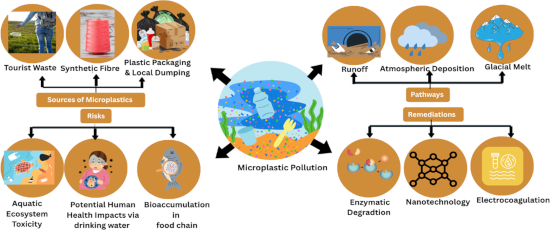
- urban runoff have resulted in plastic pollution increasing in Nainital Lake, a popular tourist destination, threatening aquatic biodiversity [2]. Nazir et al. state that MPs pollute water bodies by accumulating in food chains and bearing toxic contaminants such as heavy metals. This problem is
- vulnerable to the action of plasticizers. Consumption of these substances interferes with metabolic processes and leads to bioaccumulation of toxic compounds, like heavy metals linked with MPs [11]. Altitude lake sediments contain high concentrations of MPs, which interfere with benthic assemblages and
- metabolic disturbance in aquatic life [114]. MPs also act as carriers of hydrophobic organic pollutants such as pesticides, heavy metals, and persistent organic pollutants, which are more harmful when ingested [23]. Trophic transfer issues are generated by the bioaccumulation of MPs in fish, with birds and





