


Search results
Search for "robust" in Full Text gives 347 result(s) in Beilstein Journal of Nanotechnology. Showing first 200.
Substrate-dependent pore formation in molybdenum disulfide monolayers under ion irradiation
Beilstein J. Nanotechnol. 2026, 17, 769–780, doi:10.3762/bjnano.17.54
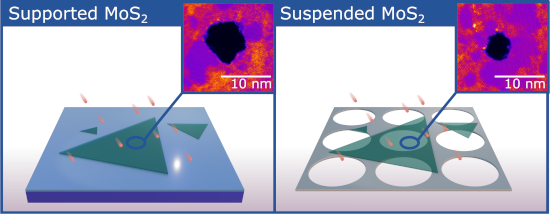
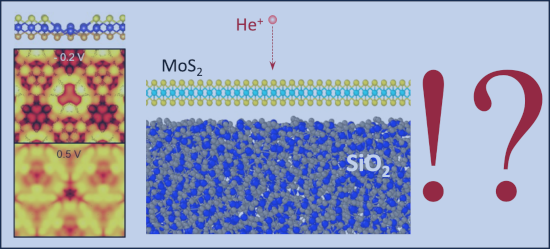
- that electronic excitation is redistributed and converted into lattice motion under the constraints imposed by the interface. The trends in pore size and pore formation efficiency observed here are robust, but the underlying dissipation pathways are inferred indirectly from defect statistics rather


Interface-engineered Caco-2 cell culture on a collagen-coated liquid–liquid interface in a microfluidic device
Beilstein J. Nanotechnol. 2026, 17, 760–768, doi:10.3762/bjnano.17.53
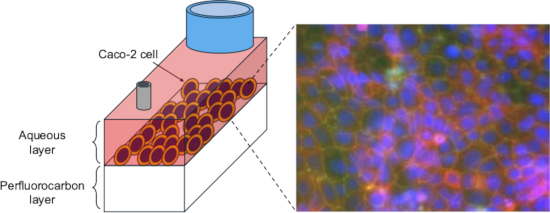
- that is sufficiently robust to support cell adhesion. Caco-2 cells monolayer maturation Immunofluorescence staining was performed to observe the characteristics of cultured Caco-2 cells as an intestinal epithelial model. Figure 6 shows a comparison of immunofluorescence images of ZO-1, F-actin, and


Oxidative atmosphere-driven formation of single-phase spinel CuRh2O4 nanofibers for alkaline water oxidation
Beilstein J. Nanotechnol. 2026, 17, 737–743, doi:10.3762/bjnano.17.50
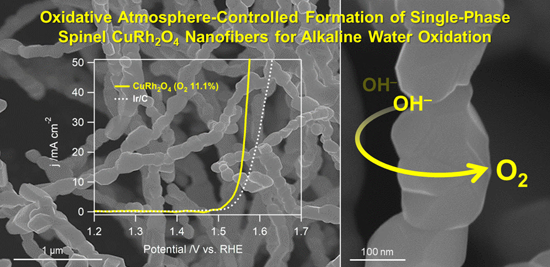
- the efficiency of alkaline water electrolysis [1]. Developing robust and highly active OER electrocatalysts is therefore essential for practical hydrogen production and large-scale renewable energy conversion. Among numerous catalyst platforms, spinel oxides (AB2O4) have attracted significant




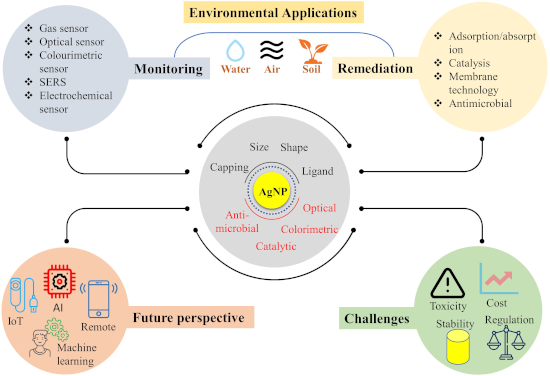
Environmental applications of silver nanoparticles: state-of-the-art review and emerging trends
Beilstein J. Nanotechnol. 2026, 17, 697–736, doi:10.3762/bjnano.17.49


Cellulose as a photocatalyst support material: extraction, structural features, and environmental applications
Beilstein J. Nanotechnol. 2026, 17, 635–652, doi:10.3762/bjnano.17.44
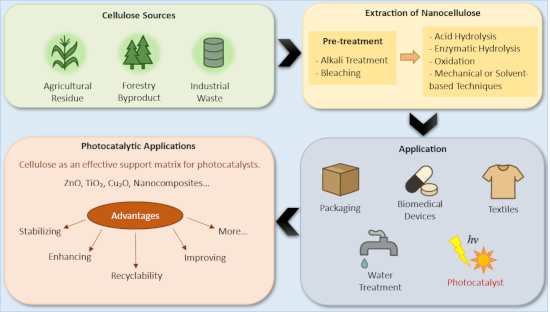
- for burns and chronic wounds, highlighting their crucial role in modern biomedicine. A notable example is cellulose acetate (CA), a natural and environmentally friendly derivative obtained from renewable sources such as wood pulp, which combines non-toxicity with water-attracting properties, robust


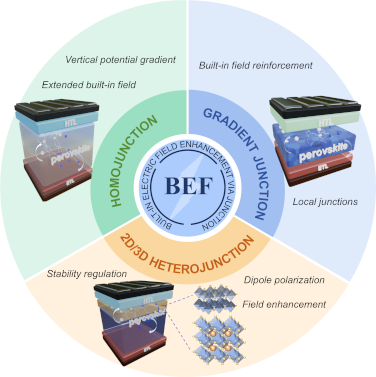
Recent progress in enhancing built-in electric fields of perovskite solar cells via junction engineering
Beilstein J. Nanotechnol. 2026, 17, 602–621, doi:10.3762/bjnano.17.42



Impacts of annealing on structural and photophysical properties of zinc phthalocyanine adsorbed on graphene
Beilstein J. Nanotechnol. 2026, 17, 576–585, doi:10.3762/bjnano.17.39
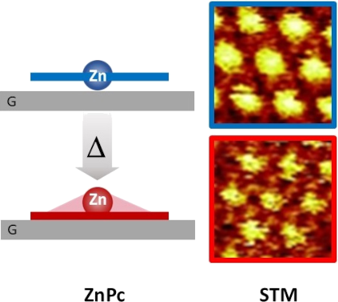
- shown to form highly reproducibly honeycomb guest–host monolayers (Scheme 1c, denoted ZnPc:TSB35-C12) that are robust in air under ambient conditions [40] and in which the guest ZnPc molecules are confined at a distance of 4.3 nm center-to-center from each other [39]. The measurements were performed on


Defects and defect-mediated engineering of two-dimensional materials: challenges and open questions
Beilstein J. Nanotechnol. 2026, 17, 454–488, doi:10.3762/bjnano.17.31
- mark a decisive advance in the study of 2D semiconductors. Defects in TMDs and h-BN host localized excitonic states and robust single-photon emission [119], yet, their spectroscopic variability has remained enigmatic. Far-field optical probes have revealed striking spatial heterogeneity in emission





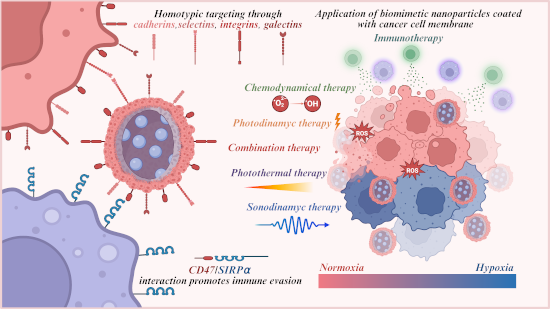
Biomimetic nanoparticles in cancer photodynamic therapy: a review of targeted delivery systems and therapeutic outcomes
Beilstein J. Nanotechnol. 2026, 17, 396–422, doi:10.3762/bjnano.17.27


Polycatecholamine nanocoatings on stainless steel: the effect on attachment of human fibroblasts and platelets
Beilstein J. Nanotechnol. 2026, 17, 365–380, doi:10.3762/bjnano.17.25
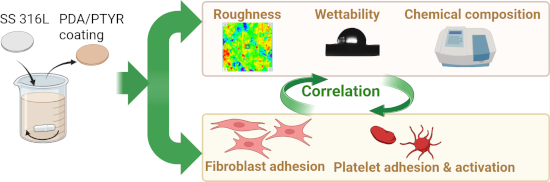
- nanoparticulate morphology, improved nanostructural stability, and were more repellent for platelets. This is an important finding in terms of searching for robust and versatile hemocompatible coatings, as platelet–surface interactions are strongly influenced by nanoscale chemistry and topography. PTYR




Ferroelectric nanodot reservoir for neuromorphic computing
Beilstein J. Nanotechnol. 2026, 17, 352–364, doi:10.3762/bjnano.17.24
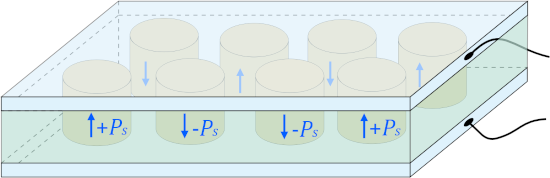
- ]. Ferroelectrics also host a wide variety of nonuniform topological soliton-like polarization states, especially at the nanoscale [26][27][28][29][30][31][32][33]. The presence of such topological states provides not only robust multistability but also new functional degrees of freedom, including topologically
- and −1 polarizations, the corresponding field trajectory is saved. These trajectories encode distinct input histories and illustrate how the reservoir transforms temporal sequences into spatial polarization patterns. Such behavior enables robust nonlinear signal processing and supports the
- supports multiple polarization states with hysteretic switching, enabling robust information storage and processing. The assembled ferroelectric reservoir exhibits behavior governed by a frustrated Ising-type energy landscape, where the polarization configuration minimizes the electrostatic energy of the


Fast vortex dynamics and relaxation times in NbRe-based heterostructures
Beilstein J. Nanotechnol. 2026, 17, 292–302, doi:10.3762/bjnano.17.20
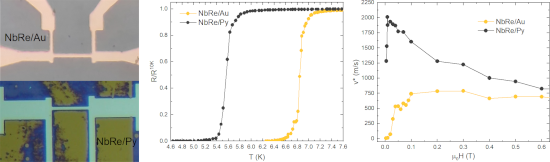
- that NbRe thin films are polycrystalline with oriented grains of nanometric size, of the order of a few nanometers [20][21]. Furthermore, earlier investigations have demonstrated that the superconducting and transport properties of NbRe are robust against moderate thickness variations [19]. These


Advancing nanolithography: a comprehensive review of materials for local anodic oxidation with AFM
Beilstein J. Nanotechnol. 2026, 17, 275–291, doi:10.3762/bjnano.17.19
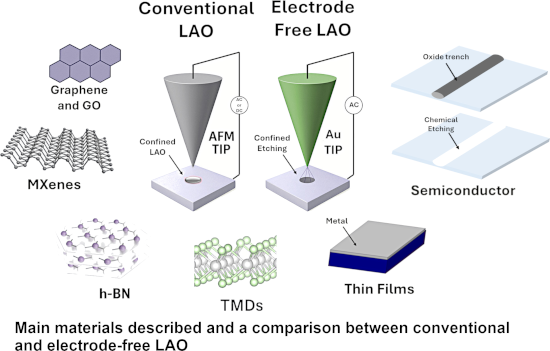
- variability in CNT integration. For this reason, CNT tips may show excellent results in specific cases [62] but do not consistently outperform robust commercial Si tips. Conductive or semiconductive substrates facilitate the process, while insulating substrates may require additional surface treatments [63
- . Additionally, the stability and integration of SiO2 within semiconductor workflows make it a reliable choice for robust electronic devices. However, silicon’s limitations include dependence on stringent surface preparation, Si crystal orientation (higher reaction rate on the (111) surface than on the other
- suitability for high-temperature environments. The formation of mixed oxides [91] (SiOxCy) during LAO provides opportunities for tailoring electrical properties, making SiC valuable for robust microelectronic and power devices. Its self-limiting oxide growth allows for precise control of layer thickness


Gold nanoparticle-decorated reduced graphene oxide as a highly effective catalyst for the selective α,β-dehydrogenation of N-alkyl-4-piperidones
Beilstein J. Nanotechnol. 2026, 17, 218–238, doi:10.3762/bjnano.17.15
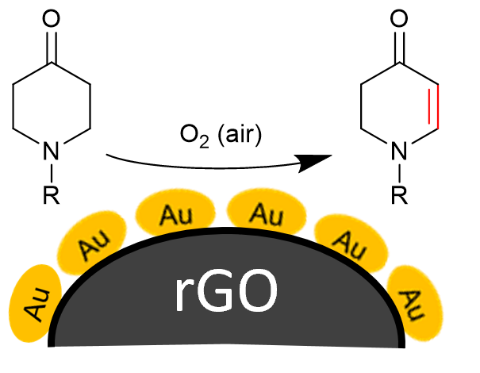
- ), confirming its comparatively lower overall catalytic performance. This trend corroborates the earlier observation that Au-Cit/rGO is more effective for short reaction times, whereas Au-SiW9/rGO proves to be the most robust and efficient for prolonged catalytic processes. The catalyst Au@SiW9 also appears to


Safe and sustainable by design with ML/AI: A transformative approach to advancing nanotechnology
Beilstein J. Nanotechnol. 2026, 17, 176–185, doi:10.3762/bjnano.17.11
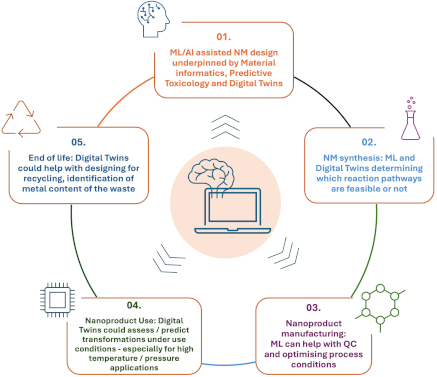
- networks, where standardized information on nanomaterial properties and toxicity profiles can be used to train increasingly robust ML models. Overall, the synergy between the SSbD concept, advanced ML/AI algorithms, and comprehensive regulatory directives fosters a future-oriented model of nanotechnology
- , inconsistently formatted, and insufficiently annotated for robust ML/AI model training [63][64]. Moreover, these datasets often arise from disparate sources – academic research labs, industrial R&D facilities, and public databases – each with its own protocols and measurement standards. Such heterogeneity


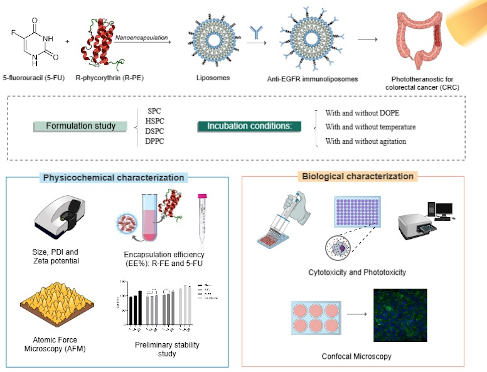
Development and in vitro evaluation of liposomes and immunoliposomes containing 5-fluorouracil and R-phycoerythrin as a potential phototheranostic system for colorectal cancer
Beilstein J. Nanotechnol. 2026, 17, 97–121, doi:10.3762/bjnano.17.7



Functional surface engineering for cultural heritage protection: the role of superhydrophobic and superoleophobic coatings – a comprehensive review
Beilstein J. Nanotechnol. 2026, 17, 63–96, doi:10.3762/bjnano.17.6
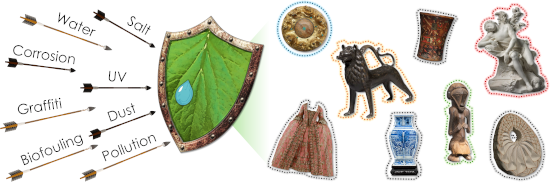
- ) layer. Subsequently, the authors incorporated the PCA-coated VCMs into a polydimethylsiloxane (PDMS) matrix, significantly reducing the thermal conductivity of the coatings and improving their surface hydrophobicity. The coating provided robust protection for concrete, enhancing abrasion resistance and


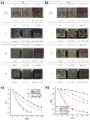
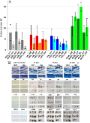
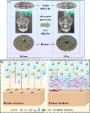


Subdigital integumentary microstructure in Cyrtodactylus (Squamata: Gekkota): do those lineages with incipiently expressed toepads exclusively exhibit adhesive setae?
Beilstein J. Nanotechnol. 2026, 17, 38–56, doi:10.3762/bjnano.17.4
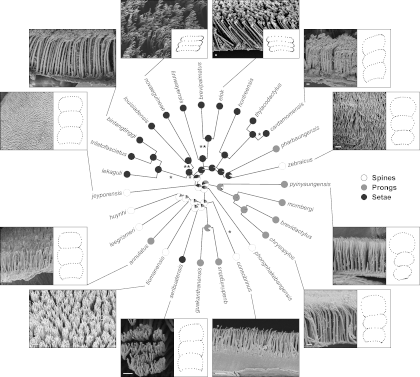
- of toepad evolution in Cyrtodactylus, Riedel et al. [43] identified two robust transitions towards macroscopically identifiable incipient toepads within the genus, one at the base of the brevipalmatus group and one at the base of the Melanesian trunk clade (the common ancestor of C. novaeguineae and
- encountered on rocks and rock formations. This diverse habitat type includes ecotypes living on granite outcrops, sandstone, karst formations, and in cave systems. Such species are associated with varying terrain roughness and incline. Species within the granite ecotype tend to be robust and are limited to
- ]. Species of the trunk ecotype are often the largest and most robust species in the genus [41][105][106] and are typically found on tree trunks or branches at varying heights, relying on natural features of the trunk surface for refugia. Structural niche preference and subdigital scale shape of the 27


Quantitative estimation of nanoparticle/substrate adhesion by atomic force microscopy
Beilstein J. Nanotechnol. 2026, 17, 1–14, doi:10.3762/bjnano.17.1

- force profile and the distance along which the NPs are pushed, offering a more robust measure of interfacial adhesion. To provide a reliable and accurate measure of the energy required to manipulate the NPs, the total work of manipulation (Wm) was calculated by taking the integral of lateral force (LF



Terahertz-range on-chip local oscillator based on Josephson junction arrays for superconducting quantum-limited receivers
Beilstein J. Nanotechnol. 2025, 16, 2296–2305, doi:10.3762/bjnano.16.158
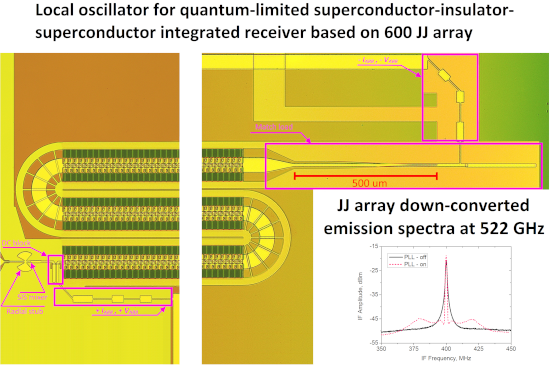
- of robust Nb-based technologies, whereas the electrodes of the transmission lines where the junctions are implemented can be fabricated using Nb compounds. In a work by Uzawa et al. the generation of up to 800 GHz was observed [29]. When a JJ array is properly matched to the load, its radiation power
- IVC of the JJ array when the PLL mode is active is shown in Figure 10. The current step induced by the PLL system is approx. 0.5 mA, which is three orders of magnitude higher than the characteristic noise level in the current bias system (≈0.5 μA) and thermal noise. This shows the robust nature of the


Visualizing nanostructures in supramolecular hydrogels: a correlative study using confocal and cryogenic scanning electron microscopy
Beilstein J. Nanotechnol. 2025, 16, 2274–2284, doi:10.3762/bjnano.16.156
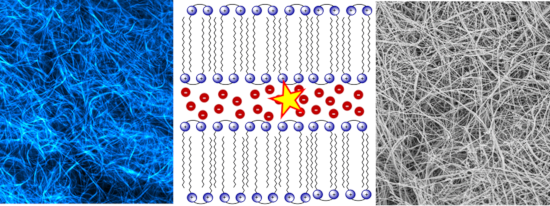
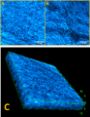
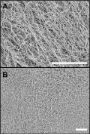
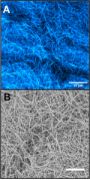
- disruption of the native gel morphology by avoiding aggregation or artefacts associated with high fluorophore loadings, an effect previously observed in such systems [26]. As illustrated in Figure 3A,B, the DPP-BC-containing gels exhibited a robust network of interconnected fibres and bundles across the CLSM




Geometry-controlled engineering of the low-temperature proximity effect in normal metal–superconductor junctions
Beilstein J. Nanotechnol. 2025, 16, 2265–2273, doi:10.3762/bjnano.16.155
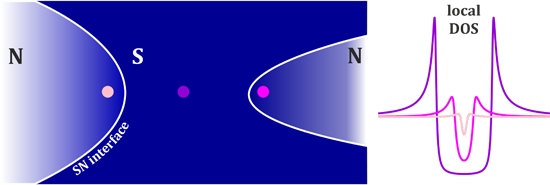
- stability of superconducting hybrid devices. For NS junctions with large positive curvature, that is, for quasi-low-dimensional structures, a robust proximity gap emerges, persisting over extended distances because of enhanced superconducting correlations. However, real systems often exhibit a soft gap in


Optical bio/chemical sensors for vitamin B12 analysis in food and pharmaceuticals: state of the art, challenges, and future outlooks
Beilstein J. Nanotechnol. 2025, 16, 2207–2244, doi:10.3762/bjnano.16.153


Hartree–Fock interaction in superconducting condensate fractals
Beilstein J. Nanotechnol. 2025, 16, 2177–2182, doi:10.3762/bjnano.16.150
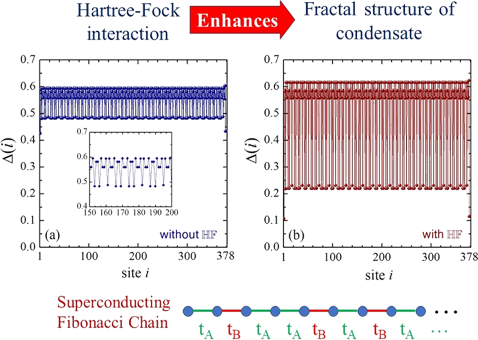
- conclusions are robust and not sensitive to the specific choice of these model parameters. Results and Discussion Figure 1 shows results of numerically solving the BdG equations in a self-consistent manner for n = 12 and tA = 1.5. In this case, Fn=12 = 233; consequently, the number of atomic sites in the


Missing links in nanomaterials research impacting productivity and perceptions
Beilstein J. Nanotechnol. 2025, 16, 2168–2176, doi:10.3762/bjnano.16.149
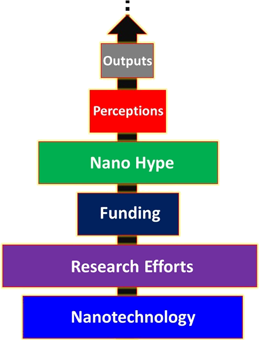
- impact of nanomaterials. These protocols should go over short-sighted strategies like recycling and usage restrictions. Similarly, to how systematic regulations exist for human cell research or radioactive materials, nanomaterial research must also be governed by robust guidelines to prevent uncontrolled



