


Search results
Search for "titanium" in Full Text gives 304 result(s) in Beilstein Journal of Nanotechnology. Showing first 200.
Environmental applications of silver nanoparticles: state-of-the-art review and emerging trends
Beilstein J. Nanotechnol. 2026, 17, 697–736, doi:10.3762/bjnano.17.49
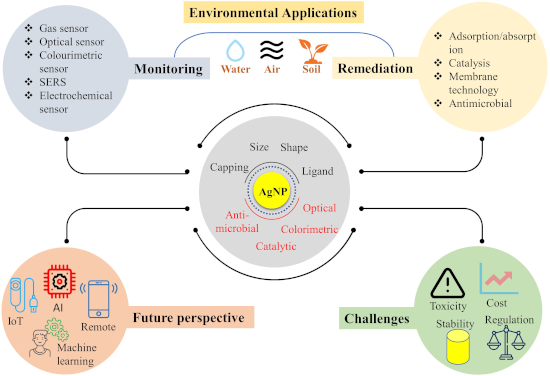
- capacity, which was increased by adding other materials. This includes carbon-based nanocomposites (activated carbon, graphene, and nanotubes), polymer-based nanocomposites (chitosan and alginate), and metal oxide-based nanocomposites (iron, zinc, and titanium) [26]. A recent study confirmed the removal of
- potent nanocatalyst in water treatment. In the list of pollutants, microplastics are emerging as a hazard to living beings. Titanium dioxide nanotubes doped with Ag degraded polyethene microplastics by up to 18% after 90 min under UV-C exposure, compared to undoped nanotubes (17.33%), indicating a
- synergistic effect of doping. Upon doping, Ag was observed to be dispersed on the nanotube surface, either as Ag or Ag2O nanoparticles [116]. Another study confirmed similar results on Ag-doped titanium dioxide, where 100% degradation of polyethene (125–150 μM) was achieved at 100 ppm in 120 min of UV


Cellulose as a photocatalyst support material: extraction, structural features, and environmental applications
Beilstein J. Nanotechnol. 2026, 17, 635–652, doi:10.3762/bjnano.17.44
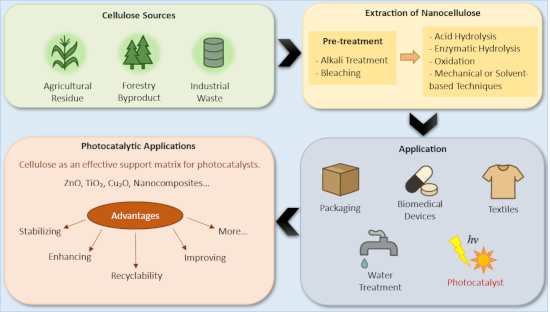
- materials that can absorb light energy and generate electron–hole pairs, which then participate in redox reactions to produce ROS that degrade organic pollutants. Titanium dioxide (TiO2) and zinc oxide (ZnO) are the common catalysts that have been used [18][19]. Figure 3 illustrates the general mechanism of
- transition metal nanoparticles such as iron, silver, palladium, platinum, titanium, and copper have been widely employed for breaking down pollutants; however, their tendency to aggregate limits performance, which is why they are frequently immobilized on solid substrates. This immobilization not only


Two-step laser synthesis of Ag@TiO2 nanomaterials for the photocatalytic degradation of rhodamine B
Beilstein J. Nanotechnol. 2026, 17, 622–634, doi:10.3762/bjnano.17.43
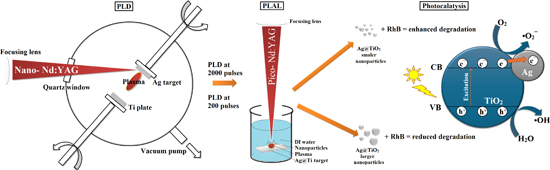
- pulsed laser ablation in liquids (PLAL). Initially, silver was ablated using 200 and 2000 pulses and deposited onto titanium targets via PLD. Subsequently, these modified targets were submerged in water and processed using PLAL to generate the final nanomaterials. Characterization through HRTEM, EDS, and
- provides an efficient and environmentally friendly route for the fabrication of Ag@TiO2 photocatalysts. Keywords: Ag@TiO2 nanomaterials; photocatalytic degradation; pulsed laser ablation in liquids; pulsed laser deposition; rhodamine B; Introduction Titanium dioxide has long been recognized as perhaps
- numerous modification strategies. Silver-modified titanium dioxide (Ag@TiO2) nanoparticles have gained significant attention as advanced photocatalysts for the degradation of organic pollutants, particularly under visible-light irradiation. The incorporation of silver introduces localized surface plasmon


Synthesis of Cu–Mo/TiO2 and Co–Mo/TiO2 photocatalysts for the efficient degradation of organic pollutants in water
Beilstein J. Nanotechnol. 2026, 17, 559–570, doi:10.3762/bjnano.17.37
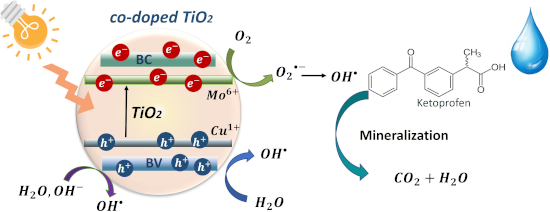
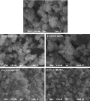
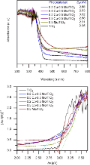
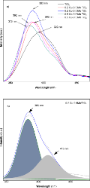
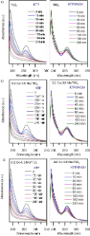
- , Universidad Autónoma de Nuevo León, Ciudad Universitaria, San Nicolás de los Garza, N.L., 66455, Mexico 10.3762/bjnano.17.37 Abstract Co-doped titanium dioxide materials were successfully synthesized by the sol–gel method. Molybdenum was incorporated into all materials at 0.5 wt %, while the co-dopants
- the complete degradation of ketoprofen and 90% of mineralization. It was determined that HO· radicals play an important role in the oxidation reactions. Keywords: co-doping; photocatalysis; titanium dioxide; water remediation; Introduction Water is an essential part of every living entity
- volumes determined from the anatase diffraction peaks using the MAUD software. A slight increase in the cell volume is observed for the modified titanium oxides. Since molybdenum can be present in the oxidation state Mo6+, presenting an ionic radius of 0.62 Å, whereas, Ti4+ presents an ionic radius of



Nanocarrier-integrated multilayer films produced by 3D printing for improved skin adhesion and curcumin photostability
Beilstein J. Nanotechnol. 2026, 17, 440–453, doi:10.3762/bjnano.17.30
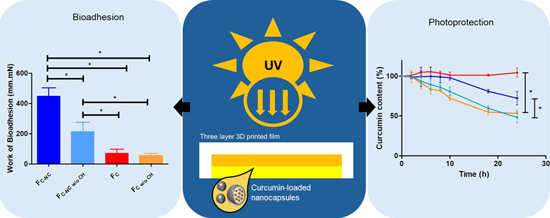
- efficiency. Films were fabricated containing either C-NCs (FC-NC) or unloaded curcumin (FC) and consisted of three layers, namely, a chitosan-based bottom layer, a middle layer of carboxymethylcellulose and alginate, and a carboxymethylcellulose top layer incorporating titanium dioxide (TiO2). The lower and
- composed of carboxymethylcellulose and titanium dioxide (TiO2). Curcumin was incorporated into the formulations either in its encapsulated form, loaded into polymeric nanocapsules, or non-encapsulated and dissolved in a hydroalcoholic solution. The preparation of films containing curcumin-loaded polymeric
- (Na-CMC) was obtained from Levviale (São Paulo, Brazil). Titanium dioxide in the rutile form (Eusolex® T-AVO) was obtained from Alpha Química. Acetone was obtained from Neon Comercial Ltda (São Paulo, Brazil), grape seed oil was purchased from Delaware Importadora Química (Porto Alegre, Brazil), and


Advancing nanolithography: a comprehensive review of materials for local anodic oxidation with AFM
Beilstein J. Nanotechnol. 2026, 17, 275–291, doi:10.3762/bjnano.17.19
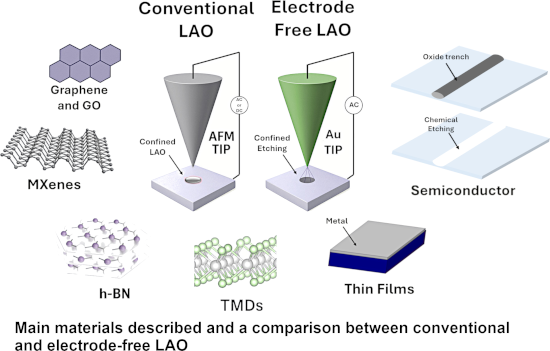
- heterostructures. Semiconductors such as silicon and silicon carbide remain foundational due to their controllable oxidation kinetics, while metals like titanium and aluminum offer opportunities for plasmonic and optical applications. 2D materials, including graphene, graphene oxide, and transition metal
- efficiently align BCPs into an ordered parallel lamellar arrangement, as depicted in Figure 4b–d. 2.5.2 Metals. Metals like titanium and aluminum are frequently utilized for plasmonic devices and nanoscale sensors. Oxidation of titanium during LAO forms TiO2 [69][88], a process highly dependent on relative
- humidity and applied voltage. Patterns on titanium exhibit uniform thickness, making it well-suited for applications in nanoelectronics devices, memristive memory elements, and lithographic masks. Typically, the titanium layer is deposited on semiconducting or insulating substrates, such as SiO2, to


Multilayered hyperbolic Au/TiO2 nanostructures for enhancing the nonlinear response around the epsilon-near-zero point
Beilstein J. Nanotechnol. 2026, 17, 251–261, doi:10.3762/bjnano.17.17
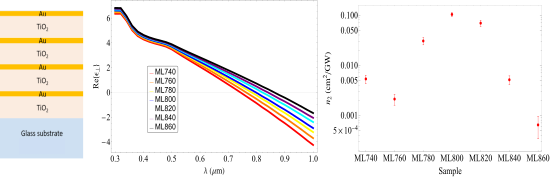
- –dielectric Au/TiO2 structures. The samples were fabricated using Joule effect evaporation for gold and electron beam evaporation for titanium dioxide. Their structure was designed to have an epsilon-near-zero (ENZ) point at different wavelengths around 800 nm, in order to study their nonlinear response as a
- oxidation rate, allowing us to avoid any changes in permittivity due to oxidation during the fabrication process. We kept using titanium dioxide because, during the simulation stage, we found that its permittivity allowed us to keep the overall sample thickness low. Also, during the fabrication process, we
- nonlinear effects. We also produced a set of single layers to study the properties of the constituting materials being deposited. In order to calculate the point for which = 0, we use the permittivities of gold εm and titanium dioxide εd from [26][27], shown in Figure 1c. This leaves the layer thicknesses


Functional surface engineering for cultural heritage protection: the role of superhydrophobic and superoleophobic coatings – a comprehensive review
Beilstein J. Nanotechnol. 2026, 17, 63–96, doi:10.3762/bjnano.17.6

- protection. Gryparis et al. [65] investigated self-cleaning photocatalytic coatings to protect cementitious materials from environmental pollutants (i.e., methylene blue (MB) and methyl orange (MO)). Titanium dioxide, known for its photocatalytic properties, was combined with carbon dots (C-dots) to enhance



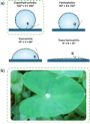


Microplastic pollution in Himalayan lakes: assessment, risks, and sustainable remediation strategies
Beilstein J. Nanotechnol. 2025, 16, 2144–2167, doi:10.3762/bjnano.16.148
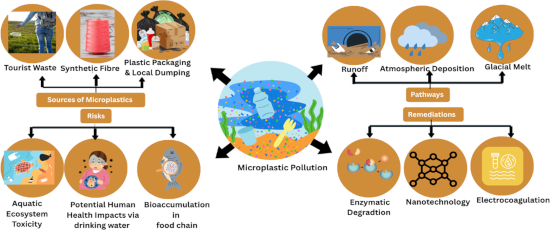
- most promising among them are photocatalytic processes that utilize titanium dioxide nanoparticles under UV radiation. These are very efficient degradation processes for degrading plastics to carbon dioxide (CO2) and water [43]. Fenton reactions, involving a mixture of hydrogen peroxide and iron


Laser ablation in liquids for shape-tailored synthesis of nanomaterials: status and challenges
Beilstein J. Nanotechnol. 2025, 16, 1963–1997, doi:10.3762/bjnano.16.137






On the road to sustainability – application of metallic nanoparticles obtained by green synthesis in dentistry: a scoping review
Beilstein J. Nanotechnol. 2025, 16, 1851–1862, doi:10.3762/bjnano.16.128
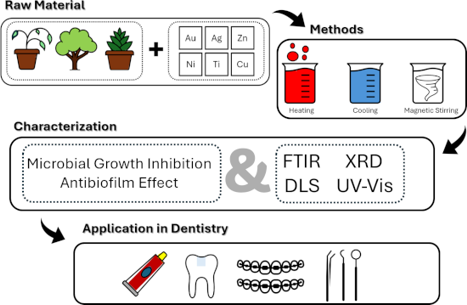
- , including cements, sealants, and mouthwashes [8][45]. CuNPs and nickel oxide nanoparticles, though less frequent, are also gaining attention for their antimicrobial activity, despite some concerns regarding cytotoxicity [46][47]. The presence AuNPs and titanium dioxide nanoparticles highlights an interest
- regenerative potential of biomaterials applied in clinical settings. Implantology is another emerging area of application, where nanoparticle-based coatings are used to reduce peri-implant biofilm formation and enhance osseointegration [9][19]. Titanium implants functionalized with green-synthesized AgNPs or


Nanotechnology-based approaches for the removal of microplastics from wastewater: a comprehensive review
Beilstein J. Nanotechnol. 2025, 16, 1607–1632, doi:10.3762/bjnano.16.114
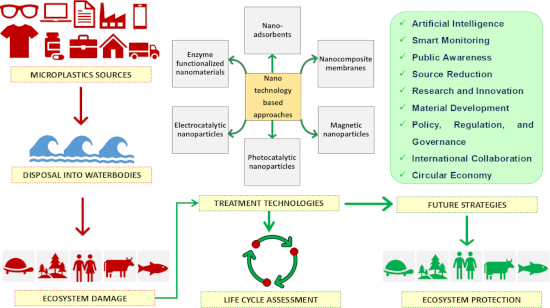
- -dimensional nanomaterials, have received interest across scientific fields owing to their exceptional chemical and thermal stability. Their chemical formula is Mn+1XnTx (n = 1, 2, or 3), where M denotes an early transition metal such as titanium, molybdenum, or vanadium, while X denotes carbon and nitrogen
- area and layered, folded structures. These 2D materials are known for their chemical robustness, surface functionality, hydrophilicity, excellent electrical conductivity, and eco-friendly nature. Due to these properties, MXenes, particularly titanium carbide derivatives (Ti3C2Tx), have become widely


Photocatalytic degradation of ofloxacin in water assisted by TiO2 nanowires on carbon cloth: contributions of H2O2 addition and substrate absorbability
Beilstein J. Nanotechnol. 2025, 16, 1567–1579, doi:10.3762/bjnano.16.111
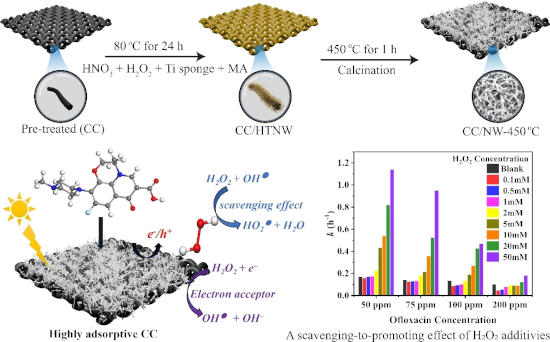
- and deionized water alternately in an ultrasonic bath, followed by drying at 60 °C. After that, it was immersed in 200 mL of a 30 wt % H2O2 solution, containing 60 mg of melamine, 4 mL of 65 wt % HNO3, and 1 g of titanium sponge, at 80 °C for 24 h to facilitate the precipitation of hydrogen titanate
- , the hydrogen titanate nanowires precipitate. In the acidic medium, the reaction between metallic Ti sponge and hydrogen peroxide produces titanium hydroxide species in solution. Once the concentration of these species reaches saturation, hydrogen titanate nanowires nucleate and grow directly on the


Nanomaterials for biomedical applications
Beilstein J. Nanotechnol. 2025, 16, 1499–1503, doi:10.3762/bjnano.16.105
- . Traditional implants face various problems, such as poor biocompatibility, inflammatory response, or the risk of infection. However, with the integration of nanomaterials, these devices show higher biocompatibility, durability, and defenses against bacteria [36]. For example, incorporating titanium dioxide or
Laser processing in liquids: insights into nanocolloid generation and thin film integration for energy, photonic, and sensing applications
Beilstein J. Nanotechnol. 2025, 16, 1428–1498, doi:10.3762/bjnano.16.104






Better together: biomimetic nanomedicines for high performance tumor therapy
Beilstein J. Nanotechnol. 2025, 16, 1246–1276, doi:10.3762/bjnano.16.92









Hydrogels and nanogels: effectiveness in dermal applications
Beilstein J. Nanotechnol. 2025, 16, 1216–1233, doi:10.3762/bjnano.16.90
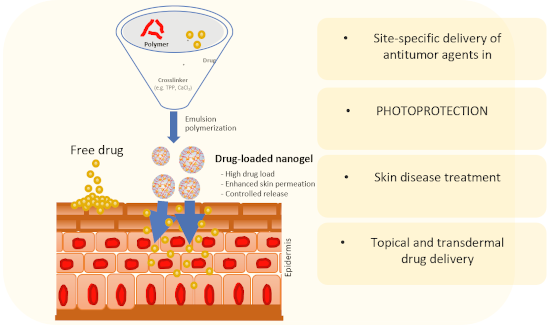
- prevention were tested by Bagde et al. (2019) [195]. The obtained nanogels were incorporated with quercetin, a natural antioxidant, and titanium dioxide (TiO2), which acts as an inorganic sunscreen. Formulations containing 0.08% and 0.12% quercetin exhibited an encapsulation rate of 89.3 ± 1.4% and 90.4


Chitosan nanocomposite containing rotenoids: an alternative bioinsecticidal approach for the management of Aedes aegypti
Beilstein J. Nanotechnol. 2025, 16, 1197–1208, doi:10.3762/bjnano.16.88
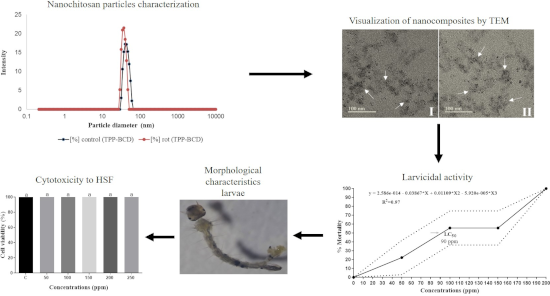
- the nanocomposite to reduce potential environmental damage, such as those reported in the literature for some metal-decorated nanomaterials and their derivatives (silver, gold, copper, zinc, titanium, and silicon) that can be highly toxic to non-target organisms in the environment [18]. The



Deep learning for enhancement of low-resolution and noisy scanning probe microscopy images
Beilstein J. Nanotechnol. 2025, 16, 1129–1140, doi:10.3762/bjnano.16.83

- . Results and Discussion In this study, 4× upscaled images were obtained from real measured low-resolution AFM images of Celgard® 2400 membrane and high-roughness titanium film used for tip characterization (Figure 1 and Figure 2, respectively). 4× upscaling means upscaling both the x and y directions and
- beneficial to authenticate results using other microscopies such as electron microscopy, or spectroscopic techniques, where relevant. Importantly, computationally, PSNR average values are very close to 30 for the Celgard® 2400 membrane surface and above 32 for the titanium film, putting them within the
- methods, PSNR and SSIM, show no statistically significant differences between the traditional methods and the deep learning models for image fidelity, the no-reference methods for image quality, Fourier Sharpness, PI, Ma, and NIQE exhibit such differences. Importantly, while for the titanium film data set


Influence of ion beam current on the structural, optical, and mechanical properties of TiO2 coatings: ion beam-assisted vs conventional electron beam evaporation
Beilstein J. Nanotechnol. 2025, 16, 1097–1112, doi:10.3762/bjnano.16.81
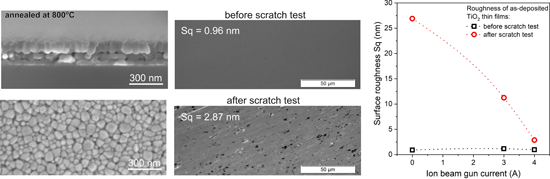
- Agata Obstarczyk Urszula Wawrzaszek Wroclaw University of Science & Technology, Faculty of Electronics, Photonics and Microsystems, Janiszewskiego 11/17, 50-372 Wroclaw, Poland 10.3762/bjnano.16.81 Abstract In this paper, comparative studies of selected properties of titanium dioxide (TiO2
- ][10][11][12]. Electron beam evaporation is very effective for preparing transparent titanium dioxide thin films, such as optical coatings for a large variety of applications. Due to its desirable structural, optical, and electrical properties, high thermal and chemical stability, relatively low price
- , and good availability, TiO2 in the form of thin films is now widely used in the development of gas sensors, photodetectors, solar cells, memristors, and photocatalysts [1][12][15][16][17]. The area of application of titanium dioxide is also related to the crystal structure in which it occurs, that is




Time-resolved probing of laser-induced nanostructuring processes in liquids
Beilstein J. Nanotechnol. 2025, 16, 968–1002, doi:10.3762/bjnano.16.74


Emerging strategies in the sustainable removal of antibiotics using semiconductor-based photocatalysts
Beilstein J. Nanotechnol. 2025, 16, 264–285, doi:10.3762/bjnano.16.21
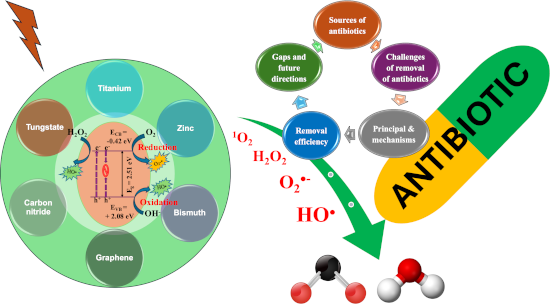
- , oxides of titanium, zinc, bismuth, and tungsten, as well as graphene, graphitic carbon nitride (g-C3N4), and their substitute materials are commonly synthesized and used as photocatalysts for the removal of antibiotics from contaminated sources. These materials are synthesized through a variety of
- wastewater treatment. Titanium dioxide-based materials TiO2 is the most commonly used photocatalyst for antibiotic removal owing to its unique features. In nanostructured forms, this substance exhibits outstanding physical and chemical durability, a high ratio of surface area to volume, adjustable electronic
- photocatalysts to remove antibiotics from water is compiled below in Table 2. Bismuth-based materials Although the activity of titanium dioxide- and zinc oxide-based photocatalysts has been increased through modification, they still absorb visible light poorly. Bi-based photocatalysts have been widely employed



Preferential enrichment and extraction of laser-synthesized nanoparticles in organic phases
Beilstein J. Nanotechnol. 2025, 16, 254–263, doi:10.3762/bjnano.16.20
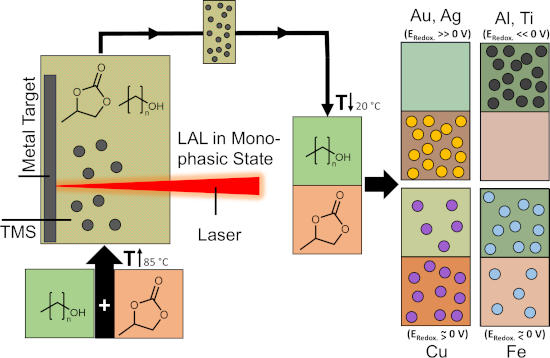
- ) to determine the preferred phase (1-nonanol or propylene carbonate) of the colloidal nanoparticles (Figure 1a,b). For gold and silver, the nanoparticles remained in the propylene carbonate phase, which is the more polar phase, while the nanoparticles made by LAL of aluminum and titanium were found to
- formation is to be expected during the ablation of copper compared to gold and silver, which leads to a decreased polarity of the formed nanoparticles and potentially a higher affinity to less polar solvents. However, the base metals (iron, aluminum, and titanium) show a different behavior during LAL in
- organic solvents. Various nanoparticle compositions were found for iron [7][24][25] and titanium [26][55], including carbides, oxides, and oxocarbides, resulting in a higher affinity towards non-polar solvents. While this was not shown for aluminum nanoparticles previously, it is known that aluminum can




Recent advances in photothermal nanomaterials for ophthalmic applications
Beilstein J. Nanotechnol. 2025, 16, 195–215, doi:10.3762/bjnano.16.16
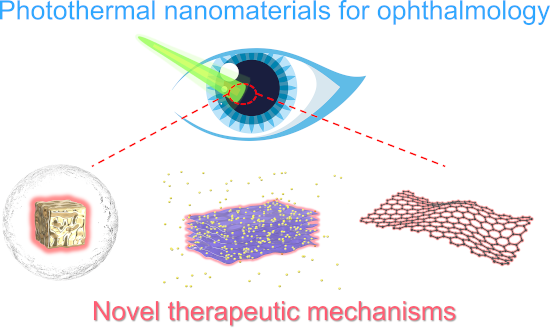
- photothermal conversion capabilities. For instance, titanium dioxide (TiO2) with a bandgap of 3.3 eV, which is transparent to visible light, primarily absorbs ultraviolet light, and common semiconductor materials are only weakly absorbent in the NIR range (Figure 2h) [78]. In comparison to LSPR metals and


Probing the potential of rare earth elements in the development of new anticancer drugs: single molecule studies
Beilstein J. Nanotechnol. 2025, 16, 187–194, doi:10.3762/bjnano.16.15

- fact that some metals have been successfully used, or are being investigated, as components of chemotherapeutic drugs [9][10], especially platinum [11][12][13][14][15][16] or, alternatively, ruthenium [17], titanium [18], gold, and copper. Here we report the high potential of three rare earth elements





