


Search results
Search for "fabrication methods" in Full Text gives 59 result(s) in Beilstein Journal of Nanotechnology.
Paper-based triboelectric nanogenerators and their applications: a review
Beilstein J. Nanotechnol. 2021, 12, 151–171, doi:10.3762/bjnano.12.12
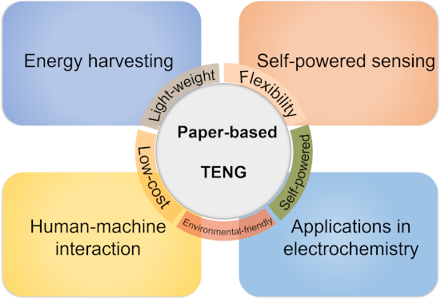
- several typical examples in which P-TENGs are used. This paper starts with an overview of TENGs and the corresponding working mechanism of four basic working modes based on charge transfer and on the electron-cloud potential-well model. Regarding surface modification and fabrication methods involving






Hexagonal boron nitride: a review of the emerging material platform for single-photon sources and the spin–photon interface
Beilstein J. Nanotechnol. 2020, 11, 740–769, doi:10.3762/bjnano.11.61
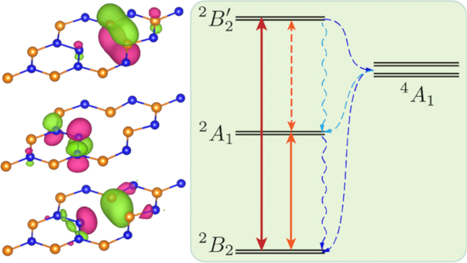
- view, host material and fabrication methods are detailed in the following sections. We will now discuss the discovery of these SPSs in the different material platforms of h-BN from bulk to 2D, 1D, and 0D material form. Bulk material Martínez et al. [98] shows for the first time an SPE in bulk
- devices. Fabrication and localization methods Here we summarize the large variety of fabrication methods used to create SPEs in various types of h-BN materials (mostly flakes and CVD h-BN), in the attempt to determine their physical origin or atomistic attribution. The methods do not provide information


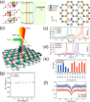


Recent progress in perovskite solar cells: the perovskite layer
Beilstein J. Nanotechnol. 2020, 11, 51–60, doi:10.3762/bjnano.11.5

- general additive to improve the quality of perovskite films and could be used in other scalable fabrication methods to enable the high-speed deposition of perovskite films. The strategy may open up new dimensions of the fabrication of large-area perovskite solar modules at a high speed and thus enhance


Integration of sharp silicon nitride tips into high-speed SU8 cantilevers in a batch fabrication process
Beilstein J. Nanotechnol. 2019, 10, 2357–2363, doi:10.3762/bjnano.10.226

- of reduced quality and can seriously mislead users [4]. New fabrication methods have enabled increased tip sharpness and uniformity, so that commercial AFM cantilevers now have a standard tip quality. A range of specialized AFM techniques require custom tip designs, including high-speed AFM [5][6


Fabrication and characterization of Si1−xGex nanocrystals in as-grown and annealed structures: a comparative study
Beilstein J. Nanotechnol. 2019, 10, 1873–1882, doi:10.3762/bjnano.10.182

- technology [19][20][21]. Various fabrication methods have been utilized to fabricate structures with SiGe NCs embedded in an oxide matrix [13][17][22][23]. Magnetron sputtering is one of the most versatile methods and it allows for a good control over the NCs formation [24] by a addition of rapid thermal


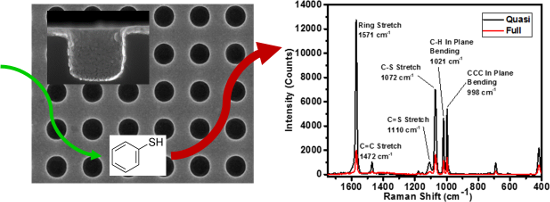
Revisiting semicontinuous silver films as surface-enhanced Raman spectroscopy substrates
Beilstein J. Nanotechnol. 2019, 10, 1048–1055, doi:10.3762/bjnano.10.105

- structures [19][20]. Chemical fabrication methods are powerful in terms of the vast variety of attainable structure types, possible enhancement factors, and low cost of fabrication. However, reproducibility of SERS substrates can be an issue and the chemical compounds used for fabrication or stabilization of




Biological and biomimetic surfaces: adhesion, friction and wetting phenomena
Beilstein J. Nanotechnol. 2019, 10, 481–482, doi:10.3762/bjnano.10.48
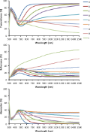
- document the recent progress of transferring these findings into artificial materials and surfaces using advanced fabrication methods and highlight the broad spectrum of both experimental and theoretical techniques to characterize biological and bioinspired surfaces. Out of the 19 collected articles, eight
Femtosecond laser-assisted fabrication of chalcopyrite micro-concentrator photovoltaics
Beilstein J. Nanotechnol. 2018, 9, 3025–3038, doi:10.3762/bjnano.9.281

- fabrication methods for microabsorbers. In thin-film photovoltaics, Cu(In,Ga)Se2 (CIGSe) solar cells with an efficiency record of 22.9% for planar cells [2] and 19.2% for sub-modules [3] are among the leading technologies. Figure 1 shows the structure of a planar CIGSe solar cell representing the current


Low cost tips for tip-enhanced Raman spectroscopy fabricated by two-step electrochemical etching of 125 µm diameter gold wires
Beilstein J. Nanotechnol. 2018, 9, 2718–2729, doi:10.3762/bjnano.9.254

- deposition (EBID) and focused ion beam (FIB) milling [41][42][43] (see [30][44] for reviews). Fabrication methods capable of guaranteeing high reproducibility, cost-effectiveness and scalability to industrial production are, however, still not available at present. Metal vapor deposition on AFM tips is


High-throughput synthesis of modified Fresnel zone plate arrays via ion beam lithography
Beilstein J. Nanotechnol. 2018, 9, 2049–2056, doi:10.3762/bjnano.9.194

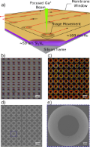
- alternative FZP fabrication techniques gained some attraction thanks to the improvements in layer deposition [15][16][17][18][19][20][21][22][23][24][25], etching methods [26], and fabrication methods based on focused ion beams [18][21][27][28][29][30][31]. One particular implementation of focused ion beams


Room-temperature single-photon emitters in titanium dioxide optical defects
Beilstein J. Nanotechnol. 2018, 9, 1085–1094, doi:10.3762/bjnano.9.100
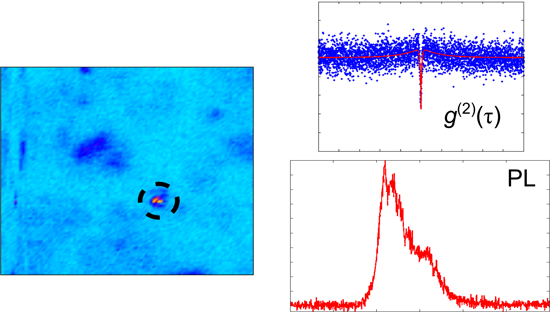
- treatment is also required. To the best of our knowledge, we can only conclude that we did not observe single-photon emission in some morphologies probably due to different fabrication methods and annealing temperatures. It can be inferred that for these two morphologies there is a pure non-radiative decay


Review: Electrostatically actuated nanobeam-based nanoelectromechanical switches – materials solutions and operational conditions
Beilstein J. Nanotechnol. 2018, 9, 271–300, doi:10.3762/bjnano.9.29


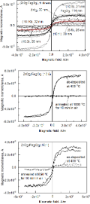
Atomic layer deposition and properties of ZrO2/Fe2O3 thin films
Beilstein J. Nanotechnol. 2018, 9, 119–128, doi:10.3762/bjnano.9.14

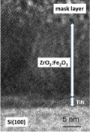
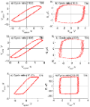
- deposited ZrO2 were compared from the viewpoint of ferroelectric behavior [21], whereby ALD precursors were Zr-based metal organic precursors (TEMAZr) and H2O. Both fabrication methods provided samples with antiferroelectric behavior. Here, ZrO2 films doped with Fe2O3 were grown by atomic layer deposition



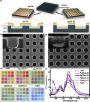
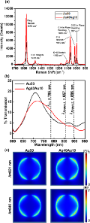
Refractive index sensing and surface-enhanced Raman spectroscopy using silver–gold layered bimetallic plasmonic crystals
Beilstein J. Nanotechnol. 2017, 8, 2492–2503, doi:10.3762/bjnano.8.249
- , and nanoscale holes or voids to effect couplings and further obtain stronger electromagnetic fields and higher spatial resolution from localized surface plasmon resonance (LSPR) [18][19][20][21][22][23][24][25][26][27]. Many fabrication methods have been described that provide structures capable of


Expanding the molecular-ruler process through vapor deposition of hexadecanethiol
Beilstein J. Nanotechnol. 2017, 8, 2339–2344, doi:10.3762/bjnano.8.233

- ; Findings In a time when many technological advances are driven by the miniaturization of fabrication methods, much effort has been placed on the development of novel methods to produce nanoscale features with chemical functionalities that go beyond traditional semiconductors [1][2][3]. Recent advances in
A top-down approach for fabricating three-dimensional closed hollow nanostructures with permeable thin metal walls
Beilstein J. Nanotechnol. 2017, 8, 1231–1237, doi:10.3762/bjnano.8.124

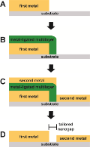
- as artificial cells [2], controlled transport and delivery of chemical agents (e.g., pharmaceutical drugs) [3], catalysis [4], lithium batteries [5] and confined reaction compartments (nanoreactors) [1]. Most fabrication methods of nanocages are based on bottom-up techniques, mainly colloidal and sol
- is typically required to create integrated systems based on multifunctional devices on a chip. For the latter purpose, top-down approaches based on fabrication methods used in the microelectronics industry are particularly well-suited because of the patterning design flexibility and controllability


Growth, structure and stability of sputter-deposited MoS2 thin films
Beilstein J. Nanotechnol. 2017, 8, 1115–1126, doi:10.3762/bjnano.8.113
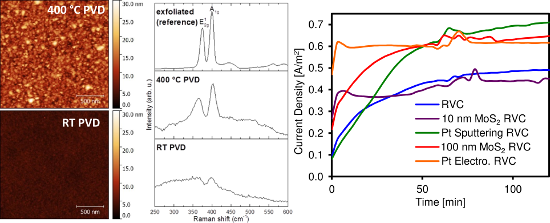
- electrochemical processes such as the hydrogen evolution reaction (HER) in electrochemical water splitting. For both types of applications, industrially scalable fabrication methods with good control over the MoS2 film properties are crucial. Here, we investigate scalable physical vapour deposition (PVD) of MoS2


Study of the correlation between sensing performance and surface morphology of inkjet-printed aqueous graphene-based chemiresistors for NO2 detection
Beilstein J. Nanotechnol. 2017, 8, 1023–1031, doi:10.3762/bjnano.8.103

- interfere with the response signal. All these peculiarities of graphene are widely attracting the interest of the scientific community involved in this research field, and much attention is devoted to the fabrication methods. Liquid phase exfoliation (LPE) [2] is a very promising fabrication technique among


Bio-inspired micro-to-nanoporous polymers with tunable stiffness
Beilstein J. Nanotechnol. 2017, 8, 906–914, doi:10.3762/bjnano.8.92

- polymeric foams have a lower density than the respective monolithic bulk material and, thus, typically exhibit a reduced elastic modulus [14]. Microporous polymers have been under development since the 1960s [15][16]. The development of fabrication methods allowing for smaller pore sizes made the next



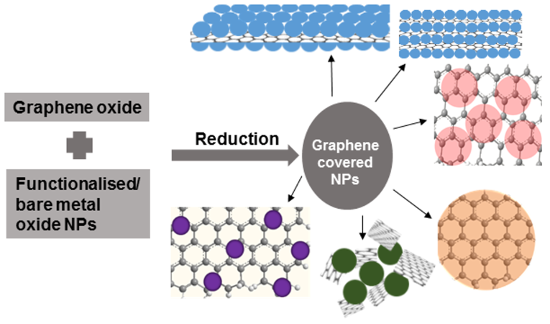
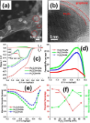
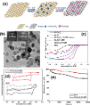
Synthesis of graphene–transition metal oxide hybrid nanoparticles and their application in various fields
Beilstein J. Nanotechnol. 2017, 8, 688–714, doi:10.3762/bjnano.8.74






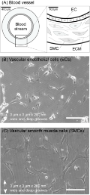
Nano- and microstructured materials for in vitro studies of the physiology of vascular cells
Beilstein J. Nanotechnol. 2016, 7, 1620–1641, doi:10.3762/bjnano.7.155
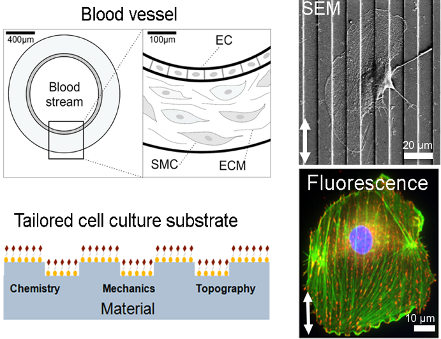
- potential interesting future studies. Keywords: fabrication methods; materials selection; nano- and micro-topography; vascular endothelial cells; vascular smooth muscle cells; Introduction Cells adhering to biomaterials are influenced by the surface topography, the surface chemistry and the mechanical
- techniques and the selection of materials for micro/nanostructured substrates as well as common geometries please refer to Table 1. 1.1 Fabrication methods In order to create tailored cell culture substrates with surface topographies established methods such as photolithography, electron- and focused-ion
- methods [55] process polymeric material and are also applied to fabricate cell culture substrates. However, the substrates resulting from these fabrication methods are in most cases (irregularly) porous, foam-like 3D structures rather than (symmetrical) surface-patterned substrates. 1.3 Nanofabrication



Dielectrophoresis of gold nanoparticles conjugated to DNA origami structures
Beilstein J. Nanotechnol. 2016, 7, 948–956, doi:10.3762/bjnano.7.87

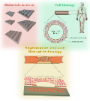
- conventional top-down fabrication methods in nanotechnology. Their positioning onto specific locations of a microstructured substrate is an important task towards this aim. Here we study manipulation and positioning of pristine and of gold nanoparticle-conjugated tubular DNA origami structures using ac
- constructs constitute promising template structures to combine different organic and inorganic nanomaterials into tailored hybrid nanodevices, and hence, hold the potential to combine self-assembly of functional molecules with conventional fabrication methods in nanotechnology [4][5][6][7][8][9][10][11]. To


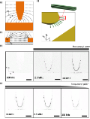


Large-scale fabrication of achiral plasmonic metamaterials with giant chiroptical response
Beilstein J. Nanotechnol. 2016, 7, 914–925, doi:10.3762/bjnano.7.83
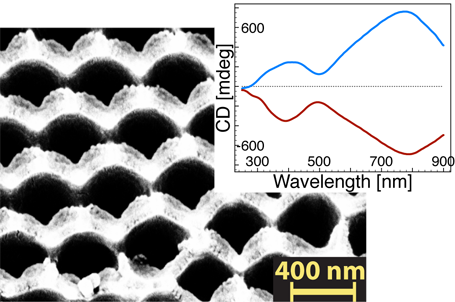
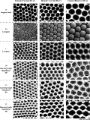
- technique while retaining control and order of the resulting arrays. This signifies a substantial improvement to standard fabrication methods such as focused ion beam and electron beam lithography concerning cost and production time. Furthermore, the use of a small chiral organic molecule and a protein has



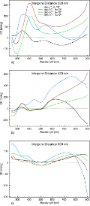
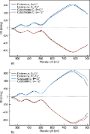
![[Graphic 2]](/bjnano/content/inline/2190-4286-7-83-i2.png?max-width=637&scale=1.18182) , of incident light with respect to the ECM structures.
, of incident light with respect to the ECM structures.





Controlled graphene oxide assembly on silver nanocube monolayers for SERS detection: dependence on nanocube packing procedure
Beilstein J. Nanotechnol. 2016, 7, 9–21, doi:10.3762/bjnano.7.2
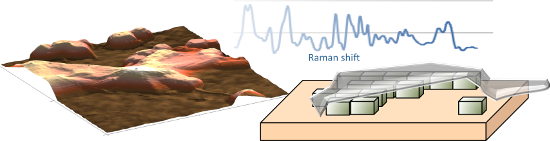
- revealed no long-range order within the assembly of nanoparticles when 2D array of 100 nm AgNP were assembled by direct adsorption of the NP onto modified surfaces. Adsorption of graphene oxide on AgNC arrays Different fabrication methods have been developed for SERS-active surfaces involving graphene


In situ SU-8 silver nanocomposites
Beilstein J. Nanotechnol. 2015, 6, 1661–1665, doi:10.3762/bjnano.6.168

- nanocomposites are therefore of great interest within micro- and nanofabrication [4][5][6]. The nanoparticles encased in a polymeric matrix should maintain their physical properties, while the nanocomposite can be structured by using standard fabrication methods allowing for the development of new optoelectronic





