


Search results
Search for "gas" in Full Text gives 964 result(s) in Beilstein Journal of Nanotechnology. Showing first 200.
Quality by design optimization of microemulsions for topical delivery of Passiflora setacea seed oil
Beilstein J. Nanotechnol. 2025, 16, 2116–2131, doi:10.3762/bjnano.16.146
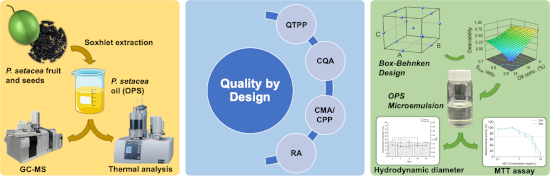
- poor physicochemical and organoleptic properties. This study aimed to develop and optimize a topical microemulsion (ME) system incorporating P. setacea seed oil using quality by design principles to address formulation challenges. The oil was extracted via Soxhlet and characterized by gas
- ), followed by gas chromatography coupled with mass spectroscopy (GC–MS) analysis. The relative composition of fatty acids is presented in Table 1, and the corresponding chromatogram is provided in Figure S1 (Supporting Information File 1). The major constituents identified in OPS were linoleic acid (64.69
- , the organic (n-hexane) layer was collected and washed three times with saturated NaCl solution to remove residual reagents. A 200 µL aliquot of the organic phase was then dried at room temperature in pre-weighted vials. FAME quantification was performed using a gas chromatograph (GC Agilent 8860


Stereodiscrimination of guests in chiral organosilica aerogels studied by ESR spectroscopy
Beilstein J. Nanotechnol. 2025, 16, 2034–2054, doi:10.3762/bjnano.16.140
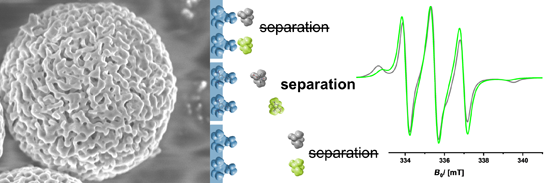
- high surface area and customizable chiral environments. A highly important and highly developed area of application of chiral materials possessing a high surface area is chromatography [11][12][13]. Techniques like high-performance liquid chromatography (HPLC) [13] and gas chromatography [14] are
- measurements more difficult. There are other valuable methods for investigating transport in porous media such as gas-adsorption methods, X-ray tomography [24][25], neutron imaging techniques [26][27], optical imaging techniques [27][28], or impedance spectroscopy [29][30]. For all of them, it is difficult to




Laser ablation in liquids for shape-tailored synthesis of nanomaterials: status and challenges
Beilstein J. Nanotechnol. 2025, 16, 1963–1997, doi:10.3762/bjnano.16.137
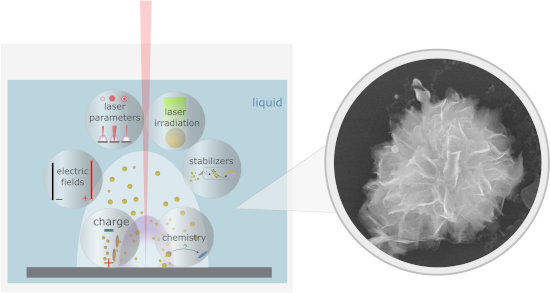
- molecules are more probable in the liquid phase as compared to the cavitation bubble due to a much higher concentration of the target material species in the bubble as compared to that of the liquid molecules. Moreover, since NPs are shown to be partially localized in the gas bubble and partially travelling
- , produced either through liquid evaporation or from reactive species generated during decomposition, such as hydrogen, hydrogen peroxide, and oxygen. The type of gas emitted depends on the liquid composition and can influence the morphology of the resulting NPs. As shown in [55], the ablation in ethanol




Evaluating metal-organic precursors for focused ion beam-induced deposition through solid-layer decomposition analysis
Beilstein J. Nanotechnol. 2025, 16, 1942–1951, doi:10.3762/bjnano.16.135
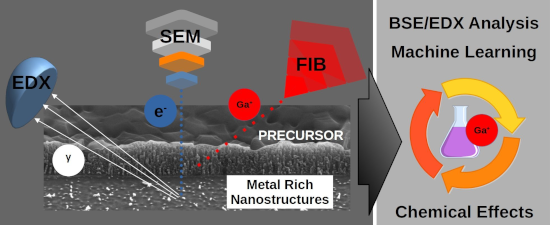
- create a new precursor, extensive testing using specialized gas injection systems is required along with time-consuming and costly chemical analysis typically conducted using scanning electron microscopy (SEM). This process can be quite challenging due to its complexity and expense. Here, the response of
- irradiation differs from gas-phase deposition, we think that our method can be employed to optimize pre-screen and score new potential precursors for FIB applications by significantly reducing the time required and conserving valuable resources. Keywords: backscattered electrons (BSE); carboxylates; energy
- duration of the electron or ion beam pulses. In FEBID and FIBID, volatile precursor molecules are delivered to the substrate surface via a gas injection system (GIS), where they adsorb and are subsequently decomposed by a focused electron or ion beam with energies in the kiloelectronvolt range. While


Targeting the vector of arboviruses Aedes aegypti with nanoemulsions based on essential oils: a review with focus on larvicidal and repellent properties
Beilstein J. Nanotechnol. 2025, 16, 1894–1913, doi:10.3762/bjnano.16.132
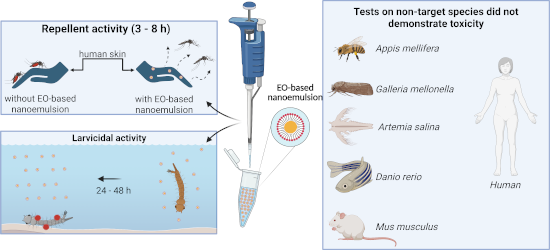
- efficiency reached 85.4%, according to gas chromatography analysis. In the tests, Sprague Dawley rats received the formulation applied to their backs before being exposed to 50 female Ae. aegypti for 8 hours. The average protection was 87.81%, surpassing the pure oil (54.57%) and falling below DEET (100


Further insights into the thermodynamics of linear carbon chains for temperatures ranging from 13 to 300 K
Beilstein J. Nanotechnol. 2025, 16, 1818–1825, doi:10.3762/bjnano.16.125
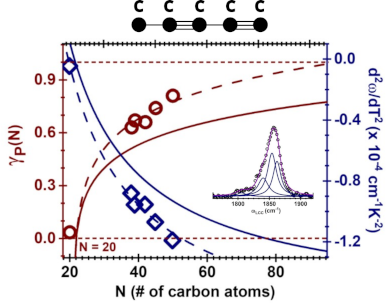
- interactions, and that mutual interactions between chain-like structures and their hosts are second-order effects [61][62][63][64][65]. Sulfur chains inside SWCNT have also demonstrated enhanced field-emission properties and outstanding gas-sensing properties [66][67], which once again corroborate the idea


![[Graphic 23]](/bjnano/content/inline/2190-4286-16-125-i25.svg?max-width=637&scale=1.18182)
Multifunctional anionic nanoemulsion with linseed oil and lecithin: a preliminary approach for dry eye disease
Beilstein J. Nanotechnol. 2025, 16, 1711–1733, doi:10.3762/bjnano.16.120

- . These characterizations were performed to ensure the quality and stability of the formulations and to evaluate their suitability for ophthalmic applications. Gas chromatograph with flame ionization detection (GC-FID) LO’s fatty acid methyl esters were transesterified as described in [37][38]. Briefly, 1
- phase. The supernatant was washed three times with 10% (w/v) citric acid and then concentrated via rotary evaporation. A 2 µL aliquot of the supernatant was injected in split injection mode (1:10 in ethyl acetate) into a gas chromatograph with flame ionization detection (GC-FID) model 7290 A (Agilent
- Technologies, USA). The column used was a SP®-2560 capillary GC column (100 m × 0.25 mm × 0.20 µm) (Supelco). The injector temperature was maintained at 230 °C, with helium (He) serving as the carrier gas at a flow rate of 1 mL·min−1. The oven temperature was programmed to increase from 150 to 300 °C at a rate



Ambient pressure XPS at MAX IV
Beilstein J. Nanotechnol. 2025, 16, 1677–1694, doi:10.3762/bjnano.16.118

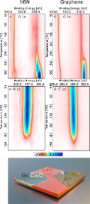
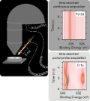
- tracking surface chemical processes in real time. Due to the scattering of the photoelectrons in a gas environment at millibar pressures, APXPS is intrinsically a photon-hungry technique. Although pioneering work on gases and liquids performed by Kai and Hans Siegbahn date back to the 1970s [1], it was
- –gas, solid–liquid, and liquid–gas interfaces in situ and under operando conditions. In this review, we highlight exemplary APXPS experiments conducted in different environments to study solid–gas and solid–liquid interfaces. APXPS at MAX IV is making a considerable contribution in various scientific
- fields including catalysis, energy materials, and corrosion, to name a few. As an example in catalysis research, we will discuss experiments on solid–gas interfaces about single-atom catalysts, catalysis in confined space, time-resolved catalysis, and photocatalysis. Remaining in the solid–gas





Nanotechnology-based approaches for the removal of microplastics from wastewater: a comprehensive review
Beilstein J. Nanotechnol. 2025, 16, 1607–1632, doi:10.3762/bjnano.16.114
- calorimetry, pyrolysis gas chromatography mass spectrometry, and thermal extraction desorption gas chromatography are useful in identifying the chemical composition of MPs but are destructive analytical techniques [132][133]. Spectroscopic analysis like Raman spectroscopy often suffers from a poor signal-to


Modeling magnetic properties of cobalt nanofilms used as a component of spin hybrid superconductor–ferromagnetic structures
Beilstein J. Nanotechnol. 2025, 16, 1557–1566, doi:10.3762/bjnano.16.110
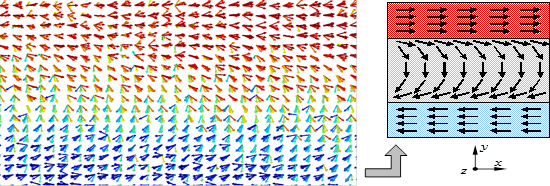
- potential multi-body model: where Fi is the immersion function of each atom in the electron gas created by electrons of all other atoms of the system; ϕij(rij) is the pair potential function; rij = |rij| = |rj − rj| is the distance between two atoms with numbers i and j; and is the background electron


Transient electronics for sustainability: Emerging technologies and future directions
Beilstein J. Nanotechnol. 2025, 16, 1545–1556, doi:10.3762/bjnano.16.109
- materials exhibit strong potential for the use in implantable medical devices. For instance, Ge nanomembranes have been employed in fully biodegradable strain and temperature sensors, demonstrating proven biocompatibility and gas-free dissolution. In addition, IGZO has been utilized to fabricate transient


Laser processing in liquids: insights into nanocolloid generation and thin film integration for energy, photonic, and sensing applications
Beilstein J. Nanotechnol. 2025, 16, 1428–1498, doi:10.3762/bjnano.16.104
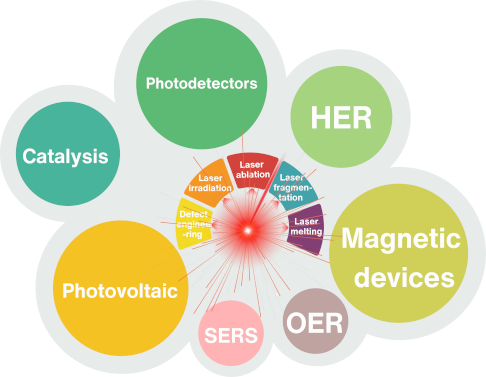
- comprehensive understanding of the process flow, from the laser-induced ejection of material into the gas phase, through its processing and movement in the plume, to its eventual deposition onto a substrate. Figure 1 shows key developments in thin film synthesis and laser-based processing from 1909 to 2025
- substrate and the spray nozzle, substrate temperature, and precursor solution concentration. Additionally, the properties of the films depend on variables like the spray rate, ambient atmosphere, droplet size, carrier gas, and post-deposition cooling. One of the key advantages of this method is its ability






Ferroptosis induction by engineered liposomes for enhanced tumor therapy
Beilstein J. Nanotechnol. 2025, 16, 1325–1349, doi:10.3762/bjnano.16.97
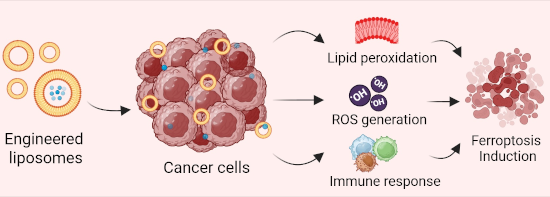
- chemodynamic and gas treatment could trigger mitochondrial damage and the formation of mtROS, resulting in the production of LPO active substances and finally inducing ferroptosis [150]. Figure 3 summarizes the key mechanisms of enhanced cancer therapy, which include induction of ferroptosis, apoptosis, and


Deep-learning recognition and tracking of individual nanotubes in low-contrast microscopy videos
Beilstein J. Nanotechnol. 2025, 16, 1316–1324, doi:10.3762/bjnano.16.96
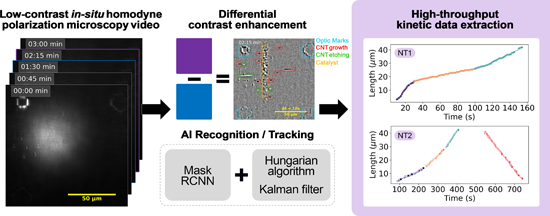
- and carrier gas. Oxygen and water sensors monitored gas-phase contaminants at the outlet line. In situ microscopy Nanotube growth was imaged in situ using a custom-built optical setup for homodyne polarization microscopy. A supercontinuum source (Fianium SC-400-4, 2 ps pulses, 40 MHz, spectral range


Acrocomia aculeata oil-loaded nanoemulsion: development, anti-inflammatory properties, and cytotoxicity evaluation
Beilstein J. Nanotechnol. 2025, 16, 1277–1288, doi:10.3762/bjnano.16.93
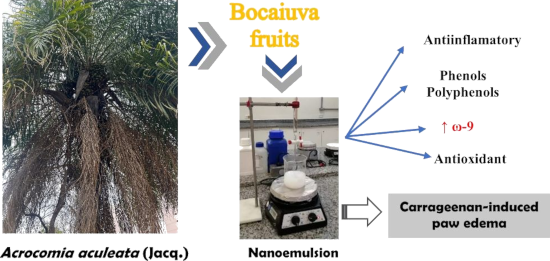
- min. Once cooled, the solution was extracted with 5 mL of n-hexane and centrifuged. 20 μL of supernatant (hexane phase) were injected directly into the GC-MS system (Mega 2 series gas chromatograph coupled to a SHIMADZU GC-MS-QP500 mass spectrometer (GC-MS) (Japan)) [60]. A 30 m × 0.32 mm capillary
- column with a 0.25 mm thick layer (66DB-5MS, Agilent Technologies, USA) was used as the stationary phase. Helium gas was used as carrier gas at a flow rate of 1.0 mL/min with a split ratio of 1:10. The injector temperature was set to 250 °C. The oven temperature was set to 130 °C for 10 min and then


Better together: biomimetic nanomedicines for high performance tumor therapy
Beilstein J. Nanotechnol. 2025, 16, 1246–1276, doi:10.3762/bjnano.16.92
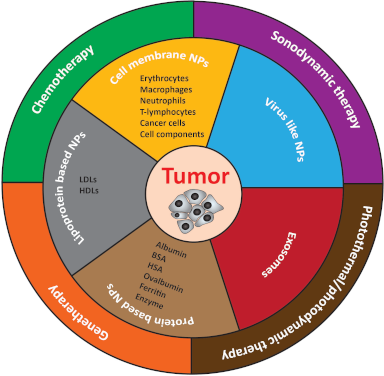
- asymmetrical catalysis of urea to ammonia acts as a gas jet to propel the microrobots to the desired site of action [54]. 1.2 Lipoprotein-based biomimetic nanoparticles Lipoproteins are complex structures with a lipid core, usually cholesterol esters and triglycerides, surrounded by a monolayer of







Electronic and optical properties of chloropicrin adsorbed ZnS nanotubes: first principle analysis
Beilstein J. Nanotechnol. 2025, 16, 1184–1196, doi:10.3762/bjnano.16.87
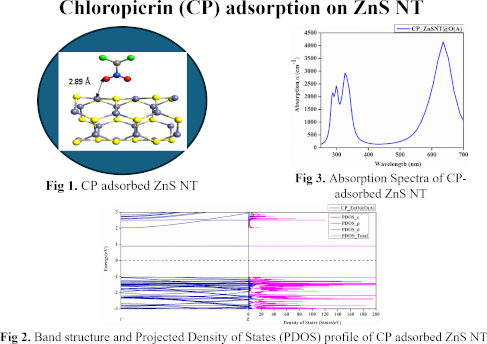
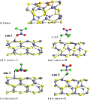
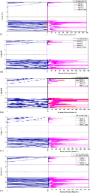
- functional theory (DFT) to explore the sensing capabilities of a ZnS (3,3) nanotube (ZnS NT) for detecting chloropicrin (CP, CCl3NO2), a highly toxic gas. To elucidate the sensing mechanism, we systematically analyze the adsorption configurations, Mulliken charge transfer, band structure, density of states
- spectra and optical conductivity peaks, highlight the potential of ZnS NT for designing sensitive and reusable CP gas sensors. Keywords: chemical sensor; chloropicrin (CP); density functional theory; zinc sulfide nanotubes (ZnS NTs); Introduction Chloropicrin (CP), also known as trichloronitromethane
- for applications ranging from ultraviolet light-emitting diodes and injection lasers to flat-panel displays and sensors [15][16][17][18][19]. ZnS, a promising transition metal chalcogenide with a wide bandgap of approximately 3.7 eV, has shown remarkable potential in gas sensing applications


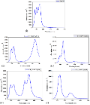

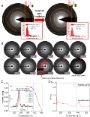
Crystalline and amorphous structure selectivity of ignoble high-entropy alloy nanoparticles during laser ablation in organic liquids is set by pulse duration
Beilstein J. Nanotechnol. 2025, 16, 1141–1159, doi:10.3762/bjnano.16.84
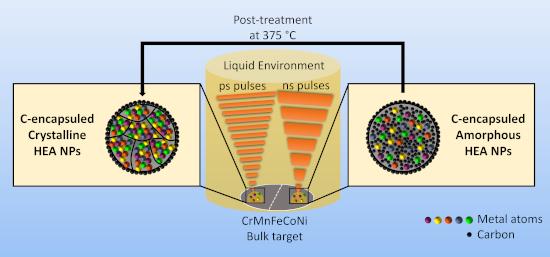
- HEA NPs could also be synthesized by inert gas condensation as stated very recently by Zhou et al. [31]. However, none of these aforementioned synthesis techniques give access to colloidal HEA NPs but to structures bound to an often very specific support material or limited to gas phase conditions. An
- organic solvents, active carbon species (radicals, permanent gases, degradation and condensation products as well as elemental carbon) were shown to form by various studies, conducting techniques such as gas-displacement quantifications and subsequent analysis via gas chromatography-coupled techniques [92




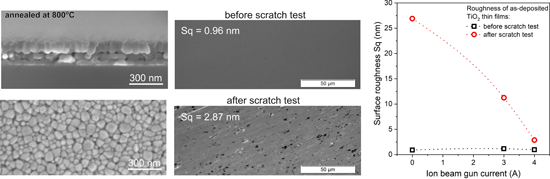
Influence of ion beam current on the structural, optical, and mechanical properties of TiO2 coatings: ion beam-assisted vs conventional electron beam evaporation
Beilstein J. Nanotechnol. 2025, 16, 1097–1112, doi:10.3762/bjnano.16.81
- , and good availability, TiO2 in the form of thin films is now widely used in the development of gas sensors, photodetectors, solar cells, memristors, and photocatalysts [1][12][15][16][17]. The area of application of titanium dioxide is also related to the crystal structure in which it occurs, that is
- crucible. Diffusion and a rotary backing pumps enabled a base pressure in the vacuum chamber below 1.5·10−5 mbar. The operating pressure in the IBAD process was kept below 1.7·10−3 mbar, and the thin film coatings were deposited with an additional oxygen gas flow of 100 sccm. The ion beam gun (Advanced
- anatase and rutile phases, prepared by magnetron sputtering using continuous and pulsed gas flow processes were 0.17 and 0.24 eV, respectively. It was found that the lower value of Eu was obtained for the anatase thin film, which was directly related to the much more ordered structure of this layer, as




Single-layer graphene oxide film grown on α-Al2O3(0001) for use as an adsorbent
Beilstein J. Nanotechnol. 2025, 16, 1082–1087, doi:10.3762/bjnano.16.79
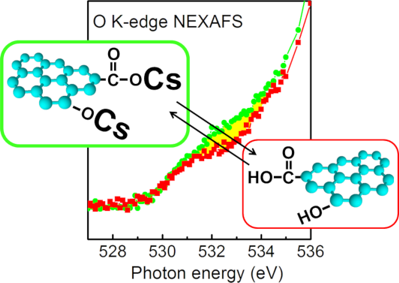
- dried under nitrogen gas blow. Cs adsorption Prior to Cs adsorption, the SLGO surface was treated with aqueous solutions which were adjusted to pH 4, 7, and 9 prior to the adsorption of the Cs atoms. Solutions with pH values of 4 and 9 were adjusted with acetate and borate buffer solutions, respectively


Piezoelectricity of hexagonal boron nitrides improves bone tissue generation as tested on osteoblasts
Beilstein J. Nanotechnol. 2025, 16, 1068–1081, doi:10.3762/bjnano.16.78
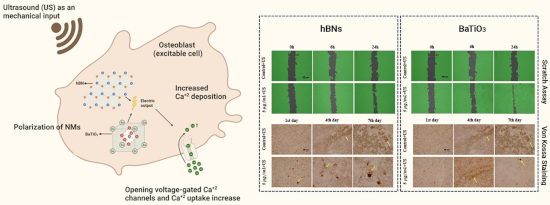
- such as low synthesis scalability, unavoidable defects, and inhomogeneity. Producing high-quality hBNs with controlled layer numbers depends heavily on precursor selection, ambient gas conditions, and substrate of choice [37]. Emerging solutions include both top-down (mechanical and chemical


Soft materials nanoarchitectonics: liquid crystals, polymers, gels, biomaterials, and others
Beilstein J. Nanotechnol. 2025, 16, 1025–1067, doi:10.3762/bjnano.16.77
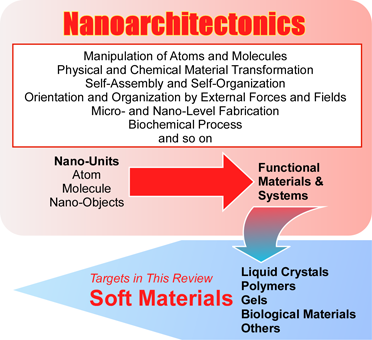
- alignment, from vertical to planar. Subsequently, exposure to oxygen oxidizes the adsorbed hydrogen, reforming the adsorbed oxygen on the Pd/Au surface and restoring the liquid crystal to its initial alignment. The motion of the liquid crystal can be controlled by exposure to gas mixtures of H2 and O2 with






Multifunctional properties of bio-poly(butylene succinate) reinforced with multiwalled carbon nanotubes
Beilstein J. Nanotechnol. 2025, 16, 1014–1024, doi:10.3762/bjnano.16.76
- temperature and load on the flowability of the composite. The sample density (ρ) was measured according to PN-EN ISO 1183-3:2003 “Plastics – Methods for Determining the Density of Non-Cellular Plastics – Part 3: Gas Pyknometer Method”, using a helium pycnometer (Anton Paar Ultrapyc 5000, Graz, Austria). The



Time-resolved probing of laser-induced nanostructuring processes in liquids
Beilstein J. Nanotechnol. 2025, 16, 968–1002, doi:10.3762/bjnano.16.74
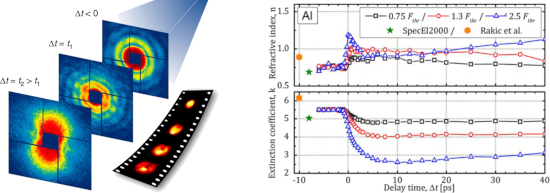
- ablation section, such as phase explosion, do require fast heating for the material to leave the binodal of liquid–gas coexistence and reach the critical point or the spinodal line [38]. This model offers a conceptually straightforward access to classifying structure formation according to the maximally
- heat capacity is temperature-dependent in simple metals [28] (and the scattering cross section decreases with temperature), the cooling of the electron gas tends to slow down with increasing excitation density [107]. A well-known case is gold with exceptionally weak electron–phonon coupling, such that
- the complete cooling of the electron gas could last for tens of picoseconds [23][108]. Therefore, excitation with short pulses of picosecond duration or shorter would display transient differences between electronic and phonon subsystem. This selectively heated electron gas can instigate processes


Focused ion beam-induced platinum deposition with a low-temperature cesium ion source
Beilstein J. Nanotechnol. 2025, 16, 910–920, doi:10.3762/bjnano.16.69
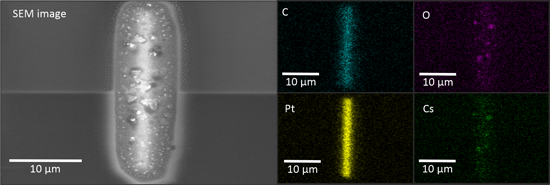
- energy-dispersive X-ray spectroscopy (EDS), lamellas for transmission electron microscopy (TEM) were prepared. Experimental The Ga+ FIB is a ThermoFisher Helios NanoLab 650 and uses a gas injection system (GIS). ZeroK NanoTech Corporation has created commercially available Cs+ FIB systems based on
- standard ion columns from ThermoFisher [23]. Both the Cs+ and the Rb+ FIB are equipped with a standard Pt GIS. The same precursor trimethylplatinum, C5H4CH3Pt(CH3)3, was used for all FIBID-Pt experiments. The precursor was heated to 40 °C to create a gas flow through the GIS nozzle, with the exit of the
- limited gas flow, which leads to an overall lower increase in growth rate with increasing current density. This agrees with previous findings for Ga+ FIBID-Pt [25]. Also, for Cs+ at 5 kV, the deposition rate is lower. A possible explanation might be the broader beam diameter, which increases for lower





