

Search results
Search for "quality control" in Full Text gives 37 result(s) in Beilstein Journal of Nanotechnology.
BTEX detection with composites of ethylenevinyl acetate and nanostructured carbon
Beilstein J. Nanotechnol. 2017, 8, 982–988, doi:10.3762/bjnano.8.100

- this study is to create a sensing material that could be used for BTEX sensing at room temperature and evaluate the EVA–CB capability in sensor applications in fuel quality control. In this study, a conductive structure of EVA–CB composites is characterised using AFM electroconductive measurements in
- detect gasoline and BTEX vapours and could be applied in future for fuel quality control. Schematic structure and dimensions of an EVA–CB sample. Reproduced with permission from [20], copyright 2011 Versita Warsaw and Springer-Verlag Wien. Expected relative change of the electrical resistance as a


Uptake of the proteins HTRA1 and HTRA2 by cells mediated by calcium phosphate nanoparticles
Beilstein J. Nanotechnol. 2017, 8, 381–393, doi:10.3762/bjnano.8.40

- organisms [29]. HtrAs are unique serine proteases. Besides their trypsin-like protease domain, they possess at least one C-terminal PDZ domain and can form higher oligomers [30]. The main functions of its family members are key aspects of the protein quality control process [29]. The best-studied members of
- , however, how its cellular distribution is regulated. HTRA2 is a human serine protease located in the intermembrane compartment of mitochondria [40]. It is known to be involved in mitochondrial quality control, namely through interactions with the antiapoptotic protein HAX-1 [41]. The degradation of this
- ]. Neurodegenerative disorders are strongly associated with the aggregation of proteins or protein fragments as well as the accumulation of unfolded proteins in mitochondria [36]. This implies that the HTRA2 protease plays a significant role in maintaining cellular homeostasis by means of protein quality control. The


False positives and false negatives measure less than 0.001% in labeling ssDNA with osmium tetroxide 2,2’-bipyridine
Beilstein J. Nanotechnol. 2016, 7, 1434–1446, doi:10.3762/bjnano.7.135

- where DNA does not absorb. This last feature enabled the development of a quality control UV–vis assay to confirm the extent of labeling [30][31][32]. It was hypothesized that a nanopore of suitable size would differentiate between osmylated and bare base due to their major differences in size and


Single pyrimidine discrimination during voltage-driven translocation of osmylated oligodeoxynucleotides via the α-hemolysin nanopore
Beilstein J. Nanotechnol. 2016, 7, 91–101, doi:10.3762/bjnano.7.11
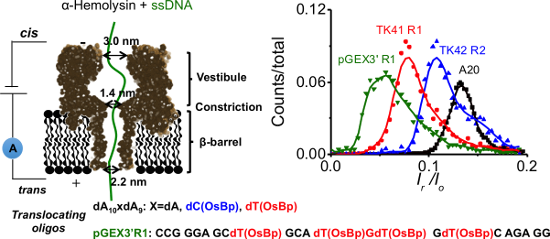
- protocols work at room temperature. The UV–vis assay serves as a quality control assay to confirm extent of osmylation. The realization that osmylation adds a 4-fold mass to the reacting base (Scheme 1, caption) fueled the speculation that any size-suitable nanopore could discriminate between osmylated and
- corresponding ratio following protocol B (see below). The values R1 and R2 serve as quality control of the product because they can be calculated from the relationships R1 = 2.21 × dT/Ntotal and R2 = 2.01 × (dT+dC)/Ntotal, where Ntotal is the total number of nucleotides, dT/Ntotal is the fraction of dT, and (dT



Nanocuration workflows: Establishing best practices for identifying, inputting, and sharing data to inform decisions on nanomaterials
Beilstein J. Nanotechnol. 2015, 6, 1860–1871, doi:10.3762/bjnano.6.189

- associated repository. A focused effort on each step in the workflow facilitates the identification of critical elements within and between each step, such as information transfers from one individual to another, quality control checks, and access rights necessary to input or review data. When individuals in


Nanotechnology in the real world: Redeveloping the nanomaterial consumer products inventory
Beilstein J. Nanotechnol. 2015, 6, 1769–1780, doi:10.3762/bjnano.6.181

- ) or suggest new products to the inventory. As a quality control measure, suggestions and new product forms contributed by registered users must be approved by a CPI curator before updates or revisions are posted to the inventory. Number of available products over time (since 2007) in each major





A scanning probe microscope for magnetoresistive cantilevers utilizing a nested scanner design for large-area scans
Beilstein J. Nanotechnol. 2015, 6, 451–461, doi:10.3762/bjnano.6.46

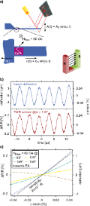
- sensing techniques as applications [2][3][4][5]. Current state of the art instruments use micro-fabricated silicon and silicon-nitride cantilevers with an optical read-out [6] and image with high resolution down to the atomic scale. Furthermore, AFMs are often incorporated into quality control systems for
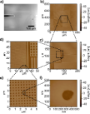
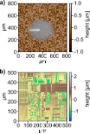
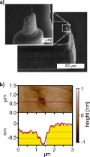
- the small-area scanner enabling further zoom steps (Figure 3f). Thereby, the instrument can span over three orders of magnitude in scan range, which makes it a helpful tool for micro- and nanomechanical analysis. One example of such an analysis is given in Figure 4a. For quality control of fabrication



Interaction of dermatologically relevant nanoparticles with skin cells and skin
Beilstein J. Nanotechnol. 2014, 5, 2363–2373, doi:10.3762/bjnano.5.245

- their ability to take up nanomaterial. The choice of the experimental system has a major influence on the generated information and a thorough quality control of the behavior of different particle batches in the experimental models is essential. Nanoparticle-induced biological effects in cells and whole


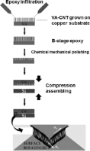
Functionalization of vertically aligned carbon nanotubes
Beilstein J. Nanotechnol. 2013, 4, 129–152, doi:10.3762/bjnano.4.14








Large-scale analysis of high-speed atomic force microscopy data sets using adaptive image processing
Beilstein J. Nanotechnol. 2012, 3, 747–758, doi:10.3762/bjnano.3.84

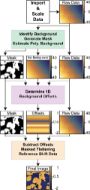
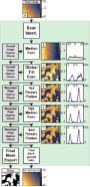
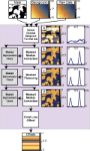
- [30][31]. Automated, AFM quality-control check in semiconductors and other nanotechnologies [32][33][34] also creates large data sets, which would also benefit from reliable automated image processing. In order to automate the image processing, it is important to define a metric by which the success




Glassy carbon electrodes modified with multiwalled carbon nanotubes for the determination of ascorbic acid by square-wave voltammetry
Beilstein J. Nanotechnol. 2012, 3, 388–396, doi:10.3762/bjnano.3.45

- during the production and quality-control stages and in clinical applications [3][4][5]. Several methods for the determination of ascorbic acid concentration have been reported, such as HPLC [6], enzymatic analysis [7] and spectrophotometry [7]. However, these methods are relatively time-consuming and/or


Preparation, properties and applications of magnetic nanoparticles
Beilstein J. Nanotechnol. 2010, 1, 21–23, doi:10.3762/bjnano.1.4
- arrays of the NPs, in the ideal case two-dimensionally periodic arrangements. To this end, highly reliable and reproducible self-organizing processes are sought allowing a high throughput at a tolerable price. Preparation, however, has to be accompanied by a strict quality control including the particles